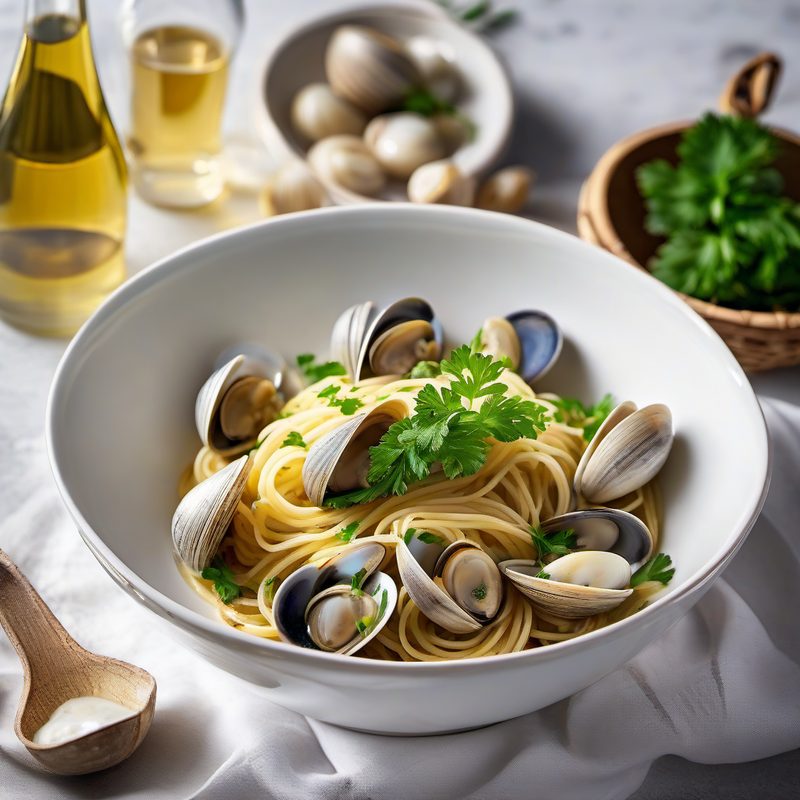
Spaghetti Vongole Peppe Guida
Elevated Neapolitan clam pasta with a revolutionary double-liquid technique — starchy pasta water and briny clam juice emulsify into a silky, intensely flavoured sauce that clings to every strand.
| Amount | Ingredient |
|---|---|
| Spaghetti | 350 g (12 oz) Preferably bronze-drawn (trafilata al bronzo) for better sauce adhesion |
| Manila clams or littleneck clams (vongole veraci) | 1 kg (2.2 lb) Small, 2–3 cm each; about 40–50 clams |
| Extra-virgin olive oil | 4 tbsp (60 ml) Divided; use a fruity, medium-intensity EVOO — nothing too peppery that would overpower the delicate clam flavour |
| Garlic cloves | 3 medium (about 12 g) 2 thinly sliced, 1 whole (for the initial sauté and to season the oil) |
| Fresh red chili (peperoncino) | 1 small (about 3–4 g) Finely chopped (seeds optional for heat level); can substitute ½ tsp red pepper flakes |
| Dry white wine | 120 ml (½ cup) A crisp, unoaked wine such as Vermentino, Pecorino, or Pinot Grigio |
| Fresh flat-leaf parsley | ¼ cup (15 g) Finely chopped; stems reserved for the steaming liquid |
| Kosher salt | 2 tbsp (30 g) For pasta water — the water should taste like the sea |
| Black pepper | ½ tsp Freshly ground, plus more for finishing |
> Peppe Guida's signature trick: after steaming the clams, reserve the precious liquor and filter it through a fine-mesh sieve lined with paper towels. Then toss the al dente spaghetti in a pan with both the clam juice and a splash of pasta water — the two starch-and-brine liquids create an emulsion that is far silkier, more flavourful, and more clingy than the traditional method of just tossing clams with pasta. This is the "double-trick" that elevates a simple Friday-night bowl of vongole to chef-level brilliance.
🏷 Category
Primi piatti (First Courses) — Cucina di mare (Seafood Cuisine)
🥘 Special Equipment
- Large pot (6–8 qt / 6–8 L) — for pasta
- Large heavy-bottomed skillet or sauté pan with lid (12-inch / 30 cm) — for clams
- Fine-mesh sieve (chinois or conical strainer)
- Paper towels or cheesecloth (for filtering clam juice)
- Colander
- Large mixing bowl or liquid measuring cup (to catch clam liquid)
- Chef's knife and cutting board
- Kitchen shears (for trimming parsley)
- Wooden spoon or silicone spatula
- Tongs (for tossing pasta)
- Measuring cups and spoons
- Small bowl (for soaking clams)
> Ingredient note on clams: Peppe Guida insists on vongole veraci (true clams) — the small, sweet Mediterranean clams with distinctive concentric ridges on their shells. If unavailable, use Manila clams or small littlenecks. Avoid large chowder clams (quahogs), which are too tough and chewy for this delicate preparation. You need approximately 1 kg (2.2 lb) for 4 servings — about 250 g (½ lb) per person, which yields roughly 80–100 g of meat after shucking.
🔧 Before You Begin
- Purge the clams of sand: Place the clams in a large bowl of cold salted water (30 g salt per 1 L water / 1 tbsp per quart). Add 1 tablespoon of cornmeal or flour — the clams will ingest it and expel sand more effectively. Soak for 30 minutes, then drain, scrub each shell under cold running water with a stiff brush, and rinse thoroughly. Discard any clams that are open and do not close when tapped — they are dead and unsafe to eat.
- Prepare the parsley: Separate the leaves from the stems. Finely chop the leaves and set aside (covered with a damp paper towel if not using immediately). Reserve the stems — they will go into the steaming liquid to infuse it with herbaceous flavour. Do not discard them.
- Prep the aromatics: Thinly slice 2 of the garlic cloves into rounds (about 1–2 mm thick). Keep the third clove whole — it will be used to season the oil at the start and removed before serving. Finely chop the fresh chili (deseed half the chili if you prefer mild heat; keep all seeds for full spice).
- Set up the filtering station: Place a fine-mesh sieve over a liquid measuring cup or bowl. Line the sieve with a double layer of paper towels or a single layer of cheesecloth. This is critical — unfiltered clam juice contains fine grit that will ruin the silky texture of the final sauce.
- Pasta water: Fill a large pot with 4–5 quarts (4–5 L) of cold water and bring to a rolling boil. Salt only after boiling — salting cold water extends the time to boil.
- Warm the serving bowls: Place 4 shallow pasta bowls in a low oven (170°F / 75°C) or in a sink of hot water to warm. Cold bowls will cause the emulsified sauce to seize and separate upon contact.
📏 Key Ratios
| Ratio | Value | Purpose |
|---|---|---|
| Clams-to-pasta | 1,000 g clams : 350 g spaghetti | The classic Neapolitan ratio — generous enough that every forkful includes clam meat alongside the pasta |
| Oil-to-clams | 60 ml oil : 1,000 g clams | Enough to create a silky emulsion without greasiness; excess oil would separate and float on top |
| Pasta water-to-clam juice | ~120 ml pasta water : ~200 ml clam juice | The "double-trick" ratio — roughly equal parts starch and brine creates the ideal emulsion viscosity |
| Wine-to-clams | 120 ml wine : 1,000 g clams | Enough to deglaze and add acidity without overwhelming the delicate clam flavour |
> Why this works: The 2:1 weight ratio of clams to pasta (in the shell) means each serving of 250 g of clams yields about 60–70 g of meat — roughly 25% of the pasta's weight in pure clam meat. Combined with the emulsified clam juice sauce, every bite delivers an intense, concentrated brininess that defines this dish. The 3:1 ratio of clam juice to olive oil (by volume after cooking) ensures the sauce is luxuriously silky but not greasy — the starch from the pasta water and the natural gelatin from the clam juices form a stable emulsion.
📝 Instructions
Step 1: Steam the Clams and Extract the Juice (8 minutes)
- In a large heavy-bottomed skillet or sauté pan, heat 2 tablespoons (30 ml) of olive oil over medium-high heat until shimmering — about 1 minute.
- Add the whole garlic clove and the parsley stems. Sizzle for 30 seconds until fragrant — the garlic should soften but not brown. The parsley stems release their chlorophyll and herbaceous oils into the fat.
- Add the purged and drained clams all at once. Pour in the white wine, then immediately cover the pan with a tight-fitting lid. Steam over high heat for 3–4 minutes, shaking the pan occasionally to redistribute the clams.
- After 3 minutes, check the clams. As soon as most have opened (typically 3–4 minutes), use tongs to transfer them to a large bowl. Discard any clams that remain stubbornly closed after 5 minutes — they were dead before cooking.
- Critical — filter the clam liquid: Pour the steaming liquid from the pan through the paper-towel-lined sieve into the measuring cup. Let it drip naturally — do not press on the solids, which would force grit through the filter. You should have about 200 ml (¾ cup + 1½ tbsp) of clear, amber-golden clam juice. Set aside.
- Once the clams are cool enough to handle (about 2 minutes), remove most of the meat from the shells. Reserve about 12–16 clams in their shells (3–4 per serving) for the final garnish — they look beautiful and signal to your guests that real clams were used. Place the shelled clam meat in a small bowl and cover loosely to keep moist.
> Chef Guida's note: The filtered clam juice is the single most important component. Many home cooks discard this liquid or dump it unstrained into the pasta — the grit then ruins the silky mouthfeel. Filter it patiently through paper towels; this 30-second step separates a good plate of vongole from a transcendent one.
Step 2: Cook the Spaghetti (8 minutes)
- While the clams steam, add the spaghetti to the boiling salted water. Stir immediately to prevent strands from sticking to each other or the pot bottom.
- Cook according to package directions until 1 minute short of al dente — typically 7–8 minutes for dried spaghetti. The pasta will finish cooking in the sauce, so it must be slightly underdone at this stage.
- Before draining, reserve 1 cup (240 ml) of pasta cooking water in a heatproof measuring cup or small bowl. The starchy water is the second key component of Peppe Guida's double-trick.
- Drain the spaghetti in a colander (do not rinse). Shake vigorously to shed excess water — too much clinging water will dilute the sauce. Work quickly; hot pasta absorbs the emulsion best.
Step 3: Build the Emulsion Sauce (3 minutes)
- Wipe the skillet clean (or use a separate large sauté pan). Add the remaining 2 tablespoons (30 ml) of olive oil and heat over medium heat until shimmering.
- Add the sliced garlic and chopped chili. Sauté for 45–60 seconds until the garlic is fragrant and just beginning to turn golden at the edges — do not let it brown, which would introduce bitterness. The chili-infused oil should take on a warm orange hue.
- The double-trick — add both liquids: Pour in 120 ml (½ cup) of the filtered clam juice and 120 ml (½ cup) of the reserved pasta cooking water. Increase the heat to high and bring to a vigorous boil. The two liquids will froth and emulsify as they bubble together — the starch from the pasta water and the natural gelatin from the clam juice form the foundation of the clingy, silky sauce.
- Let the liquid boil vigorously for 45–60 seconds to reduce slightly and thicken. The sauce should be emulsified — a unified, slightly thickened, milky-golden liquid rather than separate pools of water and oil. Swirl the pan to encourage the emulsion.
Step 4: Toss the Pasta (2 minutes)
- Add the drained spaghetti to the boiling emulsion in the skillet. Reduce the heat to medium. Using tongs, toss and stir vigorously for 60–90 seconds, allowing the pasta to absorb the liquid. The spaghetti will continue cooking to perfect al dente while the starch-and-brine emulsion clings to every strand.
- As the sauce reduces and thickens, add the shelled clam meat and all but 2 tablespoons of the chopped parsley. Toss for another 30 seconds to warm the clams through without overcooking them — rubbery clams are the result of excessive heat.
- Adjust the consistency: If the sauce looks too tight (pasta seems dry), add a splash of the remaining clam juice or pasta water (about 1–2 tablespoons at a time) and toss until the sauce loosens and coats the pasta evenly. The ideal consistency is glossy and slightly loose — the sauce should pool at the bottom of the bowl but not be soupy.
- Taste and adjust seasoning with salt (go easy — the clam juice is naturally briny) and a generous grind of black pepper. The chili should provide a gentle warmth in the background, not a fiery kick.
Step 5: Serve (2 minutes)
- Remove the pan from the heat. Using tongs, divide the spaghetti among 4 warm shallow bowls, twisting each portion into a neat, compact nest.
- Arrange 3–4 clams in their shells around the edge of each bowl, with the hinge side facing down and the opening facing upward — this shows off the succulent clam inside.
- Spoon any remaining sauce from the skillet over each portion. The sauce should glisten and pool slightly at the bottom of the bowl.
- Sprinkle with the reserved 2 tablespoons of chopped parsley and finish with a final grind of black pepper and a light drizzle of extra-virgin olive oil — just a teaspoon or so per serving, for added gloss.
- Serve immediately. This dish waits for no one — the emulsion will begin to break as it cools, and the clams will become rubbery within minutes.
🍽 Plating & Presentation
- Per serving: A compact nest of spaghetti in the centre of a warm shallow rimmed bowl, with 3–4 clams-in-shell placed like compass points around the edge (hinge-side down, opening upward). The pasta should be glossy and golden, with tiny flecks of green parsley and red chili visible throughout the strands.
- Garnish: Fresh flat-leaf parsley — never dried. A final drizzle of raw extra-virgin olive oil adds a peppery, fruity top note. Some chefs add a light dusting of pangrattato (toasted breadcrumbs) for crunch, but Peppe Guida purists consider this an unnecessary distraction from the pure clam-pasta emulsion.
- Recommended tableware: White or cream-coloured shallow pasta bowls — the contrast between the golden-amber spaghetti, the pale clam meat, the grey-brown clam shells, and the verdant green parsley creates a clean, elegant presentation that lets the simplicity of the dish speak for itself.
- Visual note: The sauce should pool at the bottom of the bowl in a thin, emulsified puddle — not watery and separate, not thick and gloppy. The pasta should be well-coated but not drowning. Each strand should glisten individually.
💡 Troubleshooting
| Problem | Likely Cause | Solution |
|---|---|---|
| Sauce is watery and separates | Emulsion didn't form — oil and water remained separate | Start the sauce at high heat to force emulsification; add a splash of pasta water (starch helps bind) and toss vigorously. If already separated, the dish cannot be fully rescued — prevent next time by using hot pasta water and boiling the emulsion vigorously before adding pasta |
| Sauce is greasy/oily on top | Too much oil relative to the clam juice, or oil added after the emulsion | Reduce olive oil to 3 tbsp total; add the oil before the pasta water, not after. Ensure the pasta water is hot when added — cold liquid breaks the emulsion |
| Pasta is dry and clumpy | Not enough liquid or insufficient tossing time | Add 2–3 more tablespoons of clam juice + pasta water mixture and toss over heat for 30 seconds longer. The starch needs time to hydrate and bind |
| Clams are rubbery and tough | Overcooked — added too early or reheated too aggressively | Add shelled clams only at the very end of tossing, just to warm through. If clams are already tough, there is no remedy — reduce cooking time next batch |
| Gritty, sandy texture | Clam juice not filtered or clams not purged | Filter clam juice through paper towels every time. Purge clams in salted water + cornmeal for a full 30 minutes. Rinse thoroughly after purging |
| Pasta is too salty | Over-salted pasta water combined with naturally briny clam juice | Reduce pasta water salt to 1 tbsp (15 g) per 5 quarts. The reserved clam juice already carries significant salt. Taste before adding any salt to the final dish |
| Garlic is burnt and bitter | Heat too high during garlic sauté | Cook garlic over medium heat, not high. Remove from pan and start over if garlic turns dark brown — burnt garlic cannot be salvaged |
| Clams won't open during steaming | Insufficient heat or some were dead before cooking | Steam covered over high heat. After 5 minutes, discard any unopened clams — they were dead before cooking and should not be eaten |
| Spaghetti absorbs all the sauce and looks dry after plating | Insufficient sauce volume or pasta continued cooking after plating | Reserve extra clam juice + pasta water to add at the last moment. Serve immediately on warm plates — cold plates draw moisture out of the pasta |
🧠 The Science of Peppe Guida's Double-trick Emulsion
The genius of Peppe Guida's technique lies in understanding what happens at the molecular level when starchy pasta water meets briny clam juice — and how that differs from the traditional method.
Why the Double-trick Works
- Starch gelatinization: When spaghetti cooks, starch granules (primarily amylose and amylopectin) leach into the cooking water. At boiling temperature, these granules absorb water, swell, and rupture, releasing long-chain starch molecules. This creates the characteristic cloudy, viscous pasta water. The amylose content (roughly 20–25% of the starch) is particularly important — it forms a gel network that traps water and fat, creating a stable emulsion.
- Clam juice composition: The liquid released by clams during steaming is not merely seawater — it is a complex broth rich in:
- Amino acids (primarily glutamic acid, glycine, and alanine) — responsible for umami and sweetness
- Minerals (sodium, potassium, magnesium, calcium) — the briny backbone
- Proteins and peptides — natural emulsifiers that aid in binding fat and water
- Glycogen — a polysaccharide that contributes mouthfeel and slight sweetness
- The emulsion matrix: When the two liquids are combined over high heat, three things happen simultaneously:
- Starch molecules from the pasta water hydrate and begin forming a gel network
- Proteins and peptides from the clam juice act as surfactants, reducing surface tension between the olive oil and the water-based liquid
- Vigorous boiling provides the mechanical energy needed to disperse oil droplets into the water phase
The result is a water-in-oil emulsion where tiny droplets of olive oil are suspended in the starch-and-protein matrix — exactly analogous to a classic pasta carbonara emulsion, but with clam-juice umami instead of egg richness.
- Why the traditional method falls short: Most cooks simply toss drained pasta with clams and a drizzle of oil. Without the starch-and-brine emulsion, the oil remains separate from the pasta water, creating a thin, watery sauce that slides off the pasta rather than clinging to it. The double-trick ensures the sauce is chemically bound to the pasta's surface — each strand emerges from the pan coated in a thin, flavourful film of emulsified clam juice.
Temperature and Timing Precision
- Pasta water must be hot (near boiling): Cold or room-temperature pasta water contains fully hydrated starch that has already collapsed out of solution. Only hot, freshly drawn pasta water retains the active starch granules needed for emulsification. If you must reserve pasta water in advance, keep it covered and hot on the stove.
- High heat for emulsification: The 45–60 second vigorous boil after combining the two liquids is non-negotiable. Without this intense bubbling — which provides the mechanical shear to disperse oil into the water — the two liquids will remain stubbornly separate.
- The 90-second toss window: Once the pasta enters the pan, you have approximately 90 seconds to toss and coat it before the emulsion starts to break down from overcooking or excess stirring. Work decisively.
> In classical French sauce-making, this is analogous to a liaison — a starch-thickened emulsion — crossed with a beurre monté technique. Peppe Guida's genius was recognizing that the two key liquids (clam juice and pasta water) that home cooks typically discard or underutilize are precisely the ingredients needed to create the perfect sauce.
🧪 Variations
- Vongole in bianco (no chili): Omit the chili entirely for a milder, more delicate version that lets the pure clam flavour shine. Add an extra garlic clove for aromatic depth. This is the classic Neapolitan spaghetti con le vongole in bianco — traditionally served on Christmas Eve (La Vigilia).
- Pomodoro e vongole (with tomatoes): Add 150 g (½ cup) of crushed San Marzano tomatoes or halved cherry tomatoes to the pan after the garlic and chili. Cook for 2 minutes before adding the liquids. The acidity of the tomatoes balances the briny clams and adds a beautiful coral-pink hue to the sauce. This is common farther south, in Puglia and Sicily.
- Pangrattato (toasted breadcrumbs): Toast 40 g (½ cup) of coarse breadcrumbs in 1 tablespoon of olive oil with a clove of garlic (discarded after toasting) until golden and crisp. Sprinkle over each serving. A cucina povera touch that adds texture and prevents waste — originally used in place of expensive grated cheese, which is never served with seafood pasta in Italian tradition.
- Peperoncino in più (extra spicy): Use 2 small chilies (seeds included) and add one whole chili to the steaming liquid alongside the parsley stems. The heat infuses both the clam juice and the final sauce for a layered, warming spice.
- Linguine or bucatini: Substitute spaghetti with linguine (same cooking time) or bucatini (add 1–2 minutes to cooking time). The hollow centre of bucatini traps a little extra sauce — a delightful textural surprise. Avoid short pasta shapes; long, thin strands are traditional and optimal for oil-and-juice emulsions.
- Lemon-kissed (alla sorrentina): Add the grated zest of 1 organic lemon to the sauce in Step 3. The citrus oils brighten the briny clams and add a fresh, aromatic dimension. Finish with a squeeze of lemon juice over each bowl just before serving — about ½ teaspoon per portion. Serve the lemon on the side for guests to add more.
- Zucchini and clams (vongole e zucchine): Dice 1 medium zucchini into ¼-inch (6 mm) cubes. Sauté in the oil after removing the garlic whole clove, before adding the sliced garlic. Cook for 2–3 minutes until just tender. Proceed with the recipe. The zucchini absorbs the clam sauce and adds a delicate vegetable sweetness that complements the briny clams.
- Spaghetti alla chitarra (hand-cut): For the ultimate textural experience, use spaghetti alla chitarra — square-cut fresh egg pasta from Abruzzo. Cook for only 2–3 minutes and proceed with the double-trick. The rough, porous surface of the hand-cut pasta traps even more sauce than commercial dried spaghetti.
> Cheese note: Never serve Parmesan, Pecorino, or any grated cheese with this dish. In Italian culinary tradition (codified by the Italian Academy of Cuisine), cheese is never paired with seafood pasta — the lactic flavours clash with the briny iodine notes of shellfish, and the umami of aged cheese overwhelms the delicate clam taste. This is one of the few genuine "rules" of Italian cooking that even rebellious modern chefs respect.
🥗 Suggested Sides
- Insalata mista (mixed green salad): Simply dressed with lemon juice, extra-virgin olive oil, salt, and pepper. A crisp, acidic counterpoint to the rich, briny pasta. Include a handful of arugula for peppery bite.
- Crostini al pomodoro: Grilled or toasted crusty bread rubbed with a cut garlic clove and topped with diced ripe tomatoes, basil, and a drizzle of olive oil. The bright, fresh tomato flavours mirror the acidity in the wine used in the pasta.
- Caponata siciliana: Sweet-and-sour eggplant, celery, olives, and capers in a agrodolce sauce. The vinegar-sweet notes cut through the rich clam sauce and provide textural contrast.
- Grilled octopus or calamari: If you want an antipasto before the primo, char-grilled octopus (polpo alla griglia) with lemon, olive oil, and herbs is the classic seaside pairing. The charred, smoky flavours contrast beautifully with the clean, briny pasta.
- Bruschetta bianca: Simply grilled bread rubbed with garlic and drizzled with olive oil — no toppings. The crisp, oily, garlicky bread is perfect for mopping up any remaining clam sauce from the bowl.
- Roasted fennel: Wedges of fennel roasted with olive oil, salt, and a pinch of fennel seeds. The anise notes echo the white wine and enhance the Mediterranean profile of the meal.
🍷 Wine Pairing
| Wine | Why |
|---|---|
| Vermentino di Sardegna | The classic pairing — crisp, saline, with a subtle almond bitterness that mirrors the briny clams. Served chilled (8–10°C / 46–50°F), its acidity cuts through the olive oil emulsion like a knife |
| Greco di Tufo | Fuller-bodied and slightly nutty, with a mineral finish that complements the clam liquor. Campania's premier white grape, grown on volcanic soils — the mineral notes are a perfect match for shellfish |
| Fiano di Avellino | Rich, honeyed, with notes of pear and hazelnut — this structured white stands up to the generous olive oil without overpowering the delicate clams |
| Pecorino (off-molo) | Not the cheese — the white wine from Le Marche/Abruzzo. Bright citrus, herbal notes, and crisp acidity. A more affordable but equally excellent pairing |
| Gavi di Gavi (Cortese) | Elegant and mineral-driven, with delicate white flower and green apple notes. A refined choice; the subtle almond finish echoes the Vermentino's signature bitterness |
| Franciacorta Brut (sparkling) | For a celebratory version — the bubbles and high acidity scrub the palate between each unctuous, sauce-laden bite. The toasty, brioche notes from extended lees ageing complement the garlic and parsley |
| Lacrima Christi del Vesuvio Bianco | A wine from the volcanic slopes of Mount Vesuvius — literally "Tears of Christ." Minerally, smoky, with a distinct volcanic salinity that is the perfect partner for clams harvested from the Bay of Naples |
| Albariño (Rías Baixas) | The Spanish answer to Vermentino — saline, citrusy, with a hint of white peach. The Atlantic salinity mirrors the Mediterranean clam liquor beautifully |
Wine to avoid: Oak-aged Chardonnay (too heavy, the vanilla notes clash with the delicate shellfish), high-tannin reds (tannins + clam meat = metallic, unpleasantly astringent aftertaste), and sweet wines (the sugar interferes with the briny-savoury balance of the dish).
> The rule: If it's not from the Mediterranean, it probably doesn't pair. The mineral-driven, saline whites of Campania, Sardinia, and Liguria have evolved alongside these dishes over millennia — trust the regional pairing.
📚 Original Source & Background
- Italian name: Spaghetti alle vongole di Peppe Guida
- English name: Chef Peppe Guida's Double-trick Clam Spaghetti
- Region/Heritage: Naples, Campania — Spaghetti alle vongole is one of the quintessential dishes of Neapolitan seafood cuisine, particularly associated with the Mergellina and Santa Lucia waterfront districts. The dish is traditionally served on Christmas Eve (La Vigilia di Natale) as part of the Festa dei Sette Pesci (Feast of the Seven Fishes) — a Catholic tradition of abstaining from meat on the eve of Christmas.
- The chef: Peppe Guida is a celebrated Neapolitan chef and restaurateur, owner of the Michelin-starred Antica Osteria Nonna Rosa in Vico Equense (Sorrentine Peninsula). He is known for elevating humble cucina povera dishes through precise technique while preserving their soul. His "double-trick" spaghetti alle vongole — using both pasta water and filtered clam juice — has become his signature dish, featured in his cookbooks and television appearances. Guida's philosophy: "La tradizione non è un museo, è un laboratorio" (Tradition is not a museum, it is a laboratory).
- Historical note: Spaghetti alle vongole as we know it today emerged in Naples in the early 20th century, when dried pasta became affordable for the working class and clams were an abundant, cheap protein from the Gulf of Naples. The earliest known published recipe appears in Ippolito Cavalcanti's Cucina teorico-pratica (1839), which describes vermicelli con le vongole — though without the refined double-trick technique. The addition of chili (peperoncino) is a distinctly Neapolitan touch that arrived with the trade of spices through the Port of Naples.
- Recipe position: 419 in the cookbook series
- Season: Year-round, but best from September to April — clams are at their peak sweetness and meatiness during colder months, and the waters of the Gulf of Naples are clearest in autumn and winter, yielding the least sandy specimens.
> Peppe Guida on his double-trick: "Il segreto non è nella quantità degli ingredienti, ma nella qualità della relazione tra di loro — l'acqua di pasta e l'acqua delle vongole si sposano in una danza di amido e sale che non si può ottenere in nessun altro modo." (The secret is not in the quantity of ingredients, but in the quality of the relationship between them — the pasta water and the clam water marry in a dance of starch and salt that cannot be achieved in any other way.)
📊 Nutrition (per serving)
| Calories | Protein | Fat | Carbs | Fiber |
|---|---|---|---|---|
| 525 | 22 g | 18 g | 65 g | 3 g |
Note: Nutritional values are estimates based on the listed ingredients. Actual values will vary depending on olive oil brand, clam size, and whether all the clam juice is consumed. The majority of calories come from the spaghetti (carbohydrate base) and olive oil (fat source). The clams contribute high-quality lean protein and essential minerals including iron, selenium, and vitamin B₁₂.
❓ FAQ
Can I use frozen clams instead of fresh?
No. Frozen clams have a radically different texture — they become watery and tough upon thawing, and they release a dilute, watery liquid rather than a concentrated, briny clam juice. The double-trick relies on the quality and concentration of the fresh clam liquor; frozen clams simply will not produce the same result. Use fresh clams that are alive and tightly closed when tapped.
How can I tell if a clam is fresh?
Fresh clams should have tightly closed shells or close firmly when tapped. They should smell like the sea — clean and briny, not fishy or ammoniated. If the shell is chipped or cracked, discard it. If a clam is open and does not close when tapped, it is dead and should be discarded immediately.
Why can't I use cheese with this dish?
In Italian culinary tradition, cheese is never paired with fish or seafood. The reason is both cultural and chemical: the lactic, tangy, umami-rich flavours of aged cheese (especially Parmigiano-Reggiano and Pecorino) clash with the delicate, iodine-brine notes of shellfish. The enzymes in cheese can also create an unpleasant metallic aftertaste when combined with shellfish proteins. Italians consider this one of the absolute rules of their cuisine — no exceptions.
The restaurant version I had was much saucier — how do I get more sauce?
Restaurants often use a wider pan that allows more rapid evaporation, and they may start with a higher ratio of liquid. To increase sauce volume, add 60 ml (¼ cup) more of both clam juice and pasta water in Step 3 (180 ml + 180 ml total). You may need to toss for 15–20 seconds longer to achieve the correct consistency. Ensure your pan is wide enough (12-inch / 30 cm) so the liquid reduces efficiently rather than pooling.
Can I make this with other types of shellfish?
This specific double-trick technique is optimized for clams because of their abundant, flavourful liquor. However, a similar approach works with mussels (use the filtered mussel steaming liquid) or a mix of cockles and small clams. For scallops or shrimp (which produce minimal liquid), supplement with a high-quality fish broth or bottled clam juice — but the purity of the result will not match that of fresh clams.
My spaghetti always clumps together — what am I doing wrong?
Three common causes: (1) Not stirring the pasta immediately after adding it to the water, (2) insufficient water volume (at least 4–5 quarts for 350 g of pasta), or (3) letting the drained pasta sit too long before adding it to the sauce. The solution: stir the pasta within 30 seconds of adding it to the pot, use adequate water, and drain the pasta just before the sauce is ready to receive it.
Is it traditional to serve the clams in their shells or shelled?
Both approaches are common. Serving some clams in their shells (3–4 per bowl) is the preferred presentation in restaurants — it signals that fresh clams were used and creates a beautiful visual. However, the majority of the clams should be shelled before tossing, so every forkful includes clam meat rather than having to wrestle clams out of shells with your hands. Peppe Guida recommends removing about 75% of the clam meat from the shells.
What if I can't find vongole veraci?
Use the best small clams available in your region. Manila clams (Venerupis philippinarum) are an excellent substitute — they have a similar size and sweet flavour. Littleneck clams also work well. Avoid large chowder clams (quahogs), which are too tough for this delicate preparation.
🏷️ Search Tags
"Il segreto delle vongole? È semplice: rispettale. Rispetta la loro acqua, il loro sale, il loro tempo. Il resto è solo tecnica." — Peppe Guida
(The secret of the clams? It's simple: respect them. Respect their water, their salt, their time. The rest is just technique.)
Recipe from The Italian Kitchen by Vita Milanese — Volume 1 · Pasta Perfetto. Discover all volumes on the ebook page.