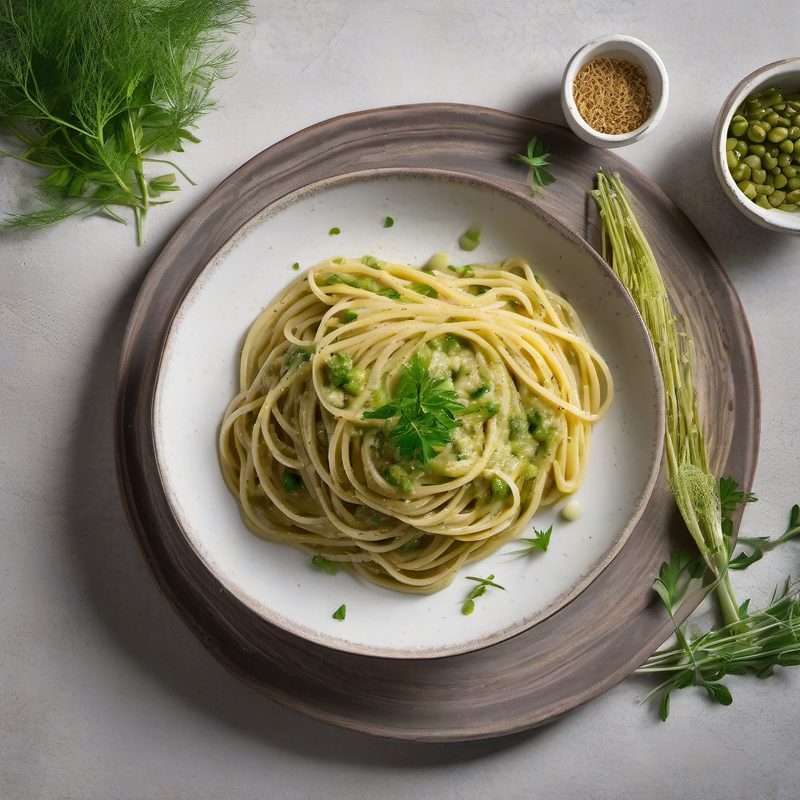
Spaghetti Cu Maccu
| Amount | Ingredient |
|---|---|
| Calories | ~595 kcal |
| Fat | 18 g |
| Saturated Fat | 2.5 g |
| Carbohydrates | 87 g |
| Fiber | 12 g |
| Protein | 22 g |
| Sodium | 890 mg |
| Sugars | 6 g |
Sicilian Fava Bean Purée Spaghetti
Category & Info
- Category: Primi piatti (First Courses)
- Sub-Category: Cucina Siciliana — Cibo Povero (Sicilian Cuisine — Poor Man's Cooking)
- Traditional Region: Sicily (Palermo, Trapani, Agrigento)
- Era/Etymology: "Maccu" derives from the Latin maccare (to crush/soften), referring to the fava bean purée. This ancient rustic dish dates back to the Roman Republic and was a staple of Sicilian peasant cuisine, particularly during Lent and the Feast of St. Joseph (March 19) when meat was forbidden.
- Yield: Serves 4 as a primo piatto
- Active Time: 30 minutes
- Total Time: 1½ hours (plus overnight soaking)
- Difficulty: Easy
Why This Recipe Works
Spaghetti cu maccu is the quintessential expression of Sicilian cucina povera — transforming the humblest of ingredients into a dish of profound depth and comfort. The key challenges are twofold: achieving a silky, bean-forward purée without graininess, and ensuring the pasta absorbs the sauce rather than being merely coated. We soak dried fava beans overnight to rehydrate them fully, then cook them low and slow until they collapse into a velvety mush. Wild fennel (or its cultivated fronds) provides the critical aromatic backbone — its faint anise notes cutting through the earthy richness of the beans. Rather than draining the cooking liquid, we reserve it and use it to thin the purée to the consistency of heavy cream, ensuring the starch from both beans and pasta water work together to create a sauce that clings tenaciously to every strand of spaghetti. A final flourish of raw extra-virgin olive oil brightens the dish and adds a peppery finish that echoes the fennel.
Equipment
- Large pot (8-quart / 7.6 L) for cooking beans
- Large pasta pot (8-quart / 7.6 L) with colander insert or separate colander
- Blender or immersion blender (preferred)
- 12-inch (30 cm) skillet or large sauté pan
- Chef's knife
- Cutting board
- Wooden spoon
- Ladle
- Measuring cups and spoons
- Large mixing bowl for soaking beans
Ingredients
#### For the Maccu (Fava Bean Purée)
#### For the Pasta
Prep & Soaking (Night Before or Morning Of)
- Prepare the fava beans: If using whole dried fava beans (with skins), place them in a large bowl and cover with cold water by 3 inches (7.5 cm). Let soak at room temperature for at least 12 hours or up to 24 hours. After soaking, drain the beans. The skins will have loosened; pinch each bean to slip off and discard the tough outer skins. Alternatively, purchase skinned (peeled, split) dried fava beans — these require no peeling and cook more quickly. Our preference: split/peeled favas save significant prep time; if using whole favas, expect 15–20 minutes of peeling.
- Prepare the fennel: If using fresh wild fennel, chop the feathery fronds finely, discarding any thick stems. If using cultivated fennel, use the dark green fronds only (the stalks and bulb are too coarse). Alternatively, substitute 1 teaspoon of dried wild fennel pollen or ½ teaspoon of fennel seed, lightly crushed in a mortar. Dried wild fennel fronds (sold in Italian specialty shops) work beautifully — use 1 tablespoon, rehydrated in 2 tablespoons warm water for 10 minutes.
Cooking Instructions
#### Step 1: Cook the Fava Beans (1 hour)
- Drain the soaked and peeled fava beans and transfer them to a large pot.
- Add 1.5 L (6 cups) fresh water — the water should cover the beans by about 2 inches (5 cm).
- Bring to a boil over high heat, then reduce heat to maintain a gentle simmer.
- Partially cover the pot (leave a small gap for steam to escape) and cook for 50–60 minutes, stirring occasionally, until the beans are extremely soft and beginning to break apart. The mixture should be thick and porridge-like. If the water level drops below the beans during cooking, add warm water as needed to keep them just covered.
- Remove from heat. Do NOT drain — the cooking liquid is essential for the purée.
#### Step 2: Blend the Maccu (5 minutes)
- Using an immersion blender directly in the pot, purée the beans and their cooking liquid until completely smooth and velvety. Alternatively, work in batches with a countertop blender — fill no more than halfway, remove the center cap from the lid (cover with a kitchen towel) to allow steam to escape, and blend until smooth.
- The purée should have the consistency of heavy cream — thick enough to coat a spoon but loose enough to flow. If too thick, stir in warm water 2 tablespoons at a time. Set aside.
#### Step 3: Prepare the Pasta Water & Cook (10–12 minutes)
- Fill a large pasta pot with 4–5 quarts (3.8–4.7 L) of water. Bring to a rolling boil over high heat.
- Add 2 tablespoons (36 g) salt.
- Add the spaghetti and cook according to package directions until al dente (typically 1 minute less than the package recommends for packaged pasta). Stir occasionally to prevent sticking.
- Reserve 1½ cups (355 ml) of the starchy pasta cooking water before draining, then drain the pasta in a colander. Do not rinse.
#### Step 4: Build the Sauce (10 minutes)
- While the pasta cooks, heat 2 tablespoons (30 ml) of extra-virgin olive oil in a 12-inch (30 cm) skillet over medium heat until shimmering.
- Add the finely chopped onion and ¼ teaspoon salt. Cook, stirring frequently, until the onion is softened and translucent but not browned — about 5–7 minutes.
- Add the minced garlic and chopped fennel fronds. Cook, stirring constantly, until fragrant — about 30 seconds. Do not let the garlic brown, or it will turn bitter.
- Ladle the fava bean purée (maccu) into the skillet — start with about 2 cups (475 ml), then add more as needed. Stir to combine with the soffritto. The sauce should be loose and saucy, not thick like a paste.
- Thin the sauce with the reserved pasta water, ¼ cup (60 ml) at a time, until it reaches a consistency that coats a spoon but still flows freely — roughly the texture of heavy cream. You'll use about ½–1 cup (120–237 ml) of pasta water, depending on how thick your purée is.
- Season with 1 teaspoon salt (or to taste) and ¼ teaspoon freshly ground black pepper. Simmer gently for 2–3 minutes to meld the flavors.
#### Step 5: Combine and Serve (2 minutes)
- Add the drained spaghetti directly to the skillet with the maccu sauce.
- Toss vigorously with tongs for 1–2 minutes, allowing the pasta to absorb the sauce. The starch from the pasta water and the bean purée will create a creamy emulsion that clings to each strand.
- If the sauce seems too thick, add another splash of reserved pasta water and toss until loose and glossy.
- Remove from heat. Drizzle with the remaining 2 tablespoons of extra-virgin olive oil and toss once more.
- Divide among four warmed shallow bowls. Finish each serving with a final drizzle of olive oil, a generous crack of black pepper, and a sprinkle of reserved fennel fronds if desired.
Serving Suggestions
- Serve immediately as a primo piatto, followed by a simple second course of grilled fish (such as pesce spada — swordfish) or roasted vegetables.
- For a complete meal (piatto unico), serve with a side of sautéed wild greens (lampascioni or cicoria) and crusty sourdough bread to mop up any remaining purée.
- A squeeze of fresh lemon juice over each serving brightens the earthy favas — this is especially welcome in warmer months.
- Wine pairing: A crisp, mineral-driven white from Sicily — Grillo or Etna Bianco (Carricante) — cuts through the richness. Alternatively, a light, chilled Nero d'Avola rosato works beautifully.
Storage & Reheating
- Refrigerator: The maccu (purée) can be made up to 3 days in advance, cooled completely, and stored in an airtight container. The assembled dish is best eaten immediately but leftovers can be refrigerated for up to 2 days.
- Reheating: Place leftover pasta in a skillet with a splash of water or pasta water and reheat over medium-low heat, tossing frequently, until hot. Add more liquid as needed — the pasta will continue to absorb moisture. Alternatively, microwave at 50% power, covered, stirring every 30 seconds. Do not reheat at high power, which toughens the bean purée.
- Freezing: The maccu purée freezes well for up to 3 months. Thaw overnight in the refrigerator and reheat gently before tossing with freshly cooked pasta. Do not freeze the assembled pasta dish — the texture of the spaghetti degrades unacceptably.
Quality & Timing Notes
- The purée must be silky: If you feel any grittiness after blending, pass the purée through a fine-mesh strainer or food mill. This extra step transforms a good maccu into a great one.
- Pasta water is the bridge: Do not skip reserving the pasta water. The starch in the water is what binds the bean purée to the spaghetti, creating a cohesive, creamy sauce rather than a separated bowl of beans and pasta.
- Wild fennel is non-negotiable for authenticity: It provides a subtle anise note that is integral to traditional Sicilian maccu. If unavailable, the dish will still be delicious but will lack the characteristic Sicilian identity. Buy dried wild fennel online (often sold as finocchietto selvatico) — a small bag lasts for months.
- Timing is tight: The final tossing step (Step 5) should take no more than 2 minutes. Over-tossing can break down the emulsion. Have everything ready before you drain the pasta.
Nutritional Information (per serving)
Note: Nutritional values are estimates based on standard ingredient data; actual values will vary by specific brands and ingredient sizes.
Recipe History & Lore
Maccu di fave (fava bean purée) is one of the oldest recorded dishes in the western Mediterranean. Ancient Romans — Pliny the Elder among them — wrote of a simple puls fabacia (fava bean porridge) that was the daily meal of the Roman plebeians. When the Arabs conquered Sicily in the 9th century, they introduced durum wheat pasta to the island, and the meeting of these two traditions — the ancient Roman bean purée and the North African pasta — gave birth to spaghetti cu maccu.
The dish became particularly associated with Lent and the Feast of St. Joseph (Festa di San Giuseppe, March 19), when devout Sicilians abstain from meat. In Palermo and Trapani, the maccu was sold by street vendors (maccunari) who would set up large copper cauldrons in the piazzas, stirring the favas with wild fennel all morning until the purée was velvety smooth. Families with little money would bring their own pasta to be sauced communally — a tradition of sharing that persists in spirit today.
The Sicilian saying "Cu mancia maccu, si 'mpigna a campari cent'anni" — "He who eats maccu pledges to live a hundred years" — reflects the deep cultural reverence for this nourishing, thrifty preparation.
Variations
- Maccu con le Sarde (with Sardines): An iconic Palermitan variation. Sauté 3 anchovy fillets with the onion until they dissolve. During the last 5 minutes of simmering the purée, add 150g (5 oz) of cleaned fresh sardines, roughly chopped. The briny, oily fish is a classic Sicilian pairing with fava beans.
- Maccu con Finocchietto e Mollica (with Wild Fennel and Toasted Breadcrumbs): Toast ½ cup coarse breadcrumbs in 2 tablespoons olive oil until golden. Sprinkle over the finished dish in place of (or in addition to) the final olive oil drizzle. The crunchy texture contrasts with the creamy maccu — a popular Trapanese touch.
- Vegan / Vegetarian: The base recipe is already vegan. The "con le Sarde" variation obviously is not, but the breadcrumb variation is entirely plant-based.
- Spicy: Add ½ teaspoon of crushed red pepper flakes with the garlic and fennel for a maccu piccante. Calabrian chili flakes work particularly well.
- Herb Swap: If wild fennel is unavailable, a combination of fresh dill (1 tablespoon) and flat-leaf parsley (2 tablespoons) makes an acceptable, though non-traditional, substitute.
- Pasta Shape: While spaghetti is traditional, any long pasta works — bucatini, linguine, or even perciatelli. Hand-rolled busiate (the traditional Trapanese pasta shape) are particularly authentic if you can find them.
Troubleshooting
| Problem | Likely Cause | Solution |
|---|---|---|
| Purée is gritty | Fava bean skins not fully removed | Pass purée through a fine-mesh strainer or food mill. Next time, ensure skins are completely removed before cooking. |
| Sauce is too thin | Too much cooking liquid or pasta water | Simmer the sauce uncovered for 5–10 minutes to reduce and concentrate. Alternatively, mash some of the beans by hand before blending. |
| Sauce won't cling to pasta | Pasta not tossed vigorously enough, or insufficient pasta water starch | Toss more vigorously for 1–2 minutes. If still problematic, add an additional ¼ cup pasta water and toss — the starch will emulsify. |
| Dish tastes flat | Insufficient salt or missing fennel | Add salt in increments — fava beans need generous seasoning. If fennel flavor is missing, add ¼ tsp fennel seed (crushed) or ½ tsp fennel pollen. |
| Garlic is bitter | Garlic was browned during sauté | Start again with fresh soffritto; cook garlic only 30 seconds. Burnt garlic cannot be fixed. |
| Pasta is gummy | Overcooked or not tossed immediately | Cook pasta to al dente (1 min less than package). Drain and sauce immediately; do not let pasta sit. |
Recipe Card Summary
> Spaghetti Cu Maccu (Sicilian Fava Bean Purée Spaghetti)
> Serves: 4 | Active Time: 30 min | Total Time: 1½ hr + overnight soak
>
> Category: Primi piatti — Cucina Siciliana
>
> Soak 300g dried fava beans overnight; peel if whole. Simmer in 1.5L water 50–60 min until very soft. Blend to a smooth purée with the cooking liquid. Sauté 1 chopped onion and 2 minced garlic cloves in 2 tbsp olive oil with ¼ cup chopped fennel fronds. Add purée; thin with reserved pasta water. Toss with 350g al dente spaghetti until creamy. Finish with olive oil drizzle, black pepper, and fennel fronds. Serve immediately.
Recipe from The Italian Kitchen by Vita Milanese — Volume 1 · Pasta Perfetto. Discover all volumes on the ebook page.