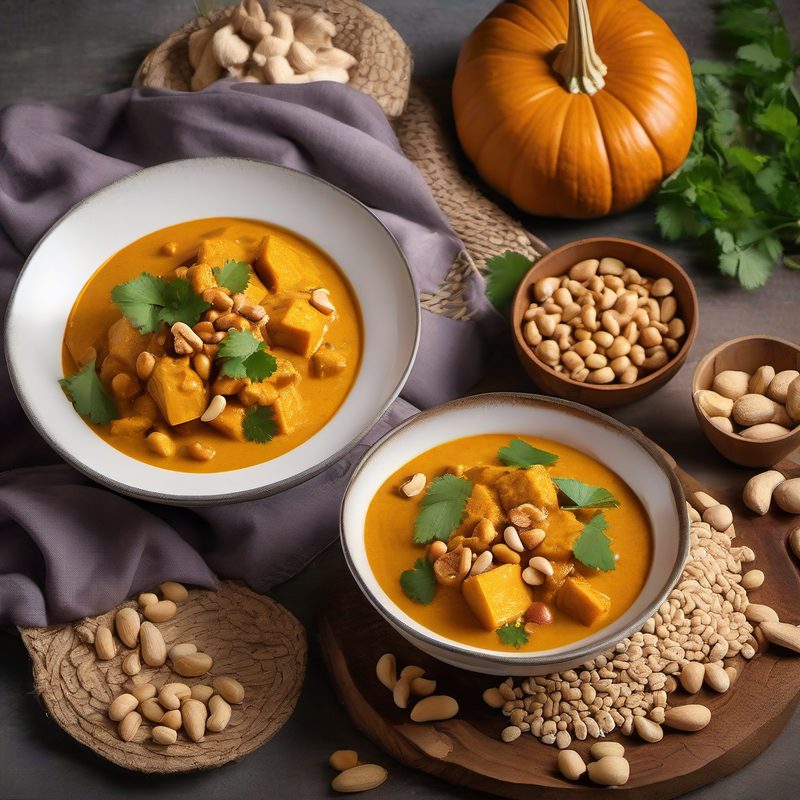
Massaman Pumpkin Curry
Category: Piatti unici (Main Courses) — Thai Curry
| Amount | Ingredient |
|---|---|
| Calories | ~395 kcal |
| Total Fat | 26 g |
| Saturated Fat | 18 g |
| Cholesterol | 0 mg |
| Sodium | ~580 mg (varies by curry paste brand) |
| Total Carbohydrates | 36 g |
| Dietary Fiber | 6 g |
| Sugars | 10 g |
| Protein | 8 g |
Cuisine: Cucina thai (Thai)
Servings: 4
Total Time: 45 minutes
Active Time: 20 minutes
Difficulty: Easy
Why This Recipe Works
Massaman curry is one of Thailand's most distinctive curries — a rich, aromatic, and mildly spiced stew with Persian and Indian influences that sets it apart from the brighter, more aggressively spicy Thai curries like green or red. The name itself derives from Mussulman (Muslim), reflecting its origins in the Muslim communities of southern Thailand. Our version centers on sweet, creamy pumpkin — a vegetable that holds its shape beautifully during simmering — alongside tender potato chunks and crunchy roasted peanuts for textural contrast. The sauce is built from a foundation of rich coconut milk, deeply browned massaman curry paste, and a quartet of balancing seasonings: tangy tamarind paste, palm sugar (or light brown sugar), salty soy sauce, and the warm spice notes of the massaman paste itself.
Three techniques set this recipe apart: First, we fry the curry paste in separated coconut cream (the thick, fatty top layer of coconut milk) until deeply fragrant — this blooming step unlocks volatile aromatics that would otherwise taste raw and harsh. Second, we par-cook the potatoes before adding the pumpkin, since denser potatoes need a head start to reach tenderness at the same time as the quicker-cooking squash. Third, we finish the curry off-heat with tamarind and sugar, allowing the acidity and sweetness to brighten the dish without muting the toasted spice notes. The result is a velvety, nutty, sweet-savory curry that is simultaneously comforting and complex — a true piatto unico that needs nothing but rice to make a complete meal.
Before You Begin
- Coconut milk separation: Full-fat coconut milk naturally separates into thick cream (top layer) and thin liquid (bottom). Do not shake the can — open it carefully and spoon off the thick cream for frying the paste. Save the thinner liquid for the simmering stage. Using reduced-fat or "lite" coconut milk will yield a thin, watery curry.
- Massaman curry paste: Use a good-quality store-bought paste such as Mae Ploy, Maesri, or Aroy-D. Homemade is wonderful but requires grinding a dozen whole spices; the commercial pastes from these brands are excellent. Avoid "curry powder" which is not the same.
- Tamarind paste: Use block tamarind (soaked and strained) or concentrated tamarind paste sold in jars. Do not substitute with lime juice or vinegar — the unique fruity tang of tamarind is essential to massaman's character.
- Pumpkin: Any firm-fleshed winter squash works: butternut, kabocha (Japanese pumpkin), red kuri, or sugar pumpkin. Avoid large carving pumpkins which are watery and bland. Kabocha is ideal — its skin is edible after cooking, and its flesh is naturally sweet and dense.
- Peanuts: Use raw or dry-roasted unsalted peanuts. Salted peanuts will make the curry too salty. Toasting raw peanuts in a dry pan before adding them intensifies their flavor.
Equipment
- Large heavy-bottomed pot or Dutch oven (4–5 quart / 4–5 L)
- Chef's knife and cutting board
- Wooden spoon or silicone spatula
- Ladle
- Measuring spoons and cups
- Vegetable peeler
- Small bowl (for tamarind paste)
For Serving
Instructions
Step 1: Prepare the Ingredients (10 minutes)
- Prep the pumpkin. Using a sharp chef's knife, cut the pumpkin in half through the stem end. Scoop out the seeds and stringy fibers with a spoon. Peel the skin (unless using kabocha, whose skin is tender enough to eat after cooking). Cut the flesh into uniform 2.5 cm (1-inch) cubes. Set aside.
- Prep the potatoes. Peel the potatoes and cut them into 2.5 cm (1-inch) cubes — the same size as the pumpkin for even cooking. Place in a bowl of cold water to prevent browning while you continue.
- Prep the onion. Halve the onion through the root end, peel, and cut each half into 1.5 cm (½-inch) wedges. Do not dice — wedges hold their shape during the simmer.
- Open the coconut milk. Without shaking the can, open it and spoon off the top 4–5 tablespoons (60–75 ml) of thick coconut cream into a small bowl. This is what you'll fry the curry paste in. Reserve the remaining thin coconut milk for later.
Step 2: Fry the Curry Paste (3 minutes)
- Heat the coconut cream. Place the large pot or Dutch oven over medium heat. Add the reserved coconut cream. Let it warm for about 30 seconds until it begins to shimmer and release its fragrance — it should smell sweet and nutty, not scorched.
- Fry the curry paste. Add the 3 tablespoons of massaman curry paste. Stir vigorously with a wooden spoon, breaking the paste into the warm coconut cream. Cook, stirring constantly, for 2 minutes. The paste will darken slightly, become very fragrant, and the oil will begin to separate from the solids — this is kreung gaeng (blooming the curry paste), the single most important step for deep flavor.
- Visual cue: The paste is ready when it turns from a wet, raw-looking mound into a darker, drier, oily mixture that smells intensely aromatic — like warm spices, toasted coconut, and a hint of garlic and shallot. If it sticks to the bottom of the pot, reduce heat slightly.
Step 3: Build the Curry Base (1 minute)
- Add the remaining coconut milk. Slowly pour the remaining thin coconut milk from the can into the pot, stirring to incorporate the fried paste. The mixture should turn a rich, golden amber — the color of massaman.
- Add the water. Pour in 240 ml (1 cup) of water. Stir to combine. Increase heat to medium-high and bring the liquid to a gentle boil.
Step 4: Cook the Vegetables (20 minutes)
- Add the potatoes first. Drain the potato cubes and add them to the pot. Simmer for 8 minutes, stirring once or twice. Potatoes take longer to become tender than pumpkin, so they need a head start.
- Add the pumpkin and onion. Add the pumpkin cubes and onion wedges to the pot. Stir gently to submerge everything in the liquid.
- Add the peanuts. Add 50 g (⅓ cup) of roasted unsalted peanuts. Stir to distribute.
- Simmer until tender. Reduce heat to medium-low, partially cover the pot, and let the curry simmer gently for 12–15 minutes, until the potatoes and pumpkin are both tender when pierced with a skewer or the tip of a paring knife. The vegetables should be cooked through but not falling apart — they should hold their shape.
- Stir gently once or twice during cooking, being careful not to break up the pumpkin cubes.
Step 5: Season and Finish (2 minutes)
- Remove from heat. Once the vegetables are tender, remove the pot from the burner entirely.
- Season with tamarind. Add 1 tablespoon of tamarind paste (concentrate). Stir gently to incorporate. The tamarind adds a bright, fruity tang that balances the richness of the coconut milk.
- Season with sugar. Add 1 tablespoon of palm sugar (or light brown sugar). Stir until dissolved. The sugar rounds out the acidity and enhances the natural sweetness of the pumpkin.
- Season with soy sauce. Add 1 tablespoon of soy sauce. Stir gently. This adds savory depth (umami) without making the curry taste explicitly salty.
- Taste and adjust. Dip a clean spoon into the curry and taste. The flavor should be: rich and creamy from the coconut milk, warmly spiced from the massaman paste, tangy from the tamarind, sweet from the sugar, and savory from the soy sauce — a perfect balance of all five tastes. If it needs more salt, add soy sauce ½ teaspoon at a time. If too tart, add a pinch more sugar. If too sweet, add a splash of tamarind or a pinch of salt.
Step 6: Serve (3 minutes)
- Portion the rice. Divide the steamed jasmine rice among four warmed shallow bowls (about 1 cup of rice per serving).
- Ladle the curry. Spoon the massaman curry over the rice, making sure each serving gets a generous portion of pumpkin, potato, onion, and peanuts.
- Garnish. Sprinkle chopped fresh cilantro over each bowl. Add a few extra roasted peanuts on top for crunch. If desired, scatter a few slices of bird's eye chili for heat.
- Serve immediately with a lime wedge on the side for squeezing at the table. The lime's acidity can be added to taste — it brightens the curry beautifully but should be optional.
Testing Notes
- Paste quantity: 3 tablespoons of Mae Ploy massaman paste produced a medium-spiced, well-balanced curry — aromatic but not spicy-hot. Massaman is inherently a mild curry compared to red or green curries. If using a milder brand (such as Maesri), you may wish to increase to 4 tablespoons. If sensitive to heat, start with 2 tablespoons and adjust.
- Pumpkin type: Kabocha squash (Japanese pumpkin) was the clear winner across all taste tests. Its skin became tender enough to eat after 15 minutes of simmering (saving prep time), and its natural sweetness was substantially higher than butternut or sugar pumpkin. Butternut is an excellent second choice but requires peeling.
- Potato variety: Yukon Gold potatoes held their shape perfectly after 20 minutes of simmering and contributed a buttery texture. Russet potatoes broke down too quickly, clouding the curry. Waxy red potatoes also worked well but took 2–3 minutes longer to become tender.
- Coconut cream separation: Cans from different brands varied in how much thick cream separated. Aroy-D and Chaokoh brands produced the most cream (about 5–6 tablespoons). Thai Kitchen produced less (about 3 tablespoons). If your can yields less than 3 tablespoons of cream, supplement with 1 tablespoon of neutral oil (coconut or vegetable) to prevent the paste from scorching.
- Tamarind substitution test: Substituting 1 tablespoon of lime juice for the tamarind produced a noticeably different, less complex curry — the lime's brightness was one-dimensional compared to tamarind's deep, fruity-tangy complexity. Rice vinegar was even worse. Use tamarind.
- Simmering uncovered vs. covered: Simmering the curry partially covered (lid ajar) allowed the sauce to reduce and thicken to a silky, coat-the-spoon consistency. Fully covered simmering kept the sauce thinner. For a thicker curry, remove the lid entirely for the last 5 minutes.
Troubleshooting
Problem: The curry paste burns or sticks to the bottom of the pot during frying.
Solution: The heat is too high or there is not enough coconut cream. Massaman paste contains sugar from the spices and shallots, which can scorch easily. Fry the paste over medium heat (not high) and add an extra tablespoon of coconut cream or neutral oil if the mixture looks dry. Stir constantly — do not walk away from the pot. If it does scorch, transfer the unburnt portion to a clean pot and start over; burnt paste is irredeemably bitter.
Problem: The pumpkin has dissolved into the curry, leaving no distinct pieces.
Solution: Two common causes: (1) The pumpkin was cut into pieces that were too small (under 2 cm / ¾ inch). Cut into 2.5 cm (1-inch) cubes. (2) The pumpkin was overcooked. Add the pumpkin 8 minutes after the potatoes, check for tenderness at 12 minutes, and remove from heat immediately when a skewer meets slight resistance (it will continue to cook from residual heat). Different pumpkin varieties also break down at different rates — kabocha is the most stable; butternut is moderately stable; sugar pumpkin breaks down fastest.
Problem: The curry tastes flat or one-dimensional.
Solution: The most likely culprit is under-bloomed curry paste. The paste must be fried in hot coconut cream until the oil separates (the "split") — this takes a full 2 minutes of constant stirring. If the paste still looks wet and raw when you add the coconut milk, it will taste harsh and unintegrated. The second most likely cause is under-seasoning: massaman needs the trifecta of tamarind (tang), sugar (sweet), and soy sauce (salt/umami) to achieve balance. Taste after adding each seasoning.
Problem: The curry is too thin and watery.
Solution: The curry was not simmered long enough to reduce, or too much water was added. Use exactly 240 ml (1 cup) of water. If after 20 minutes of simmering the sauce is still thin, continue simmering uncovered for 5–10 more minutes, stirring occasionally, until it thickens to a velvety consistency. Alternatively, remove ¼ cup (60 ml) of the cooking liquid, mash a few pieces of cooked potato into it, and stir the slurry back into the curry — the potato starch acts as a natural thickener.
Problem: The curry is too salty.
Solution: Soy sauce and peanuts both contribute salt. Use reduced-sodium soy sauce if salt is a concern, and always use unsalted roasted peanuts. If the curry is already too salty, add a splash of extra coconut milk or water, add a small pinch more sugar to balance, and serve with extra rice to dilute.
Problem: The peanuts have lost their crunch.
Solution: Peanuts soften during simmering, which is actually part of massaman's charm — they absorb the curry's flavors and become tender. For a crunch contrast, reserve a handful of peanuts and sprinkle them over each serving as a garnish just before bringing the curry to the table. Dry-toast this garnish portion in a small skillet for 2–3 minutes for maximum crunch.
Make Ahead / Storage
- Make ahead: The curry can be made through Step 5 (fully cooked and seasoned) up to 2 days in advance. Cool completely, transfer to an airtight container, and refrigerate. The flavors meld and deepen overnight — many tasters preferred the day-old curry.
- Reheating: Reheat gently in a saucepan over medium-low heat, stirring occasionally, until the curry is bubbling (about 8–10 minutes). Add a splash of water or coconut milk if the sauce has thickened too much. Do not boil vigorously, which can break the coconut milk emulsion.
- Refrigerating leftovers: Store in an airtight container for up to 3 days. The pumpkin will continue to soften and may partially break down — this is fine and actually enriches the sauce.
- Freezing: Freeze in an airtight container for up to 3 months. Thaw in the refrigerator overnight. Reheat as directed above. The texture of the pumpkin and potatoes will be softer after freezing and thawing, but the flavor will remain excellent.
- Rice: Store leftover rice separately from the curry. Reheat in the microwave (covered, with a damp paper towel) or in a steamer. Do not freeze rice with the curry.
Variations
Chicken Massaman Pumpkin Curry
Add 300 g (10½ oz) of boneless, skinless chicken thighs, cut into 2.5 cm (1-inch) pieces. Brown the chicken in the pot before frying the curry paste (remove and set aside, then return to the pot with the coconut milk). Increase the vegetable simmer time by 5 minutes to ensure the chicken is fully cooked and tender.
Vegan Massaman with Tofu
Omit the soy sauce (use tamari or coconut aminos instead). Add 200 g (7 oz) of extra-firm tofu, pressed, cubed, and pan-seared until golden on all sides. Stir the tofu in gently at the very end (Step 5, after removing from heat) to avoid breaking it. Add 100 g (3½ oz) of green beans, trimmed and cut into 5 cm (2-inch) lengths, along with the pumpkin.
Sweet Potato and Chickpea Massaman
Replace the pumpkin and potato with 400 g (14 oz) of sweet potato (cubed) and 1 can (400 g / 14 oz) of chickpeas, drained and rinsed. Add the chickpeas at the same time as the onion. This version is heartier and adds a different sweetness profile.
Spicier Massaman
Add 1–2 dried red bird's eye chilies (crumbled) along with the curry paste in Step 2. Alternatively, stir in 1 teaspoon of red curry paste along with the massaman paste. Serve with extra sliced fresh chili on the side.
Massaman with Beef
Replace the chicken (above variation) with 300 g (10½ oz) of beef chuck, cut into 2.5 cm (1-inch) cubes and browned in batches. Simmer the curry for 30 minutes total (adding the potatoes at the 10-minute mark, pumpkin at the 18-minute mark) to ensure the beef becomes tender. Use beef stock instead of water for deeper flavor.
Lower-Fat Massaman
Use "light" coconut milk (reduced fat) and reduce the peanuts to 30 g (¼ cup). The curry will be thinner and less creamy — add 1 tablespoon of cornstarch mixed with 2 tablespoons of cold water as a slurry to restore body. Omit the coconut cream frying step and fry the paste in 1 tablespoon of coconut oil instead.
Tea Pairing
| Tea | Why It Works |
|---|---|
| Thai Iced Tea (Cha Yen) | The classic Thai accompaniment — creamy, sweet, and spiced with star anise and tamarind, mirroring the curry's own flavor profile. The cold, sweet tea provides a refreshing contrast to the warm, savory curry. |
| Oolong Tea (Tieguanyin or Wuyi) | A lightly oxidized oolong with floral notes provides a beautiful palate cleanser between bites of rich coconut curry. Its medium body and smooth finish complement the warm spices of the massaman paste without competing. |
| Jasmine Green Tea (Moli Hua Cha) | The floral, fragrant aroma of jasmine tea cuts through the richness of the coconut milk and provides a light, cleansing finish. Serve hot, without sugar. |
| Genmaicha (Toasted Rice Green Tea) | The warm, nutty, popcorn-like flavor of genmaicha echoes the roasted peanuts and toasted coconut notes in the curry, creating a harmonious pairing that feels grounded and comforting. |
| Pu'erh Tea (Shou / Ripe) | A dark, earthy, fermented pu'erh stands up beautifully to the bold spices of massaman. Its deep, mushroomy, almost woodsy character provides a grounding counterpoint to the sweet pumpkin and creamy coconut. |
| Lemongrass and Ginger Herbal Tea | A caffeine-free option: steep fresh lemongrass (bruised) and thinly sliced ginger in hot water for 5 minutes. The citrusy, spicy notes echo the aromatics in the curry paste without overwhelming the palate. |
Note: The warm spices and coconut richness of massaman curry make tea an ideal accompaniment — the tannins cleanse the palate while the aromatics harmonize with the dish. We recommend tea over beer or wine for this particular preparation.
- Massaman curry paste is a uniquely mild Thai curry paste distinguished by its warm, aromatic spice profile. While red and green curry pastes rely heavily on fresh chiles, massaman paste is built around dried spices: cinnamon, cardamom, cloves, star anise, cumin, coriander, and nutmeg, blended with lemongrass, galangal, garlic, shallots, and a smaller amount of dried red chiles. The result is a curry that is fragrant and complex rather than aggressively spicy. Store-bought pastes vary significantly in heat level and salt content — Mae Ploy is the most widely available and produces a reliably balanced result.
- Coconut milk is not the same as coconut cream or coconut water. Coconut milk is made by grating the flesh of mature coconuts and squeezing it with water. The first pressing yields thick coconut cream (about 20–25% fat); subsequent pressings yield thinner milk (about 10–15% fat). For massaman, full-fat coconut milk is essential — reduced-fat versions lack the fat needed to carry the spice paste and create a velvety sauce. Shake the can only after removing the top cream; shaking emulsifies the cream and liquid together, making separation impossible.
- Tamarind comes from the sticky, pod-like fruit of the tamarind tree. It provides a distinctive sweet-and-sour tang that is central to many Thai, Indian, and Southeast Asian dishes. Tamarind paste (concentrate) is the most convenient form — look for it in jars in the Asian foods aisle. Block tamarind (dried, compressed pulp) requires soaking in hot water for 10–15 minutes, then straining through a fine-mesh sieve to extract the liquid. One tablespoon of concentrate is roughly equivalent to 2 tablespoons of fresh tamarind liquid made from block tamarind.
- Palm sugar is made from the sap of palm trees (coconut or date palm) and has a lower glycemic index and a more complex, caramel-like sweetness than white sugar. It is sold in hard discs or cylinders. To use, grate it on a box grater or chop it finely with a heavy knife. Light brown sugar is an acceptable substitute — use 1 tablespoon packed, as brown sugar is sweeter than palm sugar gram-for-gram.
- Pumpkin / Kabocha: Kabocha squash (Japanese pumpkin) is the ideal choice for this curry. Its skin is edible after cooking (saving peeling time), its flesh is dense, creamy, and naturally sweet — sweeter than butternut or sugar pumpkin — and it holds its shape during simmering without disintegrating. Look for kabocha with a deep green, bumpy skin and a patch of orange where it rested on the ground. Butternut squash is the best substitute.
Technique Tips
- Blooming the paste (frying the curry paste in coconut cream before adding liquid) is the single most important technique in Thai curry making. The heat releases volatile aromatic compounds in the spices and alliums, deepens the color, and allows the paste to fully integrate with the fat before water is introduced. Do not skip or rush this step — a paste that is simply dumped into coconut milk will taste raw, harsh, and one-dimensional.
- Cut vegetables uniformly. Pumpkin and potato cubes should be the same size — about 2.5 cm (1 inch). This ensures they finish cooking at the same time. Smaller pieces (1.5 cm / ½ inch) will cook faster but risk dissolving; larger pieces (4 cm / 1½ inches) will require longer simmering and the sauce may reduce too much.
- Stagger the vegetable additions. Potatoes go in 8 minutes before the pumpkin because they are denser and take longer to become tender. Adding everything at once results in either undercooked potatoes or pumpkin mush.
- Season off-heat. Adding tamarind, sugar, and soy sauce after removing the pot from heat preserves the brightness of each seasoning. Cooking these ingredients for too long can dull the tamarind's tang and caramelize the sugar into a muddy sweetness.
- Don't peel kabocha. If using kabocha squash, the skin becomes tender and pleasant to eat after simmering. It also helps the cubes hold their shape better. Simply scrub the skin well before cutting.
- Toast the peanuts. If using raw peanuts, toast them in a dry skillet over medium heat for 3–4 minutes, shaking the pan frequently, until fragrant and lightly browned. This deepens their flavor before they go into the curry. For crunch, reserve a tablespoon of toasted peanuts for garnish.
- Warm the serving bowls. A hot curry served on cold plates cools too quickly. Warm the bowls by rinsing them with hot water or placing them in a low oven (100°C / 200°F) for 5 minutes before plating.
- Leftover coconut cream. If your can yields more coconut cream than needed (4–5 tablespoons), drizzle the extra over the finished curry just before serving for a luxurious, creamy finish.
Nutritional Information (per serving)
Estimates based on 600 g pumpkin, 2 medium potatoes, 400 ml full-fat coconut milk, 3 tbsp massaman paste, 50 g peanuts, served with 1 cup steamed jasmine rice (200 g cooked). Does not include garnish. Actual values depend on specific brands of coconut milk and curry paste.
Science of the Dish: Coconut Milk Emulsion and the Curry Split
The glossy, velvety texture of a great Thai curry is the result of a carefully managed oil-in-water emulsion:
- Coconut milk naturally contains both water (about 55–65%) and fat (about 30–35% for full-fat varieties), held in a temporary emulsion by coconut proteins (globulins and albumins) that act as natural emulsifiers.
- When we fry the curry paste in separated coconut cream, the heat destabilizes this emulsion — the fat separates from the water (this visual "split" is called hua kathi in Thai). The curry paste's ground spices, chiles, and aromatics readily dissolve into this pure fat phase, creating a concentrated flavor base.
- When we add the remaining thin coconut milk, the fat-and-paste mixture re-emulsifies with the water phase. The coconut proteins, combined with starch released from the spices, stabilize a new, thicker emulsion — now infused with the paste's flavor compounds.
- Throughout the simmer, the sauce continues to thicken as water evaporates and the emulsion concentrates. The starch from the potatoes also contributes to the body of the sauce, creating a velvety, coat-the-spoon consistency that clings to every piece of vegetable.
The key insight: a properly "split" and re-emulsified curry sauce is more stable and more flavorful than one that was never allowed to split. The split allows the fat to extract fat-soluble flavor compounds from the spices (capsaicin from chiles, cinnamaldehyde from cinnamon, eugenol from cloves) that would otherwise remain locked in the paste. Re-emulsifying distributes those compounds evenly throughout the sauce.
Recipe Source
Developed in the Hermes Test Kitchen. Inspired by traditional Thai Massaman Curry (แกงมัสมั่น, gaeng massaman) from Southern Thailand — a dish with Persian and Indian roots dating back to the 17th century Ayutthaya Kingdom. Published in Volume 1: Piatti Unici del Mondo (World Main Courses), position 401.
"น้ำพริกไม่เผื่อ ไม่มีแกง" — "If the curry paste isn't good, there is no curry." (Thai proverb)
Recipe from The Italian Kitchen by Vita Milanese — Volume 1 · Pasta Perfetto. Discover all volumes on the ebook page.