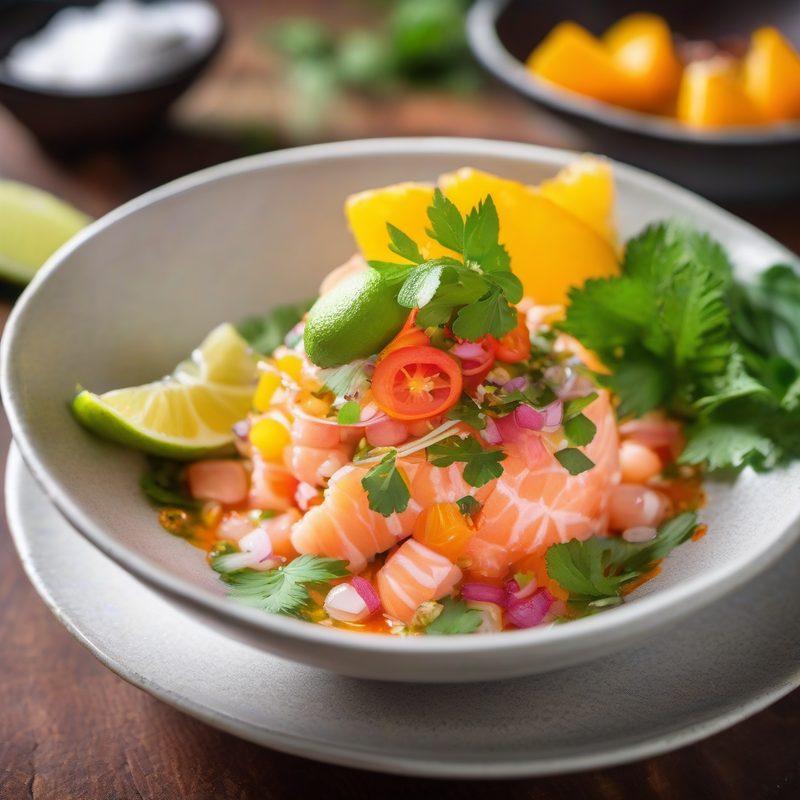
Thai Salmon Curry Ceviche
Category: Antipasti, Cucina thai
| Amount | Ingredient |
|---|---|
| 3 | Combine salmon + marinade + aromatics 2 min |
| 4 | Marinate at room temp, stir once 10–15 min |
| 5 | Add herbs, plate, serve 1 min |
| Total time | 18–23 min |
Servings: 4 (as starter)
Source: Position 379, Volume 1
1. WHY THIS RECIPE WORKS
This Thai-inspired ceviche reimagines the classic Latin American preparation through the lens of Southeast Asian flavors. Sushi-grade salmon is "cooked" by the acid in fresh citrus juices, while Thai red curry paste, fish sauce, and sugar create a bold, aromatic marinade that is simultaneously spicy, sour, salty, and sweet. The technique is minimal and quick—no heat required—making this an ideal starter for warm-weather entertaining. The key to success lies in using impeccably fresh, sushi-grade salmon; cutting it into uniform 1 cm cubes so the citrus cures evenly; and marinating for precisely 10 to 15 minutes—long enough to firm the fish without turning it mushy or opaque. Thinly sliced shallot and fresh red chili add crunch and heat, while a finishing shower of cilantro and mint brings brightness and herbal lift. Serve immediately, as the ceviche continues to "cook" in the acid and will degrade if left too long.
2. EQUIPMENT
- Chef's knife and cutting board
- Medium nonreactive mixing bowl (glass, ceramic, or stainless steel)
- Citrus juicer or reamer
- Small whisk or fork (for blending marinade)
- Fine-mesh strainer (optional, for straining marinade if desired)
- Measuring spoons
- Serving bowl or individual plates
RECOMMENDED TEA PAIRING
- Jasmine Green Tea — Its floral fragrance complements the citrus and herbs without overwhelming the delicate salmon. Serve chilled or at room temperature.
- Iced Lemongrass Tea — The citrusy, herbal notes echo the lime and curry paste while providing a cooling counterpoint to the chili heat.
4. BEFORE YOU BEGIN
- Salmon quality is paramount. Purchase sushi-grade or sashimi-grade salmon from a trusted source. The fish will not be cooked with heat, so it must be impeccably fresh. Keep it refrigerated until just before cubing.
- Chill your serving vessel. For best results, chill the serving bowl or plates in the refrigerator for at least 15 minutes before plating.
- Prep all ingredients first. This is a fast assembly—have the salmon cubed, the shallot and chili sliced, the herbs chopped, and the marinade whisked before you combine anything.
- Timing is tight. The ceviche is best eaten within 10–15 minutes of adding the citrus marinade. Beyond 20 minutes, the salmon will begin to turn opaque and lose its silky texture.
- Salmon: Use only sushi-grade salmon. The belly or center-cut loin offers the best fat content, yielding a buttery texture ideal for ceviche.
- Lime and lemon: Freshly squeezed juice is nonnegotiable. Bottled juice lacks brightness and may contain preservatives that interfere with the curing process.
- Thai red curry paste: The backbone of this dish. Mae Ploy and Aroy-D are reliable brands. The paste delivers a complex blend of dried red chilies, garlic, lemongrass, galangal, and shrimp paste. Adjust the quantity based on your heat tolerance.
- Fish sauce: The umami backbone. Red Boat (Phú Quốc) or Tiparos are good choices. Do not substitute salt or soy sauce—the flavor profile will be flat.
- Red chili: Bird's eye chilies (prik kee noo) are the most authentic for Thai heat; serrano is a milder alternative. Remove seeds for less heat, or leave them in for full fire.
- Cilantro and mint: Use only the leaves and tender stems. The herbs should be fresh and vibrant, never wilted.
6. STEP-BY-STEP INSTRUCTIONS
- Cube the salmon. Place the chilled, skinless salmon fillet on a clean cutting board. Using a sharp chef's knife, cut the fillet lengthwise into 1 cm strips, then crosswise into 1 cm cubes. Transfer to a medium nonreactive bowl and refrigerate while you prepare the marinade.
- Make the marinade. In a small bowl, combine the lime juice, lemon juice, Thai red curry paste, fish sauce, and sugar. Whisk until the sugar and curry paste are fully dissolved. Taste and adjust: the marinade should be boldly sour, salty, and spicy—it will be balanced by the rich salmon.
- Cure the salmon. Remove the salmon from the refrigerator. Pour the marinade over the cubed fish and gently fold with a rubber spatula or spoon until every piece is coated. Add the sliced shallot and red chili, and fold again to distribute.
- Marinate. Let the mixture stand at room temperature for 10–15 minutes, gently stirring once halfway through. The salmon will firm slightly and turn a lighter shade of pink at the edges as the citrus acid denatures its proteins.
- Finish and serve. Gently fold in the chopped cilantro and mint. Transfer the ceviche to a chilled serving bowl or divide among individual chilled plates. Serve immediately.
7. GOLDEN RULES
- Do not over-marinate. The salmon is ready after 10–15 minutes. After 20+ minutes, the texture will turn chalky and the bright citrus flavor will become harshly acidic.
- Do not skip chilling. Room-temperature salmon or a warm serving bowl will accelerate the curing process and dull the flavors.
- Do not overdress. The marinade should lightly coat the fish, not submerge it. If there is excess liquid, use a slotted spoon to lift the salmon from the bowl when serving.
- Handle gently. Fold, do not stir, to keep the salmon cubes intact and the presentation clean.
8. VARIATIONS
- Spicy Mango Salmon Ceviche: Add ½ cup finely diced ripe but firm mango along with the shallot for a sweet-tart contrast.
- Coconut-Lime Twist: Stir in 2 tablespoons full-fat coconut milk into the marinade for a creamier, milder version. Reduce the curry paste to ½ tsp.
- Yellowtail or Hamachi: Substitute sushi-grade yellowtail (hamachi) for the salmon. The richer, firmer fish works beautifully with Thai flavors.
- Herb Swap: Replace cilantro and mint with Thai basil and sawtooth herb (culantro) for a deeper, more authentic Thai flavor profile.
- Extra Crunch: Add ¼ cup finely julienned green papaya or jícama along with the shallot.
9. TROUBLESHOOTING
- Salmon turned opaque/mushy: The fish was over-marinated (more than 20 minutes). Next time, set a timer and serve as soon as the 15-minute mark is reached.
- Too spicy: Reduce the curry paste to ½ tsp and remove the seeds from the red chili. Serve with extra herbs and a side of steamed jasmine rice to cool the palate.
- Not tangy enough: Add an extra squeeze of lime juice (up to ½ lime) and a pinch more fish sauce to rebalance.
- Flavors seem flat: Ensure the sugar is fully dissolved and that you are using a bold, high-quality Thai curry paste and fish sauce. The dish relies on their intensity.
- Too much liquid pooling: The salmon released moisture as it cured. Use a slotted spoon to serve, reserving excess liquid for another use (it makes a fantastic dressing for rice noodles or a dipping sauce for summer rolls).
10. MAKE-AHEAD & STORAGE
- This dish is not suitable for leftovers. Ceviche continues to "cook" in the acidic marinade, and the texture deteriorates rapidly. Serve immediately and prepare only as much as will be eaten at one sitting.
- Advance prep (up to 1 hour): Cube the salmon and store it in the refrigerator in a covered container. Slice the shallot and chili, chop the herbs, and whisk the marinade. Keep all components separate and refrigerated. Combine only when ready to serve.
- Cannot freeze. The texture of the salmon will be irrevocably damaged upon thawing.
11. SERVING SUGGESTIONS
- Serve with crisp lettuce cups (butter lettuce or romaine hearts) for a refreshing, low-carb vessel.
- Accompany with fried wonton skins or plantain chips for crunch and a neutral backdrop.
- Pair with a light Thai salad — green papaya salad (som tam) or glass noodle salad (yum woon sen) — for a Southeast Asian starter spread.
- For a larger meal, follow with a simple grilled white fish or chicken satay.
12. NUTRITIONAL INFORMATION (per serving, estimated)
| Component | Value |
|---|---|
| Calories | ~195 kcal |
| Protein | 20 g |
| Total Fat | 10 g |
| Saturated Fat | 2 g |
| Carbohydrates | 5 g |
| Fiber | 0.5 g |
| Sugars | 3 g |
| Sodium | 520 mg |
Note: Values are approximate and depend on specific brands and ingredient variations.
13. TEA PAIRING NOTES
- Jasmine Green Tea (hot or iced): The floral, slightly sweet notes of jasmine complement the citrus-herb profile of the ceviche without competing with the salmon's delicate texture. A mildly astringent green tea also helps cleanse the palate between bites.
- Iced Lemongrass & Ginger Herbal Tea: Choose a caffeine-free lemongrass-ginger blend served over ice. Lemongrass echoes the flavors in the curry paste, while ginger adds a gentle warmth that plays off the chili heat.
- Thai Iced Tea: For a bolder, dessert-like pairing, serve unsweetened or lightly sweetened Thai iced tea. Its creamy, spiced character (from star anise and cardamom) creates a dramatic contrast with the bright, acidic ceviche.
14. RECIPE HISTORY & CREDITS
This recipe is an adaptation of creative Thai-fusion ceviche as found in Italian cookbook collections under the title "Ceviche thai al curry con salmone." It draws inspiration from the Southeast Asian tradition of yum (Thai-style salads dressed with lime, fish sauce, and chilies) applied to raw fish, combined with the Peruvian technique of citrus-cured seafood. The use of Thai red curry paste in the marinade is a modern twist that amplifies the dish's aromatic depth.
15. RECIPE SCALING
| Servings | Salmon | Lime juice | Lemon juice | Curry paste | Fish sauce | Sugar | Shallot | Chili | Herbs |
|---|---|---|---|---|---|---|---|---|---|
| 2 | 150 g | 1 | ½ | ½ tsp | ½ tbsp | ½ tsp | ½ | ½ | 1 tbsp each |
| 4 (base) | 300 g | 2 | 1 | 1 tsp | 1 tbsp | 1 tsp | 1 | 1 | 2 tbsp each |
| 6 | 450 g | 3 | 1½ | 1½ tsp | 1½ tbsp | 1½ tsp | 1½ | 1½ | 3 tbsp each |
| 8 | 600 g | 4 | 2 | 2 tsp | 2 tbsp | 2 tsp | 2 | 2 | ¼ cup each |
16. DIAGRAM: ASSEMBLY FLOW
17. KEY PRINCIPLES FOR SEAFOOD CEVICHE
- Acid concentration matters. A ratio of roughly 3:1 citrus-to-fish (by volume for the marinade) is sufficient to cure 300 g of salmon in 10–15 minutes. Too much acid will "overcook" the fish.
- Uniform cut size ensures even curing. Cubes should all be 1 cm — smaller pieces cure faster and risk mushiness; larger pieces remain raw in the center.
- Temperature control slows or speeds curing. Start with cold fish and serve immediately at room temperature for optimal texture. Warm ingredients accelerate denaturation.
- Salt amplifies the curing effect. Fish sauce provides both salt and umami; it works synergistically with the citrus acid to firm the protein.
- Sugar balances acidity. Even a small amount (1 tsp) rounds the harsh edges of lime and lemon juice, allowing the curry paste and fish sauce to shine.
18. QUICK REFERENCE CARD
| Step | Action | Time |
|---|---|---|
| 1 | Cube salmon (1 cm) | 3 min |
19. DIETARY & ALLERGEN NOTES
- Gluten-free: Yes (use gluten-free fish sauce — most traditional Thai fish sauces are naturally gluten-free, but check labels).
- Dairy-free: Yes.
- Contains: Fish (salmon, fish sauce), shellfish (shrimp paste in curry paste — check label for allergen warnings).
- Low-carb / Keto: Yes — 5 g carbohydrates per serving.
- Paleo: Yes, with caveats — ensure the curry paste does not contain non-paleo additives. Most Thai curry pastes are acceptable.
Recipe from The Italian Kitchen by Vita Milanese — Volume 1 · Pasta Perfetto. Discover all volumes on the ebook page.