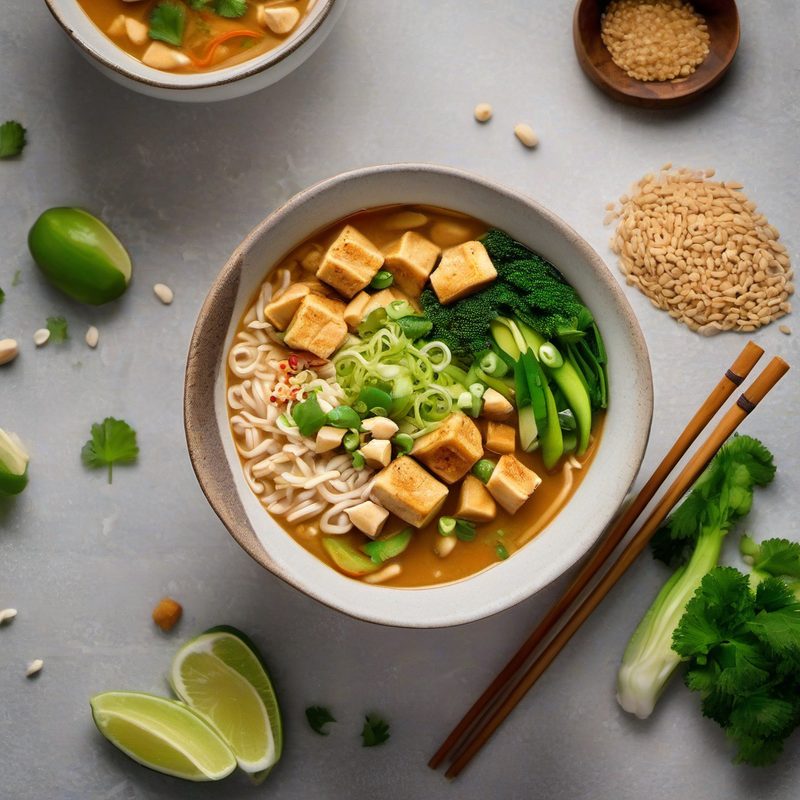
Vegan Thai Peanut Ramen
Vegan Thai Peanut Ramen
Category: Zuppe, Vegano, Cucina thai
Servings: 4
Total Time: 30 minutes
Active Time: 20 minutes
Difficulty: Easy
Why This Recipe Works
This vibrant vegan Thai peanut ramen delivers deep, complex flavor in under 30 minutes by leveraging a few key techniques. Full-fat coconut milk provides a luscious, creamy base that doubles as both broth and sauce, eliminating the need for separate stock. Pre-made red curry paste — a concentrated blend of chilies, galangal, lemongrass, and spices — delivers instant aromatic depth when bloomed in hot coconut milk. Creamy peanut butter not only thickens the broth to a silky, coat-the-noodle consistency but also contributes richness that mimics traditional meat-based tonkotsu. A bright finish of fresh lime juice and cilantro cuts through the richness, while crushed peanuts add crunch. By cooking the vegetables just until tender-crisp and combining everything off the heat, we preserve both texture and vibrant color. This recipe scales beautifully for meal prep and costs a fraction of takeout.
- Ramen noodles (300 g): Use fresh or dried ramen noodles (not instant seasoning packets). Fresh noodles from Asian markets yield the best chew; dried work well — just avoid overcooking. Substitute soba or udon if needed.
- Coconut milk (400 ml / ~1¾ cups): Full-fat is essential for the creamy body of the broth. Light coconut milk will yield a thin, watery sauce and muted flavor. Shake the can well before opening to incorporate the cream and liquid.
- Peanut butter (3 tbsp): Use smooth, unsweetened, natural peanut butter (just peanuts + salt) for the cleanest flavor. Commercial sweetened brands will alter the balance — reduce sweeteners elsewhere if substituting.
- Red curry paste (2 tbsp): Thai red curry paste is a shortcut to layered flavor. Thai Kitchen, Maesri, or Aroy-D brands are reliable. If heat-sensitive, start with 1½ tbsp.
- Soy sauce (1 tbsp): Use tamari or coconut aminos to keep the recipe gluten-free. Light soy sauce works best; dark soy is too heavy and sweet.
- Lime juice (1 tbsp): Fresh-squeezed only — bottled juice lacks brightness. Add just before serving to preserve the fresh citrus note.
- Vegetables (200 g total): A mix of carrot (julienned), bell pepper (thinly sliced), and broccoli (small florets) provides color, crunch, and nutrition. Other quick-cooking options: snow peas, bok choy, bean sprouts, or zucchini ribbons.
- Cilantro: Fresh leaves and tender stems, roughly chopped. For those with the cilantro aversion, substitute fresh Thai basil or mint.
- Crushed peanuts (approx. ¼ cup): For garnish. Toast briefly in a dry pan for extra aroma.
Equipment
- Large pot (5–6 qt) for cooking noodles
- Medium saucepan or Dutch oven (3–4 qt) for broth
- Chef's knife and cutting board
- Vegetable peeler
- Box grater or julienne peeler (optional, for carrots)
- Whisk
- Wooden spoon or silicone spatula
- Measuring spoons and liquid measuring cup
- Colander
- Serving bowls (4)
Tea Pairing
Jasmine green tea — its delicate floral notes and light astringency balance the rich, spicy coconut-peanut broth without overpowering the dish. Serve hot or iced.
Alternative: Iced lemongrass tea, which echoes the lemongrass notes in the curry paste.
Preparation
- Bring a large pot of salted water to a boil for the ramen noodles.
- Prepare the vegetables:
- Carrot: Peel and julienne or cut into thin matchsticks (approx. ⅛ × 2 inches).
- Bell pepper: Halve, remove stem and seeds, slice into thin 2-inch strips.
- Broccoli: Cut into small bite-size florets (stalks trimmed and sliced thin if desired).
- Rinse cilantro, pat dry, and roughly chop leaves and tender stems.
- Measure and crush peanuts if not pre-crushed.
- Juice the lime.
Step-by-Step Instructions
1. Cook the noodles
| Step | Action | Time | Notes |
|---|---|---|---|
| 1.1 | Add ramen noodles to boiling salted water | — | Stir immediately to prevent sticking |
| 1.2 | Cook according to package directions | 3–5 min | Fresh noodles: 2–3 min; dried: 4–5 min |
| 1.3 | Drain well (do not rinse) | — | Reserve ½ cup pasta water if thickening is needed |
| 1.4 | Set aside in the colander; toss with 1 tsp sesame oil to prevent clumping (optional) | — | — |
2. Build the peanut broth
| Step | Action | Time | Notes |
|---|---|---|---|
| 2.1 | In a medium saucepan, heat coconut milk over medium heat | — | Stir occasionally; do not boil vigorously |
| 2.2 | Once steaming, whisk in red curry paste | 1 min | Whisk continuously to dissolve paste completely |
| 2.3 | Whisk in peanut butter until smooth and fully incorporated | 1–2 min | No visible streaks of peanut butter remaining |
| 2.4 | Stir in soy sauce | — | — |
| 2.5 | Bring to a gentle simmer, then reduce heat to medium-low | — | Small bubbles around edges, not a rolling boil |
3. Cook the vegetables
| Step | Action | Time | Notes |
|---|---|---|---|
| 3.1 | Add carrot and broccoli to the simmering broth | 3 min | Start with the denser vegetables |
| 3.2 | Add bell pepper | 2 min | Bell pepper needs less cooking time |
| 3.3 | All vegetables should be tender-crisp (bright color, slight resistance when pierced) | — | Do not overcook |
4. Combine and serve
| Step | Action | Time | Notes |
|---|---|---|---|
| 4.1 | Add drained ramen noodles to the pot | — | — |
| 4.2 | Stir gently to coat noodles with broth and distribute vegetables | 1 min | Heat through without breaking noodles |
| 4.3 | Remove from heat | — | — |
| 4.4 | Stir in fresh lime juice | — | Do this off heat to preserve brightness |
| 4.5 | Taste and adjust seasoning (more soy sauce for salt, lime juice for acidity) | — | — |
| 4.6 | Divide among 4 serving bowls | — | Use tongs + ladle for even distribution |
| 4.7 | Garnish each bowl with chopped cilantro and crushed peanuts | — | Serve immediately |
Diagrams
Mise en Place Workflow
Flavor Layer Diagram
Troubleshooting
| Problem | Likely Cause | Solution |
|---|---|---|
| Broth too thin | Light coconut milk or not enough peanut butter | Whisk in 1 additional tbsp peanut butter dissolved in 2 tbsp hot water |
| Broth too thick | Over-reduction or excess peanut butter | Thin with reserved pasta water or additional coconut milk, 1 tbsp at a time |
| Noodles clumping | Not stirred immediately after adding to water, or left sitting too long | Toss with 1 tsp sesame oil after draining; add to broth promptly |
| Sauce separating (looks greasy) | Coconut milk heated too aggressively | Reduce heat and whisk vigorously to re-emulsify |
| Too spicy | Red curry paste varies in heat | Stir in 1 tsp coconut sugar or maple syrup; serve with extra coconut milk on the side |
| Not spicy enough | Mild curry paste or high heat tolerance | Finish with a drizzle of chili oil or sambal oelek |
Variations
- Spicy Thai Basil Ramen: Substitute Thai basil for cilantro; add 1 fresh bird's eye chili (minced) with the curry paste.
- Miso Peanut Ramen: Add 1 tbsp white miso paste dissolved in 2 tbsp warm water just before serving (do not boil miso).
- Green Curry Peanut Ramen: Substitute green curry paste for red; add 1 tsp grated ginger and 100 g cubed firm tofu (add with vegetables).
- Sesame Peanut Ramen: Add 1 tbsp tahini and 1 tsp toasted sesame oil to the broth; garnish with black sesame seeds.
- Vegan "Egg" Ramen: Top with a soft-tofu "egg" — press a 2-inch slab of silken tofu, marinate in soy + mirin for 10 min, and place on top before garnishing.
- Gluten-Free: Use 100% rice ramen noodles or buckwheat soba; verify soy sauce is tamari.
- Protein Boost: Add 200 g firm tofu (pressed, cubed, pan-seared until golden) or 1 can drained chickpeas; stir into broth with vegetables.
Storage and Reheating
- Refrigerator: Store noodles and broth separately for best results. Broth keeps 4 days in an airtight container. Noodles keep 2 days tossed with a little sesame oil to prevent sticking.
- Reheating: Warm broth in a saucepan over medium-low heat, adding a splash of water or coconut milk if thickened. Add noodles and heat through gently (1–2 minutes).
- Freezer: Broth (without noodles or garnish) freezes well for up to 3 months. Thaw overnight in the refrigerator before reheating. Do not freeze cooked noodles — they become mushy.
- Garnish fresh: Always add cilantro, crushed peanuts, and lime juice after reheating — they lose their impact during storage.
Why This Works — The ATK Difference
- Coconut milk as dual-purpose base: Eliminates the need for a separate vegetable stock while providing the fat necessary to carry fat-soluble aromatics from the curry paste.
- Curry paste bloomed in fat: Whisking the paste directly into hot coconut milk (rather than water) releases its volatile aromatics, yielding deeper, more rounded flavor than simply simmering paste in broth.
- Peanut butter as thickener and flavor bridge: The starches and proteins in peanut butter emulsify the broth while contributing savory depth (umami from roasted peanuts) that mimics animal-based broths.
- Vegetables added in stages: Carrots and broccoli go in first (denser, longer cooking time); bell pepper follows later — this staggered approach ensures every vegetable is perfectly tender-crisp at serving time.
- Lime juice added off heat: The volatile citrus aromatics (limonene, citral) are heat-sensitive — adding after removing from the pot preserves maximum brightness and prevents the broth from tasting flat.
- Garnish as a textural counterpoint: Cool, herbaceous cilantro and crunchy peanuts contrast with the rich, smooth broth — the interplay of temperatures and textures keeps each bite interesting.
Nutritional Information (per serving, estimated)
| Nutrient | Value |
|---|---|
| Calories | ~485 kcal |
| Protein | 14 g |
| Carbohydrates | 52 g |
| Fat | 26 g |
| Saturated Fat | 16 g |
| Fiber | 6 g |
| Sugar | 7 g |
| Sodium | 680 mg |
Values are estimates and will vary based on specific brands and ingredient choices.
Recipe #458 from the Cookbook Volume 1 collection. A vegan Thai-inspired ramen that comes together in half an hour — weeknight-friendly, deeply flavorful, and completely plant-based.
Recipe from The Italian Kitchen by Vita Milanese — Volume 1 · Pasta Perfetto. Discover all volumes on the ebook page.