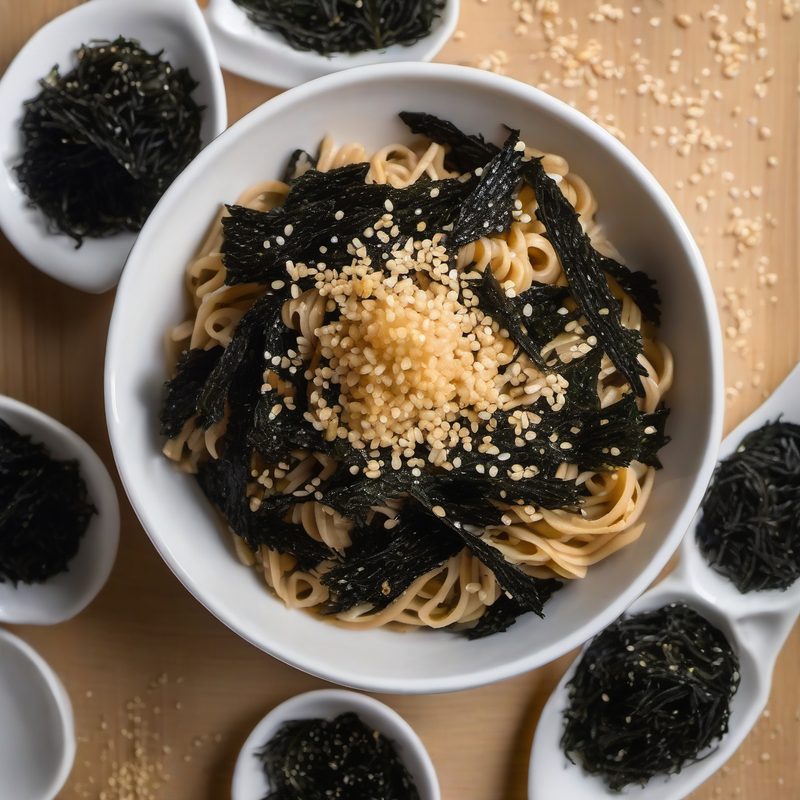
Sesame Nori Pasta
| Amount | Ingredient |
|---|---|
| Calories | ~460 kcal |
| Protein | 12 g |
| Fat | 16 g |
| Carbohydrates | 66 g |
| Fiber | 3 g |
| Sodium | 1,100 mg |
| Sugar | 2 g |
Sesame Nori Pasta
Category: Primi piatti, Fusione (Italian-Japanese)
Servings: 4
Active Time: 15 minutes
Total Time: 25 minutes
Why This Recipe Works
Japanese-Italian fusion is one of the most natural crossovers in modern cooking — Italian pasta's neutral, wheaty canvas welcomes the umami-laden ingredients of Japanese cuisine. This simple but deeply satisfying dish proves the point. Toasted sesame seeds, ground and whole, provide a nutty, aromatic foundation that clings to every strand of spaghetti. Soy sauce and sesame oil create a savory dressing that needs no cream or butter — just the starchy pasta water to emulsify into a silky, clingy sauce. Shredded nori adds a briny, oceanic crunch and a whisper of the sea, while raw minced garlic brings a pungent bite that cuts through the richness. The whole dish comes together in the time it takes to boil pasta, making it an ideal weeknight dinner that feels far more special than its effort suggests. Served warm or at room temperature, it's equally at home as a quick lunch, a light supper, or a surprising contribution to a potluck.
- Spaghetti (350 g / 12 oz): Use a high-quality bronze-drawn spaghetti — the rough, porous surface helps the sesame-soy sauce cling. Other long pasta shapes (linguine, bucatini, or even soba noodles) work well as substitutes. Avoid fresh pasta; dried pasta's starch is essential for the emulsion.
- Sesame seeds (3 tbsp): White or a mix of white and black for visual contrast. Toast untoasted seeds yourself in a dry skillet for maximum aroma — pre-toasted seeds can be stale. Grind about half of them for a paste-like texture that thickens the sauce.
- Nori sheets (2 sheets): Sushi-grade toasted nori is ideal. Cut or tear into thin strips just before serving to preserve its crisp texture. For extra flavor, briefly pass each sheet over a gas flame or toast in a dry pan for a few seconds.
- Soy sauce (3 tbsp): Use Japanese shoyu — koikuchi (dark) for deeper flavor. Low-sodium soy sauce can be substituted but adjust salt to taste. Do not use tamari unless gluten-free is needed; its thicker consistency changes the sauce.
- Sesame oil (2 tbsp): Toasted (dark) sesame oil is non-negotiable — its deep, nutty, almost smoky aroma defines the dish. Do not use untoasted sesame oil, which lacks character.
- Garlic (2 cloves): Both cloves, minced fine. Raw garlic provides a sharp, spicy counterpoint to the rich sesame and salty soy. For a milder flavor, sauté the garlic briefly in a tablespoon of the sesame oil before mixing with the soy sauce.
- Green onions (scallions, 4): Use the white and light green parts, thinly sliced on a steep bias for delicate, eye-catching rounds. Soak in ice water for 5 minutes if you want them to curl.
Equipment
- Large pot (6–8 quarts) for pasta
- Colander
- Dry skillet or frying pan (for toasting sesame seeds)
- Small skillet or tongs (for toasting nori, optional)
- Knife and cutting board
- Garlic press or chef's knife (for mincing)
- Medium mixing bowl (for sauce)
- Large mixing or serving bowl (for tossing pasta)
- Measuring spoons and cups
- Tongs or two forks (for tossing)
- Small bowl (for ground sesame seeds)
Prep Work
- Toast and grind sesame seeds: Heat a dry skillet over medium heat. Add sesame seeds and toast, shaking frequently, until fragrant and just beginning to turn golden, about 2–3 minutes. Transfer to a plate to cool. Once cool, measure out 1½ tbsp and grind in a mortar and pestle (or pulse in a spice grinder) until you have a coarse paste with some powdery bits. Reserve the remaining 1½ tbsp whole for garnish.
- Cut nori: Stack the 2 nori sheets. Using clean scissors or a sharp knife, cut into thin strips (roughly 5 cm × 3 mm). Set aside in a dry place.
- Prepare green onions: Trim roots and dark green tops. Slice the white and light green parts thinly on the bias. If desired, place sliced scallions in a small bowl of ice water for 5 minutes to crisp and curl, then drain and pat dry.
- Make the sauce: In a medium mixing bowl, combine 3 tbsp soy sauce, 2 tbsp toasted sesame oil, the minced garlic, and the ground sesame seed paste. Whisk until smooth and well combined. Set aside.
- Fill the pasta pot: Fill a large pot with 4–5 quarts of water and bring to a rolling boil.
Timing Guide
| Step | When | Duration |
|---|---|---|
| Bring pasta water to boil | Start | — |
| Cook pasta | Start | 8–10 min (until al dente) |
| Toast sesame seeds | During cooking | ~2–3 min |
Steps
1. Cook the Pasta
Bring the large pot of water to a rolling boil over high heat. Add 1 tablespoon of salt (the water should taste like the sea). Add the spaghetti and cook according to package directions until al dente — tender but still firm to the bite, typically 8 to 10 minutes.
Just before draining, reserve 1 cup of the starchy pasta water. Drain the spaghetti in a colander — do not rinse. The residual starch on the pasta surface helps the sauce cling and emulsify.
2. Prepare the Sauce Bowl
While the pasta cooks, combine in a large serving bowl:
- 3 tbsp soy sauce
- 2 tbsp toasted sesame oil
- 2 cloves garlic, minced
- 1½ tbsp toasted sesame seeds, ground to a paste
Whisk until smooth.
3. Toss the Pasta
Immediately after draining, transfer the hot spaghetti to the bowl with the sauce. Add ¼ cup of the reserved pasta water. Using tongs or two forks, toss vigorously to coat every strand. The hot pasta will warm the sauce, and the starchy water will help it emulsify into a silky, clingy coating.
If the pasta seems dry, add more pasta water 1 tablespoon at a time and toss again. You should have a glossy, well-coated pasta with a light sheen of sauce at the bottom of the bowl — not soupy, not dry.
4. Garnish and Serve
Divide the pasta among 4 warmed serving bowls or a large platter. Sprinkle with:
- 1½ tbsp whole toasted sesame seeds
- Shredded nori strips (2 sheets' worth)
- Sliced green onions
Serve immediately while warm, or let cool to room temperature for a pasta-salad-style presentation.
Taste and Texture
The spaghetti is tender but resilient, each strand carrying a glossy, savory coating that tastes of toasted nuts, soy-salt depth, and aromatic garlic. The ground sesame seeds add body to the sauce, creating a subtle creaminess without dairy. Whole sesame seeds provide tiny, crunchy pops that contrast with the soft pasta. The nori contributes a delicate, briny crispness that dissolves on the tongue with a hint of the sea. Green onions deliver pungent, fresh brightness that cuts through the rich sesame-soy base. The finish is clean and umami-forward, with the sesame oil's nuttiness lingering pleasantly.
Serving Suggestions
- Temperature: Serve warm for a comforting pasta dish, or at room temperature for a pasta-salad style that works beautifully at buffets or picnics. If serving at room temperature, toss with an extra teaspoon of sesame oil just before serving to refresh the coating.
- Sake/Tea pairing: Pair with a chilled Junmai Ginjo sake — its fruity, floral notes and clean finish complement the savory sesame-soy dressing without competing. For a non-alcoholic option, serve with hōjicha (roasted green tea), whose toasty, caramel-like notes echo the toasted sesame seeds, or genmaicha (brown rice tea) for an additional nutty layer.
- Garnish options: Add a pinch of shichimi tōgarashi (Japanese seven-spice) for gentle heat, or a small dollop of yuzu kosho for citrusy-spice brightness. A sprinkle of aonori (green seaweed flakes) reinforces the oceanic note.
- Protein addition: Top with a soft-boiled egg (cut in half), grilled salmon flakes, or sautéed shrimp for a more substantial meal.
- Leftovers: Toss leftover pasta with a splash of water or sesame oil before serving at room temperature. The nori will soften overnight, so add fresh strips when serving leftovers.
Troubleshooting
| Problem | Likely Cause | Solution |
|---|---|---|
| Pasta is dry and clumpy | Not enough pasta water or sauce | Add 1–2 tbsp hot water and toss vigorously to re-emulsify |
| Sauce is too salty | Over-reduced soy or undercooked pasta | Add a splash of hot water and a few drops of sesame oil to balance |
| Nori is chewy or limp | Added too early or not fresh | Add nori just before serving; buy fresh nori that crackles when bent |
| Garlic flavor is too harsh | Raw garlic overpowering | Reduce to 1 clove, or briefly sauté garlic in 1 tsp sesame oil before adding to sauce |
| Sesame flavor is weak | Seeds not toasted enough or old | Toast seeds until fragrant and lightly golden; replace if older than 6 months |
| Pasta is sticky | Overcooked or not tossed immediately | Cook to al dente only; toss with sauce while pasta is still steaming hot |
Variations
- Spicy Sesame Nori Pasta: Add 1 tsp chili oil (rayu) or ½ tsp red pepper flakes to the sauce. Garnish with a sprinkle of shichimi tōgarashi.
- Soba Nori Pasta (Gluten-Free): Substitute 350 g dried soba noodles for the spaghetti. Cook soba according to package directions, rinse under cold water to remove excess starch, and toss with the sauce. Serve cold or at room temperature.
- Sesame Nori Pasta with Egg: Top each serving with a soft-boiled egg (6½-minute egg, halved). The jammy yolk enriches the dish beautifully.
- Miso-Sesame Nori Pasta: Add 1 tbsp white miso paste to the sauce. Dissolve the miso in the soy sauce first before adding the other ingredients.
- Vegetable-Loaded: Sauté 200 g of thinly sliced shiitake mushrooms in sesame oil until golden, and toss with the pasta along with 1 cup of blanched snap peas or edamame.
- Creamy Version: After tossing the pasta with the sauce, stir in 2 tbsp heavy cream or coconut cream for a richer, milder sauce.
- Aromatic Boost: Add ½ tsp freshly grated ginger to the sauce along with the garlic.
Storage and Reheating
- Refrigerator: Store in an airtight container for up to 2 days. The nori will soften significantly, so add fresh nori strips when serving leftovers.
- Freezer: Not recommended — the sauce separates upon thawing and the pasta texture degrades.
- Reheating: For best results, bring the pasta to room temperature and serve as a pasta salad. To reheat warm, place in a skillet with 1 tablespoon of water, cover, and warm over medium-low heat for 2–3 minutes, tossing occasionally. Drizzle with a few drops of sesame oil before serving. Do not microwave — it makes the pasta rubbery and the sauce oily.
Nutrition Information (Per Serving)
Note: Nutritional values are approximate and depend on specific brands and ingredient choices.
Chef's Tips
- Grind your own sesame paste: Store-bought tahini is made from untoasted seeds and lacks the depth needed here. Toasting and grinding your own creates a far superior paste with layers of nutty aroma.
- Reserve pasta water before draining: Even if you think you won't need it, reserve a full cup. The starchy water is the key to creating a silky, emulsified sauce without cream or butter.
- Don't rinse the pasta: Rinsing washes away the surface starch that helps the sauce cling. Drain well but keep the pasta starchy.
- Use two pots simultaneously: While the pasta water comes to a boil, toast the sesame seeds in the dry skillet. By the time the seeds are done and cooled, the pasta water should be boiling — no wasted time.
- Cut nori with scissors: Kitchen shears give cleaner, more even strips than a knife. Cut lengthwise into ½-inch-wide strips, then crosswise if you prefer shorter pieces.
- Toss while the pasta is steaming hot: The residual heat helps the sauce emulsify and coats each strand evenly. Cold pasta won't absorb the sauce properly.
- Warm your serving bowls: A quick rinse with hot water or 30 seconds in a low oven keeps the pasta from cooling too quickly on the plate.
Common Mistakes
| Mistake | Why | Fix |
|---|---|---|
| Using untoasted sesame seeds | Flat, lackluster flavor | Toast seeds in a dry pan until fragrant and golden |
| Adding nori too early | Becomes chewy and soggy | Add fresh nori strips just before serving |
| Rinsing the pasta | Washes away starch needed for emulsion | Drain but never rinse |
| Overcooking the pasta | Mushy texture, diluted flavor | Cook to al dente — 1 minute less than package if unsure |
| Skipping the pasta water | Sauce won't emulsify, clings poorly | Reserve a cup before draining |
| Using pre-ground sesame paste | Less aromatic, often bitter | Toast and grind your own seeds |
| Not tossing immediately | Pasta cools and sauce doesn't coat evenly | Have sauce ready before draining; toss while pasta is hot |
Related Recipes
- 444 — Soba Noodles with Asparagus, Egg, and Nori
- 363 — Japanese Ramen
- 348 — Spaghetti Cacio e Pepe
- 335 — Tagliatelle with Radicchio and Speck
- 342 — Mountain Pasta with Pumpkin
Search Tags
Recipe from The Italian Kitchen by Vita Milanese — Volume 1 · Pasta Perfetto. Discover all volumes on the ebook page.