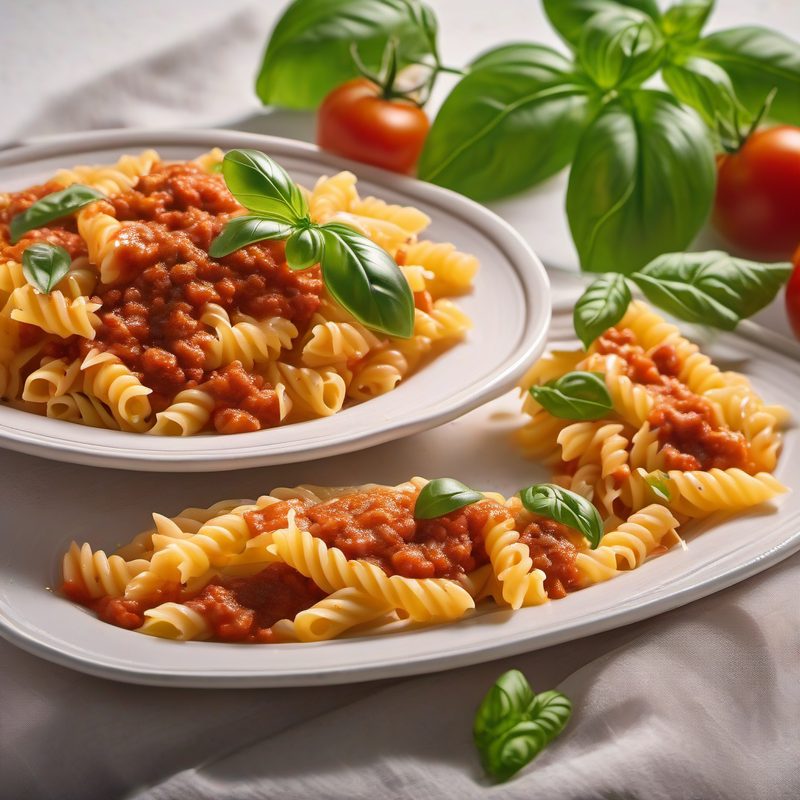
Pasta Fischio
| Amount | Ingredient |
|---|---|
| Calories | ~510 kcal |
| Protein | 16 g |
| Total Fat | 19 g |
| Saturated Fat | 3 g |
| Carbohydrates | 68 g |
| Fiber | 4 g |
| Sugar | 5 g |
| Sodium | 820 mg |
Whistle Pasta — Quick Puttanesca-Style
1. CATEGORY
Primi piatti (First Courses)
2. YIELD
Serves 4 as a main course | Serves 6 as a primo
3. TOTAL TIME
- Prep Time: 10 minutes
- Cook Time: 15 minutes
- Total Time: 25 minutes
4. WHY THIS RECIPE WORKS
Pasta al fischio (Whistle Pasta) gets its playful name from the notion that this dish is so fast to prepare — you can start the sauce, put the pasta water on, and be sitting down to eat before you've finished whistling a tune. Born from the same Southern Italian pantry logic as puttanesca, this sauce assembles in the time it takes the pasta to cook: anchovies melt into olive oil with garlic and chili, then crushed tomatoes, black olives, and capers simmer briefly into a bold, briny, no-fuss sauce. The key to its efficiency is building intense flavor from pantry staples without a long simmer — the anchovies dissolve completely, providing deep umami, while the olives and capers deliver salinity and punch. Tossing the just-drained pasta directly into the sauce with a splash of the cooking water creates a silky, emulsified finish that clings to every strand. This is weeknight cooking at its most unfussy and rewarding: one pot, one pan, fifteen minutes, and dinner is served.
5. INGREDIENTS
6. INGREDIENT NOTES
- Anchovies: These are the backbone of the sauce — not fishy, but deeply savory (umami). Do not skip or substitute with salt; they dissolve completely into the oil and vanish into the background, leaving only richness. High-quality oil-packed anchovies from Sicily or the Cantabrian coast deliver the best flavor.
- Olives: Gaeta olives (small, wrinkled, black Italian olives) are traditional for this style of sauce. Kalamata olives work beautifully too — their briney intensity stands up to the anchovies. Avoid bland canned black olives; they lack the necessary personality.
- Capers: Salt-packed capers from Pantelleria are ideal. Rinse them well before use. If using brine-packed capers, drain and pat dry. Do not skip — capers provide the bright, floral acidity that balances the rich olives and anchovies.
- Chili: A small fresh red chili (such as fresno, cayenne, or Thai bird) adds gentle, fruity heat. For a milder kick, remove the seeds and membranes. Red pepper flakes (½ teaspoon) are an acceptable substitute.
- Crushed tomatoes: Use a high-quality passata (smooth, deep red tomato purée) or San Marzano tomatoes crushed by hand. The sauce cooks for only 10 minutes, so the tomato base needs to be flavorful from the start.
- Pasta: Long, twirlable shapes are classic — spaghetti, linguine, or bucatini. The sauce is bold enough to stand up to any shape; short rigatoni or mezze maniche also work well.
7. EQUIPMENT
- Large pot (6–8 qt / 6–8 L) for boiling pasta
- Large skillet or sauté pan (12-inch / 30 cm)
- Chef's knife and cutting board
- Wooden spoon or heatproof spatula
- Measuring spoons
- Kitchen scale
- Ladle or liquid measuring cup (for reserving pasta water)
- Tongs
- Fine-mesh strainer (optional, for rinsing capers)
8. PREP NOTES
- Bring a large pot of generously salted water to a rolling boil before you begin cooking the sauce — the pasta and sauce will finish at the same time.
- Fill the pasta pot with about 5–6 quarts (5–6 L) of water and add 1½ tablespoons of kosher salt (or 2½ teaspoons fine sea salt). The water should taste like the sea.
- Have a ladle or liquid measuring cup ready to reserve pasta water before draining.
- Because the sauce components are all briny, salt the pasta water conservatively and taste the finished dish before adding any additional salt.
9. MISE EN PLACE
- Finely chop the anchovy fillets into a near-paste.
- Thinly slice or mince the garlic cloves.
- Finely chop the fresh chili (remove seeds for milder heat).
- Roughly chop the pitted black olives.
- Drain and rinse the capers (if salt-packed), then pat dry.
- Roughly chop the fresh parsley.
- Measure the crushed tomatoes and olive oil.
10. STEP-BY-STEP INSTRUCTIONS
#### Phase 1: Cook the Pasta
- Add the pasta to the vigorously boiling salted water.
- Cook until 1½ to 2 minutes short of al dente (check package timing and subtract 2 minutes). Reserve 1½ cups (355 ml) of the starchy pasta water before draining.
- Drain the pasta (do not rinse) and set aside.
#### Phase 2: Build the Sauce
- While the pasta cooks, place a large skillet over medium heat and add the olive oil.
- Once the oil shimmers, add the chopped anchovies, sliced garlic, and chopped chili. Cook, stirring constantly, until the anchovies have completely dissolved into the oil and the garlic is fragrant but not browned, about 1–2 minutes. Do not let the garlic burn.
- Add the crushed tomatoes, chopped olives, and capers. Stir to combine.
- Bring the sauce to a gentle simmer and cook for 10 minutes, stirring occasionally, until the sauce thickens slightly and the flavors meld. The sauce should be bold, briny, and fragrant.
#### Phase 3: Marry Pasta and Sauce
- Reduce heat to low. Add the drained pasta to the skillet along with ½ cup (120 ml) of the reserved pasta water.
- Increase heat to medium-high. Using tongs, toss the pasta vigorously in the sauce for 1–2 minutes, adding more pasta water a splash at a time as needed, until the sauce clings to the pasta and has a silky, emulsified consistency.
- Remove from the heat. Add the chopped parsley and toss once more to distribute.
- Taste and adjust with freshly ground black pepper. (Additional salt is rarely needed due to the brininess of the anchovies, olives, and capers.)
#### Phase 4: Plate
- Divide the pasta among warmed bowls.
- Serve immediately, passing grated Parmesan or pecorino at the table if desired.
11. CHEF'S NOTES & TIPS
- Work fast — the sauce waits for the pasta: The entire sauce cooks in the time it takes the pasta to boil. Time your steps so that the pasta finishes its 10-minute simmer just as the pasta reaches al dente.
- Don't skip dissolving the anchovies: Stir them persistently into the warm oil until they literally disappear. This takes 60–90 seconds. If they seize up or clump, the oil is not hot enough — give it another 15 seconds over medium heat.
- Reserve more pasta water than you think you'll need: The starchy water is what creates the emulsion. Having extra on hand lets you adjust the consistency without diluting flavor.
- Taste before salting: Between the anchovies, olives, and capers, this sauce packs significant salinity. Always taste the finished dish before adding a pinch of salt.
- The 10-minute simmer is a minimum: While this is a fast sauce, a full 10 minutes is essential for the olives and capers to release their flavors into the tomatoes. Do not rush this step.
- Fresh parsley is non-negotiable: Its clean, herbaceous pop cuts through the rich, briny sauce and provides a crucial bright finish. Dried parsley will not work.
12. TROUBLESHOOTING
| Problem | Cause | Solution |
|---|---|---|
| Sauce is too salty | Anchovies, olives, and capers all contribute salt; over-reduction | Add a splash of plain pasta water or a squeeze of lemon juice to balance; next time, rinse capers thoroughly and use less salt in pasta water |
| Sauce tastes flat or one-dimensional | Anchovies not fully dissolved; insufficient simmer time | Cook anchovies longer in the oil phase; ensure the sauce simmers the full 10 minutes for flavors to meld |
| Garlic is bitter | Garlic burned during the initial sauté | Keep heat at medium, not high; add garlic simultaneously with anchovies so the moisture from the anchovies prevents burning |
| Sauce is watery | Pasta water added too freely; sauce not reduced enough | Toss pasta over higher heat for an additional 30 seconds to evaporate excess liquid; add pasta water in smaller increments |
| Pasta is clumpy or dry | Insufficient pasta water in the toss; pasta sat too long after draining | Add more reserved pasta water and toss vigorously; always time the pasta to finish as the sauce completes |
13. VARIATIONS
- Classic Puttanesca: Add 2 tablespoons of rinsed, chopped capers and increase olives to 150 g; omit the fresh chili (or keep it, depending on preference) and add a squeeze of lemon juice at the end.
- Tuna Puttanesca-Fischio: Fold in one can (150 g) of oil-packed tuna, drained and flaked, after the sauce has simmered. Toss gently to warm through without breaking up the tuna too much.
- Spicy 'Nduja Version: Replace the anchovies with 50 g (1¾ oz) of 'nduja (spreadable Calabrian salami). It melts into the oil just like anchovies, adding heat and depth simultaneously.
- Breadcrumb Topping (Sicilian-style): Toast ½ cup of coarse breadcrumbs in a dry skillet with a drizzle of olive oil until golden. Sprinkle over each serving for textural contrast.
- Seafood Whistle: Add 200 g (7 oz) of peeled shrimp to the sauce during the last 3 minutes of simmering, or fold in steamed clams or mussels at the end.
- Gluten-Free: Substitute gluten-free spaghetti or linguine. Cook according to package directions and subtract 1 minute instead of 2, as gluten-free pasta tends to overcook more quickly.
- Vegan: Omit the anchovies and add 1 tablespoon of soy sauce or tamari and 1 tablespoon of nutritional yeast to the oil for umami. Use a splash of caper brine for additional briny depth.
14. MAKE AHEAD
- Sauce only: The tomato-olive-caper sauce (without pasta) can be made up to 3 days in advance. Cool completely, cover, and refrigerate. Reheat gently in a skillet, adding a splash of water to loosen, before tossing with freshly cooked pasta.
- Not recommended for full assembly: Pasta continues to absorb liquid as it sits; the dish is best served immediately. Leftovers can be revived (see Storage & Reheating).
15. STORAGE & REHEATING
- Refrigerate: Store leftovers in an airtight container for up to 2 days.
- Reheat: Place in a skillet over medium-low heat with a splash of water or olive oil. Toss gently until warmed through. The pasta will have absorbed much of the sauce; a final sprinkle of fresh parsley and a drizzle of olive oil help revive it.
- Not suitable for freezing: The texture of olives and capers degrades upon thawing, and the sauce's emulsion breaks.
16. WINE PAIRING
- White: Vermentino di Sardegna or a dry Sicilian Grillo — bright acidity, citrus notes, and a salty mineral finish complement the briny capers and olives.
- Red: A light, chilled Cerasuolo d'Abruzzo (rosé) or a young, unoaked Nerello Mascalese from Etna — high acidity and low tannins match the tomato base without clashing with the anchovies.
- Rosé: A dry rosé from the Côtes de Provence or Salento — versatile and refreshing against the sauce's bold flavors.
- Non-alcoholic: Sparkling mineral water with a squeeze of lemon and a pinch of sea salt, or a non-alcoholic Italian aperitivo (Sanbitter or Crodino).
17. NUTRITIONAL INFORMATION (per serving)
Estimates based on standard ingredient data; actual values may vary.
18. SOURCE & ATTRIBUTION
- Dish: Pasta al Fischio (Whistle Pasta)
- Origin: Southern Italy (Campania / Puglia region)
- History: Pasta al fischio belongs to the proud Italian tradition of cucina povera (peasant cooking) — resourceful, fast, and built from pantry staples that keep without refrigeration. The name is pure folk humor: the dish is so quick that by the time you've put the pot on and started whistling, dinner is ready. It shares its DNA with the more famous spaghetti alla puttanesca (invented in the 1950s in Naples and Ischia) but predates it as a simpler, everyday version without the formalized ingredient list. Every coastal Southern Italian grandmother has her own version — some add breadcrumbs, others a pinch of dried oregano, some skip the chili — but the trinity of anchovies, olives, and capers is constant. The "whistle" name appears most commonly in the oral traditions of Campania, where the speed of preparation was a matter of practical necessity for fishermen's families who needed a hot meal ready between trips.
- Adapted for the ATK format by: Hermes Cookbook Project
"Chi ha fretta, fischia." — He who is in a hurry, whistles.
Recipe from The Italian Kitchen by Vita Milanese — Volume 1 · Pasta Perfetto. Discover all volumes on the ebook page.