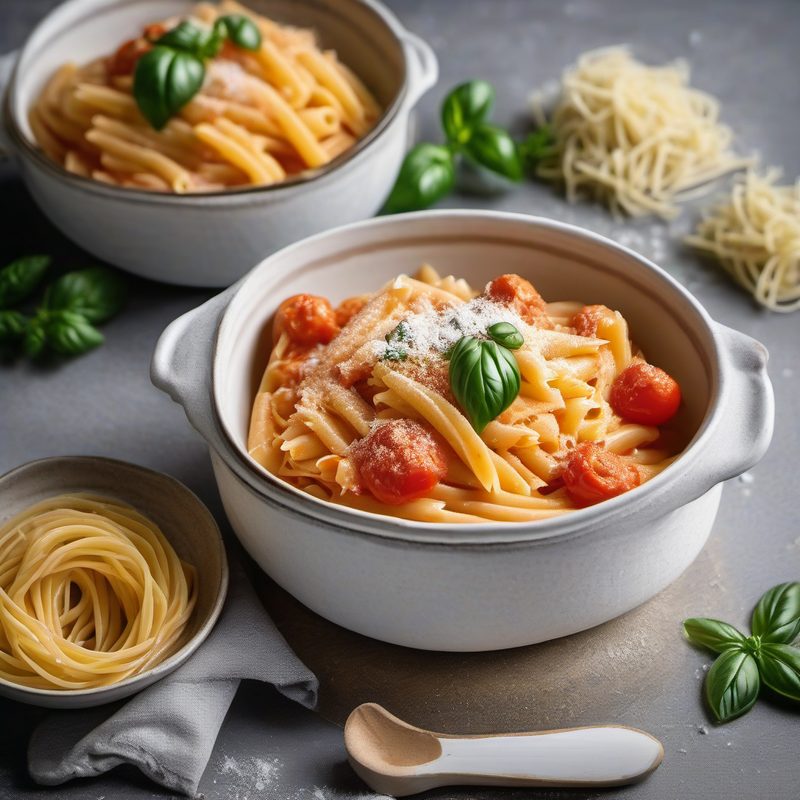
Pasta Francescana
A rich, slow-simmered pork ragù inspired by the Modenese traditions of Osteria Francescana — rustic, velvet-textured, and deeply savory with a whisper of sage and cream.
| Amount | Ingredient |
|---|---|
| 350 g | Pasta (pappardelle, rigatoni, or tagliatelle work best) |
| 300 g | Ground pork |
| 400 g | Crushed tomatoes (preferably San Marzano) |
| 1 | Medium yellow onion, finely diced |
| 2 | Garlic cloves, minced |
| 100 ml | Heavy cream |
| 50 g | Parmigiano-Reggiano, finely grated |
| 2 tbsp | Extra-virgin olive oil |
| 4-5 | Fresh sage leaves, finely chopped |
| Salt | To taste |
| Black pepper | Freshly ground, to taste |
> Note: Active cooking time is about 25 minutes — a quick ragù that tastes like it simmered all afternoon.
🥘 Equipment
- Large pot (6-qt) for pasta
- Large skillet or sauté pan (12-inch)
- Colander
- Wooden spoon or spatula
- Microplane or fine grater
📋 Preparation
Step 1: Start the Sauce Base
Heat the olive oil in a large skillet over medium heat. Add the finely diced onion and cook, stirring occasionally, until softened and translucent — about 4-5 minutes. Add the minced garlic and cook until fragrant, about 30 seconds.
Step 2: Brown the Pork
Add the ground pork to the skillet, breaking it apart with a wooden spoon. Cook without moving it too much for the first 2 minutes to develop a good sear, then stir and continue cooking until the pork is well browned and no longer pink — about 5-6 minutes total. Season with ½ tsp salt and a few grinds of black pepper.
Pro tip: Don't crowd the pan. Browning = flavor. Let the pork get caramelized edges, not steamed.
Step 3: Build the Ragù
Stir in the chopped sage and cook for 30 seconds until fragrant. Pour in the crushed tomatoes, scraping up any browned bits from the bottom of the pan. Reduce heat to low and let the sauce simmer gently, uncovered, for 15 minutes, stirring occasionally. The sauce should thicken slightly and deepen in color.
Step 4: Cook the Pasta
While the sauce simmers, bring a large pot of generously salted water to a rolling boil. Cook the pasta according to package directions until firmly al dente (about 1 minute less than suggested). Reserve 1 cup of pasta water before draining.
Why short pasta? Rigatoni or pappardelle catch the ragù in their ridges and folds. Long, flat noodles like tagliatelle also work beautifully — choose what you love.
Step 5: Finish the Sauce with Cream
Stir the heavy cream into the simmering ragù. The sauce will turn a beautiful warm brick-red, slightly rosy. Taste and adjust salt and pepper. Simmer for 1-2 minutes until the cream is fully incorporated and the sauce is silky.
Step 6: Toss and Serve
Add the drained pasta directly to the skillet of ragù. Add the grated Parmigiano and ½ cup of the reserved pasta water. Toss vigorously for 30-45 seconds — the starch and cheese will emulsify into a glossy sauce that clings to every piece of pasta.
If the sauce seems too thick, add more pasta water a splash at a time until it flows like velvet.
Divide among warm bowls. Top with an extra grating of Parmigiano and a few fresh sage leaves.
🧑🍳 Chef's Tips
- Fresh sage is non-negotiable: Dried sage can be dusty and medicinal. Fresh sage brings a peppery, almost minty warmth that is the soul of this dish.
- Ground pork matters: Don't use extra-lean pork — you want some fat (15-20%) for richness. Better yet, ask your butcher to grind pork shoulder.
- Pasta choice: Pappardelle are the most traditional with a rich ragù — their wide ribbons catch every bit of sauce. Rigatoni and mezze maniche are excellent alternatives.
- The cream is a whisper, not a shout: 100 ml (about ⅓ cup plus 1 tbsp) is enough to soften the acidity of the tomatoes without turning the ragù into a cream sauce. The pork and tomatoes should still lead.
- Rest the pasta water: Let the pot settle for a moment before scooping — the starch settles at the bottom of the pot, and that's exactly what you want for your emulsion.
❌ Common Mistakes
| Mistake | Why | Fix |
|---|---|---|
| Not browning the pork enough | Gray, flavorless sauce | Let the pork sit undisturbed for 2 minutes before stirring |
| Adding cream too early | Sauce may separate or taste flat | Add cream only after the tomatoes have simmered and reduced |
| Overcooking the sauce after cream | Cream can curdle if boiled aggressively | Keep at a gentle simmer, not a rolling boil |
| Using dried sage | Harsh, one-dimensional flavor | Fresh sage only — or substitute fresh thyme in a pinch |
| Skipping the pasta water | Thin sauce that won't cling | Always reserve 1 cup and use at least ½ cup for the emulsion |
💡 Variations
- Pork & Fennel Ragù: Add 1 tsp fennel seeds (toasted and crushed) with the garlic for a Tuscan-style twist.
- Spicy Francescana: Add ½ tsp red pepper flakes with the garlic for gentle heat.
- Mixed Meat: Replace half the ground pork with ground beef or veal for deeper flavor.
- Mushroom Version (vegetarian): Substitute the pork with 300 g finely chopped cremini mushrooms and add 1 tbsp soy sauce for umami. Use vegetable stock instead of pasta water.
- Wine Finish: Deglaze the pan with ½ cup dry white wine after browning the pork, letting it reduce by half before adding the tomatoes. This adds another layer of complexity.
❄️ Storage
Refrigerate in an airtight container for up to 3 days. The ragù actually improves overnight as the flavors meld. Reheat gently in a skillet with a splash of water or milk — the sauce thickens as it sits. Pasta is best stored separately and combined when reheating.
🍷 Wine Pairing
| Wine | Why |
|---|---|
| Chianti Classico | Sangiovese's bright acidity cuts through the rich pork and cream |
| Montepulciano d'Abruzzo | Dark fruit, soft tannins — a hearty match for a meaty ragù |
| Lambrusco di Sorbara (frizzante) | A nod to Modena — the bubbles cleanse the palate between bites |
| Barbera d'Alba | High acidity, low tannin, red fruit notes — perfect with tomatoes |
🍺 Beer Pairing
| Beer | Why |
|---|---|
| Italian Amber Lager (Birra Moretti La Rossa) | Caramel maltiness complements the pork's richness |
| Dubbel | Dark fruit and slight sweetness mirror the tomato-cream balance |
| English Brown Ale | Nutty, toasty, low bitterness — won't compete with the sage |
🥗 Suggested Sides
- Bitter greens salad with radicchio, arugula, and a lemon-anchovy vinaigrette — the bitterness cuts the richness of the ragù
- Sautéed spinach with garlic and a pinch of nutmeg
- Crusty ciabatta or focaccia for sopping up every drop of sauce
- Roasted fennel wedges with olive oil and sea salt
📊 Nutrition (per serving)
| Calories | Protein | Fat | Carbs | Fiber |
|---|---|---|---|---|
| 475 | 24 g | 18 g | 52 g | 4 g |
Nutrition based on 350 g pasta, 300 g ground pork, 100 ml cream, 50 g Parmesan, prepared as directed. Values are approximate.
❓ FAQ
What is "Francescana-style" pasta?
It's an homage to Massimo Bottura's Osteria Francescana in Modena — though this is a home cook's interpretation. The hallmarks are quality ingredients, restraint (cream as a whisper, not a flood), and letting the pork speak for itself. Sage is the characteristic herb.
Can I use tomato passata instead of crushed tomatoes?
Absolutely. Passata will give a smoother, silkier sauce. You may need slightly less (about 350 ml), as passata is thicker.
Can I make this ahead?
Yes — the ragù keeps beautifully for 3 days and freezes well for up to 3 months. Cook the pasta fresh when you're ready to serve.
Is this the same as "pasta alla bolognese"?
No — Bolognese is a slow-cooked (2+ hours) ragù with wine and milk, typically made with a mix of beef, pork, and pancetta. This Francescana-style version is quicker, uses only pork, and finishes with cream and fresh sage.
Can I use dried sage if I have no fresh?
It's not recommended. If you must, use only 1 tsp dried sage added early (with the tomatoes) and be aware the flavor will be more muted and slightly musty. Fresh thyme (2 tsp) is a better substitute.
🔗 Related Recipes
- Pappardelle al Ragù di Cinghiale — Wild Boar Ragù
- Tagliatelle alla Bolognese — The Classic
- Penne alla Vodka — Pink Sauce Cousin
- Rigatoni with Sausage & Fennel
🏷️ Search Tags
Recipe from The Italian Kitchen by Vita Milanese — Volume 1 · Pasta Perfetto. Discover all volumes on the ebook page.