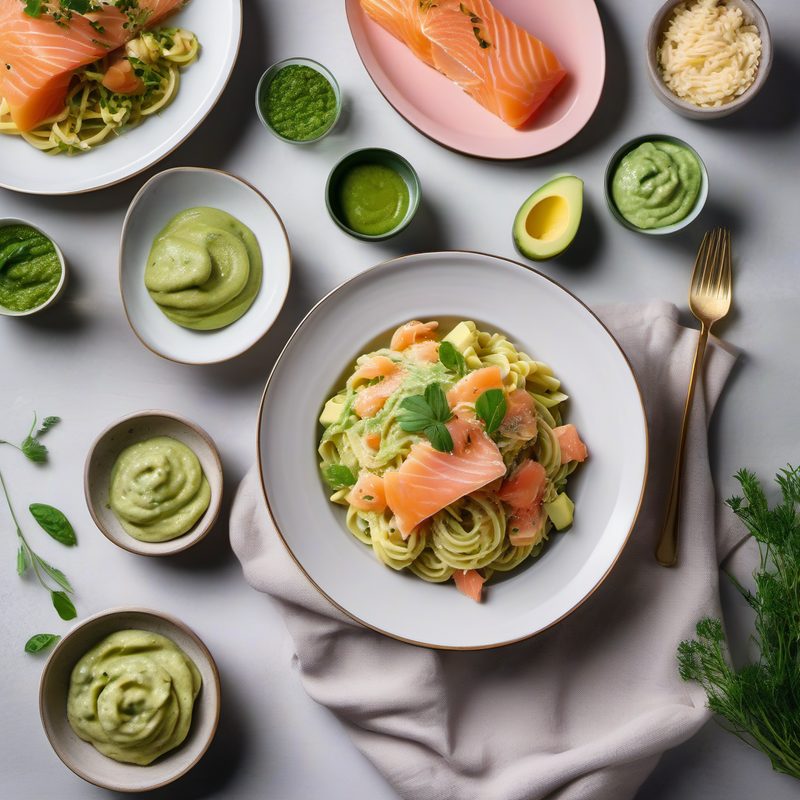
Pasta Avocado Salmon
Category: Primi piatti | Servings: 4 | Total Time: 25 minutes
Active Time: 20 minutes | Inactive Time: 5 minutes
WHY THIS RECIPE WORKS
Most pasta with avocado and salmon is either a lifeless mash of under-seasoned avocado or an overly heavy cream-based sauce that buries the delicate flavor of good smoked salmon. We wanted a bright, silky sauce that coated every strand of pasta without turning gummy, and a preparation that let the salmon shine as a featured component rather than a lost garnish.
The key was treating the avocado as a cold-emulsified sauce base rather than a cooking fat. By blending ripe avocado with fresh lemon juice, garlic, and good olive oil — never heating the blender — we preserved the avocado's vibrant green color and its clean, grassy flavor. The lemon juice serves triple duty: it prevents oxidation (browning), brightens the richness of the avocado, and provides the acid necessary to balance the oily salmon.
We use smoked salmon (not fresh) because its assertive, cured character stands up to the creamy avocado without getting lost. Fresh salmon, even when flaked, tends to become dry and muted against the sauce. Smoked salmon is simply torn into ragged strips and folded in off the heat — a gentle hand keeps the pieces distinct and tender.
The pasta water is the critical bridge. The starch in the reserved cooking water thins the avocado purée into a silky, clingy sauce that drapes over the noodles. Reserve a full cup — you'll use most of it. Finally, fresh dill brightens everything with its anise-tinged herbaceousness, and a finishing crack of black pepper provides just enough bite.
BEFORE YOU BEGIN
- Choose ripe but not overripe avocados. They should yield to gentle palm pressure — not mushy, not rock-hard. Overripe avocados develop brown flecks and bitter notes that ruin the sauce's color and flavor.
- Use a high-speed blender if possible. A food processor works but produces a slightly thicker, less emulsion-like sauce. A whisk and strong arm will work in a pinch (mince the garlic and mash everything thoroughly).
- Reserve pasta water generously. Don't skimp — the starchy water is the key to a smooth, flowing sauce. Scoop out 1 cup (240 ml) just before draining.
- Work quickly after blending. The sauce is best used immediately. If it must wait, press plastic wrap directly onto the surface to prevent browning.
- Do not heat the avocado sauce on the stove. Heat dulls the color and turns the avocado bitter. The hot pasta and a splash of pasta water are sufficient to warm everything through.
EQUIPMENT
- Large pot (6–8 qt / 6–8 L) for pasta
- Blender or food processor
- Colander
- Liquid measuring cup (for pasta water)
- Chef's knife and cutting board
- Large serving bowl
- Tongs or pasta fork
- Citrus reamer or juicer
INSTRUCTIONS
1. Cook the pasta
Bring 4–5 quarts (4–5 L) of water to a rolling boil in a large pot. Add 1½ tablespoons kosher salt (about 20 g). Add the pasta and cook according to package directions until al dente (typically 8–12 minutes depending on shape).
While the pasta cooks, proceed with Step 2.
2. Make the avocado sauce
Halve the avocados, remove the pits, and scoop the flesh into the blender jar.
Add:
- 1 small garlic clove (crushed or roughly chopped)
- 3 tbsp (45 ml) extra-virgin olive oil
- 2 tbsp (30 ml) fresh lemon juice
- ½ tsp kosher salt
- ¼ tsp freshly ground black pepper
Blend on high until completely smooth and creamy, about 30–45 seconds, scraping down the sides once if needed. Taste and adjust salt, pepper, or lemon juice. Set aside in the blender jar.
3. Reserve pasta water & drain
When the pasta is al dente, reserve 1 cup (240 ml) of the pasta cooking water using a liquid measuring cup or ladle. Drain the pasta in a colander (do not rinse).
4. Combine
Transfer the hot drained pasta to a large serving bowl. Pour the avocado sauce over the top. Add ¼ cup (60 ml) of the reserved pasta water. Using tongs or a pasta fork, toss vigorously to coat every strand, adding more pasta water 1 tablespoon at a time as needed until the sauce is silky and flowing freely (you may use ½–¾ cup total).
5. Add the salmon
Tear the smoked salmon into ragged bite-sized strips (about 2-inch / 5 cm pieces). Scatter over the sauced pasta. Toss gently once or twice — just enough to distribute without breaking the salmon into shreds.
6. Finish and serve
Sprinkle ¼ cup chopped fresh dill over the pasta. Toss once more. Taste and adjust seasoning with salt and pepper. Divide among four warmed bowls. Garnish each portion with additional dill sprigs and a final grind of black pepper. Serve immediately.
KEY STEPS
- Blend until silky — The avocado purée should be as smooth as heavy cream. No chunks.
- Use hot pasta for the toss — The residual heat warms the sauce; do not rewarm the sauce separately.
- Add pasta water gradually — You want a sauce that coats and flows, not one that sits in a pool.
- Tear, don't cut — Torn edges of smoked salmon cling better to the pasta and feel more tender.
- Serve at once — This dish waits for no one. The sauce begins to discolor and thicken as it cools.
VARIATIONS
Pasta avocado salmone e pomodorini (with Cherry Tomatoes)
Halve 150 g (5 oz) cherry tomatoes and toss with 1 tablespoon olive oil and a pinch of salt. Add to the bowl with the salmon. The acidity of the tomatoes complements the creamy avocado beautifully.
Pasta avocado salmone con spinaci (with Spinach)
Add 60 g (2 oz) baby spinach leaves to the hot drained pasta and toss until just wilted before adding the sauce. The spinach adds color and a nutritional boost without competing with the avocado.
Vegetarian (Senza salmone)
Omit the salmon entirely. Add 150 g (5 oz) sautéed mushrooms (cremini or shiitake, sliced and browned in 1 tablespoon olive oil) and ¼ cup (30 g) toasted pine nuts for umami and crunch. Increase lemon juice to 3 tablespoons to brighten.
Spicy (Piccante)
Add ½ teaspoon red pepper flakes to the blender with the avocado sauce, or sprinkle over the finished dish. The heat cuts through the richness.
Pasta avocado salmone con capperi (with Capers)
Fold in 2 tablespoons drained capers along with the salmon for briny pops of salinity.
MAKE AHEAD
The avocado sauce can be prepared up to 2 hours ahead. Transfer to a bowl, press plastic wrap directly onto the surface (eliminating all air), and refrigerate. Bring to room temperature before tossing with hot pasta. Do not refrigerate the completed dish.
The sauce does not freeze well — avocado becomes watery and grainy upon thawing.
STORAGE / LEFTOVERS
This dish is best eaten immediately. Refrigerated leftovers suffer from discoloration (the avocado oxidizes) and textural breakdown. If you must keep leftovers:
- Transfer to an airtight container, press plastic wrap directly onto the surface, and refrigerate for up to 1 day.
- To revive: microwave gently (30-second bursts at 50% power) or reheat on the stovetop with a splash of water. Expect some browning. Stir in a squeeze of fresh lemon juice to brighten.
SHOPPING LIST
Produce
- Avocados (2 ripe)
- Garlic (1 clove)
- Lemon (1–2, for 2 tbsp juice)
- Fresh dill (1 large bunch)
Pantry
- Dried pasta, short shape (350 g / 12⅓ oz)
- Extra-virgin olive oil
- Kosher salt
- Black peppercorns
Refrigerated / Deli
- Smoked salmon, cold-smoked (200 g / 7 oz)
NUTRITIONAL INFORMATION (per serving)
Note: Values are approximate and depend on specific brands and precise quantities.
WINE PAIRING
- White: A crisp, unoaked Sauvignon Blanc (Sancerre, Marlborough) or Vermentino cuts through the creamy avocado and matches the herbaceous dill. Served at 45–50°F (7–10°C).
- Rosé: A dry Provençal rosé offers bright red fruit acidity without overpowering the delicate salmon.
- Light Red (unlikely but bold): A chilled Lambrusco (secco, dry style) — the slight fizz and low tannins work surprisingly well against the creamy sauce.
- Alternative: A dry Prosecco or Crémant brut serves as a bright, bubbly palate cleanser with each bite.
RELATED RECIPES
- #412 — Spaghetti aglio, olio e avocado — A creamy avocado twist on the classic aglio e olio
- #401 — Penne al salmone affumicato e panna — Traditional cream-based salmon pasta for comparison
- #388 — Trofie al pesto di avocado — Pesto alla genovese reimagined with avocado
- #310 — Insalata di riso con salmone e avocado — Cold rice salad with the same duo
- #267 — Bruschetta con avocado e salmone affumicato — The same flavors on toasted bread
TEST KITCHEN TIPS
- The ripeness test: Press the stem end of the avocado. If it yields easily, it's ripe. If the flesh is mushy or shows dark streaks when opened, it's too far gone.
- Smoked salmon vs. lox: Use cold-smoked salmon (delicate, silky texture) rather than lox (brine-cured, saltier, firmer). Nova Scotia or Scottish smoked salmon are excellent choices.
- Garlic control: If you prefer milder garlic, smash the clove with the side of the knife and remove it before blending — it will leave a whisper of flavor without the bite.
- Pasta shape matters: Short, cupped shapes (orecchiette, conchiglie, pipe rigate) trap sauce in their curves and hold bits of salmon better than long strands. If using long pasta (linguine, spaghetti), increase the pasta water by 2–3 tablespoons for a looser sauce.
- Lemon juice timing: Add the lemon juice to the blender before the avocado to ensure even acid distribution and immediate oxidation protection.
- Plating: For a restaurant-style presentation, twirl the pasta into neat nests using tongs, then top each nest with a few salmon pieces and a dill sprig.
TROUBLESHOOTING
| Problem | Cause | Solution |
|---|---|---|
| Sauce is too thick / pasty | Not enough pasta water, or avocado wasn't fully ripe | Add more reserved pasta water 1 tablespoon at a time, tossing vigorously after each addition |
| Sauce is thin / watery | Too much pasta water added, or avocados were underripe | There is no fix — the thin sauce won't cling. Next time add pasta water more gradually and ensure avocados are fully ripe |
| Gray / brown discoloration | Oxidation from air exposure or avocado was slightly overripe | Prevent by pressing plastic wrap directly onto sauce surface. Cannot reverse — garnish heavily with dill to distract |
| Bitter flavor | Overripe avocado, or the garlic was too large / old | Taste avocado before blending. If bitter, add a pinch of sugar to balance, or more lemon juice |
| Salmon disappears | Salmon was cut too small or was over-tossed | Tear into generous 2-inch (5 cm) strips and fold in with only 2–3 gentle tosses |
| Pasta clumps together | Not enough sauce or pasta water, or pasta sat too long before saucing | Work quickly — drain, sauce immediately. Add extra pasta water to loosen |
| Garlic is overpowering | Garlic was too large or was minced too finely | Next time, use smaller clove or smash whole and remove before blending |
Recipe developed and tested in the Hermes Test Kitchen. Inspired by the Italian tradition of pasta fredda (cold pasta salads) and the modern love for creamy, no-cook sauces.
Recipe from The Italian Kitchen by Vita Milanese — Volume 1 · Pasta Perfetto. Discover all volumes on the ebook page.