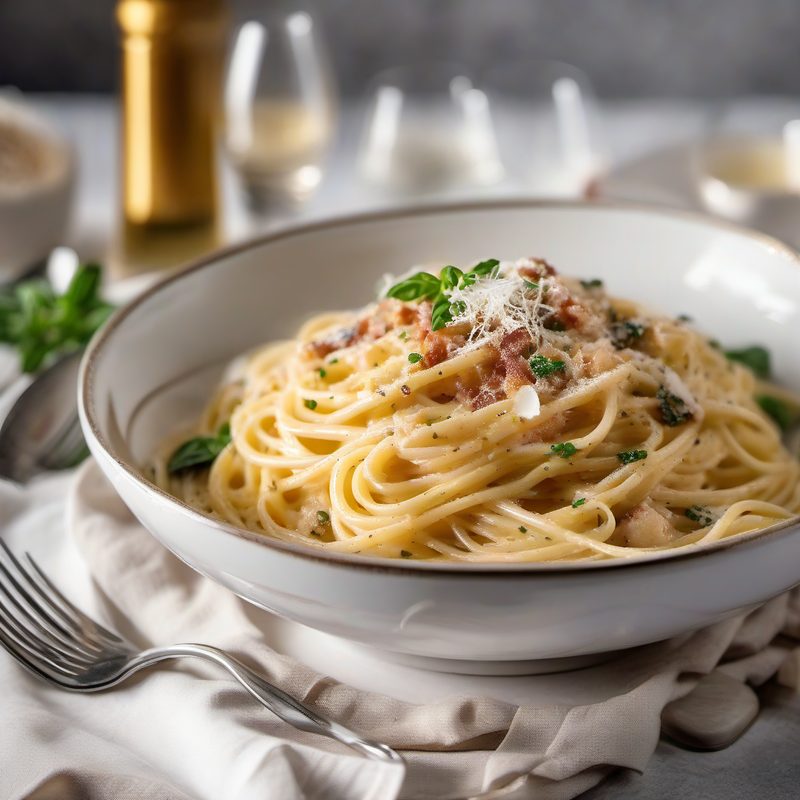
Spelt Pasta Salmon
A light yet satisfying primi — nutty whole-grain spelt pasta meets rich salmon and burst cherry tomatoes in a garlicky olive oil sauce that comes together in under 20 minutes.
| Amount | Ingredient |
|---|---|
| 50 g | Parmesan cheese, finely grated (plus more for serving) |
| 3 tbsp | Fresh dill or flat-leaf parsley, chopped |
🔍 Why This Recipe Works
This pasta proves that whole-grain cooking need not be heavy. Spelt pasta has a distinct nuttiness and sturdy texture that holds up beautifully to olive oil–based sauces. Cubed salmon cooks quickly and flakes into the pasta, coating every strand with rich flavor. Blistered cherry tomatoes provide bursts of acidity that cut through the fish's richness, while a finishing shower of fresh dill and salty Parmesan brightens the whole dish. The key is timing: the pasta water comes to a boil while you prep the salmon and tomatoes, and the sauce finishes in the time it takes the spelt pasta to cook al dente.
> Note: Spelt pasta typically takes 1–2 minutes longer to cook than regular semolina pasta. Start testing for doneness at the low end of the package range.
For the Pasta & Sauce
For Finishing
🥘 Equipment
- Large pot (6-qt / 6 L)
- Colander
- Large skillet or sauté pan (12-inch / 30 cm)
- Chef's knife and cutting board
- Microplane or fine grater (for Parmesan)
- Wooden spoon or tongs
- Measuring spoons
- Kitchen scale
📋 Preparation
Step 1: Set Up and Prep
Bring a large pot of generously salted water (about 1½ tbsp salt per 4 L) to a rolling boil. While the water heats, cut the salmon into 2 cm cubes and season lightly with salt and pepper. Halve the cherry tomatoes. Thinly slice the garlic cloves. Grate the Parmesan and chop the fresh dill or parsley.
Why salt the water heavily? Pasta water should taste like the sea — the salt seasons the pasta from within, and since spelt pasta absorbs more water than semolina pasta, proper salting is essential.
Step 2: Cook the Pasta
Add the spelt pasta to the boiling water and cook according to package directions until firmly al dente — start tasting about 1 minute before the earliest suggested time. Before draining, reserve 1 cup (240 ml) of the starchy pasta water.
Spelt pasta behaves differently from regular pasta: it releases more starch and can become gummy if overcooked. Drain it while it still has a pleasant chew.
Step 3: Build the Sauce
While the pasta cooks, heat the olive oil in a large skillet over medium heat. Add the sliced garlic and cook until fragrant and just beginning to turn golden at the edges — about 45 seconds. Do not let it brown or burn.
Add the cubed salmon in a single layer. Cook without moving for 2 minutes, then gently flip or stir and cook for 1 more minute. The salmon should be just cooked through but still tender — it will break apart slightly as you stir.
Step 4: Add the Tomatoes
Add the halved cherry tomatoes to the skillet. Cook for 2 minutes, stirring occasionally, until the tomatoes soften and begin to release their juices. Season with a pinch of salt and a few grinds of black pepper.
Let the tomatoes blister in places — those caramelized spots add deep, sweet flavor that balances the salmon's richness.
Step 5: Combine and Finish
Add the drained spelt pasta directly to the skillet with the salmon and tomatoes. Toss vigorously with tongs or a wooden spoon to combine.
Add ½ cup (120 ml) of the reserved pasta water. Sprinkle in the grated Parmesan and toss until the cheese melts into a silky sauce that coats every strand. If the sauce seems tight, add more pasta water 1 tablespoon at a time.
Remove from heat. Add the chopped fresh dill or parsley and toss once more.
Step 6: Serve
Divide among four warmed bowls. Top each portion with additional grated Parmesan, a twist of black pepper, and a small sprig of dill if desired. Serve immediately.
🧑🍳 Chef's Tips
- Use skinless salmon: Skin becomes flabby when cubed and cooked briefly. Ask your fishmonger to skin it, or do it yourself with a sharp, flexible knife.
- Cut uniform cubes: 2 cm cubes cook evenly in the 3-minute window. Larger pieces will be underdone; smaller ones will dry out.
- Reserve extra pasta water: Spelt pasta absorbs more liquid than regular pasta. Having a full cup of starchy water on hand ensures you can loosen the sauce to the perfect consistency.
- Don't skip the dill: Dill and salmon are a classic pairing for good reason — the herb's faint anise notes complement the fish without overwhelming the nutty spelt. If dill is unavailable, fresh parsley is an excellent substitute.
- Grate Parmesan fresh: Pre-grated cheese contains anti-caking agents that prevent smooth melting. Grate from a block for the silkiest emulsion.
❌ Common Mistakes
| Mistake | Why | Fix |
|---|---|---|
| Overcooking the spelt pasta | Spelt becomes gummy and gluey when overdone | Start tasting 1 minute before the earliest package time |
| Overcooking the salmon | Dry, chalky protein that crumbles apart | Cook just 3 minutes total — slight translucency in the center is fine |
| Crowding the pan | Salmon steams instead of searing; tomatoes won't blister | Use a 12-inch skillet; cook in batches if necessary |
| Adding garlic too early | Burnt garlic tastes bitter and acrid | Add garlic only when oil is shimmering, not smoking; cook just 45 seconds |
| Skipping the pasta water | No starch to bind the sauce — it stays oily and thin | Always reserve at least 1 cup of the cooking water |
| Using dried herbs | Flat, muted flavor compared to fresh | Fresh dill or parsley is non-negotiable here |
💡 Variations
- Make it gluten-free: Substitute brown rice or quinoa pasta for the spelt. Adjust cooking time per package directions.
- Swap the fish: Use cubed arctic char, trout, or even firm white fish like halibut or cod. Adjust cooking time as needed.
- Add vegetables: Toss in a handful of baby spinach or arugula with the tomatoes — it wilts in seconds. Or add blanched asparagus tips in the final toss.
- Spicy kick: Add ½ tsp red pepper flakes with the garlic for a gentle heat that pairs beautifully with salmon.
- Creamy version: Stir in 2 tbsp crème fraîche or mascarpone after adding the pasta water for a richer, more indulgent sauce.
- Lemon touch: Add the zest of ½ lemon and a squeeze of lemon juice just before serving to brighten the dish.
❄️ Storage
This pasta is best eaten immediately — the spelt can become gummy when reheated and the salmon is best fresh. If you have leftovers, refrigerate in an airtight container for up to 1 day. To reheat, warm gently in a skillet over low heat with a splash of water or olive oil, tossing frequently until heated through. Do not microwave, as it will toughen the salmon.
🍷 Wine Pairing
| Wine | Why |
|---|---|
| Verdicchio dei Castelli di Jesi | Crisp, citrusy, with almond notes that echo the nuttiness of spelt |
| Pinot Nero (light-bodied) | Earthy, low-tannin red that doesn't overpower the delicate salmon |
| Lugana | Mineral-driven white with good acidity to cut through the olive oil |
| Franciacorta Brut | The bubbles and high acidity provide contrast to the rich fish |
🍺 Beer Pairing
| Beer | Why |
|---|---|
| Italian Pilsner | Clean, crisp bitterness balances the oily salmon and olive oil |
| Czech Pale Lager | Soft malt and noble hop character complements the nutty spelt |
| Saison | Peppery, fruity notes harmonize with the dill and garlic |
| Witbier | Coriander and citrus notes echo the fresh herb finish |
🥗 Suggested Sides
- Mixed greens salad with lemon vinaigrette and shaved fennel
- Grilled asparagus with a squeeze of lemon
- Crusty sourdough or focaccia to mop up the sauce
- Marinated white beans with rosemary and garlic
- Roasted zucchini with fresh mint
📊 Nutrition (per serving)
| Calories | Protein | Fat | Carbs | Fiber |
|---|---|---|---|---|
| 485 | 28 g | 18 g | 52 g | 6 g |
❓ FAQ
Can I use regular (semolina) pasta instead of spelt?
Yes — any short or long pasta works. Reduce cooking time to standard al dente (8–10 minutes) and note that the sauce may be slightly looser since semolina pasta absorbs less water.
Is spelt pasta healthier than regular pasta?
Spelt is an ancient grain with more protein and fiber than standard durum wheat pasta. It also has a lower glycemic index, making this a more blood-sugar-friendly option. However, it does contain gluten and is not suitable for celiac sufferers.
Can I use canned salmon?
Fresh or thawed frozen salmon is strongly preferred for texture. Canned salmon will turn to mush when stirred. If using canned, drain well, flake it, and fold in gently at the very end without cooking.
The sauce looks oily — what went wrong?
You likely didn't add enough pasta water to emulsify the olive oil. The starch in the water binds the oil into a creamy sauce. Next time, add the water gradually and toss vigorously until emulsified.
Can I make this ahead for a party?
Not recommended — spelt pasta absorbs sauce and becomes gummy, and the salmon loses its texture. Cook and serve immediately for best results.
🔗 Related Recipes
- Pasta con le sarde (Sardinian Pasta with Sardines, Fennel & Saffron)
- Linguine with Salmon, Lemon & Capers
- Fusilli with Broccoli, Garlic & Chilli Flakes
- Spaghetti aglio, olio e peperoncino
- Pasta al tonno (Tuna Pasta)
- Orzotto (Barley Risotto) with Salmon & Dill
🏷️ Search Tags
Recipe from The Italian Kitchen by Vita Milanese — Volume 1 · Pasta Perfetto. Discover all volumes on the ebook page.