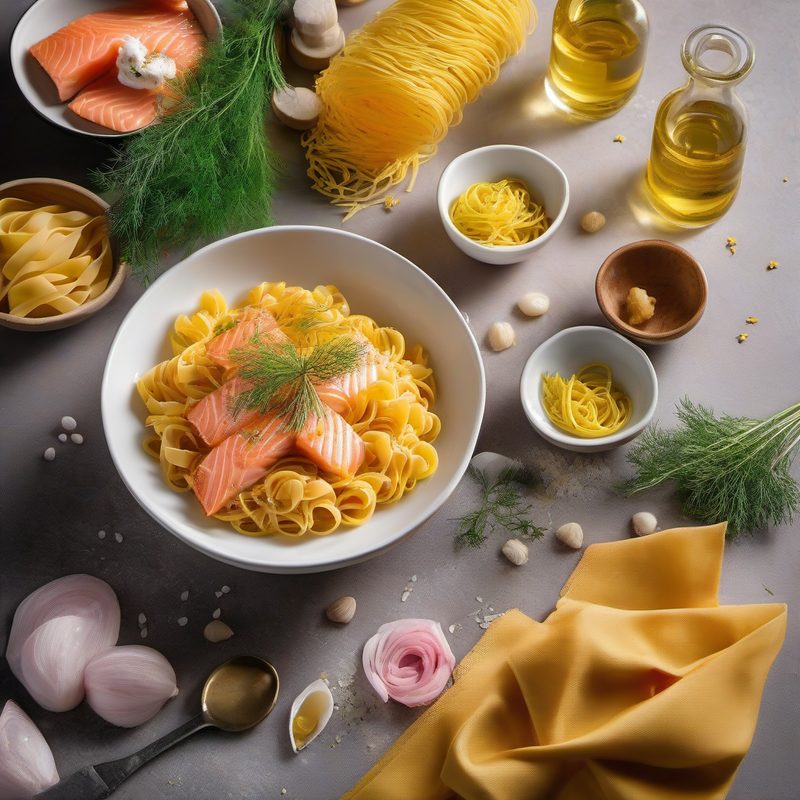
Saffron Pasta Salmon
A luxurious Lombard-inspired pasta where silky saffron cream meets tender salmon — elegant enough for company, quick enough for a weeknight.
| Amount | Ingredient |
|---|---|
| 350 g | Dried pasta (linguine, fettuccine, or spaghetti) |
| 250 g | Salmon fillet, skin removed, cut into 2-cm cubes |
| 1 pinch | Saffron threads (about 0.1 g) |
| 1 | Medium yellow onion, finely diced |
| 200 ml | Heavy cream |
| 3 tbsp | Extra-virgin olive oil |
| 50 g | Parmesan cheese (Parmigiano-Reggiano), finely grated |
| 2 tbsp | Hot water (for saffron infusion) |
| Salt and freshly ground black pepper, to taste |
Saffron Pasta with Salmon
> Note: The saffron infusion needs only 5 minutes to bloom — no overnight soaking required.
🥘 Equipment
- Large pot (6-qt) for pasta
- Large sauté pan or skillet (12-inch)
- Small bowl (for saffron infusion)
- Colander
- Chef's knife and cutting board
- Wooden spoon or tongs
- Microplane or fine grater
📋 Preparation
Step 1: Bloom the Saffron
Place the saffron threads in a small bowl and add 2 tablespoons of hot (not boiling) water. Let steep for 5 minutes while you prepare the remaining ingredients. The water will turn a deep golden-orange and release saffron's distinctive floral aroma.
Why bloom? Saffron's flavor compounds are water-soluble. Steeping in hot water unlocks its full color and fragrance far better than adding dry threads directly to the pan.
Step 2: Cook the Pasta
Bring a large pot of generously salted water (about 1½ tablespoons salt per 4 quarts water) to a rolling boil. Add the pasta and cook according to package directions until firmly al dente — about 1 minute less than the recommended time. Reserve 1 cup of the starchy pasta water before draining.
Step 3: Prepare the Salmon
While the pasta cooks, pat the salmon cubes dry with paper towels. Season generously with salt and freshly ground black pepper.
Step 4: Sauté the Aromatics
Heat the olive oil in a large sauté pan over medium heat. Add the finely diced onion and cook, stirring frequently, until translucent and softened — about 4 minutes. Do not let it brown.
Step 5: Cook the Salmon
Add the seasoned salmon cubes to the pan in a single layer. Cook without disturbing for 2 minutes, then gently flip each piece. Continue cooking for another 1-2 minutes, until the salmon is just cooked through but still moist and tender in the center. The total cook time for the salmon is about 3-4 minutes.
Step 6: Build the Sauce
Reduce the heat to medium-low. Pour the saffron-infused water (including the threads) into the pan. Add the heavy cream and stir gently to combine. Let the sauce simmer for 3 minutes, stirring occasionally, until slightly thickened. Taste and adjust salt and pepper.
Step 7: Combine and Finish
Add the drained pasta directly to the pan with the saffron cream sauce. Sprinkle the grated Parmesan over the top. Toss vigorously with tongs for 30-45 seconds, allowing the cheese to melt and the starchy pasta to help emulsify the sauce. If the sauce seems too thick, add reserved pasta water a tablespoon at a time until it reaches a silky, coat-every-noodle consistency.
Step 8: Serve Immediately
Divide among warm shallow bowls. Garnish with an extra grating of Parmesan, a twist of black pepper, and — if desired — a few additional saffron threads for visual appeal. Serve at once.
🧑🍳 Chef's Tips
- Quality saffron matters: Saffron is expensive, but cheap imitations deliver bitterness instead of fragrance. Look for deep red threads with orange tips — avoid powdered saffron, which is often adulterated.
- Don't overcook the salmon: Salmon continues cooking from residual heat. Aim for just-opaque centers; slightly translucent in the middle is fine — it will finish as you toss with the hot pasta.
- Pasta shape: Long, flat pastas like linguine or fettuccine are ideal — they catch the silky cream sauce beautifully. Short pastas like penne or rigatoni work too.
- The pasta water trick: Do not skip the reserved pasta water. The starch is essential for creating an emulsion that clings to each strand rather than pooling at the bottom.
- Room-temperature salmon: Let the cubed salmon sit at room temperature for 10 minutes before cooking for more even cooking.
❌ Common Mistakes
| Mistake | Why | Fix |
|---|---|---|
| Overcooking the salmon | Dry, flaky fish that crumbles into the sauce | Cook to just opaque — 3 minutes total is usually enough |
| Adding saffron too late | Uneven color and flavor | Bloom the saffron first, then add infused water and threads to the cream |
| Using pre-grated Parmesan | Clumpy sauce, dusty texture | Grate from a block just before using |
| Skipping the pasta water | Thin sauce that doesn't cling | Always reserve and add 1-2 tbsp per serving |
| Overcrowding the pan | Salmon steams instead of searing | Cook in a single layer; use a large pan |
💡 Variations
- Smoked Salmon Version: Substitute 200 g smoked salmon for fresh. Add it off-heat at the very end — just warm through, don't cook.
- Add Vegetables: Sauté 1 cup halved cherry tomatoes with the onion, or add a handful of baby spinach when you add the cream.
- Herb Infusion: Add 2 tbsp fresh chopped dill orflat-leaf parsley with the cream — dill and salmon are a classic pairing.
- Lighter Version: Replace heavy cream with half-and-half or a splash of pasta water mixed with 2 tbsp cream cheese.
- Spicy Kick: Add ½ tsp red pepper flakes with the onion for gentle heat that complements the saffron.
- Gluten-Free: Use a high-quality gluten-free linguine or spaghetti — the sauce works perfectly with rice or corn-based pastas.
❄️ Storage
This pasta is best enjoyed immediately — the cream sauce thickens as it cools and the salmon loses its delicate texture upon reheating. Leftovers can be refrigerated in an airtight container for up to 1 day. To reheat, warm gently in a skillet over low heat with a splash of milk or cream, tossing frequently. Do not microwave — it will toughen the salmon.
🍷 Wine Pairing
| Wine | Why |
|---|---|
| Gavi di Gavi (Cortese) | Crisp, mineral-driven acidity cuts through the cream and complements the saffron's floral notes |
| Verdicchio dei Castelli di Jesi | Bright citrus and almond undertones — a classic seafood-and-cream pairing |
| Franciacorta Brut | Sparkling elegance mirrors the dish's luxury; high acidity refreshes the palate |
| Pinot Grigio (Alto Adige) | Clean, structured, and food-friendly without overpowering the delicate saffron |
🍺 Beer Pairing
| Beer | Why |
|---|---|
| Italian Pilsner (e.g., Birra Moretti) | Clean, crisp carbonation cuts through the richness |
| Belgian Witbier | Spicy, citrusy notes echo the saffron's floral character |
| Helles Lager | Soft maltiness won't compete; lets the saffron shine |
🥗 Suggested Sides
- Arugula and fennel salad with lemon vinaigrette and shaved Parmigiano — the peppery bite contrasts the creamy pasta
- Sautéed asparagus with lemon zest and garlic
- Crostini with whipped ricotta and a drizzle of honey
- Stemmed artichokes with melted butter or olive oil
📊 Nutrition (per serving)
| Calories | Protein | Fat | Carbs | Fiber |
|---|---|---|---|---|
| 580 | 28 g | 26 g | 54 g | 3 g |
Based on 350 g dried pasta, 250 g salmon, and full cream/Parmesan quantities. Actual values may vary based on specific ingredients and pasta brand.
❓ FAQ
Can I use frozen salmon?
Yes — thaw completely in the refrigerator overnight, pat very dry, and proceed as directed. Frozen salmon releases more moisture, so you may need an extra minute of sauté time.
What if I can't find saffron?
Saffron is irreplaceable in this recipe, but a pinch of turmeric can mimic the color (not the flavor). Better to wait until you have real saffron.
Can I make this dairy-free?
Replace the heavy cream with full-fat coconut cream (the thick part from a can of coconut milk) and use nutritional yeast in place of Parmesan. The flavor profile will change significantly but remain delicious.
What pasta shape is traditional?
In Lombardy and the Alpine regions where saffron pasta is popular, tagliatelle or fettuccine are most common. Linguine and spaghetti are excellent modern substitutes.
🔗 Related Recipes
- Linguine with Lemon, Garlic & Shrimp
- Fettuccine Alfredo — The Original Roman Version
- Risotto alla Milanese (Saffron Risotto)
- Tagliatelle with Smoked Salmon & Dill Cream
🏷️ Search Tags
Recipe from The Italian Kitchen by Vita Milanese — Volume 1 · Pasta Perfetto. Discover all volumes on the ebook page.