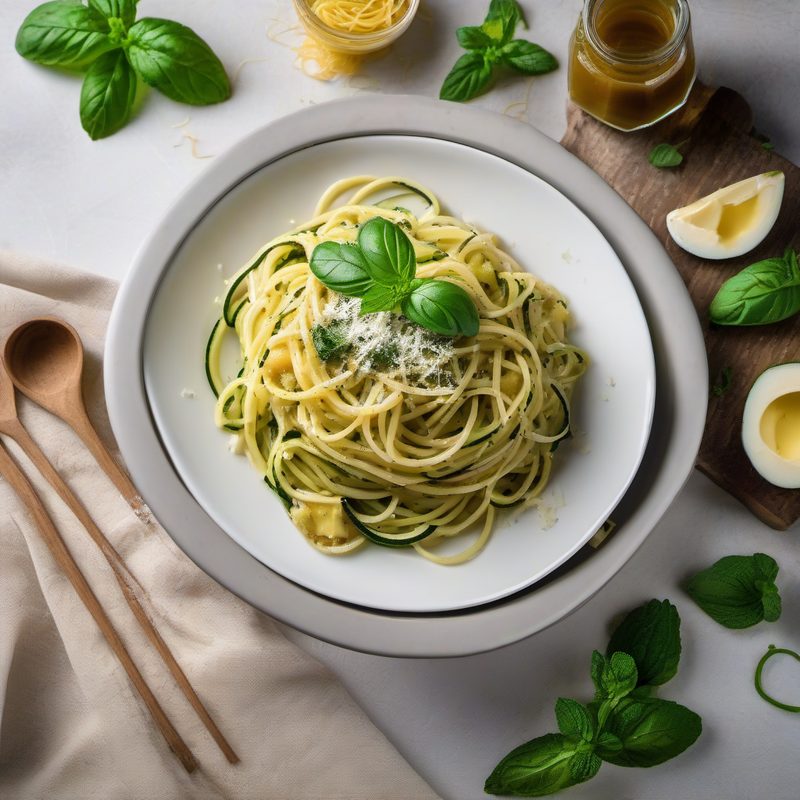
Spaghetti Pipuzzu
A humble, deeply savory Sicilian pasta where sweet spring onions are slowly softened in olive oil with anchovy and chili, then tossed with al dente spaghetti and crowned with crunchy toasted breadcrumbs and fresh parsley. Salty, spicy, herbaceous, and irresistibly textural — this is cucina povera at its most brilliant.
| Amount | Ingredient |
|---|---|
| 350 g | Spaghetti |
| 200 g | Spring onions (or scallions), including green tops |
| 4 | Anchovy fillets (oil-packed, drained) |
| 1 | Fresh red chili (or ½ tsp red pepper flakes) |
| 4 tbsp (60 ml) | Extra-virgin olive oil |
| 50 g | Coarse breadcrumbs (preferably homemade, see Chef's Tips) |
| ¼ cup (15 g) | Fresh flat-leaf parsley, finely chopped |
| As needed | Fine sea salt |
This is a pasta born of Sicilian thrift and resourcefulness. "Pipuzzu" refers to the green tops of spring onions — the part that many cooks throw away — transformed here into the soul of a quick, satisfying sauce. Gentle heat coaxes the onions to sweetness while anchovy fillets dissolve into the oil, creating an intense, briny base that clings to every strand of spaghetti. A single chili brings subtle warmth, toasted breadcrumbs add crunch in place of expensive cheese, and a shower of fresh parsley keeps everything bright. It's on the table in twenty minutes, uses exactly five main ingredients plus pantry staples, and delivers flavor that belies its simplicity — proof that the best Italian cooking is often the most frugal.
> Note: Active prep is minimal — the sauce comes together in the time it takes the pasta to cook. Have your breadcrumbs toasted and ready before you begin; the final toss is fast once the pasta is drained.
Use level tablespoons and standard US measuring cups. All produce is medium unless specified. Anchovy fillets are the small, flat, oil-packed fillets — not anchovy paste, which lacks the same depth and texture.
🥘 Equipment
- Large pot (6-quart / 6 L minimum) for boiling pasta
- 12-inch (30 cm) skillet or sauté pan (preferably stainless steel or nonstick)
- Chef's knife and cutting board
- Small skillet or baking sheet (for toasting breadcrumbs)
- Colander
- Tongs or pasta fork
- Measuring spoons
- Microplane or box grater (optional, for fine breadcrumbs)
📋 Preparation
Step 1 — Toast the Breadcrumbs (5 minutes)
Place 50 g of coarse breadcrumbs in a small, dry skillet over medium heat. Cook, stirring or shaking the pan constantly, until the breadcrumbs are golden brown and fragrant — 3 to 4 minutes. Immediately transfer to a small bowl to stop the cooking. Set aside.
Breadcrumbs go from golden to burnt in seconds once they start coloring. Keep them moving and pull them off the heat the moment they smell nutty and toasty. A light golden brown is the goal — they'll deepen slightly from residual heat.
If using the oven instead: Spread the breadcrumbs on a small baking sheet and toast at 350°F (175°C) for 5 to 7 minutes, stirring once halfway through. The even, dry heat of the oven produces a more uniform toast with less risk of burning.
Step 2 — Prepare the Spring Onions and Chili (5 minutes)
Trim the spring onions: Cut off the root ends and any wilted or discolored green tops. Thinly slice the spring onions crosswise into ¼-inch (6 mm) rounds — include both the white bulbs and the tender green tops. You should have about 2 cups loosely packed.
Prepare the chili: If using a fresh red chili, halve it lengthwise. For moderate heat, remove the seeds and white membrane; for more heat, leave them in. Finely dice the chili. If using red pepper flakes, measure out ½ teaspoon and set aside.
Pick the parsley: Pluck the leaves from ¼ cup worth of flat-leaf parsley sprigs and chop them finely. Set aside separately from the other ingredients — parsley goes in at the very end.
The green tops of spring onions are the centerpiece of this dish — don't discard them. They have a milder, more delicate flavor than the white bulbs and add a lovely fresh-green color to the finished pasta. Slice them uniformly so they cook at the same rate.
Step 3 — Start the Pasta (10 minutes, concurrent with Step 4)
Bring a large pot of generously salted water (about 1½ tablespoons kosher salt per 4 quarts / 4 L of water) to a rolling boil over high heat.
Add the 350 g spaghetti and cook according to package directions until firmly al dente — about 1 minute less than the suggested time (the pasta will finish cooking slightly in the sauce).
Just before draining, reserve 1 cup of the starchy pasta cooking water. Drain the spaghetti well (do not rinse). The clinging starch helps the sauce adhere.
Undercooking by 1 minute prevents the pasta from turning mushy when it meets the hot sauce. Reserve more pasta water than you think you'll need — the starch is essential for creating a silky, emulsified sauce.
Step 4 — Sauté the Spring Onions with Chili (7 minutes, concurrent with Step 3)
While the pasta cooks, place the 12-inch skillet over medium-low heat and add 4 tablespoons (60 ml) of extra-virgin olive oil. The gentler heat is deliberate — you want to coax sweetness from the onions, not brown or crisp them.
Add the sliced spring onions and diced fresh chili (or red pepper flakes). Season with a pinch of fine sea salt. Cook, stirring occasionally, until the spring onions are completely softened, translucent, and sweet — 5 to 7 minutes. They should collapse easily when pressed with a spoon but not take on any color beyond a pale, translucent gold.
Low-and-slow is the secret here. Spring onions are mostly water — high heat would cause them to release that water too quickly and either steam or fry into brown bits. Patience at medium-low allows their natural sugars to gently concentrate into sweetness while the texture turns meltingly tender. If you see browning at the edges, your heat is too high.
Step 5 — Melt the Anchovies (1 minute)
Add 4 anchovy fillets to the skillet with the softened onions. Increase the heat to medium. Use a wooden spoon or spatula to break the fillets apart, stirring constantly into the onion-oil mixture. The anchovies will dissolve into a fragrant, briny paste within 30 to 60 seconds — they should melt completely with no visible pieces remaining.
Don't be shy about mashing the anchovies into the onions. They aren't meant to be tasted as fish — they dissolve into a deep, savory complexity (umami) that makes the dish taste meaty and rich without a trace of fishiness. If you're skeptical about anchovies, start with 3 fillets; the result will still be deeply savory but slightly milder.
Step 6 — Toss the Pasta with the Sauce (2 minutes)
Add the drained spaghetti directly to the skillet with the spring onion-anchovy mixture. Add ⅓ cup (80 ml) of the reserved pasta cooking water. Increase the heat to medium-high and toss vigorously with tongs for 1 to 2 minutes, until the pasta is perfectly al dente and the sauce has thickened into a glossy, emulsified coating that clings to every strand.
If the pasta looks dry, add more pasta water 1 tablespoon at a time — you're looking for a loose, silky sheen, not a pool of liquid.
The quick toss over higher heat does three things: it finishes cooking the pasta, it allows the starch from the pasta water to bind with the olive oil into a creamy emulsion, and it ensures every strand is evenly coated. Work fast and keep the pasta moving — the entire process takes under 2 minutes.
Step 7 — Finish and Serve (1 minute)
Remove the skillet from the heat. Add the chopped parsley and toss once more to distribute.
Divide among warm shallow bowls. Top each serving with a generous spoonful of the toasted breadcrumbs — they should form a golden, crunchy crown on top of the pasta. Garnish with a few extra parsley leaves if desired. Serve immediately.
The breadcrumbs are not a garnish — they are an integral textural element, standing in for the grated cheese you might expect on a pasta dish. Their crunch contrasts beautifully with the silky, oil-coated spaghetti. Make sure every serving gets a generous spoonful on top, with extra passed at the table.
🧑🍳 Chef's Tips
- Make your own breadcrumbs. Homemade breadcrumbs from day-old rustic bread (ciabatta, sourdough, or country loaf) are vastly superior to the powdery, stale-tasting ones from a can. Tear stale bread into chunks and pulse in a food processor until coarse and irregular — some larger pieces for crunch, some smaller for fine coating. Store in an airtight container in the freezer for up to 3 months.
- Spring onions vs. scallions: In Sicily, "pipuzzu" refers specifically to the green tops of spring onions harvested early, before the bulb fully forms. Standard scallions (green onions) are an excellent substitute — their flavor is milder and the white bulbs are smaller, but the technique and result are nearly identical. Avoid mature bulb onions (yellow, red, Spanish) — they're too pungent and lack the delicate sweetness of spring onions.
- Toast breadcrumbs in olive oil for extra richness. For a more indulgent version, toast the breadcrumbs in 1 tablespoon of the olive oil (reduce the oil in the skillet accordingly). The oil-toasted crumbs are richer, crispier, and more golden.
- Fresh chili matters. Fresh red chili (Fresno, cayenne, or a small red Thai bird chili) adds a bright, fruity heat that dried flakes can't replicate. That said, red pepper flakes work beautifully in a pinch — use ½ teaspoon for medium heat.
- Salt the pasta water generously. The pasta is the only component that gets salted directly — the anchovies provide enough salt for the sauce. Use about 1½ tablespoons of kosher salt per 4 quarts of pasta water. The water should taste like the sea.
- No cheese. This is a classic Sicilian pasta senza formaggio — no cheese, not even Pecorino. The toasted breadcrumbs provide the savory crunch and textural contrast. If you absolutely must add cheese, a light dusting of grated Pecorino Romano or caciocavallo would be the most Sicilian choice, but purists would object.
- Don't skip the parsley. The fresh parsley is the only element that provides a clean, herbaceous counterpoint to the rich, savory anchovy oil. It brightens every bite and keeps the dish from feeling heavy.
- Warm your serving bowls. Place the bowls in a 200°F (93°C) oven for 5 minutes, or fill them with hot tap water and dry just before serving. Cold bowls will cause the oil to seize and the pasta to clump.
❌ Common Mistakes
| Mistake | Why It Hurts | The Fix |
|---|---|---|
| Burning the breadcrumbs | Burnt crumbs taste acrid and bitter, ruining the dish's delicate balance | Toast over medium heat, stirring constantly; remove the moment they turn golden and fragrant |
| Cooking the spring onions over high heat | The onions release water and either steam into mush or brown into bitterness instead of becoming sweet and translucent | Use medium-low heat and cook gently for 5–7 minutes — the goal is slow softening, not browning |
| Adding the anchovies too early (with the onions) | The anchovies cook too long and develop a harsh, fishy flavor instead of melting into a savory base | Add anchovies only after the onions are fully softened, then mash and dissolve quickly over medium heat |
| Skipping the pasta water | Without the starchy water, the olive oil and onion juices won't emulsify. You'll get a greasy, separated sauce rather than a silky coating | Always reserve at least 1 cup of pasta water before draining |
| Overcooking the pasta | Mushy spaghetti won't hold the sauce and makes the dish heavy and dull | Cook to firmly al dente (1 minute less than package directions) — the pasta finishes in the skillet |
| Rinsing the cooked pasta | Rinsing washes away the surface starch that helps the sauce cling and emulsify | Never rinse pasta. Drain it well but leave it wet with a few drops of cooking water |
| Adding parsley too early (with the hot pan) | The parsley wilts, turns dark, and loses its bright, herbaceous character | Stir in parsley off the heat at the very end, just before serving |
| Using too much chili | The chili overpowers the delicate sweetness of the spring onions and the savory depth of the anchovies | Start with half a small chili (or ¼ tsp red pepper flakes) — you can always add more, but you can't take it away |
| Serving in cold bowls | The olive oil solidifies and the pasta clumps together | Warm bowls in a low oven or with hot tap water before plating |
💡 Variations
| Variation | How To |
|---|---|
| Spaghetti alla Pipuzzu with Lemon | Add the zest of 1 lemon to the skillet with the anchovies, and a squeeze of lemon juice (about 1 tbsp) along with the pasta water. The bright acidity cuts through the richness and adds a fresh, sun-drenched Sicilian character. |
| Add Garlic | Add 2 thinly sliced garlic cloves to the skillet 30 seconds before the anchovies. The garlic infuses the oil with a sweet, nutty aroma that complements the anchovies beautifully. |
| Spicy Breadcrumbs | Add ¼ teaspoon of red pepper flakes to the breadcrumbs as they toast for an extra layer of heat that builds with every bite. |
| With Cherry Tomatoes | Add 1 cup (150 g) of halved cherry tomatoes to the skillet with the anchovies. Cook for 2 minutes until they soften and release their juices before adding the pasta. The sweet-acid burst of tomatoes is a natural Sicilian pairing. |
| Herb Swap | Substitute fresh mint or a mix of mint and parsley for the parsley alone. Mint is a classic Sicilian herb that pairs beautifully with spring onions and chili. |
| With Sardines | Replace anchovy fillets with 2 oil-packed sardine fillets (skin removed, broken into pieces). The flavor is fuller and more assertive — a nod to the famous pasta con le sarde of Palermo. |
| Pasta con le Sarde Lite | For a simplified version of Palermo's iconic pasta, add ¼ cup (30 g) of toasted pine nuts and 2 tablespoons of golden raisins (plumped in warm water for 10 minutes) along with the pasta. The sweet, nutty additions transform the dish into something more luxurious. |
| Gluten-Free | Use a high-quality gluten-free spaghetti (brown rice or chickpea-based). Cook according to package directions minus 1 minute and proceed as written. Note that gluten-free pasta releases less starch, so you may need slightly more pasta water to achieve the emulsion. |
| Vegan Version | Omit the anchovies and add 2 tablespoons of capers (rinsed and chopped) and 1 tablespoon of white miso paste dissolved in ¼ cup of the pasta water. The capers provide briny pops, and the miso delivers the savory depth that anchovies normally contribute. |
| Add a Soft-Cooked Egg | Top each serving with a soft-poached or medium-boiled egg. The runny yolk mingles with the anchovy oil and breadcrumbs to create an even richer, more luxurious sauce — a popular modern riff on the classic. |
| Kale or Chard Addition | Add 2 cups of finely chopped kale or Swiss chard stems and leaves to the skillet with the spring onions. Cook until wilted and tender — about 3 minutes longer — for a heartier, more substantial version that stretches the dish further. |
❄️ Storage & Leftovers
| Method | Details |
|---|---|
| Refrigerator | Store in an airtight container for up to 2 days. The breadcrumbs will lose their crunch and the pasta will continue to absorb oil, becoming softer. |
| Reheating | Reheat in a nonstick skillet over medium-low heat with a splash of water or pasta water, tossing frequently, until warmed through (about 3–4 minutes). Refresh with a drizzle of olive oil and a generous sprinkle of fresh toasted breadcrumbs and fresh parsley before serving — the fresh crumbs restore the textural contrast. Avoid the microwave, which makes the pasta rubbery and the breadcrumbs soggy. |
| Freezing | Not recommended. The olive oil emulsion breaks upon thawing, and the breadcrumbs and parsley lose all texture and vibrancy. The dish is so quick to make that leftovers are best eaten within a day or two at most. |
🍷 Wine Pairing
| Wine | Why |
|---|---|
| Grillo (Sicily) | The quintessential Sicilian white — full-bodied with ripe citrus, white peach, and a subtle almond finish. Its generous body stands up to the anchovy-rich olive oil sauce while its acidity keeps things fresh and bright. |
| Carricante (Etna Bianco, Sicily) | A crisp, mineral-driven white grown on the volcanic slopes of Mount Etna. Notes of green apple, lemon zest, and wet stone — the electric acidity cuts through the oil and anchovy like a knife, and the volcanic minerality echoes the dish's earthy spring onion base. |
| Catarratto (Sicily) | The most widely planted Sicilian white grape. Light, floral, and gently citrusy with a subtle bitter almond finish — a simple, honest wine for a simple, honest pasta. |
| Vermentino di Sardegna | Lean, herbal, and saline with green apple and white flower notes. The bright acidity and subtle bitterness pair perfectly with the anchovy's brininess and the chili's warmth. |
| Fiano di Avellino (Campania) | Medium-bodied with notes of pear, honeydew, and toasted almond — the nutty, slightly smoky character mirrors the toasted breadcrumbs while the acidity balances the oil. |
| Greco di Tufo (Campania) | Fuller-bodied than Fiano, with stone fruit, citrus, and a characteristic flinty, smoky note. Its weight and texture can handle the anchovy's intensity without being overpowered. |
| Etna Rosso (Nerello Mascalese, Sicily) | A light, ethereal red with bright red fruit, dried herbs, and volcanic earth. Serve slightly chilled (55°F / 13°C) — the modest tannins and high acidity make it a surprisingly excellent match for the anchovy and chili, a pairing that is common in eastern Sicily. |
| Cerasuolo di Vittoria (Sicily) | Sicily's only DOCG red — a blend of Nero d'Avola and Frappato. Light, fruity, and fragrant with cherry, wild strawberry, and floral notes. Serve cool (60°F / 15°C) for a bright, refreshing pairing that won't overpower the delicate spring onions. |
🍺 Beer Pairing
| Beer | Why |
|---|---|
| Italian Pilsner (Moretti, Peroni, Birrificio Italiano Tipopils) | Clean, crisp, and highly carbonated — the noble hop bitterness cuts through the olive oil and anchovy richness, while the light, crackery malt lets the spring onion flavor shine. |
| Sicilian Craft Pale Ale (e.g., Birra del Bosco, Baladin) | A citrus-forward, moderately bitter pale ale that echoes the chili's warmth and complements the anchovy's savory depth. The bright hop character lifts the dish. |
| Belgian Saison | Fruity, spicy, and bone-dry with high carbonation — the yeast-driven complexity (pepper, clove, citrus) harmonizes with the chili and parsley, while the effervescence cleanses the palate. |
| Vienna Lager | Malty, smooth, and slightly sweet — the caramel and toast notes mirror the toasted breadcrumbs and provide a comforting, warming backdrop to the briny anchovy sauce. |
| Gose (German Sour Wheat Ale) | Salty, tart, and lightly herbal with coriander — the saltiness resonates with the anchovies, while the acidity cuts through the oil. An unconventional but surprisingly complementary pairing. |
🥗 Suggested Side Dishes
- Simple fennel and orange salad — Thinly sliced raw fennel bulb, orange segments, black olives, olive oil, and flaky salt. The bright, refreshing citrus and crunch are the perfect palate-cleansing counterpart to the rich, savory pasta.
- Grilled eggplant with mint and lemon — Thick slices of eggplant grilled until smoky and tender, dressed with fresh mint, lemon juice, and olive oil. A classic Sicilian contorno that echoes the rustic, southern character of the pasta.
- Arugula salad with lemon and shaved Parmigiano — Peppery arugula tossed with lemon juice, good olive oil, flaky salt, and thin shavings of Parmigiano-Reggiano. The bitter greens cut through the oil richness.
- Roasted peppers with capers and oregano — Strips of roasted red and yellow bell peppers dressed with capers, oregano, and a splash of red wine vinegar. Sweet, tangy, and herbaceous.
- Warm chickpeas with rosemary and garlic — Canned chickpeas warmed in olive oil with garlic, rosemary, and a pinch of chili. The creamy legumes add substance and protein alongside the pasta.
- Crusty siciliana or pane cafone — A good, crusty Sicilian bread is essential for sopping up every last drop of the anchovy-olive-oil sauce from the bottom of the bowl.
📊 Nutrition (per serving, estimated)
| Calories | Protein | Fat | Carbs | Fiber |
|---|---|---|---|---|
| 495 | 14 g | 18 g | 68 g | 4 g |
Nutrition values are estimates based on 4 servings using 350 g dried spaghetti, 4 tbsp extra-virgin olive oil, 200 g spring onions, 4 anchovy fillets, 50 g breadcrumbs, 1 small fresh chili, and ¼ cup fresh parsley. The toasted breadcrumbs contribute approximately 50 calories per serving. Actual values will vary based on specific ingredients, oil absorption, and portion sizes. This dish is surprisingly balanced for a pasta — the olive oil provides heart-healthy monounsaturated fats, the anchovies deliver protein and omega-3s, and the spring onions contribute fiber and antioxidants.
❓ Frequently Asked Questions
What is "pipuzzu"?
Pipuzzu is the Sicilian dialect word for the green tops of spring onions — the tender, hollow green stems that are often discarded or used only as a garnish. In this dish, they are the star ingredient, cooked slowly until sweet and silky. The word derives from the Sicilian "cipudduzza" (little onion) or "cipuddazza" (spring onion).
Can I use regular onions instead of spring onions?
Not ideally. Mature bulb onions (yellow, white, or red) are too pungent and lack the delicate sweetness and tender texture of spring onions. If spring onions or scallions are unavailable, use the white and light-green parts of 6 to 8 large scallions combined with 1 small leek (white and pale-green parts only, thoroughly washed, thinly sliced). The leek adds a similar gentle onion sweetness.
Are anchovies essential? Can I skip them?
Anchovies are essential to the character of this dish — they melt into the oil and create a deep, savory (umami) base without tasting fishy. That said, for a vegetarian version, substitute 2 tablespoons of rinsed and chopped capers plus 1 tablespoon of white miso paste dissolved in ¼ cup of the pasta water. The capers provide briny pops, and the miso delivers the savory depth. The result will be different but delicious.
Why no cheese?
In Sicily, this pasta is traditionally served without cheese — the toasted breadcrumbs provide the savory crunch and textural contrast that cheese might otherwise contribute. Many Sicilian pasta dishes, particularly those with seafood or anchovies, are served senza formaggio (without cheese), as the strong flavor of cheese is thought to clash with the delicate flavors of the sea.
Can I make the breadcrumbs ahead of time?
Yes. Toasted breadcrumbs keep well in an airtight container at room temperature for up to 3 days. For longer storage, keep them in the freezer for up to 3 months — they don't need to be thawed before using. Refresh briefly in a dry skillet over medium heat (1 to 2 minutes) if they've lost their crunch.
What's the best bread for homemade breadcrumbs?
Day-old rustic Italian bread (ciabatta, pane di casa, or a good sourdough) with a firm, chewy crumb is ideal. Avoid soft, airy sandwich bread — it produces fine, dusty crumbs that don't provide the same craggy texture. A mix of fine and coarse crumbs is perfect: the fine ones cling to the pasta, and the coarse ones provide crunch.
Do I need to devein the anchovies?
No. Oil-packed anchovy fillets from a jar or tin are already cleaned, filleted, and cured. Simply drain them from the oil and add them directly to the pan. (If using salt-packed anchovies, you'd need to rinse, fillet, and soak them — but oil-packed are the standard for home cooking and perfectly fine here.)
Can I use dried chili instead of fresh?
Absolutely. Use ½ teaspoon of red pepper flakes (or more, to taste). Add them to the skillet with the spring onions so their flavor infuses the oil as the onions soften. Fresh chili adds a brighter, fruitier heat, but dried flakes are a perfectly acceptable substitute.
What pasta shape works best?
Spaghetti is traditional — the long, thin strands are ideal for capturing the silky, clinging sauce. Linguine, spaghettini, or bucatini also work beautifully. Short shapes like penne or orecchiette can be used, but the sauce tends to pool inside the shapes rather than coating each piece evenly. Avoid angel hair (capellini) — it's too delicate for the chunky breadcrumb topping.
My sauce looks greasy instead of creamy. What went wrong?
The olive oil hasn't properly emulsified with the pasta water. This usually happens when there isn't enough starchy pasta water, or when the pasta wasn't tossed vigorously enough. Add 2 to 3 tablespoons of hot pasta water and toss energetically for 30 seconds — the extra starch should help the oil and water bind into a smooth, glossy emulsion.
Is this dish traditionally served as a primo or a main course?
In Sicily, spaghetti alla pipuzzu is typically served as a primo piatto (first course) as part of a larger meal, followed by a meat, fish, or vegetable second course. In a modern home setting, it works beautifully as a main course with a simple salad or vegetable side — the breadcrumbs and olive oil make it satisfying enough to stand on its own.
🔗 Related Recipes
- Pasta con le Sarde (Sicilian Sardine Pasta) — page 294 (The iconic Palermitan pasta with sardines, wild fennel, pine nuts, and raisins)
- Spaghetti Aglio, Olio e Peperoncino (Garlic, Oil, and Chili Spaghetti) — page 15 (The Roman minimalist classic — a spiritual cousin to this dish)
- Spaghetti con le Acciughe e Mollica (Spaghetti with Anchovies and Breadcrumbs) — page 312 (A Neapolitan version that shares the anchovy-breadcrumb pairing)
- Pasta Cacio e Pepe (Cheese and Pepper Pasta) — page 348 (Another minimalist pasta that relies on technique and few ingredients)
- Tagliolini con le Cipolle (Tagliolini with Onions) — page 210 (A delicate, butter-enriched onion pasta from Lombardy — a northern contrast to this Sicilian version)
- Pasta con la Mollica (Sicilian Pasta with Breadcrumbs) — page 370 (The broader Sicilian tradition of using toasted breadcrumbs in place of cheese)
- Pasta alla Norma (Eggplant Pasta from Catania) — page 320 (Sicily's most famous pasta — a perfect companion recipe for exploring Sicilian primi)
- Caponata Siciliana (Sweet-and-Sour Eggplant) — page 85 (The classic Sicilian antipasto that pairs beautifully as a starter before this pasta)
🏷️ Search Tags
| Photo | Notes |
|---|---|
| — | No photo available for this recipe. Spaghetti alla Pipuzzu is best photographed in a wide, shallow rustic ceramic bowl, the spaghetti glistening with golden-green olive oil and studded with tender pale-green spring onion slices. A generous crown of golden toasted breadcrumbs blankets the top, with a scattering of fresh green parsley. The bowl sits on a weathered wooden table in warm, diffused daylight — trattoria-style. Steam rises gently from the pasta. |
Recipe from "The Italian Kitchen" by Vita Milanese — Volume 1: Pasta Perfetto
Recipe from The Italian Kitchen by Vita Milanese — Volume 1 · Pasta Perfetto. Discover all volumes on the ebook page.