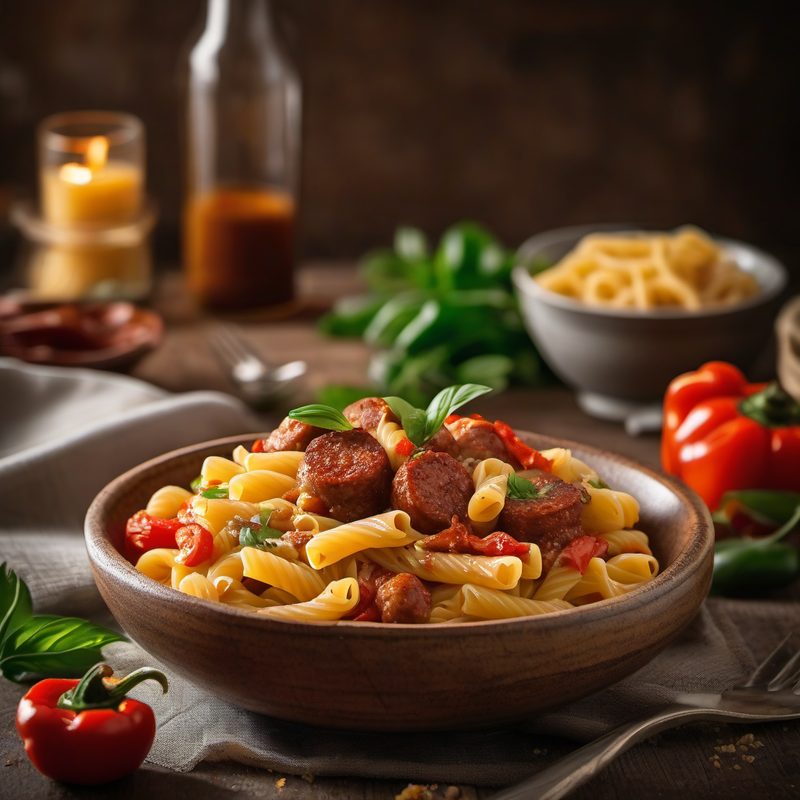
Acciugata Spaghetti
A five-minute pantry pasta from Tuscany — anchovy fillets dissolve into a silky, umami-packed cream with garlic, chili, and olive oil, ready before your spaghetti is even al dente.
| Amount | Ingredient |
|---|---|
| 400 g (14 oz) | Spaghetti |
| 8–10 | Anchovy fillets, oil-packed |
| 2 | Garlic cloves |
| — | Extra-virgin olive oil, a generous drizzle |
| 1 | Fresh chili (or ½ tsp red pepper flakes) |
| — | Fresh parsley, a handful, finely chopped |
| — | Breadcrumbs, toasted (optional, for topping) |
| — | Salt, for pasta water only |
🥘 Equipment
- Large pot (6-qt) for pasta
- Large sauté pan or skillet (12-inch)
- Chef's knife
- Cutting board
- Colander
- Wooden spoon or tongs
- Ladle
📋 Preparation
Step 1 — Prepare the Aromatics (2 min)
Peel and thinly slice the garlic cloves. Finely chop the fresh chili (remove seeds for less heat). Pick and chop the parsley.
For a milder heat, use a whole dried chili and remove it before adding the anchovies.
Step 2 — Start the Sauce (3 min)
Heat a generous drizzle of olive oil in a large skillet over medium-low heat. Add the sliced garlic and chili. Sauté gently for 1–2 minutes until the garlic is fragrant and just beginning to turn golden — do not let it brown or burn.
Low and slow is the secret here. Burnt garlic turns bitter and will ruin the delicate anchovy cream.
Step 3 — Dissolve the Anchovies (2 min)
Add the anchovy fillets to the pan. Stir continuously with a wooden spoon, breaking the fillets apart as they warm. They will dissolve into a fragrant, rust-colored cream in about 1–2 minutes. Reduce the heat to the lowest setting and keep warm.
Good-quality anchovy fillets packed in olive oil are essential — they should dissolve effortlessly. Lower-quality fillets may be too salty or stringy.
Step 4 — Cook the Pasta (9 min)
While the sauce cooks, bring a large pot of generously salted water to a rolling boil. Add the spaghetti and cook according to package directions until al dente. Before draining, reserve about 1 cup (240 ml) of pasta water.
Step 5 — Toss and Emulsify (1 min)
Add the hot, drained spaghetti directly to the skillet with the anchovy cream. Toss vigorously over low heat, adding the reserved pasta water a splash at a time — about ½ cup (120 ml) — until a silky, creamy sauce forms that coats every strand.
The starchy pasta water is the key to the emulsion. It loosens the anchovy cream and helps it cling to the pasta without becoming greasy.
Step 6 — Serve Immediately
Divide among warm bowls. Top each with a generous sprinkle of fresh parsley and, if using, toasted breadcrumbs for a crunchy contrast. Finish with a drizzle of raw olive oil and serve at once.
🧑🍳 Chef's Tips
- Quality anchovies matter: Use the best oil-packed anchovy fillets you can find — look for jars or tins from Italy (brands like Agostino Recca, Ortiz, or Cento). Avoid anchovy paste, which has a harsh, one-note flavor.
- The breadcrumb topping: Optional but transformative. Toast fresh breadcrumbs in a dry skillet over medium heat until golden, about 2–3 minutes. They add a lovely crunch that contrasts with the silky pasta.
- Go easy on the salt: The anchovies provide plenty of salt. Taste before adding any extra salt, and remember that the pasta water is already salted.
- Reserve plenty of pasta water: The sauce thickens as it cools. Having extra pasta water on hand lets you revive it at the table with a quick splash.
- No chili, no problem: A pinch of red pepper flakes works beautifully if you don't have a fresh chili.
❌ Common Mistakes
| Mistake | Why It Happens | How to Avoid |
|---|---|---|
| Bitter, harsh anchovy flavor | Anchovies burnt or garlic browned | Cook garlic and chili over low heat; add anchovies once garlic is fragrant, not brown |
| Sauce is greasy or separated | Too much oil, not enough pasta water | Use a generous but measured drizzle of oil; emulsify with starchy pasta water |
| Pasta is dry and clumpy | Not enough pasta water added | Add pasta water gradually — the sauce should flow like a silky cream |
| Dish is too salty | Over-salted pasta water + salty anchovies | Use less salt in pasta water than usual; the anchovies and cheese (if using) provide enough |
| Anchovies won't dissolve | Heat too low or poor-quality fillets | Use good-quality fillets; ensure the pan is warm enough for them to melt into a cream |
💡 Variations
- Add capers: A tablespoon of rinsed capers added with the anchovies gives a briny, Mediterranean punch.
- Go green: Stir in a handful of fresh arugula or baby spinach with the hot pasta — it will wilt from the residual heat.
- Make it cheesy: Sprinkle with pecorino or Parmigiano at the end for an extra savory layer.
- Add olives: A handful of pitted, chopped black olives (Gaeta or Taggiasca) adds a fruity, briny note.
- Use different pasta: Linguine, bucatini, or even a short shape like penne all work beautifully.
- Lemon finish: A squeeze of lemon juice and some lemon zest brightens the anchovy richness beautifully.
❄️ Storage
Best eaten immediately — this is a pasta that waits for no one. If you have leftovers, they can be refrigerated in an airtight container for up to 2 days. Reheat gently in a pan with a splash of pasta water or olive oil to restore the silky consistency.
🍷 Wine Pairing
| Wine | Why |
|---|---|
| Vernaccia di San Gimignano | A crisp, mineral-driven white from Tuscany with citrus and almond notes — a classic match for this very Tuscan dish |
| Vermentino | Bright acidity and a saline finish that echoes the anchovies |
| Gavi di Gavi | Clean, precise, and elegant — lets the anchovy and garlic shine |
| Soave Classico | Light-bodied with almond and herbal notes that complement the parsley and chili |
| Prosecco Brut | The bubbles and acidity cut through the richness of the oil-based sauce |
🥗 Suggested Sides
- Simple arugula salad with lemon vinaigrette — the peppery greens and acidity balance the rich, savory pasta
- Grilled bread rubbed with garlic — for sopping up every last drop of anchovy cream
- Roasted cherry tomatoes — a sweet, acidic counterpoint to the salty anchovies
📊 Nutrition (per serving)
| Calories | Protein | Fat | Carbs | Fiber |
|---|---|---|---|---|
| 520 | 18 g | 14 g | 78 g | 3 g |
❓ FAQ
Can I use canned anchovies instead of jarred?
Yes, canned anchovies work fine. Drain them well and pat dry before using. The quality may vary more than jarred, so taste first.
Why do my anchovies refuse to dissolve?
Two likely reasons: (1) the heat is too low — the oil needs to be warm enough to melt the fillets; or (2) you're using low-quality anchovies that are too dry. Good anchovy fillets in oil should dissolve like butter in a warm pan.
What if I don't have fresh chili?
Use ½ teaspoon of red pepper flakes (or more, to taste). Add them with the garlic in Step 2.
Is this dish gluten-free?
It can be — use gluten-free spaghetti and ensure your breadcrumbs (if using) are also gluten-free.
Can I make this vegan?
Yes. Use a high-quality vegan anchovy substitute (some are made from olives or seaweed) and skip the pecorino. The technique remains the same.
🔗 Related Recipes
- Pasta with Anchovy Cream (#235) — A Sicilian twist on anchovy pasta, with a creamy breadcrumb-based sauce
- Ortigia Linguine (#188) — Sicilian linguine with anchovies, breadcrumbs, and a touch of saffron
- Recommone Linguine (#206) — A Campanian anchovy-and-walnut pasta with a rustic charm
- Faccia Gialla Spaghetti (#208) — Saffron and anchovy spaghetti from the Amalfi coast
🏷️ Search Tags
📸 Photo Reference
Photo reference: `vol1_262.png` — An overhead or slightly angled shot of a wide, shallow white ceramic bowl filled with spaghetti all'acciugata. The spaghetti is glossy and golden from the anchovy-chili oil emulsion, with visible flecks of red chili and green parsley. A generous sprinkle of toasted breadcrumbs (if used) adds texture and pale golden contrast. Beside the bowl: a small rustic dish of extra anchovy fillets in oil, a head of garlic, a fresh red chili, a sprig of parsley, and a cruet of olive oil on a worn wooden Tuscan table. The lighting is warm and diffused, suggesting a cozy farmhouse kitchen. The overall mood is rustic, quick, and intensely satisfying.
Recipe from "The Italian Kitchen" by Vita Milanese — Volume 1: Pasta Perfetto 🍝
Recipe from The Italian Kitchen by Vita Milanese — Volume 1 · Pasta Perfetto. Discover all volumes on the ebook page.