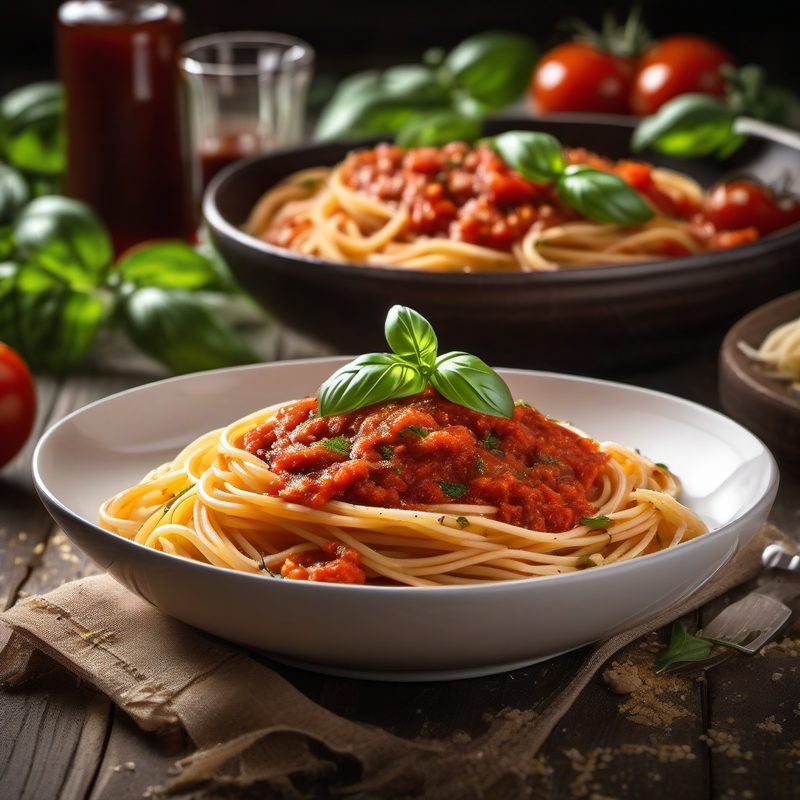
Spaghetti Chiummenzana
Category: Primi piatti, Cucina napoletana
| Amount | Ingredient |
|---|---|
| Calories | ≈ 530 kcal |
| Protein | 12 g |
| Fat | 20 g |
| Saturated Fat | 3 g |
| Carbohydrates | 76 g |
| Fiber | 4 g |
| Sugar | 6 g |
| Sodium | 380 mg |
Servings: 4
Total Time: 25 minutes
Active Time: 20 minutes
Skill Level: Beginner
Source: Naples, Campania — a rustic, rapid cherry tomato sauce that celebrates the sun-drenched sweetness of the Campanian coast
1. Why This Recipe Works
Spaghetti alla Chiummenzana is Neapolitan simplicity at its finest — a no-cook-necessary sauce that comes together entirely in the time it takes to boil pasta. This is not a slow-simmered ragù; it is a quick, aggressive toss that relies on intense heat and ripe cherry tomatoes to create a bright, chunky sauce in under five minutes. The key is sugar and heat synergy: halved cherry tomatoes are cooked on high heat, face-down, until the skins blister and the flesh collapses into a pulpy, juicy suspension, concentrating their natural sweetness while the pan's ferocious heat caramelizes the cut surfaces. Garlic, gently sizzled in olive oil before the tomatoes go in, infuses the oil with fragrance without scorching — a critical nuance in a dish where the oil carries the entire flavor profile. Fresh basil, torn at the very last second and tossed off the heat, releases its volatile aromatics without wilting into blackened shreds. The spaghetti, cooked aggressively al dente and finished in the starchy, tomato-flecked pan juices, absorbs the sauce from within rather than simply wearing it on the outside. The result is a pasta dish that tastes far more complex than its five-ingredient lineup suggests — proof that restraint, not complication, is the soul of Neapolitan cooking.
3. Before You Begin
- Cherry tomato selection: Not all cherry tomatoes are created equal for this dish. Look for small, intensely sweet varieties such as Datterini (date-shaped) or Pomodorino del Piennolo from Vesuvius — they hold their shape better and burst with concentrated sweetness. Standard supermarket cherry tomatoes work fine, but if they are pale or watery, the sauce will lack intensity. Avoid grape tomatoes, which are meatier and less juicy.
- Halve the tomatoes precisely: Halve each cherry tomato lengthwise (through the stem end). Uneven halves will cook at different rates — the sauce should be chunky, not a mix of burnt shreds and raw cores.
- No stirring the pasta pot: Spaghetti benefits from occasional gentle stirring for the first 2 minutes to prevent sticking, but don't over-agitate — vigorous stirring can break strands. Swirl the spaghetti into the pot so it softens and curls around the perimeter.
- Reserve more pasta water than you think: Even though this sauce is chunky and the pasta is simply tossed, a splash of starchy water helps the sauce cling and creates a light, emulsified sheen. Reserve a full cup; you may not need it all, but running out mid-toss is a ruinous pain.
- Work quickly in the final minute: The sauce comes together in a furious 5-minute burst, and the spaghetti must hit the pan the moment it is drained. Have your serving bowls warmed, the basil torn, and the cheese grater at the ready before you drop the pasta.
4. Equipment
- Large pot (6–8 qt) for pasta
- Large skillet or sauté pan (12-inch / 30 cm) — wide enough to hold the tomatoes in a single layer
- Chef's knife and cutting board
- Colander
- Tongs or pasta fork
- Measuring spoons
- Ladle or heatproof measuring cup (for reserving pasta water)
- Large serving bowl (warmed)
5. Key Steps at a Glance
- Cook spaghetti → Reserve 1 cup pasta water → drain al dente.
- Sauté garlic → Thinly sliced garlic in olive oil over medium heat until fragrant and pale gold — not browned.
- Cook tomatoes → Add halved cherry tomatoes cut-side down → increase heat to high → cook undisturbed 3 minutes until blistered and beginning to collapse.
- Crush & emulsify → Crush tomatoes with a wooden spoon → add ½ cup pasta water → simmer 1–2 minutes until saucy.
- Toss pasta → Add hot drained spaghetti → toss vigorously with tongs → adjust consistency with pasta water.
- Finish → Remove from heat → toss with torn basil → serve immediately.
6. Step-by-Step Instructions
Step 1: Cook the Spaghetti
- Bring a large pot of generously salted water to a rolling boil (about 1½ tbsp kosher salt per 4 quarts / gallon of water — it should taste distinctly salty like seawater).
- Add the spaghetti and cook according to package directions until al dente (typically 8–10 minutes; start checking 1 minute before the package suggests). The pasta should be tender but still offer gentle resistance when bitten, with a faint white pinpoint at its core.
- Reserve 1 cup (240 ml) of the pasta cooking water.
- Drain the spaghetti in a colander. Do not rinse — the surface starch is essential for helping the coarse sauce cling.
Step 2: Sauté the Garlic
- While the spaghetti cooks, heat 4 tablespoons (60 ml) of extra-virgin olive oil in a large 12-inch skillet over medium heat.
- Add the thinly sliced garlic and cook, stirring constantly, until fragrant and just turning pale gold — about 45–60 seconds. The garlic should be soft, translucent, and aromatic, with no browning whatsoever. Avoid even a hint of color; burnt garlic adds bitterness that overwhelms the sweet tomatoes. If the garlic browns before the tomatoes are added, the pan is too hot — lift the pan off the heat briefly.
Step 3: Cook the Cherry Tomatoes
- Add the halved cherry tomatoes to the skillet, arranging them cut-side down in a single layer as much as possible (crowding is acceptable as the tomatoes shrink, but strive for a single layer for maximum caramelization).
- Increase the heat to high. Let the tomatoes cook undisturbed for 3 minutes. Listen for a steady sizzle — if the pan is quiet, the heat is too low. The tomatoes should blister, char lightly on their flat cut surfaces, and begin to release their juices. The visual cue: the pan bottom will be speckled with brown caramelized tomato sugars, and the oil will have turned a deep sunset orange.
- After 3 minutes, add a large pinch of salt (and ¼ teaspoon red pepper flakes if using). Use the back of a wooden spoon to gently crush the tomatoes against the pan walls — you want a chunky, rustic sauce, not a smooth purée. Most tomatoes should collapse, but a few intact halves are desirable for texture.
- Pour in ½ cup (120 ml) of the reserved pasta water. Stir to scrape up any browned bits (fond) from the pan bottom — this is pure flavor. Let the sauce bubble vigorously over high heat for 1–2 minutes until it thickens slightly and the oil emulsifies with the starchy water into a cohesive, spoon-coating sauce. The sauce should be loose enough to tumble but thick enough to coat the back of a spoon — not watery.
Step 4: Toss Spaghetti with Sauce
- Add the hot drained spaghetti directly to the skillet. Turn off the heat.
- Toss vigorously with tongs for 30–45 seconds, lifting and turning the pasta to coat every strand in the chunky sauce. The starchy pasta water in the skillet will emulsify with the olive oil, creating a silky, clingy finish.
- If the sauce seems too dry or the pasta looks dull, add more reserved pasta water 1 tablespoon at a time, tossing after each addition, until the spaghetti shines with a glossy, emulsified coating — not swimming, but each strand slicked with orange-tinged oil and studded with tomato bits.
Step 5: Finish and Serve
- Tear the basil leaves directly into the skillet (about 10–12 large leaves). Toss once or twice to distribute. The residual heat will wilt the basil slightly and release its aroma — tear rather than chop, as torn edges release more essential oils and the irregular pieces look rustic and appealing.
- Taste and adjust salt — cherry tomatoes vary widely in sweetness, and the sauce may need a finishing pinch of salt to balance their acidity.
- Divide the spaghetti among warmed serving bowls, twirling each portion into a neat nest using tongs. Top each serving with a few small basil sprigs or a final torn basil leaf. Drizzle a tiny ribbon of finishing-quality extra-virgin olive oil over each plate — about 1 teaspoon per serving — for an extra layer of fruity perfume. Serve immediately.
7. Visual Cues — What to Look For
| Step | Visual Cue |
|---|---|
| Sautéed garlic | Pale gold, translucent, fragrant — not brown |
| Tomatoes after 3 min high heat | Cut surfaces blistered and caramelized; skins puckered and splitting; juices pooling orange |
| Pan bottom after tomatoes | Speckled with dark brown caramelized tomato sugars (fond) |
| Sauce consistency | Chunky, flowing — individual tomato bits visible, oil emulsified with starchy water |
| Pasta after tossing | Each strand slicked with orange-tinged oil; chunky tomato bits clinging to surface |
| Final dish | Bright, appetizing medley of red/orange sauce studded with green basil; no pools of separated oil |
| Plated spaghetti | Neat twirled nest with sauce pooling at the base of the bowl |
8. Recipe Notes & Troubleshooting
| Issue | Cause | Fix |
|---|---|---|
| Sauce is watery / thin | Tomatoes were under-ripe or watery; heat too low | Cook over high heat, uncovered, for 2 more minutes to reduce; next time choose sweeter, riper tomatoes |
| Sauce is too thick / dry | Not enough pasta water added | Add reserved pasta water 1–2 tbsp at a time while tossing — the sauce should coat, not clump |
| Garlic is bitter / burnt | Heat too high; garlic added too early | Start over — burnt garlic cannot be saved. Next time use lower heat; the garlic should only turn pale gold |
| Tomatoes won't blister | Pan not hot enough; overcrowded | Crank heat to high; resist the urge to stir for the first 3 minutes. Cook in two batches if your pan is small |
| Sauce tastes flat / acidic | Not enough salt; no pasta water emulsification | Add more salt; add 1–2 tbsp pasta water and toss vigorously — the starch balances acidity |
| Spaghetti clumps together | Drained too early; not tossed immediately | Toss with sauce immediately after draining; if already clumped, rinse briefly with hot water and re-toss |
| Sauce doesn't cling | Pasta rinsed after draining | Never rinse pasta — the surface starch is essential; cook spaghetti 1 minute less next time so it releases more starch |
| Too oily / separated | Oil and water not emulsified | Add 2 tbsp pasta water and toss fiercely — the starch acts as a binder; next time crush more tomatoes into the oil |
| Basil turned black | Added to blazing hot pan; cooked too long | Always add basil off the heat; tear, don't chop, and toss just once — residual heat is enough |
9. Make-Ahead Tips
- Cherry tomato sauce (up to 3 days ahead): Complete the sauce through Step 3 (crush and simmer with pasta water), then cool completely. Transfer to an airtight container and refrigerate. To serve, reheat the sauce gently in the skillet over medium heat, adding 2–3 tablespoons of water to loosen it. Cook and drain fresh spaghetti, then toss with the reheated sauce as directed.
- Freezing (up to 3 months): The cherry tomato sauce freezes beautifully — the high pectin content of cherry tomatoes helps it retain texture. Cool completely, transfer to a freezer-safe container or zip-top bag, press out air, and freeze. Thaw in the refrigerator overnight, then reheat gently in a skillet before tossing with freshly cooked spaghetti.
- Garlic-infused oil (up to 1 week): For an even speedier version, make garlic oil ahead. Gently heat the olive oil with sliced garlic over the lowest possible heat for 5–6 minutes until fragrant but not colored. Strain out the garlic (reserve for another use) and store the oil in a sealed jar in the refrigerator. Use this pre-infused oil to start the sauce — you'll save a minute and the oil will have a gentler, more evenly distributed garlic flavor.
- Spaghetti with sauce (not recommended): This dish is best eaten immediately. The sauce separates upon standing, and leftover cooked pasta turns mushy when reheated. If you must reheat, undercook the spaghetti by 2 minutes, shock in cold water, toss with a little olive oil, and refrigerate separately from the sauce. Combine and reheat in a skillet with a splash of water — the texture will be passable but never as good as fresh.
10. Variations
- Spaghetti alla Chiummenzana con le Alici (with anchovies): Add 4–6 anchovy fillets to the olive oil with the garlic, mashing them with a wooden spoon until they dissolve into the hot oil. This is a classic Neapolitan variation — the anchovies add a deep, briny umami that melds with the sweet tomatoes without making the dish taste fishy.
- Spaghetti alla Chiummenzana con Capperi e Olive (with capers and olives): Add 2 tablespoons salted capers (rinsed) and ¼ cup pitted Gaeta or Taggiasca olives to the skillet with the crushed tomatoes. The briny-salty contrast cuts through the sweet acidity of the cherry tomatoes beautifully.
- Spicy Chiummenzana (Puttanesca-inflected): Increase red pepper flakes to ½–1 teaspoon. Add 2 anchovy fillets and a handful of pitted black olives. This bridges Chiummenzana and the more assertive Puttanesca tradition — the name changes, but the spirit is pure Campania.
- Spaghetti alla Chiummenzana con Ricotta: Dollop 4–6 tablespoons of fresh, creamy ricotta (preferably sheep's milk) onto each serving just before serving. The cool, rich cheese is a stunning contrast to the bright, hot tomato sauce. Do not stir it in — leave it as a white cloud on top for the diner to mix in at will.
- Gluten-free version: Substitute 350 g of a high-quality gluten-free spaghetti (brown rice and corn blend works best — avoid 100% rice pasta, which turns mushy). Cook according to package directions but test 1 minute early, as gluten-free pasta goes from perfect to pasty quickly. Reserve extra pasta water, as GF starches release differently and may need more liquid.
- Vegan version: The recipe is already vegan as written — skip optional anchovies, capers, olives, and ricotta. Use a generous drizzle of finishing-quality olive oil in place of cheese for richness. A sprinkle of toasted pine nuts or panko breadcrumbs can add welcome texture.
- Spaghetti alla Chiummenzana con Pangrattato (with breadcrumbs): While the spaghetti cooks, toast ½ cup coarse breadcrumbs in a dry skillet over medium heat with 2 tablespoons olive oil until golden and crisp, about 3–4 minutes. Sprinkle over the finished pasta for a crunchy, textural counterpoint to the saucy spaghetti — this is a common Neapolitan finishing trick for simple tomato pastas.
11. Wine & Drink Pairing
- Red: A young, unoaked Gragnano (a light, fizzy red from Campania) is the traditional pairing — its slight spritz and crisp acidity cut through the olive oil and complement the sweet tomatoes. Alternatively, a chilled Lacrima Christi del Vesuvio Rosso — grown in the volcanic soil near Naples — has the earthy-mineral edge and bright red fruit that matches the rustic character of this dish. A simple, chillable Dolcetto or Bardolino also works beautifully.
- White: A Greco di Tufo or Fiano di Avellino — both from Campania — offer enough body and acidity to stand up to the olive oil while complementing the sweet acidity of the tomatoes. Serve slightly chilled.
- Rosé: A dry rosato from the Vesuvius area or a Provençal rosé — floral, mineral notes mirror the tomato-basil-garlic trinity without overwhelming it.
- Sparkling: A bone-dry Prosecco or Franciacorta brut — the fine bubbles and high acidity refresh the palate between bites of oil-rich pasta.
- Beer: A crisp Italian lager (Moretti or Peroni) or a light, fruity pilsner — the clean bitterness and carbonation cut through the olive oil's richness. A dry-hopped Italian pale ale also works.
- Non-alcoholic: Sparkling water with a squeeze of lemon and a basil leaf; a dry ginger ale with a splash of lime; or a chilled, unsweetened hibiscus iced tea.
12. Serving Suggestions
- Serve with warm, crusty bread (preferably a Neapolitan filone or pane cafone) to mop up the remaining sauce — the pan juices are the best part.
- A simple green salad dressed with lemon and olive oil (no vinegar — it would fight the tomatoes) provides a crisp, fresh contrast to the rich pasta.
- Grated Parmigiano-Reggiano or pecorino is not traditional for this dish — purists in Naples would not add hard cheese to a seafood or simple vegetable pasta. But if you crave the salty umami kick, a light dusting of finely grated Parmigiano is a common concession outside Naples. Better still: a dollop of fresh ricotta or a sprinkle of toasted breadcrumbs.
- For a more substantial meal, serve alongside grilled seafood — a lemon-oregano marinated swordfish steak or simply grilled shrimp. This pasta is also excellent as a side dish to roasted chicken or a thin, charred steak tagliata.
- Finish with a final drizzle of finishing quality extra-virgin olive oil — grassy, peppery, and fragrant — applied at the table for maximum impact.
- Serve individual bowls with a small basil sprig perched on top for an effortless, rustic presentation.
13. Nutritional Information (per serving)
Approximate values based on ingredients listed; actual values may vary. This is a relatively light, plant-based pasta — the calorie count is driven primarily by the olive oil (4 tbsp across 4 servings = 1 tbsp per serving).
14. Prep Timeline & Workflow
| Time Elapsed | Action |
|---|---|
| 0 min | Bring large pot of salted water to a rolling boil |
| 2 min | Halve cherry tomatoes lengthwise; peel and thinly slice garlic |
| 5 min | Tear basil leaves; set aside for finishing |
| 7 min | Start cooking spaghetti |
| 8 min | Heat olive oil in skillet; add garlic — cook 45–60 sec until pale gold |
| 9 min | Add cherry tomatoes cut-side down; increase heat to high |
| 10 min | Cook tomatoes undisturbed (3 min) — reserve 1 cup pasta water |
| 12 min | Crush tomatoes in pan; add ½ cup pasta water; simmer 1–2 min |
| 14 min | Drain spaghetti (al dente) — total cook time ~7–9 min |
| 15 min | Toss spaghetti with sauce; adjust consistency with pasta water |
| 17 min | Remove from heat; toss with torn basil |
| 18 min | Taste and adjust seasoning |
| 19 min | Plate and serve with garnishes |
Note: Spaghetti typically cooks in 8–10 minutes. The timeline assumes an 8-minute cook time. Adjust as needed for your brand.
15. Allergen Information
- Contains: Wheat/gluten (spaghetti)
- Free from: Eggs, dairy, shellfish, peanuts, tree nuts, soy, fish, sesame (as written)
- May contain: Traces of tree nuts if olives or capers are processed on shared equipment (if using variation)
- Note: Traditional Italian dried spaghetti is made from durum wheat semolina and water — it typically does not contain eggs. Check the package if you have egg allergies. This recipe is naturally vegan and dairy-free as written.
16. Regional Background
Spaghetti alla Chiummenzana — often simply called Chiummenzana or Spaghetti Chiummenzana — is a beloved home-style pasta from Naples and the surrounding Campania region. The name itself is the subject of some debate among Italian food etymologists. Most likely, it derives from the Neapolitan dialect word chiummenzana or ciummenzana, possibly related to cimenzana (a type of flat, coarse basket used for draining ricotta or drying tomatoes in the sun). In this reading, the dish is named after the basket in which the tomatoes were traditionally sun-dried before being cooked into the sauce — a technique that concentrated their sweetness in an era before modern refrigeration and year-round cherry tomato availability.
Another theory traces Chiummenzana to the Arabic jumman (or jummana, meaning "pearl"), filtered through medieval Sicilian and Neapolitan dialects. The cherry tomatoes, glistening like pearls in their golden olive oil sauce, would have earned the name from their visual resemblance — a poetic etymology that aligns with the deep Arab influence on Neapolitan and Sicilian cuisine, from pasta itself to the region's love of sweet-and-sour balances. Still other sources suggest the dish is named after the characteristic plump, tear-drop shape of the Datterino tomato, which resembles the seeds of the chiummenzana (a type of local melon or gourd). The precise origin may never be settled, but every Neapolitan cook agrees on one thing: the dish must be made with the sweetest, ripest cherry tomatoes available, cooked with confidence and speed.
Unlike the elaborate, slow-simmered ragùs of the Neapolitan interior, Chiummenzana belongs to the tradition of pasta alla crudaiola or pasta con i pomodorini — quick, raw-vegetable sauces that emphasize the pure flavor of prime ingredients. It is the kind of dish that Neapolitan grandmothers make on late summer evenings when the kitchen is too hot for long cooking and the garden tomatoes are at their peak sweetness. The high-heat, short-cooking method is deliberately distinct from the gentler, longer spaghetti al pomodoro — where tomatoes are coaxed slowly into a homogeneous sauce — and instead celebrates the texture and concentrated flavor of individual tomato halves.
Originally a seasonal specialty of late July through September, Chiummenzana is now made year-round across Campania thanks to the widespread availability of good cherry tomatoes and the region's pride in its tomato-growing heritage (the volcanic soils of Mount Vesuvius produce some of Italy's most famous tomatoes, including the Pomodorino del Piennolo del Vesuvio PDO). The dish is a testament to the Neapolitan culinary philosophy that a handful of excellent ingredients, treated with respect and confidence, can produce something far greater than the sum of their parts — a lesson that visitors to the Bay of Naples encounter in every corner of its cuisine.
17. Scaling
- For 2 servings: Halve all ingredients. Use 175 g spaghetti, 200 g cherry tomatoes, 2 garlic cloves (not 1½ — halving cloves is fiddly; use 2 and don't worry about the extra half), 2 tbsp olive oil, ¼ cup (60 ml) pasta water for the sauce, and about 5–6 basil leaves. Cooking times are unchanged. Use a 10-inch skillet to maintain the single-layer tomato arrangement.
- For 8 servings: Double all ingredients. Use the largest skillet you have (14–16 inches) — you need the surface area for the tomatoes to blister. If your skillet is not large enough, cook the tomato sauce in batches: cook half the tomatoes, transfer to a bowl, repeat with the remaining tomatoes, then combine and add the pasta water. Cook spaghetti in two separate batches or use the largest pot you own — 350 g of spaghetti in a standard pot is already crowding the limit. Cook the pasta 1 minute less than usual, as doubling the cooking water ratio may extend cooking time. Reserve at least 2 cups of pasta water.
18. Conversion Table (Volume)
| Metric | US Standard |
|---|---|
| 5 ml | 1 tsp |
| 15 ml | 1 tbsp |
| 60 ml | ¼ cup |
| 80 ml | ⅓ cup |
| 120 ml | ½ cup |
| 240 ml | 1 cup |
| 350 g spaghetti | ≈ 12 oz |
| 400 g cherry tomatoes | ≈ 3 cups halved |
19. Chef's Final Notes
- Don't stir the tomatoes for the first 3 minutes. This is the single most important technical instruction in the entire recipe. The tomatoes need direct, undisturbed contact with the hot pan surface to blister, caramelize, and develop deep flavor. Stirring too early releases their juices prematurely and turns the sauce into a watery, unappetizing soup. Trust the pan and trust the heat.
- Use the cut-side-down rule. Thinking of the tomatoes as steaks — you want the flat, cut surface to make direct contact with the hot metal. Arrange them carefully; it takes an extra 20 seconds but makes an enormous difference in the depth of the final sauce.
- Salt the pasta water like the Mediterranean. The single greatest source of bland Italian food at home is underseasoned pasta water. Use 1½ tablespoons of kosher salt per gallon (4 quarts) of water, and taste it — it should be distinctly salty, like the sea. The pasta absorbs this salt from the inside out, and the sauce gains seasoning from the pasta water you add. If the water isn't salty enough, the final dish will taste flat no matter how much salt you add at the table.
- Taste the tomatoes before you cook. A cherry tomato's sweetness is destiny. If your tomatoes taste bland raw, they will be bland cooked — and no amount of salt or olive oil will fix them. In that case, add ¼ teaspoon of sugar to the sauce when you crush the tomatoes. It's not cheating; it's compensating for a tomato that was picked before its time, and it's a trick Neapolitan cooks have been using for generations.
- Reserve more pasta water than you think you need. One cup seems like a lot for a simple tomato sauce, but you want the freedom to loosen the pasta to exactly the right consistency. A tight, dry sauce on spaghetti looks amateurish; a glossy, emulsified tangle signals confidence. The starchy water is the cheapest, most effective emulsifier in the kitchen.
- The basil goes in off-heat, last. Adding basil to a hot pan — or, worse, cooking basil — turns it black, bitter, and slimy. Treat it like a finishing herb: tear it directly over the finished pasta, toss once, and serve. The residual heat from the spaghetti and sauce is enough to wilt it gently and release its aromatic oils. For the same reason, if you're garnishing with whole basil leaves, add them at the table, not the stove.
- Warm the bowls. This is the difference between a dish that stays hot through the last bite and one that's tepid by the halfway point. Stack four serving bowls near the simmering pasta pot — the steam will heat them. Or, fill them with hot water while the pasta cooks and dump them just before plating. Simple, invisible, and transformative.
- Embrace the imperfections. Chiummenzana is not a composed, three-Michelin-star plate. It is a rustic, soulful, home-style Neapolitan pasta — the kind where a few halved tomatoes stay intact, the oil pools a little around the edges, and the basil is torn unevenly by hand. Don't try to make it look like food-stylist perfection. The beauty of this dish is in its honesty: the glossy, unstructured, deeply flavorful tangle of pasta, tomatoes, garlic, and basil that tastes like summer on the Amalfi Coast.
Recipe from The Italian Kitchen by Vita Milanese — Volume 1 · Pasta Perfetto. Discover all volumes on the ebook page.