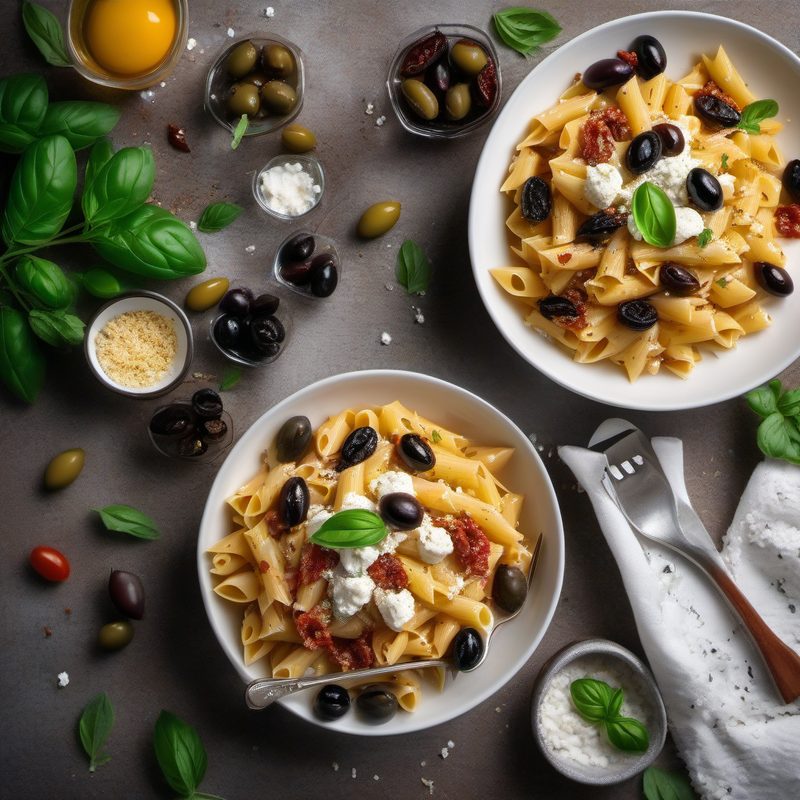
Pasta Ricotta Sundried Tomato Olive
| Amount | Ingredient |
|---|---|
| Calories | ~590 kcal |
| Protein | 20 g |
| Carbohydrates | 68 g |
| Fat | 27 g |
| Fiber | 4 g |
| Sodium | 520 mg |
Pasta with Ricotta, Sun-dried Tomatoes, and Olives
Category: Primi piatti
Servings: 4
Prep Time: 10 minutes
Cook Time: 12 minutes
Total Time: 22 minutes
Why This Recipe Works
Pasta con ricotta, pomodori secchi e olive is a Roman-inspired weeknight treasure that proves a handful of pantry staples can produce something greater than the sum of their parts. The magic lies in technique: sautéing garlic in olive oil builds a fragrant base; sun-dried tomatoes (packed in oil) add concentrated sweetness and a chewy-tender bite; briny black olives contribute a savory punch. The game-changer is folding in fresh ricotta off the heat — the residual warmth of the pasta melts the cheese into a creamy, luscious sauce without any cream needed. Every strand is coated in a velvety, tangy emulsion that clings beautifully. It's ready in barely the time it takes to cook the pasta, yet tastes like it simmered for hours.
Equipment
- Large pot (6–8 qt) for pasta
- Large skillet (12-inch)
- Colander
- Chef's knife
- Cutting board
- Wooden spoon
- Measuring spoons
- Liquid measuring cup
- Serving bowl
Instructions
Step 1: Start the Pasta
- Bring a large pot of generously salted water (about 1½ tbsp salt per 4 L / 1 gallon water) to a rolling boil.
- Add the pasta and cook until al dente (about 1 minute less than package directions — typically 10–11 minutes for dried penne or rigatoni).
- Reserve 1 cup (240 ml) of pasta cooking water before draining.
Step 2: Build the Flavor Base
- While the pasta cooks, heat the olive oil in a large skillet over medium heat.
- Add the sliced garlic and cook, stirring frequently, until fragrant but not browned — about 30 seconds.
- Add the drained and chopped sun-dried tomatoes. Cook, stirring occasionally, for 2 minutes to soften and release their flavor.
Step 3: Add the Olives
- Add the pitted and sliced black olives to the skillet.
- Cook for 2 minutes, stirring, until the olives are heated through and their oils mingle with the tomatoes.
Step 4: Combine Pasta and Toppings
- Reduce heat to low.
- Add the drained pasta directly to the skillet. Toss vigorously with a wooden spoon or tongs to combine.
- Add a splash of pasta cooking water (about ¼ cup / 60 ml) to loosen the mixture and create a light coating on the pasta.
Step 5: Fold in the Ricotta
- Remove the skillet from the heat entirely.
- Dollop the ricotta over the pasta and gently fold it in until it melts into a creamy, even coating.
- If the sauce seems too thick, add more pasta water a tablespoon at a time until you reach a silky consistency that clings to the pasta.
Step 6: Finish and Serve
- Season with salt and black pepper to taste. (Go easy on the salt — the olives and sun-dried tomatoes are already salty.)
- Fold in the chopped basil.
- Divide among warm serving bowls and serve immediately, garnished with a few extra basil leaves.
Timing Guide
| Stage | Approximate Time |
|---|---|
| Pasta water to boil | 8–10 minutes |
| Pasta cooking | 10–11 minutes |
| Sauté garlic and tomatoes | 2½ minutes |
| Cook olives | 2 minutes |
| Toss and finish with ricotta | 2 minutes |
Chef's Notes
- Use whole-milk ricotta. Low-fat or part-skim ricotta contains more moisture and less fat, which makes the sauce watery and grainy. Whole-milk ricotta yields a silky, luxurious result.
- Off-heat is non-negotiable. Stirring ricotta over direct heat can cause it to curdle and separate. Always remove the pan from the burner before folding in the cheese — the residual heat from the pasta is more than enough to melt it gently.
- Short pasta is best. Penne, rigatoni, fusilli, or conchiglie catch the creamy ricotta and chunky olives and tomatoes in their nooks and crannies. Long pasta like spaghetti works but the ricotta doesn't cling as well.
- Drain the sun-dried tomatoes well. Oil-packed sun-dried tomatoes release flavorful oil when chopped, but too much will make the dish greasy. Pat them dry with a paper towel after draining if they seem excessively oily.
- Reserve plenty of pasta water. The starchy water is your best tool for adjusting sauce consistency. Keep the full cup handy — you may not need it all, but having it ready prevents a dry pasta disaster.
Wine Pairing
A medium-bodied white with good acidity and a touch of fruit-forwardness complements the creamy ricotta and briny olives. Vermentino di Sardegna or a Frascati Superiore from Lazio (Rome's local white) are ideal. For red drinkers, a light, chilled Lambrusco or a Barbera d'Alba works beautifully, the red's acidity cutting through the richness of the cheese.
Variations
- Add protein: Toss in 150 g of cooked pancetta or guanciale (rendered until crispy) along with the garlic for a smoky, savory upgrade.
- Go spicy: Add ½ teaspoon red pepper flakes along with the garlic for a gently fiery kick.
- Swap the olives: Use bright green Castelvetrano olives instead of black ones for a milder, buttery brininess.
- Nutty crunch: Sprinkle with toasted pine nuts or walnuts just before serving for added texture.
- Herb swap: Substitute fresh oregano or mint for the basil — both work surprisingly well with ricotta and sun-dried tomatoes.
Nutritional Information (per serving)
(Approximate values; actual values vary by ingredient brand and portion size.)
Storage
This dish is best served immediately, as the ricotta sauce thickens upon cooling and the pasta continues to absorb moisture. If necessary, store leftovers in an airtight container in the refrigerator for up to 2 days. To reheat, place in a skillet over medium-low heat with a splash of water or milk, stirring gently to re-emulsify the ricotta. Microwaving is not recommended — it will make the ricotta grainy.
Notes for the Cook
- Don't overdrain the pasta. A little residual water on the pasta helps the ricotta melt smoothly into a sauce. Shake the colander but don't let the pasta sit and dry.
- Room-temperature ricotta is easier to incorporate. If you remember, pull the ricotta from the fridge 10 minutes before using — cold ricotta clumps and takes longer to melt.
- The olives should be flavorful. Low-quality pitted olives from a can lack the briny depth this dish needs. Seek out Gaeta, Kalamata, or taggiasche olives from a deli counter for the best result.
- Taste before salting. Between the pasta's salted cooking water, the brined olives, and the sun-dried tomatoes (which can be quite salty), you may not need any added salt at all.
Recipe from The Italian Kitchen by Vita Milanese — Volume 1 · Pasta Perfetto. Discover all volumes on the ebook page.