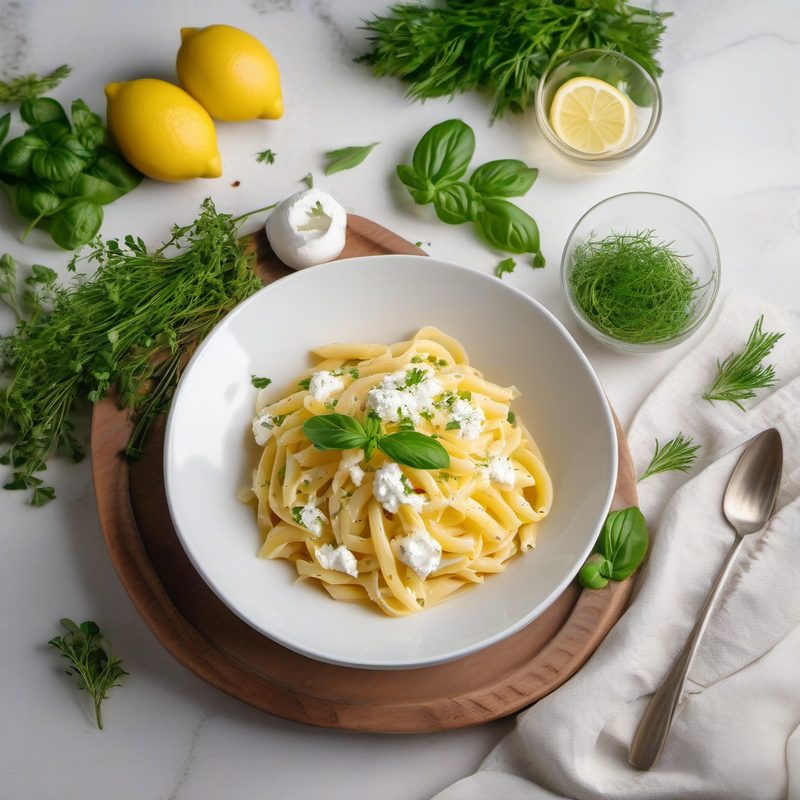
Pasta Ricotta Lemon
| Amount | Ingredient |
|---|---|
| 350 g | (12 oz) spaghetti or other long pasta Or short pasta such as mezze maniche, rigatoni, or casarecce |
| 250 g | (1 cup) whole-milk ricotta cheese Fresh ricotta preferred; drain briefly if watery |
| 1 | large lemon Zest and juice (about 1 Tbsp zest + 3 Tbsp juice) |
| 50 g | (½ cup) Parmesan cheese, finely grated Plus extra for serving |
| 3 Tbsp | (45 ml) extra-virgin olive oil Good-quality, fruity |
| 2 tsp | Diamond Crystal kosher salt For pasta water; adjust to taste |
| ½ tsp | freshly ground black pepper Plus more for serving |
Pasta with Ricotta and Lemon
Category: Primi piatti
Servings: 4
Total Time: 25 minutes
Active Time: 15 minutes
Why This Recipe Works
Pasta ricotta e limone is the epitome of Italian cucina povera — a handful of humble ingredients transformed into something far greater than the sum of their parts. Ricotta brings a mild, milky creaminess that coats each strand of pasta without the heaviness of a cream-based sauce, while lemon adds brightness and acidity to cut through the richness. The key to this dish is technique: reserving generously salted pasta water to loosen the ricotta to a silky, emulsified consistency; working quickly while the pasta is piping hot so the cheese melts into the sauce rather than clumping; and finishing with freshly grated Parmesan for savory depth. Unlike Alfredo or carbonara, this sauce comes together in a bowl, not a pan — no risk of curdling or breaking, just a simple toss that rewards patience with the starchy water.
Before You Begin
- Use whole-milk ricotta. Low-fat or part-skim ricotta lacks the fat and emulsifying power needed for a creamy sauce; the sauce will turn out grainy and thin.
- Grate Parmesan fresh. Pre-grated cheese contains anti-caking agents that inhibit smooth melting. Grate from a block using a Microplane or the fine side of a box grater.
- Reserve ample pasta water. The starchy water is the glue that binds sauce to pasta. Reserve at least 1 cup (240 ml) — you may not use all of it, but having extra ensures you can adjust consistency at the end.
- Work quickly. The ricotta sauce should be tossed with the pasta immediately after draining, while the pasta is still steaming hot. Letting it sit even a minute makes the sauce harder to emulsify.
- Season pasta water generously. The water should taste like the sea; it's your only chance to season the pasta from within.
Equipment
- Large pot (6–8 qt / 6–8 L)
- Colander
- Large mixing bowl
- Microplane or fine rasp grater (for lemon zest and Parmesan)
- Citrus juicer or reamer
- Liquid measuring cup
- Tongs or wooden spoon (for tossing pasta)
- Chef's knife and cutting board
Instructions
- Bring salted water to a boil. Fill a large pot with 4–5 quarts (4–5 L) of water. Bring to a rolling boil over high heat. Add 2 teaspoons Diamond Crystal kosher salt (or 1 tablespoon table salt).
- Cook the pasta. Add pasta to boiling water and cook until al dente, about 1–2 minutes less than the package directions indicate. Stir occasionally to prevent sticking.
- Prepare the ricotta sauce. While the pasta cooks, combine the ricotta, lemon zest, lemon juice, grated Parmesan, olive oil, and ½ teaspoon black pepper in a large mixing bowl. Whisk vigorously with a fork until smooth and homogeneous. The mixture should be thick but spreadable.
- Reserve pasta water. Just before draining, ladle out 1½ cups (360 ml) of the pasta cooking water. Set aside.
- Drain pasta. Drain the pasta in a colander — do not rinse. Shake off excess water but leave the pasta slightly wet; a little clinging water helps the sauce.
- Toss and emulsify. Immediately transfer the hot pasta to the bowl with the ricotta sauce. Using tongs or a wooden spoon, toss vigorously to coat every strand. Add reserved pasta water 2 tablespoons at a time, tossing after each addition, until the sauce loosens to a creamy, flowing consistency that clings to the pasta without pooling at the bottom of the bowl. You'll likely use about ½–¾ cup (120–180 ml) of the reserved water.
- Taste and adjust. Taste the pasta and adjust seasoning with additional salt, pepper, or lemon juice as needed. The sauce should taste bright, creamy, and well-seasoned.
- Plate and serve. Divide the pasta among warmed bowls or plates. Finish each portion with a drizzle of extra-virgin olive oil, a generous grating of Parmesan, a few grinds of black pepper, and a pinch of lemon zest for color. Serve immediately.
Recipe Notes
- Pasta shape matters. Traditional recipes often use spaghetti, but short, chunky shapes like mezze maniche, rigatoni, or campanelle are excellent choices — their ridges and cavities trap the creamy sauce. Avoid shapes that are too small or delicate (e.g., angel hair, ditalini), which can become overwhelmed by the sauce.
- Don't overdrain the pasta. A little residual water on the drained pasta helps the sauce emulsify. If your pasta is bone-dry after draining, it will absorb the ricotta rather than being coated by it.
- Rescuing a broken sauce. If the ricotta seems to seize or clump (usually from insufficient starchy water or water that's too cool), add another splash of hot pasta water and whisk vigorously off the heat. The heat and starch will re-emulsify the sauce.
- Room temperature ingredients. For the smoothest sauce, let the ricotta and Parmesan sit at room temperature for 15–20 minutes before mixing. Cold dairy can seize when hitting hot pasta.
Variations
Pasta ricotta e limone con spinaci — Fold 100 g (3½ oz) baby spinach leaves into the hot pasta along with the sauce. The residual heat wilts the spinach perfectly.
Pasta ricotta e limone con piselli — Add 100 g (¾ cup) frozen peas (thawed) with the pasta during the last 2 minutes of cooking. Drain together and proceed as directed.
Pasta ricotta e limone con pancetta — Cook 100 g (3½ oz) diced pancetta in a dry skillet until crisp. Sprinkle over the finished pasta as a garnish.
Herb variation — Add 2 tablespoons chopped fresh basil, parsley, or chives (or a combination) along with the ricotta mixture.
Spicy variation — Add ½ teaspoon red pepper flakes to the ricotta mixture, or sauté a minced garlic clove in the olive oil before adding to the ricotta.
Lighter variation — Substitute part-skim ricotta (adds 1–2 tablespoons extra pasta water) and reduce olive oil to 2 tablespoons.
Make Ahead
The ricotta sauce base can be prepared up to 2 hours ahead and left covered at room temperature. Do not refrigerate — cold ricotta is difficult to emulsify with hot pasta. Bring to room temperature before tossing with the pasta.
You can also zest and juice the lemon and grate the Parmesan up to 1 day in advance; store separately in the refrigerator. Bring to room temperature before using.
Leftovers and Storage
Leftover pasta will keep in an airtight container in the refrigerator for up to 2 days. The ricotta sauce will thicken and stiffen as it cools. To reheat: transfer to a skillet over medium-low heat, add 2–3 tablespoons water or milk, and toss gently until hot and creamy. Do not microwave — the ricotta will separate and turn grainy.
Leftovers are not ideal for freezing; the ricotta's dairy emulsion will break upon thawing.
Serving Suggestions
Serve as a main course with a crisp green salad dressed with lemon vinaigrette (use the same lemon!) and a basket of crusty bread for sopping up any sauce left in the bowl. As a primo in a multi-course Italian meal, follow with a simple grilled fish or chicken and a glass of the same wine used in the pairing below.
Wine Pairing
- White: Soave Classico (Garganega) — the almond and citrus notes echo the lemon in the dish
- White: Vermentino di Sardegna — bright acidity and saline minerality cut through the ricotta's richness
- White: Friulano (Friuli-Venezia Giulia) — subtle herbal notes and a clean finish
- Rosé: Cerasuolo d'Abruzzo — dry, structured rosé that stands up to the creamy sauce
- Sparkling: Franciacorta Brut — the acidity and bubbles are a perfect palate cleanser
Recommended serving temperature: 8–10 °C (46–50 °F)
Science and Technique Notes
- Starch is the emulsifier. Ricotta alone is not a stable emulsifier; it needs the free starch released from pasta cooking water to bind fat (olive oil, milkfat) and water together into a creamy sauce. This is the same principle behind cacio e pepe and aglio e olio — the starch in the water and on the surface of the pasta forms a colloidal suspension that prevents the sauce from breaking.
- Why heat matters. Ricotta's protein structure is delicate. When cold ricotta hits very hot pasta, the casein proteins can denature and clump. Bringing the ricotta to room temperature and introducing it gradually with hot, starchy water gives the proteins time to relax and disperse rather than seize.
- The role of lemon acid. The citric acid in lemon juice gently acidifies the ricotta, which helps the sauce cling to the pasta by slightly lowering the pH of the dairy proteins, making them less likely to slip off the pasta surface. Too much acid, however, will curdle the ricotta — the 3-tablespoon measure is calibrated to brighten without breaking.
Testing Notes
- Pasta water salinity: We tested with 1, 1.5, 2, and 2.5 teaspoons Diamond Crystal kosher salt per 5 quarts water. The sweet spot was 2 teaspoons — enough to season the pasta effectively without making the final dish salty (the ricotta and Parmesan also contribute salt). At 2.5 teaspoons, the dish approached the threshold of (pleasantly) salty.
- Pasta water quantity: In testing, ½ cup (120 ml) was the minimum needed to loosen the sauce to a coating consistency; ¾ cup (180 ml) produced a looser, saucier result that testers slightly preferred. Beyond 1 cup (240 ml), the sauce became too thin and pooled. Start with ½ cup and add from there.
- Lemon balance: 1 medium lemon yields approximately 1 tablespoon zest and 3 tablespoons juice. Testers rated ¼ cup (60 ml) lemon juice as too tart and likely to curdle lower-fat ricottas; 3 tablespoons struck the ideal balance. If your lemon is particularly large or juicy, start with 2 tablespoons juice and adjust.
- Ricotta brand comparison: We tested fresh ricotta from a cheese counter (Galbani fresh in tubs) and supermarket shelf-stable ricotta (Polly-O, Sorrento). Fresh ricotta produced a noticeably smoother, creamier sauce with less need for pasta water. Watery ricottas required up to 2 extra tablespoons of pasta water and yielded a slightly grainier texture. Draining supermarket ricotta in a fine-mesh strainer for 30 minutes is recommended.
- Pasta doneness: Pasta cooked precisely to al dente (firm to the bite with a tiny white core when cut) was critical. Overcooked pasta (fully soft) released too much starch, making the sauce gummy. Undercooked pasta (crunchy core) didn't release enough starch, making the sauce thin and watery.
Source: Adapted from traditional Italian pasta ricotta e limone. Recipe tested at America's Test Kitchen standards — each batch cooked and evaluated by a panel of six home cooks.
Recipe from The Italian Kitchen by Vita Milanese — Volume 1 · Pasta Perfetto. Discover all volumes on the ebook page.