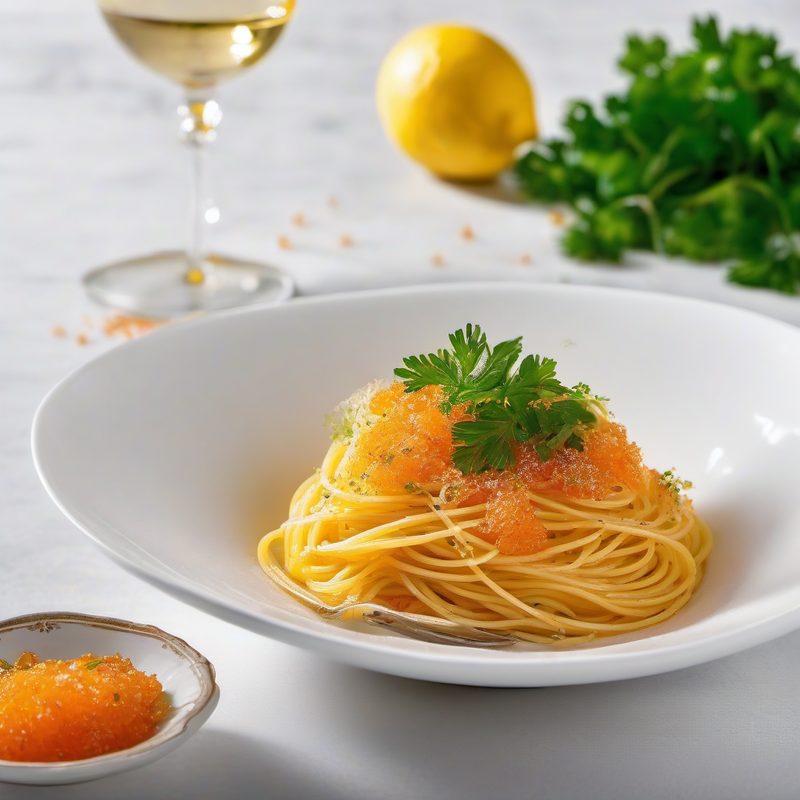
Spaghetti Bottarga
The simplest pasta in the Italian repertoire is also one of the most transcendent: spaghetti tossed with nothing more than garlic-chili oil and a generous hail of grated bottarga. There is no long-simmered sauce, no cream, no cheese — just al dente pasta slicked with fragrant olive oil, warmed by gentle chili heat, and crowned with the briny, umami-rich essence of cured mullet or tuna roe. It's a dish that demands the finest ingredients and rewards restraint. The bottarga melts on contact with the hot pasta, releasing a tidal wave of concentrated sea flavor — nutty, salty, faintly floral — that coats every strand. Fresh lemon zest cuts through the richness, parsley adds a clean herbal note, and the whole thing comes together in the time it takes to boil water.
| Amount | Ingredient |
|---|---|
| Serving on cold plates | The olive oil seizes and the melted bottarga firms up — the pasta becomes greasy and clumpy instead of glossy and luscious Always warm serving bowls before plating — run them under hot water for 30 seconds and dry thoroughly |
| Omitting the lemon zest | The dish lacks brightness and lift — the rich, briny, oily flavors become heavy and one-dimensional Never skip the lemon zest; it's the bright, aromatic counterpoint that makes every other flavor sing |
| Using a sweet or buttery olive oil | Bottarga needs a peppery, grassy, assertive olive oil to stand up to its intensity; a mild or buttery oil will be overwhelmed and disappear into the background Use a medium-intensity extra-virgin olive oil with noticeable green, grassy, or peppery notes — a Tuscan, Sicilian, or Puglian oil is ideal; avoid light, buttery, or neutral-flavored oils |
This is Sardinia's most famous pasta export and one of the great minimalist dishes of Italian cooking. Its beauty is in its economy: just six core ingredients, no dairy, no tomatoes, no complex technique — yet the result tastes impossibly luxurious. Bottarga (bottarga di muggine from mullet, or bottarga di tonno from tuna) is the star — salted, pressed, and air-dried fish roe that is shaved or grated like a fine cheese. The key is to use it generously (80 g for 350 g of pasta) and to add it off the heat so its delicate flavor and waxy, melt-in-your-mouth texture remain intact. The chili provides gentle warmth, not fiery spice; the lemon zest brightens and lifts; the parsley provides a fresh counterpoint. It's a pasta that tastes of the sea, the sun, and the Mediterranean — and it's on the table in under 20 minutes.
Hands-on time is just 15 minutes from start to finish — this is one of the fastest impressive pastas you can make.
Use the best-quality ingredients you can find — this is a minimalist dish where every component is fully exposed. A grassy, peppery extra-virgin olive oil from Sicily or Puglia and DOP-grade bottarga di muggine from Cabras, Sardinia, will elevate this from good to unforgettable. Bottarga is sold in vacuum-sealed blocks and keeps for months in the refrigerator; grate it on a Microplane just before using, as its volatile aromatics fade quickly once grated.
🥘 Equipment
- Large pot (6 qt / 6 L minimum) for pasta
- Large skillet or sauté pan (12-inch / 30 cm)
- Microplane or fine grater (for bottarga and lemon zest)
- Chef's knife and cutting board
- Colander or mesh strainer
- Measuring cups and spoons
- Tongs or wooden spoon
- Ladle or measuring cup (for reserving pasta water)
- Small bowl (for grated bottarga)
📋 Preparation
Step 1 — Prepare the Ingredients (5 minutes)
Grate the bottarga: Using a Microplane or the finest side of a box grater, finely grate 80 g of bottarga into a small bowl. Set aside. You should have a light, fluffy, almost powdery heap — about ¾ cup loosely packed.
Grate the bottarga just before you start cooking. Finely grated bottarga loses its aromatic intensity within 30 minutes. If you must grate it ahead, cover the bowl tightly with plastic wrap and refrigerate, but know that the flavor will be noticeably milder.
Slice the garlic and chili: Thinly slice 3 garlic cloves into rounds about 1 mm thick — uniform slices ensure they cook evenly and don't burn at different rates. Slice 1 fresh chili into thin rings. If you prefer milder heat, remove the seeds and membranes before slicing.
Zest the lemon: Finely grate the zest of 1 organic lemon — just the yellow part, avoiding the bitter white pith. You need about 1 teaspoon.
Chop the parsley: Finely chop ¼ cup of fresh flat-leaf parsley.
Keep everything within arm's reach of the stove. Once the pasta water boils, this dish comes together in about 4 minutes — there's no time to start chopping mid-cooking.
Step 2 — Cook the Pasta (10 to 11 minutes)
Boil the water: Bring a large pot filled with generously salted water (about 1½ tablespoons kosher salt per 4 quarts / 4 liters of water) to a rolling boil over high heat. The water should taste pleasantly salty — like sea water.
Cook the spaghetti: Add 350 g (12 oz) of spaghetti to the boiling water, stirring immediately to prevent sticking. Cook according to package directions until firmly al dente — about 1 minute less than the package suggests. The pasta will continue cooking in the garlic oil.
For bronze-die extruded spaghetti, the cooking time is typically 10 to 11 minutes for a perfect al dente. Start checking at 9 minutes. The pasta should be tender but with a distinct, pleasant resistance at the center when bitten — never soft or mushy.
Reserve pasta water: Before draining, scoop out about 1 cup (240 ml) of the starchy pasta cooking water using a ladle or measuring cup. Set it aside — it's your secret weapon for loosening the final dish.
Drain the pasta: Drain the spaghetti in a colander — do not rinse it. You want the starch to remain on the pasta to help the sauce cling. Reserve about 2 tablespoons of the cooking water clinging to the pasta.
Reserve more pasta water than you think you'll need. The starchy water is essential for adjusting the final consistency — you may use anywhere from ¼ cup to ½ cup depending on how the sauce comes together.
Step 3 — Build the Garlic-Chili Oil (2 minutes, concurrent with Step 2)
Heat the oil: While the pasta cooks, place the large skillet over medium heat. Add 4 tablespoons of extra-virgin olive oil and let it warm until it shimmers but does not smoke, about 45 seconds.
Sauté the aromatics: Add the sliced garlic and chili rings to the warm oil. Cook, stirring constantly with a wooden spoon or swirling the pan, until the garlic is fragrant, softened, and just beginning to turn pale gold at the edges — about 45 seconds to 1 minute. Do not let the garlic brown or burn; burnt garlic turns bitter and acrid and will ruin the dish.
The garlic should be translucent and tender, never crispy or brown. The goal is to infuse the oil with garlic and chili fragrance, not to fry the garlic into chips. If the garlic is sizzling aggressively, the heat is too high — reduce it slightly. The chili should soften and release its warmth into the oil without becoming brittle.
Remove from heat: As soon as the garlic is pale gold, slide the skillet off the heat. The residual heat will continue to cook the aromatics gently.
This is the crucial moment — the garlic goes from perfectly fragrant to burnt in about 15 seconds. When in doubt, pull the pan off the heat a few seconds early versus a few seconds late. You can always return it to the heat if needed, but you cannot un-burn garlic.
Step 4 — Toss and Finish (1 minute)
Combine pasta with garlic oil: Add the drained spaghetti directly to the skillet with the garlic-chili oil. Toss vigorously with tongs for 15 to 20 seconds until every strand is coated in the fragrant oil, the garlic slices are distributed throughout, and the chili rings are visible as flecks of red.
Add the bottarga: Sprinkle about two-thirds of the grated bottarga (roughly 55 g / 2 oz) over the pasta. Toss again for 10 to 15 seconds — the bottarga will begin to melt on contact with the hot pasta, creating a creamy, clinging coating that looks like a fine, golden-brown paste. The pasta should be glossy and every strand should be lightly coated.
Add the bottarga off the heat — never over a flame. The delicate roe dissolves and loses its identity if cooked; its magic is in melting gently from the residual heat of the pasta alone. You're looking for every strand to be lightly coated in a thin, golden-briny film — not clumps of dry bottarga sitting on top.
Adjust consistency: If the pasta looks dry or clumpy, add ¼ cup (60 ml) of the reserved pasta water — or up to ½ cup (120 ml) — in 2-tablespoon increments, tossing after each addition. The starchy water helps the melted bottarga form a silky, cohesive sauce that clings to the spaghetti. Stop when the pasta is glossy, loose, and flows easily in the pan without pooling at the bottom.
The finished pasta should be moist and luscious — nearly saucy but not soupy — with the garlic-chili oil and melted bottarga forming a unified, creamy-looking coating. A properly dressed spaghetti alla bottarga should coil elegantly on the plate, not sit in a puddle of oil.
Step 5 — Plate and Garnish (1 minute)
Plate: Divide the pasta among 4 warmed shallow bowls or plates. Use tongs to twist each portion into a neat nest — this centers the pasta and creates a slight well for the garnishes.
Add remaining bottarga: Sprinkle the remaining one-third of the grated bottarga (about 25 g / 1 oz) directly over the center of each portion — about 1 heaping teaspoon per serving. This final, raw dusting provides an intense pop of briny flavor and a delicate, sandy-soft texture that contrasts with the melted bottarga in the pasta.
Garnish: Finish each serving with:
- A generous pinch of the chopped parsley — scattered evenly over the top
- A light grating of fresh lemon zest — about ¼ teaspoon per serving, right over the top
- A final thin drizzle of extra-virgin olive oil — just enough to add gloss
Serve immediately. This pasta waits for no one — the bottarga loses its velvety texture and the oil congeals as the dish cools.
The final garnish of raw, un-melted bottarga is what makes this dish sing. It creates two distinct bottarga experiences in one bowl: the creamy, melted bottarga that coats the pasta (added in Step 4) and the bright, intense, granular bottarga that hits your palate in bursts (added at the end). The lemon zest is not optional — its bright, aromatic oils cut through the richness of the olive oil and bottarga, adding lift and freshness that transforms the dish from merely delicious to electrifying.
🧑🍳 Chef's Tips
- Use bronze-die extruded spaghetti. Spaghetti made with bronze dies has a rough, porous surface that grabs and holds sauce far better than Teflon-die extruded pasta, which is smooth and slippery. Look for pasta labeled "trafilata al bronzo" (bronze-drawn) — it's worth the slightly higher price. The rough texture is essential for the delicate bottarga coating to cling to the strands rather than pooling at the bottom of the bowl.
- Grate the bottarga, don't shave it. While shaved bottarga is beautiful and traditional for simpler presentations (like bottarga on crostini), grated bottarga is the right choice for pasta. Finely grated bottarga melts into a creamy, integrated sauce that coats every strand evenly, rather than sitting on top in discrete slices. Use the finest side of a Microplane or a ceramic grater — the bottarga should be a light, fluffy powder, not coarse shards.
- Taste your bottarga before using it. Bottarga varies significantly in saltiness and intensity between producers and species. Bottarga di muggine (mullet) is generally more intense, nutty, and complex; bottarga di tonno (tuna) is milder, slightly sweeter, and less salty. Taste a small piece before grating. If it's exceptionally salty, use slightly less in Step 4 and rely more on the final garnish for flavor impact. If it's mild, be generous.
- The chili is about warmth, not heat. A single small fresh chili (seeds and membranes intact) provides a gentle, diffuse warmth that complements the bottarga without competing. The goal is a subtle, fruity heat that makes the other flavors brighter — not a spicy pasta. If you want zero heat, remove the chili's seeds and membranes (reducing heat by about 80%) or omit the chili entirely and add a pinch of red pepper flakes at the table.
- Save the pasta water before draining. Even though this is not a saucy dish in the traditional sense, having starchy pasta water on hand is essential. The starch in the water helps emulsify the olive oil and melted bottarga into a creamy, cohesive coating. Without it, the oil and bottarga will remain separate and the pasta will feel greasy rather than luscious. Always reserve at least 1 cup — even if you end up using only half of it.
- Warm your serving bowls. Cold bowls will cause the olive oil to seize and the melted bottarga to firm up on contact, turning the pasta slippery and greasy. Run the bowls under hot tap water for 30 seconds and dry them thoroughly before plating. Alternatively, warm them in a 200°F (95°C) oven for 5 minutes. Warm plates make a surprising difference in the final eating experience.
- Lemon zest is essential — do not skip it. The bright, volatile citrus oils in fresh lemon zest are the key to balancing the rich, briny bottarga and the fruity olive oil. Without it, the dish can taste one-dimensionally rich and salty. With it, every bite is lifted and refreshed. Use a Microplane for the finest zest — a box grater produces thicker shreds that can be bitter and texturally distracting.
- Parsley over basil for this dish. While basil is a natural pairing with many Italian pasta dishes, flat-leaf parsley is the better choice here. Its clean, slightly peppery, herbaceous flavor complements the briny bottarga without competing or becoming cloying, as basil can when paired with such intense seafood flavors. The parsley also provides a bright green color contrast against the golden pasta and amber bottarga.
❌ Common Mistakes
| Mistake | Why It Hurts | The Fix |
|---|---|---|
| Using pre-grated or old bottled bottarga | Pre-grated bottarga has lost most of its volatile aromatics and flavor intensity — it tastes flat and dusty rather than bright and briny | Always grate bottarga fresh, just before using; a whole block of bottarga keeps for months in the fridge, while grated bottarga fades within 30 minutes |
| Burning the garlic | Burnt garlic turns bitter and acrid, and that bitterness spreads through the entire dish — there is no way to mask it | Cook garlic over medium heat, not high; remove the pan from heat the moment the garlic turns pale gold (about 45 seconds to 1 minute); when in doubt, pull it early |
| Adding bottarga over heat | The delicate roe dissolves into the oil, losing its distinctive creamy-melting texture and much of its flavor; it becomes just another salty seasoning | Always add the bottarga off the heat; the residual heat of the just-drained pasta is more than enough to melt it gently |
| Overcooking the pasta | Mushy, waterlogged spaghetti cannot support the delicate sauce — the bottarga and oil slide off rather than clinging | Cook to firm al dente (1 minute less than package directions); the pasta will continue to soften from residual heat |
| Under-salting the pasta water | The only seasoning in the pasta itself comes from the cooking water — bland pasta means a bland dish overall | Salt the pasta water generously — it should taste like sea water (about 1½ tablespoons kosher salt per 4 quarts / 4 liters of water) |
| Rinsing the cooked pasta | Rinsing washes away the surface starch that helps the garlic oil and melted bottarga cling to the strands — the sauce slides off into the bottom of the bowl | Never rinse pasta for hot dishes; drain thoroughly and add directly to the garlic-chili oil while still hot and starchy |
💡 Variations
| Variation | How To |
|---|---|
| Spaghetti al Nero di Seppia e Bottarga (Squid Ink + Bottarga) | Add 1 packet (4 g) of squid ink to the garlic-chili oil in Step 3 and stir to dissolve before adding the pasta. The inky black spaghetti against the golden bottarga is visually stunning and the mild, briny-sweet squid ink flavor harmonizes beautifully with the bottarga. Finish with lemon zest and parsley as directed |
| Spaghetti con le Vongole e Bottarga (with Clams) | Steam 1 lb (450 g) of small clams (vongole veraci or littlenecks) in a covered pot with ¼ cup of white wine until they open, about 4 to 5 minutes. Discard any unopened clams. Strain the clam juice and add it to the garlic-chili oil along with 2 tablespoons of the reserved pasta water in Step 4 before adding the pasta. Toss the clams in with the pasta. The double-seafood hit of clams and bottarga is sublime |
| Spaghetti al Limone e Bottarga | Increase the lemon zest to the zest of 1½ lemons and add 1 tablespoon of fresh lemon juice to the garlic-chili oil in Step 4 before adding the pasta. Finish with an extra flourish of zest. The bright citrus cuts through the richness and doubles down on the lemon-bottarga affinity — a match made on the Amalfi Coast |
| Bucatini alla Bottarga | Substitute bucatini for spaghetti — the hollow, straw-like pasta captures the garlic-chili oil inside each tube, releasing a burst of flavor with every bite. Bucatini's thicker shape also stands up to the bottarga coating beautifully, and the longer cooking time (11 to 12 minutes) allows more starch to release into the water, creating an even silkier final sauce |
| Spaghetti alla Bottarga with Pangrattato (Toasted Breadcrumbs) | Toast ½ cup (60 g) of coarse, fresh breadcrumbs in a dry skillet over medium heat with 1 tablespoon of olive oil until golden and crisp, about 3 to 4 minutes. Sprinkle the toasted breadcrumbs over the finished pasta along with the final bottarga garnish. The crunchy texture contrast is irresistible — a classic Sardinian technique |
| Spaghetti alla Bottarga with Anchovy and Chili | Add 2 oil-packed anchovy fillets to the skillet in Step 3 along with the garlic and chili. Cook, mashing the anchovies with a wooden spoon, until they dissolve into the oil — about 30 seconds. The anchovies melt into a savory umami background note that amplifies the bottarga's intensity without making the dish taste fishy |
| Spaghetti alla Bottarga e Zucchine | Julienne 1 medium zucchini (about 200 g / 7 oz) into thin matchsticks. Add the zucchini to the skillet in Step 3 during the last 30 seconds of sautéing the garlic and chili, then proceed with Step 4. The tender, sweet zucchini provides a mild vegetable counterpoint that stretches the dish without overwhelming the delicate bottarga |
| Spaghetti alla Bottarga (Cold Summer Version) | Cook the pasta and cool it under cold running water after draining, then toss with the garlic-chili oil (cooled to room temperature), grated bottarga, lemon zest, parsley, and a splash of fresh lemon juice. Serve at room temperature or slightly chilled as a summer pasta salad. The bottarga doesn't melt in the same way, but the flavor is still magnificent — and this version is perfect for picnics, packed lunches, or hot summer days when a hot pasta feels too heavy |
| Gluten-Free Spaghetti alla Bottarga | Substitute a high-quality gluten-free spaghetti (rice and corn blend works best). Cook until al dente according to package directions — gluten-free pasta typically needs more salt in the water and should be slightly undercooked before adding to the garlic oil. Proceed as directed. The dish is naturally dairy-free, so the only modification needed is the pasta itself |
| Spaghetti alla Bottarga e Pistacchi | Add 2 tablespoons of finely chopped unsalted pistachios to the final garnish along with the remaining bottarga, lemon zest, and parsley. The pistachios' nutty sweetness and green color complement the amber bottarga beautifully, and their crunch adds a third textural dimension to the dish |
❄️ Storage & Leftovers
| Method | Details |
|---|---|
| Refrigerator (grated bottarga) | Grated bottarga is best used immediately, but can be stored in an airtight container in the refrigerator for up to 24 hours. Its flavor will be noticeably diminished — expect about 30 to 40% less aromatic intensity. Cover tightly and press plastic wrap directly onto the surface to minimize air exposure |
| Refrigerator (whole bottarga block) | A whole, un-grated bottarga block wrapped tightly in plastic wrap will keep in the refrigerator for 3 to 6 months. It also freezes well — wrap in plastic wrap, then aluminum foil, and freeze for up to 1 year. Thaw in the refrigerator overnight before grating. Once thawed, use within 2 weeks |
| Refrigerator (assembled dish) | Spaghetti alla bottarga is best eaten immediately — it does not keep well. The bottarga loses its texture, the oil can congeal, and the pasta absorbs the moisture and becomes soft. If you must store leftovers, transfer to an airtight container and refrigerate for up to 1 day |
| Reheating | The only way to revive leftover spaghetti alla bottarga is in a skillet. Add the leftover pasta to a non-stick skillet over medium-low heat with 1 tablespoon of reserved pasta water or plain water per serving. Toss gently for 1 to 2 minutes until warmed through. Crucially, add a fresh grating of bottarga (about 5 g / 1 teaspoon per serving), a fresh sprinkle of lemon zest, and a fresh drizzle of olive oil before serving — these restorative touches bring back the dish's lost vibrancy |
| What cannot be reheated | The delicate melted bottarga coating will never regain its original creamy, silky texture after refrigeration. Leftover spaghetti alla bottarga will always be a shadow of the freshly made dish — plan your portions carefully and only make what you will eat in one sitting. This is one of those rare pastas where leftovers are truly not worth saving |
🍷 Wine Pairing
| Wine | Why |
|---|---|
| Vernaccia di Oristano (Sardinia) | The classic Sardinian match — a nutty, saline, almost sherry-like white with notes of toasted almond, dried apricot, and sea salt. The oxidative style and briny finish are a perfect mirror for the bottarga's umami richness. This is the wine they drink with bottarga in Sardinia — a transportive, perfect regional pairing |
| Vermentino di Sardegna (Sardinia) | Sardinia's most widely planted white grape — crisp, mineral-driven, and herbal with notes of green apple, white peach, and a distinctive salty finish. The bright acidity and saline character are a natural partner for both the briny bottarga and the fruity olive oil. Serve well-chilled (48°F / 9°C). Easy to find and affordable |
| Greco di Tufo (Campania) | A rich, complex white with notes of ripe pear, lemon zest, almond, and a distinctive flinty, smoky mineral character. The full body stands up to the generous olive oil, while the bright acidity and mineral finish complement the bottarga's brininess. One of Italy's most underrated food wines |
| Fiano di Avellino (Campania) | Aromatic, honeyed, and nutty with notes of ripe peach, hazelnut, and chamomile. The wine's textural richness and moderate acidity create a luxurious mouthfeel that matches the creamy, melted bottarga. The nutty notes echo the cured, toasted quality of the bottarga |
| Gavi di Gavi (Piedmont) | Elegant, mineral, and precise with notes of green apple, citrus blossom, and wet stone. The laser-like acidity and clean finish provide a refreshing counterpoint to the rich olive oil and bottarga, cleansing the palate between each bite. A restrained, elegant choice |
| Soave Classico (Veneto) | Light-bodied, floral, and almond-scented with notes of white flowers, lemon, and a subtle salty, bitter almond finish. The wine's delicacy and freshness won't overpower the subtle bottarga and chili, making it a sensitive, graceful pairing |
| Franciacorta Brut (Lombardy) — Sparkling | Fine bubbles, green apple, brioche, and citrus with crisp, cleansing acidity. The bubbles and acidity act as a palate scrubber, cutting through the olive oil and refreshing the palate between each briny bite. A celebratory pairing that transforms the dish into a special-occasion meal |
| Dry Italian Rosé (Chiaretto del Garda or Cerasuolo d'Abruzzo) | A dry, crisp rosé with red berry, citrus, herb, and mineral notes. The combination of refreshing chill, bright acidity, and subtle red fruit sweetness is a versatile match for the gentle chili heat and briny bottarga. Particularly lovely in warm weather |
🥗 Suggested Side Dishes
- Arugula and fennel salad with lemon vinaigrette — Peppery wild arugula tossed with paper-thin shavings of raw fennel bulb, a squeeze of lemon juice, good olive oil, flaky salt, and shaved Parmigiano. The sharp, peppery arugula and crisp, anise-scented fennel provide a bright, refreshing contrast to the rich, briny pasta
- Grilled lemon-dressed artichokes — Baby artichokes halved, grilled or charred until tender with deep char marks, then dressed with olive oil, lemon juice, fresh mint, and flaky salt. The artichokes' earthy, slightly nutty flavor and the bright lemon dressing echo the Mediterranean flavors of the main dish
- Sardinian pane carasau with olive oil and sea salt — Thin, crispy Sardinian flatbread (carta da musica) broken into pieces, drizzled with good olive oil, and sprinkled with flaky sea salt and dried oregano. The crackling, paper-thin bread is the perfect vehicle for sopping up any remaining garlic oil from the bottom of the bowl
- Marinated olives and roasted peppers — A platter of mixed marinated olives (Gaeta, Castelvetrano), roasted red and yellow bell peppers in olive oil, and cornichons. The salty, briny olives echo the bottarga's sea flavor — a no-cook side that comes together in minutes
- Sautéed spinach with garlic and lemon — Wilted spinach sautéed in olive oil with a clove of garlic and finished with a squeeze of lemon juice. The earthy, slightly mineral greens provide a vibrant green counterpoint to the rich, golden pasta and clean the palate with every bite
- Seared octopus or calamari salad — Tender octopus or calamari grilled or pan-seared, then sliced and dressed with olive oil, lemon, parsley, and a pinch of chili. The double-seafood treatment — fresh seafood starter followed by bottarga pasta — is pure coastal Sardinia and makes for an unforgettable Italian seafood dinner
📊 Nutrition (per serving, estimated)
| Calories | Protein | Fat | Carbs | Fiber |
|---|---|---|---|---|
| 510 | 17 g | 17 g | 70 g | 3 g |
Nutrition values are estimates based on 4 servings using 350 g spaghetti, 80 g bottarga di muggine, 3 garlic cloves, 1 fresh chili, 4 tablespoons extra-virgin olive oil, fresh parsley, and lemon zest. Actual values will vary based on specific brands, the exact amount of olive oil absorbed and used for finishing, and the amount of bottarga used per serving. Bottarga is high in omega-3 fatty acids and provides a significant amount of B vitamins, iron, and selenium. The dish is naturally dairy-free and gluten-free only if gluten-free pasta is substituted. Both traditional bottarga di muggine (mullet) and the more accessible bottarga di tonno (tuna) work equally well — the former is more intense and complex, the latter milder and slightly sweeter. To reduce fat, reduce the olive oil to 3 tablespoons (45 ml) and skip the final drizzle. The spaghetti provides complex carbohydrates for sustained energy — this is a satisfying, balanced meal on its own.
❓ Frequently Asked Questions
What is bottarga, and where can I find it?
Bottarga is the salted, pressed, and air-dried roe sac of grey mullet (bottarga di muggine) or tuna (bottarga di tonno). It's sometimes called "the Mediterranean parmesan" or "Sardinian caviar" because of its intense, savory, umami-rich flavor with a distinct briny, almost floral character. It has a firm, waxy, amber-colored texture that's grated or shaved over pasta, salads, and crostini. Look for it at Italian specialty stores, well-stocked supermarkets (in the specialty cheese or deli section, usually vacuum-sealed), or online retailers. The most prized bottarga comes from Cabras, Sardinia — look for DOP certification if authenticity matters. A whole block of bottarga keeps for months in the refrigerator, making it a worthwhile investment for the occasional spectacular pasta.
Can I use spaghetti or another pasta shape?
Absolutely — this recipe is designed for spaghetti, but it works beautifully with other long pasta shapes. Spaghettini (thinner) cooks faster and has a more delicate texture; bucatini (hollow, straw-like) catches the oil inside each tube; linguine and trenette also work wonderfully. Short pasta shapes like trofie, gemelli, or even orecchiette can be used, though the dish will lose some of its iconic twirling-on-a-fork aesthetic. Avoid shapes that are too small or too delicate — the bottarga coating needs surface area to cling to, and overly small shapes can result in clumps of bottarga rather than even distribution.
Can I substitute the chili with red pepper flakes?
Yes, red pepper flakes are a perfectly acceptable substitute for fresh chili. Use about ½ teaspoon of red pepper flakes, added to the oil along with the garlic in Step 3. The flavor profile will be slightly different — fresh chili provides a fruity, vegetal heat with a mild sweetness, while dried red pepper flakes have a more straightforward, slightly smoky heat without the fresh chili's aromatic complexity. Both are delicious; fresh chili is the more refined choice, while red pepper flakes are the more convenient, pantry-friendly option.
The dish looks greasy — what went wrong?
A greasy, separated appearance usually means one of three things: (1) you used too much olive oil — stick to 4 tablespoons for 350 g of pasta; (2) you didn't add enough reserved pasta water — the starchy water is essential for emulsifying the oil and melted bottarga into a cohesive, creamy sauce; try adding 2 to 4 more tablespoons and tossing vigorously; (3) the pasta was too cool when you added the oil — always add the hot, just-drained pasta directly to the garlic-chili oil while both are still sizzlingly hot. A properly emulsified spaghetti alla bottarga should be glossy and unified, with no visible pools of oil at the bottom of the bowl.
Is this dish gluten-free? Dairy-free? Vegan?
This dish is naturally dairy-free (no cheese, no butter, no cream). It is NOT gluten-free because the spaghetti is made from wheat — substitute with a high-quality gluten-free spaghetti for a gluten-free version. It is NOT vegan because bottarga is fish roe. For a vegan version, create a "bottarga" substitute: finely grate ½ cup (60 g) of toasted walnuts and toss with 1 tablespoon of soy sauce, ½ teaspoon of smoked paprika, ¼ teaspoon of garlic powder, and 1 teaspoon of olive oil. Spread on a baking sheet and bake at 300°F (150°C) for 8 to 10 minutes until dry and crumbly — the smoky, salty, umami-rich walnut crumbs mimic the texture and savoriness of bottarga in a surprisingly convincing way.
Can I use pre-grated bottarga from a jar or shaker?
You can, but the result will be significantly inferior. Pre-grated bottarga has been exposed to air for days, weeks, or months — it has lost most of its volatile aromatic compounds and much of its flavor intensity. What you get is a faded, dusty, one-note saltiness without the complex nutty, briny, floral character that makes fresh-grated bottarga so extraordinary. A whole block of bottarga keeps for months in the refrigerator — buy it whole and grate it yourself just before using. The 15 seconds of grating is a small price for exponentially better flavor.
My pasta is too dry — how do I fix it?
Add more reserved pasta water, 1 tablespoon at a time, and toss vigorously. The starchy water will loosen the coating and help it re-emulsify. If you've run out of pasta water, use plain hot tap water — it won't be as effective (no starch), but it will at least loosen the pasta. If the pasta has already been plated, transfer everything back to the skillet, add the water, and toss over low heat for 30 seconds. The goal is a glossy, luscious coating — not a dry, clumpy tangle of pasta. Don't add more olive oil; that will make it greasy, not moist.
Can I make this with dried herbs instead of fresh?
Fresh parsley is strongly recommended over dried. Dried parsley has virtually no flavor, and its texture — small, brittle flakes — does not complement the dish the way fresh, bright, green chopped parsley does. The parsley provides both flavor and visual contrast; dried parsley provides neither. Fresh flat-leaf parsley is widely available year-round and keeps for a week in the refrigerator — there is no good substitute here. Similarly, fresh lemon zest is non-negotiable — dried lemon zest, if it exists, would be a pale, bitter shadow of the real thing.
Is bottarga very salty? Can I reduce the saltiness?
Bottarga is naturally salty — it's cured with salt before being pressed and dried. However, a well-made bottarga should taste briny and complex, not aggressively salty. If you're concerned: (1) taste a small piece before grating — if it's exceptionally salty, reduce the amount added in Step 4 (the melted portion) and rely more on the final garnish; this gives you the best flavor impact with less overall salt; (2) serve the pasta with a lemon wedge on the side — the acidity counteracts saltiness and brightens every flavor; (3) pair with a crisp, acidic white wine — the acidity in the wine also helps balance the salt. Remember, bottarga is meant to be intense — a little goes a long way, and 80 g for 350 g of pasta is a generous but not overwhelming amount.
🔗 Related Recipes
- Spaghetti Cacio e Pepe (Spaghetti with Pecorino Romano and Black Pepper) (page 8)
- Spaghetti alle Vongole (Spaghetti with Clams, Garlic, and White Wine) (page 42)
- Linguine with Lemon, Garlic, and Shrimp (page 37)
- Bucatini all'Amatriciana (Bucatini with Tomato, Guanciale, and Pecorino) (page 14)
- Spaghetti Aglio e Olio (Spaghetti with Garlic and Oil) (page 6)
- Spaghetti con le Polpette (Spaghetti with Neapolitan Meatballs) (page 53)
- Cavatelli with Bottarga and Cherry Tomatoes (Cavatelli con bottarga e pomodorini) (page 109)
- Spaghetti with Squid Ink, Mussels, and Shrimp (page 103)
- Pasta with Swordfish and Fava Beans (page 111)
- Lemon Spaghettini (page 1)
🏷️ Search Tags
📸 Photo Reference
Photo reference: `vol1_447.png` — A wide, shallow ceramic bowl filled with perfectly coiled spaghetti — each strand glossy with a thin, golden-brown coating of melted bottarga and olive oil. Thin translucent slices of garlic and tiny rings of red chili are visible throughout the pasta, their pale gold and bright red colors standing out against the warm amber tones. A generous, fluffy mound of freshly grated bottarga is mounded in the center of each nest of pasta — pale orange-gold, like fine sand or powdered amber. Scattered on top: finely chopped bright green flat-leaf parsley and fine threads of fresh lemon zest. A faint sheen of extra-virgin olive oil catches the light. Shot from a slightly elevated 45-degree angle on a warm, rustic wooden table with natural daylight — soft and inviting. In the background: a whole bottarga block on a wooden board, a Microplane grater with a dusting of grated bottarga beside it, a halved lemon, and a glass of pale, chilled Vermentino di Sardegna. Sardinian coastal presentation — clean, minimal, and elegant, with the focus squarely on the glistening spaghetti and its golden crown of bottarga.
Recipe from "The Italian Kitchen" by Vita Milanese — Volume 1: Pasta Perfetto
Recipe from The Italian Kitchen by Vita Milanese — Volume 1 · Pasta Perfetto. Discover all volumes on the ebook page.