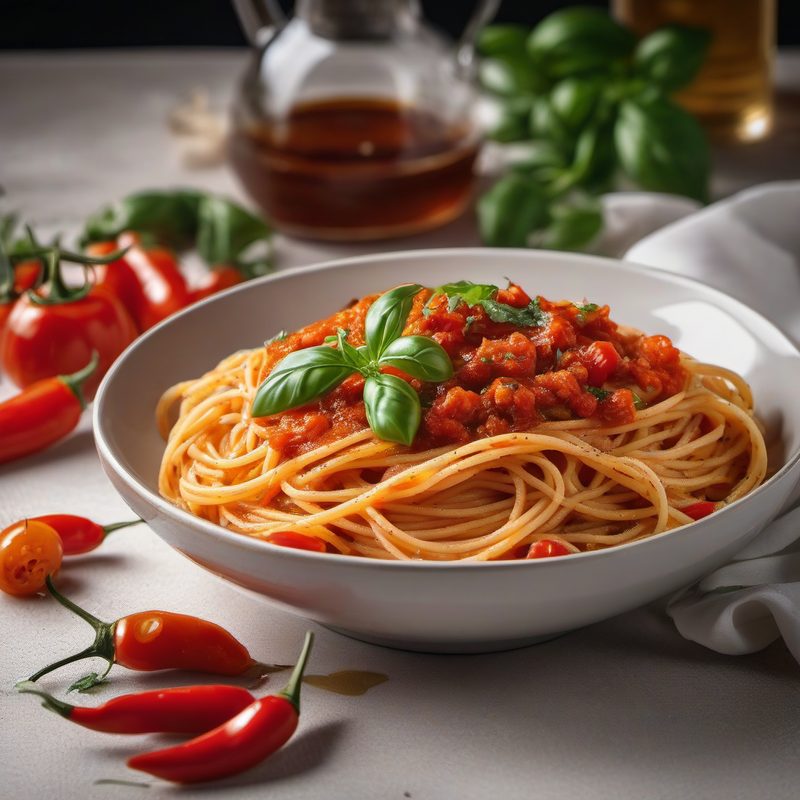
Spaghetti Diamantese
Category: Primi piatti · Cucina calabrese
| Amount | Ingredient |
|---|---|
| Calories | 485 kcal |
| Total Fat | 18 g |
| — Saturated Fat | 2.5 g |
| — Monounsaturated Fat | 12 g |
| — Polyunsaturated Fat | 2 g |
| Cholesterol | 0 mg |
| Sodium | 520 mg |
| Total Carbohydrates | 67 g |
| — Dietary Fiber | 4 g |
| — Sugars | 3 g |
| Protein | 12 g |
Servings: 4
Total Time: 30 minutes
Active Time: 25 minutes
Why This Recipe Works
Spaghetti alla Diamantese comes from the coastal town of Diamante in Calabria, the toe of Italy's boot — a region known for its bold, fiery cooking. Named after the peperoncino di Diamante (Diamante chili), this dish is the Calabrian answer to aglio e olio, but with a distinctive crunchy breadcrumb topping (called mollica in local dialect) that adds texture and nutsiness while taming the chilis' heat. Most versions rely on a heavy hand with garlic and chili, but we wanted a plate where the chilis' fruity, peppery character shone through without overwhelming.
The key was a low-and-slow infusion: gently sizzling sliced garlic and whole, crushed chilis in olive oil over medium-low heat for 4–5 minutes allowed the oil to absorb the chilis' volatile oils and the garlic to soften without browning (browned garlic equals bitter garlic). Toasting the breadcrumbs separately in a single tablespoon of oil gave them a deep golden color and crisp texture — crucial, because they're the dish's textural anchor. We reserved a splash of the starchy pasta cooking water to help the sauce cling to the spaghetti, then finished with a blanket of breadcrumbs and a shower of fresh parsley. The result: a weeknight-worthy pasta that tastes like the Amalfi coast in a bowl, with heat that builds pleasantly rather than punishing.
- 1 tablespoon (15 ml) extra-virgin olive oil
- 50 g (½ cup) coarse dried breadcrumbs, preferably homemade from day-old rustic bread
- 350 g (12 oz) spaghetti
- 1 tablespoon (9 g) Diamond Crystal kosher salt (or 1½ teaspoons table salt), plus more for pasta water
- 3 tablespoons (45 ml) extra-virgin olive oil
- 4 garlic cloves, thinly sliced (about 12 g)
- 2 whole dried Calabrian chilis (peperoncini di Diamante), stemmed, lightly crushed — or 1½ teaspoons Calabrian chili flakes
- ¼ cup (10 g) fresh flat-leaf parsley, finely chopped
- Salt and freshly ground black pepper, to taste
Equipment
- Large pot (6–8 qt) for pasta
- 12-inch (30 cm) skillet or sauté pan
- Small skillet (8-inch)
- Spider or slotted spoon
- Microplane or fine rasp (optional, for garlic)
- Measuring spoons and liquid measuring cup
- Chef's knife and cutting board
- Heatproof measuring cup (2-cup) for reserving pasta water
Instructions
- Toast the breadcrumbs. In a small skillet, heat 1 tablespoon olive oil over medium heat until shimmering. Add the breadcrumbs and cook, stirring constantly, until deep golden brown and fragrant, about 3–4 minutes. Transfer to a small bowl and wipe the skillet clean.
- Bring the pasta water to a boil. Fill a large pot with 4 quarts (3.8 L) water and add 2 tablespoons Diamond Crystal kosher salt (or 1 tablespoon table salt). Bring to a rolling boil over high heat.
- Infuse the oil. While the water comes to a boil, combine 3 tablespoons olive oil, sliced garlic, and crushed chilis in a 12-inch skillet. Place over medium-low heat and cook gently, swirling occasionally, until the garlic is soft and golden at the edges (but not browned) and the oil is fragrant with chili, 4–5 minutes. Remove from heat and set aside.
- Cook the pasta. Add the spaghetti to the boiling water and cook until al dente (1 minute less than the package directs), about 8–10 minutes. Reserve 1 cup (240 ml) of the pasta cooking water, then drain the spaghetti (do not rinse).
- Finish the sauce. Return the skillet with the garlic-chili oil to medium heat. Add ¼ cup of the reserved pasta water and bring to a simmer, scraping up any browned bits. Add the drained spaghetti and toss vigorously with tongs to coat. If the pasta seems dry, add more pasta water, 1 tablespoon at a time, until a glossy, emulsified sauce forms. Season with salt and pepper to taste.
- Serve. Divide the spaghetti among warm serving bowls. Sprinkle generously with the toasted breadcrumbs and the chopped parsley. Serve immediately, passing additional crushed chilis or chili oil at the table for those who want extra heat.
Diamante Chili (Peperoncino di Diamante): These small, slender dried red chilis from Diamante, Calabria, are PDO-protected and prized for their fruity, slightly smoky flavor and medium heat (15,000–30,000 Scoville units). If unavailable, substitute dried peperoncini calabresi, árbol chiles, or a good-quality crushed Calabrian chili flakes. Do not use standard red pepper flakes — they lack the fruitiness and can taste dusty.
Breadcrumbs: Fresh, coarse breadcrumbs made from day-old crusty bread (pane rustico, sourdough, or Italian loaf) yield a superior texture to fine, store-bought panko or bland canned breadcrumbs. Panko may be used in a pinch but gives a lighter, flakier crust rather than the sandy-crunch traditional in Calabria.
Extra-Virgin Olive Oil: Use a good-quality, fruity Calabrian or southern Italian olive oil if possible. The oil carries the chilis' flavor; a flat or rancid oil will ruin the dish.
Notes on Equipment
- 12-inch skillet vs. saucepan: A wide skillet gives the pasta room to toss and coats each strand evenly. A narrow saucepan will result in clumping. If you lack a 12-inch skillet, use a deep 10-inch sauté pan and be more vigorous with your tossing.
- Pasta pot: A 6–8 quart pot is ideal. Too small a pot leads to starchy, sticky water. If using a smaller pot, reduce the pasta to 280 g (10 oz) to prevent overcrowding.
- Tongs: Long, spring-loaded tongs are non-negotiable for tossing hot pasta in the pan without breaking strands.
Step-by-Step Visual Guide
- Step 1 – Toasting breadcrumbs: Breadcrumbs in oil over medium heat, stirred constantly until golden. Transfer to bowl immediately (they continue to darken off-heat).
- Step 3 – Infusing oil: Garlic slices and crushed chilis in oil at a lazy simmer — bubbles should be tiny and infrequent. If the garlic browns, the heat is too high.
- Step 5 – Tossing: Spaghetti added to the garlic-chili oil with pasta water, tossed until glossy. You should see tiny bubbles in the sauce — an emulsified sauce binds to the pasta.
- Plating: Twirl each portion into a neat nest, then mound breadcrumbs in the center and scatter parsley over the top.
The Science of the Sauce
The magic of Spaghetti alla Diamantese lies in its emulsified sauce — a technique that uses starch from the pasta water to bond the water and oil into a creamy, clinging suspension. When you toss hot, just-drained pasta with the garlic-chili oil and reserved pasta water, two things happen:
- Starch gelatinization: Residual heat causes the starch granules on the pasta's surface to swell and burst, releasing amylose and amylopectin into the water.
- Emulsion formation: As you toss, the leached starch acts as an emulsifier, surrounding tiny oil droplets and dispersing them evenly in the water. The result is a smooth, non-greasy sauce that coats each strand.
The ratio matters: too much water and the sauce is watery; too little and it's oily. Starting with ¼ cup and adding more as needed gives you control.
Recipe Timeline
- 0:00 — Bring pasta water to a boil
- 0:05 — Start toasting breadcrumbs (3–4 min)
- 0:10 — Begin garlic-chili infusion (4–5 min)
- 0:12 — Add pasta to water (8–10 min)
- 0:20 — Reserve pasta water; drain pasta
- 0:22 — Finish sauce (toss pasta, 1–2 min)
- 0:25 — Plate and serve
Variations
- Spaghetti alla Diamantese con Acciughe: Add 4–6 salted anchovy fillets to the garlic-chili oil infusion at step 3, mashing them with the back of a wooden spoon until they dissolve. The anchovies add umami depth without fishiness.
- Spaghetti alla Diamantese al Pomodoro: Stir ½ cup (120 ml) of passata (strained tomato purée) into the garlic-chili oil before adding the pasta water. Cook for 2 minutes to meld flavors.
- Gluten-Free Version: Use a high-quality bronze-die gluten-free spaghetti (we like Rummo or Barilla GF). Cook 2 minutes past al dente per package directions to ensure it tosses well without breaking.
- Vegan: The recipe is already vegan as written. No modifications needed.
- Extra-Spicy: Seed 1 fresh Calabrian chili (or habanero), finely mince it, and add it to the oil along with the dried chilis. Or finish with a drizzle of Calabrian chili oil.
Make-Ahead Tips
- Breadcrumbs: The toasted breadcrumbs can be made up to 3 days in advance and stored in an airtight container at room temperature. Recrisp in a 325°F oven for 3–4 minutes before serving.
- Garlic-chili oil: The infused oil can be prepared up to 4 hours ahead. Let it sit at room temperature (do not refrigerate — the olive oil will congeal). Reheat gently over medium-low heat before proceeding with step 5.
- Complete dish: This pasta does not reheat well. The breadcrumbs will soften, and the pasta will overcook. Cook fresh to order.
Serving Suggestions
- Serve as a primo following a simple antipasto of grilled vegetables, cured meats (soppressata calabrese), and olives.
- Pair with a side salad of arugula, shaved fennel, lemon juice, and olive oil to contrast the chili heat.
- For a complete Calabrian-themed dinner, follow with grilled swordfish (pesce spada) or lamb chops alla griglia.
Wine Pairing
- Red: A light, chillable red like Cirò Rosato (Calabria's signature rosé) or a Frappato from Sicily. The bright acidity and low tannins complement the chili without fighting it.
- White: A Greco di Tufo or Falanghina from Campania — both are dry, mineral-driven whites with enough body to stand up to garlic and chili.
- Beer: A crisp Italian lager (Peroni, Moretti) or a hazy IPA — the citrus notes in the IPA echo the chilis' fruitiness.
- Non-Alcoholic: Sparkling water with lemon and a pinch of Calabrian chili salt rim on the glass.
Nutritional Information (per serving)
Values are approximate and depend on specific brands and portion sizes.
Storage
- Refrigerator: Store leftover dressed pasta in an airtight container for up to 1 day. The breadcrumbs will soften significantly; recrisp fresh breadcrumbs and sprinkle over reheated pasta.
- Reheating: Reheat in a skillet over medium-low heat with a splash of water or pasta water. Toss gently until heated through. Do not microwave — it will make the pasta rubbery and the breadcrumbs soggy.
- Freezer: Not recommended. The pasta texture degrades badly upon thawing.
Troubleshooting
| Problem | Cause | Solution |
|---|---|---|
| Pasta is greasy/oily | Oil and water didn't emulsify; too much oil or insufficient tossing. | Next time, add pasta water ¼ cup at a time while tossing vigorously off heat. For the current batch, toss with a splash of warm water. |
| Breadcrumbs are burnt/bitter | Heat too high; breadcrumbs cooked too fast. | Toast over medium heat, stirring constantly. Burnt breadcrumbs must be discarded — start fresh. |
| Garlic tastes harsh or burnt | Garlic browned during infusion. | Cook garlic over medium-low heat only. If garlic browns, discard the oil and start over. |
| Dish is too spicy / not spicy enough | Chili quantity or variety. | Too spicy: stir in a pat of butter or splash of cream to tame heat. Not spicy enough: add chili oil or crushed Calabrian chili at the table. |
| Sauce is watery, won't cling | Too much pasta water added at once. | Toss pasta vigorously over medium heat to reduce the liquid. Add water in 1-tablespoon increments. |
| Pasta clumps together | Not enough water in pasta pot, or pasta sat after draining. | Drain pasta, immediately add to the skillet, and toss without delay. If already clumped, rinse very briefly with hot tap water to separate before tossing. |
Behind the Recipe
Spaghetti alla Diamantese is a celebration of Calabria's most famous export: the peperoncino di Diamante. These chilis have been cultivated along the Tyrrhenian coast of Cosenza province for centuries, where the salty sea air and sun-drenched hillsides produce a chili that is simultaneously fiery and fruity. In Diamante, every September the Sagra del Peperoncino (Chili Pepper Festival) draws thousands, and you'll find variations of this dish in every trattoria from Scalea to Praia a Mare.
Our version stays true to the spirit of the original: a $4 weeknight meal that needs nothing more than pantry staples. The breadcrumbs — mollica — are the Calabrian equivalent of Parmigiano in Roman pasta dishes: they stretch a small amount of expensive ingredients, add crunch, and catch on the pasta's rough surface. It's cucina povera at its finest, and proof that great cooking is about technique, not ingredients.
Recipe ID: 462 · Source: Cucina Calabrese Tradizionale · ATK Conversion: v1.0
Recipe from The Italian Kitchen by Vita Milanese — Volume 1 · Pasta Perfetto. Discover all volumes on the ebook page.