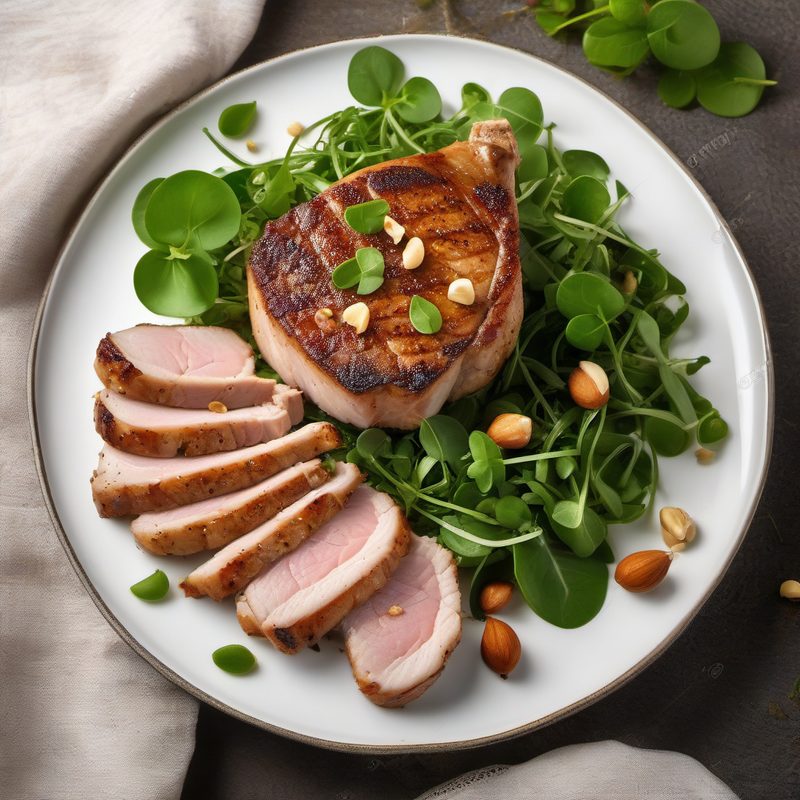
Pork Chops Watercress Hazelnuts
| Amount | Ingredient |
|---|---|
| 100 g (3½ oz) | Fresh watercress, tough stems removed |
| 50 g (½ cup) | Hazelnuts |
| 1 tbsp | Extra-virgin olive oil |
| 1 | Lemon, juiced (about 2 tbsp) |
| to taste | Kosher salt and freshly ground black pepper |
Costolette con crescione e nocciole
Crispy, golden-brown pork chops meet a peppery, nutty salad — this Italian secondo is elegant enough for company yet comes together in under 30 minutes.
> Note: For best results, use bone-in pork chops about 1 inch thick. Let the chops rest before slicing to keep them juicy.
Pork Chops
Watercress and Hazelnut Salad
🥘 Equipment
- Large cast-iron or stainless-steel skillet (12-inch)
- Small dry skillet or frying pan
- Paper towels
- Chef's knife and cutting board
- Medium mixing bowl
- Tongs
- Instant-read thermometer
📋 Preparation
Step 1: Prep the Chops
Pat the pork chops dry with paper towels. Season generously on both sides with salt and pepper. Let sit at room temperature for 10 minutes — this helps the meat cook evenly and encourages browning.
Why room temperature? A cold chop seizes up when it hits the hot pan, leading to tough meat and uneven cooking.
Step 2: Toast the Hazelnuts
In a small dry skillet over medium heat, toast the hazelnuts, shaking the pan frequently, until fragrant and the skins begin to blister, 3–5 minutes. Watch closely — nuts burn quickly. Transfer to a plate to cool slightly, then roughly chop. Set aside.
Pro tip: Rub the toasted hazelnuts in a clean kitchen towel to remove most of the bitter skins before chopping.
Step 3: Sear the Pork Chops
Heat 2 tablespoons of olive oil in a large skillet over medium-high heat until shimmering. Add the smashed garlic cloves and cook, stirring, until fragrant, about 30 seconds. Remove garlic and discard, or reserve for another use.
Place the pork chops in the skillet in a single layer — do not crowd. Cook without moving until a deep golden-brown crust forms, 4–5 minutes. Flip and cook the second side until the internal temperature reaches 135°F (57°C) for medium, another 4–5 minutes.
Why not move them? Letting the chops sit undisturbed builds a proper Maillard crust — that deep, savory browning is the foundation of flavor.
Step 4: Rest the Chops
Transfer the pork chops to a cutting board or plate. Tent loosely with foil and let rest for 5 minutes. The internal temperature will rise to 140–145°F (60–63°C) during resting.
Don't skip this step: Resting allows the juices to redistribute throughout the meat. Slice too soon and they'll pool on the board, leaving the chops dry.
Step 5: Make the Salad
While the chops rest, place the watercress in a medium mixing bowl. Add the lemon juice, 1 tablespoon olive oil, and a pinch of salt and pepper. Toss gently to coat. Add the chopped toasted hazelnuts and toss once more.
The watercress should be lightly dressed, not wilting under heavy oil — think glossy, not drenched.
Step 6: Assemble and Serve
Place each pork chop on a warm plate. Pile the watercress and hazelnut salad directly on top or alongside. Finish with a final crack of black pepper and a squeeze of lemon if desired. Serve immediately.
🧑🍳 Chef's Tips
- Thickness matters: If your chops are thinner than 1 inch (about ¾ inch or less), reduce cooking time to 3 minutes per side. For thicker cuts (1½ inches), add 1–2 minutes per side and finish in a 375°F oven if needed.
- Watercress substitute: If watercress is unavailable, use arugula or a mix of baby spinach and peppery greens. Adjust the lemon to taste — arugula is sharper.
- No hazelnuts? Toasted almonds or walnuts make an excellent substitute. Toast almonds for 5–6 minutes, walnuts for 4–5 minutes.
- Get a better crust: For an even deeper sear, salt the chops 30–60 minutes ahead and let them rest uncovered in the fridge. The salt draws out surface moisture, which then evaporates, leaving the surface dry and ready for maximum browning.
- Use a thermometer: An instant-read thermometer is your best friend here. Pull the chops at 135°F for perfect medium doneness — no more guessing.
❌ Common Mistakes
| Mistake | Why | Fix |
|---|---|---|
| Using thin, boneless chops | They cook too quickly, leaving no time for a good crust | Buy bone-in chops at least 1 inch thick |
| Moving the chops too soon | You tear the developing crust and lose browning | Leave them completely undisturbed for the full 4–5 minutes |
| Skipping the rest | Juices run out when you cut, leaving dry meat | Always rest at least 5 minutes under loose foil |
| Dressing the salad too early | Watercress wilts and becomes soggy | Dress just before serving — the residual heat from the chops will gently warm the greens |
| Over-toasting the hazelnuts | Burnt nuts taste bitter and acrid | Shake the pan frequently and pull them the moment they're fragrant |
💡 Variations
- Herb crust: Before searing, press each chop into a mixture of chopped rosemary, thyme, and fennel seeds for an aromatic crust.
- Balsamic finish: Deglaze the skillet with 2 tablespoons balsamic vinegar after removing the chops, then drizzle the reduced glaze over the salad.
- Spicy kick: Add a pinch of red pepper flakes to the oil when searing, or toss a sliced fresh chili into the watercress salad.
- Pork chop Milanese: Pound the chops to ½-inch even thickness, bread with panko and grated Parmesan, and pan-fry. Serve the watercress salad on top as a bright counterpoint.
- Winter citrus swap: Replace the watercress with Treviso radicchio and use blood orange juice instead of lemon for a bittersweet winter variation.
❄️ Storage
Pork chops are best eaten fresh. Leftover cooked chops can be refrigerated in an airtight container for up to 2 days. To reheat, warm gently in a low oven (300°F) or in a covered skillet with a splash of water. Do not microwave — it toughens the meat. The watercress salad does not store; make fresh dressing and greens for leftovers.
🍷 Wine Pairing
| Wine | Why |
|---|---|
| Barbera d'Alba | Bright acidity cuts through the richness of the pork; red fruit notes play well with the hazelnuts |
| Chianti Classico | Sangiovese's cherry and herbal notes complement the peppery watercress |
| Pinot Nero (Alto Adige) | Light, earthy, and elegant — won't overpower the delicate salad |
| Verdicchio dei Castelli di Jesi | A white option: crisp, with almond notes that mirror the toasted hazelnuts |
🍺 Beer Pairing
| Beer | Why |
|---|---|
| Italian Pilsner | Clean, crisp, high carbonation — a palate cleanser between rich bites |
| Saison | Peppery and spicy notes echo the watercress; dry finish handles the oil |
| Brown Ale | Nutty, toasty malt character harmonizes with the hazelnuts |
| Czech Dark Lager | Roasted malt and smooth body stand up to the seared pork without overwhelming |
🥗 Suggested Sides
- Roasted fennel and orange salad — the anise sweetness cuts through the pork's richness
- Sautéed Swiss chard with garlic — a classic Italian contorno that echoes the watercress earthiness
- Crusty sourdough or focaccia — essential for sopping up pan juices
- Roasted potatoes with rosemary — simple, hearty, and a textural contrast to the tender pork
- White bean purée with sage — creamy and mild, it balances the peppery salad
📊 Nutrition (per serving)
| Calories | Protein | Fat | Carbs | Fiber |
|---|---|---|---|---|
| 420 | 38 g | 28 g | 5 g | 2 g |
Note: Nutrition values are approximate and based on 6 oz bone-in pork chops with 2 tsp oil per serving.
❓ FAQ
Can I use boneless pork chops?
Yes, but they cook faster and dry out more easily. Reduce cooking time by about 1 minute per side and use an instant-read thermometer. Look for chops at least ¾ inch thick.
What if I can't find watercress?
Arugula is the best substitute — it has a similar peppery bite. Baby kale or a mix of tender greens with a splash of extra lemon works too, though the character will shift.
Should I trim the fat cap on the chops?
Leave a thin layer (about ¼ inch) of fat. Score it in a few places to prevent curling. The rendered fat adds flavor and helps baste the meat.
Can I make this dairy-free?
It already is — there's no dairy in the recipe. The olive oil and nuts provide richness.
My hazelnuts still have skin — should I remove it?
It's optional. The skins add slight bitterness and texture. If you prefer a cleaner flavor, rub the warm toasted nuts in a clean kitchen towel to loosen the skins, then pick out the nuts. Don't worry if a little skin remains.
🔗 Related Recipes
- Saltimbocca alla Romana — Veal with Prosciutto and Sage
- Pollo alla Milanese — Breaded Chicken Cutlets
- Maiale al Latte — Pork Loin Braised in Milk
- Arugula and Parmesan Salad with Lemon Vinaigrette
- Bistecca alla Fiorentina — Tuscan Grilled Steak
🏷️ Search Tags
Recipe from The Italian Kitchen by Vita Milanese — Volume 1 · Pasta Perfetto. Discover all volumes on the ebook page.