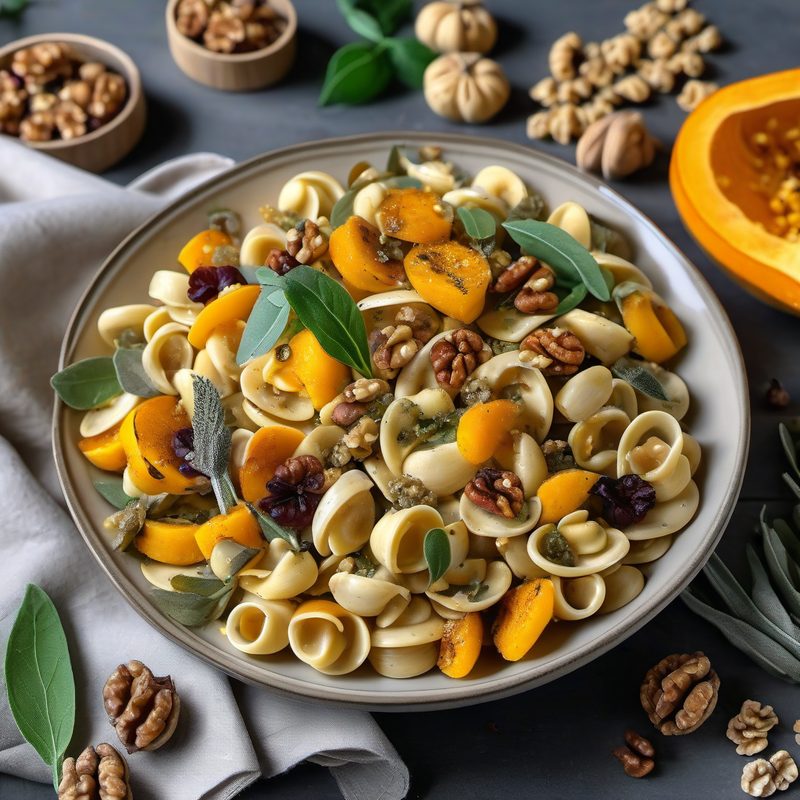
Orecchiette Autumn Salad
| Amount | Ingredient |
|---|---|
| Calories | 485 kcal |
| Total Fat | 21 g |
| Saturated Fat | 4 g |
| Trans Fat | 0 g |
| Cholesterol | 15 mg |
| Sodium | 620 mg |
| Total Carbohydrates | 61 g |
| Dietary Fiber | 5 g |
| Total Sugars | 6 g |
| Protein | 16 g |
| Calcium | 280 mg |
| Iron | 3 mg |
| Vitamin A | 6800 IU |
| Vitamin C | 12 mg |
1. Category
Primi Piatti — Insalate — First Course (Pasta Salad)
Cucina Stagionale — Seasonal Cuisine (Autumn)
2. Yield / Serves
Serves 4 as a main-course salad
Serves 6 as a side dish or buffet contribution
3. Total Time
55 minutes
4. Active Time / Prep Time
20 minutes
5. Difficulty
Easy — ★☆☆☆☆ (1/5)
6. Why This Recipe Works
Insalata di orecchiette d'autunno is a study in contrasts — a cold pasta salad that captures the warm, earthy flavors of autumn and presents them in a refreshing, make-ahead format. Where summer pasta salads rely on bright tomatoes and tender zucchini, this version leans into the deep, caramelized sweetness of roasted pumpkin, the peppery bite of fresh arugula, and the luxurious, nutty richness of shaved Parmigiano-Reggiano and toasted walnuts. It is a salad that understands that cold does not have to mean bland.
The key to this dish is roasting the pumpkin until its edges are deeply bronzed and its interior is silky and concentrated. At 200°C (400°F), the natural sugars in the pumpkin caramelize, transforming a humble squash into something almost candy-like in sweetness — a perfect counterpoint to the sharp, grassy notes of the arugula and the tang of balsamic vinegar. The orecchiette — those ear-shaped little pastas from Puglia — are cooked until perfectly al dente, then cooled under cold running water to stop cooking and remove surface starch, ensuring they remain distinct and bouncy rather than clumping together in a starchy mass.
The dressing is intentionally minimal: a good extra-virgin olive oil, a sharp balsamic vinegar, salt, and pepper. Nothing more. The roasted pumpkin contributes its own moisture and oil, the walnuts add crunch and healthy fats, and the Parmesan shavings provide salty, umami-rich ribbons that melt slightly into the warm pasta. Tossed together and chilled briefly, the flavors meld into a cohesive whole — each bite delivering sweetness, bitterness, nuttiness, and tang in perfect balance. This is a pasta salad that proves autumn produce can be just as vibrant as summer's best.
7. Key Equipment
- Baking sheet (half-sheet pan, 13 × 18 inches) — rimmed, for roasting the pumpkin
- Parchment paper (optional but recommended for easy cleanup)
- Large pot (6–8 quart) for boiling pasta
- Colander for draining and rinsing pasta
- Chef's knife and cutting board
- Large mixing bowl — wide enough to toss all ingredients without spilling
- Vegetable peeler — for Parmesan shavings
- Small dry skillet — for toasting walnuts
- Measuring spoons and liquid measuring cup
- Rubber spatula or large spoon for tossing
- Pumpkin (or butternut squash) — The heart of the salad. Use a sugar pumpkin or a butternut squash; both have dense, sweet flesh that roasts beautifully. Peeled, seeded, and cut into ½-inch (1.25 cm) cubes, the pumpkin should be spread in a single layer on the baking sheet so it roasts rather than steams. The goal is caramelization: deeply golden edges and a tender, almost creamy interior. Kabocha or Hokkaido pumpkin work well too and do not require peeling if well scrubbed.
- Orecchiette — Literally "little ears," these small, concave pasta shapes are ideal for cold salads because their rough, dimpled surfaces catch the dressing and small bits of pumpkin and arugula cling to their curves. The ear shape also provides a satisfying textural contrast to the soft pumpkin and tender greens. If unavailable, cavatelli, conchigliette, or even medium shells (conchiglie) make good substitutes — choose a shape with some sort of pocket or curve.
- Arugula (rocket) — Fresh, peppery arugula provides the salad's sharp, green backbone. Its pungent, slightly spicy flavor cuts through the sweetness of the roasted pumpkin and the richness of the olive oil and cheese. Use baby arugula for a milder bite or mature arugula for a more assertive kick. The leaves should be crisp, dry, and perky — wilted or slimy arugula will ruin the salad's texture.
- Walnuts — Toasted walnuts contribute a warm, earthy crunch that elevates every bite. Toasting is non-negotiable: raw walnuts can be bitter and slightly astringent, while toasting brings out their natural oils and transforms them into something sweet, buttery, and deeply nutty. Toast them in a dry skillet over medium heat for 3–4 minutes, shaking the pan frequently, until fragrant and slightly darkened.
- Parmigiano-Reggiano (shaved) — Shaved Parmesan adds elegant, salty ribbons that provide bursts of savory umami throughout the salad. Use a vegetable peeler to create thin, wide shavings from a block of authentic Parmigiano-Reggiano (not pre-grated or pre-shaved, which are dry and lack flavor). The shavings should be added just before serving so they maintain their shape and texture.
- Extra-virgin olive oil — The dressing base. Use a good-quality, fruity extra-virgin olive oil — one you would happily eat with bread. A grassy, medium-intensity oil from Tuscany or a fruity, almondy oil from Puglia both work beautifully. The oil should be the bridge that ties all the components together.
- Balsamic vinegar — A good aged balsamic vinegar (aceto balsamico di Modena) adds sweetness and acidity that balances the richness of the pumpkin and oil. Use a moderately aged vinegar (at least 3 years) — the syrupy, 12-year-plus stuff is too thick and sweet for a salad dressing. A splash of balsamic is all you need; it should whisper, not shout.
9. Before You Begin (Mise en Place)
- Position an oven rack in the middle position and preheat the oven to 200°C (400°F).
- Prepare the pumpkin: Peel the pumpkin (if using a thick-skinned variety like butternut or sugar pumpkin), scoop out the seeds and stringy fibers, and cut the flesh into ½-inch (1.25 cm) cubes. You should have about 200 g (7 oz) of cubed pumpkin — roughly 2 cups.
- Line a baking sheet with parchment paper (optional, but makes cleanup much easier).
- Bring a large pot of generously salted water to a rolling boil — about 1½ tablespoons of kosher salt per 4 quarts of water.
- Toast the walnuts: Place 50 g (½ cup) of walnut halves or pieces in a small dry skillet over medium heat. Toast, shaking the pan frequently, until fragrant and lightly browned — about 3 to 4 minutes. Watch carefully; walnuts go from toasted to burnt very quickly. Transfer to a plate or cutting board to cool, then roughly chop.
- Using a vegetable peeler, shave 50 g (about 1¾ oz) of Parmigiano-Reggiano into thin, wide ribbons. Set aside at room temperature.
- Wash and thoroughly dry the arugula. Any excess water on the leaves will dilute the dressing and waterlog the salad. Pat dry with paper towels or spin in a salad spinner.
- Have the olive oil, balsamic vinegar, salt, and pepper measured and ready near the mixing bowl.
11. Instructions
Step 1: Roast the Pumpkin
On the prepared baking sheet, toss the pumpkin cubes with 1 tablespoon of the olive oil, a generous pinch of salt, and a few grinds of black pepper. Spread the pumpkin in a single, even layer — crowding will cause it to steam instead of roast, preventing caramelization.
Roast on the middle rack for 25 minutes, flipping the cubes halfway through (at the 12–13 minute mark) with a spatula. The pumpkin is done when the pieces are tender all the way through when pierced with a fork and the edges are deeply golden brown and slightly crisp.
Remove from the oven and let cool completely on the baking sheet. Do not transfer to a bowl while hot — the residual heat will continue to cook the pumpkin and may cause it to fall apart.
Tip: While the pumpkin roasts, proceed with cooking the pasta. The two tasks run in parallel.
Step 2: Cook the Orecchiette
Once the salted water is at a rolling boil, add the orecchiette and cook according to package directions until al dente. Check the pasta 1 minute before the suggested cooking time — orecchiette can go from perfectly al dente to mushy in seconds, and a cold salad is merciless with overcooked pasta.
Drain the pasta in a colander. Immediately rinse under cold running water, tossing the pasta with your hands, until the orecchiette is cool to the touch — about 30 to 45 seconds. Shake the colander vigorously to remove as much excess water as possible.
Rinsing is essential for cold pasta salad: it stops the cooking instantly and washes away the surface starch that would otherwise make the noodles sticky and clumpy when chilled.
Transfer the drained, cooled pasta to the large mixing bowl. Drizzle with 1 tablespoon of the remaining olive oil and toss to coat — this prevents the orecchiette from sticking together as they sit.
Step 3: Assemble the Salad
To the bowl with the orecchiette, add:
- The cooled roasted pumpkin (break up any pieces that have stuck together)
- The arugula
- The toasted walnuts
- Half of the Parmesan shavings (set the other half aside for garnish)
Drizzle with the remaining 1 tablespoon of olive oil and the balsamic vinegar. Season with salt (start with ½ teaspoon) and several generous grinds of black pepper.
Using a rubber spatula or two large spoons, toss gently but thoroughly, lifting from the bottom to distribute the ingredients evenly. The arugula should be lightly wilted by the heat of the pasta (if the pasta is still slightly warm) or remain crisp (if the pasta is fully cold) — either state is acceptable.
Step 4: Chill (Optional but Recommended)
Cover the bowl and refrigerate for 20 to 30 minutes. This brief chill allows the flavors to meld and the dressing to fully coat every piece of pasta. Do not chill for more than 1 hour before serving, as the arugula will begin to wilt excessively and the pumpkin may break down.
Note on temperature: This salad is delicious served immediately at room temperature, slightly chilled after 30 minutes in the fridge, or fully cold after an hour. Adjust the resting time to your preference.
Step 5: Garnish and Serve
Just before serving, taste the salad and adjust the salt, pepper, and balsamic vinegar to your preference. Transfer to a serving platter or individual bowls. Scatter the remaining Parmesan shavings over the top and finish with a final drizzle of olive oil and a few extra grinds of black pepper for visual appeal.
Serve cold or at room temperature.
12. Step-by-Step Visual Guide
| Stage | Visual Cue |
|---|---|
| Pumpkin before roasting | Even ½-inch cubes, uniformly coated with oil; single layer on baking sheet, no overlapping |
| Pumpkin after roasting | Edges deeply caramelized and crisp; interior tender and bright orange; pieces hold their shape |
| Cooked orecchiette | Al dente — firm to the bite with a tiny white core; rinsed, cooled, and glossy with oil |
| Assembled salad (pre-chill) | Orecchiette, pumpkin, arugula, walnuts, and Parmesan evenly distributed; dressing coats everything without pooling at the bottom |
| Finished salad (plated) | Bright contrast of orange pumpkin, green arugula, golden pasta, and cream-white Parmesan shavings; walnuts visible as dark flecks |
13. Troubleshooting
| Problem | Cause | Solution |
|---|---|---|
| Pumpkin is mushy or falling apart | Overcooked or cut into pieces that were too small | Cut into ½-inch cubes; check at 20 minutes and remove when fork-tender but intact |
| Pumpkin is not caramelized | Oven temperature too low, or pumpkin was crowded on the baking sheet | Roast at 200°C (400°F); spread in a single layer with space between pieces |
| Pasta is clumpy/sticky | Not rinsed after draining, or not tossed with oil | Rinse thoroughly under cold water and toss with olive oil immediately after draining |
| Salad tastes flat or underseasoned | Not enough salt, or pasta water was undersalted | Season pasta water generously (1½ tbsp salt per 4 quarts); taste salad before serving and add salt or balsamic as needed |
| Arugula is wilted and soggy | Washed but not dried, or salad was chilled too long | Dry arugula thoroughly in a salad spinner; do not chill assembled salad for more than 1 hour |
| Walnuts taste bitter or burnt | Over-toasted | Toast at medium heat for only 3–4 minutes; nuts continue to darken after being removed from heat |
| Parmesan shavings clump together | Added too early; moisture from salad makes them stick | Add half at assembly and half as garnish just before serving |
| Dressing pools at the bottom of the bowl | Ratio of oil to vinegar is off, or pasta was not drained well enough | Shake colander thoroughly after rinsing; increase oil slightly (add ½ tbsp more) to emulsify |
14. Make Ahead / Storage
- Refrigerator: This salad is best eaten within 4 hours of assembly. After that, the arugula begins to wilt noticeably and the pumpkin softens. Leftovers can be stored in an airtight container for up to 1 day — the arugula will be quite wilted, but the flavor will still be enjoyable.
- Reviving leftovers: If the salad has dried out overnight, refresh with a drizzle of olive oil and a splash of balsamic vinegar. Add a handful of fresh arugula if available.
- Prep-ahead strategy (recommended): The components can be prepared up to 1 day in advance and assembled just before serving:
- Roast the pumpkin, cool completely, and store in an airtight container in the refrigerator.
- Toast the walnuts, cool, and store at room temperature.
- Shave the Parmesan and store in a covered container in the refrigerator (bring to room temperature before serving).
- Cook and cool the orecchiette, toss with 1 tablespoon of oil, and store in an airtight container in the refrigerator.
- Do not wash the arugula or assemble the salad until just before serving.
- Freezer: Not recommended. Both the pasta and the pumpkin will become mushy upon thawing, and the arugula will collapse into a slimy mess.
15. Variations
Insalata di Orecchiette d'Autunno con Gorgonzola
Add 75 g (2½ oz) of crumbled Gorgonzola dolce (sweet Gorgonzola) along with the other ingredients. The creamy, tangy blue cheese pairs beautifully with the sweet pumpkin and balsamic. Omit or reduce the Parmesan to avoid over-cheesing.
Autumn Orecchiette Salad with Crispy Sage
Add 10–12 fresh sage leaves to the roasting pan with the pumpkin during the last 10 minutes of roasting. The sage becomes crisp and papery, adding a woodsy, aromatic crunch. Alternatively, fry sage leaves in a small skillet with 1 tablespoon of olive oil until crisp (about 30 seconds per side), drain on paper towels, and crumble over the finished salad.
Con Melagrana e Noci (with Pomegranate and Walnuts)
Add the seeds from ½ a pomegranate (about 60 g / ¼ cup) when assembling the salad. The jewel-like arils provide bursts of sweet-tart juice that cut through the richness of the oil and cheese. Replace half the walnuts with toasted pepitas (pumpkin seeds) for extra crunch.
Con Radicchio (with Radicchio)
Replace half the arugula with 50 g (1¾ oz) of thinly sliced radicchio (Trevigiano or Chioggia). The radicchio's pleasant bitterness echoes the pumpkin's sweetness and adds a beautiful burgundy hue to the salad.
Con Salsiccia Grigliata (with Grilled Sausage)
For a heartier, main-course salad, grill 2 Italian sausages (sweet or spicy) until cooked through, about 10–12 minutes. Let rest for 5 minutes, then slice into ½-inch rounds and add to the salad when assembling. The sausage juices mingle with the balsamic dressing for an extra layer of savoriness.
Gluten-Free Version
Substitute 350 g (12 oz) of gluten-free orecchiette (brown rice or corn-based). Cook according to package directions, rinse, and proceed with the recipe as written. Gluten-free pasta can be more fragile when cold, so toss gently.
Vegan Version
Omit the Parmesan. Replace with 2 tablespoons of nutritional yeast (for umami and cheesy flavor) or 50 g of toasted pine nuts tossed in the dressing for richness. Use a high-quality aged balsamic to compensate for the missing Parmesan tang.
16. Wine Pairing
- White (classic): A Greco di Tufo (Campania) — medium-bodied with pear, almond, and a distinct saline-mineral finish that bridges the pumpkin's sweetness and the arugula's peppery bite. Also excellent: Fiano di Avellino or a barrel-fermented Friulano from Friuli.
- White (aromatic): A Gewürztraminer from Trentino-Alto Adige — its lychee and rose notes and slight residual sweetness complement the balsamic and roasted pumpkin beautifully.
- Rosé: A dry Cerasuolo d'Abruzzo or Tavel Rosé — wild strawberry and herb notes echo the walnuts and arugula without overpowering.
- Red (light): A chillable Lambrusco Grasparossa di Castelvetro (secco/dry) — the slight spritz and sour-cherry acidity cut through the olive oil and cheese. Alternatively, a Pinot Nero (Pinot Noir) from Alto Adige served at cellar temperature (55–60°F / 13–15°C).
- Sparkling: A Franciacorta Brut Nature or a Trentodoc Brut — the bubbles and high acidity refresh the palate between the rich, nutty bites.
17. Serving Suggestions
- Serve as a primo piatto (first course) followed by a simply roasted chicken or a pan-seared pork chop with sautéed apples and sage.
- Pair with a white bean and rosemary soup (zuppa di fagioli) for a cozy, rustic autumn meal.
- Serve alongside grilled radicchio wrapped in prosciutto and drizzled with balsamic glaze — the bitter-grilled radicchio echoes the arugula in the salad.
- For a buffet or picnic, present the salad on a large platter, garnished with extra Parmesan shavings and a scattering of pomegranate seeds for color.
- Accompany with crostini al forno (oven-toasted bread rounds) rubbed with garlic and drizzled with olive oil — perfect for sopping up any dressing at the bottom of the bowl.
- A side of sautéed spinach with garlic and pine nuts makes an excellent green-on-green companion.
18. Nutritional Information (per serving, serves 4)
Note: Nutritional values are estimates and will vary based on specific ingredient brands and portion sizes. Values assume a standard extra-virgin olive oil and a 3-year-aged balsamic vinegar. For the vegan variation, subtract approximately 50 calories and 15 mg sodium per serving.
19. Recipe Source & Notes
Origin: Italy — seasonal autumn pasta salad tradition \
Region: Adaptable; inspired by Pugliese orecchiette and Emilia-Romagnan Parmigiano \
Inspired by: Insalate di pasta della tradizione autunnale and Le Insalate della Nonna \
Author: Hermes Agent Cookbook, Volume I \
Recipe ID: 472 \
Date Added: July 2026
> Note on pumpkin selection: Look for "sugar pumpkins" or "pie pumpkins" — they are smaller, denser, and sweeter than the large jack-o'-lantern pumpkins, which are watery and bland. Butternut squash is an excellent substitute and is available year-round. Kabocha squash (Japanese pumpkin) works beautifully and has the added benefit of edible skin — simply scrub well and leave the skin on for extra texture and fiber.
> Note on serving temperature: This salad is deliberately versatile when it comes to temperature. Served immediately while the pasta is still slightly warm, the arugula wilts gently and the Parmesan shavings soften, creating a more unified, cohesive dish. Served fully cold (after 1 hour in the refrigerator), the ingredients remain distinct and the arugula stays crisp, offering a brighter, more refreshing eating experience. Neither is "correct" — let the occasion and your preference guide you. For picnics and packed lunches, the cold version is more practical; for a first course at a dinner party, the warm version is more elegant.
"Autumn in a bowl: sweet roasted pumpkin, peppery arugula, crunchy walnuts, and salty Parmesan — all held together by little ears of pasta and a whisper of balsamic. This is the salad that proves cold pasta can be just as soulful as its hot cousin." 🍂🥗
Recipe from The Italian Kitchen by Vita Milanese — Volume 1 · Pasta Perfetto. Discover all volumes on the ebook page.