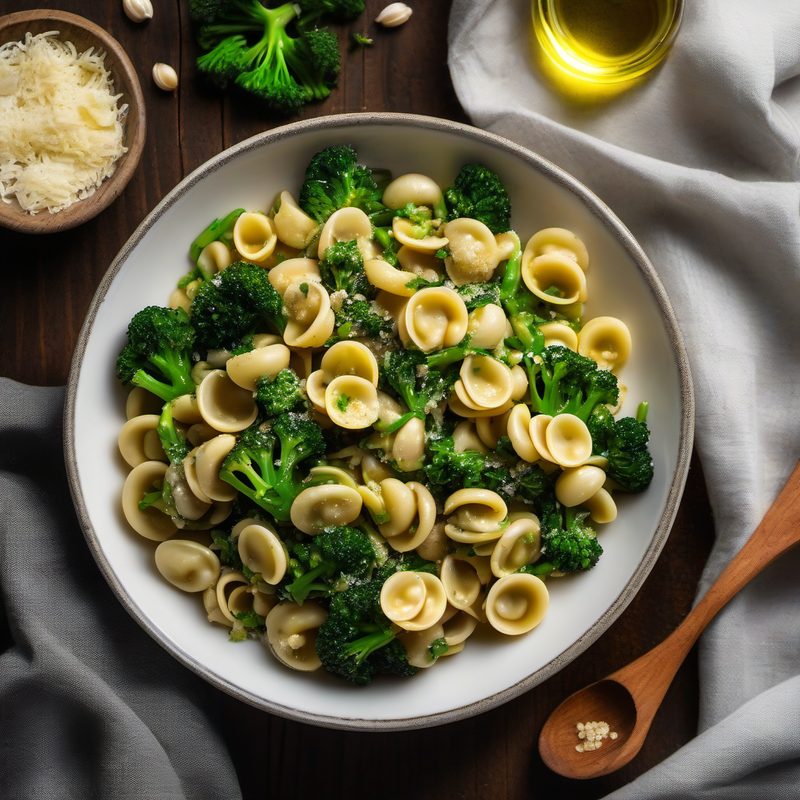
Orecchiette Broccoli Rabe
| Amount | Ingredient |
|---|---|
| Calories | 505 kcal |
| Total Fat | 18 g |
| Saturated Fat | 2.5 g |
| Trans Fat | 0 g |
| Cholesterol | 10 mg (with anchovies) |
| Sodium | 780 mg |
| Total Carbohydrates | 70 g |
| Dietary Fiber | 6 g |
| Total Sugars | 3 g |
| Protein | 17 g |
| Calcium | 120 mg |
| Iron | 4 mg |
| Vitamin C | 18 mg |
| Vitamin A | 1800 IU |
1. Category
Primi Piatti — First Course (Pasta)
Cucina Pugliese — Pugliese Cuisine
2. Yield / Serves
Serves 4 as a main course
Serves 6 as a first course (primo)
3. Total Time
35 minutes
4. Active Time / Prep Time
15 minutes
5. Difficulty
Easy — ★☆☆☆☆ (1/5)
6. Why This Recipe Works
Orecchiette con le cime di rapa is the undisputed queen of Pugliese pasta — a dish so elemental, so perfectly balanced, that it has sustained generations of cooks in the sun-scorched region that forms the heel of Italy's boot. At first glance it seems impossibly simple: ear-shaped pasta, bitter greens, garlic, olive oil, and chili. But the genius lies in how these few ingredients are treated. The broccoli rabe (cime di rapa — literally "turnip tops") is blanched in the same pot of water that later cooks the pasta, infusing the water with its grassy, slightly bitter character. That same starchy, green-flecked water becomes the secret weapon for building the sauce: a splash of it, combined with the oil slick from the sautéed garlic and anchovies, emulsifies into a glossy, clingy coating that drapes each orecchiette like a silk scarf.
The anchovies are the dish's hidden architect — optional in name but transformative in practice. They dissolve into the hot olive oil, contributing not fishiness but a profound, meaty umami that rounds off the sharp edges of the broccoli rabe's bitterness. The chili provides a low, warm hum of heat that keeps every bite interesting. And the broccoli rabe itself — its sturdy leaves, tender stems, and tiny broccoli-like flower buds — offers three distinct textures in one vegetable: the leaves soften and wilt, the stems retain a gentle bite, and the florets become sweet and almost nutty. The hand-shaped orecchiette, with their rough, dimpled surfaces, catch every bit of this sauce, making each forkful a perfect, compact universe of flavor. It is peasant cooking at its most refined — and it takes less time than ordering takeout.
7. Key Equipment
- Large pot (6–8 quart) for boiling pasta and blanching greens
- Large skillet or sauté pan (12-inch) — wide enough to toss pasta with greens
- Slotted spoon or spider skimmer for transferring greens
- Chef's knife and cutting board
- Tongs for tossing pasta
- Ladle or heatproof measuring cup for reserving pasta water
- Colander
- Broccoli rabe (cime di rapa) — Also known as rapini, this Italian leafy green is the soul of the dish. Look for bunches with firm, slender stems, deep green leaves, and compact, bright green flower buds (no yellow flowers — that means they're past their prime). The leaves are earthy and robust, the stems pleasantly bitter, and the buds tender and sweet. Broccoli rabe is not the same as regular broccoli or broccolini; its distinctive bitterness is essential to the dish's character. If unavailable, a mix of broccoli florets, kale, and mustard greens can approximate the flavor, but the result will not be the same.
- Orecchiette — Literally "little ears" in Italian, these small, domed pasta shapes are the traditional pasta of Puglia. Their rough, hand-stamped surface and concave shape are designed to catch and hold sauce. If you cannot find orecchiette, cavatelli or conchigliette are acceptable substitutes, though the eating experience will differ.
- Anchovy fillets (optional but recommended) — The anchovy is the secret ingredient that transforms this humble dish from good to sublime. It does not make the pasta taste fishy; rather, it dissolves completely into the hot olive oil, contributing a deep, savory umami backbone that tempers the bitterness of the greens and amplifies the garlic. Use oil-packed anchovy fillets and mash them with the back of a spoon as they cook. If you absolutely must omit them, add an extra pinch of salt and a splash of fish sauce (yes, really) for a similar glutamatic boost.
- Extra-virgin olive oil — This is a dish where the olive oil is not merely a cooking medium but a primary flavor component. Use a good-quality extra-virgin olive oil from Puglia if possible — fruity, grassy, with a gentle peppery finish. The oil carries the garlic and chili flavors and forms the base of the emulsified sauce.
- Chili pepper — A single fresh red chili (Fresno or red jalapeño) or ½ teaspoon of dried red pepper flakes. The heat should be present but not dominant — a warm undercurrent that enlivens the greens without overwhelming them.
- Garlic — Three cloves, thinly sliced. The garlic should turn golden and fragrant in the oil, not brown and bitter. This is the aromatic foundation of the entire dish.
9. Before You Begin (Mise en Place)
- Fill a large pot with 4 quarts of water and bring to a rolling boil. Add 1½ tablespoons of kosher salt per quart.
- Prepare the broccoli rabe: Trim off the tough, woody ends of the stems (about ½ inch from the bottom). If any stems are thicker than ¼ inch, split them lengthwise for even cooking. Rinse thoroughly in cold water to remove any grit. Do not dry — the residual water on the leaves helps them wilt when they hit the pan later.
- Peel and thinly slice garlic cloves.
- If using a fresh chili, slice it into thin rings. For milder heat, remove the seeds and white membranes before slicing. If using red pepper flakes, have them measured and ready.
- If using anchovy fillets, drain the oil and finely chop them, then mash to a paste with the side of the knife.
- Measure olive oil and have it ready near the stove.
- Have a slotted spoon and a ladle or measuring cup ready near the pasta pot.
11. Instructions
Step 1: Blanch the Broccoli Rabe
Once the salted water is at a rolling boil, add the prepared broccoli rabe. Blanch for 2 minutes — the stems should become tender but still offer some resistance, and the leaves should be bright green and wilted.
Using a slotted spoon or spider skimmer, transfer the broccoli rabe to a large plate or baking sheet. Spread it out so it stops cooking (do not rinse). Set aside. Do not discard the cooking water — it will be used to cook the pasta.
Step 2: Cook the Pasta
Return the pot of broccoli rabe–infused water to a rolling boil. Add the orecchiette and cook until very al dente — 1 to 2 minutes less than the package's al dente time. The pasta will finish cooking in the sauce, so it must be removed from the water while it still has a distinct chalky-white core when bitten.
Reserve 1½ cups (360 ml) of pasta cooking water just before draining. Drain pasta (do not rinse) and set aside.
Step 3: Infuse the Oil
While the pasta cooks, heat 3 tablespoons of the olive oil in a 12-inch skillet over medium heat. Add the sliced chili pepper (or red pepper flakes) and cook, stirring, until fragrant and the oil takes on a faint reddish hue, about 1 minute.
Step 4: Sauté the Garlic and Anchovies
Add the sliced garlic and minced anchovy fillets (if using) to the chili oil. Cook, stirring constantly and mashing the anchovies with the back of a spoon, until the garlic is golden and fragrant and the anchovies have completely dissolved into the oil — about 30 to 45 seconds. Do not let the garlic brown; burnt garlic turns bitter and will spoil the dish.
Step 5: Cook the Broccoli Rabe
Add the blanched broccoli rabe to the skillet. It may still have some residual water clinging to the leaves — this is good; it will help create steam. Increase the heat to medium-high and cook, stirring frequently, for 3 minutes. The greens should be tender, well-coated with the garlic-anchovy-chili oil, and any remaining liquid should have mostly evaporated.
Step 6: Build the Sauce
Reduce heat to medium-low. Add ½ cup (120 ml) of the reserved pasta water to the skillet and stir, scraping up any browned bits from the bottom of the pan. Let it simmer for 30 seconds to meld the flavors. The liquid should look emulsified — slightly creamy and opaque from the oil-and-water union — not greasy or separated.
Step 7: Toss the Pasta
Add the drained orecchiette to the skillet. Using tongs, toss and turn the pasta vigorously for 1 to 2 minutes, allowing it to absorb the sauce and finish cooking. The sauce should coat each orecchiette thickly, clinging to the dimpled surfaces. If the sauce seems too tight or dry, add more reserved pasta water, 1 tablespoon at a time, until it flows freely and coats the pasta.
Step 8: Finish and Serve
Remove the skillet from the heat. Drizzle with the remaining 1 tablespoon of extra-virgin olive oil and toss once more to distribute. Divide among 4 warmed bowls. Serve immediately — this dish waits for no one.
12. Step-by-Step Visual Guide
| Stage | Visual Cue |
|---|---|
| Blanched broccoli rabe | Bright green, leaves wilted, stems tender but not mushy; spread flat to stop cooking |
| Chili-infused oil | Oil fragrant and lightly tinted reddish; chilies starting to soften |
| Garlic and anchovy | Garlic pale gold, anchovies completely dissolved — no visible fillets remain |
| Cooked greens | Broccoli rabe glistening with oil, leaves darkened slightly, no standing liquid in pan |
| Emulsified sauce | Oily and aqueous phases combined into a slightly creamy, opaque liquid — no oil slick floating on top |
| Finished pasta | Orecchiette glistening, each piece individually coated, greens evenly distributed, no pooling liquid at bottom of bowl |
13. Troubleshooting
| Problem | Cause | Solution |
|---|---|---|
| Sauce is watery / pools at bottom of bowl | Pasta was undercooked before saucier, or too little oil-to-water ratio | Add 1 more tablespoon of olive oil and toss over medium heat for 1 more minute to emulsify |
| Sauce is greasy / separated | Heat too high after adding pasta water; oil and water broke | Remove from heat, add 1 tbsp cold pasta water, and whisk/toss vigorously — it will re-emulsify |
| Pasta is gummy | Overcooked before draining, or rinsed after draining | Cook to very al dente; never rinse — surface starch is essential for sauce adhesion |
| Broccoli rabe is mushy | Over-blanched or not spread out to cool after blanching | Blanch for exactly 2 minutes; spread on a cool surface immediately to stop carryover cooking |
| Broccoli rabe is too bitter | Variety choice or over-mature greens | Add another anchovy fillet — the umami balances bitterness; or add an extra pinch of salt |
| Garlic tastes bitter | Garlic was cooked too long or over too-high heat | Keep heat at medium and add garlic for only 30–45 seconds before adding greens |
| Not enough heat | Chili was too mild or seeds were removed | Add a pinch of red pepper flakes with the garlic next time, or use a spicier fresh chili |
| Anchovy flavor is too prominent | Too many fillets or they weren't fully dissolved | The flavor mellows as the dish sits; toss with an extra splash of olive oil to balance |
14. Make Ahead / Storage
- Refrigerator: Orecchiette con le cime di rapa is best eaten immediately, but leftovers can be stored in an airtight container for up to 2 days. The pasta will absorb much of the sauce overnight, so revive it by reheating in a skillet with a splash of water or broth, adding a little extra olive oil and a pinch of salt.
- Freezer: Not recommended. The greens lose their texture upon thawing and the pasta becomes mushy.
- Prep ahead: Broccoli rabe can be cleaned, trimmed, and blanched up to 1 day in advance. After blanching, plunge into an ice bath (shock), drain thoroughly, pat dry, and store in a covered container in the refrigerator. Proceed with the recipe from Step 2 when ready to cook. Garlic and chili should be prepared just before cooking for best flavor.
15. Variations
Orecchiette con Cime di Rapa con Salsiccia (with Sausage)
Add 200 g (7 oz) of crumbled Italian pork sausage (sweet or spicy) to the skillet after infusing the oil. Cook, breaking apart with a wooden spoon, until browned and cooked through, about 5 minutes. Remove with a slotted spoon and set aside. Proceed with the recipe, returning the sausage to the pan when tossing the pasta.
Orecchiette con Cime di Rapa senza Acciughe (Vegetarian Version)
Omit the anchovies entirely. Add ½ teaspoon of soy sauce or tamari along with the pasta water for a glutamatic boost that mimics the umami the anchovies provide. Alternatively, add 2 tablespoons of toasted breadcrumbs (pangrattato) tossed with lemon zest and parsley as a final garnish for extra texture and savoriness.
Orecchiette con Cime di Rapa con Pomodorini (with Cherry Tomatoes)
Add 150 g (5 oz) of halved cherry tomatoes to the skillet after the garlic has softened. Cook for 2 minutes, until the tomatoes begin to blister and release their juices, before adding the broccoli rabe. The sweet acidity of the tomatoes balances the bitterness of the greens beautifully.
Orecchiette con Cime di Rapa Piccante (Extra Spicy)
Use 2 fresh red chilies (or 1 teaspoon of red pepper flakes) and add the seeds along with the sliced chili. For an even deeper heat, add a pinch of Calabrian chili paste along with the garlic. Finish with a drizzle of chili-infused olive oil at the table.
Gluten-Free Version
Substitute 350 g (12 oz) of gluten-free orecchiette (brown rice or corn-based). Cook according to package directions and reserve extra pasta water, as gluten-free pasta tends to absorb more liquid. Proceed with the recipe as written.
Broccoli Rabe with Cavatelli or Trofie (Different Pasta Shapes)
Cavatelli (ridged, curled pasta from Campania) or trofie (twisted short pasta from Liguria) make excellent substitutes. The cooking time will vary — always cook to very al dente and finish in the sauce.
16. Wine Pairing
- White (classic): A crisp, mineral-driven Verdeca or Locorotondo from Puglia — these local whites have the acidity to cut through the olive oil and the herbal notes to complement the broccoli rabe's bitterness. Also excellent: Greco di Tufo or Fiano di Avellino from Campania.
- Rosé: A dry Cerasuolo d'Abruzzo rosato — bright cherry and wild strawberry notes bridge the garlic and greens beautifully.
- Red (light): A chillable Nero di Troia (Puglia's indigenous red grape) served at cellar temperature (55–60°F / 13–15°C) — light-bodied, with notes of red cherry, violet, and Mediterranean herbs. Alternatively, a Barbera d'Alba or a simple Chianti.
- Sparkling: A bone-dry Franciacorta Brut or a Prosecco di Valdobbiadene Extra Brut — the bubbles scrub the palate clean between the bitter, savory bites.
17. Serving Suggestions
- Serve as a primo piatto before a simply grilled fish (branzino, orata, or fresh sardines) or a lemony chicken cutlet (scaloppina al limone).
- Pair with a fennel and orange salad — thinly sliced raw fennel, blood orange segments, black olives, and a lemon-olive oil dressing — the bright, citrusy notes cut through the richness of the olive oil.
- For a rustic Pugliese spread, serve alongside fave e cicorie (fava bean purée with chicory), pane di Matera (crusty bread from neighboring Basilicata), and a plate of olive nere di Cerignola.
- A side of grilled radicchio dressed with balsamic vinegar adds a complementary bitter note that echoes the broccoli rabe.
18. Nutritional Information (per serving, serves 4)
Note: Nutritional values are estimates and will vary based on specific ingredient brands and portion sizes. Values assume the optional anchovies are included. Without anchovies, subtract approximately 15 calories and 65 mg sodium per serving.
19. Recipe Source & Notes
Origin: Puglia, Italy — the heel of the boot \
Region: Bari and the Salento peninsula \
Inspired by: Traditional Pugliese home cooking and Le Ricette della Cucina Pugliese \
Author: Hermes Agent Cookbook, Volume I \
Recipe ID: 450 \
Date Added: July 2026
> Note on broccoli rabe selection: The best cime di rapa have firm, slender stems (no thicker than a pencil), deeply green leaves, and tight, compact flower buds that show no yellow. If the buds have begun to open into yellow flowers, the greens are past their prime and will be excessively bitter and tough. When shopping at an Italian market, ask for "cime di rapa" or "rapini" — they are the same vegetable, but "cime di rapa" specifically refers to the variety prized in Puglia.
> Note on the pasta water: Blanching the broccoli rabe in the pasta water is not a time-saver — it is a deliberate technique. The water absorbs the oils, minerals, and bitter compounds from the greens, and this infused water then seasons the pasta from within. The result is a deeper, more integrated flavor than you would achieve by cooking the pasta in plain salted water. Do not skip this step.
"Orecchiette con cime di rapa is not a dish you learn — it is a dish you remember. The bitter greens, the garlic, the oil, the little ears of pasta that hold it all together like cupped hands. This is the taste of Puglia: elemental, honest, and unforgettable." 🥦🍝
Recipe from The Italian Kitchen by Vita Milanese — Volume 1 · Pasta Perfetto. Discover all volumes on the ebook page.