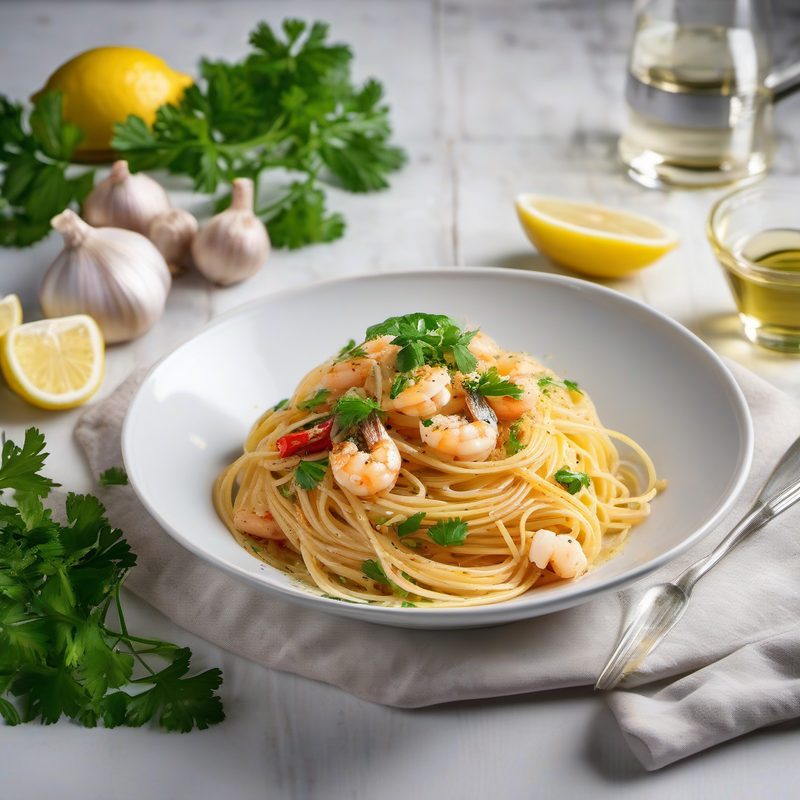
Spaghetti Scampi Aglio Olio
| Amount | Ingredient |
|---|---|
| 350 g | spaghetti — |
| 300 g | scampi (langoustine) tails, peeled and deveined (or large shrimp, 16–20 count; tails left on or off per preference) |
| 5 tbsp | extra-virgin olive oil divided |
| 4 | garlic cloves thinly sliced |
| 2 | fresh red chili peppers (such as Fresno or cayenne) thinly sliced into rings, seeds left in for heat |
| 60 ml | dry white wine (¼ cup) — |
| ¼ cup | fresh flat-leaf parsley finely chopped |
| 2 tsp | salt for pasta water; plus more to taste |
| — | freshly ground black pepper to taste |
Garlic Chili Spaghetti with Scampi (Langoustines)
Category
Primi piatti, Cucina di mare
Why This Recipe Works
Spaghetti aglio, olio, peperoncino e scampi is a classic Italian seafood pasta that marries the bold, simple punch of garlic and chili with the delicate sweetness of scampi (Mediterranean langoustines). The key lies in coaxing maximum flavor from minimal ingredients: slowly infusing good olive oil with sliced garlic and dried chili, then using that same fragrant oil to quickly sear the scampi. A splash of white wine deglazes the pan and is absorbed into the pasta, while a generous handful of fresh parsley adds brightness. The result is a dish that tastes far greater than the sum of its parts — spicy, garlicky, briny, and deeply satisfying.
Serves
4
Total Time
30 minutes
Ingredients
Before You Begin
- Scampi vs. shrimp: True scampi (Mediterranean langoustines, Nephrops norvegicus) have a sweeter, more delicate flavor than shrimp. If using shrimp, choose large (16–20 count) and do not overcook — shrimp need only 1–2 minutes per side.
- Chili heat: For a milder dish, remove the seeds and ribs from the chilies. For extra heat, add a pinch of red pepper flakes alongside the fresh chili.
- Pasta water: Reserve at least 1 cup of starchy pasta cooking water before draining — it is essential for emulsifying the sauce.
- Oil quality matters: Use a good extra-virgin olive oil; it is the backbone of this sauce and will be tasted in every bite.
- Timing: The sauce comes together in the time it takes to cook the pasta. Have all ingredients prepped before you begin.
Equipment
- Large pot (6–8 qt) for pasta
- Large skillet (12-inch) or sauté pan
- Colander
- Measuring cups and spoons
- Chef's knife and cutting board
- Tongs (for tossing pasta)
- Ladle
Instructions
1. Cook the pasta
Bring 4 quarts of water to a rolling boil in a large pot. Add 2 teaspoons of salt. Add the spaghetti and cook until al dente, 1–2 minutes less than the package directions (typically 8–10 minutes). Reserve 1½ cups of pasta cooking water, then drain the spaghetti (do not rinse).
2. Infuse the oil
While the pasta cooks, heat 3 tablespoons of the olive oil in a large skillet over medium heat. Add the sliced garlic and chili rings and cook, stirring frequently, until the garlic is fragrant and just beginning to turn golden at the edges — about 2 minutes. Do not let the garlic brown or burn, or it will become bitter.
3. Sear the scampi
Increase the heat to medium-high. Add the scampi tails in a single layer and cook without moving for 1 minute. Flip and cook the second side for 1 minute more. The scampi should be opaque and just cooked through — lightly golden on the outside, still tender within.
4. Deglaze with wine
Pour in the white wine — it will sizzle and steam immediately. Using a wooden spoon, scrape up any browned bits from the bottom of the pan. Let the wine bubble and reduce by about half, roughly 30–45 seconds.
5. Sauce the pasta
Reduce the heat to low. Add the drained spaghetti to the skillet along with ½ cup of the reserved pasta water. Using tongs, toss vigorously to coat the pasta in the garlic-chili oil. If the pasta looks dry, add more pasta water a couple of tablespoons at a time until a glossy, emulsified sauce forms. The sauce should cling to each strand without pooling.
6. Finish and serve
Remove the skillet from the heat. Add the remaining 2 tablespoons of olive oil and the chopped parsley. Toss once more to combine. Season with salt and black pepper to taste. Divide among 4 warmed plates and serve immediately.
Notes on Ingredients
- Scampi / Langoustines: These are not to be confused with "shrimp scampi" as prepared in American-Italian cooking. True scampi are small lobster-like crustaceans with a tender, sweet tail meat. If unavailable, jumbo shrimp (U-15 or 16–20 count) are the best substitute. Avoid pre-cooked frozen scampi; raw, shell-on or peeled tails yield far better texture.
- Chili peppers: Fresh red chilies provide both heat and a fruity, vegetal note. Dried red pepper flakes can be substituted in a pinch — use ½–1 teaspoon, added with the garlic.
- Olive oil: This is a sauce built on oil, not tomato or cream. Use a fruity, medium-intensity extra-virgin olive oil you enjoy eating raw — its flavor will be front and center.
- Parsley: Flat-leaf (Italian) parsley is preferred for its cleaner flavor and tender texture. Curly parsley can be used but chop it very finely.
Technique Tips
- Emulsifying the sauce: The alchemy of pasta water (starch) + olive oil (fat) + vigorous tossing creates a creamy, clingy emulsion. Do not skip the reserved pasta water — it is the secret to a silky, non-greasy sauce.
- Don't rinse the pasta: Rinsing washes away the surface starch that helps the sauce adhere. Drain the pasta and transfer it directly to the skillet while it is still hot.
- Work quickly: Have all components ready before the pasta is done. The sauce comes together in the final 2–3 minutes, and you want to toss and serve while everything is piping hot.
Variations
- Spaghetti aglio, olio e peperoncino (classic, no seafood): Omit the scampi and white wine. After toasting the garlic and chili in oil, toss the pasta directly with ½ cup pasta water, remaining olive oil, and parsley. This is the original Neapolitan "poor man's" pasta — simple and extraordinary.
- With clams or mussels: Add 500 g of scrubbed clams or mussels in step 3 after the garlic has infused. Cover the pan and cook 3–4 minutes until the shells open, then proceed with the wine deglaze. Discard any unopened shells.
- A touch of lemon: Add the zest of 1 lemon along with the parsley for brightness, and finish with a squeeze of lemon juice.
- Breadcrumb topping (Gricia-inspired): Toast ¼ cup of fine breadcrumbs in 1 tablespoon of olive oil until golden and sprinkle over the finished pasta for crunch.
Wine Pairing
A crisp, mineral-driven white wine complements the garlic, chili, and sweet scampi. Look for:
- Verdicchio dei Castelli di Jesi (Marche) — citrus and almond notes
- Soave Classico (Veneto) — clean, floral, with a saline finish
- Greco di Tufo (Campania) — rich yet acidic, with stone fruit character
- Vermentino di Sardegna (Sardinia) — bright, herbal, with a sea-breeze minerality
Serve slightly chilled (10–12°C / 50–54°F).
Serving Suggestions
Serve in shallow bowls with a final drizzle of raw extra-virgin olive oil and an extra scattering of fresh parsley. A side of crusty bread (pane sciocco or a good baguette) is ideal for sopping up any remaining garlic-chili oil at the bottom of the bowl. This pasta is traditionally enjoyed as a primo (first course) but makes a satisfying main course when paired with a simple green salad dressed with lemon and olive oil.
Storage / Leftovers
This dish is best eaten immediately — pasta continued to absorb oil and sauce as it sits, and the scampi will toughen upon reheating. If you must store leftovers, toss the pasta with an extra drizzle of olive oil to keep it from drying out, and refrigerate in an airtight container for up to 1 day. Reheat gently in a skillet with a splash of water, tossing constantly, until just warmed through.
Troubleshooting
| Problem | Likely Cause | Solution |
|---|---|---|
| Sauce is oily, not creamy | Pasta water not starchy enough; insufficient tossing | Use less oil next time or add more pasta water while tossing vigorously to encourage emulsion |
| Garlic is bitter | Garlic browned too quickly or burned | Cook garlic on medium, not high, and remove pan from heat if edges turn dark brown |
| Scampi are rubbery | Overcooked | Scampi need only 1–2 minutes total. Cook just until opaque — residual heat will finish them |
| Pasta is bland | Not enough salt in pasta water or sauce | Pasta water should taste like the sea. Adjust seasoning at the end with salt and pepper |
| Dish lacks heat | Chili was too mild or seeds removed | Add a pinch of red pepper flakes with the garlic, or use a spicier chili variety |
Nutritional Information (per serving)
- Calories: ~520 kcal
- Protein: 24 g
- Fat: 22 g (saturated: 3.5 g)
- Carbohydrates: 58 g
- Fiber: 3 g
- Sodium: 720 mg (varies with added salt)
Note: Nutritional values are approximate and based on the listed ingredients using large shrimp if scampi are unavailable.
Source
Adapted from traditional Neapolitan and Southern Italian home cooking. Spaghetti aglio, olio, peperoncino e scampi is a coastal variation of the classic Spaghetti aglio e olio, elevated with Mediterranean langoustines and a touch of white wine. Volume 1, Recipe 473.
Recipe from The Italian Kitchen by Vita Milanese — Volume 1 · Pasta Perfetto. Discover all volumes on the ebook page.