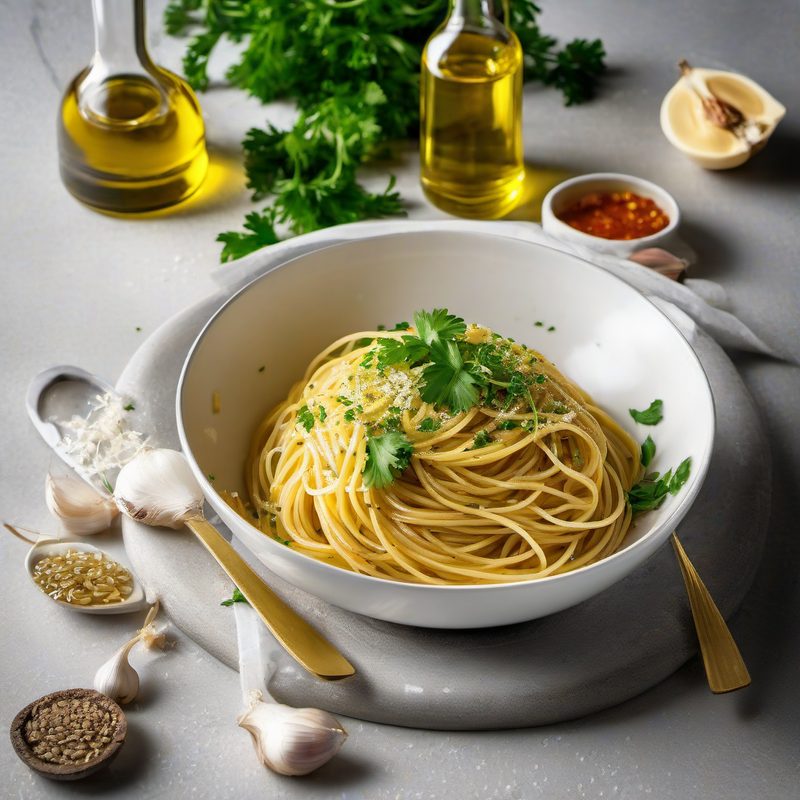
Spaghetti Aglio Olio Cannavacciuolo
Chef Antonino Cannavacciuolo's signature twist on the Neapolitan classic — a silky egg yolk emulsion transforms humble garlic-and-oil pasta into something transcendent.
What Is Spaghetti Aglio e Olio?
Spaghetti aglio e olio, “garlic and oil,” is a Neapolitan classic of spaghetti tossed with garlic gently sautéed in olive oil, chili and parsley — pantry ingredients, big flavor. This version adds Chef Antonino Cannavacciuolo’s signature touch: a silky egg-yolk emulsion that turns the humble dish creamy and transcendent.
| Amount | Ingredient |
|---|---|
| 350 g | Spaghetti |
| 6 cloves | Garlic, thinly sliced lengthwise |
| 1 | Fresh red chili (or 1 tsp red pepper flakes) |
| 80 ml | Extra-virgin olive oil |
| 2 large | Egg yolks, at room temperature |
| 3 tbsp | Fresh flat-leaf parsley, finely chopped |
| to taste | Fine sea salt |
> Note: The critical moment is the off-heat egg yolk incorporation — work quickly and confidently. The residual heat from the pasta and pan is what creates the creamy, custard-like emulsion.
🥘 Equipment
- Large pot (6–8 qt) for pasta
- Colander
- Large skillet or sauté pan (12-inch)
- Chef's knife
- Cutting board
- Small bowl for egg yolks
- Tongs
- Ladle for pasta water
📋 Preparation
Step 1: Prep the Aromatics
Thinly slice the 6 garlic cloves lengthwise — aim for uniform 1–2 mm slices so they cook evenly. If using fresh chili, slice it into thin rings; if using red pepper flakes, set them aside. Finely chop the parsley and set aside. Separate the egg yolks into a small bowl, discarding the whites (or reserve for another use).
Why slice rather than mince? Thin slices allow the garlic to perfume the oil gradually without burning. Minced garlic releases its moisture too quickly and burns before the oil is fully infused.
Step 2: Cook the Pasta
Bring a large pot of generously salted water (about 1½ tbsp salt per 4 quarts water) to a rolling boil. Add the spaghetti and cook until firmly al dente — about 1 minute less than the package direction indicates. Reserve 1 cup of pasta cooking water before draining.
The pasta will finish cooking in the sauce, absorbing the flavorful oil. The reserved starchy water is your emulsion insurance — it can rescue a split sauce.
Step 3: Infuse the Oil
While the pasta cooks, combine the olive oil, sliced garlic, and chili in a cold 12-inch skillet. Place over low heat — the lowest flame your burner can maintain. Cook gently, swirling the pan occasionally, until the garlic turns pale golden and releases its fragrance into the oil. This should take 6–8 minutes. The garlic should be soft and translucent, never brown or crispy.
The slow infusion is non-negotiable. Cannavacciuolo's technique draws out garlic's sweet, nutty character without any bitterness. High heat would scorch the garlic and ruin the oil's flavor profile.
Step 4: Dress the Pasta
Using tongs, transfer the drained spaghetti directly into the skillet with the infused oil. Alternatively, drain the pasta and add it to the skillet. Toss vigorously for 30–45 seconds, letting every strand become coated in the fragrant oil. If the pasta seems dry, add 2–3 tablespoons of the reserved pasta water — the starch helps the sauce cling.
Remove the skillet from the heat completely.
Step 5: Create the Egg Yolk Emulsion
Working quickly off heat, pour the egg yolks over the pasta. Immediately toss and stir vigorously with tongs for 20–30 seconds, lifting and turning the pasta to distribute the yolks evenly. The residual heat from the pasta and pan will gently cook the yolks, creating a rich, creamy, velvety sauce that coats every strand.
This is the heart of Cannavacciuolo's technique. The egg yolks must never scramble — that's why the pan is off heat. The residual heat (around 65–70°C / 150–160°F) is ideal: hot enough to thicken the yolks into a sabayon-like emulsion, but not hot enough to curdle them. Work fast and keep tossing.
Step 6: Finish and Serve
Add the chopped parsley and toss once more. Taste and adjust salt if needed — the pasta water already contributed salt, so go easy. Divide immediately among warm bowls. For a final flourish, drizzle a tiny thread of raw extra-virgin olive oil over each serving and add a pinch of flaky sea salt.
Serve at once — this pasta waits for no one. The emulsion sets as it cools, so timing is everything.
🧑🍳 Chef's Tips
- Room-temperature egg yolks are critical: Cold yolks straight from the fridge will shock the hot pasta and seize up rather than emulsify. Separate the eggs in advance and let the yolks sit at room temperature for at least 15 minutes.
- Quality olive oil matters: This recipe has only a few ingredients — use the best extra-virgin olive oil you have. A fruity, slightly peppery oil from southern Italy (Sicily, Puglia, Campania) is ideal.
- Fresh chili vs. flakes: Fresh red chili (fresno or red jalapeño) gives a brighter, fruitier heat. Red pepper flakes offer more pungent, earthy warmth. Either works — choose your preference.
- Don't rinse the pasta: The starch coating on the pasta surface helps the egg yolk emulsion adhere and stabilizes the sauce. Never rinse.
- Pasta water is your safety net: If the sauce looks too thick or the yolks aren't coating evenly, add a splash of hot pasta water and toss vigorously. The starch rebinds everything.
❌ Common Mistakes
| Mistake | Why | Fix |
|---|---|---|
| Burning the garlic | High heat creates bitter, acrid flavors that permeate the oil | Use the lowest heat possible; garlic should be pale gold, not brown |
| Scrambling the egg yolks | Adding yolks while the pan is still on the heat | Remove the skillet from the burner before adding yolks |
| Cold egg yolks | Temperature shock causes uneven cooking and clumping | Bring yolks to room temperature before starting |
| Overcooking the pasta | Mushy strands break apart when tossed with the sauce | Cook to firm al dente — 1 minute less than package directions |
| Over-salting | The pasta water is salted, plus the pecorino-like richness from yolks balances salt differently | Add salt in the pasta water only; taste before adding more |
| Skimping on olive oil | 80 ml seems generous, but it's the entire sauce base — less oil means a dry, clumpy dish | Measure precisely; don't reduce the oil |
💡 Variations
- Spaghetti aglio, olio e peperoncino (no egg): Omit the egg yolks for the classic Roman version. The pasta is simply tossed with the garlic-chili oil and parsley.
- Add bottarga: Grate 20 g of bottarga (cured fish roe) over the finished pasta for a briny, umami depth that plays beautifully with the egg yolk creaminess.
- Lemon zest: Add the zest of 1 organic lemon along with the parsley for a bright citrus note that cuts the richness of the yolks.
- Breadcrumb topping: Toast ¼ cup of coarse breadcrumbs in a dry pan until golden and sprinkle over each serving for textural contrast.
- Guanciale: Render 100 g of diced guanciale until crispy, then proceed with the garlic infusion in the rendered fat (reduce olive oil to 50 ml). A decadent twist from Cannavacciuolo's Amalfi Coast roots.
- Vegetarian / Gluten-free: Use gluten-free spaghetti (rice or corn-based). The recipe is already vegetarian.
❄️ Storage
This dish is best enjoyed immediately — the egg yolk emulsion breaks down upon reheating. If you must keep leftovers, refrigerate in an airtight container for up to 1 day. To refresh: place the pasta in a skillet with a splash of water and reheat gently over low heat, tossing constantly, until warmed through. The texture won't be the same, but the flavor remains.
🍷 Wine Pairing
| Wine | Why |
|---|---|
| Greco di Tufo (Campania) | Mineral, slightly smoky, with enough body to stand up to the egg yolk richness — a classic pairing from Cannavacciuolo's home region |
| Verdicchio dei Castelli di Jesi | Bright acidity and almond notes cut through the oil and complement the garlic |
| Soave Classico | Light, floral, with a bitter almond finish that echoes the garlic's sweetness |
| Frascati Superiore | Crisp, saline, and refreshing — lifts the dish without competing |
🍺 Beer Pairing
| Beer | Why |
|---|---|
| Italian Pilsner (e.g., Birra del Borgo ReAle) | Clean, crisp bitterness and high carbonation cut through the oil and yolk richness |
| Belgian Saison | Spicy, peppery notes mirror the chili, while the dry finish cleanses the palate |
| Blonde Ale | Malt sweetness plays off the garlic, with enough carbonation to refresh |
🥗 Suggested Sides
- Simple arugula salad with lemon juice, shaved Parmigiano, and pine nuts — the peppery bite contrasts the creamy pasta.
- Grilled asparagus drizzled with olive oil and sea salt.
- Crostini with ricotta and black pepper — a light, creamy starter that echoes the egg yolk richness.
- Focaccia alla Genovese — soft, oily, perfect for sopping up every last drop of the garlic oil from the bowl.
📊 Nutrition (per serving)
| Calories | Protein | Fat | Carbs | Fiber |
|---|---|---|---|---|
| 520 | 14 g | 26 g | 58 g | 3 g |
Note: Nutrition estimates based on 350 g spaghetti (dry), 80 ml olive oil, 2 egg yolks. Actual values will vary based on specific ingredients used.
❓ FAQ
Why does Chef Cannavacciuolo add egg yolk to aglio e olio?
Traditional aglio e olio is a lean, almost starkly simple dish — just garlic, oil, chili, and parsley. Cannavacciuolo's version adds egg yolks to create a luxurious, velvety emulsion that transforms the dish into something closer to a pasta carbonara in texture, while keeping the clean garlic-and-chili flavor profile intact. It's his signature "elevation" of a humble classic.
Can I use whole eggs instead of just yolks?
Not ideal. The whites contain too much water and will thin the sauce rather than thicken it. They also set at a slightly different temperature, making the emulsion harder to control. Stick with yolks only.
What if my egg yolks scramble?
If you see small curds forming, you left the pan on the heat too long. Remove from heat immediately, add 2–3 tablespoons of reserved pasta water, and whisk/toss vigorously. The extra starch and water can sometimes rescue a splitting emulsion. If it's too far gone, start fresh — it's a cheap lesson.
Can I make this vegan?
Yes — omit the egg yolks entirely and you have a classic spaghetti aglio e olio. For creaminess, blend ¼ cup of raw cashews with ¼ cup of water until smooth and add it off heat in place of the yolks. The texture won't be identical, but it's a worthy approximation.
What's the best pasta shape?
Spaghetti is the classic — its round, thin strands catch the oil and yolk sauce perfectly. Spaghettini (thinner) or linguine (slightly wider and flatter) also work well. Avoid shapes like penne or fusilli — the sauce pools inside the tubes rather than coating the surface.
Can I double the recipe?
Yes, but use two skillets or work in batches. Crowding the pan makes it harder to control the garlic infusion temperature, and the off-heat yolk emulsion is much harder to execute at scale. Two batches of 4 servings each will yield better results than one batch of 8.
🔗 Related Recipes
- Spaghetti aglio, olio e peperoncino — The Original
- Carbonara Classica (Gricia, Cacio e Pepe, Carbonara — The Roman Quartet)
- Spaghetti alla Nerano (Zucchini and Provolone)
- Pasta alla Zozzana (Tomato, Sausage, and Cream)
- Lemon Spaghettini with Mint and Pecorino
🏷️ Search Tags
Recipe from The Italian Kitchen by Vita Milanese — Volume 1 · Pasta Perfetto. Discover all volumes on the ebook page.