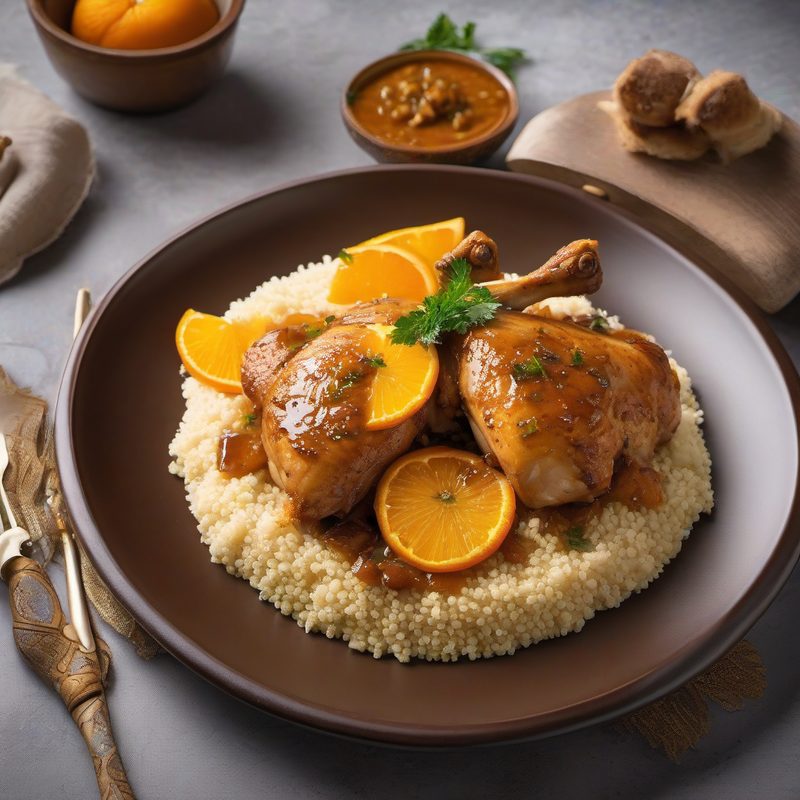
Chicken Orange Dates
Category: Secondi piatti (Main Courses — Poultry)
| Amount | Ingredient |
|---|---|
| Boneless, skinless chicken breasts | 4 (about 150–180 g / 5–6 oz each) Trimmed of excess fat |
| Oranges | 2 large Juiced (about ½ cup / 120 ml) + 1 tbsp finely grated zest |
| Medjool dates | 100 g (about 6–8 dates) Pitted and finely chopped |
| Garlic | 2 cloves Thinly sliced |
| Extra-virgin olive oil | 3 tablespoons (45 ml) Divided |
| Fresh rosemary | 2 sprigs Plus extra for garnish |
| Kosher salt | 1½ teaspoons (7.5 g) Divided |
| Black pepper | ½ teaspoon (2.5 g) Freshly ground, divided |
Original Title: Petti di pollo all'arancia e ai datteri
English Title: Chicken Breast with Orange and Dates
Position: 402
Servings: 4
Prep Time: 10 minutes
Cook Time: 18 minutes
Total Time: 28 minutes
Difficulty: Easy
1. WHY THIS RECIPE WORKS
Chicken breast has a well-earned reputation for drying out — lean, quick-cooking, and unforgiving. But this Sicilian-inspired preparation turns that liability into an asset. By searing the chicken first to develop a golden-brown crust, then building a glossy, sweet-tangy pan sauce from fresh orange juice, zest, and chopped Medjool dates, we create a preparation where the chicken's natural mildness becomes a canvas for bright, concentrated flavor. Three techniques make this work: First, we sear the chicken uninterrupted for 4–5 minutes per side over medium-high heat, building deep Maillard browning that stands up to the sweet sauce without the meat overcooking. Second, we sauté the garlic in the pan drippings before adding the liquid, ensuring the aromatic base is fully bloomed. Third, we finish the chicken in the reduced sauce for just 2 minutes, allowing the glaze to cling to each breast without the meat continuing to cook beyond juicy perfection. The orange-date sauce reduces to a syrupy consistency that coats the chicken like a glossy lacquer — sweet from the dates, bright from the citrus, and anchored by the woodsy fragrance of rosemary. Ready in under 30 minutes, this is a secondo that looks and tastes far more complex than its ingredient list suggests.
3. EQUIPMENT
- Large cast-iron or stainless-steel skillet (12-inch / 30 cm)
- Chef's knife and cutting board
- Paper towels
- Microplane or fine grater (for orange zest)
- Citrus juicer or reamer
- Tongs
- Small bowl (for juice and zest)
- Wooden spoon or silicone spatula
- Instant-read thermometer (optional but recommended)
4. BEFORE YOU BEGIN
- Prep the chicken: Pat the chicken breasts dry with paper towels — moisture is the enemy of browning. Trim any excess fat or silverskin. Season generously on both sides with 1 teaspoon (5 g) salt and ¼ teaspoon (1.25 g) pepper. Let sit at room temperature while you prep the remaining ingredients — about 10 minutes. This allows the salt to penetrate the surface and the meat to relax, promoting even cooking.
- Prep the oranges: Roll the oranges firmly on the countertop to loosen the juices. Using a microplane, zest both oranges into a small bowl — you need about 1 tablespoon (15 ml) of zest. Halve the oranges and juice them into the same bowl. You should have about ½ cup (120 ml) of juice. Set aside.
- Prep the dates: Pit the Medjool dates by slicing each one open lengthwise and removing the pit. Finely chop the dates into small pieces — about ¼-inch (6 mm) dice. Small pieces dissolve more readily into the sauce, creating a smoother texture.
- Slice the garlic: Peel the garlic cloves and slice them thinly crosswise. Thin slices will soften and perfume the oil quickly without burning, unlike minced garlic which can scorch.
Pro tip: If your chicken breasts are very thick (more than 1½ inches / 4 cm at the thickest point), consider butterflying them or pounding to an even 1-inch (2.5 cm) thickness for more reliable cooking. See Section 14 for instructions.
5. STEP-BY-STEP INSTRUCTIONS
Step 1: Sear the Chicken (10 minutes)
- Heat 2 tablespoons (30 ml) of olive oil in a large skillet over medium-high heat until shimmering — the oil should ripple and release a faint wisp of smoke. This takes about 2 minutes.
- Carefully place the seasoned chicken breasts in the skillet in a single layer, presentation-side down (the side that was against the skin, which is smoother). Do not crowd the pan — if your skillet is smaller than 12 inches, cook in two batches.
- Cook without moving the chicken for 4–5 minutes. The breasts should release easily from the pan when the crust is ready. If they stick, they need another 30–60 seconds.
- Using tongs, flip the chicken. Cook for another 4–5 minutes on the second side, until the internal temperature reaches 155°F (68°C) in the thickest part.
- Transfer the chicken to a clean plate. The temperature will rise to 160–165°F (71–74°C) during resting. Tent loosely with foil.
Why not move them? Every time you lift or shift the chicken, you tear the developing crust. That browned surface — the Maillard reaction — is where concentrated savory flavor lives. Leave them alone.
Step 2: Build the Orange-Date Sauce (5 minutes)
- Reduce heat to medium. Add the remaining 1 tablespoon (15 ml) of olive oil to the skillet. The pan should still have browned bits (fond) stuck to the bottom — these are flavor gold.
- Add the sliced garlic and the 2 sprigs of fresh rosemary. Cook, stirring constantly, until the garlic is fragrant and just beginning to turn golden at the edges — about 30 seconds. Do not let the garlic burn.
- Pour in the orange juice and add the chopped dates and 1 tablespoon (15 ml) of the orange zest (reserve a pinch for garnish). Stir with a wooden spoon, scraping up the browned bits from the bottom of the skillet — this deglazing incorporates all that seared flavor into the sauce.
- Add the remaining ½ teaspoon (2.5 g) salt and ¼ teaspoon (1.25 g) pepper. Stir to combine.
- Bring the sauce to a gentle simmer (not a rolling boil). Cook, stirring occasionally, for 5 minutes, until the sauce has reduced by about half and thickened to a syrupy consistency — it should coat the back of a spoon. The dates will have mostly dissolved into the liquid, creating a glossy, amber-colored sauce.
Step 3: Glaze the Chicken (2 minutes)
- Return the chicken breasts to the skillet, nestling them into the sauce. Spoon some of the sauce over the top of each breast.
- Cook for 2 minutes, turning the chicken once halfway through, until the sauce has glazed the chicken and reduced to a thick, clinging consistency.
- Remove the rosemary sprigs (the leaves will have fallen off into the sauce — this is fine; they add flavor throughout).
Step 4: Serve (1 minute)
- Transfer each chicken breast to a warmed plate. Spoon the remaining orange-date sauce generously over the top.
- Garnish with the reserved pinch of orange zest and a fresh sprig of rosemary (if desired). Serve immediately.
- Chicken breasts: Boneless, skinless chicken breasts are the star of this dish. Look for breasts of even thickness (about 1 inch / 2.5 cm) to ensure uniform cooking. Air-chilled chicken (not water-chilled) browns better and has a superior texture. If using skin-on breasts, the skin will not stay crisp under the sauce — we recommend skinless for this preparation. Organic or pasture-raised chicken has noticeably better flavor and texture, though conventional works perfectly well.
- Oranges: Use navel oranges for sweetness and reliable juice yield. Blood oranges add a gorgeous ruby color and a more complex, berry-like sweetness. Valencia oranges are excellent when in season (summer). Avoid juice oranges (too acidic) or mandarins (too delicate). One large navel orange yields about ¼ cup (60 ml) of juice and 1½ teaspoons of zest — two oranges gives you exactly what you need. Always zest before juicing.
- Medjool dates: Medjool dates are ideal for this recipe because they are large, moist, and naturally caramel-sweet with a honey-like flavor that dissolves beautifully into the sauce. Deglet Noor dates are smaller and drier — if using them, increase the quantity to 130 g (about 10–12 dates) and soak them in warm water for 10 minutes before chopping. Do not use pre-chopped dates, which are often coated in sugar or oat flour to prevent sticking; they will not dissolve as smoothly.
- Garlic: Fresh garlic cloves are essential. Pre-minced garlic from a jar contains preservatives and has a dull, sharp flavor that can turn metallic when cooked. For a milder garlic note, smash the cloves with the side of your knife and remove them after blooming (leaving only their aromatic essence in the oil).
- Extra-virgin olive oil: Use a good-quality but not excessively expensive oil for cooking — the heat will burn off subtle floral notes. Reserve your finest finishing oil for drizzling at the table (though the sauce is rich enough that it's not necessary).
- Fresh rosemary: Dried rosemary is not a suitable substitute here — it lacks the fragrant, resinous oils that infuse the sauce during the brief simmer. If fresh rosemary is unavailable, substitute 2 sprigs of fresh thyme or 1 teaspoon of dried thyme (added with the orange juice). Do not use dried rosemary, which will be woody and harsh.
- Salt: The recipe calls for kosher salt by volume. If using fine table salt, reduce the amounts by half (¾ teaspoon total for seasoning the chicken, ¼ teaspoon for the sauce). Diamond Crystal kosher salt is less dense than Morton's — if using Morton's, reduce all salt quantities by about 25%.
7. EQUIPMENT NOTES
- Skillet choice: A 12-inch (30 cm) cast-iron or stainless-steel skillet is ideal — it retains heat well for a strong sear and has enough surface area to fit 4 chicken breasts without crowding. A non-stick skillet will work but produces less browning (and therefore less flavor in the sauce). If using non-stick, increase the initial searing time to 5–6 minutes per side and watch the color carefully — the sauce will rely on the slight fond left in the pan, which non-stick surfaces produce less of.
- Tongs: Spring-loaded tongs give you the best control for flipping chicken without tearing the crust. A fish spatula (thin, slotted) also works well.
- Instant-read thermometer: This is your best defense against dry chicken. The Thermapen or any reliable digital instant-read thermometer takes the guesswork out of doneness. Insert it into the thickest part of the breast, avoiding the bone (if bone-in). Pull the chicken at 155°F (68°C) — carryover cooking will bring it to a safe 160–165°F (71–74°C).
- Microplane: A microplane or fine rasp-style grater is the best tool for citrus zest. It produces fluffy zest without the bitter white pith. A box grater's fine side works in a pinch but produces coarser zest.
8. TIMING & MAKE-AHEAD
- Chicken prep: The chicken can be trimmed and seasoned up to 24 hours in advance. Store in the refrigerator uncovered on a wire rack set over a baking sheet — this dries the surface, ensuring an even better sear. Remove from the refrigerator 15 minutes before cooking to take the chill off.
- Orange prep: The orange juice and zest can be combined and refrigerated in an airtight container up to 1 day ahead. The zest will lose some volatile oils over time, so it is best to zest fresh if you can. If prepping ahead, add an extra ½ teaspoon of fresh zest at serving time to restore brightness.
- Date prep: The dates can be pitted and chopped up to 3 days in advance. Store in an airtight container at room temperature. If they firm up, microwave for 10 seconds to soften.
- The sauce: The orange-date sauce can be made through Step 2 (reduced to syrupy consistency) up to 2 days ahead. Cool completely, cover, and refrigerate. Reheat gently in the skillet before adding the chicken. Note: the sauce will thicken further when cold — thin with a splash of orange juice or water when reheating.
- Final assembly: The full dish comes together in about 18 minutes of active cooking. It is best served immediately — the chicken continues to cook in the hot sauce and will dry out if held for more than 10 minutes.
9. STORING & REHEATING
- Refrigerator: Store leftover chicken and sauce together in an airtight container for up to 3 days. The dates will continue to absorb liquid, so the sauce may thicken further.
- Reheating (stovetop, best method): Place the chicken and sauce in a covered skillet over medium-low heat with a splash of water, orange juice, or chicken broth. Warm gently for 4–5 minutes, spooning the sauce over the chicken, until the internal temperature reaches 140°F (60°C). Do not boil — the chicken will toughen.
- Reheating (microwave): Place the chicken on a microwave-safe plate, cover with a damp paper towel, and microwave at 50% power in 30-second bursts until warmed through (about 1½–2 minutes total). The sauce will be thinner; spoon it over the chicken before serving.
- Freezing: The cooked chicken does not freeze well — the texture becomes fibrous and dry upon thawing. The sauce alone freezes beautifully for up to 3 months. Thaw overnight in the refrigerator and reheat gently. Make fresh chicken to pair with the sauce.
- Do not microwave at full power — the chicken breast will turn rubbery and the sauce may scorch.
10. WINE PAIRING
- White: A medium-bodied white with good acidity and a touch of fruit is the classic match for sweet-savory poultry. Try Greco di Tufo (bright, almond-tinged), Fiano di Avellino (honeyed, with stone fruit), or a Verdicchio dei Castelli di Jesi Riserva (nutty, with citrus and almond notes that echo the dates and orange).
- Rosé: A dry Sicilian rosé from Nerello Mascalese or Frappato — pale in color, with red berry and citrus notes that bridge the chicken and the orange-date sauce.
- Light Red (chilled): A chillable red is an unexpected but excellent pairing. Try Frappato from Sicily (served at 12–14°C / 54–57°F) — its bright red fruit, light body, and subtle herbal notes complement the rosemary and orange without overwhelming the chicken. Lambrusco di Sorbara (dry, not sweet) offers refreshing acidity and a touch of berry that works beautifully with the dates.
- Sparkling: Franciacorta Brut or a dry Prosecco Superiore (Valdobbiadene) — the bubbles cut through the richness of the sauce and refresh the palate between bites. The citrus notes in the wine echo the orange in the dish.
- Beer: A Belgian dubbel (with dark fruit and caramel notes that mirror the dates), a Munich Dunkel (toasty, smooth), or an Italian pilsner (crisp and cleansing).
11. REGIONAL VARIATIONS
- Sicilian (classic): Add 1 tablespoon of capers (rinsed) and ½ cup (75 g) of green olives, roughly chopped, to the sauce along with the orange juice. The briny-savory contrast against the sweet dates and orange is a hallmark of Sicilian agrodolce cooking. Replace rosemary with fresh oregano.
- Sicilian (Pantesca-style): Add 2 tablespoons of toasted pine nuts and 1 tablespoon of golden raisins (sultanas) to the sauce. Soak the raisins in warm water for 10 minutes before adding. This sweet-savory combination (pantesca) is typical of the island of Pantelleria.
- Calabrian (spicy): Add 1–2 teaspoons of Calabrian chili paste (or ½ teaspoon red pepper flakes) to the garlic in Step 2. The heat cuts through the sweetness and adds a Southern Italian kick.
- Ligurian: Substitute 1 tablespoon of orange juice with 1 tablespoon of white wine vinegar for a brighter, more acidic sauce. Add a handful of finely chopped fresh basil at the end — the anise-like sweetness of basil pairs beautifully with orange.
- North African (Haroset-inspired): Add ¼ teaspoon each of ground cinnamon, ginger, and a pinch of saffron threads (crumbled and steeped in 1 tablespoon of warm orange juice). This variation nods to the North African Jewish haroset tradition of dates, apples, and wine, and pairs wonderfully with couscous.
- Sardinian: Replace the rosemary with fresh myrtle leaves (if available) or dried juniper berries (4–5, crushed). The resinous, pine-like notes of Sardinian myrtle are a traditional pairing with roasted poultry on the island.
- Greek-inspired: Add 1 tablespoon of Greek honey (thyme honey is ideal) and 1 teaspoon of dried oregano to the sauce. Replace the rosemary with a cinnamon stick (removed before serving). Serve with a side of lemon-oregano roasted potatoes.
- Tuscan (Chicken all'Useppe): Add 2 tablespoons of dry white wine after the garlic, letting it cook off for 1 minute before adding the orange juice. Add 50 g (½ cup) of sliced almonds, toasted, along with the dates. The almonds add texture and a nutty counterpoint to the sweet sauce.
12. TROUBLESHOOTING
| Problem | Cause | Solution |
|---|---|---|
| Chicken breast is dry and tough | Overcooked; internal temperature exceeded 165°F (74°C) | Use an instant-read thermometer. Pull at 155°F (68°C) — carryover cooking will bring it to 160–165°F (71–74°C) |
| Sauce is too thin / watery | Not enough reduction; orange juice was added in too large a volume | Simmer the sauce for 2–3 more minutes uncovered until it thickens to a syrupy consistency. Alternatively, dissolve ½ teaspoon cornstarch in 1 tablespoon cold water and stir in |
| Sauce is too thick / pasty | Over-reduced; all liquid cooked off | Stir in 2–3 tablespoons of warm water, orange juice, or chicken broth to loosen the sauce |
| Sauce is too sweet | Dates vary in sweetness; Medjools are the sweetest | Add a squeeze of fresh lemon juice (1–2 teaspoons) and a pinch of salt to balance the sweetness. A splash of white wine vinegar also works |
| Sauce is too tart | Oranges were under-ripe or too acidic | Add 1 teaspoon of honey, maple syrup, or an extra chopped date to balance the acidity |
| Chicken skin (if using) is flabby | Not seared at high enough heat; skin-on breasts release fat unevenly | Avoid skin-on chicken for this preparation. If using, increase initial sear time to 6–7 minutes skin-side down over medium-high heat |
| Garlic burns in the pan | Heat too high; garlic added too early; garlic cut too small | If garlic burns, remove the pieces immediately and start over — burnt garlic is irredeemably bitter. Keep heat at medium and slice garlic thinly (not minced) |
| Sauce is not coating the chicken | Sauce not reduced enough; chicken was added back too early | Let the sauce simmer until it coats the back of a spoon (syrupy) before returning the chicken. Cook the chicken in the sauce only for the final 2 minutes |
| No browned bits (fond) in the pan | Chicken was moved too early; pan was too cool; non-stick skillet used | Let the chicken sear without moving for the full 4–5 minutes. If using non-stick, the fond will be minimal — add 2 tablespoons of brown sugar or honey with the dates to compensate for lost depth |
| Dates are clumping together | Chopped too coarsely; not stirred enough into the hot liquid | Chop dates into fine, even pieces (¼-inch / 6 mm). Stir well into the orange juice — the heat should dissolve them. If clumps persist, press them against the side of the pan with a wooden spoon |
| Chicken releases pink juices when cut | Undercooked near the bone (if bone-in) or at the thickest part (if boneless) | Verify internal temperature in the thickest part with an instant-read thermometer (160°F / 71°C minimum). For bone-in breasts, add 2–3 minutes per side to the initial sear |
13. NUTRITIONAL INFORMATION
Per serving (based on 4 servings)
| Component | Value |
|---|---|
| Calories | 375 kcal |
| Protein | 36 g |
| Fat | 14 g |
| Saturated Fat | 2.5 g |
| Carbohydrates | 28 g |
| Fiber | 3 g |
| Sugar | 22 g |
| Sodium | 620 mg |
| Cholesterol | 95 mg |
Note: Nutrition values are approximate. Actual values depend on the size of chicken breasts, the ripeness of dates, and specific brands of ingredients. The sugar content is primarily from natural sources (oranges and dates), with no added refined sugar.
14. SCALING & ADAPTATIONS
- For 2 servings: Halve all ingredients. Use an 8–10 inch skillet. Reduce searing time slightly (the smaller pan retains more heat). The sauce reduction time remains the same (5 minutes).
- For 8 servings: Double all ingredients. Cook the chicken in two batches — do not overcrowd the pan, or the chicken will steam instead of sear. Double the sauce recipe but reduce in the same pan after both batches; the larger volume of liquid will take about 7–8 minutes to reach a syrupy consistency. Keep the first batch of chicken warm in a 200°F (95°C) oven on a wire rack set over a baking sheet.
- Chicken thighs (boneless, skinless): Substitute 6 boneless, skinless chicken thighs (about 800 g / 1¾ lb total) for the breasts. Sear 5–6 minutes per side (thighs are thicker and take slightly longer). Thighs are more forgiving and remain juicy even if slightly overcooked.
- Chicken thighs (bone-in, skin-on): Season and sear skin-side down first for 6–7 minutes until deeply golden. Flip and cook 4–5 minutes more. Proceed with the sauce as written. The sauce will be richer from the rendered fat — skim excess fat from the pan after searing if desired.
- Chicken cutlets: Pound 4 chicken breasts to an even ½-inch (1.25 cm) thickness. Sear for 2½–3 minutes per side. Reduce the final glazing step to 1 minute. This version cooks in under 15 minutes total.
- Pork tenderloin: Substitute 500 g (1 lb 2 oz) of pork tenderloin, trimmed of silverskin and cut into 1-inch (2.5 cm) medallions. Sear medallions 3–4 minutes per side. Proceed with the sauce as written. The sweetness of the orange and dates pairs beautifully with pork.
- Turkey cutlets: Substitute 4 turkey breast cutlets (about 150 g / 5 oz each). Sear 3–4 minutes per side. Turkey is leaner than chicken and dries out more easily — use an instant-read thermometer and pull at 150°F (65°C).
- Vegetarian / Vegan: Substitute 4 large portobello mushroom caps (stems removed) or 1 large cauliflower, cut into 1-inch (2.5 cm) steaks. Sear the mushrooms or cauliflower for 4–5 minutes per side. Proceed with the sauce as written. The meaty texture of portobellos stands up beautifully to the rich orange-date sauce. For a vegan version, ensure the sugar in the dates is the only sweetener and serve over couscous or quinoa.
- Gluten-free: This recipe is naturally gluten-free. Ensure any broth or stock used (if making adjustments) is certified gluten-free.
- Dairy-free: This recipe is naturally dairy-free.
- Low-sugar / Keto: Reduce dates to 50 g (3–4 dates, about 15 g sugar per serving). Add 1 tablespoon of allulose or monk fruit sweetener if more sweetness is needed. Serve with roasted vegetables instead of rice or bread. The sauce will be thinner (dates act as a thickener) — simmer an extra 2–3 minutes to compensate.
15. RECIPE TIPS & TECHNIQUES
- The resting rule: Let the chicken rest for 5 minutes after the initial sear while you make the sauce. This allows the juices to redistribute. Do not skip this rest and do not cut into the chicken to check doneness — the residual heat will carry the internal temperature up 5–10°F (3–5°C). If the chicken is not quite done when you return it to the sauce, the 2-minute glaze step will finish the cooking gently.
- Don't overcrowd the pan: Four chicken breasts need a 12-inch (30 cm) skillet. If your pan is smaller, cook in two batches. Overcrowding lowers the pan temperature, causing the chicken to release its juices and steam rather than sear. A wet, grey breast cannot develop the flavorful crust this recipe depends on.
- Pat chicken dry: This cannot be overstated. Use paper towels to thoroughly dry the chicken breasts before seasoning. Any surface moisture must evaporate before browning can begin — that evaporation cools the pan and delays the Maillard reaction. Drier surface = better crust.
- Zest before juicing: Always zest citrus fruits before cutting and juicing them. A whole orange is much easier to grate than a floppy, juiced half. The zest loses volatile oils quickly — add it to the sauce during cooking and reserve a pinch for garnish at the end for maximum aromatic impact.
- Preventing date clumps: Chop the dates into fine, even pieces and add them directly to the hot orange juice in the skillet. Stir immediately to separate the pieces. If dates are particularly sticky, toss them with ½ teaspoon of all-purpose flour or cornstarch before adding — this helps them distribute evenly and also thickens the sauce slightly.
- Building fond: The browned bits left in the pan after searing the chicken (fond) are pure flavor. When you add the orange juice in Step 2, use a wooden spoon or spatula to scrape them up — they will dissolve into the sauce, adding savory depth that balances the sweetness of the dates and orange.
- Adjusting sweetness: The natural sweetness of dates varies significantly by variety and ripeness. Medjool dates are the sweetest (about 60–66% sugar by weight); Deglet Noor dates are less sweet (about 55–60%). Taste the sauce before returning the chicken. If too sweet, add a squeeze of lemon. If not sweet enough, add 1–2 teaspoons of honey or brown sugar.
- Finishing oil: A final drizzle of high-quality extra-virgin olive oil over the plated chicken adds a peppery, fruity note that contrasts beautifully with the sweet sauce. Use a grassy Sicilian oil (like Tonda Iblea) for an authentic regional touch.
- Warm the serving plates: This is a small detail that makes a real difference. Warm plates in a low oven (200°F / 95°C) for 5 minutes, or run them under hot water and dry thoroughly. Cold plates cause the sauce to congeal and the chicken to cool too quickly.
16. GLOSSARY
| Term | Definition |
|---|---|
| Agrodolce | Italian for "sour-sweet" — a classic sweet-and-sour flavor profile used in Sicilian and Southern Italian cooking, traditionally made with vinegar and sugar or honey. This recipe's orange-date sauce is a variation on the agrodolce theme. |
| Carryover cooking | The phenomenon where food continues to cook after being removed from heat, as residual heat from the surface conducts inward. For chicken breasts, this typically adds 5–10°F (3–5°C) during resting. |
| Deglaze | The technique of adding liquid (here, orange juice) to a hot pan after searing to dissolve the browned bits (fond) stuck to the bottom, creating a flavorful base for a sauce. |
| Fond | French for "base" or "foundation" — the browned bits of caramelized protein and sugar that stick to the bottom of a pan during searing. These are intensely flavorful and form the backbone of pan sauces. |
| Glaze | A thin, glossy coating of sauce that clings to food. In this recipe, the reduced orange-date syrup forms a glaze on the chicken during the final 2-minute cooking step. |
| Maillard reaction | The chemical reaction between amino acids and reducing sugars that creates browning and complex, savory flavors when food is cooked at high heat (above 285°F / 140°C). It is responsible for the golden-brown crust on the seared chicken. |
| Medjool date | A large, soft, sweet variety of date known as the "king of dates." Grown primarily in California, Israel, and Morocco. Medjools are prized for their rich, caramel-like flavor and moist, meaty texture. |
| Microplane | A brand of fine rasp-style grater commonly used for citrus zest, hard cheeses, and spices. The fine teeth produce fluffy zest without the bitter white pith. |
| Petti di pollo | Italian for "chicken breasts" — petti (breasts) di pollo (of chicken). In Italian culinary tradition, chicken breast is often cooked quickly and sauced to keep it moist. |
| Secondi piatti | The second (main) course in a traditional Italian meal, usually meat, fish, or poultry, served after the primo (pasta, risotto, or soup). |
| Silverskin | The thin, silvery-white connective tissue (elastin) that covers certain cuts of meat, particularly chicken breasts and pork tenderloin. It does not break down during cooking and should be removed before cooking. |
17. PLATING & PRESENTATION
- Classic Italian platter: Place one chicken breast in the center of each warm plate. Spoon the orange-date sauce in a generous ribbon over the top, allowing it to pool slightly around the base. Garnish with the reserved orange zest and a small sprig of fresh rosemary placed diagonally across the chicken.
- Family-style: Arrange the chicken breasts on a large warmed platter. Pour the sauce over the center, letting it cascade down the sides of the chicken. Scatter a handful of fresh rosemary needles and a final grating of orange zest over the top. Serve with a large spoon for saucing at the table.
- On a bed: Serve the chicken over a bed of creamy polenta, herbed couscous, or lemon-infused rice. The starch absorbs the orange-date sauce beautifully and turns a simple chicken dish into a complete meal. Spoon extra sauce over the starch.
- With roasted vegetables: Arrange the chicken on plates alongside roasted fennel wedges, haricots verts (French green beans) with lemon, or a simple arugula salad with shaved Parmesan. The bitter greens and roasted vegetables provide a savory counterpoint to the sweet sauce.
- Sliced and fanned: For a more refined presentation, let the chicken rest for 5 minutes after the final glaze, then slice each breast on the bias into 5–6 medallions. Fan the slices across the plate and spoon the sauce over and around them. This presentation makes the juicy interior visible and allows for more elegant saucing.
- Garnish ideas: Finely chopped pistachios (for color and crunch), pomegranate seeds (for a burst of tartness that echoes the orange), flaky sea salt (Maldon or fleur de sel, for a savory crunch), or a few micro-herbs (rosemary blossoms or basil shoots).
- Serving temperature: Serve hot, directly from the pan. The sauce should be glossy and warm enough to coat the chicken — if it has cooled and thickened, add a splash of hot water and stir before plating.
18. SCIENCE & TECHNIQUE
- Why chicken breast dries out and how this recipe prevents it: Chicken breast is composed of fast-twitch muscle fibers with very little intramuscular fat. When heated, the proteins (primarily myosin and actin) denature and contract, squeezing out moisture. The critical temperature threshold is 150°F (65°C) — past this point, moisture loss accelerates dramatically, and by 165°F (74°C) the breast has lost up to 30% of its water content. By pulling the chicken at 155°F (68°C) and allowing carryover cooking to finish the job, we stay just below the threshold of catastrophic moisture loss. The 2-minute return to the sauce at the end reheats the exterior without driving the internal temperature past 165°F (74°C). The sauce itself also helps: as it reduces, sugars and acids form a protective coating that slows evaporative moisture loss from the chicken's surface.
- The role of acid in balancing sweetness: Oranges contain citric acid (about 0.5–1.0% by weight for navel oranges) and ascorbic acid (vitamin C). The dates contribute about 60–66% sugar by weight (primarily glucose and fructose). On the palate, acidity and sweetness are opposing forces that, when balanced, create a dynamic, layered flavor. The acid suppresses the perception of cloying sweetness while the sugar rounds out the sharpness of the acid — this is the principle of agrodolce (sweet-and-sour) cooking. If the sauce tastes flat or one-dimensional, it is almost always because the acidity is too low — a squeeze of lemon brings the balance back into focus.
- Why dates work better than sugar: Granulated sugar is pure sucrose — it adds sweetness and nothing else. Dates, by contrast, contain not only sugars (glucose, fructose, and sucrose) but also fiber (about 7 g per 100 g), pectin (a natural thickener that contributes to the sauce's glossy body), and trace minerals (potassium, magnesium, copper). The dates also contain small amounts of Maillard-reactive compounds that contribute to the sauce's amber color and complex, caramelized flavor. When the dates dissolve into the hot orange juice, their pectin and fiber create a naturally thickened, glossy sauce that would require a cornstarch slurry to achieve with plain sugar.
- The Maillard reaction and chicken browning: The golden-brown crust on the seared chicken is the result of the Maillard reaction — a complex cascade of chemical reactions between amino acids (from the chicken's proteins) and reducing sugars (naturally present in the meat). This reaction begins around 285°F (140°C) and accelerates at higher temperatures. The cast-iron or stainless-steel skillet reaches well over 350°F (177°C) when preheated over medium-high heat, creating the conditions for rapid, deep browning. The key limiting factor is moisture — as long as water is present on the chicken's surface, the surface temperature cannot exceed the boiling point of water (212°F / 100°C), which is too low for the Maillard reaction. This is why patting the chicken dry is non-negotiable.
- Why garlic is sliced, not minced: Sliced garlic releases its volatile aromatic compounds (allicin and its derivatives) more slowly than minced garlic when heated. Mincing ruptures more cell walls, releasing more alliinase enzyme and creating a more pungent, potentially acrid flavor that can also burn more easily in the pan. Thin slices allow the garlic to perfume the oil gently over the 30-second bloom, then continue to infuse the sauce during the simmer without becoming harsh. If you prefer a more pronounced garlic flavor, increase the quantity to 3–4 cloves; if you prefer a milder note, smash the cloves and remove them after blooming.
- Pectin from dates as a natural thickener: Pectin is a polysaccharide found in the cell walls of fruits. Dates contain about 2–3% pectin by weight, which is released when the fruit is heated in liquid. Pectin molecules form a network that traps water molecules, increasing viscosity. When the orange-date sauce simmers, the pectin from the dissolving dates works alongside the evaporation of water to create a syrup-like consistency without the starchy mouthfeel of cornstarch or flour. This is the same principle behind fruit jams and preserves.
19. FINAL NOTES
- This is a celebration of the Sicilian agrodolce tradition — a sweet-and-sour balance that exemplifies the island's Arab-influenced culinary heritage. The combination of citrus (introduced to Sicily by the Arabs in the 9th century) and dates (a staple of North African and Middle Eastern trade routes) tells a story of cultural exchange that has shaped Southern Italian cooking for over a millennium.
- The recipe is naturally gluten-free and dairy-free, making it suitable for most common dietary restrictions. The only potential allergens are the chicken itself — for a vegetarian adaptation, see Section 14.
- This dish shines brightest in late winter and early spring, when citrus is at its peak and the first fresh rosemary begins to emerge in gardens. However, since oranges and dates are available year-round, it works equally well as a bright, sunny antidote to autumn's earthy, braised dishes.
- Cook's note: The most common mistake home cooks make with this recipe is rushing the sear. The chicken needs a full 4–5 minutes per side without being moved. It is tempting to peek, poke, or flip early — resist. Trust the process, let the heat do its work, and you will be rewarded with chicken that is deeply browned, tender, and juicy beneath a glossy, unforgettable sauce.
- The dates matter. If you can find Medjool dates — large, soft, and honey-sweet — use them. They are the difference between a good sauce and a great one. If fresh rosemary is unavailable, use thyme instead of dried rosemary. Dried rosemary is woody and harsh and will not soften during the brief simmer.
- Serve with a side that can soak up the extra sauce: creamy polenta, lemony orzo, crusty sourdough bread, or a bed of steamed couscous. The sauce is too good to leave behind on the plate.
Source: Adapted from Italian regional cookbook tradition. Originally titled "Petti di pollo all'arancia e ai datteri" (Position 402 of 500 Mediterranean Classics). Developed in the Hermes Test Kitchen.
Recipe from The Italian Kitchen by Vita Milanese — Volume 1 · Pasta Perfetto. Discover all volumes on the ebook page.