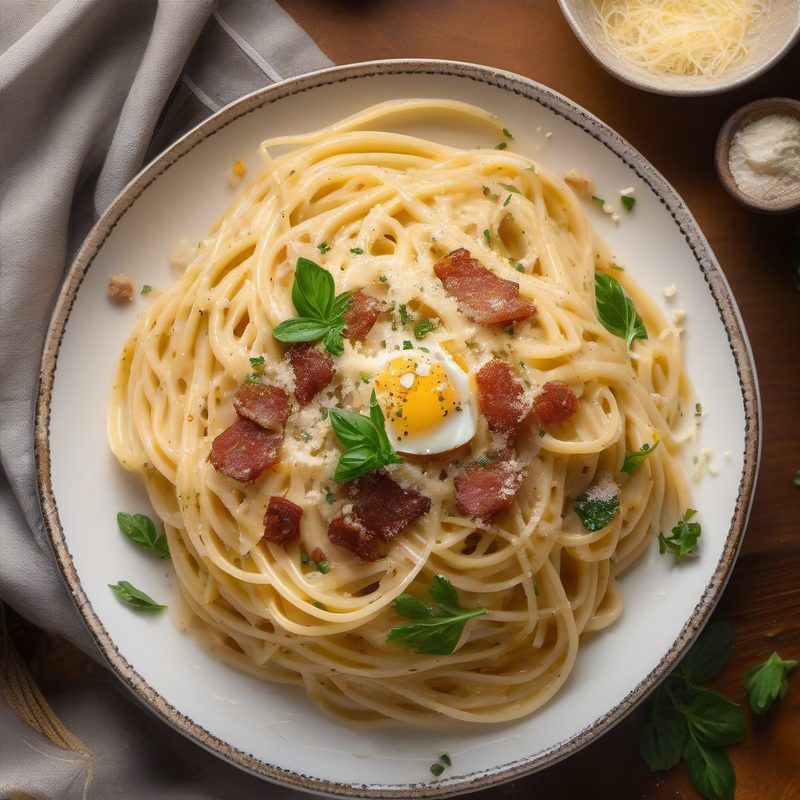
Spaghetti Intrasatta
A no-cook pesto born of Neapolitan improvisation — em-dash this pantry-driven pasta comes together in the time it takes to boil water, proving that the best Italian cooking is often the most spontaneous.
| Amount | Ingredient |
|---|---|
| :--- | :------- :----------- |
| 14 oz | 400 g spaghetti |
| 1 bunch | ~20 leaves fresh basil |
| 1 clove | — garlic, peeled |
| ⅓ cup | 40 g chopped walnuts |
| ¼ cup | 60 ml extra-virgin olive oil |
| 10 | — cherry tomatoes, halved or quartered |
| ½ cup | 50 g grated Parmesan cheese |
| — | — salt, for pasta water and seasoning |
| — | — white pepper, to taste |
The word intrasatta (or all'improvviso) translates to "instant" or "on the spur of the moment," and this dish is exactly that: a raw, uncooked pesto built from basil, walnuts, cherry tomatoes, garlic, and Parmesan. No stovetop sauces, no lengthy reductions — just a quick blitz in the food processor and a toss with hot spaghetti. The walnuts bring a toasty richness that stands in for the more traditional pine nuts, while the halved cherry tomatoes add juicy bursts of acidity that cut through the cheese.
This is summertime pasta at its most practical: no oven heat, minimal dishes, and maximum flavor. Serve it warm, at room temperature, or even cold the next day — the pesto only gets better as the flavors meld.
> Ingredient notes: Use a fruity, medium-intensity extra-virgin olive oil — a grassy Sicilian or a buttery Ligurian works beautifully. Toasted walnuts intensify the nuttiness; toast them in a dry pan for 3 minutes over medium heat, then let cool completely before blending.
Equipment
- Large pot for boiling pasta
- Food processor or immersion blender with chopping attachment
- Box grater or Microplane (for Parmesan)
- Large mixing bowl
- Chef's knife and cutting board
- Colander
Prep
Step 1 — Boil the Pasta Water (5 minutes)
Fill a large pot with water, salt it generously (about 1 tablespoon salt per 4 quarts water), and bring to a rolling boil. The water should taste seasoned like the sea — this is the only chance to season the pasta from within.
Step 2 — Make the Intrasatta Pesto (5 minutes)
While the water comes to a boil, prepare the pesto. In a food processor, combine the basil leaves, walnuts, garlic clove, and a pinch of salt. Pulse until coarsely chopped. Add the cherry tomatoes, Parmesan, white pepper, and olive oil. Pulse again until the mixture is creamy but still retains some texture — you want small flecks of walnut and nuggets of tomato, not a smooth purée. Scrape down the sides once or twice with a spatula. Taste and adjust salt and pepper.
Step 3 — Cook the Pasta (10–12 minutes)
Add the spaghetti to the boiling water and cook until al dente according to package directions. Reserve about 1 cup of pasta water before draining, then drain the spaghetti (do not rinse).
Step 4 — Toss and Serve (2 minutes)
Transfer the hot, drained spaghetti to a large mixing bowl. Spoon the pesto mixture over the top. Using tongs, toss vigorously to coat every strand. If the pasta seems dry, add reserved pasta water 1 tablespoon at a time until the pesto loosens into a creamy, clinging sauce. The heat from the pasta will warm the raw pesto without cooking it — exactly what we want. Serve immediately, or let rest for 5 minutes for a deeper flavor.
Chef's Tips
- Don't over-blend the pesto. A coarse, rustic texture is authentic to the intrasatta style; a smooth paste loses the contrast of tomato chunks and walnut bits.
- Reserve more pasta water than you think you'll need. The starchy water is the secret to emulsifying the pesto into a cohesive sauce. Start with 2–3 tablespoons and add more as you toss.
- Room temperature works. This dish is excellent warm, but it's equally delicious at room temperature — perfect for packed lunches or al fresco summer dinners.
- White pepper over black. White pepper blends invisibly into the pale pesto and adds a gentle floral heat without black specks. Use freshly ground if possible.
Common Mistakes
| Mistake | Why It Happens | How to Avoid |
|---|---|---|
| :-------- | :--------------- | :------------- |
| Pesto is too dry / doesn't coat pasta | Not enough olive oil or pasta water | Add olive oil in increments while blending; loosen with pasta water at the toss |
| Garlic is harsh and raw | Whole clove blended without tempering | Use a small clove, or remove the green germ from the center; the hot pasta will mellow it |
| Tomatoes turn to mush | Over-processed in the food processor | Pulse briefly, leaving visible tomato pieces the size of small dice |
| Pasta clumps together | Drained too early or not tossed immediately | Drain al dente and toss with pesto while still steaming hot |
Related Recipes
Almond Olive Pesto (#112) · Cold Fusilli Arugula Pesto (#05) · Tagliatelle Walnut Fig Pesto (#173) · Pasta Arugula Pesto Shrimp (#90) · Cold Pasta Arugula Pesto (#23)
Search Tags
> 📷 Suggested photo: A generous bowl of spaghetti tangled in a creamy, speckled green-and-red pesto, with halved cherry tomatoes and a dusting of Parmesan visible, styled on a rustic wooden table with a glass of white wine.
Recipe 185 — Converted for the Hermes Cookbook
Recipe from The Italian Kitchen by Vita Milanese — Volume 1 · Pasta Perfetto. Discover all volumes on the ebook page.