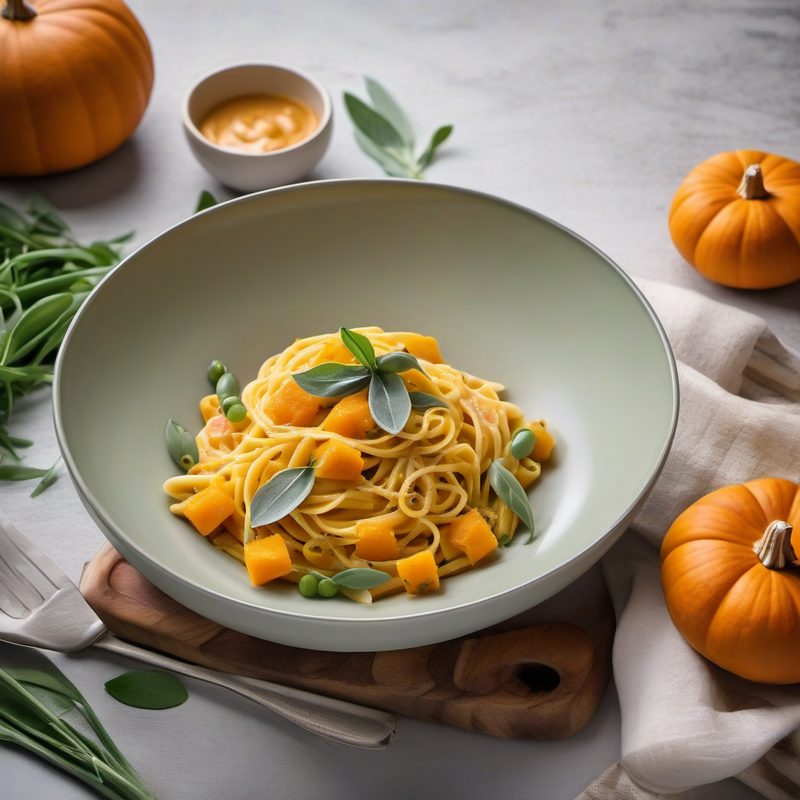
Pasta Pumpkin Spring Onion
Category: Primi piatti, Autumn Pasta \
| Amount | Ingredient |
|---|---|
| Calories | ≈ 520 kcal |
| Protein | 16 g |
| Fat | 18 g |
| Saturated Fat | 4 g |
| Carbohydrates | 72 g |
| Fiber | 5 g |
| Sugar | 6 g |
| Sodium | 480 mg |
Servings: 4 \
Total Time: 40 minutes \
Active Time: 30 minutes \
Skill Level: Beginner \
Source: Campania / Lazio — a rustic autumnal pasta that celebrates the sweet, earthy richness of pumpkin tempered by the gentle allium heat of spring onions and the fragrant herbaceouness of sage
> This is a weeknight-friendly pasta that tastes like a Sunday supper — the kind of quietly brilliant dish that proves Italian cooking's deepest truth: a few well-chosen ingredients, treated with care, are worth more than a pantry of tricks. The pumpkin is cooked twice: first it is roasted or sautéed until caramelized and concentrated, then a portion is mashed into the pasta water to create a silky, naturally sweet sauce that needs no cream, no butter, and no fuss. The spring onion oil — a gentle infusion of sliced scallions and garlic in warm olive oil — provides a fragrant, aromatic backbone that lifts the pumpkin's sweetness into savory territory. Fresh sage, torn and sizzled at the end, adds an earthy, slightly peppery counterpoint. Parmesan brings salt and umami. It is a dish of such elemental goodness that you will find yourself making it on repeat through every squash season.
1. Why This Recipe Works
Pasta zucca e olio al cipollotto is a masterclass in ingredient layering — each element has a distinct job, and they work together to create a dish that feels far more complex than its short ingredient list suggests.
The pumpkin (zucca) is the heart of the dish. Roasting or sautéing it until the edges caramelize concentrates its natural sugars, deepening its flavor from watery-sweet to rich and almost nutty. Mashing a portion of the cooked pumpkin into the pasta water creates a creamy, clinging sauce without adding a drop of cream — the pumpkin's own starches and pectins act as natural thickeners, and its vivid orange-gold color stains the pasta beautifully.
The spring onion oil (olio al cipollotto) is the aromatic soul. By gently infusing olive oil with thinly sliced spring onions and garlic over low heat, we extract their volatile aromatics without burning or browning them. The result is a fragrant, pale-gold oil that carries a mellow allium sweetness with none of the harshness of raw garlic or the bitterness of burnt onion. This oil is not a cooking medium — it is a sauce component, added at two stages: some is used to sauté the pumpkin, and the remainder is drizzled over the finished pasta as a finishing touch, providing a fresh, aromatic top note.
The sage (salvia) is the herbaceous bridge. Fresh sage leaves, torn and added just before serving, bring an earthy, slightly peppery, almost floral note that is the classic Italian partner for winter squash. The sage's aromatic oils cut through the pumpkin's sweetness and the oil's richness, providing brightness and depth. When the sage hits the hot pasta, it wilts gently, releasing its fragrance into the dish without the bitterness that comes from overcooking.
The Parmesan is the silent architect. Its salty, umami-rich crystals do not merely season the dish — they transform it. The combination of pumpkin sweetness and Parmesan savoriness creates a savory-sweet synergy (technically, the glutamates in Parmesan and the natural sugars in pumpkin amplify each other) that makes each bite compulsively delicious. Without the Parmesan, the dish would taste flat and one-dimensionally sweet.
The pasta — ideally a short, shape that catches sauce — provides the canvas. The pumpkin mash clings to ridges and hollows (rigatoni, paccheri, or orecchiette are ideal), while the spring onion oil slicks the exterior. Every forkful delivers sweetness, savoriness, herbaceousness, and the gentle bite of perfectly cooked pasta.
Pumpkin choice is the single most important ingredient decision. Italian zucca mantovana (also called marina di Chioggia) is the gold standard — its flesh is dense, deeply orange, and naturally sweet, with a chestnut-like flavor that is almost creamy when cooked. Butternut squash is an excellent, widely available substitute. The key is finding a pumpkin with deep orange flesh (not pale yellow) and a dense, non-fibrous texture. If your pumpkin is watery or stringy, the sauce will not thicken properly and the flavor will be thin. If you can only find a watery variety, roast the pumpkin longer to evaporate excess moisture, and consider adding 1 tablespoon of tomato paste to the mash to boost savory depth.
3. Before You Begin
- Choose the right pumpkin: Not all pumpkins are created equal. For this dish, you want a dense, sweet, orange-fleshed variety — the kind that roasts to a creamy, almost buttery texture. Watery pumpkins (the common carving pumpkin) will produce a thin, bland sauce. If you're unsure, ask your greengrocer for a "sweet" or "sugar" pumpkin; in Italy, look for zucca mantovana, zucca delica (a green-striped Hokkaido type), or zucca butternut. The skin of Hokkaido and kabocha pumpkins is edible once cooked; butternut and mantovana need peeling.
- The spring onion oil needs gentle heat: The oil infusion is the aromatic foundation of the dish. If you rush it over high heat, the spring onions will brown and turn bitter, and the garlic will acrid. Low heat, patient cooking, and pale-gold results — this is the technique that separates a good dish from a great one. The oil should never sizzle aggressively; it should whisper.
- Reserve pasta water generously: The starchy pasta water is the emulsifier that marries the pumpkin mash, the spring onion oil, and the cheese into a cohesive, silky sauce. Reserve a full 1½ cups (360 ml) — you will use most of it, and running out mid-toss is the single most common reason this dish fails to come together.
- Grate Parmesan fresh: The 50 g of Parmigiano-Reggiano in this recipe is not a garnish — it is a structural ingredient. The fine, airy particles of freshly grated Parmesan dissolve into the hot pasta water, creating a creamy, emulsified sauce. Pre-grated cheese contains anti-caking agents (cellulose, potato starch) that prevent proper melting and result in a gritty, clumpy sauce. Grate it yourself, and grate it fine (the small holes of a box grater, not the large ones).
- Prep everything before you start cooking: This dish comes together quickly once the pasta is cooked — you will be juggling the oil infusion, the pumpkin mash, and the final toss in a span of about 5 minutes. Have the spring onions sliced, the garlic minced, the sage leaves torn, and the Parmesan grated before you put the pasta water on to boil.
- Warm the serving bowls: This dish relies on a silky, emulsified sauce that can seize slightly if it hits cold ceramic. Run the bowls under hot water for 30 seconds, dry, and fill immediately. The difference in mouthfeel is subtle but real — the last few bites will be as silky as the first.
4. Equipment
- Large pot (6–8 qt / 6–8 L) — for boiling pasta
- Large skillet or sauté pan (12-inch / 30 cm) — wide enough for roasting/sautéing the pumpkin and the final toss
- Chef's knife and cutting board
- Box grater or Microplane (for Parmesan)
- Colander
- Tongs or pasta fork
- Measuring spoons
- Ladle or heatproof measuring cup (for reserving pasta water)
- Small bowl (for spring onion oil)
- Fork or potato masher (for mashing pumpkin)
- Large serving bowl (warmed)
- Sheet pan (if roasting the pumpkin in the oven)
- Parchment paper (if roasting)
5. Key Steps at a Glance
- Prepare pumpkin → Peel if necessary → dice into ½-inch (1 cm) cubes → roast at 400°F (200°C) for 20–25 minutes or sauté in 1 tbsp olive oil until caramelized and tender.
- Infuse spring onion oil → Slice spring onions (white and green parts) → gently cook in 3 tbsp olive oil with smashed garlic over low heat 5–7 minutes until soft and fragrant → strain or reserve with aromatics.
- Cook pasta → Boil in salted water until al dente → reserve 1½ cups pasta water → drain.
- Build the sauce → Mash half the cooked pumpkin with a fork or potato masher → return to skillet with a splash of pasta water → add remaining pumpkin pieces → stir to combine into a chunky, creamy sauce.
- Toss pasta → Add hot drained pasta to the pumpkin sauce → add half the spring onion oil and half the grated Parmesan → toss vigorously, adding pasta water as needed for a silky, clingy consistency.
- Finish → Remove from heat → tear sage leaves over the pasta → add remaining Parmesan → toss gently → plate → drizzle remaining spring onion oil on top → garnish with extra sage and black pepper.
6. Step-by-Step Instructions
Step 1: Prepare and Cook the Pumpkin (20–25 minutes)
- Prepare the pumpkin: If using a variety with inedible skin (butternut, mantovana, sugar pumpkin), peel it thoroughly with a vegetable peeler or chef's knife. If using kabocha or Hokkaido, scrub the skin well — it is edible and nutritious once cooked, and adds a pleasant textural contrast. Cut the pumpkin in half and scoop out the seeds and stringy fibers with a spoon. Reserve the seeds (see Chef's Final Notes). Cut the flesh into ½-inch (1 cm) cubes — uniform size ensures even cooking.
- Choose your cooking method: You have two excellent options:
Method A: Roasted (recommended) — Preheat the oven to 400°F (200°C). Toss the pumpkin cubes with 1 tablespoon of the olive oil (from the 4 tbsp total), a generous pinch of salt, and a few grinds of black pepper on a parchment-lined sheet pan. Spread in a single, even layer — overcrowding causes steaming, not caramelization. Roast for 20–25 minutes, flipping halfway through, until the pumpkin is tender, deeply golden, and caramelized at the edges. The cubes should yield easily to a fork but hold their shape. Roasting concentrates the pumpkin's sweetness far more than sautéing and produces a richer final sauce.
Method B: Sautéed (faster, one-pan) — Heat 1 tablespoon olive oil in a large skillet over medium-high heat. Add the pumpkin cubes in a single layer (work in batches if necessary) and cook without moving for 3–4 minutes to develop a golden-brown crust. Toss and continue cooking, stirring occasionally, for 8–12 minutes total, until the pumpkin is tender throughout and caramelized on at least two sides. If the pan becomes dry before the pumpkin is tender, add 2 tablespoons of water and cover for 2 minutes to steam-cook the interior, then uncover and cook off the remaining moisture. Sautéing is faster and uses one fewer pan but produces slightly less caramelization than roasting.
- Set aside the pumpkin: Transfer the cooked pumpkin to a bowl. Do not wash the skillet — any browned bits (fond) stuck to the pan are pure flavor that will be incorporated into the sauce.
Step 2: Infuse the Spring Onion Oil (7 minutes)
- Prepare the spring onions: Trim off the root ends and any dark green tips that look wilted or tough. Slice the spring onions thinly crosswise — white bulbs and light green parts into thin rings (about ⅛ inch / 3 mm), dark green tops into slightly wider ribbons (¼ inch / 6 mm). Keep the white/light green parts separate from the dark green tops.
- Infuse the oil: In a small saucepan or in the skillet you used for the pumpkin (wiped clean if using the same pan), combine 3 tablespoons of the remaining olive oil, the white and light green spring onion slices, and the 2 garlic cloves, smashed flat with the side of a knife (smashed, not minced — whole cloves infuse flavor without overwhelming the oil). Set over low heat.
- Cook gently: Warm the oil for 5–7 minutes, swirling occasionally. The aromatics should sizzle lazily — barely a whisper — never aggressively. The spring onions will soften and become translucent, and the oil will take on a pale golden tint and a fragrant, sweet allium aroma. The garlic should soften but not brown; if it begins to color, the heat is too high — remove the pan from the burner for 30 seconds to cool down, then return to low heat.
- Finish the oil: After 5–7 minutes, add the dark green spring onion tops to the warm oil and stir for just 30 seconds — they should wilt slightly but stay bright green. Remove the pan from the heat. If you prefer a clean, clear oil, fish out the garlic cloves with a fork and discard them (or leave them in for a stronger garlic presence — your choice). Transfer the oil with the spring onions to a small bowl and set aside. Do not strain — the softened spring onion pieces are delicious and add texture to the final dish.
Step 3: Cook the Pasta (10 minutes, overlapped with Step 4)
- Bring a large pot of generously salted water (about 1 tablespoon salt per 4 quarts / 4 L of water) to a rolling boil. Add 350 g pasta and cook according to package directions until al dente — typically 1 minute less than the package suggests for dried pasta.
- Reserve 1½ cups (360 ml) of the pasta cooking water before draining. Set it aside at the ready — you will use it to build the sauce.
- Drain the pasta in a colander. Do not rinse — the surface starch is essential for emulsification. Do not let it sit in the colander for more than 2 minutes; time your final steps so the pasta goes directly from colander to pan.
Step 4: Build the Pumpkin Sauce (3 minutes)
- Return the skillet to medium heat (the same skillet used for the pumpkin or the oil infusion — either is fine). Add the cooked pumpkin cubes to the pan.
- Using a fork or potato masher, mash about half the pumpkin (roughly 200 g) directly in the pan into a chunky puree. The remaining half should stay in recognizable cubes — you want a sauce that is part creamy, part chunky for textural interest.
- Pour in ⅓ cup (80 ml) of the reserved pasta water. Stir to combine, scraping up any browned bits from the pan bottom. Let the mixture bubble gently for 1 minute, stirring constantly. The pumpkin will break down further into a creamy, golden-orange sauce. If the sauce seems too thick, add another 2–3 tablespoons of pasta water — it should be the consistency of loose applesauce: thick enough to coat a spoon but fluid enough to flow.
- Taste and season the sauce with a pinch of salt and a grind of black pepper. Remember that the Parmesan will add saltiness later, so under-season slightly at this stage.
Step 5: Toss with Pasta and Spring Onion Oil (2 minutes)
- Reduce the heat to low. Add the hot drained pasta to the skillet with the pumpkin sauce. Toss with tongs for 30 seconds to coat every piece of pasta in the orange sauce.
- Drizzle in half the spring onion oil (with the spring onion pieces) — about 1½ tablespoons of oil plus half the sliced spring onions. Toss vigorously for another 30 seconds. The pasta should take on a glossy, golden-orange color, and the spring onion oil should distribute evenly.
- Add half the grated Parmesan (25 g) and ¼ cup (60 ml) more pasta water. Toss vigorously for 30–45 seconds. The starch in the pasta water will emulsify the oil and the cheese into a creamy, cohesive sauce that clings to the pasta. The sauce should be silky and fluid, not thick or gloppy — each piece of pasta should be slicked with a glossy coating, with a little extra sauce pooling at the bottom of the pan (it will be absorbed as the pasta rests briefly before serving).
- Assess consistency: If the sauce seems too tight or dry, add more pasta water 1 tablespoon at a time, tossing after each addition. If it seems too loose, let it bubble over low heat for 30–60 seconds, tossing occasionally, to allow excess moisture to evaporate and the starch to thicken the sauce further.
Step 6: Finish with Sage and Parmesan (1 minute)
- Remove the pan from the heat. Tear the fresh sage leaves into large pieces (about 2–3 pieces per leaf) directly over the pasta — tearing releases more aromatic oils than cutting. Add the remaining grated Parmesan (25 g).
- Toss gently once or twice to distribute the sage and cheese. The sage should wilt slightly from the residual heat but remain bright green — it is a finishing herb, not a cooked herb. Do not over-toss; you want visible flecks of sage throughout the pasta.
- Taste and adjust: Add a final pinch of salt if needed (the Parmesan and pasta water provide significant saltiness) and a generous grind of fresh black pepper — the pepper's gentle heat is an essential counterpoint to the pumpkin's sweetness.
- If the dish seems to need more aromatic lift (the spring onion flavor can fade as the dish sits), drizzle the remaining spring onion oil — about 1½ tablespoons — over the pasta and toss once more. This final application of raw-infused oil provides a fresh, fragrant top note that the cooked oil in the sauce cannot provide.
Step 7: Serve Immediately
- Divide among warmed serving bowls (4 portions). Make sure each bowl gets a good mix of pasta, pumpkin cubes, softened spring onions, and sage leaves.
- For each serving, finish with: a drizzle of the remaining spring onion oil (if not already added in Step 6), a final scattering of Parmesan (a small pinch from the wedge — not more grated, but a few shavings if you have a vegetable peeler), a few whole or torn sage leaves (for visual contrast), and a final grind of black pepper.
- Serve immediately. This dish waits for no one — the sauce continues to thicken as it cools, and the sage's volatile aromatics fade within minutes. It is at its absolute peak in the first 5 minutes after plating.
7. Visual Cues — What to Look For
| Step | Visual Cue |
|---|---|
| Pumpkin roasting (oven) | Deep golden-orange edges, slight caramelization on pan contact points, cubes yield easily to fork |
| Pumpkin sautéing (stovetop) | Golden-brown crust on at least two sides, pan bottom has browned bits (fond), cubes are tender throughout |
| Spring onion oil infusing | Oil is pale gold, spring onions are translucent and soft, garlic is tender but not browned, aromatics barely sizzle |
| Spring onion oil done | Dark green tops are wilted but bright green, oil is fragrant and sweet-smelling (not sharp or burned) |
| Pumpkin sauce after mashing | Creamy, loose applesauce consistency — thick enough to coat a spoon but fluid enough to flow |
| Pasta and sauce combined | Each piece of pasta is evenly coated in glossy golden-orange sauce, with no dry spots |
| After adding oil and Parmesan | Sauce turns from matte to glossy, emulsified, clingy — no separation of oil into puddles |
| After tossing | Pasta is slick, orange-gold, visibly coated — sauce pools slightly at bottom of pan but does not pool excessively |
| Sage added | Bright green flecks visible throughout, slightly wilted but not darkened or gray-green |
| Final plated dish | Golden-orange pasta studded with recognizable pumpkin cubes, softened spring onion rings, bright green sage pieces, and white flecks of Parmesan — glossy, inviting, no greasy sheen |
8. Recipe Notes & Troubleshooting
| Issue | Cause | Fix |
|---|---|---|
| Sauce is watery / thin | Pumpkin was too watery (jack-o'-lantern type); too much pasta water added | Simmer the sauce uncovered for 1–2 minutes to reduce. Next time, choose a dense, sweet pumpkin variety and roast (rather than sauté) to concentrate flavors. |
| Sauce is gluey / pasty | Pumpkin was over-mashed; too little pasta water; pasta was overcooked and released excess starch | Add more pasta water 1 tablespoon at a time and toss vigorously. Next time, leave more pumpkin in chunks and mash only a small portion. |
| Sauce is greasy / separated | Oil added without enough pasta water to emulsify; insufficient tossing | Add 2–3 tablespoons of pasta water and toss vigorously for 30 seconds — the starch will re-emulsify the oil. |
| Spring onion oil tastes bitter | Heat was too high; spring onions or garlic browned | Start over with fresh oil. Next time, cook over low heat and remove aromatics if they begin to color. Burnt allium oil cannot be saved. |
| Garlic is burnt / black in the oil | Heat too high or garlic left unattended in hot oil | Remove the burnt cloves immediately; they will continue to leach bitterness into the oil. Next time, smash the cloves and remove them after infusing (they are easier to spot and remove). |
| Dish tastes flat / one-dimensional | Not enough salt; pumpkin was bland; sage is missing | Add a finishing pinch of salt and a grating of Parmesan. If sage is missing, add more (or substitute thyme — fresh only). Next time, choose a sweeter pumpkin variety and roast it longer. |
| Pasta is dry / clumpy | Not enough sauce or pasta water; pasta sat too long after draining | Add ¼ cup more pasta water and toss vigorously. Next time, transfer pasta directly from colander to pan within 1 minute. |
| Pumpkin cubes fell apart | Overcooked or over-stirred during sauce building | Next time, cook pumpkin cubes just until tender (not falling apart), and mash only the portion designated for the sauce. Handle the remaining cubes gently during the toss. |
| Parmesan clumped / didn't melt | Added too much at once; pan was too cool; pre-grated cheese used | Add Parmesan in two batches, tossing between additions. Ensure the pan is on low heat (not off) when adding cheese. Always grate fresh Parmesan — never use pre-grated. |
| Sage tastes bitter / harsh | Overcooked; added too early; dried sage used instead of fresh | Add sage only at the very end, off the heat. Use fresh sage only — dried sage is a completely different (and harsher) herb. |
| Dish is too sweet | Pumpkin was very sweet; not enough salt or Parmesan or pepper | Add a generous grind of black pepper and an extra tablespoon of Parmesan. A squeeze of lemon juice (about 1 tsp) can also help balance the sweetness. |
9. Make-Ahead Tips
- Pumpkin (up to 3 days ahead): Roast or sauté the pumpkin cubes as directed, let cool completely, and refrigerate in an airtight container. To use, warm the pumpkin gently in the skillet over medium heat with 2 tablespoons of pasta water (or water) before proceeding with mashing and sauce-building. The pumpkin will be slightly softer than freshly cooked but still delicious. Do not freeze — thawed pumpkin becomes watery and loses texture.
- Spring onion oil (up to 5 days ahead): Prepare the infused oil through Step 2, let cool to room temperature, and transfer to a small jar with the softened spring onions. Refrigerate for up to 5 days. The oil will solidify slightly in the fridge — let it come to room temperature for 30 minutes before using, or warm it gently over low heat. Do not microwave — it can cause uneven heating and alter the delicate flavor.
- Pumpkin-sage sauce base (up to 2 days ahead): Complete Steps 1 and 4 (cook the pumpkin and mash it into a sauce with pasta water), but do not add the oil or cheese. Let the sauce cool and refrigerate in an airtight container. To finish the dish, warm the sauce over low heat with a splash of water or pasta water, cook fresh pasta, and proceed from Step 5. The sauce will be slightly thicker after refrigeration — thin it with extra pasta water as needed.
- Pasta (not recommended ahead): This dish relies on the emulsion formed by tossing hot pasta with the sauce, oil, and cheese. Reheated pasta will never achieve the same silky, clingy consistency. If you must make it ahead, undercook the pasta by 2 minutes, shock in cold water, toss with 1 teaspoon olive oil, and refrigerate separately from the sauce. Combine in a skillet over medium heat with ¼ cup pasta water, tossing constantly, until heated through. The result is acceptable but markedly inferior to freshly cooked.
- Grated Parmesan (up to 1 week): Grate the Parmesan and store in an airtight container in the refrigerator. Bring to room temperature for 15 minutes before using — cold cheese clumps when added to hot pasta.
10. Variations
- Pasta zucca e olio al cipollotto con rosmarino e noci (with rosemary and walnuts): Add ¼ cup (30 g) toasted walnuts, roughly chopped, and 1 teaspoon fresh rosemary leaves (finely chopped) to the final toss. The walnuts add crunch and a toasty, bitter edge that balances the pumpkin's sweetness; the rosemary's piney, resinous character complements the sage beautifully. Toast the walnuts in a dry skillet over medium heat for 3–4 minutes until fragrant, then chop and add with the sage.
- Pasta zucca e olio al cipollotto con pancetta (with pancetta): Dice 100 g pancetta (or guanciale) and render it in the skillet over medium heat until crisp, about 5–6 minutes. Remove the pancetta with a slotted spoon, leaving the rendered fat in the pan. Use the pancetta fat in place of 1 tablespoon of olive oil for sautéing the pumpkin. Add the crisp pancetta back to the pan with the sage at the end. The salty, smoky pork adds a savory depth that transforms the dish into a hearty cold-weather meal.
- Pasta zucca e olio al cipollotto con peperoncino (spicy): Add 1 small dried red chili (peperoncino calabrese or cayenne), crumbled, to the spring onion oil during the infusion. The gentle, persistent heat cuts through the pumpkin's sweetness and adds a Calabrian-inspired kick. Alternatively, add ½ teaspoon red pepper flakes to the final toss. The heat level should be modest — you want warmth, not pain.
- Pasta zucca e olio al cipollotto con gorgonzola (with gorgonzola): Add 50 g Gorgonzola dolce (sweet, creamy blue cheese) to the pumpkin sauce at the end of Step 4, stirring until melted and incorporated. The blue cheese's pungent, salty, funky character is a spectacular counterpoint to the sweet pumpkin and fragrant sage. Reduce the Parmesan to 30 g to balance saltiness. This variation is rich enough to be a main course on its own.
- Pasta zucca e olio al cipollotto con curcuma e zenzero (with turmeric and ginger): Add ½ teaspoon ground turmeric and 1 teaspoon finely grated fresh ginger to the pumpkin sauce. The turmeric deepens the orange-gold color to a brilliant sunset hue, while the ginger adds a warm, slightly spicy note that echoes the sage's peppery character. This variation has a subtle Indian-Italian fusion character — serve with a dollop of fresh ricotta on top for a creamy finish.
- Gluten-free version: Substitute 350 g of a high-quality gluten-free pasta (brown rice and corn blend or chickpea-based). Cook according to package directions but test 1 minute early — gluten-free pasta goes from perfect to pasty quickly. Reserve extra pasta water (about 2 cups), as GF starches release differently and may need more liquid to create a cohesive sauce. The pumpkin sauce and spring onion oil are naturally gluten-free.
- Vegan version: Omit the Parmigiano-Reggiano. To replace its umami and saltiness, add 2 tablespoons nutritional yeast (for cheesy, savory flavor) and 1 tablespoon white miso paste (for depth) to the sauce at the end of Step 4, stirring until dissolved. Alternatively, use a high-quality vegan Parmesan alternative. The pumpkin sauce is creamy enough without dairy, and the spring onion oil provides richness. The dish will be less complex but still delicious — the pumpkin, sage, and allium flavors are strong enough to carry it.
11. Wine & Drink Pairing
- White (Italy): A Gavi di Gavi (Cortese di Gavi, Piedmont) — crisp, mineral, with notes of green apple and white flowers — is the classic pairing. The wine's bright acidity cuts through the olive oil richness and complements the sage's herbaceous character. A Verdicchio dei Castelli di Jesi (Marche) — with its almond undertone and saline finish — is an excellent alternative. For a richer, more textural white, a Chardonnay from Alto Adige (with moderate oak, if any) echoes the pumpkin's creamy, nutty notes.
- White (Italy, off-dry): A Ribolla Gialla (Friuli Venezia Giulia) — with subtle floral notes and a touch of stone fruit — is beautiful with the sweet-savory pumpkin and sage. A Pigato (Liguria) — herbal, slightly bitter, with a saline edge — mirrors the sage and spring onion beautifully.
- White (biodynamic / natural): A Trebbiano Spoletino (Umbria, from a producer who makes it with skin contact) — tannic, textural, with notes of dried herbs and citrus — is an unusually good match. The wine's savory, almost bitter character harmonizes with the sage and the pumpkin's caramelized notes.
- Red (light, chilled): A Schiava (Alto Adige) — light-bodied, with bright red fruit, a hint of almond, and gentle tannins — served slightly chilled (55–60°F / 13–15°C) is a surprising but lovely pairing. The wine's delicacy does not overpower the dish's subtle flavors. A Valpolicella Classico (Veneto, young and fresh) — with its sour cherry and herbal notes — is another excellent light red option.
- Rosé (Italian): A dry Rosato di Montepulciano (Abruzzo) or a Terre di Faiano rosato from Puglia — both have enough structure to stand up to the Parmesan while their fruit brightness balances the pumpkin's sweetness. Serve well-chilled.
- Sparkling: A Franciacorta Brut (Lombardy) or Trentodoc (Trentino) — the fine bubbles and bready autolytic character cut through the olive oil and refresh the palate between bites. A Lambrusco di Sorbara (dry, not sweet) — with its lively red fruit, gentle fizz, and bright acidity — is a fun, unexpected match that works brilliantly with the sage and Parmesan.
- Beer (Italy): A Moretti Baffo d'Oro or Menabrea — crisp, light lagers with enough character to complement the dish without competing. A Italian Pilsner (Birrificio Italiano's Tipopils or similar) — with a subtle hop bitterness that cuts through the oil — is an excellent choice.
- Beer (Belgian): A Saison Dupont — dry, spicy, with a peppery yeast character that echoes the sage and black pepper — is a beautiful, unexpected pairing. The beer's effervescence and dryness refresh the palate. A Belgian Witbier with a touch of coriander (like Blanche de Bruxelles) — the coriander echoes the herbal notes, and the citrus rounds out the pumpkin.
- Non-alcoholic: Sparkling water with a squeeze of lemon and a sprig of thyme; a chilled, dry apple-ginger soda; or a cold-brewed herbal tea of sage and lemon balm with a splash of apple cider vinegar.
12. Serving Suggestions
- Serve with crusty bread — a rustic Italian filone, pagnotta, or ciabatta — for mopping up every last smear of pumpkin sauce from the bowl.
- A simple arugula salad dressed with lemon juice, olive oil, and shaved Parmigiano-Reggiano is the ideal accompaniment. The peppery, slightly bitter arugula cuts through the pumpkin's sweetness and provides a fresh, crisp contrast to the rich pasta. Do not use vinegar in the dressing — its acidity muddles the delicate balance of the dish.
- For a more substantial meal, start with crostini with whipped ricotta and honey (simple, creamy, a gentle sweet note that previews the pumpkin theme without repeating it), then follow with this pasta as a primo piatto. A second course of roasted pork loin with fennel and garlic or grilled pork chops with sage butter would be the ideal secondo — the sage and pumpkin flavors echo through both courses.
- For a fall-themed dinner, precede this pasta with a butternut squash soup with sage and brown butter (a gentle warm-up for the palate), then follow the pasta with a main course of osso buco alla Milanese or braised beef short ribs (rich, slow-cooked meat that contrasts with the light, fresh pasta), and finish with panna cotta with caramelized figs or a simple apple crostata.
- If serving the vegan variation (with nutritional yeast and miso), accompany with sautéed wild mushrooms or a warm lentil and roasted beet salad for protein and heft.
- A final drizzle of finishing-quality extra-virgin olive oil applied at the table — a grassy, peppery green oil — adds a fresh, vibrant top note that contrasts with the deeper, cooked olive oil in the spring onion infusion. This is the same principle as the final raw drizzle in pasta aglio e olio — it wakes up the dish.
- Sprinkle a few toasted pumpkin seeds (the seeds from the pumpkin you used — see Chef's Final Notes) over each bowl for a crunchy, nutty garnish that echoes the dish's main ingredient.
13. Nutritional Information (per serving)
Approximate values based on ingredients listed; actual values vary. The calorie count is driven by the pasta (the largest energy component), the olive oil (4 tbsp across 4 servings = 1 tbsp per serving), and the Parmigiano-Reggiano. The pumpkin is very low in calories (about 80 kcal for the full 400 g) and contributes most of the fiber. The dish is relatively low in saturated fat (most of the fat is unsaturated olive oil) and moderate in sodium (driven primarily by the salted pasta water and the Parmesan). To reduce sodium, use less salt in the pasta water and reduce the Parmesan to 30 g (though the sauce will be less creamy and less savory). The fiber content is good for a pasta dish — the pumpkin contributes about 3 g of fiber per serving, and whole-wheat pasta would nearly double that. For a higher-protein version, add the pancetta variation (adds about 8 g protein and 5 g fat per serving) or increase the Parmesan to 75 g (adds about 6 g protein and 4 g fat).
14. Prep Timeline & Workflow
| Time Elapsed | Action |
|---|---|
| 0 min | Preheat oven to 400°F (200°C) if roasting pumpkin |
| 5 min | Prepare pumpkin (peel if needed, seed, cut into ½-inch cubes) |
| 10 min | Toss pumpkin with 1 tbsp oil, salt, pepper → spread on sheet pan → place in oven (or start sautéing in skillet) |
| 15 min | Slice spring onions (white/light green and dark green parts separate); smash garlic cloves; grate Parmesan; tear sage leaves |
| 18 min | Start spring onion oil infusion over low heat (if it will take 5–7 minutes, time it to finish with the pumpkin) |
| 25 min | Fill large pot with salted water → bring to a rolling boil |
| 30 min | Remove roasted pumpkin from oven (or finish sauté) → transfer to a bowl |
| 32 min | Finish spring onion oil → remove from heat → set aside |
| 33 min | Add pasta to boiling water → set timer for al dente |
| 35 min | Return skillet to medium heat → add pumpkin → mash half → add ⅓ cup pasta water → simmer 1 minute |
| 38 min | Reserve 1½ cups pasta water → drain pasta |
| 39 min | Add hot pasta to pumpkin sauce → toss → add half the spring onion oil → toss → add half the Parmesan + ¼ cup pasta water → toss vigorously |
| 40 min | Remove from heat → tear in sage → add remaining Parmesan → toss gently → taste and adjust |
| 42 min | Plate → drizzle remaining spring onion oil → garnish with extra sage, Parmesan shavings, black pepper → serve immediately |
Note: The timeline assumes a 20-minute roast for the pumpkin. If using the sauté method (Method B), subtract 5 minutes from the start time — begin sautéing at T+10 min and finish by T+22 min. The spring onion oil can be made while the pumpkin roasts; the pasta water can be brought to a boil while the spring onion oil infuses. The only critical timing link is the pasta-to-toss cascade — pasta must go from colander to pan within 2 minutes of draining. Everything else can flex by 5–10 minutes without harm.
15. Allergen Information
- Contains: Wheat/gluten (pasta), milk/dairy (Parmigiano-Reggiano)
- Free from: Eggs, peanuts, tree nuts, soy, fish, shellfish, sesame, lupin, mustard, celery (as written)
- May contain: Traces of tree nuts (Parmigiano-Reggiano is aged in facilities that may process nuts; the pumpkin could have been processed on shared equipment)
- Cross-contact note: If you have severe dairy allergies, note that Parmigiano-Reggiano is a hard, aged cheese with very low lactose content (usually <1 g per 100 g) — most people with lactose intolerance tolerate it well. Those with casein or milk protein allergies should omit the cheese entirely or use a vegan alternative.
- Dietary profiles (as written): Vegetarian, low-lactose (if using aged Parmigiano-Reggiano), egg-free, nut-free, soy-free
- Not suitable for: Vegan, gluten-free (but see Variations for GF and vegan alternatives)
- Note on pumpkin preparation: The pumpkin is cooked through (roasted or sautéed) before being served. If using a pumpkin variety with edible skin (kabocha, Hokkaido), the skin is a good source of fiber and nutrients but may be difficult to digest for some individuals — feel free to peel if desired. The pumpkin seeds, if toasted and used as garnish, are a choking hazard for young children.
16. Regional Background
Pasta zucca e olio al cipollotto — Pasta with Pumpkin and Spring Onion Oil — is a dish that belongs to no single Italian region in its exact form but draws from several deep culinary traditions.
The combination of pumpkin (zucca) and pasta is most closely associated with the regional cuisines of Campania (Naples and the Amalfi Coast) and Lazio (Rome and its hinterland). In Campania, pumpkin is a beloved autumnal ingredient — it appears in risotto alla zucca (pumpkin risotto), gnocchi di zucca (pumpkin gnocchi), and tortiera di zucca (baked pumpkin with cheese and breadcrumbs). The Neapolitan affinity for pumpkin likely traces back to the Spanish influence on the Kingdom of Naples (1504–1707), during which New World squashes were introduced to Europe and rapidly adopted by the warm, generous cooking of the Mezzogiorno. The modern pasta zucca tradition in Campania is typically enriched with garlic, chili, and Parmesan or Pecorino — a simple, honest preparation that lets the pumpkin shine.
In Lazio (particularly the Roman cucina povera tradition), pumpkin appears in hearty, ribollita-style soups (like minestra di zucca), in the famous fettuccine con zucca e pancetta, and as a filling for ravioli. The Roman approach to pumpkin tends to be more savory than sweet — they pair it with guanciale, rosemary, sage, and black pepper, relying on pork fat and hard cheese to balance the vegetable's natural sugars. The use of spring onions (cipollotti) as the aromatic base is a nod to the Roman preference for battuto — the gently cooked aromatic base of onion, garlic, and herbs that forms the flavor foundation of many Roman dishes. While Romans more commonly use regular yellow onions or leeks, the spring onion provides a milder, fresher, more delicate allium note that is particularly well-suited to a late-summer or early-autumn dish.
The technique of infusing olive oil with spring onions and garlic (olio al cipollotto) is a riff on the classic olio santo (chili-infused oil) and olio all'aglio (garlic oil) of Southern Italy. In Calabria and Puglia, garlic-infused oil is a pantry staple — a spoonful added to pasta, grilled vegetables, or bruschetta provides instant depth. Here, the spring onion replaces (or joins) the garlic, creating an infusion that is sweet and gentle rather than pungent and aggressive. The oil serves a dual purpose: it is both a cooking medium (for the pumpkin) and a finishing condiment (drizzled over the plated pasta) — a technique that mirrors the Calbrese and Pugliese habit of finishing dishes with raw, unheated olive oil to provide a fresh, grassy top note.
The sage (salvia) in this dish is a classic Roman and Tuscan pairing with winter squash. Sage grows abundantly throughout Central Italy and has been used in Italian cooking since Roman times — Pliny the Elder praised it as a digestive and a flavoring agent. In Tuscany, sage is almost always paired with butter (the famous burro e salvia sauce for gnocchi and ravioli); here, it pairs with olive oil instead, keeping the dish within the Southern Italian pantry while borrowing the sage-butter/squash logic of the North.
The result is a dish that is pan-Italian in its influences — Campanian pumpkin, Roman sage and pancetta logic, Southern Italian infused oil technique — and yet feels cohesive and specific. It is the kind of recipe that could only have emerged from the Italian tradition of cucina di riutilizzo (kitchen of reuse) and cucina del territorio (territorial cooking): using what is abundant in the season, treating each ingredient with respect, and letting the natural affinities between good ingredients do the work.
17. Scaling
- For 2 servings: Halve all ingredients. Use 175 g pasta (small shapes like orecchiette or ditalini work beautifully at this scale), 200 g pumpkin (about 1½ cups diced), 2 spring onions, 1 garlic clove, 2 tbsp olive oil, 25 g Parmesan, 4–5 sage leaves. Use a 10-inch skillet for comfortable tossing. The smaller volume of oil and pasta water means the emulsion forms faster — add pasta water in 1-tablespoon increments. Roasting the smaller quantity of pumpkin on a sheet pan works fine; keep an eye on it as it may cook slightly faster (15–18 minutes).
- For 6 servings: Increase proportions by 1.5x: 525 g pasta, 600 g pumpkin (about 4½ cups diced), 6 spring onions, 3 garlic cloves, 6 tbsp olive oil, 75 g Parmesan, 12–15 sage leaves. Use your largest skillet (14-inch / 35 cm) or a wok for the final toss — surface area is critical for even coating. If your skillet is too small, toss the pasta with the sauce in a large warmed mixing bowl with salad servers. Roast the pumpkin on two sheet pans (or in two batches) to avoid overcrowding. Reserve 2 cups of pasta water.
- For 8 servings (double): Double all ingredients: 700 g pasta, 800 g pumpkin, 8 spring onions, 4 garlic cloves, 8 tbsp (½ cup) olive oil, 100 g Parmesan, 16–20 sage leaves. Cook the pasta in two batches (or use two pots). Roast the pumpkin on two sheet pans. For the final toss, work in batches — divide the pumpkin sauce, spring onion oil, and pasta between two skillets, each tossed separately. Alternatively, combine everything in a very large warmed mixing bowl and toss with salad servers. Serve family-style on a large platter for a spectacular autumn presentation. Double the spring onion oil infusion but keep the garlic at 4 smashed cloves (do not double it — double garlic can become overpowering at scale).
18. Conversion Table (Volume)
| Metric | US Standard |
|---|---|
| 5 ml | 1 tsp |
| 15 ml | 1 tbsp |
| 60 ml | ¼ cup |
| 80 ml | ⅓ cup |
| 120 ml | ½ cup |
| 240 ml | 1 cup |
| 350 g pasta | ≈ 12 oz |
| 400 g pumpkin | ≈ 14 oz (about 3 cups diced) |
| 50 g Parmesan | ≈ ½ cup finely grated (packed) |
19. Chef's Final Notes
- Toast the pumpkin seeds. When you scoop the seeds and stringy fibers from the pumpkin in Step 1, do not discard the seeds. Rinse them in a colander under cold water, rubbing off the stringy bits, and pat dry with a kitchen towel. Toss with a drizzle of olive oil, a pinch of salt, and (if you like) a pinch of smoked paprika or cayenne. Spread on a small baking sheet and roast at 350°F (175°C) for 10–15 minutes, shaking halfway through, until golden and crisp. Sprinkle these over the finished pasta — the crunchy, nutty seeds provide a brilliant textural counterpoint to the soft, creamy pumpkin and silky pasta, and they honor the ingredient by using every part of it. This is cucina di riutilizzo in action.
- The pumpkin does not need to be peeled if you use the right variety. Kabocha and Hokkaido pumpkins have thin, tender skins that soften completely during cooking and are perfectly edible. Leaving the skin on saves time, adds fiber, and provides a subtle textural contrast (the skin pieces remain slightly firmer than the flesh). For butternut squash and zucca mantovana, the skin is too tough — peel them thoroughly. When in doubt, take a bite of a raw piece of skin: if it is tough and fibrous, peel; if it is thin and pliable, leave it on.
- Why spring onions instead of regular onions? Regular yellow or red onions have a sharper, more pungent sulfur character that can dominate the delicate pumpkin and sage. Spring onions (cipollotti) are milder, sweeter, and have a grassy, fresh quality that complements the pumpkin without overpowering it. Their green tops add color and a subtle chlorophyll note that lifts the dish visually and aromatically. Scallions are the closest substitute, but they lack the bulb's sweetness — if using scallions, supplement the white parts with a small shallot to restore the sweet bulb note.
- The pasta water is the secret to the sauce's silkiness. I cannot emphasize this enough. The starch that leaches from the pasta as it cooks is a natural emulsifier — it binds the olive oil, the pumpkin puree, and the melted Parmesan into a homogeneous, creamy sauce. Without enough pasta water, the sauce will separate into an oily puddle and a clumpy pumpkin mash. Reserve a full 1½ cups (360 ml). If you accidentally dump all the pasta water, you can approximate a replacement by dissolving 1 teaspoon of cornstarch or all-purpose flour in 1½ cups of hot water — but it is not the same. Reserve the real stuff.
- Fresh sage is non-negotiable. Dried sage is a different beast entirely — it is more pungent, more camphor-like, and has a harsh, almost medicinal quality that overwhelms the delicate sweetness of the pumpkin. Fresh sage is gentle, sweet, and peppery, with a subtle floral undertone that harmonizes with the olive oil and spring onions. If you cannot find fresh sage, use fresh thyme (about 1 teaspoon leaves, stripped from stems) or a combination of fresh thyme and a few torn basil leaves. Both are excellent substitutes, but neither is sage — if you truly want the sage flavor, grow a plant on your windowsill. It is nearly indestructible and provides fresh leaves year-round for pennies.
- The quality of the olive oil matters enormously. In a dish with so few ingredients, the olive oil is not merely a cooking medium — it is a primary flavor component. The 4 tablespoons of oil in this recipe are consumed almost entirely by the dish (very little is left in the pan), so use an oil that you would happily eat on bread. A medium-fruity, grassy Italian extra-virgin olive oil (from Tuscany, Umbria, or Lazio) is ideal — it should be green-gold, aromatic, and slightly peppery on the finish. Avoid bland, overly filtered oils that taste of nothing. The finishing drizzle of raw oil at the end is your chance to showcase a truly special oil — a monocultivar (single-varietal) oil from a small producer, if you have one.
- Do not oversalt the pasta water. The pasta water should taste like the sea, but not like the Dead Sea. A good rule of thumb: 1 tablespoon of fine sea salt per 4 quarts (4 L) of water. The Parmesan will add significant saltiness to the finished dish, and the pumpkin itself is naturally sweet with a low sodium requirement. Taste the sauce before adding any finishing salt — you may find that the Parmesan and salted pasta water provide exactly the right seasoning without any additional salt.
- This dish is a canvas for autumn. Once you master the basic technique, play with the season. In September, when pumpkin is just coming into season, use it simply with sage and Parmesan as written. In October, add walnuts and rosemary for a more rustic, earthy version. In November, fold in crispy pancetta or a spoonful of Gorgonzola dolce for a rich, decadent cold-weather pasta. In December, add a pinch of cinnamon and a grating of nutmeg to the pumpkin sauce for a holiday-adjacent warmth. The technique — roast, mash, infuse, toss — remains the same; only the flavor accents change.
- Respect the ingredient. Pumpkin is a humble vegetable — it costs little, grows abundantly, and stores for months. But when treated with care — roasted until caramelized, mashed into a silky sauce, paired with fragrant spring onion oil, bitter sage, and salty Parmesan — it becomes something genuinely luxurious. This is the great lesson of Italian cucina povera: luxury is not about expensive ingredients. It is about attention and respect. Give the pumpkin your full attention, and the dish will give you a meal that tastes like it cost ten times what it did.
🔗 Related Recipes
- 346 — Pasta ai Funghi e Mascarpone (Pasta with Mushrooms and Mascarpone) — Another autumn-focused pasta that uses a similar technique of mashing a vegetable (mushrooms) into a creamy, clinging sauce. Compare the mushroom-mascarpone emulsion with the pumpkin-parmesan emulsion — both rely on a combination of vegetable puree, pasta water, and cheese for their silky texture, but the flavor profiles are dramatically different.
- 333 — Pasta con Cavolfiore e Pangrattato (Pasta with Cauliflower and Toasted Breadcrumbs) — A Southern Italian cucina povera classic that uses another humble vegetable (cauliflower) as the centerpiece of a pasta sauce. The technique of mashing some of the cooked vegetable into the sauce is shared with this recipe. Notice how the cauliflower's mild, nutty character requires a different aromatic approach (anchovy, garlic, chili) than the pumpkin's sweetness.
- 312 — Fettuccine con Burro e Salvia (Fettuccine with Butter and Sage) — The classic Roman emulsion of butter and sage is the spiritual ancestor of the pumpkin-sage pairing in this recipe. Compare the two: butter provides richness and emulsifies with pasta water to create a silky sauce here; olive oil provides the same function in the pumpkin version, with a lighter, fruitier result.
- 328 — Pasta con le Sarde (Pasta with Sardines) — Another Southern Italian pasta that uses an infused oil (with wild fennel and anchovies) as the aromatic foundation. Compare the condimento technique: in Pasta con le Sarde, the fennel-infused oil is the primary flavor vehicle; here, the spring onion oil serves the same role. Both demonstrate the principle that a thoughtfully infused oil can be as complex as a long-simmered sauce.
- 310 — Risotto alla Zucca (Pumpkin Risotto) — The risotto counterpart to this pasta dish. The same ingredients (pumpkin, sage, Parmesan, spring onion or onion) are treated with risotto technique (gradual stock addition, constant stirring, creamy finish) instead of pasta technique (toss, emulsify, serve). Making both dishes will teach you more about how technique transforms identical ingredients into completely different experiences than a month of reading cookbooks.
- 301 — Spaghetti Aglio, Olio e Peperoncino (Spaghetti with Garlic, Oil, and Chili) — The foundational "empty pantry" pasta that teaches the principles of infused oil and pasta-water emulsion. Master this dish, and the spring onion oil technique in this recipe will feel intuitive. The only difference is the aromatic: chili and garlic in Aglio e Olio; spring onion and garlic here.
- 320 — Pasta con Panna e Piselli (Pasta with Cream and Peas) — A spring pasta that uses a similar "mash-and-emulsify" technique: some peas are mashed into the cream to create a thick, clinging sauce, while whole peas provide texture. Compare the pea-cream emulsion with the pumpkin-parmesan emulsion — both rely on a combination of starch, fat, and vegetable puree for their silky texture.
🏷️ Search Tags
📸 Photo Reference
Photo reference: `vol1_366.png` — A warm, inviting overhead shot of a rustic, shallow ceramic pasta bowl (cream-colored, with a subtle hand-thrown texture and a narrow rim) filled with Pasta zucca e olio al cipollotto. The pasta — short rigatoni tubes — is stained a glossy, deep golden-orange from the pumpkin-parmesan emulsion, with visible flecks of bright green sage and pale green-and-white spring onion rings distributed throughout. Scattered among the pasta: recognizable cubes of roasted pumpkin with caramelized edges, some still holding their shape, others partially broken down into the sauce. A final drizzle of pale golden spring onion oil catches the light in glossy droplets across the surface. A few shavings of Parmigiano-Reggiano (curled, delicate, from a vegetable peeler) rest on top, alongside a few whole, bright green sage leaves for visual contrast. A sprinkle of toasted pumpkin seeds (golden-brown, irregular) adds a final textural garnish. The pasta is mounded slightly in the center of the bowl, not flat, with a small pool of glossy sauce visible at the bottom edge. In the background, slightly out of focus: a rustic wooden table, a small glass of pale straw-colored wine (Gavi di Gavi or Verdicchio) with condensation, a linen napkin in warm terracotta tones, and a small ceramic bowl of extra grated Parmesan with a tiny spoon. A single sage leaf rests on the table near the bowl. The lighting is warm, golden, natural daylight from a window at a 45-degree angle — late afternoon autumn light that makes the orange-gold sauce glow. The mood is rustic, cozy, and deeply appetizing — the kind of bowl that makes you want to curl up with a fork and a good book on a cool October evening.
Recipe from "The Italian Kitchen" by Vita Milanese — Volume 1: Pasta Perfetto 🍝
Recipe from The Italian Kitchen by Vita Milanese — Volume 1 · Pasta Perfetto. Discover all volumes on the ebook page.