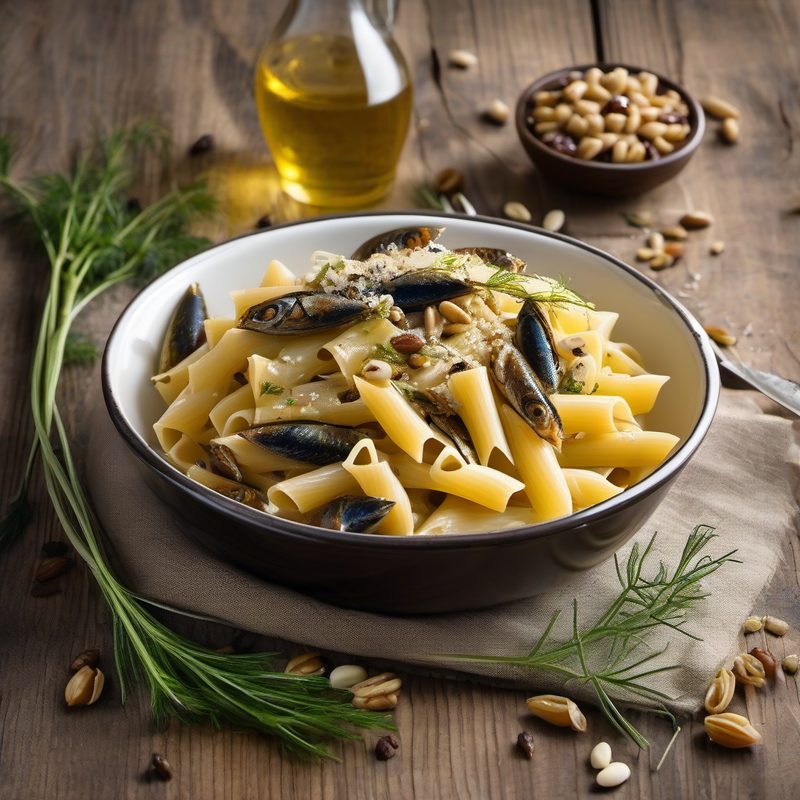
Pasta Sardines Sicilian
| Amount | Ingredient |
|---|---|
| Bucatini or spaghetti | 350 g (12 oz) |
| Fresh sardines (see note for canned substitute) | 300 g (10½ oz) |
| Onion, finely chopped | 1 medium (about 150 g) |
| Garlic cloves, minced | 2 |
| Pine nuts | 50 g (⅓ cup) |
| Golden raisins (sultanas) | 50 g (⅓ cup) |
| Wild fennel tops (or fennel fronds from 2 bulbs), chopped | 1 bunch (about 40 g) |
| Saffron threads | large pinch (about 0.1 g) |
| Hot water (for dissolving saffron) | 60 ml (¼ cup) |
| Extra-virgin olive oil | 60 ml (¼ cup), plus more as needed |
| Salt | to taste |
| Black pepper, freshly ground | to taste |
Sicilian Pasta with Sardines
Category
Primi piatti — Cucina siciliana
Why This Recipe Works
Pasta con le sarde is one of Sicily's defining dishes — a bold, sweet-savory pasta that perfectly captures the island's Arab-Norman culinary heritage. The combination of sardines, wild fennel, pine nuts, raisins, and saffron may sound exotic, but every ingredient serves a purpose. Fresh sardines (or high-quality tinned ones) bring a rich, briny umami that melts into the olive oil. Wild fennel — foraged across Sicily's hillsides — contributes a delicate anise-like sweetness that is utterly distinct from common fennel bulb. The pine nuts and raisins, a hallmark of Sicilian cucina baronale, add crunch and pops of sweetness against the savory fish. A pinch of saffron infuses the sauce with a golden hue and floral depth. Toasted breadcrumbs (muddica), not cheese, garnish the dish — a frugal yet brilliant Sicilian touch that adds texture without overwhelming the seafood. The key is timing: the sauce comes together quickly, and the pasta finishes cooking in the pan so it absorbs every drop of the fragrant emulsion.
Serves
4
Total Time
45 minutes
Ingredients
#### For the Toasted Breadcrumbs (Muddica Atturrata)
#### For the Pasta and Sauce
#### Ingredient Notes
Sardines: Fresh sardines are traditional and superior — they should be bright-eyed, firm-fleshed, and smell of clean seawater. If unavailable, use 200 g (7 oz) of high-quality sardines packed in olive oil (drained weight). Avoid brisling or sprats; true sardines (Sardina pilchardus) are essential.
Wild fennel (Finocchietto selvatico): This is not the same as fennel bulb. Wild fennel has fine, feathery fronds and a more pronounced anise flavor. It grows freely across Sicily. Outside Sicily, look for it at farmers' markets or Italian specialty grocers. A good substitute is the feathery fronds from 2–3 large fennel bulbs plus a pinch of fennel seeds (toast and crush them first). Do not skip this ingredient — it defines the dish.
Breadcrumbs: Sicilian muddica atturrata is toasted in olive oil (never butter) and is the traditional finishing touch instead of grated cheese, which would compete with the seafood.
Before You Begin
- If using fresh sardines, have your fishmonger gut and butterfly them, or do it yourself: scale, gut, remove the head, and open along the belly. Run your thumb along the backbone to loosen it, then lift it out. Rinse and pat dry. You can leave the tail on for appearance if desired. Chop the fillets into 2.5 cm (1-inch) pieces.
- If the raisins are very dry, plump them in warm water for 10 minutes, then drain.
- Toast the pine nuts in a dry skillet over medium heat, shaking frequently, until fragrant and lightly golden — about 3 minutes. Watch closely; they burn quickly. Set aside.
- Bring a large pot (at least 6 litres / 6 quarts) of water to a boil for the pasta. Salt it generously: 1½ tablespoons of salt per 4 litres (4 quarts) of water — it should taste like the sea.
- Have all ingredients prepped and within reach — this dish comes together quickly.
Equipment
- Large pot (6+ litres / 6+ quarts)
- Large skillet or sauté pan (30 cm / 12-inch)
- Colander
- Chef's knife and cutting board
- Small skillet (for toasting breadcrumbs)
- Spider or slotted spoon (for transferring pasta)
Instructions
1. Toast the breadcrumbs: In a small skillet, heat 2 tablespoons olive oil over medium heat until shimmering. Add the breadcrumbs and a pinch of salt. Cook, stirring constantly with a wooden spoon, until they turn an even golden brown — about 3 to 4 minutes. Immediately transfer to a small bowl to stop cooking. Set aside. (The breadcrumbs will crisp further as they cool; do not walk away from the pan.)
2. Prepare the fennel: If using fennel bulbs for the fronds, trim away the bottom and the stalks, reserving the fronds. Chop the fronds finely — you should have about ½ cup loosely packed. If using wild fennel, simply chop the tender tops.
3. Bloom the saffron: In a small bowl or cup, combine the saffron threads with 60 ml (¼ cup) hot water. Let steep for at least 5 minutes until the water turns deep gold.
4. Cook the sardines: If using fresh sardines, heat 3 tablespoons olive oil in a large skillet over medium-high heat. Add the chopped sardines and cook, stirring gently, just until they turn opaque and begin to flake — about 2 minutes. Season lightly with salt and pepper. Using a slotted spoon, transfer to a plate and set aside. (Do not overcook; the sardines will finish cooking when tossed with the pasta.) Leave the oil in the pan.
5. Sauté the aromatics: Reduce heat to medium. Add the remaining olive oil (about 1 tablespoon) to the pan if needed. Add the chopped onion and cook, stirring occasionally, until softened and translucent — about 6 to 8 minutes. Add the minced garlic and cook until fragrant, about 30 seconds.
6. Build the sauce: Add the chopped fennel tops to the pan and stir until wilted — about 1 minute. Add the pine nuts, raisins, and the saffron water (including the threads). Stir to combine. Cook for 1 minute to allow the flavors to meld. Season with salt and pepper to taste. Remove from heat and set aside.
7. Cook the pasta: Meanwhile, cook the bucatini or spaghetti in the boiling salted water until just shy of al dente — about 1 minute less than the package directions (the pasta will finish cooking in the sauce). Reserve 250 ml (1 cup) of pasta cooking water before draining.
8. Finish the dish: Return the skillet with the sauce to medium heat. Add the drained pasta and the cooked sardines to the pan. Toss vigorously to coat, adding pasta water a splash at a time as needed to create a loose, silky emulsion that clings to the pasta — you will likely need about 120 ml (½ cup). Cook for 1 to 2 minutes, tossing constantly, until the pasta is al dente and the sauce has thickened and unified.
9. Serve: Divide the pasta among warmed bowls or plates. Top each portion with a generous sprinkle of the toasted breadcrumbs. Serve immediately. (No cheese is served with this dish — the breadcrumbs are the authentic finishing touch.)
Notes for Success
- Don't skip the breadcrumbs. Muddica atturrata is not merely a garnish — it provides the textural contrast and nuttiness that cheese would otherwise bring, without clashing with the sardines.
- Wild fennel is non-negotiable for authentic flavor. If you absolutely cannot source it, use fennel fronds + a pinch of crushed fennel seeds (toasted in the skillet for 30 seconds before adding the onion).
- Sardine quality matters. Never use cheap tinned sardines in soybean oil with an off taste. Good ones — packed in olive oil, firm-fleshed — make a perfectly respectable substitute.
- Pasta water is your secret weapon. The starch in the reserved water is essential for creating the sauce emulsion. Add it gradually; you want the pasta glossy and lightly coated, not swimming.
- Work quickly once the pasta is in the pan. The sauce should come together in about 2 minutes of vigorous tossing — any longer and the sardines will break down into a paste (not desirable here).
- Bucatini is traditional, but spaghetti, linguine, or even busiate (a Sicilian coiled pasta) work beautifully.
Variations
- With anchovies: Add 2–3 anchovy fillets (chopped) to the onion in step 5. They will melt into the oil and deepen the savory flavor without tasting "fishy."
- Spicier version: Add ½ teaspoon red pepper flakes along with the garlic for pasta con le sarde arrabbiata.
- With tomato (Palermo style): Some Palermitan versions add 2 tablespoons of tomato passata or a handful of halved cherry tomatoes in step 6 for a touch of acidity and color. This is not traditional but is common in home cooking.
- Canned sardine shortcut: Skip step 4. Drain two 120 g (4¼ oz) tins of sardines packed in olive oil, break them into large chunks, and add them to the sauce in step 8 along with the pasta.
Wine Pairing
A crisp, mineral-driven Sicilian white is ideal. Look for:
- Grillo — bright citrus and herbal notes echo the wild fennel
- Carricante (Etna Bianco) — high acidity and saline minerality cut through the richness
- Vermentino di Sardegna — a nod from the sister island, with a briny finish
For red wine drinkers, a light, chilled Frappato or Cerasuolo di Vittoria (served at 14–16°C) works surprisingly well, with low tannins and juicy red fruit that won't overpower the fish.
Regional Background
Pasta con le sarde is a primo piatto from Palermo and the surrounding Conca d'Oro, the golden coastal plain where wild fennel once grew in abundance and sardines were the daily catch. The dish traces its roots to the Arab occupation of Sicily (827–1091 AD), which introduced raisins, pine nuts, and saffron to the island's pantry — ingredients that remain central to Sicilian cuisine today. It is traditionally served on March 19, the Feast of Saint Joseph (Festa di San Giuseppe), when it is made as part of a grand vegetarian spread — though the "vegetarian" version omits the sardines, using only fennel, raisins, pine nuts, and breadcrumbs, a variant known as pasta câ muddica atturrata.
Every family in western Sicily has their own version — some add tomato, some use anchovies alongside the sardines, some top with caciocavallo rather than breadcrumbs (a break with orthodoxy fiercely debated). But the core — sardines, wild fennel, sweet-and-sour balance, and crunchy breadcrumbs — remains the unchanging heart of a dish that tastes of the Sicilian sun.
Recipe inspired by the traditions of Palermo and the Conca d'Oro.
Recipe from The Italian Kitchen by Vita Milanese — Volume 1 · Pasta Perfetto. Discover all volumes on the ebook page.