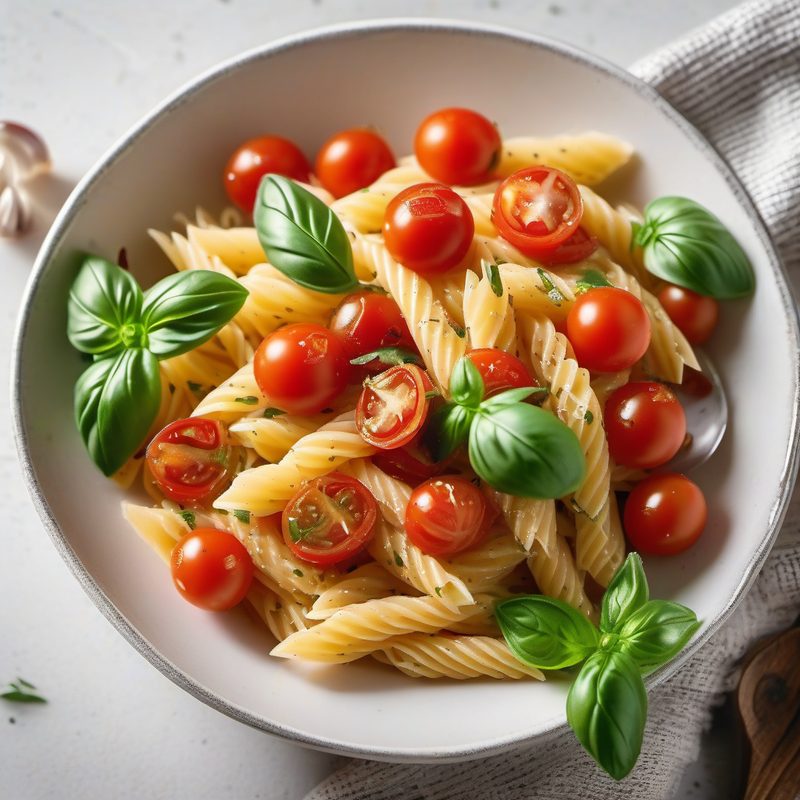
Sicilian Pasta Norma
A towering casserole of al dente rigatoni layered with slow-cooked tomato sauce, golden fried eggplant, fresh fiordilatte mozzarella, and mountains of Parmigiano Reggiano — this is Sicily's most iconic baked pasta, a cathedral of flavors that transforms humble ingredients into something transcendent.
| Amount | Ingredient |
|---|---|
| 320 g (11 oz) | Rigatoni |
| 500 g (1 lb / 2–3) | Long eggplants (melanzane lunghe) |
| 150 g (1 medium) | White onion |
| 1 L (4 cups) | Tomato passata (strained tomatoes) |
| 250 g (8 oz) | Fresh fiordilatte mozzarella (or fresh buffalo mozzarella) |
| 70 g (⅔ cup) | Parmigiano Reggiano, finely grated |
| Peanut oil (for frying) | |
| Extra-virgin olive oil | |
| Fresh basil leaves | |
| Fine sea salt |
Pasta alla Norma — named in tribute to Vincenzo Bellini's beloved opera Norma — is the proud centerpiece of Catania's culinary tradition. The original version is a simple stovetop pasta tossed with fried eggplant, tomato sauce, and ricotta salata, but this baked interpretation elevates the classic into a grand, layered casserole worthy of the opera's name. Long eggplants are sliced into rounds and fried until golden and tender, their creamy interior a perfect foil for the rich, slowly cooked tomato passata. Fresh fiordilatte mozzarella provides milky, stretchy pockets of richness between the layers, while aged Parmigiano Reggiano adds nutty, crystalline depth. Baked just long enough for the cheese to melt and the flavors to marry, this is pasta alla Norma at its most decadent and satisfying — a dish that demands to be shared with family and friends, preferably with a robust Sicilian red in hand.
Use level tablespoons and standard measuring cups. Long Italian eggplants (melanzane lunghe) are ideal — they have fewer seeds, thinner skin, and a creamier texture than globe eggplants. If unavailable, use the same weight of standard Italian or Japanese eggplants. Tomato passata is a smooth, uncooked tomato purée — do not substitute crushed tomatoes or tomato sauce, which have different consistencies and often contain added herbs or sugar. Fiordilatte mozzarella is a cow's milk mozzarella with a firmer, less watery texture than buffalo mozzarella — ideal for baking. If using buffalo mozzarella, drain it well and pat dry before tearing. Peanut oil has a high smoke point and neutral flavor, making it excellent for frying eggplant. Do not use extra-virgin olive oil for frying — it burns at high temperatures.
🥘 Equipment
- Large pot (6–8 qt / 6–8 L) for pasta
- Large skillet or sauté pan (12-inch / 30 cm) for sauce
- Deep skillet or heavy pot for frying eggplant
- 9×13-inch (23×33 cm) baking dish (or equivalent 3 qt / 3 L dish)
- Chef's knife and cutting board
- Mandoline or sharp knife (for slicing eggplant evenly)
- Colander
- Tongs or spider skimmer (for removing fried eggplant)
- Paper towels (for draining eggplant)
- Wooden spoon
- Ladle
- Box grater or Microplane (for Parmigiano)
- Measuring cups and spoons
📋 Preparation
Step 1 — Start the Tomato Sauce (40 minutes, mostly unattended)
Peel and thinly slice the white onion — about ⅛-inch (3 mm) slices. In a large skillet, heat 3 tablespoons of extra-virgin olive oil over medium heat. Add the sliced onion and a generous pinch of salt, and sauté until soft and translucent — about 6 to 8 minutes. The onion should be tender and fragrant but not colored.
Reduce the heat to low and add 1 liter (4 cups) of tomato passata and another pinch of salt. Stir to combine.
Simmer gently, uncovered, for 40 minutes, stirring occasionally. The sauce should reduce slightly and deepen in color, becoming richer and more concentrated. Taste and adjust salt at the end — the sauce should be well-seasoned, as it will need to carry the entire dish.
The slow simmer concentrates the tomato flavor and allows the sweetness of the onion to infuse the sauce. Do not rush this step — 40 minutes on low heat transforms a simple passata into a velvety, complex base. If the sauce seems too thick after 40 minutes, add a splash of water to loosen it; if too thin, let it simmer for another 10 minutes without stirring.
Step 2 — Fry the Eggplant (15 minutes, while sauce simmers)
Trim the ends of the eggplants and slice into even rounds, about ½-inch (1 cm) thick. A mandoline is ideal for consistent thickness. Do not salt the eggplant slices before frying — long Italian eggplants are not bitter and do not need purging. Sprinkling with salt before frying only draws out moisture, making the eggplant absorb more oil.
Pour peanut oil into a deep skillet or heavy pot to a depth of about ½ inch (1 cm). Heat over medium-high heat until the oil shimmers and a small piece of eggplant sizzles immediately when added — about 350°F (175°C).
Fry the eggplant slices in batches, without crowding the pan, until golden brown on both sides — about 3 to 4 minutes per batch, 2 minutes per side. Turn once with tongs when the bottom is deeply golden.
Transfer to a paper towel–lined plate or tray to drain. Season immediately with a light sprinkle of salt while still hot. Repeat with remaining eggplant slices, adding more oil as needed and allowing the oil to return to temperature between batches.
The key to perfect fried eggplant is the oil temperature. If the oil is not hot enough, the eggplant absorbs it like a sponge, turning greasy and heavy. If too hot, the outside burns before the inside is tender. A slice should sizzle vigorously the moment it hits the oil. Drain on paper towels immediately and salt while hot — the salt adheres better to the hot, oily surface. Do not stack the fried slices; this traps steam and makes them soggy.
Step 3 — Cook and Compose the Pasta (15 minutes)
Preheat the oven to 350°F (175°C).
About 10 minutes before the sauce is done, bring a large pot of generously salted water to a rolling boil. Add the rigatoni and cook until al dente — about 1 minute less than the package directions, as the pasta will continue cooking in the oven.
Drain the rigatoni (do not rinse). Return the drained pasta to the pot off the heat and add about half the tomato sauce (about 500 ml / 2 cups). Toss to coat.
Step 4 — Layer the Casserole (5 minutes)
Lightly oil the baking dish with olive oil. Begin layering:
- Spread a thin layer of the remaining tomato sauce (about ½ cup / 120 ml) across the bottom of the dish.
- Add half the sauced rigatoni in an even layer.
- Scatter half the fried eggplant slices over the pasta, overlapping slightly.
- Tear half the fiordilatte mozzarella into small pieces and distribute evenly.
- Sprinkle with half the grated Parmigiano Reggiano and a few torn basil leaves.
- Repeat with the remaining rigatoni, remaining tomato sauce, remaining eggplant, remaining mozzarella, remaining Parmigiano, and a final layer of basil leaves on top.
The layering order matters: sauce on the bottom prevents sticking, pasta forms the base, eggplant adds richness in the middle, and the final blanket of cheese creates a golden, bubbly crust. Do not skimp on the Parmigiano between the layers — it adds flavor depth throughout, not just on top.
Step 5 — Bake (10 minutes)
Bake the assembled pasta at 350°F (175°C) for 10 minutes, just until the mozzarella has melted and the Parmigiano is lightly golden and bubbling around the edges. Do not overbake — the pasta should be heated through but not dried out, and the mozzarella should be soft and stretchy, not browned and tough.
Remove from the oven and let rest for 5 minutes before serving. This brief rest allows the layers to settle and the cheese to set slightly, making for cleaner slices.
The short bake time is deliberate — all the components are already cooked; the oven is simply melting the cheese and marrying the flavors. Overbaking dries out the pasta and makes the mozzarella rubbery. If you prefer a more deeply browned top, switch the oven to broil for the final 2 minutes, watching carefully.
Step 6 — Serve (2 minutes)
Spoon the pasta onto warmed plates or shallow bowls, making sure each serving gets a generous cross-section of all the layers. Finish with a final drizzle of extra-virgin olive oil, a few fresh basil leaves, and an extra grating of Parmigiano Reggiano at the table.
Serve immediately — this is a dish that waits for no one. The cheese will begin to set as it cools, losing its glorious stretchiness.
The presentation should reveal the strata: a golden, cheesy top crust, a ribbon of red tomato sauce, the sturdy rigatoni, and tender slices of golden eggplant visible in every cross-section. A final flourish of good olive oil and fresh basil at the table elevates the dish from hearty casserole to something celebratory.
💡 Chef's Tips
- Long Italian eggplants are the right choice. They have thinner skins, fewer seeds, and a creamier texture than the large globe eggplants common in other countries. If they are unavailable, Japanese eggplants are an excellent substitute.
- Do not salt the eggplant before frying. Long Italian eggplants are not bitter — salting only draws out moisture, making the slices absorb more oil during frying. Fry them as-is for a light, crisp exterior and creamy interior.
- Fry in peanut oil. Peanut oil has a high smoke point (450°F / 230°C) and neutral flavor, making it ideal for deep frying. Olive oil (even extra-virgin) burns at high temperatures, creating acrid flavors. Save the good olive oil for the sauce and final drizzle.
- Cook the pasta 1 minute short of al dente. The rigatoni will continue to cook in the oven during the 10-minute bake. Starting with fully cooked pasta would result in mushy, overdone rigatoni.
- Use fresh, high-quality fiordilatte. This fresh cow's milk mozzarella has a firmer texture and lower moisture content than buffalo mozzarella, making it ideal for baking without releasing too much water into the casserole. If using buffalo mozzarella, drain it thoroughly and pat it dry before using.
- Grate the Parmigiano fresh. Pre-grated cheese contains anti-caking agents that prevent it from melting smoothly. Grate from a wedge using a Microplane or the finest holes of a box grater for a feathery, meltable texture.
- Let the baked pasta rest for 5 minutes. This brief resting period allows the layers to settle and the cheese to set slightly, making for cleaner, more attractive servings without the casserole collapsing into a messy pile.
❌ Common Mistakes
| Mistake | Why It Hurts | The Fix |
|---|---|---|
| Using large globe eggplants | Thicker skins, more seeds, and more bitter flavor; the texture is spongy rather than creamy | Seek out long Italian or Japanese eggplants. If using globe eggplant, peel it first and salt the slices for 30 minutes, then pat dry before frying |
| Salting the eggplant before frying | Draws out moisture, causing the slices to absorb excess oil and turn greasy | Skip the salting step for long Italian eggplants. Fry them as-is for a light, crisp result |
| Frying in olive oil | Olive oil burns at frying temperatures, creating acrid, bitter flavors | Use peanut oil, grapeseed oil, or another neutral oil with a high smoke point |
| Overcrowding the frying pan | Lowers the oil temperature, causing eggplant to steam rather than fry and absorb extra oil | Fry in batches, leaving space between slices. Let the oil return to temperature between batches |
| Overcooking the pasta | The rigatoni becomes mushy after baking | Cook the pasta 1 minute shy of al dente. It will finish cooking in the oven |
| Using pre-shredded mozzarella | Contains anti-caking agents and starches that prevent it from melting into soft, stretchy pockets | Always tear or slice fresh fiordilatte mozzarella. The texture difference is night and day |
| Overbaking | The pasta dries out, the mozzarella turns rubbery, and the casserole loses its creamy character | Bake for only 10 minutes at 350°F (175°C) — just long enough to melt the cheese |
| Not draining the fried eggplant properly | Excess oil pools in the bottom of the casserole, making it greasy and heavy | Drain eggplant on paper towels immediately after frying. Press gently with another paper towel to absorb surface oil |
| Skipping the resting period | The casserole collapses into a loose, messy pile when spooned out | Let the baked pasta rest for 5 minutes before serving. This allows the layers to settle |
| Using too much mozzarella | The casserole becomes a watery, greasy mess as the cheese releases moisture | Use the specified 250 g (8 oz) — enough for richness without overwhelming the other components |
💡 Variations
| Variation | How To |
|---|---|
| Classic stovetop version (Pasta alla Norma tradizionale) | Skip the baking step entirely. Toss the cooked rigatoni with the tomato sauce, fried eggplant, and grated ricotta salata (a salty, aged sheep's milk cheese) instead of mozzarella and Parmigiano. Serve immediately. This is the original Catania version — lighter, faster, and equally delicious |
| Add spicy heat (Pasta alla Norma piccante) | Add 1 or 2 small dried chili peppers (or 1 teaspoon of red pepper flakes) to the simmering tomato sauce. The gentle heat cuts through the richness of the fried eggplant and cheese |
| Add anchovies for umami depth | Add 4 anchovy fillets (finely chopped) to the onion as it sauté. The anchovies dissolve into the oil, adding a deep, savory backbone to the tomato sauce without tasting fishy |
| Use ricotta salata instead of Parmigiano | Substitute the Parmigiano Reggiano with 100 g (1 cup) of grated ricotta salata — the traditional cheese for stovetop Pasta alla Norma. Its salty, crumbly texture and sheep's milk character are a perfect match for eggplant |
| Make it vegetarian (already is!) | This recipe is naturally vegetarian. To make it vegan, omit the mozzarella and Parmigiano and substitute with a cashew-based ricotta (blended with lemon juice and nutritional yeast) and a generous sprinkle of toasted breadcrumbs |
| Use different pasta shapes | Substitute the rigatoni with paccheri, ziti, penne, or even lasagna sheets (for a layered Norma lasagna). Short, tubular pastas are best — they catch the sauce inside and hold up to the weight of the eggplant and cheese |
| Add toasted breadcrumbs | Sprinkle ½ cup (60 g) of toasted breadcrumbs mixed with 2 tablespoons of chopped parsley over the top before baking. The crunchy topping adds textural contrast to the soft, creamy layers |
❄️ Storage & Leftovers
| Method | Details |
|---|---|
| Refrigerator | Store in an airtight container for up to 3 days. The flavors continue to meld and often taste even better the next day — the eggplant absorbs the sauce and becomes incredibly tender |
| Reheating | Reheat in a 350°F (175°C) oven for 15–20 minutes, covered with foil for the first 10 minutes to prevent drying, then uncovered for the last 5–10 minutes to re-crisp the top. Individual portions can be reheated in a skillet with a splash of water, covered, over medium-low heat for 5–7 minutes. Do not microwave — it makes the eggplant rubbery and the mozzarella tough |
| Freezing | Freeze in a well-sealed baking dish (or portioned into freezer-safe containers) for up to 3 months. Thaw overnight in the refrigerator before reheating in the oven. The eggplant will lose some of its fried texture but the overall dish will still be delicious |
| Make Ahead | The tomato sauce can be made up to 5 days ahead and refrigerated, or frozen for up to 3 months. The eggplant can be fried up to 1 day ahead and refrigerated in an airtight container — re-crisp in a 350°F (175°C) oven for 5 minutes before assembling. Assemble the casserole (without baking) up to 1 day ahead, refrigerate, and bake directly from the fridge, adding 5 minutes to the baking time |
| Leftover eggplant | Leftover fried eggplant slices that didn't make it into the casserole are wonderful on their own — warm them in the oven and serve with a drizzle of honey and a sprinkle of flaky salt, or layer them into a sandwich with fresh mozzarella and basil |
🍷 Wine Pairing
| Wine | Why |
|---|---|
| Nero d'Avola (Sicily) | The quintessential Sicilian red — bold, dark-fruited, and structured with notes of black cherry, plum, and Mediterranean herbs. Its tannins cut through the richness of the fried eggplant and cheese, while its dark fruit echoes the sweetness of the slow-cooked tomato sauce. A perfect, classic pairing |
| Etna Rosso (Sicily) | A more elegant, mineral-driven red from the volcanic slopes of Mount Etna — notes of sour cherry, pomegranate, dried herbs, and volcanic earth (nerello mascalese grape). Its bright acidity and firm tannins cut through the creamy cheese and fried eggplant, while its earthy, smoky character echoes the deep, savory tomato sauce |
| Cerasuolo di Vittoria (Sicily) | Sicily's only DOCG red — a blend of Nero d'Avola and Frappato that is lighter, brighter, and more floral than Nero d'Avola alone. Notes of wild strawberry, rose, and herbs, with soft tannins and refreshing acidity. The bright red fruit and floral lift provide a beautiful contrast to the rich, savory casserole |
| Primitivo di Manduria (Puglia) | A full-bodied, sun-drenched red from Puglia — notes of ripe blackberry, plum, dried fig, and sweet spice. Its generous fruit and moderate tannins stand up to the richness of the dish without overwhelming it. The jammy fruit echoes the concentrated tomato sauce beautifully |
| Rosso di Montepulciano (Tuscany) | A medium-bodied Tuscan red with notes of cherry, plum, tobacco, and leather. Its bright acidity and moderate tannins cut through the cheese and eggplant while its savory, earthy character complements the slow-cooked tomato sauce |
| Chianti Classico (Tuscany) | Sangiovese-driven with notes of sour cherry, tomato leaf, dried herbs, and earthy leather. The tomato leaf note is an uncanny match for the passata-based sauce, while the wine's bright acidity refreshes the palate between rich, cheesy bites |
🥗 Suggested Side Dishes
- Simple arugula and lemon salad — Baby arugula dressed with extra-virgin olive oil, fresh lemon juice, salt, and pepper. The peppery, bright greens cut through the richness of the baked pasta like a palate cleanser
- Grilled zucchini with mint and lemon — Zucchini sliced lengthwise, brushed with olive oil, grilled until tender, and finished with fresh mint, salt, and a squeeze of lemon. The light, herbaceous vegetable is a perfect counterpoint to the hearty casserole
- Fennel and orange salad — Thinly sliced raw fennel, segments of blood orange or navel orange, a handful of black olives, and a simple lemon-olive oil dressing. The bright, citrusy, anise-flavored salad refreshes the palate between rich, cheesy forkfuls
- Crusty Sicilian bread (pane cunzato style) — A hearty, crusty bread with a drizzle of olive oil and a sprinkle of oregano. Perfect for sopping up any remaining sauce from the plate
- Roasted peppers with capers and oregano — Roasted red and yellow bell peppers, peeled and sliced, dressed with extra-virgin olive oil, rinsed capers, dried oregano, and a splash of red wine vinegar. The sweet, tangy peppers complement the rich tomato sauce beautifully
- Seared radicchio with balsamic — Radicchio wedges seared in a hot pan with olive oil until lightly charred, then drizzled with aged balsamic vinegar. The bitter, charred leaves provide a striking contrast to the sweet, creamy baked pasta
📊 Nutrition (per serving, estimated)
| Calories | Protein | Fat | Carbs | Fiber |
|---|---|---|---|---|
| ~680 | 28 g | 28 g | 78 g | 8 g |
Nutritional values are estimates based on 4 generous servings. Eggplant absorbs a significant amount of oil during frying — the fat content will vary depending on how thoroughly the slices are drained. To reduce the fat, bake the eggplant slices (brushed with oil) at 400°F / 200°C for 20 minutes, flipping halfway, instead of frying — approximately 520 calories and 14 g fat per serving. Eggplant is a good source of dietary fiber, potassium, and antioxidants (especially nasunin in the purple skin). Fiordilatte mozzarella provides calcium and protein, while Parmigiano Reggiano is rich in protein and calcium with a concentrated umami flavor. This is a substantial main course; as a primo (first course), it will serve 6 with smaller portions (approximately 450 calories per serving). The dish is naturally high in fiber thanks to the eggplant and whole-grain pasta (if using whole wheat rigatoni). To lighten it further, use a reduced-fat mozzarella and only half the Parmigiano — approximately 580 calories and 20 g fat per serving.
❓ Frequently Asked Questions
What does "alla Norma" mean? Why is it named after an opera?
Pasta alla Norma is named after Vincenzo Bellini's opera Norma (1831), written by the Catania-born composer. The story goes that the noted Sicilian writer Nino Martoglio, upon tasting this dish for the first time in a Catania trattoria, exclaimed "Chista è 'na vera Norma!" ("This is a true Norma!") — comparing the dish's artistic perfection to Bellini's masterpiece. The name stuck, and the dish has been called Pasta alla Norma ever since. It is one of the few dishes in Italian cuisine named after a work of art rather than an ingredient or region.
Do I really need to fry the eggplant? Can I bake it instead?
You can bake it, but frying is traditional and produces a noticeably different result — the eggplant develops a crisp, golden-brown exterior and a creamy, tender interior that baking cannot replicate. Baked eggplant is softer, less crisp, and absorbs less oil. If you prefer to bake, slice the eggplant into rounds, brush both sides generously with olive oil, season with salt, and bake on a parchment-lined sheet at 400°F (200°C) for 20 minutes, flipping halfway. The texture will be softer and less caramelized, but the dish will still be delicious and significantly lighter.
Why is my eggplant greasy?
Greasy eggplant is almost always caused by oil that was not hot enough when the eggplant was added. When the oil is at the proper temperature (around 350°F / 175°C), the eggplant slices immediately form a thin, crispy crust that prevents oil absorption. If the oil is too cool, the eggplant acts like a sponge and soaks up the oil before the crust has a chance to form. Other causes: overcrowding the pan (which lowers the oil temperature) and salting the eggplant before frying (which draws out moisture, leaving the cells ready to absorb oil).
Can I use canned crushed tomatoes instead of passata?
Passata is preferred because it is a smooth, uncooked tomato purée with a consistent texture and no added ingredients. Crushed tomatoes are chunkier and often contain tomato purée, citric acid, or calcium chloride (a firming agent) that can affect the texture of the sauce. If you must substitute, use the same amount of canned crushed tomatoes and blend them smooth with an immersion blender before using. Adjust the salt accordingly — some brands of crushed tomatoes are already salted.
What is fiordilatte mozzarella? Is it different from regular mozzarella?
Fiordilatte mozzarella is a fresh cow's milk mozzarella, as opposed to mozzarella di bufala (buffalo milk mozzarella). Fiordilatte has a firmer texture, lower moisture content, and milder flavor than buffalo mozzarella, making it ideal for baking and melting. Buffalo mozzarella is softer, more watery, and more delicate — it releases more liquid during baking and can make the casserole soggy. If you can find fiordilatte, use it. If not, substitute with a good-quality low-moisture mozzarella (the kind sold in blocks, not the soft balls in brine), or drain buffalo mozzarella very thoroughly and pat it dry before using.
Can I make this dish gluten-free?
Yes — substitute 320 g (11 oz) of gluten-free rigatoni or penne (brown rice, quinoa, or chickpea-based). Cook according to package directions (typically 1–2 minutes longer than wheat pasta). You may need to add an extra splash of sauce to the gluten-free pasta, as it tends to absorb liquid differently. All other ingredients (eggplant, tomato sauce, mozzarella, Parmigiano, basil) are naturally gluten-free. Be sure to use gluten-free breadcrumbs if adding the toasted breadcrumb variation.
My baked pasta came out watery. What went wrong?
A watery casserole is usually caused by one of three issues: (1) The mozzarella was too wet — high-moisture mozzarella (especially buffalo mozzarella) releases water during baking. Use fiordilatte or pat high-moisture mozzarella very dry before adding. (2) The eggplant was not drained properly after frying — excess oil and moisture from the eggplant seep into the casserole. Drain the fried eggplant on paper towels and press gently to absorb surface oil. (3) The tomato sauce was too thin — the sauce needs to simmer for 40 minutes to reduce and concentrate. If it is still thin, continue simmering for another 10–15 minutes.
Is Pasta alla Norma traditionally vegetarian?
In its classic form (stovetop, with ricotta salata), Pasta alla Norma is vegetarian — it contains no meat or fish. This baked version, with mozzarella and Parmigiano, is also vegetarian. However, some Sicilian cooks add anchovies (for umami depth) or even small bits of cured pork (guanciale or pancetta) to the sauce. These additions are non-traditional but common in home cooking. The pure, meatless version is the one celebrated in Catania and named for Bellini's opera.
Can I prepare this dish entirely in advance and bake it later?
Absolutely. Assemble the entire casserole (steps 1 through 4) up to 24 hours ahead, cover tightly with foil, and refrigerate. When ready to bake, add 5 to 10 minutes to the baking time (bake covered for the first 10 minutes, then uncovered for the remaining time). Let the dish come to room temperature for about 20 minutes before baking for more even heating. This makes it an excellent choice for entertaining — the flavors actually improve as they meld overnight.
🔗 Related Recipes
- Baked Pasta Eggplant (#135/40) — Another layered baked pasta with eggplant, this one with béchamel and a different cheese blend; a creamy, northern-Italian counterpart to this Sicilian classic
- Pasta Eggplant (#108) — A simpler, quicker stovetop pasta with eggplant and tomato; the everyday version of Pasta alla Norma, ready in 30 minutes
- Paccheri Fried Eggplant Cream (#140) — Large paccheri tossed with a silky, creamy eggplant sauce; a luxurious, refined take on eggplant pasta
- Penne Vegetable Ragu (#119) — A hearty, slow-cooked vegetable ragu served over penne; shares the long-simmered tomato sauce technique with Pasta alla Norma
- Lasagna Norma (#88) — The ultimate baked pasta alla Norma, with layers of lasagna sheets, fried eggplant, ricotta, and mozzarella; the grand, operatic version of this beloved Sicilian dish
🏷️ Search Tags
📸 Photo Reference
Photo reference: `vol1_214.png` — A slightly angled three-quarter overhead shot of a rectangular baking dish (ceramic, warm terracotta color) filled with baked Pasta alla Norma. The top is a mosaic of golden-brown melted cheese — patches of milky white fiordilatte mozzarella interspersed with a blanket of finely grated Parmigiano Reggiano, bubbling and lightly browned at the edges. A spoonful has just been lifted from the corner, exposing the interior cross-section: al dente rigatoni coated in rich, deep red tomato sauce; slices of golden fried eggplant, their interiors creamy and tender; and stretchy ribbons of melted mozzarella running through the layers like molten gold. A few fresh basil leaves are scattered on top, their bright green a vivid contrast to the golden, red, and white layers. Beside the baking dish: a small bowl of freshly grated Parmigiano Reggiano, a cruet of golden-green extra-virgin olive oil, a sprig of fresh basil, and a glass of deep ruby Nero d'Avola catching the light. The scene is set on a rustic wooden table with a woven placemat and a heavy linen napkin. The lighting is warm and inviting — golden hour sunlight from a nearby window casting soft, elongated shadows. The mood is celebratory, generous, and deeply Sicilian — a dish that commands attention and demands to be shared.
Recipe from "The Italian Kitchen" by Vita Milanese — Volume 1: Pasta Perfetto 🍆
Recipe from The Italian Kitchen by Vita Milanese — Volume 1 · Pasta Perfetto. Discover all volumes on the ebook page.