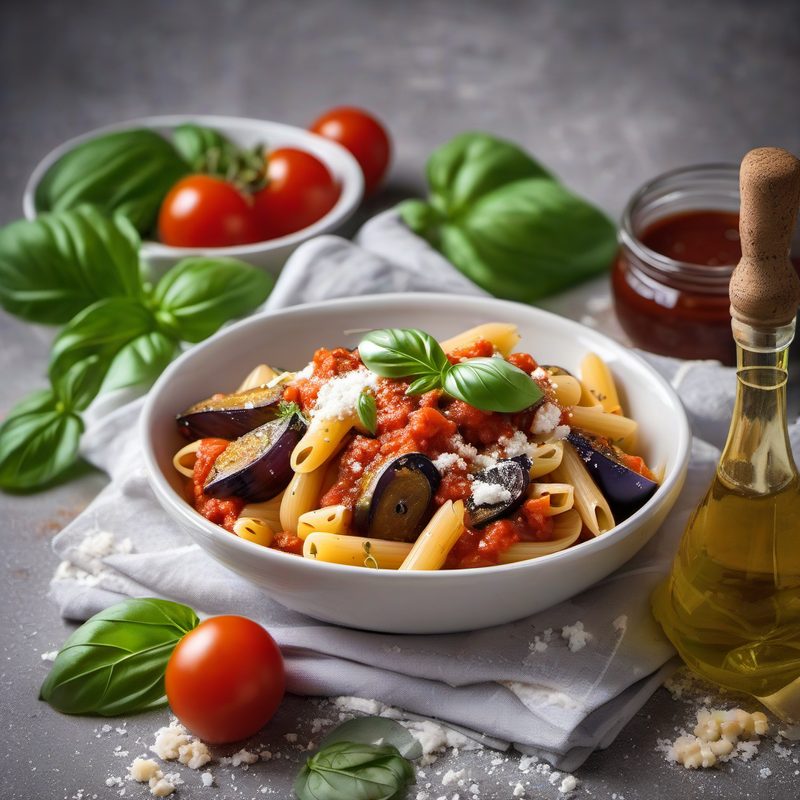
Pasta Norma Sicilian
The classic stovetop Pasta alla Norma — Sicily's most iconic pasta dish, where golden-fried eggplant meets sweet crushed tomatoes, fragrant basil, and salty ricotta salata in a perfect, harmonious bowl. Named after Bellini's opera Norma, this is Catania's gift to the world: simple, bold, and utterly sublime.
| Amount | Ingredient |
|---|---|
| 350 g (12 oz) | Rigatoni or spaghetti |
| 2 (about 24 oz / 680 g total) | Medium globe eggplants |
| 400 g (14 oz) | Crushed tomatoes (preferably San Marzano) |
| 2 | Garlic cloves, thinly sliced |
| 150 g (1⅓ cups) | Ricotta salata, grated or shaved |
| As needed | Extra-virgin olive oil, for frying |
| 2 tbsp (30 ml) | Extra-virgin olive oil, for the sauce |
| ~10 | Fresh basil leaves, torn |
| Kosher salt | |
| Freshly ground black pepper |
Pasta alla Norma is the pride of Catania, the Sicilian city at the foot of Mount Etna. Unlike the baked, layered casserole that sometimes shares its name, this is the original — a quick, stovetop pasta where each component is treated with respect and brought together at the last minute. The eggplant is cut into cubes, salted to draw out bitterness, patted dry, and fried until golden and crisp-edged. A quick sauce of garlic and crushed tomatoes simmers briefly, absorbing the remaining olive oil and the faint, smoky sweetness left behind by the fried eggplant. Then everything is tossed together with al dente rigatoni (or spaghetti, if you prefer) and finished with a generous shower of ricotta salata — a salty, crumbly aged sheep's milk cheese that doesn't melt so much as cling to every surface, providing little bursts of creamy, tangy saltiness against the tender eggplant and sweet tomatoes. It's a study in contrasts — crunchy and silky, sweet and salty, bright and earthy — and it comes together in under 45 minutes with a single skillet and a pot of pasta water. No cream, no mozzarella, no oven — just the pure, honest flavors of Sicily in a bowl.
> Note: The 30-minute salting-and-resting step for the eggplant is non-negotiable — it removes bitterness and, more importantly, draws out excess moisture so the eggplant fries to golden, crisp perfection rather than steaming into a soggy mess. The actual active cooking time is under 25 minutes.
Use level tablespoons and standard US measuring cups. All produce is medium unless specified. For the best flavor, use DOP San Marzano crushed tomatoes — their natural sweetness and low acidity make for a more balanced sauce. Ricotta salata is a firm, salted, aged sheep's milk cheese from Sicily; it should be grated on the large holes of a box grater or shaved with a vegetable peeler into thin, delicate flakes. Do not substitute ricotta fresca (fresh ricotta), which is soft and moist and will not provide the same salty, crumbly texture. If ricotta salata is unavailable, Pecorino Romano can work in a pinch, though the flavor will be sharper and more pungent.
🥘 Equipment
- Large pot (6 qt / 6 L minimum) for pasta
- Large skillet or sauté pan (12-inch / 30 cm), preferably nonstick or well-seasoned cast iron
- Chef's knife and cutting board
- Large bowl for salting eggplant
- Colander
- Paper towels or clean kitchen towels
- Tongs or spider skimmer
- Wooden spoon or heat-resistant spatula
- Box grater or vegetable peeler (for ricotta salata)
- Measuring cups and spoons
- Slotted spoon
📋 Preparation
Step 1 — Salt the Eggplant (30 minutes, largely unattended)
Trim and dice the eggplants: Cut off the stem end of each eggplant. Without peeling, cut the eggplants into ¾-inch (2 cm) cubes. You should have about 6 to 7 cups of cubes.
Salt and rest: Place the eggplant cubes in a large bowl and sprinkle generously with 1½ teaspoons of kosher salt. Toss to coat evenly. Transfer to a colander set over the bowl or in the sink and let rest for 30 minutes. You'll see beads of dark liquid form on the surface of the cubes — this is the moisture (and any bitterness) being drawn out.
Why this matters: Eggplant is a spongy vegetable — its flesh is full of air pockets that trap moisture. Salting draws that moisture out through osmosis, concentrating the eggplant flavor and, most importantly, ensuring the cubes fry rather than steam in the pan. Unsalted eggplant dumped directly into hot oil will release its water, lower the oil temperature, and turn into a gray, oily mush. The 30-minute rest is the single most important step in this recipe.
Step 2 — Pat Dry and Start the Pasta Water (5 minutes)
After 30 minutes, rinse the eggplant cubes briefly under cold running water to remove excess salt. Do not oversoak — just a quick rinse in the colander.
Dry thoroughly: Transfer the cubes to a clean kitchen towel or a double layer of paper towels and press firmly to remove as much moisture as possible. Dry cubes are non-negotiable for golden, crisp eggplant.
Meanwhile, bring a large pot of generously salted water (about 1½ tablespoons of kosher salt per 4 quarts / 3.8 L of water) to a rolling boil over high heat.
Step 3 — Fry the Eggplant (8 to 10 minutes)
Heat the oil: Pour olive oil into the large skillet to a depth of about ¼ inch (6 mm) — roughly ½ cup (120 ml) , but the exact amount depends on your pan. Heat over medium-high heat until shimmering but not smoking, about 1½ minutes. A test cube should sizzle vigorously the moment it hits the oil.
Fry in batches: Add the dried eggplant cubes in a single layer without crowding — cook in two or three batches if necessary. Fry, turning occasionally with a slotted spoon or tongs, until deep golden brown on all sides — about 4 to 5 minutes per batch. The cubes should be crisp-edged and tender within.
Drain: Using a slotted spoon or spider skimmer, transfer the fried eggplant to a paper towel–lined plate or tray. Season immediately with a light sprinkle of salt while still hot. Set aside.
The secret to non-greasy fried eggplant is oil temperature. If the oil is not hot enough (below 350°F / 175°C), the eggplant acts like a sponge and soaks up the oil before a crust can form. If the oil is hot enough, a crisp barrier forms instantly, sealing the surface. Work in batches and let the oil return to temperature between batches. Do not stack the fried cubes — they'll steam each other and lose their crispness.
Step 4 — Make the Sauce (15 minutes, while the pasta cooks)
Pour off excess oil: Carefully pour off all but 2 tablespoons of the frying oil from the skillet, leaving behind the browned bits on the bottom. If there is less than 2 tablespoons, add fresh olive oil to make up the difference.
Sauté the garlic: Return the skillet to medium-low heat. Add the sliced garlic and cook, stirring constantly, until fragrant and just beginning to turn golden at the edges — about 30 seconds. Do not let it brown or burn.
Add the tomatoes: Add the crushed tomatoes and a pinch of salt. Stir to combine, scraping up any browned bits from the bottom of the pan.
Simmer: Bring to a gentle simmer and cook, stirring occasionally, until the sauce thickens slightly and the flavors meld — about 10 minutes. If the sauce seems too thick, add a splash of pasta water to loosen it.
Add basil: Stir in half the torn basil leaves and cook for 1 minute more. Taste and adjust salt — the sauce should be well-seasoned and sweet from the tomatoes.
While the sauce simmers, cook the pasta: Add the rigatoni or spaghetti to the boiling salted water and cook until al dente (about 1 minute less than the package directions). Reserve 1 cup (240 ml) of pasta water before draining.
Step 5 — Combine and Serve (2 minutes)
Drain the pasta (do not rinse) and transfer directly to the skillet with the simmering tomato sauce. Add ¼ cup (60 ml) of the reserved pasta water and toss over medium heat for 30 to 60 seconds, allowing the pasta to absorb some of the sauce and the starch to help bind everything together. If the pasta seems dry, add more pasta water 1 tablespoon at a time.
Add the eggplant: Remove the skillet from the heat. Add three-quarters of the fried eggplant cubes and most of the remaining basil leaves. Toss gently to combine, being careful not to break up the eggplant too much.
Plate and finish: Divide the pasta among 4 warm bowls. Top each portion with the remaining fried eggplant cubes, a generous shower of grated or shaved ricotta salata, and a few fresh basil leaves. Drizzle with a final ribbon of good extra-virgin olive oil and finish with a crack of black pepper.
Serve immediately — Pasta alla Norma waits for no one. The ricotta salata should be cool and salty against the hot pasta, and the eggplant should still have some crunch.
The final addition of reserved pasta water is the secret to a cohesive dish. The starchy water helps the tomato sauce cling to the pasta rather than pooling at the bottom of the bowl. The brief toss over heat after adding the pasta is called 'mantecatura' in Italian — it emulsifies the sauce and finishes the cooking of the pasta, ensuring every piece is perfectly coated.
💡 Chef's Tips
- Globe eggplants are fine — if you salt them. Many recipes claim you should use long Italian or Japanese eggplants and skip the salting step altogether. That works if you have access to those varieties, which are naturally less bitter and less watery. But standard globe eggplants (the large, teardrop-shaped ones most common in supermarkets) benefit enormously from the 30-minute salt-and-rest. The salting removes bitterness AND excess moisture, ensuring golden, non-greasy results every time. If you use long Italian or Japanese eggplants, you can reduce the resting time to 20 minutes — but do not skip it entirely.
- Cut the eggplant into even ¾-inch (2 cm) cubes. Too small and they'll disintegrate in the sauce; too large and they won't cook through before the outside burns. Uniform cubes ensure even cooking and the ideal texture: crisp outside, creamy inside.
- Dry the eggplant cubes thoroughly after rinsing. This is the second most important step after salting. Wet eggplant = steam = gray, soggy cubes that never brown. Use a kitchen towel and press firmly.
- Fry in batches. Crowding the pan drops the oil temperature instantly, turning your fry into a steam. Work in two or three batches and let the oil return to temperature between them (about 1 minute).
- Reserve pasta water before draining. This is your sauce adjuster — a splash loosens a tight sauce, and the starch helps it cling to the pasta. Always save at least 1 cup before draining.
- Grate ricotta salata on the large holes of a box grater. Finely grated ricotta salata will clump and disappear into the pasta; coarsely grated or shaved pieces provide distinct, salty bursts of flavor and texture. A vegetable peeler makes beautiful thin shards.
- Use a high-quality olive oil for the final drizzle. The eggplant absorbs a lot of oil during frying, so use a neutral olive oil for that step. But the final drizzle on top — that should be your best extra-virgin olive oil, grassy and peppery, to finish the dish with brightness and fruitiness.
- Warm your serving bowls. Pasta alla Norma cools quickly; warmed bowls (run them under hot water and dry, or place them in a low oven for 5 minutes) keep the pasta hot and the ricotta salata from clumping prematurely.
❌ Common Mistakes
| Mistake | Why It Hurts | The Fix |
|---|---|---|
| Skipping the salting step | Eggplant releases water in the pan, lowers oil temperature, and turns into gray, oily mush | Always salt the eggplant cubes and let them rest for 30 minutes, then rinse and pat dry |
| Not drying the eggplant after rinsing | Surface moisture creates steam instead of a crisp crust | Press the rinsed cubes firmly in a clean kitchen towel or paper towels until visibly dry |
| Crowding the frying pan | Oil temperature drops, eggplant steams instead of fries, and absorbs excess oil | Fry in batches — the cubes should be in a single layer with space between them |
| Using cold oil | The eggplant soaks up oil like a sponge before a crust can form | Heat the oil until shimmering — a test cube should sizzle immediately on contact |
| Burning the garlic | Burnt garlic turns bitter and acrid, ruining the sauce | Cook garlic over medium-low heat, stirring constantly, for only 30 seconds until fragrant |
| Overcooking the pasta | Mushy pasta that falls apart when tossed with the sauce | Cook 1 minute less than the package al dente time — it will finish cooking in the sauce |
| Using fresh ricotta instead of ricotta salata | Fresh ricotta is soft, wet, and mild — it melts into a white blur and adds no textural contrast | Ricotta salata is firm, salty, and crumbly — the correct cheese for classic Pasta alla Norma |
| Adding all the eggplant to the sauce | The eggplant softens and loses its crispy texture | Reserve one-quarter of the fried eggplant to pile on top as a garnish — it provides crucial textural contrast |
| Not reserving pasta water | No way to adjust sauce consistency or help it cling to the pasta | Always reserve at least 1 cup of starchy pasta water before draining |
💡 Variations
| Variation | How To |
|---|---|
| Pasta alla Norma piccante (spicy) | Add 1 small dried chili pepper (or ½ teaspoon of red pepper flakes) to the oil when sautéing the garlic. The gentle heat cuts through the richness of the fried eggplant beautifully |
| With anchovies for umami depth | Add 4 anchovy fillets (finely chopped) to the skillet with the garlic. Cook, stirring, until the anchovies dissolve into the oil — they add a deep, savory backbone without tasting fishy |
| Spaghetti alla Norma | Substitute spaghetti for rigatoni. The long strands twirl around the eggplant cubes and catch the sauce differently — equally traditional and delicious. Use 350 g (12 oz) of spaghetti |
| Baked Pasta alla Norma | Turn this into a baked casserole: toss the pasta with sauce and eggplant, transfer to a baking dish, top with fresh mozzarella and Parmigiano, and bake at 375°F (190°C) for 15 minutes until bubbly. This is a different dish — richer and more decadent — but wonderful in its own right |
| Add toasted breadcrumbs (pangrattato) | Sauté ½ cup (60 g) of coarse breadcrumbs in 2 tablespoons of olive oil until golden and crisp. Sprinkle over the finished pasta along with the ricotta salata for an extra layer of crunch |
| Use passata instead of crushed tomatoes | Substitute 400 g (14 oz) of tomato passata (smooth tomato purée) for the crushed tomatoes. The sauce will be silkier and more refined, though slightly less rustic |
| With fresh mint | Add a few torn fresh mint leaves along with the basil. Mint and eggplant are a classic Sicilian pairing — the cool, herbal note is a beautiful counterpoint to the rich, fried eggplant |
| Gluten-free version | Substitute 350 g (12 oz) of gluten-free rigatoni or spaghetti (brown rice, quinoa, or chickpea-based). Cook according to package directions and reserve extra pasta water, as gluten-free pasta tends to absorb more liquid |
| Baked eggplant instead of fried | For a lighter version, toss the dried eggplant cubes with 2 tablespoons of olive oil, spread on a parchment-lined baking sheet, and roast at 425°F (220°C) for 20–25 minutes, flipping halfway. The texture will be softer and less crisp, but the dish will be significantly lower in fat |
❄️ Storage & Leftovers
| Method | Details |
|---|---|
| Refrigerator | Store in an airtight container for up to 3 days. The eggplant will soften and lose its crispness, but the flavors will meld beautifully — some say it tastes even better the next day |
| Reheating | Reheat in a skillet over medium-low heat with a splash of water or additional tomato sauce, covered, for 5–7 minutes, stirring occasionally. Add a fresh sprinkle of ricotta salata and basil after reheating. Do not microwave — it turns the eggplant rubbery and the ricotta salata tough |
| Freezing | Freeze in a freezer-safe container for up to 2 months. Thaw overnight in the refrigerator and reheat in a skillet. The eggplant will lose all of its fried texture, but the flavor will still be good |
| Make Ahead | The tomato sauce can be made up to 5 days ahead and refrigerated, or frozen for up to 3 months. The eggplant is best fried fresh on the day of serving — leftover fried eggplant can be recrisped in a 375°F (190°C) oven for 5 minutes, but it will never be as good as freshly fried |
| Leftover ricotta salata | Store the remaining ricotta salata wrapped in parchment paper in the refrigerator for up to 2 weeks. It's wonderful grated over any pasta, salads, roasted vegetables, or even shaved onto a simple green salad with lemon and olive oil |
🍷 Wine Pairing
| Wine | Why |
|---|---|
| Nero d'Avola (Sicily) | The quintessential Sicilian red — bold, dark-fruited, and structured with notes of black cherry, plum, and Mediterranean herbs. Its tannins cut through the richness of the fried eggplant, while its dark fruit echoes the sweetness of the tomato sauce. The classic, perfect pairing |
| Etna Rosso (Sicily) | A more elegant, mineral-driven red from the volcanic slopes of Mount Etna — notes of sour cherry, pomegranate, dried herbs, and volcanic earth (nerello mascalese grape). Its bright acidity and firm tannins cut through the fried eggplant, while its earthy, smoky character echoes the deep, savory notes of the sauce |
| Cerasuolo di Vittoria (Sicily) | Sicily's only DOCG red — a blend of Nero d'Avola and Frappato that is lighter, brighter, and more floral than Nero d'Avola alone. Notes of wild strawberry, rose, and herbs, with soft tannins and refreshing acidity. The bright red fruit provides a beautiful contrast to the rich, savory pasta |
| Frappato (Sicily) | A light, fragrant red from southeastern Sicily — notes of wild strawberry, raspberry, violet, and white pepper. Delicate and perfumed, with low tannins and bright acidity. Served slightly chilled, it's a stunning counterpoint to the warm, savory richness of the fried eggplant and salty ricotta salata |
| Grillo (Sicily, white) | A full-bodied Sicilian white with notes of citrus, white peach, almond, and Mediterranean herbs. Its richness stands up to the fried eggplant, while its bright acidity cuts through the oil. An unconventional but excellent choice, especially on a warm summer evening |
| Rosato (Sicilian rosé) | A dry Sicilian rosé (often made from Nero d'Avola or Frappato) — notes of wild strawberry, cherry blossom, and citrus zest. Crisp, refreshing, and food-friendly, with enough body to stand up to the eggplant and enough acidity to refresh the palate |
🥗 Suggested Side Dishes
- Simple arugula and lemon salad — Baby arugula dressed with extra-virgin olive oil, fresh lemon juice, salt, and pepper. The peppery, bright greens cut through the richness of the fried eggplant like a palate cleanser
- Grilled zucchini with mint and lemon — Zucchini sliced lengthwise, brushed with olive oil, grilled or griddled until tender, and finished with fresh mint, salt, and a squeeze of lemon. Light, herbaceous, and summery
- Fennel and orange salad — Thinly sliced raw fennel, segments of blood orange or navel orange, a handful of black olives, and a simple lemon-olive oil dressing. The bright, citrusy, anise-scented salad refreshes the palate between rich, savory forkfuls
- Roasted peppers with capers and oregano — Roasted red and yellow bell peppers, peeled and sliced, dressed with extra-virgin olive oil, rinsed capers, dried oregano, and a splash of red wine vinegar. Sweet, tangy, and bright
- Crusty Sicilian bread — A hearty, crusty loaf with a drizzle of olive oil and a sprinkle of dried oregano. Perfect for sopping up any remaining sauce from the plate
- Seared radicchio with balsamic — Radicchio wedges seared in a hot pan with olive oil until lightly charred, then drizzled with aged balsamic vinegar. The bitter, charred leaves provide a striking contrast to the sweet, creamy pasta
📊 Nutrition (per serving, estimated)
| Calories | Protein | Fat | Carbs | Fiber |
|---|---|---|---|---|
| ~620 | 22 g | 24 g | 80 g | 10 g |
Nutritional values are estimates based on 4 generous servings. Eggplant absorbs a significant amount of oil during frying — the fat content will vary depending on how thoroughly the cubes are drained and how well the oil is measured. To reduce the fat, roast the eggplant cubes (tossed with 2 tablespoons of olive oil) at 425°F / 220°C for 20–25 minutes instead of frying — approximately 480 calories and 12 g fat per serving. Ricotta salata is lower in fat and calories than many aged cheeses (approximately 100 calories per ounce / 28 g). Eggplant is an excellent source of dietary fiber, potassium, and antioxidants (especially nasunin in the purple skin). The tomatoes provide lycopene and vitamin C, while the olive oil contributes heart-healthy monounsaturated fats. This is a satisfying, balanced main course; as a primo (first course), it will serve 6 with smaller portions (approximately 410 calories per serving).
❓ Frequently Asked Questions
What does "alla Norma" mean? Why is it named after an opera?
Pasta alla Norma is named after Vincenzo Bellini's opera Norma (1831), written by the Catania-born composer. The story goes that the Sicilian writer Nino Martoglio, upon tasting this dish for the first time in a Catania trattoria, exclaimed "Chista è 'na vera Norma!" ("This is a true Norma!") — comparing the dish's artistic perfection to Bellini's masterpiece. The name stuck, and it remains one of the few dishes in Italian cuisine named after a work of art rather than an ingredient or region.
What is the difference between this stovetop Pasta alla Norma and the baked version?
The stovetop version (this recipe) is the original Catania dish — pasta tossed with fried eggplant, tomato sauce, and ricotta salata. It is quick, light, and lets each component shine individually. The baked version (sometimes called Pasta alla Norma al forno) layers the same components with mozzarella and Parmigiano, then bakes everything into a casserole. Both are delicious, but they are different dishes. This stovetop version is the one that Catania claims as its own.
What is ricotta salata, and can I substitute it?
Ricotta salata is a firm, salted, aged sheep's milk cheese from Sicily. Unlike fresh ricotta (which is soft, moist, and creamy), ricotta salata is pressed, salted, and aged for several months, developing a dense, crumbly texture and a clean, salty, slightly tangy flavor. It does not melt — it softens slightly from the heat of the pasta while retaining its distinct, crumbly character. It is the essential finishing cheese for classic Pasta alla Norma. If you absolutely cannot find it, the best substitute is Pecorino Romano (grated on the large holes of a box grater), though it is sharper, saltier, and more pungent. Feta is a distant third option — similar in saltiness and crumbliness but with a completely different, briny flavor profile that will change the character of the dish.
Do I have to salt the eggplant? I've heard that modern eggplants are not bitter.
Yes, you should still salt the eggplant — but not primarily for bitterness. The main reason is texture: salting draws out excess moisture from the eggplant's spongy flesh, allowing the cubes to fry to golden, crisp perfection rather than steaming into a gray, oily mush. Even if your eggplants are not bitter at all (which is true of most modern varieties), the moisture issue remains. The 30-minute salt-and-rest makes the difference between good Pasta alla Norma and transcendent Pasta alla Norma.
Can I use a different pasta shape?
Absolutely. While rigatoni is the classic choice (its ridges catch the sauce and its hollow center traps pieces of eggplant), spaghetti is also traditional and common in Catania. Other excellent choices: penne, paccheri, casarecce, fusilli, or mezze maniche. Choose a shape that has ridges, curves, or holes to catch the chunky sauce.
Why is my eggplant greasy?
Greasy eggplant is almost always caused by oil that was not hot enough when the cubes were added. When the oil is at the proper temperature (shimmering, around 350°F / 175°C), the eggplant cubes immediately form a thin, crisp crust that prevents oil absorption. If the oil is too cool (or the cubes are wet from inadequate drying), the eggplant acts like a sponge and soaks up the oil before the crust has a chance to form. Other common causes: overcrowding the pan (which drops the oil temperature) and not drying the cubes thoroughly after rinsing off the salt.
My sauce tastes flat — what went wrong?
The most common cause is underseasoning. Taste the sauce before adding the pasta — it should be well-seasoned and vibrant. Add salt in increments until the tomato flavor pops. A pinch of sugar can help if the tomatoes are particularly acidic (though good San Marzano tomatoes should not need it). Finally, do not skip the final drizzle of good extra-virgin olive oil — it adds fruitiness and complexity that brightens the entire dish.
Can I make this dish vegan?
Yes, with one substitution: omit the ricotta salata and replace it with a generous sprinkle of toasted breadcrumbs (pangrattato) tossed with chopped fresh parsley and a pinch of salt. The breadcrumbs provide the textural contrast that ricotta salata normally supplies. Alternatively, use a cashew-based vegan ricotta crumbled on top. All other ingredients (eggplant, tomatoes, garlic, basil, olive oil, pasta) are naturally vegan.
Is this dish traditionally vegetarian?
Yes — classic Pasta alla Norma is naturally vegetarian. There is no meat, fish, or animal-derived ingredient other than the ricotta salata (which is made from sheep's milk). Some modern Sicilian cooks add anchovies for umami depth, but this is a variation, not the tradition. The pure, meatless version is the one celebrated in Catania and named for Bellini's opera.
Why add the pasta water to the sauce?
The starchy pasta water serves two purposes: (1) it loosens the sauce to the right consistency so it coats the pasta evenly rather than pooling at the bottom of the bowl, and (2) the starch in the water helps emulsify the sauce, creating a silky, cohesive texture that clings to every piece of pasta. This is a standard Italian technique called mantecatura — finishing the pasta in the sauce with a splash of pasta water over heat.
🔗 Related Recipes
- Pasta with Eggplant (#108) — A simpler, quicker stovetop pasta with eggplant and tomato, using Parmigiano instead of ricotta salata; the everyday, quicker cousin of Pasta alla Norma
- Baked Pasta with Eggplant (#135/40) — A layered baked casserole with eggplant, béchamel, and a different cheese blend; the rich, northern-Italian-inspired counterpart to this Sicilian classic
- Sicilian Pasta alla Norma – Baked Version (#214) — The grand, layered baked version of Pasta alla Norma with mozzarella and Parmigiano; the operatic, oven-baked sibling of this stovetop original
- Paccheri with Fried Eggplant Cream (#140) — Large paccheri tossed with a silky, creamy eggplant sauce; a refined, luxurious take on eggplant pasta
- Penne with Vegetable Ragu (#119) — A hearty, slow-cooked vegetable ragu served over penne; shares the long-simmered tomato technique with this recipe
- Spaghetti alla Siciliana (#368 Pasta with Sardines, Sicilian) — Another classic Sicilian pasta, this one with sardines, fennel, raisins, and pine nuts; the seafood counterpart to the vegetable-based Norma
- Lasagna alla Norma (#88) — The ultimate baked Pasta alla Norma, with layers of lasagna sheets, fried eggplant, ricotta, and mozzarella; the grand, operatic version of this beloved Sicilian dish
- Pasta alla Norma tradizionale (Variation, this recipe) — The classic stovetop version you're reading now — quick, light, and authentic to Catania
🏷️ Search Tags
📸 Photo Reference
Photo reference: `vol1_440.png` — A slightly elevated three-quarter overhead shot of four shallow ceramic bowls arranged on a rustic wooden table, each filled with al dente rigatoni generously coated in a rich, brick-red tomato sauce. Golden-brown cubes of fried eggplant are scattered throughout the pasta — some visible on the surface, others peeking through the sauce. Each bowl is crowned with a generous shower of coarsely grated or shaved ricotta salata (white, crumbly flakes) and a scattering of fresh torn basil leaves. A final glossy ribbon of deep green-gold extra-virgin olive oil glistens on top. The bowls are warm and inviting — the deep red of the sauce, the golden brown of the eggplant, the white of the ricotta salata, and the bright green of the basil creating a beautifully composed tricolore palette. Beside the bowls: a small wooden board with extra shavings of ricotta salata, a few sprigs of basil, a cruet of olive oil, and a glass of deep ruby Nero d'Avola or pale garnet Frappato. A white linen napkin and a heavy fork rest on the table. The lighting is warm, natural, and soft — golden hour sunlight from a nearby window casting gentle highlights on the oil and the ricotta. The mood is rustic, generous, and deeply Sicilian — a dish that celebrates the best of the summer garden.
Recipe from "The Italian Kitchen" by Vita Milanese — Volume 1: Pasta Perfetto 🍆
Recipe from The Italian Kitchen by Vita Milanese — Volume 1 · Pasta Perfetto. Discover all volumes on the ebook page.