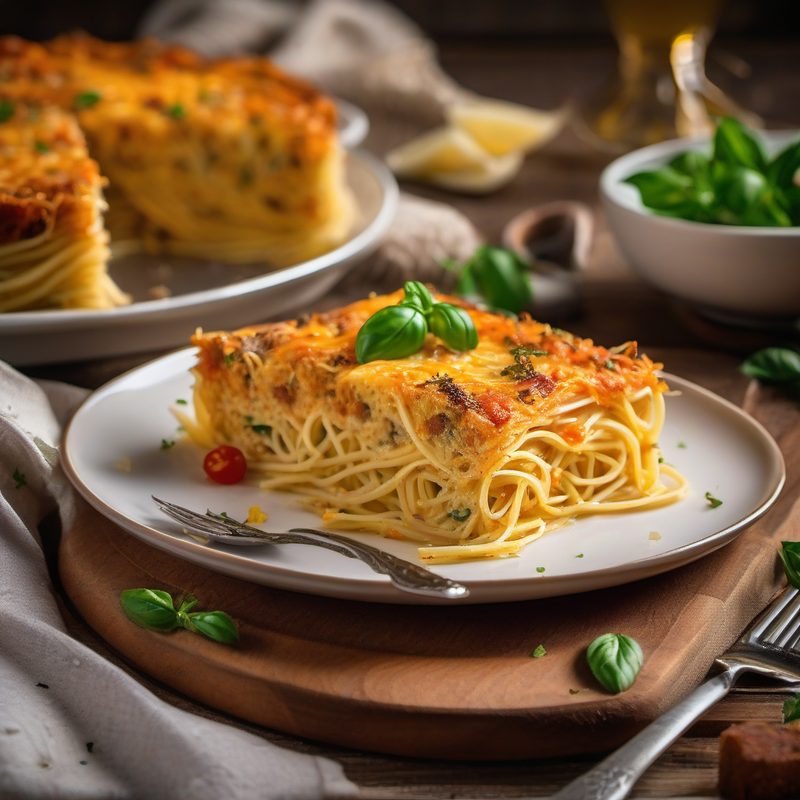
Pasta Frocia Spaghetti Cake
| Amount | Ingredient |
|---|---|
| Calories | ~485 kcal |
| Protein | 23 g |
| Fat | 24 g |
| Saturated Fat | 8 g |
| Carbohydrates | 44 g |
| Fiber | 2 g |
| Sugars | 2 g |
| Sodium | ~720 mg |
| Cholesterol | 210 mg |
1. Category
Secondi Piatti (Main Courses) · Riciclo (Leftover Makeover) · Italian Comfort Food
2. Servings / Yield
- Servings: 4
- Yield: One 10-inch spaghetti cake
- Portion Size: One large wedge or two smaller wedges per person
3. Total Time / Active Time
- Total Time: 40 minutes
- Active Time: 20 minutes
- Inactive Time: 20 minutes (cooking over medium-low heat, plus resting after flipping)
4. Why This Recipe Works
Pasta a frocia — a thrifty, soulful Italian staple — transforms yesterday's plain spaghetti into a golden, pan-fried cake that's far more than the sum of its leftovers. The genius lies in three moves: First, stale or leftover spaghetti has a drier surface that absorbs the egg mixture eagerly, creating a cohesive, sliceable cake instead of a slippery scramble. Second, a hefty dose of finely grated Parmesan (100g for 400g pasta) pulls double duty — it seasons the custard and, as it hits the hot pan, creates a crackling, deeply savory crust on both sides. Third, pressing the spaghetti flat in the pan and cooking over medium-low heat gives the interior time to set through without burning the exterior, much like a Spanish tortilla. The result is a dish that's crispy-edged, custard-soft within, and intensely savory — proof that thrift and deliciousness are the same thing.
5. Key Equipment
- 10-inch nonstick skillet with straight or slightly sloping sides (essential for clean release)
- Large mixing bowl (large enough to toss 400g spaghetti with egg mixture without spillage)
- Flexible silicone spatula (for pressing and coaxing the cake's edges)
- Dinner plate or baking sheet (larger than the skillet diameter, for the flip)
- Chef's knife and cutting board (for mincing garlic and parsley)
- Box grater or Microplane (if grating Parmesan from a block)
- Timer (8–10 min first side, 5–7 min second side)
Leftover spaghetti: Day-old spaghetti that has dried out slightly in the fridge is ideal — it readily absorbs the egg mixture without turning mushy. Freshly cooked spaghetti can be used; spread it on a baking sheet and let it cool uncovered for 15 minutes so excess steam evaporates. Long pasta like spaghetti is traditional, but bucatini, linguine, or fettuccine all work.
Parmesan: Parmigiano-Reggiano offers the best flavor-to-melt ratio. Its crystalline texture creates extra crunch on the crust. Avoid finely dust-style pre-grated Parmesan, which can clump; use the larger holes of a box grater or the coarse side of a Microplane.
Eggs: Eggs are the binder. Use large eggs (about 50 g each out of shell). For a richer, more custardy interior, substitute one yolk for one of the whole eggs.
Parsley: Flat-leaf (Italian) parsley is traditional. A small handful of chopped basil or chives can be added alongside, but don't omit the parsley entirely — its freshness cuts the richness of the fried cheese crust.
8. Before You Begin
- Take the chill off the spaghetti — if your leftovers are straight from the fridge, let them sit at room temperature for 15 minutes while you prep. Cold spaghetti makes the egg mixture seize up and cook unevenly.
- Grate your Parmesan fresh — pre-grated cheese often contains anti-caking agents that prevent it from melting smoothly into the egg custard.
- Have your flip plate ready before you start cooking — once that first side is perfectly golden, you'll need to act quickly.
- This recipe scales easily — for 6 servings, use 600 g spaghetti, 6 eggs, 150 g Parmesan, and a 12-inch skillet, increasing cooking time by 2–3 minutes per side.
9. Step-by-Step Instructions
Step 1: Prepare the Egg Mixture
In a large mixing bowl, crack the 4 eggs. Add the ¾ teaspoon salt, ½ teaspoon pepper, and the 100 g finely grated Parmesan. Whisk vigorously until the cheese is evenly distributed and the mixture is slightly thickened and pale, about 30 seconds. Stir in the 2 minced garlic cloves and 3 tablespoons minced parsley. Set aside.
Step 2: Combine with Spaghetti
Add the 400 g leftover spaghetti to the bowl with the egg mixture. Using two forks or your hands (lightly oiled), toss and tumble the spaghetti until every strand is evenly coated. The mixture will look clumpy, not saucy — that's correct. Let it sit for 3–5 minutes so the spaghetti absorbs some of the egg.
Step 3: Heat the Pan and Start Cooking
Place the 10-inch nonstick skillet over medium-low heat. Add 3 tablespoons olive oil and swirl to coat the bottom and about ½ inch up the sides. When the oil shimmers and flows like water (about 1–2 minutes), add the spaghetti mixture.
Step 4: Form and Press the Cake
Using a silicone spatula, quickly spread the spaghetti into an even layer, pressing it flat. The mixture should fill the pan in a compact, even disc about 1 inch thick. Press firmly with the spatula — you want good contact between the underside and the hot oil.
Step 5: Cook the First Side (8–10 Minutes)
Cook over medium-low heat without disturbing for 8–10 minutes. Peek occasionally by lifting an edge with the spatula. The first side is ready when the entire bottom is deep golden brown and the surface looks mostly set (no liquid egg pooling on top). If the cake browns too quickly, reduce heat to low.
Step 6: Flip the Cake
Slide the spaghetti cake onto a large dinner plate or rimless baking sheet (the plate method, like flipping a tortilla or frittata). Invert the skillet over the plate, then — in one confident motion — flip the plate and skillet together so the cake lands back in the pan, uncooked side down. Add another 1–2 teaspoons of oil around the edge if the pan looks dry.
Step 7: Cook the Second Side (5–7 Minutes)
Cook the second side over medium-low heat for 5–7 minutes, again without moving it. The second side cooks faster because the pan and cake are already hot. Peek after 5 minutes — it's ready when the bottom is deep golden brown and the cake feels firm but gives slightly when pressed in the center.
Step 8: Rest and Serve
Slide the finished spaghetti cake onto a cutting board or serving platter. Let it rest for 2–3 minutes — this allows the interior custard to finish setting and makes slicing cleaner. Cut into 4 wedges (like a pizza). Garnish with additional minced parsley and, if desired, a final grating of Parmesan. Serve warm or at room temperature.
10. Recipe Notes & Tips
Flip without fear: The plate method is reliable, but if you're nervous, use two spatulas to support the cake — one sliding underneath, one holding the top edge — and transfer it to the plate that way. Alternatively, slide the cake onto a cooling rack set over a baking sheet for a cooler flip surface.
Don't rush the heat: Medium-low is the sweet spot. Too high and the Parmesan in the crust will burn before the center sets; too low and the eggs will slowly steam into a dense, wet mass.
Crispier crust: For an extra-crunchy exterior, increase olive oil to 4 tablespoons and press the cake even more firmly into the pan during the first 2 minutes of cooking. Some Italian cooks dust the top with a pinch of extra breadcrumbs before flipping.
Add meat or vegetables: Fold 100 g of diced cooked pancetta, crumbled Italian sausage, or sautéed mushrooms into the egg mixture along with the spaghetti. Add 100 g of blanched peas, chopped spinach (squeezed dry), or roasted red peppers for a vegetal version.
11. Why This Is a "Riciclo" (Leftover) Masterpiece
Pasta a frocia belongs to the glorious Italian tradition of riciclo — creative, resourceful cooking that treats leftovers not as a compromise but as an opportunity. Like ribollita, panzanella, or frittata di maccheroni (the baked pasta cousin), it elevates the humble leftover into something you'd willingly cook from scratch. The dish is a perfect example of the Italian kitchen's deep wisdom: dry, leftover pasta has less surface moisture than freshly boiled pasta, so it absorbs egg custard more readily and fries up with superior texture. You can double this recipe with confidence, cook one cake immediately, and refrigerate the second batch of spaghetti-egg mixture (covered) for the next day — it only improves.
12. Variations
Pasta Frocia with Pancetta and Peas: Add 100 g diced pancetta, crisped in a separate skillet, and 50 g thawed frozen peas (blotted dry) to the egg mixture. The sweetness of the peas balances the salty pancetta.
Herb and Lemon Pasta Frocia: Replace the parsley with a mix of basil, chives, and mint (3 tablespoons total). Add the finely grated zest of 1 lemon to the egg mixture. Serve with lemon wedges.
Spicy Calabrian Pasta Frocia: Stir 1–2 teaspoons of Calabrian chili paste (or ½ teaspoon red pepper flakes) into the egg mixture. Garnish with fresh basil instead of parsley.
Cheese Three Ways: Reduce Parmesan to 50 g and add 50 g diced low-moisture mozzarella and 50 g crumbled Gorgonzola dolce to the egg-spaghetti mixture. The mozzarella creates custardy pockets; the Gorgonzola adds tang.
Extra-Crispy Breading: Before flipping, press 2 tablespoons of fine dried breadcrumbs onto the uncooked surface. They'll toast into a second crunchy crust during the second-side cooking.
13. Make Ahead / Storage
Make Ahead: You can mix the spaghetti with the egg mixture (Steps 1–2) up to 24 hours in advance. Cover the bowl tightly with plastic wrap and refrigerate. Let sit at room temperature for 20 minutes before cooking.
Storage: Leftover wedges keep in the refrigerator, wrapped in foil or in an airtight container, for up to 3 days.
Reheating: For best results, reheat in a nonstick skillet over medium-low heat with a teaspoon of oil, about 4 minutes per side. The microwave will soften the crust — acceptable in a pinch, but you lose the crispness.
Freezing: Fully cooked spaghetti cake can be frozen. Cool completely, wrap tightly in plastic wrap then foil, and freeze for up to 1 month. Thaw overnight in the refrigerator and reheat in a skillet as above.
14. Serving Suggestions
Wine Pairing: A light, crisp red like a chilled Valpolicella or a bright, unoaked Sangiovese (Rosato di Montalcino) cuts through the richness beautifully. For white wine fans, a Friulano or Gavi di Gavi offers the right acidity and minerality.
As a Main: Serve with a simple arugula and lemon salad (arugula, olive oil, lemon juice, shaved Parmesan) alongside for a complete meal. The greens' peppery bite contrasts the warm, eggy cake.
As a Side or Snack: In Italy, pasta a frocia is often served as a secondo piatto (main course) but also works beautifully as a substantial antipasto cut into small squares, or packed for a picnic — it's excellent at room temperature.
Dipping: Some Italians serve it with a dollop of fresh ricotta or a drizzle of extra-virgin olive oil and a squeeze of lemon. Try a quick salsa verde (parsley, capers, anchovy, olive oil) alongside for a flavor boost.
15. Nutritional Information (Per Serving — ¼ of Recipe)
Note: Values are estimates and vary based on specific ingredients (type of olive oil, exact Parmesan brand, spaghetti type).
16. Testing Notes & Kitchen Science
Why leftover pasta works better: Freshly cooked spaghetti holds a significant amount of surface moisture (from the starchy cooking water). Leftover pasta that has been refrigerated overnight loses some of this moisture through evaporation. The drier surface acts like a sponge, absorbing the egg mixture more thoroughly. This creates a cohesive cake that slices cleanly rather than falling apart. If using fresh pasta, spread it on a baking sheet and let it cool and dry for at least 15 minutes before mixing.
The Parmesan double crust: When finely grated Parmesan hits hot olive oil, the cheese melts, browns, and then re-crisps as it cools slightly, forming a lacy, ultra-thin crust on the pasta's surface. This is the same mechanism behind frico (the crispy fried cheese disks of Friuli). The Parmesan that migrates into the egg mixture also contributes to browning via the Maillard reaction — its milk sugars and proteins brown faster than egg alone, giving the cake its characteristic deep golden color.
Medium-low heat is non-negotiable: At temperatures above medium, the Parmesan will burn before the egg custard sets. The center of the cake needs to reach about 71°C (160°F) for the eggs to coagulate fully. On medium-low heat, this takes 8–10 minutes per side — roughly the same time a Spanish tortilla takes. Rushing it yields a burnt exterior and under-set interior.
Why the plate flip works: Inverting the cake onto a plate and sliding it back into the pan applies even pressure across the cake's surface, preventing breakage. This is the same technique used for Spanish tortilla, frittata, and tarte Tatin. The key is using a plate or baking sheet that's at least as wide as the skillet.
17. Troubleshooting
| Problem | Likely Cause | Solution |
|---|---|---|
| Cake sticks to pan | Pan isn't truly nonstick, or not enough oil | Use a high-quality nonstick skillet; add full 3 tablespoons oil; gently loosen edges with spatula before flipping |
| Crust burns before center sets | Heat too high | Cook on medium-low (not medium); check if your stove runs hot and dial back |
| Cake falls apart during flip | Not enough egg binder, or cake wasn't pressed firmly enough | Use 4 full eggs; press spaghetti firmly into pan after adding; let first side cook full 10 minutes |
| Cake is greasy | Too much oil, or oil wasn't hot enough when spaghetti was added | Wait until oil shimmers before adding spaghetti; measure oil; blot finished cake briefly on paper towel |
| Cake is dry and crumbly | Too much time in pan, or too little egg | Cook exactly 8–10 minutes first side, 5–7 second side; check that 4 eggs fully coat 400g spaghetti |
| Egg mixture curdles or scrambles | Heat too high, or pan was too hot when spaghetti was added | Let pan come to temp over medium-low, not medium; add spaghetti immediately when oil shimmers |
| Cake won't brown | Heat too low, or too little Parmesan | Increase heat slightly; ensure Parmesan is finely grated; add another tablespoon of oil |
Parmigiano-Reggiano is the undisputed king of Italian cheeses — a hard, granular cow's-milk cheese produced exclusively in the provinces of Parma, Reggio Emilia, Modena, and parts of Bologna and Mantua. It is aged a minimum of 12 months (the best for cooking is aged 24–36 months). Its high concentration of glutamates gives it an intense umami flavor that elevates any dish.
For pasta a frocia, splurging on true Parmigiano-Reggiano (not generic "Parmesan") makes a measurable difference. The authentic cheese has a crumbly, crystalline texture — those little crunchy bits are tyrosine crystals, not defects — and it melts into a lacy, browned crust with deeper flavor than any substitute. If you must substitute, use Grana Padano (similar but milder, less crumbly) or Pecorino Romano (saltier, sheep's milk, sharper — reduce added salt to ½ teaspoon).
Storage: Wrap Parmigiano-Reggiano in wax paper, then loosely in plastic wrap, and store in the vegetable drawer of the refrigerator. It keeps for weeks. Never freeze it — this destroys its crystalline texture.
19. Related Recipes
- Frittata di Maccheroni — Baked pasta frittata (the oven-baked cousin, more cake-like, less crusty)
- Spanish Tortilla de Patatas — Same plate-flip technique, different base (potatoes and onions)
- Frico Friulano — The crispy fried cheese disks that inspired the crust
- Ribollita — Another classic Italian riciclo dish (bread and vegetable soup, Tuscany)
- Panzanella — Tuscan bread salad made from stale bread and ripe tomatoes
- Spaghetti Frittata with Tomato Sauce — A southern Italian variation where the cake is simmered briefly in tomato sauce after frying
- Crispy Parmesan Zucchini Cakes — Same crispy-cheese-crust principle applied to shredded zucchini
"Pasta a frocia teaches you that the best ingredient in Italian cooking isn't expensive olive oil or rare truffles — it's the willingness to see potential in what you already have."
— Adapted from Italian riciclo kitchen tradition | ATK-style format
Recipe from The Italian Kitchen by Vita Milanese — Volume 1 · Pasta Perfetto. Discover all volumes on the ebook page.