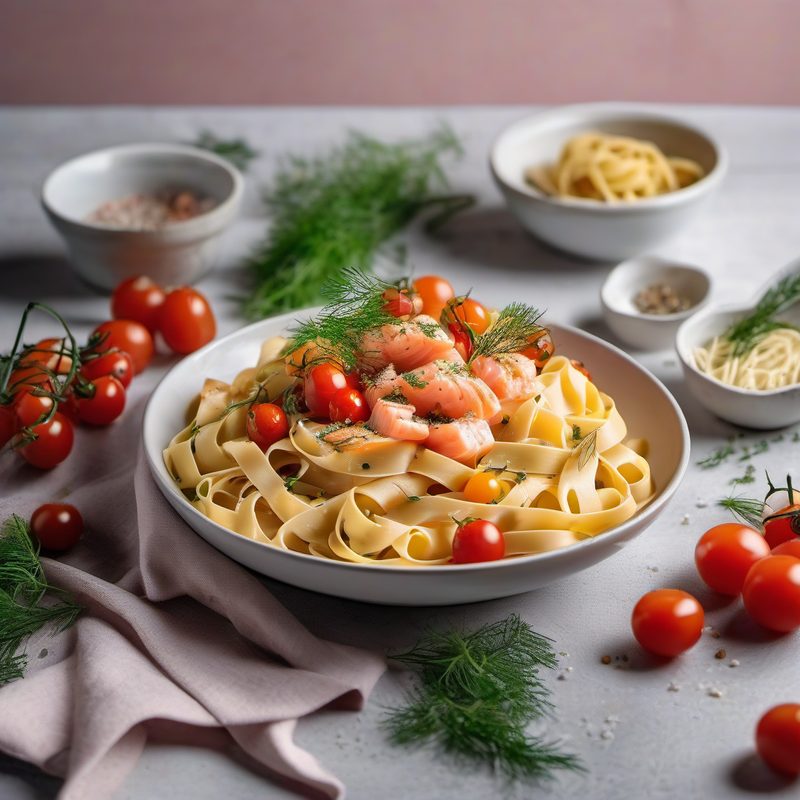
Tagliatelle Salmon Cherry Tomatoes
| Amount | Ingredient |
|---|---|
| Calories | ~690 kcal |
| Protein | ~31 g |
| Fat | ~36 g |
| Saturated Fat | ~16 g |
| Carbohydrates | ~58 g |
| Fiber | ~3 g |
| Sugars | ~5 g |
| Sodium | ~520 mg |
Tagliatelle with Salmon and Cherry Tomatoes
Category: Primi piatti (First Courses / Pasta)
1. Headnote / Why This Recipe Works
This quick, creamy pasta dish brings together tender tagliatelle, flaky salmon, and burst cherry tomatoes in a rich Parmesan-cream sauce. The key to this recipe is restraint: we cube the salmon generously, sear it just until opaque, and let the cherry tomatoes soften in the pan until they release their sweet-tart juices, creating a light sauce without heaviness. A brief simmer with cream ties everything together without overwhelming the delicate salmon. Finished with fresh basil and grated Parmesan, this dish comes together in about 25 minutes — perfect for a satisfying weeknight dinner that feels special.
2. Yield (Servings)
Serves 4 as a main course
3. Total Time
25 minutes
4. Active Time
20 minutes
- Tagliatelle: Dried egg tagliatelle (preferably Italian) yields the best texture. Fresh tagliatelle can be substituted; reduce cooking time to 2–3 minutes. Fettuccine or pappardelle are acceptable substitutes.
- Salmon: A center-cut fillet gives the most uniform cubes. Avoid the thin tail section, which overcooks too quickly. Skin must be removed before cubing.
- Cherry tomatoes: Use ripe, sweet cherry tomatoes — ideally Datterini or Ciliegia varieties if available. Grape tomatoes work well too. Halve any larger specimens; leave very small ones whole.
- Cream: Do not substitute half-and-half or milk, which may curdle at a simmer. The higher fat content of heavy cream ensures a stable, velvety sauce.
- Parmesan: Always grate Parmesan fresh from a wedge. Pre-grated cheese contains anti-caking agents that prevent smooth melting. Grana Padano or Pecorino Romano can be substituted for a sharper edge.
- Basil: Add fresh basil off the heat to preserve its aroma and color. Do not substitute dried basil.
7. Equipment
- Large pot (6–8 qt) for pasta
- Large skillet (12-inch / 30 cm), preferably nonstick or stainless steel
- Colander
- Chef's knife and cutting board
- Box grater or Microplane for Parmesan
- Wooden spoon or silicone spatula
- Measuring spoons and liquid cup measure
- Small bowl (for prepared ingredients)
8. Prep Work
- Bring a large pot of generously salted water to a rolling boil (about 1 tablespoon salt per 4 quarts water).
- Cube the salmon: Pat the fillet dry with paper towels. Cut lengthwise into 2 cm (¾-inch) strips, then crosswise into 2 cm cubes. Season lightly with salt and pepper. Set aside.
- Halve the cherry tomatoes: Wash and dry the tomatoes. Cut each in half through the equator. If using very large cherry tomatoes, quarter them. Set aside.
- Prepare the garlic: Smash and peel the cloves, then slice thinly (do not mince — thin slices allow gentle flavor infusion without burning).
- Grate the Parmesan: Finely grate 50 g Parmesan. Set aside.
- Slice the basil: Stack the basil leaves, roll tightly, and slice into thin ribbons (chiffonade). Set aside for garnish.
9. Cooking Instructions
Step 1: Cook the pasta
Drop the tagliatelle into the boiling salted water. Cook according to package directions until al dente (typically 8–10 minutes for dried egg tagliatelle). Reserve 1 cup (240 ml) of pasta cooking water just before draining, then drain the pasta well. Do not rinse.
Step 2: Sear the salmon
While the pasta cooks, heat 3 tablespoons of olive oil in a large skillet over medium-high heat until shimmering. Add the cubed salmon in a single layer (work in two batches if needed to avoid crowding). Cook without moving for 1½ minutes, until the bottom is lightly golden. Gently flip and cook another 1 minute. The salmon should be just cooked through but still moist in the center. Transfer to a clean plate; leave the oil in the skillet.
Step 3: Sauté garlic and tomatoes
Reduce the heat to medium. Add the sliced garlic to the skillet and cook, stirring constantly, until fragrant but not coloured — about 30 seconds. Add the halved cherry tomatoes and a pinch of salt. Cook, stirring occasionally, until the tomatoes begin to soften and release their juices — about 3–4 minutes. Gently press a few tomatoes with the back of the spoon to help them burst.
Step 4: Make the cream sauce
Pour the heavy cream into the skillet with the tomatoes. Stir to combine and bring to a gentle simmer. Cook for 2 minutes, stirring occasionally, until the sauce thickens slightly and turns a warm blush pink.
Step 5: Combine pasta, salmon, and sauce
Add the drained tagliatelle and cooked salmon cubes to the skillet. Toss gently with tongs or a wooden spoon to coat the pasta evenly. If the sauce seems too thick, add reserved pasta cooking water a splash at a time (start with ¼ cup) and toss until the sauce clings loosely to the noodles.
Step 6: Finish and serve
Remove the skillet from the heat. Sprinkle in the grated Parmesan and half the sliced basil. Toss once more to combine. Taste and adjust seasoning with salt and freshly ground black pepper. Divide among warm shallow bowls, top with remaining basil, and serve immediately.
10. Plating and Serving
Serve in warmed shallow bowls to keep the pasta hot. Garnish with fresh basil ribbons and an extra grating of Parmesan. A drizzle of finishing-quality extra-virgin olive oil just before serving is optional but welcome. Pair with a light, crisp white wine such as Pinot Grigio, Vermentino, or a dry Gavi.
11. Troubleshooting
| Problem | Likely Cause | Solution |
|---|---|---|
| Salmon is dry | Overcooked; too-small cubes | Cube salmon to 2 cm; cook only until opaque throughout |
| Sauce is greasy | Oil and cream separated from high heat | Simmer gently; do not boil vigorously after cream is added |
| Sauce is too thin | Not enough reduction; too much pasta water | Simmer cream 1–2 minutes longer before adding pasta |
| Sauce is too thick | Insufficient pasta water | Add reserved pasta water 1–2 tbsp at a time until desired consistency |
| Garlic is bitter | Garlic burned in hot oil | Reduce heat before adding garlic; stir constantly |
| Tomatoes didn't burst | Too-low heat; undercooked | Cook on medium heat; press gently with spoon to encourage bursting |
| Pasta clumps | No oil or insufficient stirring after draining | Toss drained pasta with a drizzle of oil if not saucing immediately |
12. Variations
- Spicy version: Add ½ teaspoon red pepper flakes with the garlic for gentle heat.
- Lemon-herb: Add 1 teaspoon finely grated lemon zest and 1 tablespoon lemon juice with the cream. Replace basil with fresh dill or chives.
- Smoked salmon: Substitute 150 g smoked salmon (cubed) for fresh. Reduce initial cooking time to just 30 seconds per side, as smoked salmon is already cured.
- Pink peppercorn: Crush 1 teaspoon pink peppercorns and sprinkle over the finished dish for a floral, mildly spicy finish.
- Dairy-free: Substitute the cream with full-fat coconut milk (from a can, not a carton) and omit the Parmesan. Add 2 tablespoons nutritional yeast for savory depth. The flavor profile shifts but remains delicious.
- Vegetable swap: Replace salmon with 250 g quartered cremini mushrooms, sautéed until golden, for a vegetarian version.
13. Storage and Reheating
- Refrigeration: Store leftovers in an airtight container for up to 2 days. The pasta will absorb sauce as it sits, so expect a drier consistency upon reheating.
- Reheating: Place in a skillet over medium-low heat with a splash of water, milk, or additional cream. Toss gently until warmed through. Do not microwave, as the salmon will overcook and become rubbery.
- Freezing: Not recommended. The cream sauce may separate upon thawing, and delicate salmon loses texture after freezing and reheating.
14. Make-Ahead Notes
This dish is best prepared and served immediately. To streamline:
- Cube the salmon and halve the tomatoes up to 6 hours in advance; refrigerate separately.
- Grate the Parmesan and slice the basil up to 4 hours in advance; keep basil between damp paper towels in the fridge.
- Do not cook the pasta or prepare the sauce ahead of time — both suffer significantly from reheating.
15. Nutritional Information (per serving, estimated)
Note: Values are approximations based on standard ingredient profiles and may vary with specific brands and substitutions.
16. Testing Notes
- Pasta water ratio: ¼ cup (60 ml) of reserved pasta water per serving was the ideal amount to achieve a sauce that coats without pooling. Adjust based on how dry your tagliatelle was.
- Salmon doneness: The 2 cm cube seared 90 seconds per side produced a tender interior with a light golden exterior. Do not move the cubes during the initial sear — they release naturally when a crust has formed.
- Tomato selection: Datterini tomatoes (small, intensely sweet, firm-fleshed) gave the best results — their low water content meant they released concentrated flavor without watering down the cream. Standard cherry tomatoes required an extra minute of cooking.
- Cream fat content: Testing with 18% (light) cream produced a sauce that separated slightly at a simmer. 35% heavy cream was stable and luxurious.
- Pasta type: Fresh tagliatelle reduced total cooking time to 2½ minutes and gave a silkier texture. Dried egg tagliatelle (De Cecco brand) was tested at 8 minutes and performed admirably, holding the sauce well.
17. Recommended Pairings
- Wine: Pinot Grigio, Gavi di Gavi, Verdicchio, or a light Vermentino. A dry rosé from Provence also works beautifully.
- Bread: Crusty ciabatta or a simple focaccia to mop up remaining sauce.
- Salad: A simple arugula salad with lemon vinaigrette provides a peppery contrast to the creamy pasta.
18. Abbreviations and Definitions
- ATK: America's Test Kitchen
- g: grams
- ml: milliliters
- tbsp: tablespoon (15 ml)
- tsp: teaspoon (5 ml)
- Al dente: Italian for "to the tooth"; pasta cooked until tender but still firm when bitten
- Chiffonade: A cutting technique in which leafy herbs are rolled tightly and sliced into thin ribbons
- Datterini: A small, exceptionally sweet Italian variety of cherry tomato, oblong in shape
19. Source
Original recipe adaptation. Inspired by classic Italian pasta al salmone traditions from the Piedmont and Lombardy regions.
Created: July 25, 2026
Last modified: July 25, 2026
Recipe from The Italian Kitchen by Vita Milanese — Volume 1 · Pasta Perfetto. Discover all volumes on the ebook page.