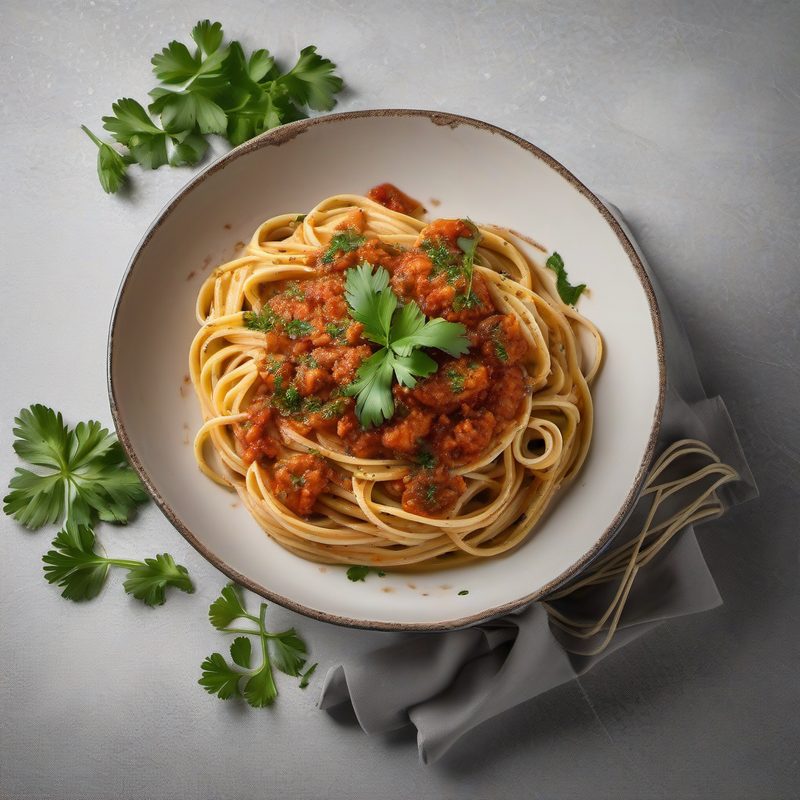
Linguine Monkfish Ragu
A rustic, slow-simmered Ligurian-style ragu that swaps beef for monkfish—lean, meaty, and surprisingly robust. The sauce builds layers of flavor from a classic soffritto base, white wine, and tomato passata, then clings to every strand of linguine like a proper Sunday ragu—only lighter and faster.
| Amount | Ingredient |
|---|---|
| 1½ lbs (680 g) | Monkfish fillet, cut into ½-inch cubes |
| 1 lb (450 g) | Dried linguine |
| 1 | Medium carrot, finely diced (about ½ cup) |
| 1 | Celery rib, finely diced (about ½ cup) |
| 1 | Small yellow onion, finely diced (about ¾ cup) |
| 3 tbsp (45 ml) | Extra-virgin olive oil, plus more for drizzling |
| 3 cloves | Garlic, smashed |
| ½ cup (120 ml) | Dry white wine (such as Pinot Grigio or Vermentino) |
| 1½ cups (360 ml) | Tomato passata (or plain tomato purée) |
| ¼ cup (10 g) | Fresh parsley, finely chopped |
| Kosher salt, to taste | |
| Black pepper, to taste |
Most people think of fish as quick-cooking weeknight fare—sear it fast, serve it simply. But the fishermen of Liguria know better. Monkfish, with its dense, lobster-like flesh and mild sweetness, stands up beautifully to the same slow-simmer treatment you'd give a beef ragu. Diced into small cubes and gently cooked in a tomato-soffritto base, it breaks down just enough to create a chunky, satisfying sauce that coats the pasta without weighing it down. The key is browning the monkfish cubes well before adding the liquid—they hold their shape and develop a deep, savory crust that infuses the whole sauce. A soffritto of carrot, celery, and onion provides the aromatic backbone; white wine and passata keep things bright and coastal. Finished with fresh parsley and a drizzle of good olive oil, this is the pasta you turn to when you want the soul of a ragu without the three-hour wait.
All produce is medium size unless specified. Use standard US measuring cups and spoons.
🥘 Equipment
- Large pot (6-quart or larger) for pasta
- Large skillet or Dutch oven (12-inch / 5-quart) with lid
- Large colander
- Chef's knife and cutting board
- Wooden spoon
- Tongs
📋 Preparation
Step 1 — Prep the Monkfish and Soffritto (10 minutes)
Cut the monkfish fillet into ½-inch cubes. Pat the cubes thoroughly dry with paper towels—any moisture will prevent browning. Season with ½ teaspoon salt and ¼ teaspoon black pepper.
Trim and finely dice the carrot, celery, and onion into pieces no larger than ¼ inch. Keep them uniform so they cook evenly.
Monkfish has a central tough membrane that some fillets arrive with. If you feel a rubbery strip running through the fillet, trim it out with a sharp knife before cubing.
Step 2 — Bloom the Garlic and Sauté the Soffritto (8 minutes)
Heat 3 tablespoons olive oil in a large skillet or Dutch oven over medium heat. Add the 3 smashed garlic cloves and cook, stirring occasionally, until fragrant and pale gold at the edges—about 2 minutes.
Add the diced carrot, celery, and onion. Cook, stirring frequently, until the vegetables are softened and the onion is translucent—about 5 to 7 minutes. Remove and discard the garlic cloves.
The garlic infuses the oil during the initial bloom, then gets removed before the monkfish goes in so it doesn't burn or overwhelm the delicate fish flavor.
Step 3 — Brown the Monkfish (7 minutes)
Increase heat to medium-high. Add the monkfish cubes to the skillet in a single layer—work in two batches if necessary to avoid crowding. Cook, stirring occasionally but not too frequently, until the monkfish is golden-brown on most sides—about 5 to 7 minutes. The monkfish should be just cooked through and beginning to release its juices.
Let the monkfish sit undisturbed for the first 2 minutes to develop a proper crust. Stirring too early prevents browning and the cubes will steam instead of sear.
Step 4 — Deglaze and Build the Sauce (25 minutes)
Pour the ½ cup white wine into the skillet—it will bubble vigorously. Using a wooden spoon, scrape up any browned bits from the bottom of the pan. Let the wine reduce by half, about 1 minute.
Add the tomato passata, ½ teaspoon salt, and a few grinds of black pepper. Stir to combine. Bring to a gentle simmer, then reduce heat to low, cover, and let the ragu cook for 20 to 25 minutes, stirring once or twice. If the sauce looks too thick before the time is up, add ¼ cup of water at a time to loosen it—you want a thick, chunky sauce that coats a spoon, not a watery one.
Taste and adjust salt and pepper.
The passata should bubble lazily, not aggressively. A covered gentle simmer lets the monkfish and vegetables meld without reducing the sauce too quickly.
Step 5 — Cook the Pasta (10 minutes, concurrent with Step 4)
About 8 minutes before the ragu is done, bring a large pot of generously salted water (about 1½ tablespoons kosher salt per 4 quarts of water) to a rolling boil. Add the linguine and cook until just shy of al dente—about 2 minutes less than the package directs.
Reserve 1 cup of pasta cooking water before draining. Drain the linguine (do not rinse).
Step 6 — Toss and Finish (2 minutes)
Add the drained linguine and the chopped parsley to the skillet with the finished ragu. Drizzle with 1 tablespoon of good olive oil. Using tongs, toss everything together vigorously over low heat for 1 to 2 minutes, adding a splash of the reserved pasta water if the sauce looks dry—you're looking for a glossy, nappe consistency where the ragu clings to every strand.
Step 7 — Serve
Divide among warm serving bowls. Spoon any remaining ragu from the skillet over the top. Garnish with extra chopped parsley and a final drizzle of olive oil. Serve immediately.
🧑🍳 Chef's Tips
- Dry the monkfish thoroughly. Monkfish has a high water content, and wet fish won't brown—it will steam into pale, mushy pieces. Pat each cube with paper towels just before cooking.
- Uniform dicing is critical. The soffritto vegetables should be cut the same size as the monkfish cubes (½ inch or smaller). Mismatched pieces cook at different rates, leaving you with either raw carrot or mushy fish.
- Don't skip the pasta water. Even though this is a chunky ragu (not an emulsified cream sauce), a splash of starchy pasta water helps the sauce cling to the linguine and adjusts the consistency perfectly.
- Use passata, not crushed tomatoes. Passata is smooth, thick, and concentrated—it creates a velvety base that coats the fish without overwhelming it. Crushed or diced tomatoes introduce too much watery pulp and seeds.
- Taste the monkfish before simmering. If your fillet came from a less-than-pristine source, it may have a slightly ammonia-y scent. A quick soak in cold milk for 10 minutes (then rinse and pat dry) neutralizes any off flavors.
- Overcooking is not a danger here. Unlike delicate white fish, monkfish is remarkably forgiving—it holds its shape and stays moist even after 25 minutes of gentle simmering. That's why it's perfect for ragu.
❌ Common Mistakes
| Mistake | Why It Hurts | The Fix |
|---|---|---|
| Adding the monkfish to the pan before the soffritto is fully softened | Hard raw vegetables and fish compete for pan space; the fish overcooks while waiting for the vegetables to finish | Cook the soffritto until the onion is fully translucent and the carrot is tender before adding the monkfish |
| Using too high a heat for the ragu simmer | The passata scorches and the monkfish toughens | Keep the heat at low–medium-low; the sauce should bubble lazily, not rapidly |
| Skipping the browning step | The ragu tastes flat and one-dimensional—the fond on the pan bottom is pure umami | Take the 5–7 minutes to brown the monkfish properly; it's the single most important step for depth of flavor |
| Rinsing the cooked pasta | Washes away the surface starch needed for sauce adhesion | Never rinse pasta—drain well and add directly to the skillet |
| Overcrowding the pan during browning | The monkfish steams instead of searing, producing pale, gray cubes | Brown in two batches if your skillet can't hold the cubes in a single layer without touching |
💡 Variations
| Variation | How To |
|---|---|
| Spicy Monkfish Ragu | Add 1 teaspoon red pepper flakes or 1 dried chili (peperoncino), crumbled, along with the garlic in Step 2. The heat enhances the sweetness of the monkfish and tomatoes. |
| With Olives and Capers | Stir in ¼ cup pitted Taggiasca or Kalamata olives and 1 tablespoon rinsed capers along with the passata. The briny pop is a natural match for the fish. |
| Creamy Ragu | Stir in ¼ cup heavy cream or crème fraîche after the ragu has simmered, just before adding the pasta. This mellows the acidity and adds a luxurious velvety texture. |
| Herb Swap | Replace the parsley with fresh basil (torn) or a mix of basil and mint. Fresh oregano (1 teaspoon, chopped) also works beautifully. |
| Swap the Pasta Shape | Spaghetti, bucatini, or pappardelle all work well. Adjust cooking time per package and always undercook by 2 minutes before finishing in the sauce. |
| Halibut or Cod Ragu | If monkfish isn't available, substitute halibut or cod. Note that these are more delicate—reduce the initial simmer to 15 minutes and add the fish after 10 minutes of simmering the sauce alone. |
❄️ Storage & Leftovers
| Method | Details |
|---|---|
| Refrigerator | Store in an airtight container for up to 3 days. The ragu flavor actually deepens overnight as the monkfish and vegetables meld further. |
| Reheating | Reheat in a skillet over medium-low heat with a splash of water or leftover pasta cooking water, tossing gently until warmed through (about 4–5 minutes). Microwave works (covered, 1½ minutes at 70% power) but the pasta will be softer. |
| Freezing (Ragu Only) | The monkfish ragu (without pasta) freezes beautifully for up to 2 months. Cool completely, transfer to a freezer-safe container, and freeze. Thaw overnight in the refrigerator and reheat gently before tossing with fresh-cooked pasta. Do not freeze the assembled pasta dish—the noodles turn mushy upon thawing. |
🍷 Wine Pairing
| Wine | Why |
|---|---|
| Vermentino (Liguria or Sardinia) | Native to the same coastal regions where monkfish ragu is a tradition—crisp, herbal, and mineral-driven. The bright acidity cuts through the olive oil richness while the herbal notes echo the parsley. |
| Pigato (Liguria) | Liguria's own white grape, a relative of Vermentino with more body and a distinctive bitter-almond finish. Its weight stands up to the hearty ragu without overwhelming the fish. |
| Gavi di Gavi (Cortese) | Light-bodied with green apple and citrus—the clean, bright character keeps the palate fresh against the tomato-based sauce. |
| Etna Bianco (Carricante) | Saline and electric, with a volcanic minerality that mirrors the briny-sweet character of monkfish. A stunning and unexpected pairing. |
| Rosé di Bolgheri | A dry, structured Italian rosé with red berry, herb, and a touch of salinity. The body bridges red and white wine territory—ideal for a tomato-based fish ragu. |
🍺 Beer Pairing
| Beer | Why |
|---|---|
| Italian Pilsner (e.g., Menabrea, Birrificio Italiano Tipopils) | Clean, crisp, and light—the subtle hop bitterness balances the tomato acidity without competing with the delicate monkfish flavor. |
| Belgian Saison | Spicy, peppery yeast notes echo the savory character of the ragu while the high carbonation and dry finish scrub the palate clean. |
| American Wheat Ale | Soft, slightly bready malt with low bitterness—it supports the dish without stealing the spotlight. The subtle citrus notes from many American wheat ales play nicely with the white wine deglaze. |
🥗 Suggested Side Dishes
- Simple arugula salad with lemon juice, shaved Parmigiano-Reggiano, and pine nuts
- Sautéed Swiss chard or spinach with garlic and olive oil
- Grissini (breadsticks) or crusty ciabatta for sopping up the last of the ragu from the bowl
- Roasted fennel wedges with olive oil, salt, and a squeeze of lemon
- Grilled zucchini ribbons with mint and flaky salt
📊 Nutrition (per serving, estimated)
| Calories | Protein | Fat | Carbs | Fiber |
|---|---|---|---|---|
| 420 | 32 g | 9 g | 58 g | 4 g |
Nutrition is an estimate based on standard ingredient quantities. Values will vary with olive oil absorption and pasta cooking time.
❓ Frequently Asked Questions
Can I use frozen monkfish?
Yes. Thaw overnight in the refrigerator. Pat extremely dry with paper towels before cubing—frozen monkfish releases significantly more water than fresh during thawing, and excess moisture will prevent browning.
What is monkfish sometimes called "poor man's lobster"?
Monkfish has a firm, dense texture and mildly sweet flavor that closely resembles lobster tail—at a fraction of the price. This makes it ideal for ragu because it holds its shape during simmering the way lobster would, but won't break the bank.
Can I make this ragu with a different white fish?
Halibut, cod, or hake are reasonable substitutes. However, they are more delicate and should be added after the sauce has simmered for 10 minutes on its own—then simmer just 10–15 minutes more. Monkfish's unique resilience is what makes the full 25-minute simmer work.
Can I prepare the ragu a day ahead?
Absolutely. In fact, the ragu (without pasta) tastes even better the next day. Make it up to 2 days in advance, cool, and refrigerate. Reheat gently over medium-low heat, then cook fresh pasta and toss.
My ragu turned out watery. What went wrong?
Either the passata was too thin (use a thick Italian passata, not tomato juice or thin purée), or the monkfish wasn't dry enough before browning, releasing excess moisture. Fix by uncovering the pan in the last 5 minutes and letting the sauce reduce.
I can't find monkfish anywhere. What's the closest substitute?
Extra-large sea scallops (halved or quartered) come closest in texture—firm, sweet, and meaty. Sear them separately (2 minutes per side) and add to the finished sauce just before tossing with pasta. Thick shark or swordfish (cubed) also work, though swordfish has a stronger flavor.
🔗 Related Recipes
- Linguine with Garlic, Oil, Chili, and Shrimp (page 27)
- Linguine with Shrimp, Cherry Tomatoes, and Lemon Bisque (page 38)
- Pasta with Cuttlefish and Tomatoes (page 25)
- Orecchiette with Sardines and Cherry Tomatoes (page 24)
- One-Pot Sausage and Mushroom Pasta (page 15)
🏷️ Search Tags
Photo reference: `vol1_89.png` — A wide shallow bowl of linguine twirled into a loose nest, coated in a brick-red tomato ragu speckled with chunks of golden-brown monkfish and bits of soffritto vegetables. Fresh chopped parsley scattered across the top. A drizzle of olive oil catching the light. Warm golden-hour lighting on a rustic wooden table with a linen napkin and a half-full glass of Vermentino.
Recipe from "The Italian Kitchen" by Vita Milanese — Volume 1: Pasta Perfetto
Recipe from The Italian Kitchen by Vita Milanese — Volume 1 · Pasta Perfetto. Discover all volumes on the ebook page.