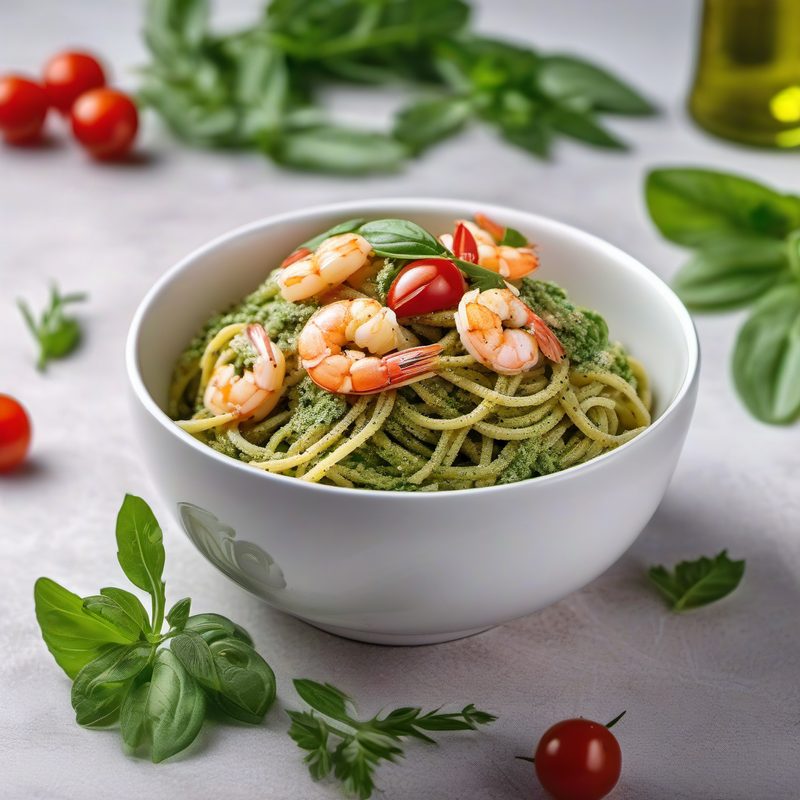
Pasta Arugula Pesto Shrimp
Peppery arugula pesto meets sweet seared shrimp in this bright, fresh pasta that comes together in under thirty minutes—the shrimp-shell cooking liquid is the secret ingredient that ties the briny-sweet seafood to the grassy, nutty pesto in a way that no plain oil or cream ever could.
| Amount | Ingredient |
|---|---|
| 12 oz (340 g) | Spaghetti, linguine, or bucatini |
| 1 lb (455 g) | Large shrimp (peeled and halved lengthwise, from above) |
| 1 cup (240 ml) | Reserved pasta cooking water |
| Kosher salt | |
| Freshly ground black pepper | |
| ¼ cup (30 g) | Almond slivers, toasted, for garnish |
| Extra arugula leaves, for serving |
This is the kind of pasta that makes you wonder why you ever bothered with basil pesto. Arugula—peppery, slightly bitter, and green as fresh-mown grass—blitzed with toasted almonds, good olive oil, and a squeeze of lemon makes a pesto that's brighter and more assertive than the classic Genovese. And when you add a splash of the shrimp-shell cooking liquid to the pesto? That's the moment everything clicks. The liquid carries concentrated shrimp flavor—briny and sweet—that emulsifies into the pesto, turning it into a sauce that clings to every strand of spaghetti and coats each pink curl of shrimp. It's a dish that tastes like the Mediterranean in a bowl: light enough for a warm evening, satisfying enough for any night of the week.
For the Shrimp and Shell Liquid
For the Arugula Pesto
For the Pasta
Use level tablespoons and standard US measuring cups. All produce is medium unless specified.
🥘 Equipment
- Large pot (6-quart or larger) for pasta
- Large skillet or sauté pan (12-inch)
- Blender or food processor
- Fine-mesh strainer
- Chef's knife and cutting board
- Kitchen shears (for shrimp prep)
- Colander
- Large mixing bowl
- Wooden spoon or spatula
📋 Preparation
Step 1 — Prepare the Shrimp (10 minutes)
Shell and devein the shrimp: Using kitchen shears or a sharp paring knife, cut down the back of each shrimp along the vein line. Remove the dark vein with the tip of the knife or under running water. Remove the heads (if attached) by twisting them off at the joint. Peel the shells off the shrimp bodies. Place the cleaned, peeled shrimp in a bowl, cover, and refrigerate. Transfer the heads and shells to a separate bowl.
Halve the shrimp: Cut each peeled shrimp in half lengthwise so you have two thin, even pieces. This ensures they cook through almost instantly when tossed with the hot pasta. Return to the refrigerator.
Halving the shrimp is a texture play — each piece is thin enough to cook from the residual heat of the pasta and pasta water, so the shrimp stay tender and never turn rubbery.
Step 2 — Toast Shrimp Shells and Make Cooking Liquid (8 minutes)
Place the large skillet over medium-high heat and add 1 tablespoon of olive oil. When the oil shimmers, add the reserved shrimp heads and shells. Cook, stirring frequently, until the shells turn bright pink and begin to brown in spots and smell intensely toasty, about 3 to 4 minutes.
Pour in the ½ cup of dry white wine — it will sizzle immediately. Scrape up any browned bits from the bottom of the pan. Let the wine bubble and reduce by about half, about 1 minute.
Add the ½ cup of water, stir, and bring to a simmer. Cook for 2 minutes to extract every bit of flavor from the shells.
Set the fine-mesh strainer over a small bowl or liquid measuring cup. Pour the contents of the skillet through the strainer, pressing firmly on the shells with the back of a spoon to extract as much liquid as possible. Discard the shells. You should have about ⅓ to ½ cup of concentrated shrimp cooking liquid. Set aside.
This quick shell-toasting and deglazing is the shortcut version of a shrimp stock — it delivers concentrated, briny-sweet flavor in minutes instead of the hour a traditional stock requires. The wine pulls flavorful compounds from the shells that water alone cannot.
Step 3 — Make the Arugula Pesto (5 minutes)
In a blender or food processor, combine the 4 cups of arugula, ⅓ cup almonds, ⅓ cup olive oil, 2 tablespoons lemon juice, ½ teaspoon kosher salt, and ¼ cup of the reserved shrimp cooking liquid (save any remaining liquid for finishing the dish).
Blend until completely smooth, scraping down the sides as needed, about 30 to 45 seconds. The pesto should be bright green, fluid, and emulsified — thin enough to coat a spoon but not watery. Taste and adjust salt or lemon juice. Transfer to a bowl and set aside.
The shrimp cooking liquid is the quiet MVP here: it replaces some of the oil and adds a layer of umami that deepens the arugula's peppery bite without tasting overtly seafood-y. Don't skip it or substitute plain water — the difference is night and day.
Step 4 — Cook the Pasta (8–10 minutes, concurrent with Step 3)
Bring a large pot of generously salted water (about 1½ tablespoons kosher salt per gallon) to a rolling boil over high heat.
Add the pasta and cook until very al dente — about 1 minute less than the package directions indicate (the pasta will continue cooking slightly when tossed with the hot pesto and shrimp).
Just before draining, reserve 1 cup of the starchy pasta cooking water. Drain the pasta well (do not rinse).
Step 5 — Combine and Serve (2 minutes)
In a large mixing bowl, combine the hot drained pasta, the raw halved shrimp, and ½ cup of the reserved pasta cooking water. Toss immediately and vigorously — the residual heat from the pasta and the hot water will cook the thin shrimp pieces in about 30 to 45 seconds. The shrimp should turn pink and opaque but remain tender.
Add the arugula pesto and any remaining shrimp cooking liquid. Toss well until every strand of pasta is evenly coated with the bright green sauce. If the sauce seems too thick, add more pasta water a tablespoon at a time until the pesto coats the pasta in a loose, glossy emulsion — it should cling, not pool.
Season with freshly ground black pepper and taste for salt — the shrimp and pasta water are naturally seasoned, so you may need very little additional salt.
Divide among warm shallow bowls. Garnish each serving with a small handful of fresh arugula leaves and a sprinkle of toasted almond slivers. Drizzle with a final thread of good extra-virgin olive oil if desired.
Serve immediately.
The raw-shrimp trick works only if the pasta is very hot and the shrimp are halved thin — the residual heat is enough to gently cook them through without toughening. If you're squeamish about raw shrimp in contact with pasta, sear them first in a hot skillet with a drizzle of oil for 45 seconds per side, then toss with the pesto and pasta.
🧑👩🍳 Chef's Tips
- Shell-on shrimp are non-negotiable for the cooking liquid: The toasted shells release a concentrated, briny-sweet liquid that transforms the pesto from good to unforgettable. Pre-peeled shrimp will leave you with a one-dimensional pesto. Buy 16–20 count shell-on shrimp; the extra minute of peeling is worth it.
- Halve the shrimp lengthwise: A whole shrimp tossed with hot pasta will need more heat to cook through, which can make it rubbery. Halved shrimp cook from the residual heat in seconds flat and are more evenly distributed throughout the dish.
- Toast the almond slivers for the garnish: Spread the slivered almonds in a dry skillet over medium heat and toss frequently until fragrant and lightly golden, about 3 minutes. Toasted almonds add crunch and a deeper nuttiness that raw almonds can't match. Watch carefully — they burn in seconds.
- Use baby arugula for a milder pesto: If standard arugula is too peppery for your taste, substitute baby arugula, which has a milder, more delicate flavor. Conversely, wild arugula (rocket) will make an aggressively peppery pesto — excellent if you love the bite.
- The shrimp cooking liquid can be made ahead: Toast the shells, deglaze, strain, and refrigerate the liquid for up to 2 days. Bring to room temperature before blending into the pesto.
- Save extra arugula for the garnish: The fresh arugula leaves on top aren't just decoration — their raw peppery bite cuts through the richness of the pesto and adds a textural counterpoint to the tender pasta and shrimp.
❌ Common Mistakes
| Mistake | Why It Hurts | The Fix |
|---|---|---|
| Using pre-peeled, deveined shrimp | No shells means no shrimp cooking liquid — the pesto lacks depth and the dish feels flat | Buy shell-on, head-on shrimp. Keep every shell and head for toasting |
| Skipping the shell-toasting step | Raw shells release less flavor than toasted shells. The liquid will taste faint and watery | Toast the shells until they're fragrant and beginning to brown. That caramelization is flavor |
| Over-blending the pesto | Arugula is delicate — over-blending generates heat that turns the pesto brown and dulls its bright color | Blend just until smooth (30–45 seconds). Stop the moment the pesto comes together |
| Not halving the shrimp | Whole shrimp need more heat to cook through, leading to either undercooked centers or rubbery exteriors | Halve each shrimp lengthwise. Thin pieces cook instantly from the pasta's residual heat |
| Overcooking the pasta | The pasta continues cooking when tossed with the hot pesto and shrimp. Fully cooked pasta turns mushy | Cook 1 minute shy of al dente. The residual heat and final toss will finish the cooking |
| Forgetting to reserve pasta water | The starchy water is essential for loosening the pesto into a silky sauce. Without it, the pesto clumps and clings unevenly | Always reserve at least 1 cup of pasta cooking water before draining |
| Adding the shrimp to boiling pasta water | Dropping raw shrimp into the pasta pot means you lose them in the water and they overcook instantly | Toss raw shrimp with the hot drained pasta in a bowl — the residual heat cooks them gently and evenly |
| Using all the shrimp cooking liquid in the pesto | Using all the liquid makes the pesto too thin and dilutes the arugula flavor | Use only ¼ cup in the pesto. Add any remaining liquid at the end to adjust consistency and boost shrimp flavor |
| Serving with cold arugula garnish | Arugula straight from the fridge wilts slower and doesn't integrate with the warm pasta | Let the garnish arugula come to room temperature. Toss it lightly with the pasta, not on top as an afterthought |
💡 Variations
| Variation | How To |
|---|---|
| Make it Spicier | Add ¼ teaspoon red pepper flakes to the pesto, or a small fresh red chile (seeded) when blending. The heat amplifies the peppery arugula beautifully |
| Add Burrata or Ricotta | Tear 4 ounces (115 g) of burrata or dollop ½ cup fresh ricotta over each serving just before garnishing. The creamy cheese mellows the peppery pesto and adds luxurious richness |
| Use Walnuts or Pine Nuts Instead of Almonds | Substitute toasted walnuts (for an earthier, more bitter pesto) or pine nuts (for a sweeter, more traditional Genovese-style pesto). Toast nuts for 3 minutes in a dry skillet before blending |
| Go Gluten-Free | Use gluten-free spaghetti or linguine. Cook according to package direction minus 1 minute. The pesto and shrimp technique remains unchanged |
| Add Cherry Tomatoes | Halve 1 cup (150 g) cherry tomatoes and toss with the finished pasta along with the pesto. Their sweet acidity cuts through the richness and adds color |
| Swap Shrimp for Scallops | Replace shrimp with 1 lb (455 g) sea scallops, quartered. Sear in a hot skillet with 1 tablespoon oil for 1 minute per side before tossing with the pasta |
| Add a Lemon Zest Finish | Finely grate the zest of 1 lemon over the finished dish before serving. The bright citrus oils lift the arugula and shrimp flavors dramatically |
| Make it Vegetarian | Omit the shrimp entirely and replace the shrimp cooking liquid with ¼ cup of the pasta cooking water. Add 1 cup (150 g) of halved cherry tomatoes and ½ cup (75 g) of toasted pine nuts for substance. The pesto is still excellent without seafood |
❄️ Storage & Leftovers
| Method | Details |
|---|---|
| Refrigerator | Store in an airtight container for up to 1 day. The pesto will darken as the arugula oxidizes — this is cosmetic and doesn't affect flavor significantly. The shrimp will continue to cook from residual heat and may turn slightly firmer |
| Freezer | The pesto (without shrimp and pasta) freezes well for up to 1 month. Freeze in a sealed jar or ice cube tray. Thaw overnight in the refrigerator. The almond texture will be slightly softer upon thawing, but the flavor remains vibrant |
| Reheating | Reheat leftover pasta in a nonstick skillet over medium-low heat with a splash of pasta water or white wine, tossing frequently, until warmed through. The pesto may have darkened but the flavor will still be excellent. Do not microwave — it turns the shrimp rubbery and the pesto dull |
🍷 Wine Pairing
| Wine | Why |
|---|---|
| Verdicchio dei Castelli di Jesi (Marche) | The bright acidity and saline-mineral finish of Verdicchio cut through the peppery arugula pesto and mirror the briny sweetness of the shrimp. A classic seafood-Italy pairing that lets the arugula's herbaceousness shine |
| Vermentino di Sardegna (Sardinia) | Floral, citrusy, and lightly herbal, Vermentino has a subtle bitter-almond note on the finish that echoes the toasted almond garnish — an uncanny and delightful echo effect |
| Gavi di Gavi (Piedmont) | Crisp and steely with notes of green apple and wet stone, Gavi's focused acidity stands up to the pesto's peppery bite without overwhelming the delicate shrimp. Clean, elegant, and precise |
| Etna Bianco (Sicily) | Volcanic Carricante-based wines offer lemon zest, flint, and sea salt — the smoky-mineral character mirrors the toasted shrimp shells, creating a wine-pasta harmony that feels almost alchemical |
| Soave Classico (Veneto) | Garganega's almond blossom and lemon-curd notes complement the arugula pesto's nuttiness. Medium-bodied with enough texture to carry the sauce, but bright enough to keep things light |
| Franciacorta Brut (Lombardy) | Italy's sparkling answer to Champagne — high acid, fine bubbles, and a toasty brioche character that scrubs the palate clean between bites. The effervescence lifts the peppery pesto and refreshes after each creamy, nutty mouthful |
🍺 Beer Pairing
| Beer | Why |
|---|---|
| Italian Dry Lager (Moretti, Peroni) | Crisp, clean, and highly carbonated — the dryness and effervescence reset the palate between bites of peppery pesto and sweet shrimp |
| Belgian Witbier | The subtle coriander and orange peel notes play with the arugula's peppery character and the lemon in the pesto, while the hazy body complements the sauce's creamy texture |
| Czech-style Pilsner | Assertive hop bitterness (Saaz) with floral and spicy notes mirrors the pesto's herbaceousness and contrasts the sweet shrimp. A classic pairing that works better than expected |
| Session IPA | Low-alcohol, bright hop character with citrus notes — bitter enough to cut through the pesto's richness, light enough not to overwhelm the delicate shrimp. Avoid high-ABV IPAs that clash with the arugula |
🥗 Suggested Side Dishes
- Crusty sourdough or ciabatta with olive oil — Essential for sopping up every last smear of arugula pesto from the bottom of the bowl. This is not optional
- Simple lemon and olive oil salad — A handful of mixed greens dressed with nothing but fresh lemon juice, good olive oil, and flaky salt. The bright acidity resets the palate between servings of the rich, nutty pasta
- Grilled asparagus with lemon zest — Asparagus spears grilled or pan-seared in olive oil until charred, finished with lemon zest and a squeeze of lemon. The grassy, slightly bitter notes mirror and complement the arugula
- Fennel and orange salad — Thinly sliced raw fennel bulb tossed with segments of orange, extra-virgin olive oil, and flaky salt. The bright citrus and crunchy fennel cut through the pesto's richness
- Roasted cherry tomatoes with garlic — Cherry tomatoes halved and roasted at 400°F (200°C) with olive oil, sliced garlic, and salt until blistered and caramelized. Their sweet acidity is a perfect counterpoint to the peppery pesto
- White bean and rosemary crostini — Toasted baguette slices topped with warm cannellini beans mashed with olive oil, rosemary, and garlic. A simple starter that bridges the wine and the meal
📊 Nutrition (per serving, estimated)
| Calories | Protein | Fat | Carbs | Fiber |
|---|---|---|---|---|
| 440 | 27 g | 18 g | 42 g | 4 g |
Nutrition is an estimate based on 4 servings using 1 lb large shrimp, 12 oz dried spaghetti, 4 cups arugula, ⅓ cup almonds, ⅓ cup olive oil, ½ cup white wine, and ¼ cup almond slivers for garnish. Actual values will vary with brands, substitutions, and portion sizes. This dish is a good source of lean protein, heart-healthy monounsaturated fats, and vitamin K from the arugula.
❓ Frequently Asked Questions
Can I make this with pre-peeled shrimp?
You can, but you'll lose the shrimp cooking liquid — the single most important flavor component after the arugula itself. Without the shell liquid, the pesto will taste like a standard green sauce rather than something that harmonizes with seafood. If you only have pre-peeled shrimp, supplement the pesto with 1 tablespoon of fish sauce (sounds strange, works beautifully) or 1 teaspoon of shrimp paste from an Asian market. Add it with the olive oil and lemon juice in Step 3.
Can I use frozen arugula?
Fresh arugula is strongly preferred — frozen arugula is limp, watery, and lacks the peppery punch that makes this pesto distinctive. If fresh arugula is unavailable, substitute with a mix of fresh spinach (3 cups) and fresh basil (1 cup), adding ¼ teaspoon of black pepper for the missing peppery bite.
Why does my pesto taste bitter?
Two possible causes: (1) your olive oil is too bitter — use a mild, fruity extra-virgin olive oil, not an aggressively grassy or peppery one, since the arugula already provides the bite; (2) you over-blended the pesto, which oxidized the arugula and released bitter compounds. Blend only until smooth, about 30 seconds.
Can I make the pesto ahead of time?
Yes, but arugula pesto oxidizes faster than basil pesto. Make it up to 6 hours ahead and press a layer of plastic wrap directly onto the surface to minimize air contact. Alternatively, freeze the pesto (without the shrimp cooking liquid — add that fresh when you're ready to serve) for up to 1 month. The flavor will be slightly less vibrant but still very good.
The pesto seems too thick — what should I do?
Thin it with reserved pasta cooking water, 1 tablespoon at a time, until it reaches a loose, spoon-coating consistency. The starchy water helps emulsify the pesto into a silky sauce that clings to the pasta. Do not add more oil — that will make it greasy.
The shrimp didn't cook through when I tossed them with the pasta — why?
Two likely causes: (1) your shrimp were too thick — make sure you've halved them lengthwise to about ¼-inch (6 mm) thickness; (2) your pasta wasn't hot enough when you tossed them — work quickly after draining, or return the drained pasta to the hot pot off the heat for 10 seconds before adding the shrimp to ensure maximum residual heat.
Can I double this recipe?
Easily. Double every ingredient. Use a larger pot for the pasta and work in two batches if your blender isn't large enough for the pesto. The shell-toasting step can handle double the shells in the same skillet. Total time goes from 30 to about 40 minutes since the pasta will take slightly longer to come back to a boil.
Can I use a different green?
Absolutely. This technique works with any assertive green. Try peppery watercress, spicy mizuna, or a mix of basil and spinach. The principle remains: blend the green with nuts, oil, acid, and the shrimp cooking liquid. Adjust salt to taste, as some greens are more bitter than others.
What pasta shape works best?
Long, strand-shaped pasta is ideal — spaghetti, linguine, bucatini, or fettuccine. The pesto coats each strand evenly, and the shrimp pieces nestle naturally among the pasta. Short shapes like orecchiette or shells work but the distribution is less satisfying — the pesto tends to pool inside the shapes rather than coat the outside.
The pesto turned brown after sitting — is it safe?
Yes. Arugula oxidizes rapidly when exposed to air, turning from bright green to olive or brown. This is cosmetic, not a safety issue. The flavor is still excellent. To slow oxidation, press plastic wrap directly onto the surface of the pesto and refrigerate. Adding the lemon juice also helps preserve the color — acid slows enzymatic browning.
🔗 Related Recipes
- Spaghetti alla Puttanesca (Spaghetti with Olives, Capers, and Anchovies)
- Linguine alle Vongole (Linguine with Clams, White Wine, and Garlic)
- Pasta alla Norma (Pasta with Eggplant, Tomato, and Ricotta Salata)
- Pasta con Pesto alla Genovese (Pasta with Basil Pesto, Potatoes, and Green Beans)
- Spaghetti al Limone con Gamberi (Lemon Spaghetti with Shrimp)
- Pasta con le Sarde (Pasta with Sardines, Fennel, and Breadcrumbs)
- Gamberi alla Griglia (Grilled Shrimp with Lemon and Herbs)
- Trofie al Pesto di Pistacchio (Trofie with Pistachio Pesto)
🏷️ Search Tags
📸 Photo Reference
Photo reference: `vol1_90.png` — A wide, shallow white ceramic bowl of spaghetti glistening in a vibrant, bright green arugula pesto sauce. Pink, tender shrimp halves are scattered throughout the pasta, with fresh arugula leaves and toasted almond slivers strewn across the top. A final shimmer of olive oil catches the light. Warm golden afternoon light, shot from a 45-degree overhead angle. The sauce clings to every strand — glossy, emulsified, and inviting. Simple and elegant, with the bright green and pink tones popping against the white bowl.
Recipe from "The Italian Kitchen" by Vita Milanese — Volume 1: Pasta Perfetto
Recipe from The Italian Kitchen by Vita Milanese — Volume 1 · Pasta Perfetto. Discover all volumes on the ebook page.