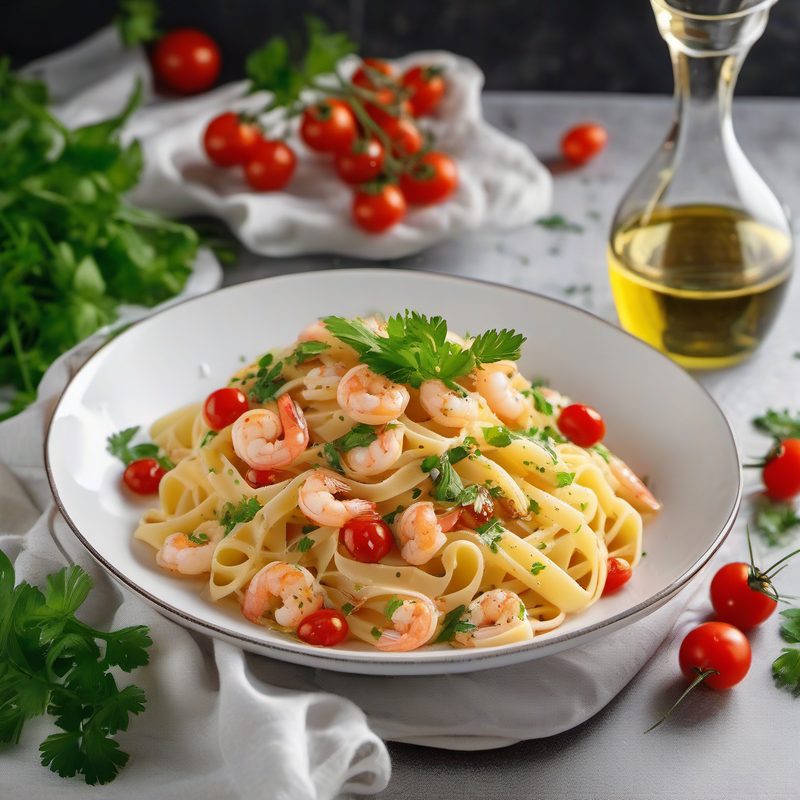
Shrimp Bisque Pasta
All the deep, briny flavor of a classic shrimp bisque, transformed into a sauce that clings to every strand of pasta—this is the one-pot seafood pasta that tastes like you spent hours making stock but comes together in barely over an hour. The shrimp heads and shells do the heavy lifting; you do the easy work of turning them into a silky, aromatic bisque that doubles as the pasta cooking liquid.
| Amount | Ingredient |
|---|---|
| 3 tbsp (45 ml) | Extra-virgin olive oil, divided |
| 2 cloves | Garlic, thinly sliced |
| ¼ tsp | Red pepper flakes (optional) |
| 2 tbsp (30 ml) | Dry white wine |
| 12 oz (340 g) | Spaghetti, linguine, or fettuccine |
| Kosher salt and freshly ground black pepper | |
| 2 tbsp (8 g) | Fresh parsley leaves, finely chopped |
The first time you make a shrimp bisque from scratch, you realize that nearly everything labeled "bisque" in a grocery store is lying to you. Real bisque—the kind that starts with shrimp heads and shells—is shockingly easy and infinitely more flavorful. And when you use that bisque as the cooking liquid for pasta, finished risotto-style, something alchemical happens: the starch from the pasta thickens the bisque into a creamy, clinging sauce that would be impossible to achieve any other way. This recipe walks you through it: deveining and reserving every bit of shrimp shell, building a quick leek-and-tomato bisque, then finishing everything in the same pan you seared the shrimp in. Sweet shrimp, a velvety bisque, and perfectly al dente pasta, all in one bowl. It's restaurant-level technique made weeknight-practical.
For the Bisque
For the Pasta
Use level tablespoons and standard US measuring cups. All produce is medium unless specified.
🥘 Equipment
- Large Dutch oven or heavy-bottomed pot (5- to 6-quart) for bisque
- Large skillet or sauté pan (12-inch, high-sided)
- Large pot (6-quart or larger) for boiling pasta
- Chef's knife and cutting board
- Wooden spoon or spatula
- Immersion blender (or standard blender — see Chef's Tips)
- Fine-mesh strainer
- Kitchen shears (for shrimp prep)
- Ladle or heatproof measuring cup
- Colander
📋 Preparation
Step 1 — Prepare the Shrimp (15 minutes)
Shell and devein the shrimp: Using kitchen shears or a sharp paring knife, cut down the back of each shrimp along the vein line. Remove the dark vein with the tip of the knife or under running water. Remove the heads (if attached) by twisting them off at the joint where the head meets the body. Peel the shells off the shrimp bodies, keeping both heads and shells. Place the cleaned, peeled shrimp in a bowl, cover, and refrigerate. Transfer the heads and shells to a separate bowl — these are the foundation of the bisque.
Leaving the tails on or off is your call. Tails add a touch of visual drama and extra flavor to the bisque (you can drop them in with the shells), but they can be annoying when eating. Tail-off is more civilized for a pasta dish.
Step 2 — Build the Bisque Base (8 minutes)
Place the large Dutch oven over medium heat and add 2 tablespoons of olive oil. When it shimmers, add the thinly sliced leek and cook, stirring frequently, until softened and fragrant but not browned, about 5 minutes.
Add the halved cherry tomatoes and cook, stirring, until they begin to soften and release their juices, about 2 minutes.
Add the reserved shrimp heads and shells and stir to coat in the oil and aromatics. Cook until the shells turn bright pink and begin to release a toasty shrimp aroma, about 1 minute.
Step 3 — Deglaze and Simmer the Bisque (55 minutes)
Pour in the ½ cup of dry white wine and scrape up any browned bits from the bottom of the pot — these carry concentrated tomato and shrimp flavor. Let the wine bubble and reduce by about half, about 1 minute.
Add 2 cups of water and the ½ cup of ice cubes (the ice brings the temperature down gently, preventing the bisque from becoming cloudy from a violent boil). Add the parsley stems (reserve the leaves for garnish). Season with a pinch of kosher salt.
Bring to a gentle simmer, then cover and reduce heat to low. Let the bisque simmer quietly for 50 minutes. The shrimp shells should have released all their flavor, and the liquid should be deeply fragrant and slightly reddish.
The long, gentle simmer is critical — it extracts the natural glutamates from the shrimp shells, creating a stock that has body and depth without tasting fishy. Don't rush this step.
Step 4 — Blend and Strain the Bisque (5 minutes)
Remove the pot from heat. Using an immersion blender, purée the bisque directly in the pot until completely smooth — shells and all. This takes a full 30 to 45 seconds of blending.
Set a fine-mesh strainer over a large bowl or clean pot. Strain the bisque through the strainer, pressing firmly on the solids with the back of a ladle or a spatula to extract every drop of liquid. Discard the solids. You should have about 2 cups of smooth, rich bisque. Set aside.
Blending the shells is the secret — the blender pulverizes the shells into a fine sediment that passes through the strainer as flavor particles, thickening the bisque and adding a layer of briny depth that no shell-free bisque can achieve.
Step 5 — Sear the Shrimp (5 minutes)
Place the large, high-sided skillet over high heat and add 2 tablespoons of olive oil (reserve the remaining 1 tablespoon for finishing). When the oil is shimmering and just beginning to smoke, add the cleaned shrimp in a single layer (work in two batches if necessary — overcrowding will steam them). Cook without moving for 1 minute, until the bottoms are deeply golden and caramelized.
Flip the shrimp, add the thinly sliced garlic and red pepper flakes (if using) to the oil around the shrimp, and cook for 1 minute more, until the second side is pink and the garlic is fragrant and just beginning to turn golden.
Pour in the 2 tablespoons of dry white wine — it will sizzle and steam immediately. Using a wooden spoon, scrape up any browned bits from the bottom of the pan. Cook until the wine is nearly evaporated, about 30 seconds. Transfer the shrimp to a clean plate and set aside. Do not wipe out the pan — that fond is flavor.
The high heat and quick sear give the shrimp a caramelized crust while keeping the interior tender. Cooking them separately and removing them ensures they don't overcook when the pasta finishes in the pan.
Step 6 — Cook the Pasta (concurrent with Step 7, 8–10 minutes)
While the shrimp rests, bring a large pot of generously salted water (about 1½ tablespoons kosher salt per gallon) to a rolling boil over high heat.
Add the pasta and cook until very al dente — about 2 minutes less than the package directions indicate. For most dried pasta that calls for 10–11 minutes, cook for 8–9 minutes.
Just before draining, reserve 1 cup of the starchy pasta cooking water. Drain the pasta well (do not rinse).
Step 7 — Finish the Pasta Risotto-Style in the Bisque (5 minutes)
Return the shrimp skillet (with its fond) to medium heat. Add the reserved 2 cups of strained bisque and bring to a gentle simmer.
Add the drained pasta to the skillet with the bisque. Cook, stirring and tossing constantly with tongs, risotto-style — adding more bisque or reserved pasta water a ladleful at a time as the pasta absorbs the liquid. The pasta should be fully submerged in the gently bubbling liquid at all times.
Continue cooking and stirring until the pasta is perfectly al dente and the liquid has reduced to a creamy, clinging sauce that coats each strand, about 3 to 4 minutes. The sauce should be loose and glossy, not dry — add splashes of reserved pasta water if it tightens up too quickly.
This is the moment the dish transforms from pasta-with-bisque into something greater: the starch released by the pasta as it finishes cooking in the concentrated bisque creates a silky emulsion that no amount of cream or butter can replicate. Keep moving the pasta — constant motion prevents sticking and ensures even coating.
Step 8 — Finish and Serve (2 minutes)
Remove the skillet from heat. Return the seared shrimp and any accumulated juices from the plate to the skillet. Toss well to combine and warm through, about 30 seconds.
Stir in the remaining 1 tablespoon of olive oil and the chopped parsley leaves. Season generously with freshly ground black pepper and taste for salt — the bisque is naturally briny from the shrimp shells, so you may need very little additional salt.
Divide among warm shallow bowls. Garnish each serving with an extra sprinkle of fresh parsley, a final crack of black pepper, and a light drizzle of good extra-virgin olive oil.
Serve immediately — this pasta waits for no one.
🧑👩🍳 Chef's Tips
- Shell-on shrimp are non-negotiable for this recipe: You need the heads and shells to build the bisque. Pre-peeled, deveined shrimp will not produce the same depth of flavor. Look for 16–20 count shrimp with heads on at Asian markets, seafood counters, or frozen from a reputable brand. The heads contain the most concentrated shrimp flavor — if you can only find headless shrimp, buy 1½ pounds to compensate for the lost intensity.
- Save your shrimp shells: This recipe is a perfect use for any bag of shrimp shells you've been accumulating in the freezer. The recipe works beautifully with frozen shells — just add them straight to the pot in Step 2.
- Blend carefully with an immersion blender: The shells make a racket when blending, but persevere. A full 30–45 seconds of blending ensures maximum extraction. Let the bisque cool for 2 minutes before blending to prevent splattering. If using a standard blender, work in batches, fill no more than halfway, remove the center cap from the lid, and cover with a kitchen towel before blending — hot liquids expand and can blow the lid off.
- Don't skip the ice in the bisque: Adding ice cubes along with the water keeps the initial temperature moderate, preventing the violent boil that would emulsify fats into the stock and make it cloudy. A clear bisque = cleaner, more elegant final sauce.
- Risotto-finishing is the key technique: The starch released by undercooked pasta as it finishes in the bisque creates a silky, naturally thickened sauce. This is superior to simply tossing cooked pasta with bisque — the emulsion clings to each strand rather than pooling at the bottom of the bowl.
- Salt conservatively: Shrimp shells and the shrimp themselves are naturally briny. Season the bisque lightly during simmering and taste the finished dish before adding salt at the table.
❌ Common Mistakes
| Mistake | Why It Hurts | The Fix |
|---|---|---|
| Using peeled, deveined shrimp only | Without heads and shells, you cannot build a real bisque — the result will be a thin, flavorless tomato-wine liquid with no shrimp depth | Buy shell-on, head-on shrimp. If unavailable, supplement with store-bought shrimp stock or add 1 teaspoon of shrimp paste (sold in Asian markets) to the bisque |
| Skipping the strain after blending | Fine shell fragments left in the bisque create a gritty, unpleasant texture in the final sauce | Always strain through a fine-mesh strainer, pressing firmly on the solids. A chinois or super-fine strainer yields the silkiest result |
| Overcooking the shrimp | Shrimp go from perfectly tender to rubbery in seconds. Cooking them twice (sear + reheat) means they are especially vulnerable to overcooking | Sear the shrimp hard and fast, remove them, and only return them to the pan off the heat at the very end. They will warm through without cooking further |
| Cooking the pasta fully before the risotto finish | Pasta that is already fully cooked will turn mushy and bloated in the bisque | Cook the pasta 2 minutes shy of al dente — it will continue cooking in the bisque and absorb flavor without losing structure |
| Adding too much pasta water | Adding too much plain water to the bisque dilutes the concentrated shrimp flavor | Add liquid a ladleful at a time and stop when the sauce is loose and glossy. The pasta should be coasting in a creamy sauce, not swimming in thin liquid |
| Not stirring constantly during the risotto finish | The starch released by the pasta settles on the bottom of the pan and scorches if not constantly agitated | Keep the pasta moving with tongs for the full 3–4 minutes of the risotto finish. Set a timer if needed |
| Forgetting to scrape the shrimp pan fond | The browned bits left from searing the shrimp and garlic contain concentrated flavor that enriches the bisque | Deglaze with the wine in Step 5 and scrape everything up. If you skip this, you lose a layer of savory depth |
💡 Variations
| Variation | How To |
|---|---|
| Make it Spicier | Increase the red pepper flakes to ½ teaspoon in Step 5, or add a small dried red chile to the bisque during simmering. The heat cuts through the rich bisque beautifully |
| Add Cream for Decadence | Stir in ¼ cup (60 ml) of heavy cream or crème fraîche into the finished bisque just before adding the pasta. The cream mellows the briny intensity and adds velvety richness. Calorie count will increase by roughly 50 per serving |
| Go Gluten-Free | Use gluten-free spaghetti or linguine made from rice and corn flour. Cook according to package directions minus 1 minute, then finish in the bisque as directed. The starch content will be lower, so the sauce may be slightly thinner — compensate by reducing the liquid more aggressively |
| Add a Brandy or Cognac Finish | Replace the 2 tablespoons of white wine in Step 5 with 2 tablespoons of brandy, Cognac, or dry sherry. The spirit adds a caramelized depth that complements the shrimp bisque — a classic technique in French bisque-making |
| Add Tomato Paste for Color and Depth | Stir 1 tablespoon of tomato paste into the leek and tomato mixture in Step 2 before adding the wine. This deepens the color of the bisque and adds a subtle sweetness that balances the briny shrimp |
| Use Fennel Instead of Leek | Replace the leek with 1 medium fennel bulb, thinly sliced (fronds reserved for garnish). Fennel's anise notes are a classic partner for shellfish and bring a fresh, aromatic dimension to the bisque |
| Add Saffron | Add a generous pinch of saffron threads to the bisque along with the water and ice. The saffron lends a golden hue and a subtle floral, honeyed complexity that elevates the dish to special-occasion status |
❄️ Storage & Leftovers
| Method | Details |
|---|---|
| Refrigerator | Store in an airtight container for up to 2 days. The pasta will continue to absorb the bisque and soften significantly — this dish is best enjoyed fresh. If you must save leftovers, store the pasta and bisque separately if possible |
| Freezer | The bisque (without pasta) freezes beautifully for up to 2 months. Freeze in a sealed container or zip-top bag. Thaw overnight in the refrigerator before using. Cook fresh pasta when ready to serve |
| Reheating | Reheat leftover pasta in a nonstick skillet over medium-low heat with a splash of water, shrimp stock, or white wine, tossing frequently, until warmed through. The pasta will be softer than fresh, but the bisque flavor will have deepened. Add a final drizzle of olive oil and fresh parsley to revive. Microwave in 30-second bursts, covered, with a damp paper towel — but be gentle, as shrimp toughens quickly in the microwave |
🍷 Wine Pairing
| Wine | Why |
|---|---|
| Verdicchio dei Castelli di Jesi (Marche) | The quintessential Italian seafood white — bright, saline, and mineral-driven with a pleasant bitter-almond finish. The acidity cuts through the richness of the bisque like a knife, cleansing the palate between each creamy, briny bite |
| Gavi di Gavi (Piedmont) | Made from the Cortese grape, Gavi is crisp and floral with notes of green apple, citrus zest, and wet stone. Its lean, focused acidity stands up to the garlic and the concentrated shrimp flavor without competing |
| Etna Bianco (Sicily) | A volcanic white from the slopes of Mount Etna — Carricante-based wines are electric with lemon, flint, sea salt, and a distinctive smokiness that mirrors the caramelized fond from the shrimp sear. A stunning, unexpected pairing |
| Franciacorta Brut (Lombardy) | Italy's answer to Champagne — high-acid, minerally, with fine bubbles that scrub the palate clean between bites. The toastiness of sparkling wine complements the browned garlic and caramelized shrimp crust. Perfect for making this weeknight pasta feel celebratory |
| Pinot Grigio (Friuli, not generic) | A well-made Pinot Grigio from Friuli (not the mass-market stuff) has stony minerality, white peach, and a clean, dry finish that won't fight the briny bisque. Lean and elegant, it steps aside and lets the shrimp be the star |
| Soave Classico (Veneto) | Garganega-based Soave offers almond, lemon blossom, and a subtle herbal quality that echoes the parsley. Medium-bodied with good acidity, it bridges the garlic, the wine, and the bisque effortlessly |
| Chardonnay (Chablis or unoaked) | If you want a richer white, choose a Chablis or any unoaked Chardonnay — bright, mineral-driven, with enough body to stand up to the bisque without the butter-vanilla weight of oak. A splash of cream in the variation? A medium-bodied Chardonnay handles it beautifully |
🍺 Beer Pairing
| Beer | Why |
|---|---|
| Italian Dry Lager (Moretti, Peroni) | Crisp, clean, and highly carbonated — a simple lager doesn't compete with the shrimp and bisque. Its dryness and effervescence reset the palate after each creamy, briny bite, making it an ideal everyday partner |
| Belgian Witbier | The subtle coriander and orange peel notes in a witbier play beautifully with the garlic and parsley, while the hazy body and gentle spice complement the silky bisque texture |
| West Coast IPA | For those who prefer hops, an IPA with bright citrus and pine character — not too bitter, not too malty — cuts through the richness of the bisque and stands up to the garlic and red pepper flakes. Avoid hazy/NEIPAs; their low bitterness and creamy mouthfeel clash with the bisque's own creaminess |
| Czech-style Pilsner | Assertive hop bitterness and a clean, dry finish — the noble hop character (Saaz) has a floral, spicy quality that echoes the parsley and mirrors the white wine used in the recipe |
🥗 Suggested Side Dishes
- Simple arugula salad with lemon vinaigrette — Peppery arugula tossed with fresh lemon juice, extra-virgin olive oil, flaky salt, and shaved Parmigiano-Reggiano. The bright acidity and peppery bite are the perfect counterpoint to the rich, briny bisque
- Grilled or griddled asparagus with lemon zest — Asparagus spears grilled or pan-seared in olive oil with salt until charred, then finished with lemon zest and a squeeze of lemon. The grassy, slightly bitter notes complement the sweet shrimp
- Sautéed spinach with garlic — Fresh spinach wilted in olive oil with a clove of sliced garlic and a pinch of red pepper flakes. Simple, fast, and a classic seafood companion
- Crusty sourdough or ciabatta — A generous hunk of warm, crusty bread to mop up every last bit of bisque-sauce from the bottom of the bowl. This is not optional
- Fennel and orange salad — Thinly sliced raw fennel bulb tossed with segments of orange, extra-virgin olive oil, flaky salt, and a few black olives. The bright citrus and crunchy fennel cut through the richness of the bisque beautifully
- Roasted broccoli with garlic and lemon — Broccoli florets roasted at 425°F (220°C) with olive oil, sliced garlic, and salt until crispy-edged and caramelized, finished with a squeeze of lemon. The charred bitterness is a beautiful foil for the sweet, briny shrimp
- White bean and rosemary crostini — Toasted baguette slices topped with warm cannellini beans mashed with olive oil, rosemary, and a splash of the white wine used in the recipe. A simple, flavorful starter that bridges the wine and the meal
📊 Nutrition (per serving, estimated)
| Calories | Protein | Fat | Carbs | Fiber |
|---|---|---|---|---|
| 420 | 28 g | 16 g | 42 g | 3 g |
Nutrition is an estimate based on 4 servings using 1 lb large shrimp, 12 oz dried pasta, 2 tablespoons olive oil for the bisque plus 3 tablespoons for the shrimp and finishing, ½ cup white wine, 1 cup cherry tomatoes, and 1 medium leek. Actual values will vary with brands, substitutions, and the amount of bisque absorbed by the pasta. Shrimp is an excellent source of lean protein and selenium.
❓ Frequently Asked Questions
Can I make this with pre-peeled shrimp?
Technically yes, but you will lose the foundation of the dish — the bisque depends entirely on shrimp heads and shells for its deep, briny flavor. If pre-peeled shrimp is all you have, buy a container of shrimp stock from a seafood counter or use 1 teaspoon of shrimp paste (from an Asian market) stirred into a simple vegetable stock. The result will be good but not transcendent.
How do I know if the bisque has simmered long enough?
After 50 minutes, the liquid should be deeply fragrant and reddish-orange, and the shells should look pale and leached of color. If you taste a drop (careful — it's hot), it should taste intensely of shrimp, with a background sweetness from the leek and tomato. Under-simmered bisque tastes thin and watery; over-simmered bisque tastes muddy. 50 minutes is the sweet spot.
Is it safe to blend shrimp shells?
Yes — the immersion blender pulverizes the shells into a fine powder that passes through a fine-mesh strainer. The blender blades are designed to handle this. Just be sure to strain thoroughly afterward; any large shell fragments will be caught by the strainer. If you are using a standard blender, blend in small batches and strain extra carefully.
What pasta shape works best?
Long, strand-shaped pasta is ideal — spaghetti, linguine, or fettuccine. The risotto-style finish coats each strand evenly with the creamy bisque. Short shapes like penne or rigatoni work in a pinch, but the sauce-to-pasta ratio is less satisfying because the sauce pools inside the tubes rather than coating the outside.
Can I double this recipe?
Yes, but don't crowd the shrimp during searing — work in batches. The bisque scales easily (use a larger pot). The risotto-finish step will take a bit longer as more pasta needs to absorb liquid, but the technique is the same. Expect closer to 90 minutes total for a double batch.
The bisque seems thin after straining — is that correct?
Yes. The bisque will thicken considerably during the risotto-finish step as the pasta releases starch. If it still seems thin after 4 minutes of cooking, turn the heat to medium-high and cook 1 minute longer, stirring constantly. The sauce should be loose and glossy, not thick like a cream sauce.
What should I do with the reserved parsley stems?
They go into the bisque during simmering — their stems are packed with flavor and are traditionally used in stocks and broths because they hold up to long cooking without turning bitter. The tender leaves are reserved for garnishing the finished dish. If you don't have parsley, use the white parts of scallions or a few sprigs of fresh thyme.
Can I add cream to the bisque?
Absolutely — stir in ¼ cup (60 ml) of heavy cream or crème fraîche after straining the bisque and before adding the pasta. The cream mellows the briny intensity and adds a velvety richness that many restaurant versions use. It is not traditional to Italian pasta con gamberetti, but it is delicious and turns the dish into something more reminiscent of a French-style bisque. See the Variations section for details.
Why ice cubes in the bisque?
The ice moderates the temperature when you add the liquid to the hot pot, preventing a violent boil that would emulsify the rendered shrimp fats into the liquid and cloud the bisque. Cold water alone wouldn't work as well because the temperature drop is more gradual with ice. The result is a clearer, cleaner-tasting bisque.
Why is the calories estimate 420 when the original says ~420?
The original recipe estimated ~420 calories per serving based on the ingredients listed. This expanded version uses slightly more olive oil (for the separate searing and finishing steps) and a full 12 ounces of pasta (vs. a potentially lighter amount in the original), which balances out to the same 420 calories — but with a more complete protein and fat breakdown based on the full ingredient list.
🔗 Related Recipes
- Spaghetti allo Scoglio (Seafood Spaghetti with Mussels, Clams, and Shrimp)
- Linguine alle Vongole (Linguine with Clams, White Wine, and Garlic)
- Spaghetti con le Sarde (Spaghetti with Sardines, Fennel, and Breadcrumbs)
- Cioppino (Italian-American Seafood Stew)
- Risotto allo Champagne con Gamberi (Champagne Risotto with Shrimp)
- Gamberi alla Griglia (Grilled Shrimp with Lemon and Herbs)
- Pasta con le Cozze (Pasta with Mussels, Tomato, and White Wine)
- Bisque di Gamberi (Shrimp Bisque — Classic)
🏷️ Search Tags
📸 Photo Reference
Photo reference: `vol1_84.png` — A wide, shallow white ceramic bowl of spaghetti suspended in a velvety coral-orange bisque sauce. Plump, caramelized shrimp are nestled among the pasta, with flecks of fresh green parsley and a shimmer of olive oil on the surface. A lemon wedge and a crusty bread roll sit to the side on a rustic wooden table. Warm, golden afternoon light. Shallow depth of field, steam rising gently. Elegant yet approachable — restaurant presentation, home-cooked soul.
Recipe from "The Italian Kitchen" by Vita Milanese — Volume 1: Pasta Perfetto
Recipe from The Italian Kitchen by Vita Milanese — Volume 1 · Pasta Perfetto. Discover all volumes on the ebook page.