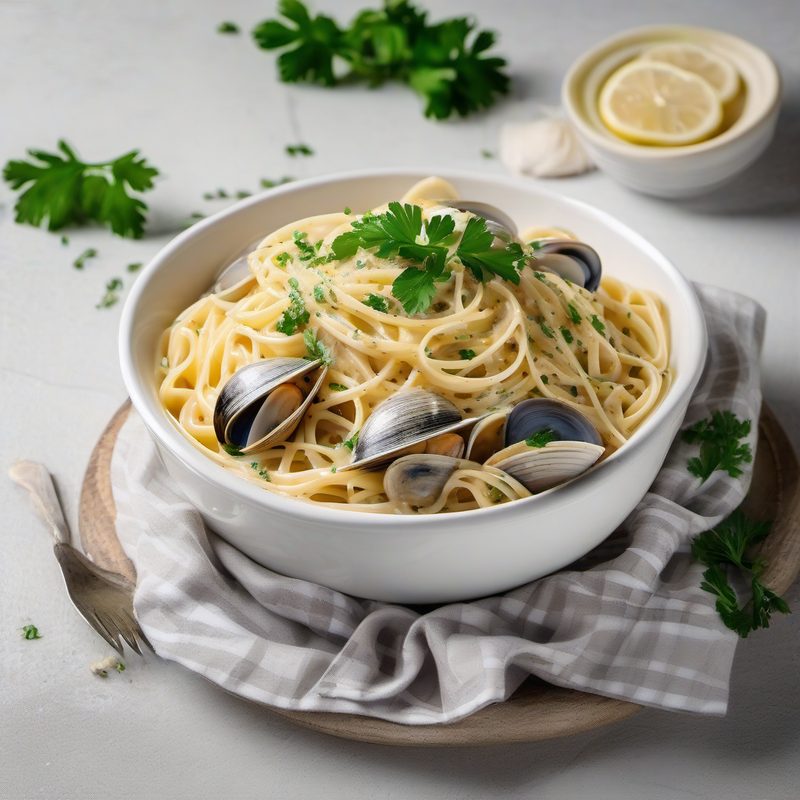
Spaghetti Clams
| Amount | Ingredient |
|---|---|
| Calories | 490 kcal |
| Total Fat | 18 g |
| Saturated Fat | 3 g |
| Trans Fat | 0 g |
| Cholesterol | 48 mg |
| Sodium | 750 mg |
| Total Carbohydrates | 62 g |
| Dietary Fiber | 3 g |
| Total Sugars | 2 g |
| Protein | 20 g |
| Calcium | 55 mg |
| Iron | 7 mg |
| Vitamin C | 10 mg |
| Vitamin A | 350 IU |
| Omega-3 (EPA+DHA) | 200 mg |
| Zinc | 1.5 mg |
| Selenium | 30 mcg |
1. Category
Primi Piatti — First Course (Pasta)
Cucina di Mare — Seafood Cuisine
2. Yield / Serves
Serves 4 as a main course
Serves 6 as a first course (primo)
3. Total Time
35 minutes
4. Active Time / Prep Time
25 minutes
5. Difficulty
Easy — ★☆☆☆☆ (1/5)
6. Why This Recipe Works
Pasta con le vongole is one of Italy's most beloved seafood pastas — a dish of astonishing depth that requires only a handful of ingredients and a single, critical technique. At its heart, this is a recipe built on a paradox: the sauce is almost entirely liquid (white wine, clam juices, olive oil, pasta water), yet the finished dish should not be soupy. Each strand of spaghetti must be glossed with a creamy, pale-gold emulsion that tastes intensely of the sea — briny, garlicky, with a whisper of chili warmth and a clean finish of parsley.
The key to achieving this lies in three pillars. First, the clams must be purged thoroughly. Even premium vongole veraci carry sand and grit in their shells; a one-hour soak in salted water with a sprinkle of cornmeal (if available) encourages them to filter and expel this grit. Skipping this step yields a dish with an unpleasant, gritty texture that no amount of good olive oil can fix. Second, the order of operations matters. The garlic and chili infuse the oil first, building a fragrant base. Then the clams go in with the wine, and the pan is covered — the clams steam open, releasing their precious liquor into the wine, creating an instant broth. The timing is tight: once the clams open (3–5 minutes), they are done. Overcooking turns them into rubbery, shrunken morsels. Third, the pasta finishes cooking in the clam broth. By cooking the spaghetti to just shy of al dente — about 1 minute less than the package directs — and then tossing it in the skillet with the clam juices, the starch from the pasta interacts with the oil-water emulsion to create a sauce that clings rather than pools. A final drizzle of raw olive oil and a handful of chopped parsley brightens everything.
This is cucina povera at its most elegant — humble ingredients, precise technique, and a result that tastes far greater than the sum of its parts.
7. Key Equipment
- Large pasta pot (6–8 quart) for boiling spaghetti
- Large skillet or sauté pan (12–14 inch) with a tight-fitting lid — wide enough to hold the clams in a single layer
- Large mixing bowl for soaking the clams
- Colander or spider for draining pasta
- Ladle or heatproof measuring cup for reserving pasta water
- Chef's knife and cutting board
- Tongs for tossing pasta
- Wooden spoon or spatula
- Small bowl for chopped parsley
- Fresh clams (vongole veraci) — The soul of the dish. Vongole veraci (true clams, Ruditapes decussatus) are the gold standard in Italy: small (2–3 cm), tender, and intensely briny with a clean, sweet finish. If unavailable, substitute Manila clams (Venerupis philippinarum) or littleneck clams — both are small, sweet, and cook quickly. Avoid large chowder clams (quahogs, cherrystones) — they are too tough and require much longer cooking, which will reduce their juices to bitterness. Buy 1 kg (2.2 lbs) — this accounts for shells and the 5–10% that may not open. Look for clams that are tightly closed (or close when tapped), smell cleanly of the sea, and have no cracked or chipped shells.
- Spaghetti — 350 g (12 oz) of good-quality bronze-die extruded spaghetti. The rough, porous surface created by bronze dies is essential — it traps the thin, brothy sauce, allowing it to cling to each strand rather than slide off. De Cecco, La Molisana, and Rustichella d'Abruzzo are excellent choices. Do not use fresh pasta; its delicate structure cannot handle the brief second cooking in the clam broth.
- Extra-virgin olive oil — 4 tablespoons (60 ml), divided. Use a high-quality, medium-intensity extra-virgin olive oil from southern Italy (Puglia, Sicily, or Campania). The oil serves dual roles: 3 tablespoons for sautéing the aromatics and building the sauce base, and 1 tablespoon drizzled raw at the end for brightness and fruitiness. Avoid overly peppery oils that will clash with the delicate clam flavor.
- Garlic — 3 large cloves, thinly sliced. The garlic infuses the oil gently, providing aromatic backbone without ever browning. Thin, even slices release flavor quickly and evenly; minced garlic can burn too easily.
- Fresh chili pepper (or red pepper flakes) — 1 fresh red chili (Fresno, red jalapeño, or Calabrian peperoncino), sliced into thin rings, or ½ teaspoon dried red pepper flakes. The chili should provide a gentle warmth that heightens the brininess of the clams without announcing itself as "heat." This is not a spicy dish; it is a dish with a whisper of warmth.
- Dry white wine — ½ cup (120 ml). A crisp, dry white wine with good acidity — Pinot Grigio, Vermentino, Sauvignon Blanc, or a Gavi. The wine deglazes the pan, melds with the clam liquor, and adds the acidity necessary to balance the richness of the olive oil. Avoid oaked, buttery, or sweet wines.
- Fresh flat-leaf parsley — ¼ cup (about 15 g), finely chopped. Added off heat at the very end, the parsley provides a clean, herbaceous finish that cuts through the richness and echoes the green, mineral notes of the olive oil. Stems are fine to include as long as they are finely chopped.
- Salt — Fine sea salt or kosher salt. For the pasta water (1½ tablespoons per 4 quarts / 3.8 L) and for the clam-soaking water. Do not add salt to the sauce directly — the clam liquor provides ample salinity.
9. Before You Begin (Mise en Place)
- Purge the clams. Place the clams in a large bowl and cover with cold water. Add 2 tablespoons of fine sea salt and stir to dissolve (the salinity should approximate seawater). If you have it, add 1 teaspoon of cornmeal — the clams will ingest it, which helps expel sand more effectively. Let the clams soak for 1 hour at cool room temperature (or in the refrigerator if your kitchen is warm). After soaking, lift the clams out of the water by hand (do not pour them through a colander — this pours the sand back onto them). Discard the sandy water. Scrub each clam thoroughly under cold running water with a stiff brush. Discard any clams that are open and do not close when tapped.
- Bring the pasta water to a boil. Fill a large pot with 4 quarts (3.8 L) of cold water. Add 1½ tablespoons of fine sea salt and bring to a rolling boil over high heat.
- Prepare the aromatics. Peel and thinly slice 3 garlic cloves. If using a fresh chili, slice it into thin rings (remove the seeds and membranes for milder heat). If using dried red pepper flakes, measure ½ teaspoon and set aside.
- Chop the parsley. Wash the parsley, dry thoroughly, and chop finely. Measure ¼ cup (about 15 g). Set aside.
- Measure the wine. Pour ½ cup (120 ml) of dry white wine into a small measuring cup or bowl and have it ready near the stove.
- Set up the serving bowls. Warm 4 serving bowls in a low oven (200°F / 95°C) or by filling them with hot water and emptying just before serving. Cold bowls will cause the pasta to cool too quickly.
11. Instructions
Step 1: Cook the Pasta
Once the salted water is at a rolling boil, add the spaghetti and cook until just shy of al dente — about 1 minute less than the package's al dente time. The pasta will finish cooking in the clam sauce, so it must be removed from the water while it still has a distinct chalky-white core when bitten.
Reserve 1½ cups (360 ml) of pasta cooking water just before draining. Drain the pasta (do not rinse) and set aside. Do not let the drained pasta sit for more than a few minutes — it will clump.
Step 2: Sauté the Aromatics
While the pasta cooks, heat 3 tablespoons of the olive oil in a large skillet (12–14 inch) over medium heat. Add the sliced chili pepper (or red pepper flakes) and cook, stirring, until fragrant, about 30 seconds. The oil should take on a faint reddish hue.
Add the sliced garlic and cook, stirring constantly, until pale gold and fragrant — about 30 to 45 seconds. Do not let the garlic brown; browned garlic introduces bitterness that will clash with the delicate clam flavor.
Step 3: Add the Clams and Wine
Increase the heat to medium-high. Add the purged and scrubbed clams to the skillet in a single layer (as much as possible). Pour the ½ cup white wine over the clams. Cover immediately with the tight-fitting lid.
Cook for 3 to 5 minutes, shaking the pan gently once or twice during cooking to redistribute the clams and ensure even steaming. The clams are done when their shells have opened wide. Start checking at the 3-minute mark — some clams may open faster than others. As they open, use tongs to transfer the open clams to a large bowl (leaving the juices in the skillet). Continue cooking any unopened clams for another minute or two. After 5 minutes total, discard any clams that remain stubbornly closed — they were dead before cooking and are not safe to eat.
Important: Do not overcook the clams. A properly cooked clam is plump, juicy, and tender — when overcooked, they shrink, toughen, and turn rubbery.
Step 4: Build the Sauce (Optional Shell Removal)
At this point, you have two paths:
Path A (Traditional / Rustic): Leave the clams in their shells. This is the most common presentation in Italy — diners use an extra bowl for empty shells. It is dramatic, authentic, and the shells keep the clams warmer during serving.
Path B (Refined / Easy-to-Eat): Remove approximately half the clams from their shells and return just the meat to the skillet. Leave the remaining clams in their shells for visual appeal. This strikes a balance between elegance and convenience.
Either way, keep the skillet with the clam-wine broth over low heat while you work.
Step 5: Finish Cooking the Pasta in the Sauce
Add the drained spaghetti to the skillet with the clam broth. Add ½ cup (120 ml) of the reserved pasta water. Using tongs, toss and turn the pasta vigorously for 45 to 60 seconds over medium heat. The starch from the pasta will interact with the oil and clam juices to create a creamy, emulsified sauce that clings to each strand.
If the sauce looks too tight or dry, add more pasta water, 1 tablespoon at a time, until the pasta is glossy and the sauce flows freely but does not pool at the bottom of the pan. If the sauce looks too watery, let it cook for another 20–30 seconds, tossing constantly, until it thickens.
Step 6: Return the Clams and Finish
Return any shelled clam meat and any reserved shell-on clams to the skillet. Toss gently to combine and warm through — about 30 seconds. Do not toss too aggressively or the shell-on clams may break.
Remove the skillet from the heat. Drizzle with the remaining 1 tablespoon of extra-virgin olive oil and add the chopped parsley. Toss once more to distribute.
Step 7: Serve Immediately
Divide the pasta among the 4 warmed bowls, distributing the clams evenly (each bowl should get roughly 6–8 clams). Pour any remaining juices from the skillet over the pasta. Serve immediately — this dish waits for no one, and the pasta will continue to absorb the sauce as it sits.
Provide an empty bowl for discarded shells at the table, along with extra napkins.
12. Step-by-Step Visual Guide
| Stage | Visual Cue |
|---|---|
| Chili-infused oil | Oil fragrant with a faint reddish tint; chili slices softened but not browned |
| Garlic in oil | Pale gold, translucent, softened — no brown edges whatsoever |
| Clams with wine, covered | Steam rising from under lid; wine bubbling vigorously |
| Clams opening (3–5 min) | Shells crack open, revealing plump, golden-tan clam bodies floating in a pale, briny broth |
| Finished sauce before pasta | A thin, fragrant broth of wine, clam liquor, and oil — pale gold, lightly cloudy |
| Pasta tossed in sauce | Spaghetti strands glistening, coated in a creamy, emulsified sauce — no standing liquid at the bottom |
| Finished dish | Pasta glossy, clams evenly distributed, flecks of green parsley throughout — bowls with a pool of thin, emulsified sauce at the bottom (not a deep puddle) |
13. Troubleshooting
| Problem | Cause | Solution |
|---|---|---|
| Dish is gritty / sandy | Clams were not purged long enough or grit was not fully expelled | Soak clams for a full hour next time; lift them out by hand rather than pouring through a colander; scrub shells thoroughly |
| Clams are rubbery and tough | Overcooked (more than 5 minutes steaming) | Next time, remove clams as they open rather than waiting for all to open in the pan |
| Sauce is watery / too thin | Not enough pasta starch or under-emulsified | Add more reserved pasta water and toss over medium heat for 30 more seconds; the starch will help bind the sauce |
| Sauce is greasy / separated | Oil and water not emulsified properly | Remove from heat, add 1 tablespoon cold pasta water, and toss vigorously — it will re-emulsify |
| Pasta is gummy or clumpy | Overcooked before draining, or rinsed after draining | Cook to just shy of al dente; never rinse — surface starch is essential for sauce adhesion |
| Dish tastes flat / not briny enough | Clams were poor quality or had little liquor | Use a better wine (higher acidity) next time, or add a pinch of sea salt at the end; consider different clam variety |
| Dish tastes too salty | Pasta water was too salty, or clams were especially briny | Reduce salt in pasta water to 1 tablespoon per 4 quarts next time; do not add any salt to the sauce directly |
| Garlic tastes bitter | Garlic was browned during sautéing | Keep heat at medium and cook garlic for only 30–45 seconds; start over with fresh garlic if it browns |
| Not enough heat | Chili was too mild or seeds were removed | Add a pinch of red pepper flakes alongside the fresh chili next time |
| Clams did not open | Clams were dead before cooking (pre-opened), or heat was too low | Discard unopened clams; ensure the pan is hot enough and the lid is tight-fitting |
| Sauce is too salty from clams | Clam liquor was exceptionally concentrated | Add a splash of fresh water or unsalted pasta water to dilute; finish with lemon juice to rebalance acidity |
14. Make Ahead / Storage
- Refrigerator: Pasta con le vongole is strictly a serve-immediately dish. The pasta will continue to absorb the sauce and become soggy within 15–20 minutes, and the clams will turn rubbery as they sit in the hot liquid. Leftovers, if you have them, can be stored in an airtight container for up to 1 day, but the texture will be significantly compromised.
- Reheating: To revive leftovers, reheat gently in a skillet over medium-low heat with a splash of water or white wine. Toss constantly for 1–2 minutes until warmed through. Accept that the clams will be tougher and the pasta softer than the original dish.
- Freezer: Not recommended. The clams become irreparably tough and rubbery upon thawing, and the pasta turns to mush.
- Prep ahead:
- Clam purging can be done up to 2 hours in advance. After purging and scrubbing, keep the clams refrigerated in a bowl covered with a damp towel. Do not store them in fresh water — they will die.
- Garlic and chili can be sliced up to 1 hour in advance and kept covered at room temperature.
- Parsley can be chopped up to 1 hour in advance and refrigerated in a damp paper towel inside a sealed bag.
- Do not shuck the clams in advance. They are cooked in the shell and must be alive when they hit the pan. Shucking them ahead would cause them to die and spoil.
- Do not cook the pasta ahead. It must go from the pot directly into the clam sauce.
15. Variations
Pasta con le Vongole in Bianco (No Wine)
Omit the white wine entirely. After sautéing the garlic and chili, add the clams directly to the pan with ¼ cup (60 ml) of reserved pasta water instead of wine. Cover and steam as directed. The result is a purer, more direct clam flavor — the brininess of the clams is the star. This version is common in southern Italian home cooking.
Pasta con le Vongole e Pomodorini (with Cherry Tomatoes)
Add 200 g (1 cup) of halved cherry tomatoes (preferably piennolo or datterini from Vesuvius) to the skillet after sautéing the garlic and chili. Cook for 2 minutes until the tomatoes begin to soften, then proceed with adding the clams and wine. The tomatoes add acidity, color, and a subtle sweetness that beautifully complements the briny clams. This is the classic vongole rosse (red clam sauce) variation and is immensely popular in Naples and the Amalfi Coast.
Spaghetti alle Vongole con Peperoncino e Limone (with Lemon and Extra Chili)
Add the zest of 1 organic lemon to the garlic oil during sautéing, and finish the dish with 1 tablespoon of fresh lemon juice alongside the parsley. Increase the chili to 1½ fresh chilies (or 1 teaspoon of red pepper flakes) for a more assertive heat. The citrus cuts through the richness and brightens the brininess. This variation is popular in Puglia and Sicily.
Linguine, Vermicelli, or Spaghettini
Spaghetti is traditional, but this dish works beautifully with other long, thin pasta shapes. Linguine (slightly wider, flatter) catches more sauce due to its increased surface area. Vermicelli or spaghettini (thinner than spaghetti) cook faster and create a more delicate mouthfeel. Adjust cooking time according to package directions, always cooking to just shy of al dente.
Vongole con Pane Grattato (with Toasted Breadcrumbs)
For added texture, garnish the finished dish with ¼ cup (30 g) of pangrattato (toasted breadcrumbs). To make: Heat 2 tablespoons olive oil in a small skillet over medium heat. Add ½ cup (60 g) of fresh breadcrumbs (from day-old crusty bread) and cook, stirring constantly, until deep golden and crisp, about 3–4 minutes. Season with salt, a pinch of chili flakes, and a teaspoon of lemon zest. Sprinkle over the pasta just before serving.
Gluten-Free Version
Substitute 350 g (12 oz) of high-quality gluten-free spaghetti (brown rice and corn blend works best). Cook according to package directions and reserve extra pasta water, as gluten-free pasta tends to absorb more liquid. Proceed with the recipe as written — the gluten-free starch will still help emulsify the sauce, though the emulsion may be slightly less stable.
Seafood Mixed Variation (Vongole e Cozze)
Replace 500 g of the clams with 500 g of mussels (cozze). Scrub and debeard the mussels, and cook them alongside the clams. Mussels open slightly faster (2–4 minutes), so add them 1 minute after the clams. The combination of briny clams and sweet, rich mussels creates a more complex, layered sauce. Discard any mussels that do not open.
16. Wine Pairing
- White (Classic): A crisp, mineral-driven Vermentino di Sardegna or Vermentino della Maremma Toscana — saline, citrusy, with a subtle almond finish that echoes the brininess of the clams. The high acidity and sea-salt minerality make this the quintessential pairing.
- White (Campanian): A Greco di Tufo from Campania — the wine of the region where vongole veraci are most prized. Its stony minerality, bright acidity, and notes of white peach and almond are a perfect match for the garlic, chili, and clam broth.
- White (Friulian): A Friulano (formerly Tocai Friulano) from Friuli-Venezia Giulia — herbaceous, with notes of almond, white flowers, and a subtle bitter finish that cuts through the richness of the olive oil.
- White (Sicilian): An Etna Bianco (Carricante grape) from the volcanic slopes of Mount Etna. Its electric acidity, smoky minerality, and citrus-drive profile are sublime with seafood pasta.
- White (Ligurian): A Pigato from Liguria — the region's signature white grape, producing wines with a distinctive saline, almost iodine-like character that is a natural partner for shellfish.
- Sparkling: A bone-dry Franciacorta Brut (Lombardy) or Trentodoc (Trentino) — the high acidity and persistent bubbles scrub the palate clean between bites, preparing it for the next forkful. Prosecco Brut (Valdobbiadene DOCG) is a more accessible alternative, though its lighter body may be overshadowed by the garlic and chili.
- Rosé: A dry Cerasuolo d'Abruzzo rosato — light-bodied with bright red berry and floral notes that bridge the garlic and seafood beautifully.
- Red (Unconventional): If you must have red, a chillable Lagrein from Alto Adige (served at 55–58°F / 13–14°C) or a light Schiava (Vernatsch) — both are low-tannin, high-acidity reds with bright red fruit and herbal undertones that can stand up to the garlic without overwhelming the clams. Most reds will overpower this delicate dish, so proceed with caution.
17. Serving Suggestions
- Serve as a primo piatto (first course) in a traditional Italian meal, followed by a simply grilled whole fish (branzino, orata, or spigola) drizzled with lemon and olive oil, or a mixed seafood grill (grigliata mista di mare).
- For a full Italian seafood dinner, start with antipasti di mare: marinated anchovies (acciughe marinate), carpaccio di pesce spada (swordfish carpaccio), or insalata di polpo (octopus salad). Follow the spaghetti with a light insalata mista dressed with lemon and olive oil.
- Pair with a bright fennel and orange salad — thinly sliced raw fennel, blood orange segments, black olives (Taggiasche if available), and a lemon-olive oil dressing. The citrus and anise notes are a classic counterpoint to briny seafood pasta.
- A side of sautéed spinach with garlic and lemon offers a gentle, vegetal complement without competing with the clams.
- Crusty bread is mandatory — a good pane di Matera, ciabatta, or sourdough for scarpetta (sopping up every last drop of the clam-garlic-chili broth pooled at the bottom of the bowl). This broth is the soul of the dish and should not be wasted.
- Serve with lemon wedges on the side — a squeeze of fresh lemon over the pasta just before eating brightens the flavors and enhances the brininess.
- Wine pairing tip: Pour the same wine you used in the sauce for a seamless, harmonious pairing.
18. Nutritional Information (per serving, serves 4)
Note: Nutritional values are estimates and will vary based on specific ingredient brands, clam variety, and portion sizes. Clams are naturally rich in iron, vitamin B12, selenium, and protein while being relatively low in calories and fat.
19. Recipe Source & Notes
Origin: Coastal Italy — Campania (Gulf of Naples, Amalfi Coast, Sorrento Peninsula), Lazio (Roman coast), and Puglia (Adriatic coast)
Region: Campania / Lazio / Puglia
Traditional name: Spaghetti con le vongole or Spaghetti alle vongole
Dialectal name: Spaghetti e vongole (Neapolitan)
Inspired by: Traditional coastal Italian seafood pasta — La Cucina del Mare
Author: Hermes Agent Cookbook, Volume I
Recipe ID: 85
Date Added: July 2026
> Note on clam varieties: Vongole veraci (Ruditapes decussatus) are native to the Mediterranean and are considered the finest clams for this dish — tender, sweet, and intensely briny. However, they are increasingly rare and expensive due to overfishing and habitat loss. Most clams sold as vongole veraci outside Italy are actually vongole filippine (Manila clams, Venerupis philippinarum), an introduced Pacific species that has naturalized in the Adriatic. Manila clams are an excellent substitute — slightly firmer, slightly less sweet, but still delicious. Look for the smallest clams available (2–3 cm shell width) for the best texture and flavor. If you can only find larger clams (littlenecks or countnecks), use 750 g and increase the steaming time by 1–2 minutes.
> Note on the pasta water: The reserved pasta water is a critical component of the sauce, not merely a hydrating agent. The starch in the water creates the emulsion that binds the oil, wine, and clam juices into a cohesive, clingy sauce. If you forget to reserve pasta water before draining, you can quickly boil a small pot of water with a tablespoon of pasta (any shape) to create a starchy substitute — but it is far easier to simply remember to set aside 1½ cups before draining.
> Note on shell disposal: Do not discard open, empty clam shells in the kitchen trash without rinsing them first — the residual seafood odor can attract flies and develop an unpleasant smell within hours. Rinse the shells under cold water and dispose of them in a sealed bag or outdoor bin. Alternatively, save the larger, clean shells, dry them thoroughly, and use them as decorative elements in a seafood-themed table setting — a common practice in coastal Italian homes.
> Note on serving: In Italy, pasta con le vongole is never served with grated cheese (Parmigiano-Reggiano or Pecorino Romano). The combination of seafood and cheese is considered a culinary faux pas in Italian cuisine — the cheese's richness and saltiness overwhelm the delicate brininess of the clams. If you must add something dairy, a thin drizzle of high-quality fior di latte or burrata on the side (not grated over the pasta) is a controversial but occasional modern twist.
> Note on authenticity: In Naples and the Campanian coast, this dish is traditionally eaten with the fingers — diners pick up the clam shells, use them as tweezers to extract the tender meat, and suck the garlic-chili broth directly from the shells. While this may seem informal, it is the most efficient (and delicious) way to enjoy the dish. Provide plenty of napkins and embrace the mess.
"Pasta con le vongole is the sound of the Mediterranean — the whisper of garlic in hot olive oil, the crack of clam shells as they open to the steam, the sizzle of white wine hitting hot metal, the slurp of a satisfied diner pulling a clam from its shell. It is simplicity raised to an art form. It is the taste of summer on the Amalfi Coast. And it requires nothing more than a handful of ingredients, a single pan, and a willingness to let the sea speak for itself." 🐚🍝
Recipe from The Italian Kitchen by Vita Milanese — Volume 1 · Pasta Perfetto. Discover all volumes on the ebook page.