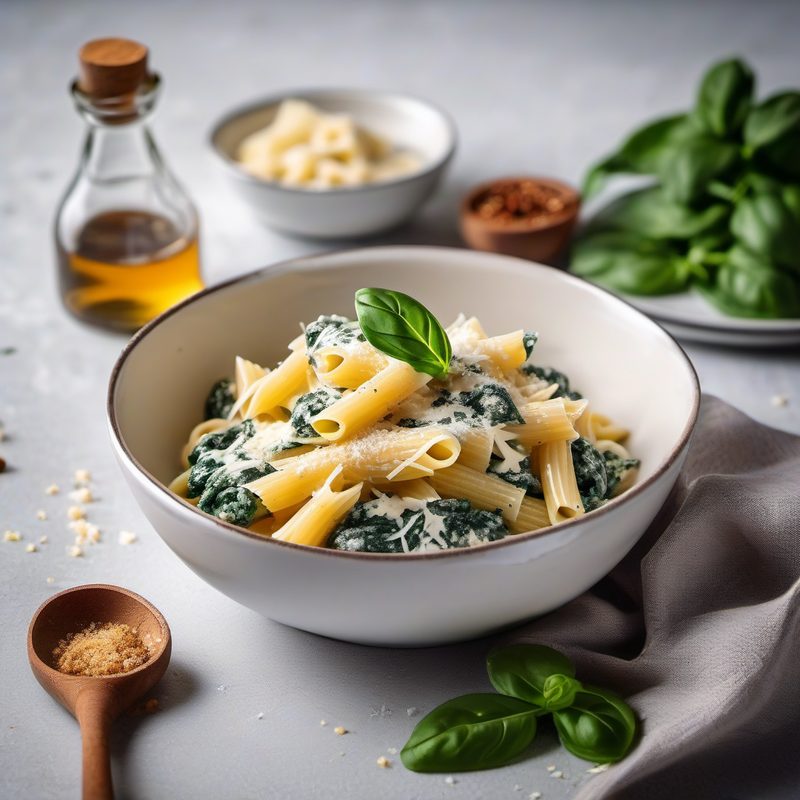
Recommone Linguine
A five-minute creamy pasta from the Nerano coast — al dente linguine tossed in a silky emulsion of anchovies, bright lemon, and sharp Pecorino Romano that comes together faster than you can boil the water.
| Amount | Ingredient |
|---|---|
| Add white wine | Deglaze the pan with ¼ cup (60 ml) of dry white wine after the anchovies have dissolved, letting it reduce by half before adding the lemon and cheese. The wine adds acidity and depth |
| Make it vegetarian | Omit the anchovies and substitute 2 tablespoons of rinsed capers (chopped) and 1 tablespoon of nutritional yeast. The capers provide the brininess while the nutritional yeast adds umami depth. The sauce will be thinner and less creamy without the anchovy oil |
The Sorrento Peninsula, with its turquoise bays and terraced lemon groves, is home to some of Italy's most beloved seafood pastas — and some of its most brilliantly simple ones. Linguine alla Recommone belongs to the latter category: a pasta that transforms five humble ingredients into a creamy, emulsified sauce in the time it takes to cook the pasta. Named for the Recommone family, who popularized this dish in the coastal town of Nerano, the recipe relies on a technique that borders on alchemy: anchovy fillets are stirred into hot oil until they dissolve into a savory cream, then lemon juice, zest, and grated Pecorino are added with a splash of starchy pasta water to create a glossy, velvety emulsion that clings to every strand of linguine. The entire sauce comes together in the pan in about five minutes — a testament to the power of generous Pecorino, good olive oil, and the emulsifying magic of pasta water. Bright, briny, and intensely satisfying, this is the kind of pasta that belongs in every cook's weeknight repertoire.
> Note: This dish is defined by its speed — the entire sauce comes together in the time it takes to cook the pasta. Have all your ingredients measured and ready before you start: the anchovies opened, the lemon zested and juiced, the Pecorino grated, the garlic sliced. There will be no time for chopping or grating once the pasta is drained. Use the best quality ingredients you can — the short ingredient list means every one of them will be front and center.
Use level tablespoons and standard measuring cups. The anchovies should be high-quality fillets packed in olive oil — their briny, umami richness is the backbone of the sauce. The Pecorino Romano must be a genuine, aged Pecorino Romano (sheep's milk) — pre-grated cheese will not melt smoothly and contains anti-caking agents that prevent proper emulsification. The lemon should be large, unwaxed, and organic — you will use both the zest and the juice, and the quality of the citrus is crucial. Use a fruity, medium-intensity extra-virgin olive oil — a Ligurian or Sicilian oil with citrus notes is ideal.
🥘 Equipment
- Large pot (6 qt / 6 L) for boiling pasta
- Large skillet or sauté pan (12-inch / 30 cm)
- Chef's knife and cutting board
- Colander
- Tongs or pasta fork
- Wooden spoon or silicone spatula
- Fine grater or Microplane (for lemon zest)
- Citrus juicer or reamer
- Measuring spoons
- Ladle (for pasta water)
- Small bowl (for combining lemon juice and Pecorino)
📋 Preparation
Step 1 — Prepare the Aromatics and Cheese (5 minutes, before cooking)
Zest the lemon with a Microplane or fine grater — you should have about 1 tablespoon of finely grated zest. Set aside.
Juice the lemon — you should have about 3 tablespoons (45 ml) of juice. Set aside.
Finely grate the Pecorino Romano — you should have 8 tablespoons (80 g) of fine, fluffy cheese. Set aside in a small bowl.
Lightly crush the garlic clove with the flat side of your knife — it should be cracked open but still intact.
Finely chop the parsley — about 2 tablespoons. Set aside.
Having everything prepped before you start cooking is essential for this dish — the sauce comes together in under 2 minutes once the pasta is cooked, and there is no time for grating or zesting in the middle of the process. The garlic is crushed rather than minced so it can infuse the oil with its aroma without being so fine that it burns or becomes harsh.
Step 2 — Cook the Linguine (8–10 minutes)
Fill a large pot with generously salted water — about 1 tablespoon of salt per 4 quarts (4 L) — and bring to a rolling boil.
Add the linguine and cook until al dente — about 1 minute less than the package directs. The pasta should be fully cooked but still firm to the bite; it will finish cooking in the pan with the sauce.
Reserve about 1½ cups (360 ml) of the pasta cooking water before draining. Drain the pasta well (do not rinse).
Undercooking the pasta slightly is essential — it will absorb the lemony, anchovy-infused sauce as it finishes cooking in the pan, becoming perfectly al dente while the sauce clings to every strand. Reserve more pasta water than you think you need — the starch is the key to a silky, emulsified sauce.
Step 3 — Sauté the Garlic and Anchovies (3 minutes, while pasta cooks)
While the pasta cooks, heat 4 tablespoons (60 ml) of olive oil in a large skillet over medium-low heat. Add the crushed garlic clove and cook gently until fragrant and just beginning to turn golden — about 1 minute. Watch carefully — burnt garlic turns bitter.
Add the anchovy fillets to the pan. Cook over medium-low heat, stirring and breaking them apart with a wooden spoon. The anchovies will dissolve into the oil within about 2 minutes, creating a velvety, savory cream. The fillets should completely disappear into the oil, leaving a smooth, amber-tinged paste.
Remove and discard the garlic clove once the anchovies have dissolved — it has done its job of perfuming the oil.
Low heat is essential — anchovies cooked over high heat seize up and release a harsh, fishy flavor instead of mellowing into a silky cream. Be patient and stir gently; the transformation from separate fillets to unified sauce takes just a couple of minutes. The garlic clove is used whole so it can be removed easily after infusing — this prevents the garlic from becoming too assertive and allows the anchovies to remain the star.
Step 4 — Add Lemon and Create the Emulsion (2 minutes)
Remove the skillet from the heat. This step is crucial — adding lemon juice to hot oil over direct heat can cause the emulsion to break.
Add the lemon zest and lemon juice to the pan. Stir to combine with the anchovy oil.
Add the grated Pecorino Romano and ½ cup (120 ml) of the reserved pasta water. Stir vigorously with a wooden spoon or spatula — the cheese will melt into the liquid, combining with the oil, anchovies, and lemon to create a creamy, emulsified sauce.
Return the skillet to low heat and stir continuously for 30 seconds — the sauce should thicken and become glossy. If it seems too thick, add more pasta water 1 tablespoon at a time. If it seems too thin, let it simmer gently for another 30 seconds.
The off-heat step is the key to a stable emulsion. If the lemon juice hits the hot oil over direct heat, the acid can cause the oil to separate rather than combining into a unified sauce. By removing the pan from the heat first, you allow the ingredients to marry gently. The starchy pasta water is the bridge that binds everything together — it emulsifies the oil, cheese, and lemon into a silky, cohesive sauce.
Step 5 — Combine and Toss (1 minute)
Add the drained linguine directly to the skillet with the sauce. Add half the chopped parsley and a generous grind of black pepper.
Toss vigorously with tongs over low heat for about 1 minute, adding more pasta water 1 tablespoon at a time as needed, until the sauce emulsifies into a creamy, glossy coating that clings to every strand. The pasta should be slick and shiny, not oily or dry.
Taste and adjust — add more black pepper if desired. Do not add salt; the anchovies and Pecorino are already intensely salty, and the pasta water is salted. Additional salt is almost never needed.
The final toss over low heat is where the magic happens — the starch from the pasta water, the melted Pecorino, the anchovy cream, and the lemon come together in a unified, velvety sauce that wraps around each strand of linguine. Work quickly and energetically; the emulsion forms best when everything is still hot. If the pasta starts to clump, add another splash of pasta water and toss forcefully.
Step 6 — Serve (1 minute)
Divide the linguine among four warm shallow bowls, using tongs to create neat, coiled nests. Each portion should be glossy and evenly coated in the pale, creamy sauce.
Garnish with the reserved chopped parsley and an extra crack of black pepper. For an extra touch, add a final fine grating of lemon zest over each serving.
Serve immediately — this pasta waits for no one. The emulsion will begin to set and lose its gloss as it cools, so have your guests seated and ready before you plate.
The visual is deceptively simple: pale golden linguine with a creamy, almost sauce-like coating, flecked with black pepper and green parsley. The lemon zest provides tiny bursts of bright yellow and an intoxicating citrus aroma. It is a dish that announces its freshness and simplicity from the first glance.
🧑🍳 Chef's Tips
- Work off the heat when adding lemon juice. The acid in lemon juice can cause the hot oil to break and separate if added over direct heat. Remove the skillet from the stove before adding the lemon, stir to combine, and only then return to low heat to finish the emulsion.
- Crush the garlic, don't mince it. A whole, crushed garlic clove infuses the oil with aroma without becoming overpowering. It is removed before the sauce is finished, leaving a subtle garlic note that supports the anchovies without competing with them.
- Grate the Pecorino finely — the finer, the better. Pecorino Romano is a hard, salty cheese that needs to be grated as finely as possible to melt smoothly into the sauce. Use a Microplane or the finest holes of a box grater. Pre-grated cheese contains anti-caking agents (cellulose, potato starch) that prevent it from melting and emulsifying properly.
- Reserve more pasta water than you think you need. The starchy water is the key to a silky, emulsified sauce. Different brands of pasta release different amounts of starch, and the amount of water needed to achieve the perfect consistency varies. Reserve at least 1½ cups (360 ml).
- Taste before adding any salt. Anchovy fillets and Pecorino Romano are both intensely salty. The pasta water is also salted. You will almost certainly not need to add any additional salt to this dish. A generous grind of black pepper is usually all the seasoning needed.
- Warm the bowls before serving. Cold bowls will cause the emulsion to seize up and lose its gloss. Run the bowls under hot water for 30 seconds and dry them just before plating, or warm them in a 200°F (90°C) oven.
- Use unwaxed organic lemons. You will be using the zest directly in the sauce, so wax-coated supermarket lemons are not suitable. The zest of an unwaxed organic lemon has a bright, pure citrus aroma that is integral to the dish.
❌ Common Mistakes
| Mistake | Why It Hurts | The Fix |
|---|---|---|
| Adding lemon juice over direct heat | The acid causes the hot oil to separate, resulting in a broken, greasy sauce instead of a creamy emulsion | Remove the skillet from the heat before adding lemon juice. Combine off-heat, then return to low heat |
| Cooking anchovies over high heat | The fillets seize up and release a harsh, fishy flavor instead of dissolving into a mellow cream | Cook over medium-low heat, stirring constantly, until the fillets dissolve naturally — about 2 to 3 minutes |
| Using pre-grated Pecorino | Anti-caking agents prevent the cheese from melting, resulting in a grainy, clumpy sauce instead of a silky emulsion | Grate Pecorino Romano fresh from a wedge using a Microplane or fine grater |
💡 Variations
| Variation | How To |
|---|---|
| Add chili heat | Add a pinch of red pepper flakes (peperoncino) along with the garlic. The gentle heat cuts through the richness and adds a warm, Southern Italian character |
| Use spaghetti or bucatini | Any long pasta works well. Spaghetti is a classic choice, while bucatini (hollow strands) catch the sauce inside the tubes for an extra burst of flavor in every bite |
| Add capers | Add 1 tablespoon of rinsed and roughly chopped capers along with the lemon juice. The floral, briny pop of capers complements the anchovies and adds another layer of complexity |
| Make it creamy with butter | Add 1 tablespoon of unsalted butter along with the Pecorino and pasta water. The butter enriches the emulsion, creating an even silkier, more luxurious sauce |
| Add breadcrumbs | Toast ¼ cup (40 g) of breadcrumbs in a dry skillet until golden and sprinkle over the finished pasta. The crunchy texture contrasts beautifully with the creamy, silky linguine |
❄️ Storage & Leftovers
| Method | Details |
|---|---|
| Refrigerator | Store in an airtight container for up to 1 day. The pasta will absorb the sauce, becoming denser and less glossy |
| Reheating | Reheat in a skillet over medium-low heat with a splash of water or pasta water, tossing gently until warmed through (2–3 minutes). The sauce will loosen as it heats. Add a fresh squeeze of lemon juice and a grind of black pepper to revive the flavors. Do not microwave — it makes the anchovy flavor harsh and the Pecorino grainy |
| Freezing | Freezing is not recommended. The emulsion will break completely upon thawing, leaving a greasy, separated sauce. The pasta will also become mushy |
| Make Ahead | This dish is designed to be made and served immediately — it comes together in 15 minutes and is at its absolute peak the moment it hits the plate. The only advance preparation possible is grating the Pecorino and zesting the lemon up to a few hours ahead |
| Lemon Zest (Make Ahead) | Lemon zest loses its volatile oils quickly after grating, becoming dry and less aromatic. Grate it just before cooking for the brightest flavor. If you must do it ahead, store it in an airtight container in the refrigerator for up to 2 hours |
| Pecorino (Make Ahead) | Grated Pecorino can be stored in an airtight container in the refrigerator for up to 3 days. Bring to room temperature before using for the smoothest melting |
🍷 Wine Pairing
| Wine | Why |
|---|---|
| Greco di Tufo (Campania) | A structured white from Campania with stone fruit, citrus, and flinty notes. Its bright acidity cuts through the rich anchovy-Pecorino sauce, while its mineral character echoes the brininess of the anchovies. A perfect match for the coastal Campanian origins of the dish |
| Falanghina (Campania) | A native Campanian white with notes of white flowers, citrus, green apple, and a subtle almond finish. Its lively acidity and medium body stand up to the Pecorino without being overwhelmed. The almond note harmonizes beautifully with the savory anchovy sauce |
| Verdicchio dei Castelli di Jesi (Marche) | Crisp and mineral-driven with pronounced acidity and a subtle bitter-almond finish — the acidity tames the richness of the anchovy-Pecorino sauce while the almond note echoes the nuttiness of the cheese |
| Etna Bianco (Sicily) | A mineral-driven white from the volcanic slopes of Mount Etna — notes of green apple, white flowers, and flinty minerality. The bright acidity and saline finish complement the lemon and anchovies beautifully |
| Soave Classico (Veneto) | Light, floral, and unoaked with a subtle bitter-almond finish. The wine's delicacy provides a refreshing counterpoint to the bold, savory flavors of the pasta while its almond note harmonizes with the Pecorino |
| Franciacorta Brut (Lombardy, sparkling) | Italy's premier méthode traditionnelle sparkling wine — brisk bubbles and crisp acidity cut through the rich, cheesy sauce like a palate-cleansing wave. The yeasty, brioche notes add another layer of complexity to the pairing |
🥗 Suggested Side Dishes
- Simple arugula and lemon salad — Baby arugula dressed with 3 parts extra-virgin olive oil, 1 part fresh lemon juice, salt, and pepper. The peppery, bright greens provide a clean contrast to the rich, savory pasta. A perfect echo of the lemon theme
- Marinated olives and roasted peppers — A simple antipasto of mixed olives (Castelvetrano and Gaeta), roasted red peppers, and a drizzle of good olive oil. The briny olives complement the anchovies while the sweet peppers offer a different flavor dimension
- Grilled lemon-marinated zucchini — Zucchini sliced lengthwise, marinated briefly in lemon juice, olive oil, and oregano, then grilled until tender and lightly charred. The bright, herbaceous vegetable echoes the lemon character of the pasta
- Crusty ciabatta or grissini — A warm, crusty bread for sopping up any remaining sauce from the bowl. Bread is nearly essential with this dish — the sauce at the bottom of the bowl is too good to waste
- Roasted cherry tomatoes with oregano — Cherry tomatoes halved, roasted at 400°F (200°C) for 15 minutes with olive oil, dried oregano, salt, and pepper. The sweet-tart tomatoes and aromatic oregano balance the salty, savory pasta
- Fennel and orange salad — Thinly sliced raw fennel, segments of blood orange, a handful of black olives, and a simple lemon-olive oil dressing. The bright, citrusy, anise-flavored salad refreshes the palate between savory forkfuls
📊 Nutrition (per serving, estimated)
| Calories | Protein | Fat | Carbs | Fiber |
|---|---|---|---|---|
| ~510 | 20 g | 18 g | 64 g | 3 g |
Nutritional values are estimates based on 4 servings with 400 g linguine, 8 anchovy fillets in oil, 8 tbsp Pecorino Romano, 4 tbsp olive oil, and 1 lemon (zest and juice). Actual values will vary based on specific brands and portion sizes. Anchovies are rich in omega-3 fatty acids, calcium, and protein — just a few fillets provide a significant nutrient boost. Pecorino Romano adds calcium and protein but is high in sodium and saturated fat — a little goes a long way. This is a moderate-calorie main course; as a primo (first course), it will serve 6 with smaller portions (approximately 340 calories per serving). The dish is naturally low in fiber; pair with a vegetable side dish or salad to round out the meal. To lighten the dish, reduce the olive oil to 2 tablespoons and use 6 tbsp Pecorino instead of 8 — approximately 430 calories and 12 g fat per serving.
❓ Frequently Asked Questions
What is Recommone? Is it a place or a person?
The term "Recommone" refers to the Recommone family, a well-known local family from the Nerano area on the Sorrento Peninsula. They popularized this simple yet brilliant pasta preparation in their trattoria, and the dish has since become a signature of the region. It is a classic example of how Italian family-run trattorias often give their name to dishes that become local legends — a humble kitchen creation elevated to culinary fame through its sheer deliciousness.
Can I use anchovy paste instead of whole anchovy fillets?
You can, but whole fillets are strongly preferred. Anchovy paste is denser, saltier, and lacks the subtle texture that whole fillets develop as they dissolve into the oil. If you must substitute, use 2 teaspoons of anchovy paste and adjust salt carefully — paste is significantly saltier than fillets. The paste will also not create the same velvety, creamy texture that dissolved whole fillets provide.
Why is my sauce oily and separated instead of creamy?
A broken, oily sauce is usually caused by one of three issues: (1) You added the lemon juice over direct heat rather than off-heat — the acid causes the oil to separate. (2) You did not use enough pasta water — the starch is needed to emulsify the oil and cheese into a cohesive sauce. (3) You used pre-grated Pecorino, which contains anti-caking agents that prevent the cheese from melting smoothly. Fix by adding more hot pasta water and whisking vigorously off the heat.
Do I really need to remove the garlic clove? Why not just leave it in?
The garlic is used whole and crushed to infuse the oil with its aroma without becoming too assertive. It is removed after infusing to prevent it from overwhelming the delicate balance of anchovies, lemon, and Pecorino. If you prefer a stronger garlic flavor, you can mince the garlic instead of crushing it and leave it in the sauce — but this will change the character of the dish considerably.
My Pecorino clumped into a stringy mess instead of melting smoothly. What happened?
Grated Pecorino Romano can clump when it comes into contact with hot liquid if: (1) It was grated too coarsely — fine, powdery grates melt more smoothly. Use a Microplane or the finest holes of a box grater. (2) The pasta water was too hot — let the water cool for 10–15 seconds after adding it to the pan before stirring in the cheese. (3) The cheese was too cold — bring the grated Pecorino to room temperature before adding. (4) You used pre-grated cheese — always grate fresh from a wedge.
Can I use a different lemon variety?
Meyer lemons (which are sweeter and less acidic) can be used, but the dish will be noticeably milder and less bright. Regular Eureka or Lisbon lemons are traditional and provide the bright, tangy acidity that balances the rich anchovy and Pecorino. If using Meyer lemons, add an extra squeeze of juice (about ½ lemon more) to compensate for the lower acidity.
The sauce seems too thin. How do I fix it?
A thin sauce usually means there is too much pasta water relative to the cheese and oil. Let the sauce simmer gently over low heat for 30–60 seconds, stirring constantly, to allow some of the liquid to evaporate. Alternatively, add another tablespoon of grated Pecorino — the cheese will thicken the sauce as it melts. Remember that the sauce will continue to thicken as it coats the pasta, so it should be slightly looser than ideal in the pan.
Can I use gluten-free pasta?
Yes — substitute 400 g (14 oz) of high-quality gluten-free linguine (brown rice, quinoa, or chickpea-based). Cook according to package directions (typically 1–2 minutes longer than wheat pasta). You may need slightly more or less pasta water to achieve the right consistency, as gluten-free pastas release starch differently. All other ingredients are naturally gluten-free.
🔗 Related Recipes
- Ortigia Linguine (#188) — Another anchovy-based linguine from Sicily, with walnuts and toasted breadcrumbs instead of lemon; a beautiful contrast in texture and flavor profile
- Mediterranean Spaghetti (#193) — A sun-drenched cherry tomato spaghetti from Maria Grazia Cucinotta; the simplest possible tomato pasta, ready in 25 minutes
- Spaghetti Clams Lemon (#65) — A classic clam and lemon spaghetti that shares the bright, briny character of the Recommone, using fresh clams instead of anchovies
- Linguine Garlic Oil Shrimp (#27) — Another lightning-fast linguine dish from the same coastal tradition, with garlic, olive oil, and shrimp; a perfect sibling recipe to this one
- Spaghetti Garlic Butter Pecorino (#66) — A Roman-inspired spaghetti with garlic butter and Pecorino; the same cheesy, emulsified finish with a different aromatic base
🏷️ Search Tags
📸 Photo Reference
Photo reference: `vol1_206.png` — An overhead or slightly angled three-quarter shot of a wide, shallow white ceramic bowl filled with linguine alla Recommone. The linguine is glossy and slick with a pale, creamy emulsion — each strand coated in a silky, ivory-tinted sauce. Tiny flecks of black pepper are visible throughout, along with bright green specks of fresh parsley. A final grating of lemon zest provides tiny golden bursts of color and visual texture. The pasta is coiled neatly in the center of the bowl, with a generous drift of freshly grated Pecorino caught among the strands. Beside the bowl: a halved unwaxed lemon on a small wooden board, a few whole anchovy fillets on a small dish, a ramekin of freshly grated Pecorino, and a glass of chilled Greco di Tufo (pale straw color). A white linen napkin and a heavy fork complete the scene. The lighting is warm and natural, evoking a sun-drenched terrace overlooking the Bay of Naples. The overall mood is bright, fresh, and effortlessly elegant — the kind of dish that announces its simplicity and speed while delivering extraordinary depth of flavor.
Recipe from "The Italian Kitchen" by Vita Milanese — Volume 1: Pasta Perfetto 🍋
Recipe from The Italian Kitchen by Vita Milanese — Volume 1 · Pasta Perfetto. Discover all volumes on the ebook page.