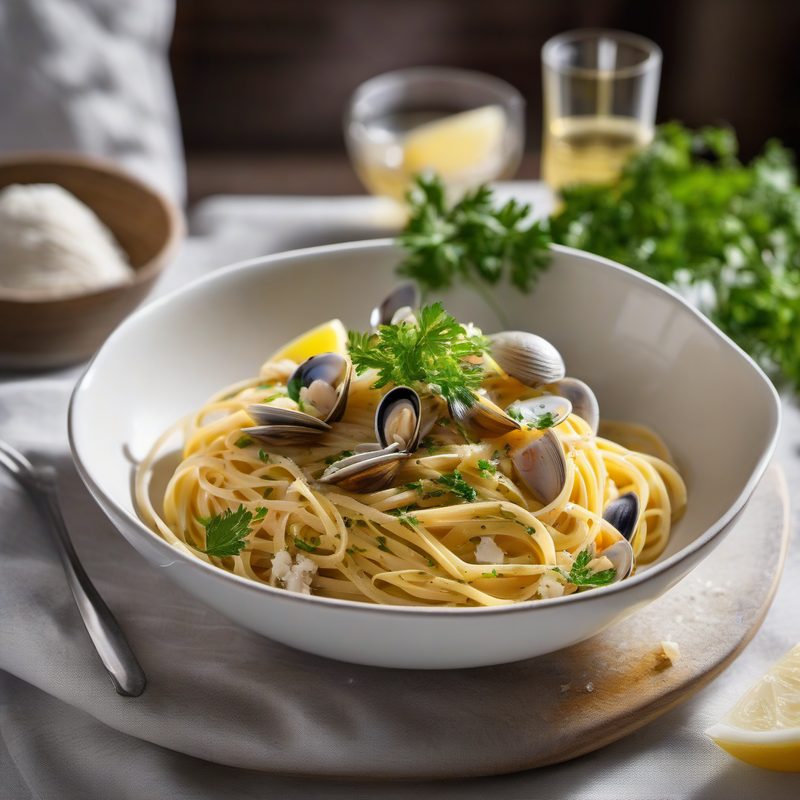
Linguine Clams Bottarga
| Amount | Ingredient |
|---|---|
| Calories | ~555 kcal |
| Total Fat | 21 g |
| Saturated Fat | 3.5 g |
| Cholesterol | 85 mg |
| Sodium | ~980 mg (varies with clam salinity) |
| Total Carbohydrates | 64 g |
| Dietary Fiber | 3 g |
| Sugars | 2 g |
| Protein | 26 g |
Linguine with Clams and Bottarga (Cured Fish Roe)
Category: Primi piatti · Cucina di mare (First Courses · Sea Kitchen)
Servings: 4
Total Time: 45 minutes
Active Time: 30 minutes
Difficulty: Easy to Intermediate
Why This Recipe Works
This classic Italian seafood pasta draws its power from two intensely briny ingredients: fresh Manila or littleneck clams and salt-cured bottarga (mullet or tuna roe). The clams release a sweet, sea-scented liquor as they steam open; the bottarga contributes a deep, funky umami that no amount of salt alone can replicate. For the best results, we source small, tender clams (about 1 kg for four people), purge them thoroughly to eliminate grit, and cook the pasta a full minute short of al dente so it can finish absorbing the clam juices in the pan. A quick soffritto of garlic and chili in olive oil builds a fragrant base, and a splash of dry white wine deglazes the pan and marries the flavors. The finishing touch—a generous grating of fresh bottarga showered over the plated pasta—adds texture and an elegant salinity that makes every bite taste of the sea.
Test Kitchen Discoveries
- Bottarga quality matters: Bottarga comes in two forms—whole (wax-coated, shelf-stable) and pre-grated (more convenient but less aromatic). We strongly prefer whole Sardinian bottarga di muggine (grey mullet) or Sicilian bottarga di tonno (bluefin tuna), grated fresh with a Microplane just before serving. Pre-grated bottarga loses volatile aromatics quickly.
- Clams need a long purge: Clams straight from the fishmonger often contain sand. A 20-to-30-minute soak in cold salted seawater (3% salinity, about 30 g kosher salt per liter of cold water) with a sprinkle of cornmeal encourages them to expel grit.
- Pasta water is liquid gold: Reserve at least 1 cup (240 ml) of the starchy pasta cooking water before draining. The starch helps emulsify the clam juices and olive oil into a silky, clingy sauce.
- Don't crowd the clams: Work in batches if necessary. Overcrowding lowers the pan temperature and prevents clams from opening properly.
For the Clams
For the Pasta and Sauce
For the Finish
Before You Begin
- Purging the clams is the single most important step. Discard any clams that are cracked, broken, or that remain open after being tapped. Soak the clams in cold salted water (30 g salt per liter of cold tap water) with optional cornmeal for 20–30 minutes. Lift the clams out by hand (do not pour through a colander—this re-deposits grit), rinse under cold running water, and set aside.
- Bring a large pot of water (about 5–6 quarts) to a rolling boil. Season generously with kosher salt (about 1½ Tbsp or 22 g) — the water should taste like the sea.
- Set up your workstation: Have the wine measured, garlic and chili prepped, parsley chopped, and bottarga ready at your Microplane. The final assembly moves fast.
Equipment
- Large stockpot (8–10 qt) for pasta
- Large skillet or sauté pan (12-inch / 30 cm) with a tight-fitting lid
- Colander or fine-mesh sieve
- Microplane or fine rasp grater (for bottarga)
- Chef's knife and cutting board
- Wooden spoon or tongs
- Measuring cups and spoons
- Small bowl for reserved pasta water
Instructions
Step 1: Purge the Clams
- Fill a large bowl with 1 liter (4 cups) cold water. Add 30 g (2 Tbsp) kosher salt and stir until dissolved. Add the optional cornmeal.
- Submerge the clams and let them sit at room temperature for 20–30 minutes. The clams will filter the water and expel sand.
- Lift the clams out by hand (discard the gritty water), rinse under cold running water, and drain in a colander. Set aside. Discard any clams that remain open after being tapped.
Step 2: Cook the Pasta
- Bring a large pot of salted water (about 5–6 quarts water with 1½ Tbsp kosher salt) to a vigorous boil.
- Add the linguine and cook for 1 minute less than the package directions call for al dente. (Typically 8–9 minutes for dry linguine; you want it very al dente since it will finish cooking in the pan.)
- Reserve 1½ cups (355 ml) of the starchy pasta water before draining. Drain the pasta (do not rinse) and set aside.
Step 3: Build the Flavor Base
- While the pasta cooks, place a large skillet (12-inch) over medium heat. Add 4 tablespoons (60 ml) olive oil.
- Add the sliced garlic and minced chili (or red pepper flakes). Cook, stirring frequently, until the garlic is fragrant and just barely golden — about 45–60 seconds. Do not let the garlic brown or burn; it will turn bitter.
Step 4: Cook the Clams
- Raise the heat to medium-high. Add the purged clams to the skillet in a single layer.
- Pour in the white wine and cover the skillet immediately with the lid.
- Cook, shaking the pan occasionally, for 3–5 minutes, until all (or nearly all) of the clams have opened. Check after 3 minutes — if some remain closed, re-cover and cook 1–2 minutes more.
- Transfer the opened clams to a bowl using tongs, leaving the liquid in the pan. Discard any clams that refuse to open after 6 minutes. (They may still be edible but usually contain mud.)
- Remove the skillet from the heat and let the clam liquor settle for about 30 seconds. If you suspect any residual grit, pour the liquid through a fine-mesh sieve lined with a paper towel or coffee filter back into the skillet.
Step 5: Marry Pasta and Clams
- Return the skillet to medium heat. Add the very al-dente linguine and ½ cup (120 ml) of the reserved pasta water.
- Toss vigorously with tongs or a wooden spoon for 1–2 minutes, allowing the pasta to absorb the clam-and-wine liquid. The starch from the pasta water will emulsify with the olive oil and juices into a light, creamy sauce. Add more pasta water a tablespoon at a time if the pan looks dry.
- Return the clams (in their shells) to the skillet, along with any accumulated juices from the bowl. Toss gently to combine and warm the clams through — about 30 seconds.
Step 6: Finish and Serve
- Divide the pasta among four warmed shallow bowls, arranging the clams evenly on top.
- Using a Microplane, grate a generous layer of bottarga over each serving — about 12–15 g (scant 2 Tbsp) per portion.
- Sprinkle with the chopped parsley, drizzle with a finishing swirl of extra-virgin olive oil, and finish with a few cracks of black pepper.
- Serve immediately with extra bottarga and a lemon wedge on the side, if desired.
Visual Cues for Doneness
- Garlic: Translucent with just the faintest golden edge — not brown.
- Clams: Shells pop open ¼ to ½ inch; the meat is plump and glossy.
- Sauce: Coats the back of a spoon — thin but creamy, not watery.
- Pasta: No visible white core when bitten; tender but with a firm resistance (al dente).
Variations
Spaghetti con Vongole e Bottarga (No Chili)
Omit the chili entirely for a delicate, sweet version that lets the bottarga and clams speak. Finish with lemon zest (1 tsp) alongside the bottarga for brightness.
Linguine Vongole con Panna
Add 60 ml (¼ cup) heavy cream along with the pasta water in Step 14. This produces a softer, northern-Italian-style sauce. Reduce the bottarga by half (25 g) to keep the salt in balance.
Linguine Vongole e Bottarga senza Gusci (De-shelled)
For a more elegant presentation, remove all clams from their shells before tossing with the pasta in Step 16. Reserve 4–6 clams in the shell for garnish. This makes the dish easier to eat and allows the sauce to coat every strand more evenly.
Make-Ahead Tips
- Clams can be purged up to 4 hours in advance and kept refrigerated in a damp paper towel–lined bowl (not submerged in water after purging).
- Bottarga can be grated up to 1 hour ahead; cover tightly with plastic wrap to prevent it from drying out. For best aroma, grate just before serving.
- Do not cook the pasta or clams ahead — this dish must be assembled and served immediately. The sauce will break and the pasta will turn gummy on standing.
Leftovers (If Any)
This dish is best consumed immediately. If you have leftovers, remove the clams from their shells, refrigerate the pasta and clams separately in airtight containers, and consume within 24 hours. Reheat gently in a skillet with a splash of water or white wine to re-emulsify the sauce — the microwave will toughen the clams and turn the bottarga bitter.
Serving Suggestions
- Warm crusty bread (pane di casa or ciabatta) to mop up the remaining sauce at the bottom of the bowl.
- A light contorno: Arugula salad with shaved fennel, lemon juice, and olive oil; or simply grilled zucchini with mint.
- Primo/secondo ordering: Follow this pasta course with a light fish main, such as branzino al sale or grilled calamari. Avoid a second heavy seafood dish — the bottarga already delivers an intense oceanic punch.
Wine Pairing
| Wine Style | Specific Examples | Why It Works |
|---|---|---|
| Crisp, mineral-driven white | Vermentino di Sardegna, Gavi di Gavi, Soave Classico | The bright acidity stands up to the briny clams without overwhelming the delicate bottarga. |
| Light, unwooded white | Falanghina del Sannio, Pecorino Offida, Albariño | Subtle salinity echoes the seafood; avoid oak, which collides with the bottarga's delicate cured notes. |
| Sparkling (traditional method) | Franciacorta Brut, Cava Brut Nature, Crémant de Loire | Bubbles cut through the olive oil and cleanse the palate between bites. |
| Rosé (dry, Provençal-style) | Cerasuolo d'Abruzzo, Rosé de Provence | Light berry notes complement the chili without competing with the clams. |
| Avoid: | Big oaked Chardonnay, heavy reds, or sweet wines | These overpower the subtle, briny flavors of the dish. |
Shopping List
Seafood
- [ ] 1 kg (2.2 lb) Manila or littleneck clams
- [ ] 50 g (1.75 oz) whole Sardinian bottarga di muggine (or Sicilian bottarga di tonno)
Produce
- [ ] 1 head garlic
- [ ] 1 fresh red chili (or dried red pepper flakes)
- [ ] 1 bunch fresh flat-leaf parsley
- [ ] 1 lemon (optional, for serving)
Pantry
- [ ] 350 g (12.3 oz) linguine (bronze-die)
- [ ] Extra-virgin olive oil (good quality for finishing)
- [ ] Dry white wine (e.g., Vermentino or Pinot Grigio)
- [ ] Kosher salt
- [ ] Black peppercorns
- [ ] Cornmeal (optional, for purging)
Nutrition Information (per serving)
Estimates based on standard ingredient values. Actual values depend on specific brands and clam salinity.
Science of the Dish: Emulsifying Seafood Pasta
The silky sauce in this dish is a starch-stabilized emulsion — not a cream-based sauce. Here is the mechanism:
- Starch granules released from the pasta during cooking swell and burst in hot water, releasing amylose and amylopectin.
- When we add the starchy pasta water to the olive oil–clam juice mixture and toss vigorously, these starch molecules act as emulsifiers, bridging the oil and water phases.
- Agitation (tossing and stirring) provides the mechanical energy needed to disperse oil droplets into the water phase, creating a temporary but stable oil-in-water emulsion.
- The clam liquor contributes natural glutamates (free amino acids) and sodium, which also help stabilize the emulsion by screening electrostatic repulsion between droplets.
The result: a light, creamy sauce that clings to every strand of linguine — no cream required.
About Bottarga
Bottarga is the salted, pressed, and air-dried roe sac of grey mullet (Mugil cephalus) or bluefin tuna (Thunnus thynnus). The process is ancient, dating back to Phoenician and Roman times. The best bottarga — bottarga di muggine from Cabras, Sardinia — is protected by PDO (Protected Designation of Origin) status.
To use bottarga:
- Whole roe: Peel away the wax coating and the thin membrane underneath. Grate directly onto the finished dish using a Microplane. Do not cook it — heat destroys its delicate aroma.
- Storage: Wrap whole bottarga in parchment paper, then in plastic wrap, and store in the refrigerator for up to 6 months. Freeze for longer storage.
Bottarga substitutes in a pinch: karasumi (Japanese cured mullet roe), butàriga (Sicilian tuna bottarga), or, in a lesser approximation, a finely grated anchovy fillet (though the flavor profile is markedly different).
Recipe Source & History
A classic from the cucina marinara of central and southern Italy — particularly Lazio (Rome) and Sardinia. The pairing of clams (vongole veraci, the true carpet-shell clams) with cured fish roe reflects the Italian practice of using preserved fish products to intensify the flavor of fresh seafood without masking it. Linguine is traditional because its long, flat shape captures both the sauce and the small, tender clams. Spaghetti is a common substitute, but linguine's oval cross-section offers a slightly thicker, more satisfying bite.
Buon appetito!
Recipe from The Italian Kitchen by Vita Milanese — Volume 1 · Pasta Perfetto. Discover all volumes on the ebook page.