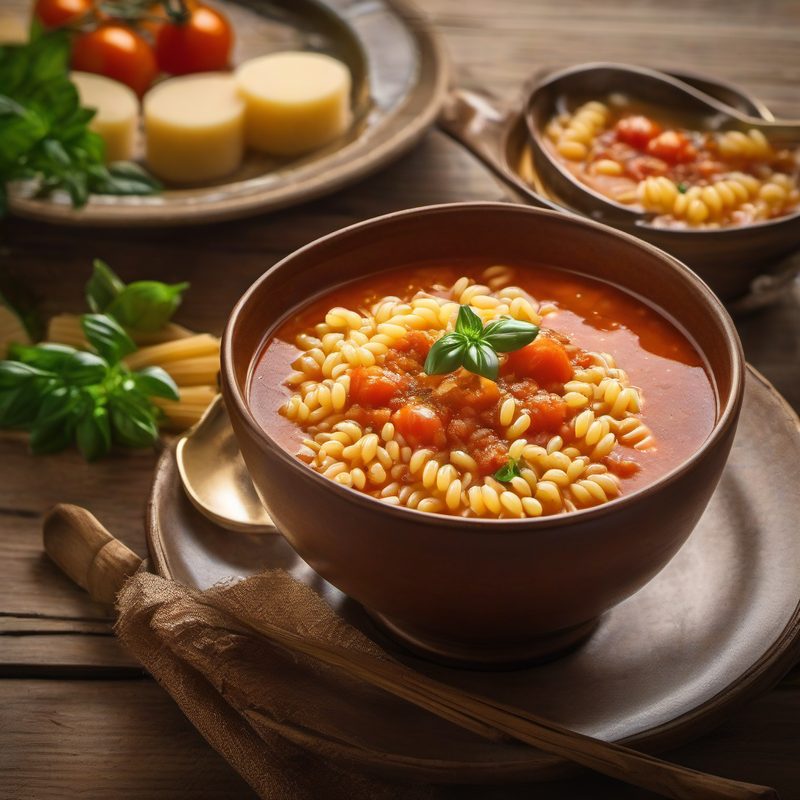
Pastina Pomodoro
Little Pasta with Tomato — the quintessential Italian childhood comfort food. Tiny pasta swimming in a silky, fragrant tomato broth, finished with fresh basil and Parmigiano. Simple, soul-warming, and ready in 20 minutes.
| Amount | Ingredient |
|---|---|
| 3 tbsp | Extra-virgin olive oil |
| 1 clove | Garlic, thinly sliced |
| 400 g | Passata or crushed tomatoes (preferably Mutti or San Marzano) |
| 1 liter | Vegetable broth or water |
| 200 g | Pastina (stelline, acini di pepe, orzo, or any tiny pasta shape) |
| Kosher salt and black pepper | To taste |
| 6–8 leaves | Fresh basil, torn, plus more for garnish |
| 1/2 cup | Parmigiano-Reggiano, finely grated, plus more for serving |
> Note: Active time is minimal — this comes together in the time it takes to boil a pot of water. The key is using good-quality passata (imported Italian if possible) and finishing with fresh basil off the heat.
🥘 Equipment
- Dutch oven or large saucepan (4-qt)
- Wooden spoon or silicone spatula
- Box grater or Microplane
- Ladle
- Serving bowls
📋 Preparation
Step 1: Sauté the Garlic
In a Dutch oven or large saucepan, heat the olive oil over medium heat until shimmering. Add the sliced garlic and cook, stirring constantly, until fragrant and just lightly golden — about 30 to 45 seconds. Do not let it brown or burn, which will turn the broth bitter.
Why slice rather than mince? Thin slices infuse the oil with gentle garlic flavor without the harsh pungency of minced garlic — appropriate for a children's comfort dish.
Step 2: Build the Tomato Base
Add the passata or crushed tomatoes to the pot. Bring to a lively simmer and cook, stirring occasionally, until the tomato deepens in color and thickens slightly — about 5 minutes.
Season with a generous pinch of kosher salt and a few turns of black pepper.
Step 3: Add the Broth
Pour in the vegetable broth or water. Increase the heat to high and bring to a rolling boil.
Step 4: Cook the Pastina
Add the pastina, stirring immediately to prevent sticking. Reduce the heat to medium and cook according to package directions, typically 5 to 7 minutes for stelline or acini di pepe. Stir occasionally to keep the tiny pasta from clumping.
The finished dish should be brothy, not dry — like a soupy pasta. If it thickens too much, add a splash of hot water or broth.
Step 5: Finish and Serve
Remove the pot from the heat. Stir in the torn basil and half the grated Parmigiano (about 1/4 cup). Taste and adjust salt and pepper.
Ladle into warm bowls. Top with the remaining Parmigiano, a few fresh basil leaves, and a drizzle of extra-virgin olive oil. Serve immediately.
🧑🍳 Chef's Tips
- Use good passata: This recipe has so few ingredients that each one matters. Imported Italian passata (Mutti, Cirio, or La Valle) produces a far more flavorful broth than generic crushed tomatoes.
- Pastina alternatives: Stelline (little stars) are the classic. Acini di pepe, orzo, ditalini, or even broken-up vermicelli all work beautifully.
- Make it richer: Swirl in a pat of butter at the end, or use chicken broth instead of vegetable broth.
- Don't oversalt the broth: The pasta absorbs liquid as it cooks and the Parmigiano adds saltiness. Season lightly at first, then adjust at the end.
- Resist the urge to rinse: Never rinse pastina. The surface starch helps thicken the broth just enough and helps the sauce cling.
❌ Common Mistakes
| Mistake | Why | Fix |
|---|---|---|
| Overcooking the pastina | Tiny pasta turns to mush in seconds | Cook to the lower end of the package time and test frequently |
| Burning the garlic | Burnt garlic ruins the broth's sweetness | Cook over medium heat, remove from oil as soon as it's golden |
| Using too little broth | Pastina absorbs a lot of liquid — you'll end up with glue | Start with 1 liter and have hot water ready to thin |
| Adding basil too early | Heat destroys the herb's bright aroma | Stir basil in off the heat, just before serving |
| Skipping the Parmigiano | The cheese adds depth and a silky finish | Never skip it — it's the backbone of the dish |
💡 Variations
- Brodo di pollo: Substitute chicken broth for vegetable broth for a heartier, more traditional version. This is how many Italian nonne prepare it.
- Pastina con uova (stracciatella style): Beat 1 large egg with 2 tbsp grated Parmigiano. After the pastina is cooked, drizzle the egg mixture into the simmering broth while stirring — it forms delicate ribbons. Cook 1 minute more.
- Pastina con verdure: Add 1/2 cup of finely diced carrot and celery along with the passata for a minestrone-like version.
- Speedy pantry version: Use 1 can (400 g) of whole San Marzano tomatoes, crushed by hand, in place of the passata. The texture will be slightly chunkier.
- Vegan pastina: Omit the Parmigiano or use a good-quality vegan Parmesan. Nutritional yeast (1–2 tbsp) adds a savory, cheesy note.
❄️ Storage
Pastina is best eaten immediately — the tiny pasta continues to absorb broth and will become mushy within hours. If you must store it, transfer to an airtight container and refrigerate for up to 1 day. To reheat, add a generous splash of water or broth and warm gently over low heat, stirring frequently. The texture will be softer than fresh but still enjoyable.
🍷 Wine Pairing
| Wine | Why |
|---|---|
| Chianti Classico | Bright acidity and cherry notes match the tomato broth beautifully |
| Barbera d'Alba | Lively, food-friendly red with the acidity to cut through the olive oil and cheese |
| Pinot Nero (Alto Adige) | Light-bodied, red-fruited, and elegant — won't overwhelm the delicate pastina |
🍺 Beer Pairing
| Beer | Why |
|---|---|
| Italian Pilsner (e.g., Birra Moretti) | Clean, crisp, and highly carbonated — a perfect palate cleanser between spoonfuls |
| Belgian Saison | Peppery, slightly funky notes complement the herbaceous basil and nutty Parmigiano |
🥗 Suggested Sides
- Insalata verde — Simple green salad with lemon vinaigrette to balance the richness
- Bruschetta al pomodoro — Toasted crusty bread rubbed with garlic and topped with diced tomato, basil, and olive oil
- Frittata with zucchini and mint — A light egg dish that extends the Italian theme
📊 Nutrition (per serving)
| Calories | Protein | Fat | Carbs | Fiber |
|---|---|---|---|---|
| 345 | 12 g | 14 g | 42 g | 4 g |
❓ FAQ
Can I make this with gluten-free pastina?
Yes — use a gluten-free tiny pasta shape (rice or corn-based stelline are available). The cooking time will be shorter, so watch it carefully. You may also need extra broth as GF pasta tends to absorb more liquid.
Is pastina just for kids?
Traditionally yes — in Italy, pastina is the first solid food given to babies and a go-to sick-day meal. But there's nothing childish about its flavor. A bowl of properly made pastina al pomodoro is a genuinely satisfying meal at any age.
Can I use whole wheat pastina?
You can, but note that whole wheat pastina has a nuttier, earthier flavor that competes with the tomato-basil broth. It also requires a slightly longer cooking time and more broth.
My pastina turned into a thick paste — what went wrong?
Either you used too little liquid, cooked it too long, or let it sit before serving. Pastina is thirsty — always start with the full liter of broth and serve immediately.
🔗 Related Recipes
- Stracciatella alla Romana (Roman Egg Drop Soup)
- Pasta e Fagioli
- Pasta con Ceci (Pasta with Chickpeas)
- Minestrone Tradizionale
- Spaghetti al Pomodoro
🏷️ Search Tags
Recipe from The Italian Kitchen by Vita Milanese — Volume 1 · Pasta Perfetto. Discover all volumes on the ebook page.