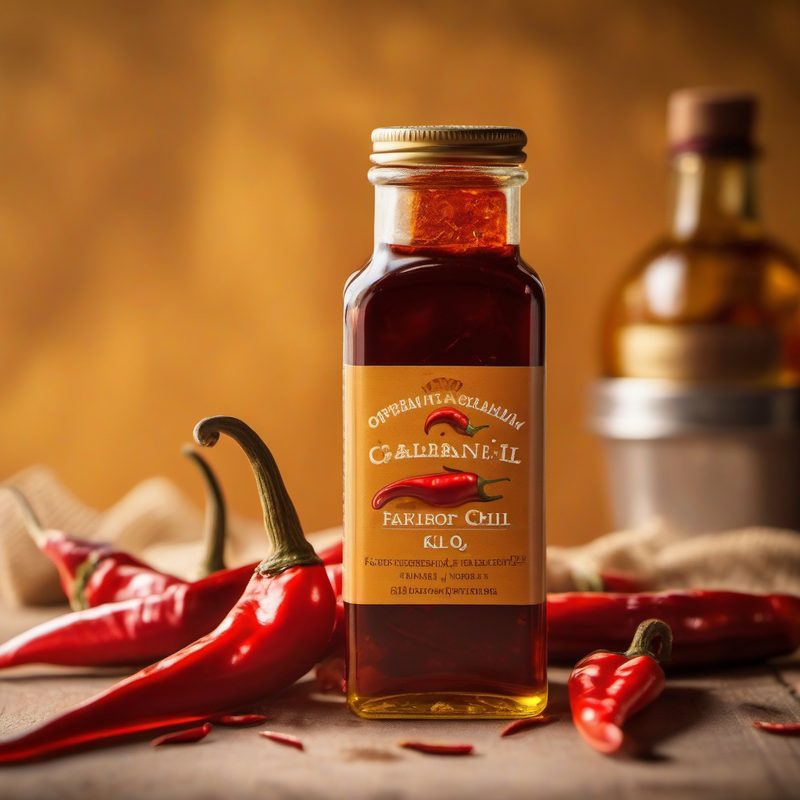
Calabrian Chili Oil (Olio santo calabrese)
A fiery, fragrant southern Italian chili oil that transforms everything it touches — pizza, pasta, grilled meats, roasted vegetables, eggs — with slow-infused heat and the distinctive fruity, smoky character of Calabrian peperoncini.
| Amount | Ingredient |
|---|---|
| as needed (about 15–20) | dried Calabrian chili peppers (peperoncini secchi) |
| enough to cover (about 250 ml / 1 cup) | extra-virgin olive oil |
Olio santo — "holy oil" — is the Calabrian answer to the question every Italian kitchen asks: how do I make everything taste better? The answer is deceptively simple: dried Calabrian chili peppers submerged in good extra-virgin olive oil, left to infuse for weeks until the oil turns a deep, menacing red and carries the peppers' signature heat — fruity, floral, and building, never punishing. Unlike Asian chili oils that incorporate Sichuan peppercorns, star anise, or garlic, olio santo is a pure expression of the pepper itself. The result is an oil that adds heat without heaviness, a liquid condiment that brightens and elevates rather than smothers. A few drops on a slice of pizza, a drizzle over pasta aglio e olio, or a quick brush on grilled vegetables — this is the oil that Calabrian grandmothers keep on the table at every meal.
Ingredient notes: The quality of the olive oil matters enormously — use a good-quality extra-virgin olive oil that you would happily eat raw. Do not use a cheap or overly bitter oil; the chili infusion will amplify whatever flavors the oil brings. True Calabrian peperoncini (Capsicum annuum) are ideal — they have a distinct fruity, slightly smoky character with a medium heat that builds gradually. If unavailable, substitute dried peperoncini from other Italian regions, dried cayenne peppers, or a mix of dried red chilies. Avoid pre-crushed red pepper flakes, which are too broken down and will produce a dusty, gritty oil. The quantity of peppers depends on your heat tolerance and the size of your jar — you want the jar packed loosely with peppers, then filled with oil.
- Protective glasses and gloves (essential — chili oils can aerosolize and burn eyes and skin)
- Sterilized glass jar with tight-fitting lid (250–350 ml / 1–1½ cup capacity)
- Damp cloth or paper towel
- Kitchen scissors or small knife (for removing stems)
- Funnel (optional, for transferring oil)
- Labels and marker (for dating)
- Prepare your workspace and protect yourself (2 min). Wear protective glasses and disposable gloves when handling dried chilies. The oils can aerosolize and cause intense burning if they contact your eyes or skin. Work in a well-ventilated area.
- Clean the chilies (3 min). Wipe each dried chili pepper with a damp cloth or paper towel to remove dust, dirt, and any residue. Do not wash them under running water — moisture introduces a risk of spoilage and mold during the infusion period.
- Remove the stems (3 min). Using kitchen scissors or a small knife, snip off the tough stems from each chili. Leave the peppers whole — cutting or crushing them releases more seeds and creates a cloudier, grittier oil. For a milder oil, optionally slit a few peppers lengthwise and shake out some of the seeds before infusing (the seeds hold much of the heat).
- Pack the jar (2 min). Place the stemmed chilies in the sterilized glass jar. Pack them loosely — they should fill about half to two-thirds of the jar's volume. Do not cram them in; the oil needs room to circulate around each pepper for even extraction.
- Add the oil (2 min). Pour extra-virgin olive oil over the chilies, completely covering them by at least 1 cm (½ inch). The peppers must be fully submerged — any pepper exposed to air may develop mold. Tap the jar gently on the counter to release any trapped air bubbles, then add more oil if needed.
- Seal and infuse (2 min). Wipe the rim of the jar clean, seal tightly with the lid, and label with the date. Place the jar in a cool, dark place (a cupboard or pantry works perfectly) and let it infuse for at least 2 weeks. The oil will gradually deepen in color from golden to a rich, translucent red.
- Test and use (2 min). After 2 weeks, open the jar and dip a clean spoon into the oil. Taste a drop on your tongue or on a piece of bread. If the heat level is where you want it, the oil is ready. If you prefer more intensity, let it infuse for another week or two. The oil will continue to develop and deepen over time.
- Use the right oil. The olive oil is the canvas for the chili — a fruity, medium-bodied extra-virgin olive oil (something from Calabria itself, if possible) will produce the most harmonious result. Avoid robust, peppery oils that might fight with the chilies.
- Leave the peppers whole. Cutting or crushing the chilies releases tiny seed fragments that settle at the bottom of the jar and create a gritty, unappealing texture. Whole peppers infuse just as effectively and produce a clean, clear oil.
- Sterilize the jar. Wash the jar and lid in hot, soapy water, rinse thoroughly, and dry completely. Alternatively, run them through a dishwasher on the sanitize cycle. Any residual moisture or bacteria can cause the oil to spoil during the long infusion.
- Patience is non-negotiable. The oil needs at least 2 weeks to extract the pepper's full character — heat, fruitiness, and subtle smokiness. Tasting it after 3 days is fruitless; it will be barely pink and barely hot. The magic happens in the second and third weeks.
- Heat is variable. Calabrian peperoncini vary in heat from batch to batch and season to season. Taste one raw (just a tiny piece) before making your oil to gauge its intensity. If the peppers are exceptionally hot, use fewer of them or infuse for a shorter time.
- Do not refrigerate during infusion. The oil needs to stay liquid for proper extraction. Refrigeration causes olive oil to thicken and cloud, slowing the infusion process. Store in a cool, dark cupboard instead.
| Mistake | Why It Hurts | The Fix |
|---|---|---|
| Washing the chilies under running water | Trapped moisture creates conditions for mold and bacterial growth during the 2+ week infusion | Wipe chilies with a damp cloth only. Dry them completely before adding to the jar. |
| Using poor-quality olive oil | The chili amplifies any off-flavors in the oil — bitterness, rancidity, or harshness become impossible to ignore | Use a good-quality extra-virgin olive oil with a flavor profile you enjoy on its own. |
| Not fully submerging the chilies | Any pepper exposed to air will likely develop mold, ruining the entire batch | Pour enough oil to cover the peppers by at least 1 cm (½ inch). Check after 24 hours and add more if needed. |
| Using crushed or ground chilies | The oil becomes cloudy, gritty, and difficult to strain — tiny seed fragments settle at the bottom of every dish | Use whole dried chilies whenever possible. Snip off the stems but leave the pods intact. |
| Infusing in a warm, sunny spot | Heat and light degrade the olive oil and can cause the chilies to develop off-flavors | Store in a cool, dark place — a pantry, cellar, or dark cupboard. Below 21°C (70°F) is ideal. |
| Checking too early and disturbing the jar | Every time you open the jar, you introduce oxygen, which accelerates oil oxidation and can affect flavor | Resist the urge to peek. Two weeks is the minimum; trust the process. |
- Garlic and Chili Oil (Olio santo all'aglio): Add 2 peeled and slightly crushed garlic cloves to the jar with the chilies. The garlic infuses alongside the peppers and adds a savory, aromatic dimension. Use within 1 month — garlic carries a risk of botulism when stored in oil for extended periods, so refrigerate after infusion.
- Herb and Chili Oil: Add a sprig of fresh rosemary, a few fresh bay leaves, or a sprig of oregano to the jar. The herbs contribute an aromatic, Mediterranean character that is lovely drizzled over grilled bread or roasted vegetables.
- Lemon Chili Oil: Add a strip of lemon zest (no white pith) to the jar for a bright, citrusy note that pairs beautifully with fish and seafood. The zest should be removed after 1 week to prevent bitterness.
- Smoked Chili Oil: Substitute 3–4 dried smoked chilies (like chipotle meco or smoked paprika peppers) for some of the Calabrian peperoncini for a deeper, smokier flavor profile.
- Mild Chili Oil: Remove the seeds from all chilies before infusing and reduce the number of peppers by half. The resulting oil will have a gentle warmth rather than a fiery kick.
- Extra-Hot Chili Oil: Slit each chili lengthwise to expose the seeds (without chopping them) and double the quantity of peppers. Infuse for 3–4 weeks instead of 2 for maximum intensity.
| Storage Method | Details |
|---|---|
| Cool, dark place (pantry/cupboard) | The prepared oil (chilies still in the jar) keeps for up to 6 months. Keep away from heat, light, and moisture. The chilies will continue to infuse slowly over time, so the heat level will gradually increase. |
| Refrigerator (after opening or for garlic variation) | Refrigerate if you added garlic or herbs. The oil may thicken and turn cloudy in the fridge — this is normal. Let it come to room temperature for 30 minutes before using; the cloudiness will clear. |
| Straining for longer storage | For the longest shelf life (up to 1 year), strain the oil through a fine-mesh sieve lined with cheesecloth into a clean, sterilized bottle after 3–4 weeks of infusion. Discard the chilies. Strained oil has a more stable, consistent flavor. |
Calabrian chili oil is a finishing oil, not a cooking oil. Use it sparingly — a little goes a long way:
- Drizzle over pizza: A few drops on a slice of Margherita or Diavola pizza — the heat cuts through the cheese and tomato and adds a Calabrian kick.
- Finish pasta dishes: A drizzle over pasta aglio e olio, cacio e pepe, or any simple tomato-based pasta. Stir it in at the very end, off the heat.
- Brush on grilled meats: Brush onto grilled steak, pork chops, or chicken thighs during the last minute of cooking for a glossy, spicy finish.
- Dress roasted or grilled vegetables: Toss roasted broccoli, cauliflower, eggplant, or zucchini with a tablespoon of chili oil and a squeeze of lemon.
- Eggs: Drizzle over fried eggs, scrambled eggs, or a frittata for a spicy morning kick.
- Sandwiches and bruschetta: Spread on crusty bread with fresh tomatoes and basil, or use as a spicy finishing touch on a porchetta or sausage sandwich.
- Seafood: A light drizzle over grilled shrimp, seared scallops, or steamed mussels enhances without masking.
- Wine pairing: A crisp, acidic white wine like a Vermentino (Sardinia) or a Falanghina (Campania) — the acidity and minerality stand up to the chili heat. For red wine lovers, a light, chillable red like a Lacrima di Morro d'Alba or a Bardolino works beautifully.
| Per Serving (about 1 tsp / 5 ml) | |
|---|---|
| Calories | 40 |
| Protein | 0 g |
| Fat | 4.5 g |
| Carbohydrates | 0 g |
| Fiber | 0 g |
Nutrition values are approximate and based on extra-virgin olive oil. The chili peppers contribute negligible calories.
Can I speed up the infusion process?
You can warm the oil and chilies gently in a saucepan over the lowest possible heat for 10–15 minutes (do not let it simmer or smoke), then let it cool and infuse for 24 hours. This rapid method produces a usable oil quickly but lacks the depth and complexity of the slow, cold infusion method. The texture may also be cloudier.
How do I know if the oil has gone bad?
If you see any signs of mold (white or fuzzy spots on the chilies or surface of the oil), a rancid or off smell, or any fermentation bubbles, discard the entire batch immediately. Always use a clean, dry spoon when dipping into the oil.
Can I reuse the chilies after the oil is finished?
The chilies will have given most of their heat and flavor to the oil, but they are not entirely spent. Remove them from the oil, chop them finely, and use them in a tomato sauce, braise, or stew for a mild chili background. They will not have much heat left.
Should I use extra-virgin or regular olive oil?
Extra-virgin is strongly preferred for its flavor. However, if you plan to use the oil primarily for high-heat cooking (which is not its intended purpose), a lighter, more neutral olive oil may be preferable — but at that point, you are making a different condiment.
Can I add salt?
No. Salt does not dissolve in oil and will simply settle at the bottom of the jar. Season the food itself with salt; the oil should contribute only heat and fruitiness.
- Homemade Red Pepper Flakes (Volume 1)
- Garlic Confit (Volume 2)
- Harissa (Volume 2)
- Pasta Aglio e Olio (Volume 1)
- Grilled Vegetables with Chili Oil (Volume 3)
Recipe from "The Italian Kitchen" by Vita Milanese — Volume 2: Sunday Sauce
Recipe from The Italian Kitchen by Vita Milanese — Volume 2 · Sunday Sauce. Discover all volumes on the ebook page.