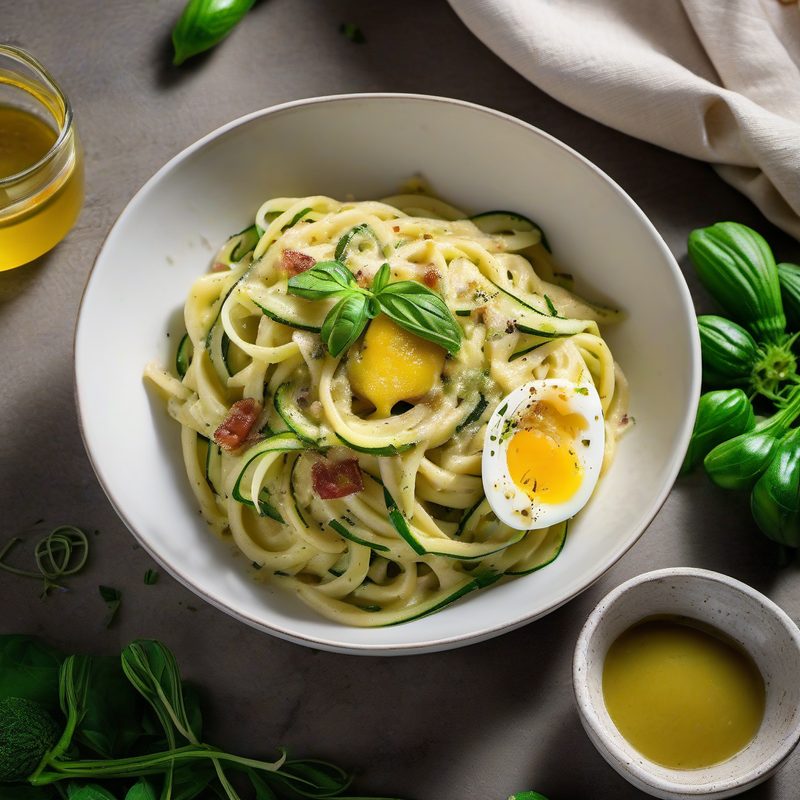
Zucchini Carbonara
Category: Primi piatti
Position: 498
Servings: 4
Total Time: 35 minutes
Active Time: 25 minutes
Why This Recipe Works
Classic carbonara relies on guanciale or pancetta for richness and salt, but this ingenious summer variation lets zucchini take center stage. By julienning or grating the zucchini and sautéing it until soft and golden, we build a silky, almost creamy base that mimics the unctuous texture of traditional carbonara without any meat. The heat of the just-cooked pasta is the secret weapon: it gently cooks the egg-and-Pecorino mixture into a velvety sauce that clings to every strand. A starchy splash of pasta water ties everything together, while fresh mint (an unexpected but traditional Calabrian touch) cuts through the richness and brightens the dish. The result is a vegetarian carbonara that is every bit as luxurious and satisfying as the original.
- Pasta (350 g): Spaghetti, bucatini, or tonnarelli are ideal — their long, round shapes catch the sauce beautifully. The starch from the pasta water is critical for the emulsion; do not skimp on the cooking water.
- Zucchini (3 medium, about 450 g total): Choose firm, medium zucchini with glossy skin and no soft spots. Avoid oversized ones, which can be watery and seedy. Leave the skin on for color and texture.
- Eggs (2 whole + 3 yolks): Use the freshest eggs you can find. The whole eggs provide body; the extra yolks deliver the velvety richness that defines a great carbonara. Bring eggs to room temperature before mixing so they emulsify smoothly.
- Pecorino Romano (100 g): A sharp, salty sheep's-milk cheese is non-negotiable. Do not substitute Parmigiano-Reggiano alone — its milder flavor will not stand up to the zucchini. Grind it fresh from a block; pre-grated cheese contains anti-caking agents that will make the sauce gritty.
- Garlic (2 cloves): Used gently — sliced, not minced — to perfume the oil without dominating. If your garlic is very large, use just one clove.
- Extra-Virgin Olive Oil (3 tablespoons): A fruity, medium-intensity oil works best. Reserve a high-end finishing oil for drizzling at the table if desired.
- Fresh Mint (about 6–8 leaves): An essential finishing touch. Do not skip or substitute with dried mint. It provides a cool, herbaceous counterpoint that makes the dish sing.
- Salt & Black Pepper: Use fine sea salt for the pasta water (it dissolves more evenly) and a generous amount of freshly ground black pepper.
Equipment
- Large pot (6–8 qt) for pasta
- Box grater or mandoline (for julienning zucchini)
- Large skillet (12-inch) or sauté pan
- Large heatproof mixing bowl (for serving)
- Microplane or fine grater (for Pecorino)
- Tongs (for tossing pasta)
- Liquid measuring cup (to reserve pasta water)
Prep Notes
- Bring the eggs to room temperature 30 minutes before cooking.
- Grate Pecorino Romano on a Microplane — the fine, fluffy shreds dissolve almost instantly into the egg mixture.
- Julienne the zucchini into matchstick-size pieces (about 3 mm × 3 mm × 6–8 cm). Alternatively, use the large holes of a box grater; the texture will be softer but still delicious.
- Pick, stack, and chiffonade the mint leaves just before serving to prevent browning.
- Reserve at least 1½ cups of pasta water before draining; the exact amount you need varies with the humidity of the zucchini and the pasta.
Key Steps
- Prep the zucchini — Julienne or coarsely grate 3 medium zucchini. Salting is optional (see Troubleshooting).
- Build the zucchini base — Sauté sliced garlic in olive oil until fragrant, then add zucchini and cook over medium-high heat until soft and deeply golden (12–15 minutes). Discard garlic.
- Mix the egg-cheese emulsion — Whisk 2 whole eggs + 3 yolks with 100 g grated Pecorino and generous black pepper. Do not add salt — the Pecorino is salty enough.
- Cook the pasta — Boil pasta in well-salted water until al dente (1–2 minutes less than package directions).
- Assemble off heat — Toss hot pasta with the zucchini in a warm serving bowl. Add the egg mixture while tossing vigorously with tongs. Stream in reserved pasta water (about ½–¾ cup) and continue tossing until the sauce is glossy and coats every strand.
- Serve immediately — Top with extra Pecorino, fresh mint chiffonade, and a crack of black pepper.
Step-by-Step Instructions
1. Bring a large pot of generously salted water (about 1 tablespoon salt per 4 quarts) to a rolling boil.
2. While the water heats, prepare the zucchini. Trim the ends of 3 zucchini and julienne them on a mandoline or box grater into matchstick-sized pieces. Set aside in a colander lined with paper towels to absorb excess moisture.
3. In a large (12-inch) skillet over medium heat, warm 3 tablespoons of extra-virgin olive oil. Add 2 garlic cloves, thinly sliced, and cook, stirring, until fragrant and just starting to turn golden at the edges, about 1 minute. Do not let the garlic brown fully or it will turn bitter.
4. Add the zucchini to the skillet and spread into an even layer. Increase the heat to medium-high and cook, stirring occasionally, until the zucchini is very soft and deeply golden in spots, 12 to 15 minutes. Some browning (Maillard browning) is desirable — it builds flavor. If the zucchini begins to stick, deglaze with a tablespoon of water. Discard the garlic slices.
5. Meanwhile, prepare the egg mixture. In a medium bowl, whisk together 2 whole eggs and 3 egg yolks until homogenous. Add 100 g of finely grated Pecorino Romano (about 1 cup, lightly packed) and a generous amount of freshly ground black pepper (about 1 teaspoon). Whisk until smooth and thick. Set aside at room temperature.
6. Cook the pasta. Add 350 g of spaghetti (or your chosen pasta) to the boiling water and cook until al dente, about 1 minute less than the package directs. Just before draining, reserve at least 1½ cups of the starchy pasta water.
7. Transfer the hot zucchini to a large, warmed serving bowl (warm the bowl by filling it with hot water for a minute, then drying). Add the drained pasta and toss with tongs to combine with the zucchini.
8. Immediately pour the egg-cheese mixture over the hot pasta while tossing vigorously with tongs. The residual heat of the pasta and zucchini will cook the eggs into a creamy, emulsified sauce. As you toss, add the reserved pasta water a few tablespoons at a time — you will likely need about ½ to ¾ cup total. The sauce should transform from thick and clumpy to silky and coating every strand. If it seems too thick, add more pasta water; if too thin, toss for another 10–15 seconds over very low heat to thicken.
9. Taste and adjust — add a final grind of black pepper if needed. Remember that Pecorino is salty, so taste before adding any salt.
10. Divide among warm individual plates (or serve family-style). Top each portion with an extra grating of Pecorino Romano, a chiffonade of 6–8 fresh mint leaves, and a final crack of black pepper. Serve immediately.
Troubleshooting
| Problem | Cause | Solution |
|---|---|---|
| Sauce is clumpy or scrambled | Heat too high; eggs cooked too quickly | Work entirely off the heat. Warm the serving bowl, but do not return to the burner after adding the egg mixture. If scrambling starts, toss in a tablespoon of cold pasta water to cool and re-emulsify. |
| Sauce is too thin | Insufficient starch or too much water | Toss the pasta vigorously — the friction helps the starch bond. If still thin, add an extra 2 tablespoons of grated Pecorino and toss. |
| Sauce is too thick | Not enough pasta water | Stream in additional hot pasta water 1 tablespoon at a time while tossing until glossy. |
| Zucchini is watery | Zucchini released too much liquid during cooking | If your zucchini seems very wet after cooking, increase the sauté time by 2–3 minutes to cook off the moisture. For very watery zucchini, you can salt the julienned zucchini in a colander for 10 minutes, then squeeze dry before sautéing. |
| Dish tastes bland | Not enough Pecorino or pepper | Add more Pecorino at serving time. The cheese is the primary source of salt — do not rely on table salt alone. Fresh black pepper is also critical; do not skimp. |
Variations
- Spicy Zucchini Carbonara: Add 1 small dried red chili (crumbled) or ½ teaspoon red pepper flakes to the oil with the garlic for a gentle heat that complements the mint.
- Zucchini Carbonara with Ricotta: Fold in 3 tablespoons of fresh whole-milk ricotta along with the egg mixture for an even creamier, more indulgent sauce. Reduce pasta water by about ¼ cup.
- Whole-Wheat Version: Substitute whole-wheat spaghetti. The nuttier flavor pairs beautifully with the browned zucchini. Add an extra ¼ cup of pasta water, as whole-wheat pasta tends to absorb more liquid.
- Gluten-Free Version: Use a high-quality gluten-free spaghetti (rice-and-corn blends work best). Cook to al dente and reserve extra pasta water, as GF pasta starch behaves differently and may require more water to emulsify.
- Zucchini Carbonara with Crispy Capers: Fry 2 tablespoons of capers (drained and patted dry) in 1 tablespoon of olive oil until crisp, about 2 minutes. Sprinkle over the finished dish alongside the mint for a briny pop.
Make Ahead
This dish is designed to be served immediately and does not reheat well (the egg sauce will thicken and break). However, you can prepare components in advance:
- Zucchini: Julienne and store in an airtight container lined with paper towels in the refrigerator for up to 2 days.
- Egg mixture: Whisk eggs, Pecorino, and pepper and refrigerate in a covered container for up to 4 hours. Bring to room temperature for 20 minutes before using.
- Pecorino: Grate up to 3 days ahead and store in an airtight container in the refrigerator.
Storage
- Refrigerator: Leftovers can be stored in an airtight container for up to 1 day, but the texture will suffer significantly. To reheat, place in a skillet with a splash of water or milk over very low heat, tossing constantly to attempt re-emulsification. Expect a denser, less silky result.
- Freezer: Not recommended. The egg-based sauce will break upon thawing and become grainy.
Nutritional Information (Per Serving)
- Calories: ~620 kcal
- Protein: 25 g
- Carbohydrates: 72 g
- Fat: 26 g
- Saturated Fat: 10 g
- Fiber: 4 g
- Sodium: 680 mg
- Cholesterol: 245 mg
Note: Nutritional values are estimates. Sodium content varies significantly depending on the Pecorino Romano brand.
Wine Pairing
The creamy, herbal character of Zucchini Carbonara calls for a bright, medium-bodied white wine with enough acidity to cut through the richness and enough personality to stand up to the Pecorino.
- Italy: Gavi di Gavi (Cortese), Verdicchio dei Castelli di Jesi, or a young Pecorino (the grape, from Le Marche / Abruzzo) — an amusingly fitting match for the cheese.
- France: A Sancerre or Pouilly-Fumé (Sauvignon Blanc) with its grassy, herbal notes complements the mint.
- Sparkling: Franciacorta Brut or a crisp traditional-method Prosecco (Valdobbiadene Superiore) — the bubbles refresh the palate between creamy bites.
- Rosé: A dry Provençal-style rosé or a Cerasuolo d'Abruzzo.
Serve slightly chilled (8–10°C / 46–50°F).
Side Suggestions
- Simple Green Salad: Arugula or mixed bitter greens dressed with lemon juice and olive oil — the acidity and bitterness balance the creamy pasta.
- Sautéed Escarole: Garlicky, slightly bitter greens echo the Italian theme.
- Roasted Cherry Tomatoes: Halved tomatoes tossed with olive oil, salt, and oregano, roasted at 200°C / 400°F for 15 minutes until blistered.
- Crusty Bread: Warm, grilled or toasted ciabatta or sourdough for soaking up any remaining sauce.
- Grilled Vegetables: Zucchini and bell pepper slices grilled alongside (or instead of) serve as a warm-weather antipasto.
Notes from the Test Kitchen
- The mint is non-negotiable. We tested this dish without it, and while still pleasant, the flavor falls flat. The cool, peppery freshness of mint is what elevates this from "creamy zucchini pasta" to a true carbonara variation with its own identity. If you absolutely must substitute, fresh basil (about 10 leaves) is the only acceptable alternative, but the character of the dish changes notably.
- On the zucchini browning: Do not rush this step. The zucchini must be genuinely golden and soft — not just pale and steamed — to develop the savory, almost meaty flavor that stands in for guanciale. If your skillet is crowded, cook the zucchini in two batches; better yet, use a larger pan.
- Pasta shape matters. We tested spaghetti, bucatini, tonnarelli, and fettuccine. Long, slender shapes with some chew (spaghetti #10 or bucatini) were the top performers. Short shapes (penne, rigatoni) did not hold the sauce as well. If fresh egg pasta is available, tonnarelli (like a slightly thicker spaghetti) is sublime.
- Pasta water: Save more than you think you need — about 1½ cups. If your zucchini is particularly dry or the pasta is low-starch, you may need up to a full cup to achieve the perfect silky consistency.
Recipe Timeline
| Step | Time | Notes |
|---|---|---|
| Bring eggs to room temp | 30 min before cooking | Pull eggs from fridge |
| Bring pasta water to boil | 15 min | Fill pot, salt heavily |
| Julienne zucchini | 5 min | Use mandoline or box grater |
| Sauté garlic + zucchini | 12–15 min | Medium-high heat, stir occasionally |
| Whisk egg mixture | 2 min | Eggs + Pecorino + pepper |
| Cook pasta | 8–10 min | 1 min less than package al dente |
| Reserve pasta water | During draining | ~1½ cups |
| Toss pasta + zucchini + sauce | 2 min | Off heat, vigorous tossing |
| Serve | 2 min | Mint + Pecorino + pepper |
Total time from start to table: ~35 minutes
Source: Recipe position 498 — Carbonara di zucchine. A summer adaptation of the Roman classic, featuring zucchini as the centerpiece and fresh mint as the signature finishing herb.
Recipe from The Italian Kitchen by Vita Milanese — Volume 1 · Pasta Perfetto. Discover all volumes on the ebook page.