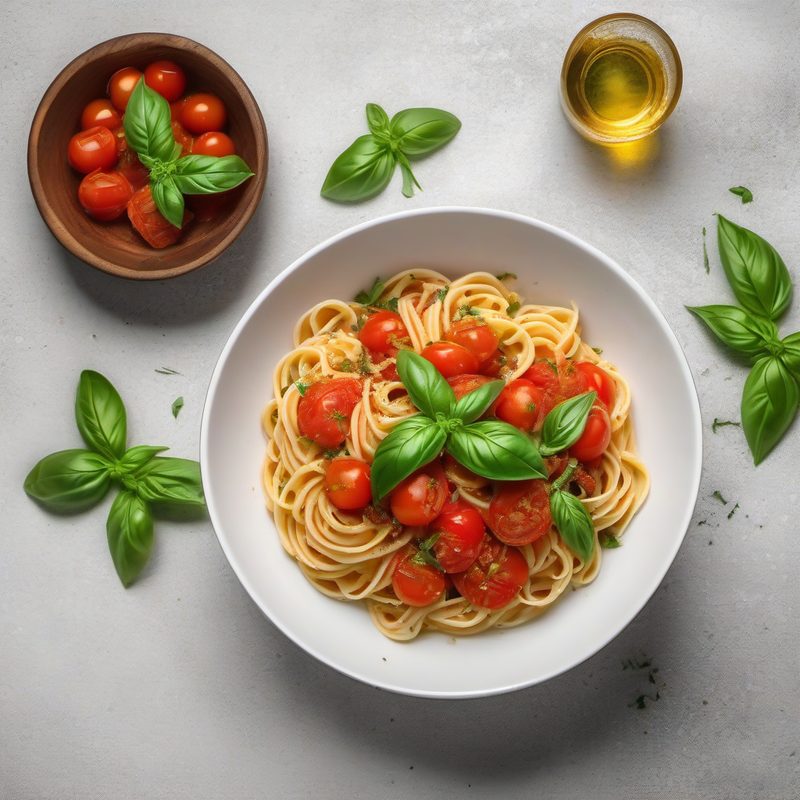
Pasta Zucchini
Grated zucchini, not chopped, is the secret to this deceptively simple pasta — the shreds melt into the olive oil and pasta water to create a silky, almost creamy sauce without a drop of cream. Twenty minutes, one skillet, and you've got a weeknight dinner that tastes like late-August cooking at its most satisfying.
| Amount | Ingredient |
|---|---|
| 11 oz (320 g) | Fusilli (or other short, twisted pasta) |
| 1½ lbs (650 g) | Zucchini (about 4 medium), ends trimmed |
| 1 | Garlic clove, peeled and lightly crushed |
| ¼ cup (10 g) | Fresh basil leaves, torn, plus more for garnish |
| 3 tbsp (45 ml) | Extra-virgin olive oil, plus more for finishing |
| Fine sea salt | |
| Freshly ground black pepper | |
| Parmesan or Pecorino Romano, grated (optional, for serving) |
Most zucchini pasta recipes call for diced or sliced zucchini, which stays stubbornly separate from the sauce — pleasant enough, but the zucchini and the pasta never quite become one dish. This version, from the Southern Italian tradition, solves that problem with a single smart move: you grate the zucchini on the large holes of a box grater. The shredded zucchini releases its moisture quickly into the hot oil, then as the water evaporates, the remaining flesh collapses into a soft, almost jammy mass that coats every spiral of fusilli. A single garlic clove perfumes the oil, torn basil leaves add freshness at the end, and a ladle of pasta water ties everything together into a sauce that clings, not slides. It's the kind of recipe that seems too simple to be this good — and then you taste it and realize that simple, done right, is the whole point.
Use level tablespoons and standard US measuring cups. All produce is medium unless specified. The key to this recipe is the largest holes on your box grater — a Microplane or fine grater will turn the zucchini to mush and release too much water too fast.
🥘 Equipment
- Large pot (at least 6 quarts) for pasta
- Box grater (large-hole side)
- Large skillet or sauté pan (12-inch / 30 cm, preferably nonstick or well-seasoned carbon steel)
- Colander
- Chef's knife and cutting board
- Tongs
- Ladle or heatproof measuring cup
- Wooden spoon or silicone spatula
📋 Preparation
Step 1 — Grate the Zucchini (5 minutes)
Place a box grater on a cutting board or in a large bowl. Grate the zucchini on the large-hole side — the side with the big rectangular openings, not the tiny shredding holes. You should end up with a fluffy pile of long, thin shreds, not a wet paste.
Don't squeeze the grated zucchini dry. Its natural moisture is what creates the creamy sauce in the pan. If you squeeze it, you'll end up with dry, stringy zucchini and no sauce.
Step 2 — Cook the Zucchini (6–7 minutes)
Place a large skillet over medium-high heat and add the olive oil and the crushed garlic clove. Let the garlic sizzle gently in the oil for about 30 seconds until fragrant — do not let it brown or burn.
Add the grated zucchini all at once, along with a generous pinch of salt and a few grinds of black pepper. Stir to coat the shreds in the oil, then spread them in an even layer. Cook for 5 to 6 minutes, stirring occasionally, until the liquid the zucchini releases has mostly evaporated and the shreds have collapsed into a soft, creamy-looking mass.
The zucchini will release a surprising amount of water in the first 2 minutes — that's normal. Keep cooking and stirring, and the water will steam off, leaving behind concentrated zucchini flavor. When the pan looks almost dry and the shreds have lost their raw, separate quality, you're ready for the next step.
When the pan looks almost dry and the zucchini has softened into a cohesive, almost jammy texture, add one ladle (about ½ cup) of boiling water (scooped from the pasta pot) to the skillet. Lower the heat to medium-low. Let it bubble gently for about 1 minute, then remove and discard the garlic clove. Stir in the torn basil leaves and remove the skillet from the heat.
Step 3 — Cook the Pasta (8–10 minutes)
While the zucchini cooks, bring a large pot of generously salted water (about 2 tablespoons of salt per 4 quarts of water) to a rolling boil. Add the fusilli and cook until very al dente — about 1 to 2 minutes less than the package directions suggest. The pasta will finish cooking in the skillet with the zucchini sauce.
Before draining, reserve at least 1 cup of the starchy pasta cooking water.
Drain the pasta in a colander. Do not rinse.
Step 4 — Finish and Serve (2 minutes)
Return the skillet with the zucchini to medium heat. Add the hot drained fusilli directly to the skillet and toss with tongs to coat. Add ¼ cup of the reserved pasta water and cook, tossing constantly, for 2 minutes. The pasta will absorb the liquid and release its starch into the zucchini, creating a creamy, emulsified sauce that clings to every spiral.
If the sauce looks too tight, add more pasta water a tablespoon at a time, tossing after each addition. The finished pasta should look glossy and saucy, not dry or clumpy.
Remove from heat. Drizzle with a final swirl of extra-virgin olive oil, add a generous grind of black pepper, and scatter torn basil leaves over the top. Serve immediately in warmed bowls. Pass grated Parmesan or Pecorino Romano at the table if desired — though the purists will tell you this one is best without cheese.
The 2-minute finish is the most important part of this recipe. Cooking the pasta briefly in the zucchini mixture with pasta water creates the emulsified sauce that makes this taste creamy — don't skip it, and don't rush it.
🧑🍳 Chef's Tips
- Use the largest grater holes — medium or fine grater holes turn zucchini into watery mush. The large-hole side of a box grater gives you shreds that hold their shape long enough to collapse into a sauce rather than dissolving into watery strings.
- Salt early — salting the zucchini at the start of cooking draws out its moisture quickly. This sounds like a bad thing, but it's the whole point: the water evaporates, and the zucchini flavor concentrates. If you salt late, the zucchini stays watery and the sauce never thickens.
- Very al dente is non-negotiable — the pasta needs to be underdone by a full minute when it goes into the skillet because those 2 minutes of finishing time are what build the creamy sauce. Al dente pasta (cooked through) won't release enough starch to emulsify.
- Let the garlic perfume, not dominate — a single crushed clove that gets removed before serving is all you need. The zucchini and basil are the stars here; garlic is a supporting actor.
- Fresh basil is mandatory — dried basil has no place in this dish. The torn fresh leaves added off heat release their aroma without becoming bitter. If you only have dried, add a pinch of it to the zucchini while cooking, not at the end.
- No cheese? No problem — this recipe is naturally vegan as written (omit the optional grating cheese). The zucchini itself becomes creamy enough that you won't miss the dairy.
❌ Common Mistakes
| Mistake | Why it hurts | The Fix |
|---|---|---|
| Using diced or sliced zucchini instead of grated | The zucchini stays separate from the pasta instead of creating a cohesive sauce | Always grate on the large-hole side of a box grater |
| Squeezing the water out of the grated zucchini | You remove the very liquid that becomes the creamy sauce | Grate directly into a bowl and add to the pan as-is |
| Overcooking the pasta before combining | Fully cooked pasta won't release enough starch to emulsify the sauce | Cook to very al dente, 1–2 minutes short of package directions |
| Forgetting to reserve pasta water | No liquid to finish the sauce — you get dry pasta with dry zucchini | Always scoop out at least 1 cup before draining |
| Burning the garlic | Burnt garlic makes the whole dish bitter | Crush the clove (don't mince it) and remove it before serving |
| Skipping the 2-minute finish | The pasta and zucchini remain separate; no creamy emulsion forms | Always toss the underdone pasta in the skillet with pasta water for 2 full minutes |
💡 Variations
| Variation | How To |
|---|---|
| Spicy zucchini pasta | Add ½ teaspoon of red pepper flakes to the olive oil with the garlic. The heat cuts through the creamy zucchini beautifully. |
| Zucchini and mint | Swap half the basil for fresh mint — the cool, bright mint plays off the warm, nutty zucchini flavor. |
| Add lemon | Add 1 teaspoon of lemon zest with the torn basil at the end, and finish with a squeeze of lemon juice. The acid brightens the dish considerably. |
| Creamy with ricotta | Dollop ½ cup of fresh ricotta into the skillet with the pasta water in Step 4. Stir until melted for an even richer, creamier sauce. |
| Summer squash blend | Replace half the zucchini with yellow summer squash, grated the same way. The color contrast is beautiful and the flavor is similar. |
| Add cherry tomatoes | Halve 1 cup (150 g) of cherry tomatoes and add them to the zucchini in the last 2 minutes of cooking. They'll soften and burst slightly, adding acidity. |
| Swap the pasta shape | Fusilli's spirals catch the creamy zucchini perfectly, but casarecce, gemelli, orecchiette, and rotini all work well. Spaghetti or linguine also work — the zucchini coats long pasta nicely too. |
❄️ Storage
| Method | Details |
|---|---|
| Refrigerator | Store in an airtight container for up to 2 days. The pasta will absorb some of the sauce as it sits, so it won't be as saucy on day two. |
| Freezer | Not recommended — the creamy zucchini emulsion breaks upon thawing, and the pasta becomes mushy. |
| Reheating | Reheat in a skillet over medium-low heat with a splash of water or olive oil, tossing until warmed through. Microwave works in a pinch (30-second bursts, stirring between) but the texture won't be as good. |
This is a same-day dish through and through. Make only what you'll eat, because leftover zucchini pasta is a shadow of its freshly-tossed self.
🍷 Wine Pairing
- Vermentino di Sardegna — bright and saline with a hint of almond, the classic summer white that mirrors the zucchini's delicate sweetness
- Soave Classico (Garganega) — elegant, floral, and light-bodied, with a subtle bitterness on the finish that cuts through the creamy squash
- Gavi di Gavi (Cortese) — crisp, mineral-driven, and unoaked, with enough acidity to refresh the palate between bites
- Pinot Grigio (Alto Adige) — clean and citrusy, a reliable crowd-pleaser that won't overpower the subtle zucchini flavor
- Rosato di Sicilia — a dry, structured rosé bridges the herbal basil and the creamy zucchini beautifully; serve slightly chilled (50°F / 10°C)
🥗 Suggested Side Dishes
- Mixed green salad with lemon vinaigrette — the acidity provides a bright contrast to the creamy pasta
- Grilled eggplant slices — smoky, charred eggplant echoes the summer vegetable theme
- Tomato and mozzarella salad (Caprese) — the classic summer pairing; the tomatoes' acidity balances the zucchini's sweetness
- Crusty bread — for sopping up every last bit of the creamy zucchini sauce from the bowl
- Roasted peppers with anchovy dressing — a punchy, savory side that adds depth to a simple pasta meal
📊 Nutrition (per serving, estimated)
| Calories | Protein | Fat | Carbs | Fiber |
|---|---|---|---|---|
| 385 | 11 g | 8 g | 65 g | 5 g |
Nutrition is estimated and will vary based on pasta brand, olive oil quantity, and whether optional cheese is added. This is a naturally low-fat, high-fiber pasta dish — the creaminess comes entirely from the zucchini and pasta starch, not from dairy.
❓ Frequently Asked Questions
Can I use yellow squash instead of zucchini?
Absolutely — yellow summer squash has a very similar texture and moisture content. The flavor is slightly sweeter and the color is brighter. Use the same weight (1½ lbs / 650 g) and grate it the same way.
My zucchini released a lot of water and the sauce looks thin. What went wrong?
Nothing — that's normal. Keep cooking on medium-high heat and the water will evaporate. The sauce thickens significantly in the last minute or two as the liquid cooks off. If it's still thin after 6 minutes, turn the heat up slightly and cook for another minute.
Can I make this gluten-free?
Yes, use gluten-free fusilli or another short gluten-free pasta. Cook it according to package directions (most gluten-free pastas need a minute or two less than regular dried pasta) and reserve the pasta water. The starch content of gluten-free pasta varies, so the sauce may not emulsify quite as well — add an extra splash of pasta water if needed.
Do I need to peel the zucchini?
No. The skin is thin, tender, and packed with color and nutrients. The large-hole grater breaks it into small flecks that disappear into the sauce visually. Just wash the zucchini well before grating.
What if I don't have a box grater?
You can use a food processor with the large shredding disk attachment, or you can julienne the zucchini into very thin matchsticks with a chef's knife (this takes more time but works perfectly). Do not use a mandoline — the slices will be too thin and will turn to mush.
Can I add protein to make it a complete meal?
Yes — this pasta welcomes additions. Pan-seared shrimp (add at the end during the 2-minute finish), shredded grilled chicken, or crispy chickpeas all work well. For a more traditional approach, add cubes of pan-fried pancetta or guanciale at the beginning, cook until crispy, then proceed with the zucchini.
🔗 Related Recipes
- Fusilli with Arugula Pesto & Cherry Tomatoes
- Pasta with Fava Bean Pesto (Pasta con pesto di fave)
- Penne with Vegetable Ragu (Penne al ragù vegetale)
- Pasta with Asparagus, Octopus & Burrata
- Spaghetti with Garlic, Oil & Chili (Aglio e olio)
🏷️ Search Tags
Photo reference: `vol1_121.png` — A generous heap of fusilli glistening with creamy zucchini sauce, finished with a drizzle of olive oil, scattered torn basil leaves, and a final crack of black pepper, served in a wide white ceramic bowl on a wooden table, natural daylight, shallow depth of field, steam rising from the pasta.
Recipe from "The Italian Kitchen" by Vita Milanese — Volume 1: Pasta Perfetto
Recipe from The Italian Kitchen by Vita Milanese — Volume 1 · Pasta Perfetto. Discover all volumes on the ebook page.