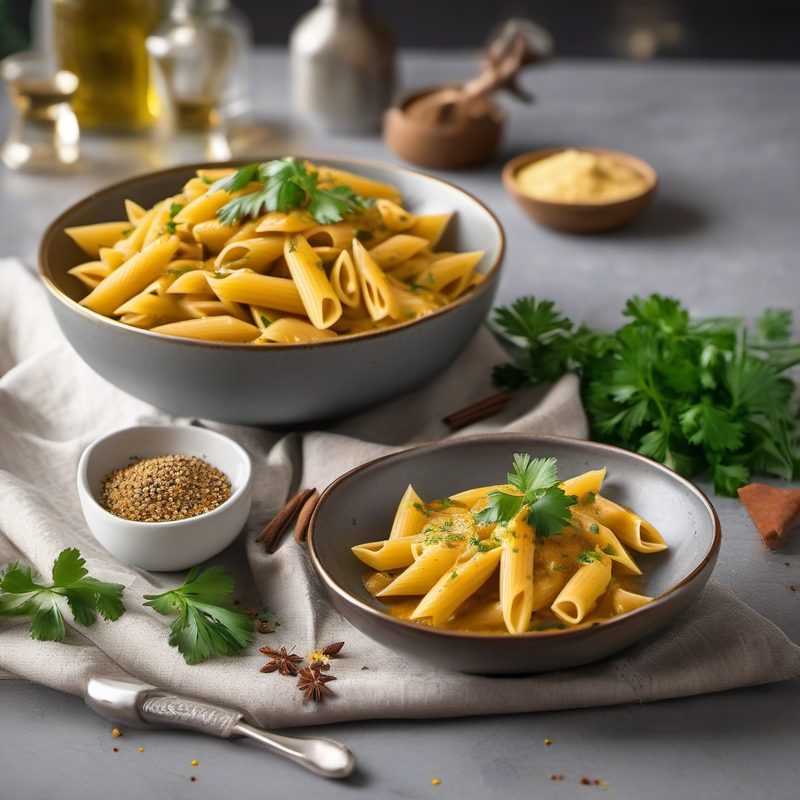
Turkish Curry Pasta
A silky, warmly spiced pasta that bridges Italy and Turkey in one irresistible bowl — creamy coconut milk and fragrant curry powder transform simple pantry ingredients into a quick, weeknight revelation in under 30 minutes.
| Amount | Ingredient |
|---|---|
| 12 oz (340 g) | Penne, fusilli, or spaghetti |
| 3 tbsp | Extra-virgin olive oil |
| 1 medium | Yellow onion, finely chopped |
| 2 cloves | Garlic, minced |
| 1 tbsp | Curry powder (mild or hot) |
| 1 tsp | Sweet or hot paprika |
| ¾ cup (180 ml) | Tomato passata (smooth tomato purée) |
| 1 cup (240 ml) | Canned unsweetened coconut milk, well shaken |
| Kosher salt and black pepper, to taste | |
| ¼ cup | Fresh cilantro or parsley leaves, roughly chopped (optional, for garnish) |
| 1 cup (about 150 g) | Mixed vegetables — diced bell pepper, frozen peas, diced zucchini, or sliced mushrooms (optional) |
This is the pasta you turn to when you want something deeply satisfying but utterly unfussy. The idea comes from Turkey's love of gentle curry spice — a legacy of trade routes that brought Indian flavors through Ottoman kitchens — married to Italy's perfect pasta technique. The sauce starts simply: onion and garlic softened in olive oil, then bloomed with curry powder and a touch of paprika for warmth and color. Tomato passata adds brightness, while coconut milk brings the whole thing together into a velvety, spoon-coating sauce that clings beautifully to every piece of pasta. It's quick enough for a Tuesday dinner, but interesting enough that you'll find yourself craving it. And the whole thing comes together in one skillet.
Tomato passata is a smooth, uncooked tomato purée. If unavailable, substitute ¾ cup crushed tomatoes pulsed 3–4 times in a food processor until smooth.
🥘 Equipment
- Large pot (6-quart) for pasta
- Large skillet (12-inch) or sauté pan with high sides
- Chef's knife and cutting board
- Wooden spoon or heat-resistant spatula
- Colander
- Liquid measuring cup
- Fine-mesh strainer (if straining tomatoes)
📋 Preparation
Step 1 — Bring the Pasta Water to a Boil
Fill a large pot with 4 quarts of water and add 1½ tablespoons of kosher salt. Bring to a rolling boil over high heat. While the water heats, begin the sauce.
Step 2 — Start the Sauce Base
Heat 3 tablespoons of extra-virgin olive oil in a large skillet over medium heat. Add the chopped onion and cook, stirring occasionally, until softened and translucent — about 4 minutes. Add the minced garlic and cook, stirring constantly, until fragrant — about 1 minute more.
Don't let the garlic brown — it turns bitter. If the pan seems dry, add a splash of water, not more oil.
Step 3 — Bloom the Spices
Add 1 tablespoon curry powder and 1 teaspoon paprika to the skillet. Stir constantly for 30 to 45 seconds until the spices are fragrant and darkened slightly. This blooming step is crucial — raw curry powder tastes dusty and flat; toasted curry powder tastes warm, complex, and deep.
If using optional vegetables (see Variations), add them now — diced bell pepper, zucchini, or mushrooms — and cook for 2 minutes before adding the liquids. Frozen peas should be added later, at the end.
Step 4 — Build the Sauce
Pour in ¾ cup tomato passata and stir to combine. Cook, stirring occasionally, for 2 to 3 minutes — the passata will thicken slightly and its raw acidity will mellow. Then pour in 1 cup coconut milk and stir until the sauce is a uniform, warm orange color. Bring to a gentle simmer, then reduce the heat to medium-low and let the sauce bubble gently for 5 minutes — this is where the flavors marry.
The sauce should be thick enough to coat the back of a spoon but still pourable. If it seems too thick, loosen it with a splash of the pasta cooking water later.
Step 5 — Cook the Pasta
Add the pasta to the boiling salted water and cook until al dente — about 1 minute less than the package directs. Reserve 1 cup of pasta cooking water before draining.
Drain the pasta well but do not rinse — you want the starch on the surface to help the sauce cling.
Step 6 — Combine and Finish
Add the drained pasta directly to the skillet with the sauce. Increase the heat to medium. Using tongs or a wooden spoon, toss and stir for 1 to 2 minutes, allowing the pasta to absorb some of the sauce. If the sauce seems too thick, add reserved pasta water 1 tablespoon at a time until the sauce coats each piece of pasta in a glossy, creamy blanket.
Taste and adjust seasoning with salt and black pepper. If using frozen peas, stir them in now — the residual heat will warm them through in about 30 seconds.
Step 7 — Serve
Divide among warm serving bowls. Garnish with chopped cilantro or parsley — the fresh herbs cut through the richness of the coconut curry and add a bright, green finish. Serve immediately.
🧑🍳 Chef's Tips
- Bloom your spices every time. This is the single most important step in curry cooking. Raw curry powder tastes harsh and one-dimensional. Thirty seconds in hot oil unlocks a spectrum of warm, aromatic flavors that no amount of simmering can replicate. Smell for the moment the fragrance intensifies — that's your cue.
- Full-fat coconut milk is non-negotiable. Light coconut milk is mostly water and won't give you the velvety, emulsified sauce that makes this dish special. Look for a brand without stabilizers or gums — the shorter the ingredient list, the better. Chaokoh and Aroy-D are excellent choices available at most supermarkets.
- Passata vs. crushed tomatoes. Passata is smoother than crushed tomatoes and gives a silkier sauce. To approximate it at home, pulse a 14-oz can of whole peeled tomatoes (with their juices) in a food processor for 5 seconds until smooth. Pass the purée through a fine-mesh strainer for an even silkier result. Freeze any extra in ½-cup portions.
- Pasta water is liquid gold. The starchy, salted water is the single best tool for adjusting sauce consistency while preserving flavor and body. Always reserve a full cup before draining — even if you think you won't need it. You almost certainly will.
- Taste your curry powder before using it. Curry powders vary enormously in heat, sweetness, and complexity. A milder Madras-style curry powder gives a gentle, approachable warmth; a hotter vindaloo-style will bring the fire. Taste a pinch on your tongue and adjust the quantity accordingly — our 1-tablespoon measure is calibrated for a medium-warm curry powder like a standard Madras.
❌ Common Mistakes
| Mistake | Why | Fix |
|---|---|---|
| Adding curry powder directly to liquid without blooming | The spice stays raw and dusty — the dish tastes flat and one-dimensional. | Always bloom curry powder in hot oil for 30–45 seconds before adding liquid. |
| Using light coconut milk | The sauce is thin, watery, and lacks the velvety body that makes this dish satisfying. | Use full-fat coconut milk only. Check the label — at least 10 g fat per 100 ml. |
| Overcooking the sauce after adding coconut milk | Coconut milk can curdle or separate if boiled aggressively for too long. | Keep the sauce at a gentle simmer, not a rolling boil, after adding coconut milk. |
| Rinsing the cooked pasta | Rinsing washes away the surface starch that helps sauce cling to the pasta. | Never rinse pasta for warm sauces. Drain well and add directly to the skillet. |
| Skipping the pasta water adjustment | The sauce is either too thick (pasty, clumpy) or too thin (soupy, watery). | Add pasta water 1 tablespoon at a time while tossing until the sauce glistens and coats each piece. |
💡 Variations
| Variation | How To |
|---|---|
| Add Vegetables | After blooming the spices in Step 3, add ½ diced bell pepper, 1 small diced zucchini, and 4 sliced cremini mushrooms. Cook, stirring, for 2 minutes before adding the passata. Stir in ½ cup frozen peas at the end with the pasta. You now have a complete one-dish meal. |
| Make It Spicy | Add 1 teaspoon of red pepper flakes or ½ teaspoon of cayenne pepper along with the curry powder. Or use hot curry powder instead of mild — Patak's hot curry powder works beautifully. For extra fire, serve with sliced fresh chili on top. |
| Add Protein | Sear 1 lb of boneless, skinless chicken thighs (cut into 1-inch pieces) in the skillet before starting the onions. Remove and set aside, then proceed with the recipe. Return the chicken to the skillet with the coconut milk and let it simmer gently for 5 minutes — the chicken stays tender and absorbs the curry flavors beautifully. Alternatively, add 1 cup of cooked chickpeas (rinsed and drained) for a vegetarian protein boost. |
| Creamy Tomato-Free Version | Omit the passata entirely and increase the coconut milk to 1½ cups. Add 1 tablespoon tomato paste instead of passata for a hint of umami without the tomato-forward flavor. This yields a paler, creamier sauce that lets the curry and coconut flavors take center stage. |
| Lighter Version | Use 8 oz of pasta instead of 12 oz, and bulk up the dish with 2 cups of mixed vegetables (bell pepper, zucchini, mushrooms, peas). The vegetable cooking liquid released into the skillet helps extend the sauce without extra fat. |
| Turmeric-Lemon Finish | Add ½ teaspoon ground turmeric along with the curry powder for extra color and earthy depth. Finish each bowl with a squeeze of fresh lemon juice — the acidity cuts through the richness and brightens the entire dish. |
❄️ Storage & Leftovers
| Method | Details |
|---|---|
| Refrigerator | Store in an airtight container for up to 3 days. The pasta will absorb some of the sauce as it sits, so don't be alarmed if it looks drier on day 2 — that's normal. |
| Reheating | The best method: reheat in a skillet over medium-low heat with a splash of water, coconut milk, or pasta water. Toss gently until warmed through — about 3 minutes. The microwave works in a pinch: cover the bowl and heat at 70% power in 45-second intervals, stirring between each. |
| Freezing | The sauce freezes beautifully on its own for up to 3 months. Freeze in a quart-size freezer bag or a deli container. Thaw overnight in the refrigerator. Cook fresh pasta and toss with the reheated sauce. Do not freeze the assembled pasta dish — thawed pasta turns mushy. |
🍷 Wine Pairing
| Wine | Why |
|---|---|
| Gewürztraminer (Alto Adige) | This aromatic, lychee-scented white has the floral perfume and off-dry sweetness to stand up to the curry spices without fighting them. The subtle spice notes in the wine echo the curry beautifully. A classic pairing for spiced coconut dishes. |
| Vermentino (Sardinia) | Crisp, saline, and citrus-driven — Vermentino's bright acidity cuts through the creamy coconut sauce like a knife, while its herbal undertones complement the curry's aromatic complexity. |
| Grüner Veltliner (Austria) | Peppery, zesty, and bone-dry with a distinctive white pepper note that harmonizes with the curry powder's warmth. The high acidity keeps each sip refreshing against the rich sauce. |
| Off-Dry Riesling (Mosel or Finger Lakes) | A touch of residual sugar tames the curry's gentle heat while the piercing acidity keeps the pairing bright. The apple and stone fruit notes are a lovely counterpoint to the warm spices. Aim for a Kabinett or Spätlese with under 30 g/L residual sugar. |
🍺 Beer Pairing
| Beer | Why |
|---|---|
| Belgian Witbier (e.g., Hoegaarden, Allagash White) | The coriander and orange peel spices in a witbier mirror the aromatic complexity of the curry, while the light body and hazy texture complement the creamy coconut sauce. A brilliant, unexpected pairing. |
| American Blonde Ale | Clean, crisp, and malt-forward with low bitterness — the gentle sweetness and smooth finish won't compete with the curry. Firestone Walker 805 is a widely available example that works beautifully. |
| IPA (New England-style) | A hazy, juicy, low-bitterness NEIPA with tropical fruit notes (mango, passion fruit, pineapple) echoes the coconut and curry flavors. Avoid aggressively bitter West Coast IPAs — they clash with the sauce's richness. |
🥗 Suggested Side Dishes
- Quick cucumber raita — 1 cup plain Greek yogurt, ½ cup grated cucumber (squeezed dry), 1 tbsp lemon juice, and a pinch of salt. The cool, tangy yogurt is the perfect counterpoint to the warm, creamy curry pasta.
- Roasted broccoli or cauliflower — tossed with olive oil, salt, and a squeeze of lemon, roasted at 425°F for 20 minutes until browned and crisp-edged. The charred florets add texture and a slightly bitter contrast to the rich sauce.
- Simple arugula salad — baby arugula tossed with lemon juice, extra-virgin olive oil, flaky salt, and shaved Parmigiano-Reggiano. The peppery arugula cuts through the coconut richness.
- Naan or warm pita bread — for sopping up every last drop of sauce from the bowl. Brush with melted garlic butter and warm in a 350°F oven for 5 minutes.
- Mango lassi — a cold, sweet yogurt drink that's a classic finish to any spiced meal. Blend 1 cup plain yogurt, ½ cup mango purée (fresh or frozen), ¼ cup cold milk, and 1 tablespoon honey until smooth.
📊 Nutrition (per serving, estimated)
| Calories | Protein | Fat | Carbs | Fiber |
|---|---|---|---|---|
| 420 | 10 g | 18 g | 54 g | 4 g |
Nutrition is an estimate based on standard ingredient quantities without optional additions. Adding chicken, chickpeas, or vegetables will change the values. Coconut milk brands vary in fat content — expect a range of 390–450 calories per serving.
❓ Frequently Asked Questions
What kind of curry powder should I use?
A standard Madras curry powder (mild to medium heat) is the best starting point — it's widely available, well-balanced, and approachable for American palates. Avoid "curry powder blends" that include salt or starch fillers. Brands like McCormick, Simply Organic, or Penzeys all work well. For a more authentic Turkish-adjacent experience, look for a Turkish or Middle Eastern köri blend — it tends to be milder and slightly sweeter than Indian curry powders.
Can I use tomato sauce instead of passata?
Yes, but there's a catch. Most canned tomato sauce is thinner and more acidic than passata. If substituting, use the same ¾ cup, but simmer it for an extra 3 minutes before adding the coconut milk to concentrate the flavor and cook off some of the raw acidity. Alternatively, use ¾ cup crushed tomatoes pulsed smooth in a food processor — this is the closest texture to passata.
Is this dish authentic Turkish food?
Not exactly. This is an Italian-inspired interpretation of a Turkish-style flavor profile. In Turkey, curry powder (köri baharatı) is used in some modern home cooking and street food, but it's not a traditional Anatolian ingredient. The combination of pasta with curry cream sauce is more of a contemporary fusion — delicious, but more "inspired by" than "authentic to" Turkish cuisine. Think of it as the pasta dish that Turkish-Italian home cooks might make on a busy weeknight.
Can I make this dairy-free?
Yes — the recipe is already dairy-free as written. The sauce uses coconut milk as its creamy base, and there is no butter, cream, or cheese in the ingredients. If you add chicken or vegetables, they're naturally dairy-free too. Just double-check your curry powder label — some blends contain anti-caking agents derived from lactose.
My sauce is too thin. What went wrong?
Three common causes: (1) you used light coconut milk instead of full-fat — it has a much higher water content; (2) you didn't simmer the passata long enough before adding the coconut milk — the passata needs 2–3 minutes to concentrate; (3) you added too much pasta water when tossing. To fix a thin sauce, simmer it uncovered over medium-high heat for 2–3 minutes to reduce, then toss with the pasta.
Can I add cheese to this?
This is one of those rare pasta dishes where cheese is best left out. The dairy in parmesan or pecorino will compete with the coconut milk and curry spices rather than complement them. If you absolutely crave a dairy finish, try a sprinkle of crumbled feta on top — its salty, tangy character is a more harmonious match with the curry-coconut sauce than hard Italian cheeses.
🔗 Related Recipes
- Creamy Coconut Curry Noodles with Chicken
- One-Pot Spiced Tomato and Chickpea Pasta
- Penne with Vodka Sauce and a Touch of Cream
- Spaghetti with Garlic, Oil, and Chili
- Quick Weeknight Coconut Lentil Curry
- Linguine with Shrimp and Turmeric-Coconut Sauce
🏷️ Search Tags
Photo reference: `vol1_34.png` — A wide, shallow bowl of penne glistening in a warm orange-golden coconut curry sauce, garnished with fresh cilantro leaves. The pasta is nestled in a creamy, speckled sauce with visible flecks of curry spice. Warm, golden-hour lighting on a rustic wooden table with a linen napkin and a small bowl of extra cilantro on the side.
Recipe from "The Italian Kitchen" by Vita Milanese — Volume 1: Pasta Perfetto
Recipe from The Italian Kitchen by Vita Milanese — Volume 1 · Pasta Perfetto. Discover all volumes on the ebook page.