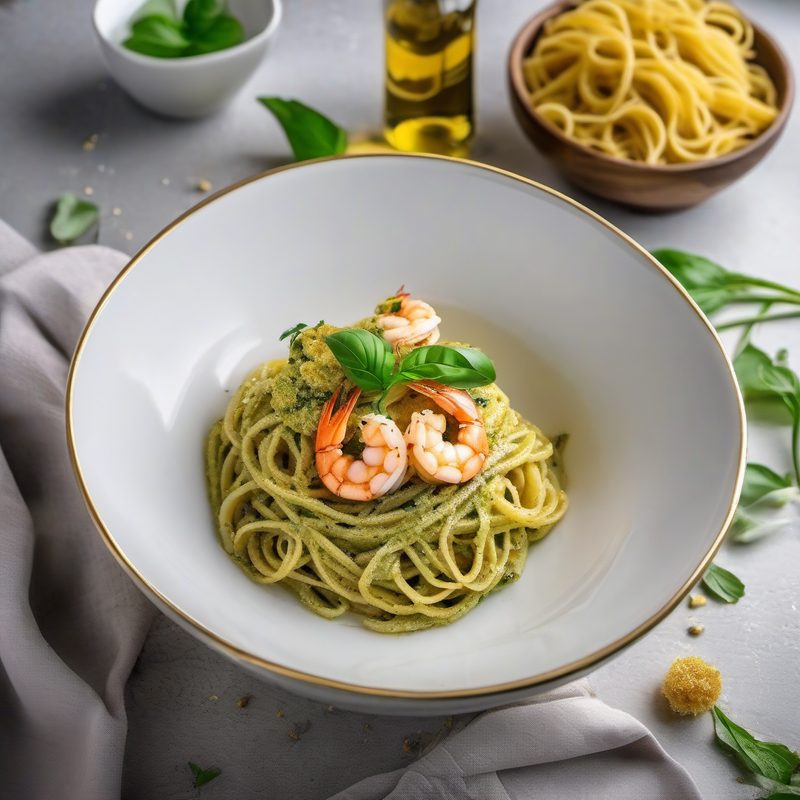
Zucchini Flower Pesto Shrimp
A velvety, vibrantly green zucchini flower pesto tossed with al dente linguine and topped with succulent pan-seared shrimp and sautéed zucchini blossoms — a celebration of late-summer flavors that comes together in 35 minutes.
| Amount | Ingredient |
|---|---|
| 1 lb (450 g) | Dried linguine |
| 12–16 | Large zucchini flowers (about 6 oz / 170 g), plus 6 more for garnish |
| 1 lb (450 g) | Large shrimp (mazzancolle or jumbo shrimp, 16–20 count), peeled and deveined |
| ½ cup (60 g) | Blanched almonds |
| 1 clove | Garlic, peeled |
| ½ cup (50 g) | Freshly grated Parmigiano-Reggiano |
| ½ cup + 3 tbsp (165 ml) | Extra-virgin olive oil, divided |
| 2 tbsp | Fresh lemon juice (from about ½ lemon) |
| 2 sprigs | Fresh thyme |
| 1 clove | Garlic, thinly sliced (for shrimp) |
| Kosher salt, to taste | |
| Black pepper, to taste |
This is the pasta dish you didn't know you were missing. Where classic basil pesto is the everyday staple, zucchini flower pesto is the seasonal revelation — floral, delicate, and subtly sweet, with a texture so creamy it barely needs cheese. We use blanched almonds instead of pine nuts for a milder, nuttier backbone that lets the blossoms shine. The shrimp are quickly seared in garlic-and-thyme-infused oil, then finished alongside extra zucchini flowers for a double hit of the star ingredient. The entire dish comes together in a single pasta-water-emulsified toss that coats every strand in bright, herby, garden-fresh flavor. It's the kind of pasta that tastes like sunshine.
All produce is medium size unless specified. Use standard US measuring cups and spoons.
🥘 Equipment
- Large pot (6-quart or larger) for pasta
- Mortar and pestle (or food processor)
- Large skillet (12-inch), preferably nonstick
- Chef's knife and cutting board
- Small pastry brush or soft-bristled brush
- Colander
- Microplane or fine grater (for Parmigiano)
- Citrus juicer or reamer
- Tongs
- Paper towels
📋 Preparation
Step 1 — Clean the Zucchini Flowers
Using a small pastry brush or a soft-bristled brush, gently brush any dirt or insects off 12 to 16 zucchini flowers. Open each flower carefully by pulling back the petals and remove the internal pistil (stamen) — pinch it at the base and pull straight out. Set the cleaned flowers aside on a paper towel.
For the 6 garnish flowers (reserved for later), clean them the same way but leave them whole.
Handle the flowers gently — they are delicate and bruise easily. Any bruised or damaged petals should be trimmed away with scissors.
Step 2 — Make the Zucchini Flower Pesto
In a mortar, add 1 peeled garlic clove and ½ cup (60 g) blanched almonds. Add a pinch of salt. Pound with the pestle until the almonds are reduced to a fine, almost paste-like consistency — about 2 to 3 minutes of steady work.
Add the cleaned zucchini flowers to the mortar. Pound gently but firmly, working the pestle in a circular motion, until the flowers break down into a uniform green paste — about 2 minutes. The mixture should be homogenous with no visible flower fragments.
Add ½ cup (50 g) freshly grated Parmigiano-Reggiano and continue working with the pestle until the cheese is fully incorporated — about 30 seconds.
Drizzle in ½ cup (120 ml) extra-virgin olive oil while stirring with the pestle, adding it in a slow, steady stream. Continue mixing until the pesto is a smooth, creamy emulsion — about 1 minute.
Finish by stirring in 2 tablespoons fresh lemon juice. Taste and adjust salt. Set the pesto aside.
If using a food processor instead of a mortar: Pulse the garlic and almonds until finely ground (about 10 pulses). Add the flowers and pulse until smooth (about 15 pulses). Add the cheese, then with the processor running, drizzle in the oil through the feed tube. Finish with lemon juice. The mortar method yields a slightly more textured, rustic pesto; the processor gives a smoother result. Both work beautifully.
Step 3 — Prepare the Shrimp
Pat the shrimp thoroughly dry with paper towels — moisture is the enemy of browning. Season lightly with salt and black pepper.
Step 4 — Sear the Shrimp and Sauté the Garnish Flowers
Heat 3 tablespoons of extra-virgin olive oil in a large 12-inch skillet over medium-high heat until shimmering. Add 1 thinly sliced garlic clove and 2 sprigs of fresh thyme. Cook, stirring constantly, until the garlic is fragrant — about 30 seconds.
Add the shrimp in a single layer. Cook without moving for 1½ minutes, until the bottoms are pink and lightly browned. Flip and cook the second side for 1 minute more — the shrimp should be just opaque throughout.
Add the 6 reserved whole zucchini flowers, a pinch of salt, and a few turns of black pepper. Toss and cook over high heat for 3 minutes, until the flowers are just wilted and tender. Remove from heat. Transfer the shrimp and flowers to a plate — leave any oil behind in the skillet.
The garnish flowers cook very quickly — they should be just wilted, not collapsed into mush. The high heat preserves their delicate texture and floral character.
Step 5 — Cook the Pasta
While the shrimp cooks, bring a large pot of generously salted water (about 1½ tablespoons kosher salt per 4 quarts of water) to a rolling boil. Add the linguine and cook until just shy of al dente — about 1 minute less than the package directs.
Reserve 1½ cups of pasta cooking water before draining.
Step 6 — Dress the Pasta with Pesto
Place the zucchini flower pesto in a large serving bowl or return the shrimp skillet (wiped clean) to low heat. Add ¼ cup of the reserved pasta water to the pesto and stir to loosen it into a creamy, spoonable consistency.
Add the drained linguine to the pesto. Using tongs, toss vigorously for 1 to 2 minutes, adding more pasta water 1 tablespoon at a time as needed. You're looking for a silky, glossy coating that clings to every strand — not a thick paste, not a thin soup.
The starchy pasta water is what transforms the pesto from a dense paste into a velvety sauce that coats each strand. Add it gradually and toss until you see that glossy, emulsified sheen.
Step 7 — Serve
Divide the pesto-coated linguine among warm serving bowls. Top each portion with seared shrimp and sautéed zucchini flowers. Drizzle with a finishing swirl of extra-virgin olive oil, if desired. Serve immediately.
🧑🍳 Chef's Tips
- Dry the zucchini flowers thoroughly. Any moisture trapped inside the petals will water down the pesto. After removing the pistil, let the flowers sit on paper towels for at least 5 minutes before making the pesto.
- Blanched almonds are key. Raw blanched almonds (skins removed) give a milder, creamier pesto than untoasted almonds with skins. If you can only find skin-on almonds, blanch them yourself: boil for 1 minute, then slip off the skins.
- Don't over-process the pesto in a food processor. A smooth pesto is the goal, but a food processor can quickly turn it into a purée that loses texture. Pulse, don't run continuously. The mortar method is gentler and gives better texture — worth the extra arm work.
- Reserve more pasta water than you think you need. Pesto absorbs starch differently depending on the flowers' moisture content. Having extra pasta water on hand means you can adjust the consistency at the very last moment, when the pasta is already in the bowl.
- Shrimp timing is everything. Shrimp go from perfectly cooked to rubbery in about 30 seconds. Cook them just until opaque and remove from the heat immediately. They'll finish warming through in the residual heat when you plate them atop the hot pasta.
- Serve immediately. This dish does not wait. Pesto-coated pasta congeals as it cools, and the shrimp lose their snap. Have your bowls warm and your diners at the table before you toss the pasta.
❌ Common Mistakes
| Mistake | Why It Hurts | The Fix |
|---|---|---|
| Skipping the pistil removal | The pistil (stamen) is tough and slightly bitter — it gives the pesto an unpleasant texture and off-flavor. | Always open each flower and remove the entire pistil before using. |
| Overcooking the garnish flowers | Sautéed flowers collapse into slimy ribbons with no texture. | Cook over high heat for only 3 minutes — they should be just wilted, not fully softened. |
| Adding pesto to dry pasta | The pesto clumps in sticky blobs instead of coating each strand evenly. | Always loosen the pesto with pasta water first, then add the pasta and toss with more water as needed. |
| Using stale or browning zucchini flowers | Flowers that have started to decline taste flat and slightly vegetal — the pesto loses its floral magic. | Use flowers that are brightly colored, firm, and freshly picked. Buy them the same day you plan to cook. |
| Overcooking the shrimp | Shrimp that are cooked beyond just-opaque turn tough, dry, and rubbery. | Cook just 1½ minutes per side — the residual heat from the pasta will finish warming them. |
💡 Variations
| Variation | How To |
|---|---|
| Swap the Pasta Shape | Spaghetti, bucatini, or fettuccine all work beautifully. Adjust cooking time per package directions and always undercook by 1 minute before finishing in the pesto. |
| Without Shrimp (Vegetarian) | Omit the shrimp entirely. Double the sautéed garnish flowers, or add 1 cup of halved cherry tomatoes to the skillet for a burst of acidity against the rich pesto. A sprinkle of toasted almond slivers on top adds crunch. |
| Nut-Free Version | Substitute the almonds with ¼ cup (30 g) sunflower seeds or pumpkin seeds (pepitas). Toast them lightly in a dry pan first for deeper flavor. |
| Extra Herby Pesto | Add a handful of fresh basil leaves (about ¼ cup / 10 g) to the mortar along with the zucchini flowers. The basil amplifies the floral notes and adds a classic pesto brightness. |
| Spicy Version | Add 1 small dried red chili (peperoncino), crumbled, to the olive oil when sautéing the shrimp. The gentle heat cuts through the richness of the pesto beautifully. |
| Grilled Shrimp | Instead of pan-searing, thread the shrimp onto skewers and grill over high heat for 2 minutes per side. Brush with garlic-thyme oil during grilling for a smoky alternative. |
❄️ Storage & Leftovers
| Method | Details |
|---|---|
| Refrigerator | Store pesto-coated pasta and shrimp separately in airtight containers for up to 2 days. The pesto will darken slightly as it oxidizes — this is normal and does not affect flavor significantly. |
| Reheating | The best method: reheat the pasta in a skillet over low heat with a splash of water or white wine, tossing gently until warmed through. Reheat the shrimp separately — 30 seconds in a hot skillet per side, or they'll toughen. The microwave works for the pasta only (covered, 1 minute at 70% power) but the shrimp should never be microwaved. |
| Freezing | The pesto freezes well on its own. Freeze in an ice cube tray, then transfer cubes to a freezer bag — good for up to 3 months. Thaw overnight in the refrigerator and loosen with warm pasta water before using. Do not freeze the assembled dish with shrimp. |
🍷 Wine Pairing
| Wine | Why |
|---|---|
| Vermentino (Tuscany or Sardinia) | Crisp, citrusy, and mineral-driven — this native Italian white has enough acidity to cut through the pesto's richness while its herbal notes echo the zucchini flowers. A perfect regional match. |
| Gavi di Gavi (Cortese) | Light-bodied with green apple, citrus, and subtle almond notes — the almond character mirrors the blanched almonds in the pesto, creating a harmonious bridge between wine and food. |
| Friulano (Friuli-Venezia Giulia) | Medium-bodied with floral, white peach, and bitter-almond finish. The floral notes complement the zucchini flowers beautifully, and the almond finish is a direct echo of the pesto. |
| Sauvignon Blanc (Alto Adige) | Herbaceous, zesty, and bright — the grassy, elderflower character reinforces the floral-garden quality of the dish. Choose a restrained, mineral-driven example, not a New World fruit bomb. |
| Franciacorta Brut | Italy's sparkling answer to Champagne: high acidity and fine bubbles scrub the palate clean after each rich, pesto-coated bite. The crispness is a revelation with the seared shrimp. |
🍺 Beer Pairing
| Beer | Why |
|---|---|
| Italian Dry Pilsner (e.g., Menabrea, Birrificio Italiano Tipopils) | Clean, crisp, and light with subtle herbal hop bitterness that balances the pesto's richness without overwhelming the delicate zucchini flower flavor. |
| Belgian Saison | Spicy, peppery, and slightly funky — the yeast-driven character and dry finish complement the floral-herbal notes of the pesto and the sweetness of the shrimp. |
| American Pale Ale (low bitterness) | A malt-forward, low-IBU pale ale with citrusy American hop notes can work. Avoid heavily bittered IPAs — they clash with the delicate zucchini flower flavor. |
🥗 Suggested Side Dishes
- Simple arugula salad with lemon juice, shaved Parmigiano-Reggiano, and pine nuts
- Grilled or roasted zucchini ribbons with mint and olive oil
- Crusty ciabatta or sourdough for sopping up any remaining pesto from the bowl
- Blistered shishito peppers with flaky salt and a squeeze of lemon
- Chilled melon and prosciutto for a starter — the sweet-savory contrast sets the stage for the floral pasta
📊 Nutrition (per serving, estimated)
| Calories | Protein | Fat | Carbs | Fiber |
|---|---|---|---|---|
| 520 | 28 g | 22 g | 54 g | 3 g |
Nutrition is an estimate based on standard ingredient quantities. Values will vary with olive oil absorption and shrimp size.
❓ Frequently Asked Questions
Can I use frozen shrimp?
Yes. Thaw them overnight in the refrigerator or under cold running water (about 5 minutes). Pat extremely dry — frozen shrimp release more water than fresh, which can prevent browning.
Where can I find zucchini flowers?
Look for them at farmers' markets, Italian grocers, or specialty produce stores from late spring through early fall. They are highly perishable — buy them the same day you plan to use them. If you grow zucchini, harvest the male flowers (the ones on long stems without a small zucchini at the base) first thing in the morning when they're fully open.
Can I make the pesto ahead of time?
Yes! The pesto keeps well for up to 3 days in the refrigerator. Press a layer of plastic wrap directly onto the surface to prevent oxidation (which causes browning). Bring to room temperature and loosen with a splash of warm pasta water before using.
What if I can't find a mortar and pestle?
A food processor works beautifully. Pulse — don't run continuously — to avoid over-processing. Start with the almonds and garlic, add the flowers, then the cheese, and finally drizzle the oil through the feed tube with the motor running.
My pesto turned brown quickly. What happened?
Zucchini flower pesto is more prone to oxidation than basil pesto because the flowers have a higher water content. To minimize browning: (1) use freshly squeezed lemon juice — the acid helps preserve the green color, (2) press plastic wrap onto the surface if storing, and (3) don't make it more than a day ahead.
Can I use a different nut instead of almonds?
Yes. Pine nuts (the traditional pesto choice) work well but are milder. Walnuts add an earthy, slightly bitter note that pairs surprisingly well with the flowers. Toast whichever nut you choose lightly for deeper flavor.
🔗 Related Recipes
- Pasta with Basil Pesto, Potatoes, and Green Beans
- Linguine with Garlic, Oil, Chili, and Shrimp
- Cold Pasta with Arugula Pesto and Cherry Tomatoes
- Tagliatelle with Artichokes and Lemon
- One-Pot Creamy Mushroom Pasta
🏷️ Search Tags
Photo reference: `vol1_33.png` — A shallow ceramic bowl of linguine glistening with vibrant green zucchini flower pesto, topped with pink seared shrimp and whole wilted zucchini blossoms. Warm, golden-hour lighting on a linen-draped table. Fresh lemon wedges and a scattering of almond slivers on the side.
Recipe from "The Italian Kitchen" by Vita Milanese — Volume 1: Pasta Perfetto
Recipe from The Italian Kitchen by Vita Milanese — Volume 1 · Pasta Perfetto. Discover all volumes on the ebook page.