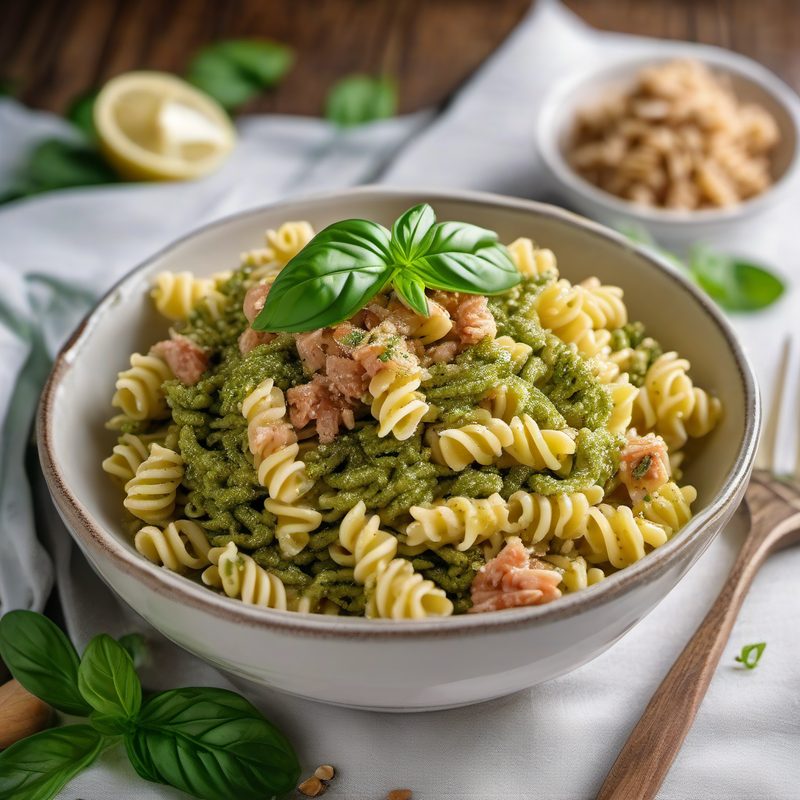
Fusilli Tuna Almond Pesto
Category: Primi piatti
| Amount | Ingredient |
|---|---|
| 10 min | Pulse pesto with olive oil → set aside |
| 11 min | Reserve 1 cup pasta water |
| 12 min | Drain pasta (al dente) |
| 13 min | Toss pasta with pesto and pasta water |
| 15 min | Adjust consistency, taste, and season |
| 17 min | Plate and serve with garnishes |
Servings: 4
Total Time: 25 minutes
Active Time: 20 minutes
Skill Level: Beginner
Source: Sicilia — a robust, rustic pesto from the island's tuna-fishing tradition, replacing pine nuts with almonds and enriching the sauce with oil-packed tuna
1. Why This Recipe Works
This Sicilian-inspired pesto swaps the traditional basil-and-pine-nut formula for a bold, briny, protein-packed sauce built around oil-packed tuna, toasted almonds, and sharp Pecorino Romano. The tuna — drained but not rinsed — contributes a deep savory umami and a silky texture that eliminates the need for extra oil; its residual oil also helps the pesto emulsify when tossed with hot pasta. Toasting the almonds deepens their flavor and adds a satisfying crunch that contrasts with the tender pasta. Blending the ingredients into a coarse, chunky paste rather than a smooth purée preserves textural interest: little flecks of almond, bite-size pieces of tuna, and grated Pecorino that melts on contact with the hot fusilli. A single garlic clove provides just enough pungency to wake up the sauce without overwhelming the tuna. A handful of fresh basil leaves keeps the pesto bright and herbaceous, tying everything back to the classic Genovese tradition. The key is to under-blend — the pesto should remain rustic, not homogeneous — and to toss with hot pasta and a splash of starchy cooking water for a creamy, clingy finish that coats every spiral.
3. Before You Begin
- Choose the right tuna: Use good-quality tuna packed in olive oil, not water. The oil in the can contributes flavor and body to the pesto. Drain the can but do not rinse — the residual oil is part of the sauce.
- Toast the almonds: Spread the almonds in a dry skillet over medium heat and cook, shaking frequently, until fragrant and pale golden, 3–5 minutes. Watch closely — almonds go from golden to burnt in seconds. Let cool completely before blending.
- Pasta water: Bring 4–5 quarts of water to a rolling boil and salt generously (1½ tbsp kosher salt per gallon). The starchy water is essential for emulsifying the pesto into a creamy sauce.
- Grate your own cheese: Pre-shredded Pecorino Romano contains anti-caking agents that prevent smooth melting. Grate from a wedge on the fine side of a box grater or Microplane.
- Work quickly at the end: The sauce comes together in the last minute — have the drained pasta, pesto, and a ladle of pasta water at arm's reach before you start tossing.
4. Equipment
- Large pot (6–8 qt) for pasta
- Colander
- Dry skillet or pan for toasting almonds
- Food processor or high-speed blender
- Chef's knife and cutting board
- Box grater or Microplane
- Rubber spatula
- Tongs or pasta fork
- Measuring cups and spoons
- Small bowl for drained tuna
5. Key Steps at a Glance
- Toast almonds → 3–5 minutes in dry skillet until golden → let cool.
- Cook pasta → al dente → Reserve 1 cup pasta water → drain.
- Blend pesto → Tuna + almonds + Pecorino + garlic + basil + olive oil → pulse to coarse, chunky paste.
- Toss & finish → Combine hot fusilli with pesto and reserved pasta water → toss until creamy and coated.
- Serve → Garnish with extra Pecorino, crushed almonds, and a drizzle of olive oil.
6. Step-by-Step Instructions
Step 1: Toast the Almonds
- Place the almonds in a dry skillet over medium heat.
- Cook, shaking the pan frequently, until the almonds are fragrant and a shade or two darker — about 3–5 minutes.
- Immediately transfer the almonds to a plate to cool completely. Do not leave them in the hot pan or they will continue to toast and potentially burn.
- Once cool, set aside a small handful (about 6–8 almonds) for garnish. Roughly chop these by hand and reserve.
Step 2: Cook the Pasta
- Bring a large pot of generously salted water (1½ tbsp kosher salt per 4 quarts of water) to a rolling boil.
- Add the fusilli and cook according to package directions until al dente (about 1 minute less than the suggested time — the pasta will finish cooking in the sauce).
- Reserve 1 cup (240 ml) of pasta cooking water before draining.
- Drain the pasta in a colander. Do not rinse — the surface starch helps the sauce cling to every spiral.
Step 3: Make the Tuna-Almond Pesto
- While the pasta cooks, open the can of tuna and drain off the oil. Place the drained tuna in the bowl of a food processor.
- Add the cooled toasted almonds (minus the reserved garnish), grated Pecorino Romano, peeled garlic clove, fresh basil leaves, and a generous pinch of freshly ground black pepper.
- Pulse 8–10 times (1-second pulses) until the mixture is coarsely chopped — you want visible flecks of almond and shreds of tuna, not a smooth paste. Scrape down the sides of the bowl with a rubber spatula once or twice.
- With the motor running, drizzle in the 80 ml olive oil in a steady stream through the feed tube. Process for no more than 10 seconds — just enough to bring everything together into a thick, chunky, spreadable pesto. It should look rustic, with distinct pieces of almond and tuna still visible.
- Taste and adjust seasoning. The Pecorino is salty, and the tuna brings its own brininess, so add salt sparingly if at all. Add a few grinds of black pepper to finish.
Step 4: Toss Pasta with Pesto
- Transfer the hot drained fusilli to a large serving bowl or return it to the now-empty pasta pot.
- Add the tuna-almond pesto and ¼ cup (60 ml) of the reserved pasta water.
- Toss vigorously with tongs for 30–45 seconds, coaxing the pesto into every spiral and crevice of the fusilli. The heat from the pasta will melt the Pecorino and soften the pesto, while the starchy water emulsifies the olive oil into a creamy sauce that coats the pasta.
- If the sauce seems too thick or clumpy, add more pasta water 1 tablespoon at a time, tossing after each addition, until you reach a silky, clingy consistency.
- Taste and adjust seasoning with black pepper. Add the reserved chopped almonds and toss once more to distribute.
Step 5: Serve
- Divide the pasta among warmed serving bowls.
- Top each portion with a generous grating of Pecorino Romano, a sprinkle of the reserved crushed almonds, and a light drizzle of extra-virgin olive oil. Garnish with a small basil leaf if desired. Serve immediately.
7. Visual Cues — What to Look For
| Step | Visual Cue |
|---|---|
| Toasted almonds | Pale golden-brown; fragrant; no dark spots or burnt edges |
| Tuna drained | Flakes separate easily; moist but not dripping with oil |
| Pesto in processor | Coarse, chunky paste; visible almond pieces and tuna shreds; deep green from basil |
| Pesto coating pasta | Each fusilli spiral coated in speckled green pesto; ridges filled with sauce |
| Final consistency | Sauce clings to pasta; a spoonful of accumulated sauce at the bottom is creamy, not watery or oily |
| Plated dish | Garnish of white Pecorino shavings and golden almond pieces on top |
8. Recipe Notes & Troubleshooting
| Issue | Cause | Fix |
|---|---|---|
| Pesto is too dry / won't blend | Not enough olive oil or pasta water | Add extra olive oil 1 tbsp at a time, or add reserved pasta water when tossing |
| Pesto is too smooth / pasty | Over-processed in the food processor | Pulse next time — stop while still chunky. Can't be undone |
| Sauce tastes flat / one-dimensional | Missing salt, pepper, or brightness | Add a squeeze of lemon juice (½ tsp) or more black pepper; taste the Pecorino's saltiness first |
| Sauce tastes too salty | Pecorino is naturally salty; tuna adds brine | Use less Pecorino next time; add unsalted pasta water to dilute |
| Pasta clumps together | Drained too early; not tossed immediately | Toss with pesto immediately after draining; work quickly |
| Sauce doesn't cling | Pasta rinsed after draining | Never rinse pasta — surface starch is essential for emulsification |
| Pesto tastes bitter | Almonds were over-toasted or burned | Toast on medium heat, not high; discard burnt almonds and start over |
| Tuna flavor overwhelms | Canned tuna in water (less flavorful) or too much tuna | Use oil-packed tuna; or reduce tuna to 100 g and add an extra 20 g Pecorino |
9. Make-Ahead Tips
- Pesto (up to 3 days ahead): Transfer the finished tuna-almond pesto to an airtight container. Press a layer of plastic wrap directly onto the surface (to prevent oxidation) and seal with a lid. Refrigerate for up to 3 days. Bring to room temperature before tossing with hot pasta, or gently warm in a saucepan with a splash of pasta water.
- Freezing (up to 1 month): Tuna pesto freezes reasonably well. Spoon into an ice cube tray, freeze until solid, then transfer cubes to a freezer bag. Thaw overnight in the refrigerator. Note that the texture of the tuna may soften slightly upon thawing.
- Pasta (not recommended): Cooked pesto pasta does not keep well — the sauce separates and the pasta turns mushy upon reheating. Best enjoyed immediately.
10. Variations
- Spicy tuna pesto: Add ½ teaspoon red pepper flakes or 1 small dried chili to the food processor with the tuna. The heat cuts through the richness of the tuna and oil.
- Lemon & caper: Add 1 tablespoon drained capers and 1 teaspoon lemon zest to the pesto for a brighter, more acidic profile — a nod to Sicilian pasta con le sarde.
- Pistachio instead of almond: Substitute 50 g shelled unsalted pistachios (toasted) for the almonds. Pistachios give a milder, sweeter, and more colorful pesto.
- Pine nut classic: Substitute 50 g toasted pine nuts for the almonds for a more traditional pesto Genovese — though the tuna is still the star.
- Add sun-dried tomatoes: Add 30 g oil-packed sun-dried tomatoes (drained) to the food processor for a sweet, tangy counterpoint to the tuna.
- Breadcrumb crunch: Toast ¼ cup coarse breadcrumbs in olive oil until golden and sprinkle over each serving for extra texture.
- Herb swap: Replace half the basil with fresh mint or flat-leaf parsley for a different herbal character.
11. Wine & Drink Pairing
- White: A crisp, mineral-rich Etna Bianco (Sicily) — the volcanic minerality pairs beautifully with the tuna's brininess and the almond's nuttiness. Alternatively, a Vermentino di Sardegna with its saline finish.
- Light red: A chillable Frappato (Sicily) or a Bardolino — low tannins and bright red fruit won't compete with the pesto's intensity.
- Rosé: A dry Sicilian rosato (from Nero d'Avola grapes) — floral, fruity, and refreshing.
- Sparkling: A crisp Franciacorta or Prosecco Superiore — the bubbles cut through the oil and cleanse the palate.
- Non-alcoholic: Sparkling water with a slice of lemon and a basil leaf; or an iced Sicilian lemonade.
12. Serving Suggestions
- Serve with warm, crusty bread (ciabatta or Sicilian pane cunzato) to mop up any remaining pesto at the bottom of the bowl.
- A simple side salad of arugula, shaved Pecorino, and a lemon vinaigrette adds freshness and contrast.
- Pair with grilled vegetables — zucchini, eggplant, and bell peppers tossed in olive oil and herbs echo the Sicilian spirit of the dish.
- For a heartier meal, serve alongside grilled swordfish or shrimp skewers — the tuna pesto reinforces the seafood theme.
- Finish with a final crack of black pepper and a few flakes of crunchy sea salt (Maldon or fleur de sel).
13. Nutritional Information (per serving)
Approximate values based on ingredients listed; actual values may vary.
14. Prep Timeline & Workflow
| Time Elapsed | Action |
|---|---|
| 0 min | Bring pot of salted water to a rolling boil |
| 2 min | Toast almonds in dry skillet (3–5 min) → transfer to plate to cool |
| 5 min | Drain tuna; grate Pecorino; peel garlic; pick basil leaves |
| 7 min | Add fusilli to boiling water |
15. Allergen Information
- Contains: Wheat/gluten (fusilli pasta), tree nuts (almonds), dairy (Pecorino Romano), fish (tuna)
- Free from: Eggs, shellfish, peanuts, soy, sesame (as written)
- May contain: Traces of other tree nuts if almonds were processed on shared equipment
16. Regional Background
Pesto al tonno is a specialty of Sicily and the coastal regions of Southern Italy, where the island's legendary tuna fisheries — particularly around Trapani, Favignana, and the Egadi Islands — have supplied the Mediterranean with premium tonno rosso (bluefin tuna) for centuries. While pesto alla Genovese (basil, pine nuts, garlic, Parmigiano, olive oil) is Liguria's gift to the world, Sicilian cooks adapted the concept using local ingredients: almonds instead of pine nuts (almonds have been cultivated in Sicily since the Arab era, and the island remains one of Europe's largest producers), Pecorino Romano instead of Parmigiano (sheep's milk cheese is more common in the south), and canned tuna — a practical, economical source of protein that every Sicilian pantry holds. The result is a pesto that is at once more rustic, more robust, and more substantial than its northern cousin. Traditionally made with a mortar and pestle (a murtaru in Sicilian dialect), the sauce reflects the island's culinary philosophy of cucina povera — making something extraordinary from simple, humble ingredients. This version uses the food processor for convenience but preserves the coarse, hand-pounded texture that defines the authentic experience.
17. Scaling
- For 2 servings: Halve all ingredients. Use 175 g fusilli, 75 g tuna (½ can), 25 g almonds, 25 g Pecorino, ½ garlic clove (or 1 small), 40 ml olive oil, and half the basil. Blend time unchanged.
- For 8 servings: Double all ingredients. Use 700 g fusilli, 300 g tuna (2 cans), 100 g almonds, 100 g Pecorino, 2 garlic cloves, 160 ml olive oil. Blend pesto in two batches in the food processor (it won't all fit at once). Use a 14-inch skillet or extra-large serving bowl for tossing.
18. Conversion Table (Volume)
| Metric | US Standard |
|---|---|
| 5 ml | 1 tsp |
| 15 ml | 1 tbsp |
| 60 ml | ¼ cup |
| 80 ml | ⅓ cup |
| 240 ml | 1 cup |
| 50 g almonds | ≈ ⅓ cup (whole) / ½ cup (slivered) |
| 50 g Pecorino | ≈ ½ cup grated |
| 20 g basil | ≈ 1 cup packed leaves |
| 150 g tuna (drained) | ≈ 1 can / ⅔ cup flaked |
19. Chef's Final Notes
- Coarse is king. This is not a smooth, emulsified pesto — it's a chunky, rustic sauce. Pulse, don't purée. You want to see bits of almond, shreds of tuna, and flecks of basil. Over-processing turns it into baby food and robs the dish of texture.
- Use good tuna. The quality of the tuna makes or breaks this dish. Splurge on Italian tonno in olio d'oliva — it's meaty, flavorful, and not mushy. Cheap tuna packed in water or soybean oil will produce a bland, mealy pesto.
- Don't skip the pasta water. The starchy, salted water is the secret to a creamy, emulsified sauce. Without it, the pesto sits on top of the pasta instead of coating it. Add it gradually and toss vigorously.
- Taste before you salt. Pecorino Romano is aggressively salty, and canned tuna brings its own sodium. Season the pasta water generously, but add finishing salt judiciously — you can always add more, but you can't take it out.
- Serve immediately. This pasta waits for no one. As it sits, the pesto thickens and the pasta absorbs moisture. If you must hold it, toss with an extra tablespoon of pasta water just before serving to revive the sauce.
- A squeeze of lemon can save a flat pesto. If the pesto tastes one-dimensional or heavy, add a squeeze of fresh lemon juice (½ to 1 teaspoon). It brightens the tuna, cuts the richness of the olive oil, and wakes up the Pecorino.
Recipe from The Italian Kitchen by Vita Milanese — Volume 1 · Pasta Perfetto. Discover all volumes on the ebook page.