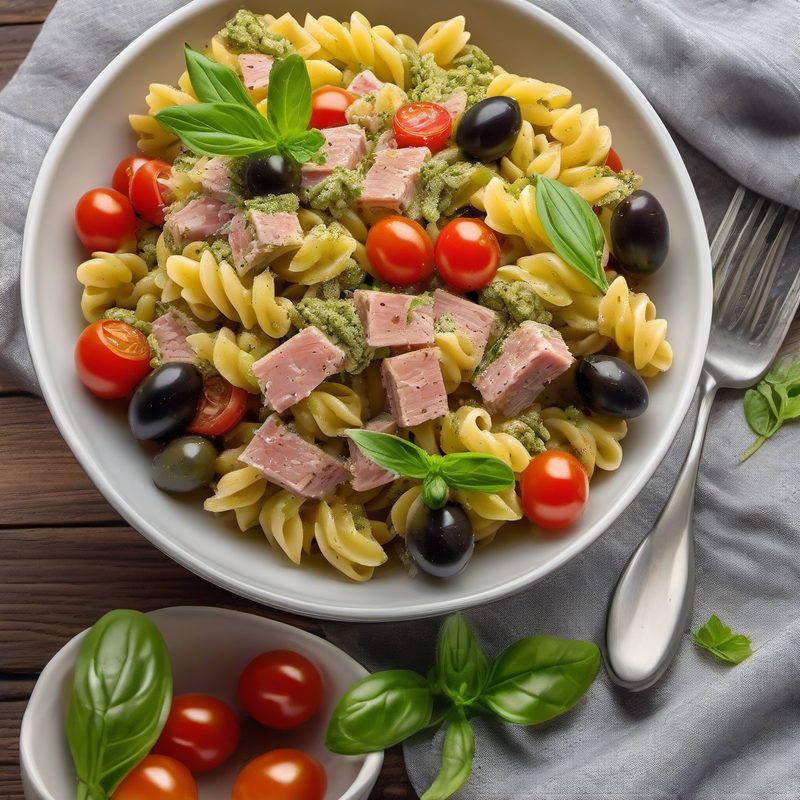
Cold Pasta Pesto Tuna Olives
A no-cook summer pasta salad that proves the best Italian cooking is often the simplest—just-cooked pasta tossed with vibrant basil pesto, flaked oil-packed tuna, briny black olives, and sweet cherry tomatoes, then chilled until the flavors settle into a perfect cold supper. There's no mayonnaise, no cream, no fuss—just bold Mediterranean flavors that taste like they came from a sun-drenched seaside trattoria.
| Amount | Ingredient |
|---|---|
| Pinot Grigio (Alto Adige) | Delicate, unoaked, and mineral-driven with notes of white peach and pear. A classic, crowd-pleasing pairing that doesn't compete with the dish's vibrant flavors. Its clean, precise finish refreshes the palate between each herbaceous, briny bite |
This is the pasta salad you make when the kitchen is too hot to turn on the stove for more than ten minutes, when you want something satisfying that won't weigh you down, and when you need dinner on the table with barely any effort. The trick is in the quality of your ingredients: a good refrigerated basil pesto (or better yet, homemade), tuna packed in olive oil (not water—the oil carries flavor), and olives with some personality, like taggiasche or kalamata. The cherry tomatoes add pops of sweetness and acidity that cut through the richness of the pesto and tuna, while the olives bring a briny, savory depth that turns a simple pasta into a complete meal. Chilled for thirty minutes, the flavors meld together into something far greater than the sum of their parts—and it's every bit as good the next day.
Use level tablespoons and standard US measuring cups. All produce is medium unless specified. The lemon juice is optional but recommended—it brightens the flavors and balances the richness of the tuna and pesto.
🥘 Equipment
- Large pot (6 qt / 6 L minimum) for boiling pasta
- Chef's knife and cutting board
- Colander
- Large serving bowl
- Small bowl (for dressing)
- Fork (for flaking tuna)
- Measuring cups and spoons
- Salad servers or tongs
📋 Preparation
Step 1 — Prepare the Tuna and Olives (3 minutes)
Drain and flake the tuna: Open the can of tuna and drain the oil (or reserve 1 tablespoon of the tuna oil to add to the dressing for extra flavor). Transfer the tuna to a small bowl and flake it into small, bite-sized pieces with a fork. Set aside.
Slice the olives: If using whole pitted olives, slice them into ¼-inch (6 mm) rings or rough chop them into pieces about the size of a chickpea. If using taggiasche (small Ligurian olives), leave them whole—their small size and intense flavor make chopping unnecessary.
Flaking the tuna with a fork rather than breaking it apart by hand gives you more uniform pieces that distribute evenly through the pasta. Large chunks are fine—they should be bite-sized, not pulverized. The olives should be small enough that you get a piece in almost every bite but large enough to offer a distinct burst of briny flavor.
Step 2 — Halve the Cherry Tomatoes (3 minutes)
Wash and halve the tomatoes: Rinse the cherry tomatoes and pat them dry. Cut each tomato in half through the equator (not from stem to blossom end). If your cherry tomatoes are particularly large (larger than a thumbnail), cut them into quarters.
Place the halved tomatoes in the large serving bowl where you'll assemble the pasta. Season with a small pinch of kosher salt and let them sit while you cook the pasta.
Salting the tomatoes early draws out a tiny bit of their juice, which mingles with the pesto to create a light, flavorful dressing that coats the pasta beautifully. Cutting them through the equator exposes the internal seed chambers, which releases more flavor than cutting pole to pole. If you're using colorful heirloom cherry tomatoes (red, yellow, orange, and even dark purple), the visual effect is stunning.
Step 3 — Cook the Pasta (10 minutes)
Bring a large pot of generously salted water (about 1½ tablespoons kosher salt per 4 quarts of water) to a rolling boil over high heat.
Add the pasta and cook according to package directions until al dente—typically 8 to 11 minutes depending on the shape. Set a timer for 1 minute less than the package's recommended time; the pasta will continue to soften slightly as it sits and absorbs the pesto.
Before draining, reserve ½ cup of the starchy pasta cooking water and set it aside. Drain the pasta into the colander and rinse immediately under cold running water until the pasta is cool to the touch, 30 to 45 seconds. Shake off excess water vigorously.
Rinsing is essential for cold pasta—it stops the cooking instantly and washes away surface starch that would otherwise cause the pasta to clump into sticky, unappealing clumps as it chills. The reserved pasta water, while less critical in a pesto-based dish than in a cream sauce, can be used to thin the pesto if it seems too thick or to loosen the final dish after refrigeration.
Step 4 — Assemble the Pasta Salad (5 minutes)
Combine the ingredients: Add the cooled pasta to the large serving bowl with the halved cherry tomatoes.
Add the pesto and oil: Spoon the pesto over the pasta. Drizzle with the extra-virgin olive oil and lemon juice (if using).
Toss gently: Using salad servers or tongs, toss the pasta with the pesto mixture until every piece is evenly coated.
Add the tuna and olives: Scatter the flaked tuna and sliced olives over the top. Gently fold them in—just enough to distribute them evenly without breaking the tuna into tiny fragments. You want distinct pieces of tuna and pockets of olives throughout the dish.
The order matters: coating the pasta with pesto first creates a protective layer that prevents the tuna from making the pasta feel oily or fishy. The pesto clings to every surface, and the tuna and olives sit nestled within the coating, adding their distinct flavors to each bite without dominating.
Step 5 — Chill and Serve
Cover the bowl with plastic wrap or a tight-fitting lid and refrigerate for at least 30 minutes. This rest is essential—it allows the pasta to absorb the flavors of the pesto, the tomatoes to release their juices into the dressing, and all the components to settle into a cohesive, harmonious dish.
After chilling, remove from the refrigerator. Taste and adjust seasoning: add a pinch of kosher salt if needed, a crack of black pepper, and if the pasta seems dry, stir in 1 to 2 tablespoons of reserved pasta water or a drizzle of olive oil to loosen it.
Toss gently once more before serving. Serve directly from the bowl or divide among shallow plates. If desired, garnish with a few fresh basil leaves (torn or whole), a light drizzle of extra-virgin olive oil, and a scattering of flaky sea salt.
Thirty minutes of chilling is the sweet spot—enough time for the flavors to meld without the cold temperature dulling the pesto's bright, herbaceous notes. If you're making this for a picnic or the next day's lunch, it will keep beautifully for up to 24 hours in the refrigerator; just give it a good stir and let it sit at room temperature for 15 minutes before serving to take the chill off.
🧑🍳 Chef's Tips
- Use tuna packed in olive oil, not water. This is non-negotiable. Tuna in olive oil has superior flavor, better texture, and the oil itself carries flavor compounds that season the dish. Water-packed tuna is dry, bland, and fibrous—it will make the pasta salad taste flat. If all you have is water-packed tuna, drain it, flake it, and toss it with a tablespoon of extra-virgin olive oil and a pinch of salt before adding it to the pasta.
- Reserve the tuna oil for extra flavor. Before draining the can, pour off the oil into a small dish and add a tablespoon of it to the pesto mixture. The tuna-infused olive oil adds another layer of savory depth—it's the difference between a good pasta salad and one that tastes like it came from a seaside trattoria.
- Choose your pesto carefully. The pesto is the backbone of this dish—don't use the shelf-stable jarred stuff from the pasta aisle. Look for refrigerated pesto from the deli section (often sold near fresh mozzarella), or make your own. A good pesto should be vividly green, fragrant with basil, and balanced between olive oil, pine nuts, garlic, and Parmigiano. If your store-bought pesto is dark or dull, brighten it with a handful of fresh chopped basil and a squeeze of lemon before using.
- Undercook the pasta by 1 minute. Even though you rinse the pasta with cold water, it continues to soften as it sits in the dressing and absorbs the pesto's oil. Cooking it to just barely al dente—about a minute less than the package directions—ensures a firm, satisfying bite that holds up perfectly even after chilling.
- Don't skip the chilling step. Yes, you could eat this immediately after tossing, but it won't be the same dish. The 30-minute rest allows the tomato juices to bleed into the pesto, the olives to release their briny oils, and the tuna to perfume the entire bowl. The flavor transformation is remarkable—patient cooks are rewarded.
- Cut the cherry tomatoes consistently. Halving all the tomatoes through the equator ensures they release their juices at the same rate. Haphazard cuts mean some tomatoes release all their liquid immediately (making the dish watery) while others stay intact (adding no flavor to the dressing).
- Add a squeeze of lemon. The lemon juice is listed as optional for a reason—some people prefer the pure pesto-tuna-olive trio without acidity. But try it once with lemon, and you'll likely never skip it. The bright citrus cuts through the richness of the tuna and pesto and makes everything taste fresher and more vibrant.
- Let leftovers come to room temperature before serving. Straight from the fridge, the pesto's olive oil stiffens and the flavors mute. If you're serving leftovers, let them sit at room temperature for 15 to 20 minutes, then toss with a teaspoon of fresh olive oil to revive the gloss and flavor.
❌ Common Mistakes
| Mistake | Why It Hurts | The Fix |
|---|---|---|
| Using water-packed tuna | Water-packed tuna is dry, fibrous, and flavorless; it sits in the pasta like bland shreds of protein | Always use tuna packed in olive oil—preferably ventresca or a high-quality Italian tonno sott'olio |
| Not rinsing the pasta | Surface starch makes the cold pasta clump together into sticky, unappealing clumps | Rinse thoroughly under cold running water immediately after draining; shake off excess water |
| Using shelf-stable jarred pesto | Jarred pesto is darker, duller, and often made with cheaper oils and fewer basil leaves—the dish tastes muted and flat | Use refrigerated fresh pesto from the deli section, or make your own |
💡 Variations
| Variation | How To |
|---|---|
| Add Capers | Add 2 tablespoons of drained capers (rinsed if salted) along with the olives. The briny, lemony pop of capers amplifies the Mediterranean character and is a classic pairing with tuna |
| Make it Spicy | Add ½ teaspoon of red pepper flakes to the pesto before tossing, or fold in a finely chopped Calabrian chile in oil. The gentle heat wakes up the tuna and pesto beautifully |
| Add Fresh Herbs | Fold in ¼ cup of mixed fresh herbs—basil, parsley, and a few mint leaves—just before serving. The herbs add brightness and freshness that contrast with the rich tuna and pesto |
| Add Crunch | Toast ¼ cup of pine nuts or slivered almonds in a dry skillet over medium heat until golden, about 3 minutes. Sprinkle over the finished salad for a nutty crunch that echoes the pine nuts in the pesto |
| Swap the Protein | Replace tuna with 200g of flaked smoked mackerel or grilled sardines (skin removed). The smoky, assertive fish stands up beautifully to the pesto and olives—try it with a Sardinian-inspired twist |
| Add Mozzarella | Fold in ½ cup (about 120 g) of small fresh mozzarella balls (bocconcini or ciliegine), halved or quartered. The creamy, milky mozzarella adds a cooling, mild counterpoint to the briny olives and rich pesto |
| Add Bell Peppers | Dice 1 roasted red bell pepper (jarred or home-roasted) into ½-inch pieces and fold in after chilling. The sweet, smoky pepper provides color and a soft, jammy texture that complements the tuna |
| Go Gluten-Free | Use gluten-free fusilli, penne, or chickpea pasta. Cook according to package directions, rinse well, and proceed as written. Handle gently—GF pasta is more fragile, especially when cold |
| Make it Dairy-Free | Use a dairy-free basil pesto (many brands now make excellent versions, or make your own with nutritional yeast). The dish is naturally dairy-free except for the Parmigiano in traditional pesto |
| Add Artichokes | Fold in ½ cup (about 100 g) of marinated artichoke hearts, quartered. Their tangy, herbal flavor is a natural match for the pesto and olives—a classic Antipasto-inspired addition |
| Use Green Olives | Substitute green Castelvetrano or Cerignola olives for the black olives. Green olives are milder, buttery, and slightly sweeter, creating a less intensely briny but equally delicious pasta salad |
| Add Toasted Breadcrumbs | Toast ½ cup of fresh breadcrumbs in 2 tablespoons of olive oil with a pinch of salt until golden and crisp, 4–5 minutes. Sprinkle over each serving for a Sicilian-inspired crunchy topping that adds texture |
❄️ Storage & Leftovers
| Method | Details |
|---|---|
| Refrigerator | Store in an airtight container for up to 2 days. The pesto will darken slightly from oxidation (this is normal and harmless), and the flavors will continue to meld—some people find it tastes even better on day two. The pasta will soften a bit more but should still be pleasant |
| Reheating | Not recommended—this is a cold dish. If you prefer it less chilly, let refrigerated leftovers sit at room temperature for 15–20 minutes, then toss with a drizzle of fresh olive oil and a squeeze of lemon to revive the flavors. The lemon acidity brightens the pesto beautifully after refrigeration |
| Freezing | Not recommended. The pesto's basil oxidizes and turns black upon thawing, the tuna becomes dry and stringy, and the pasta turns mushy. Make only what you'll eat within 2 days |
| Make-Ahead Tips | For best results, cook and dress the pasta up to 4 hours ahead and keep refrigerated. If making more than 4 hours ahead, keep the pesto and pasta separate, then dress and add the tuna and olives no more than 1 hour before serving—the pesto stays brighter and the tuna stays fresher |
🍷 Wine Pairing
| Wine | Why |
|---|---|
| Vermentino di Sardegna or Liguria | The ultimate pairing—crisp, saline, and herbal with notes of green apple and white flowers. The bright acidity cuts through the pesto's olive-oil richness and echoes the basil's herbaceousness, while the saline minerality complements the briny olives and tuna. A taste of the Mediterranean in every sip |
| Gavi di Gavi (Piedmont) | Light-bodied with green apple, citrus, and wet stone—clean and precise. The steely, mineral acidity refreshes the palate between each pesto-coated bite. An elegant, understated pairing that lets the tuna and olives shine |
| Soave Classico (Veneto) | Garganega's signature almond blossom, white peach, and lemon-citrus notes mirror the creamy, herbaceous profile of the pesto. Medium-bodied with enough texture to carry the richness of the tuna, while bright acidity cuts through the olive oil |
| Greco di Tufo (Campania) | Full-bodied white with notes of white peach, lemon, almond, and a distinct salty-mineral finish. The richness stands up to the tuna and pesto, while the saline, almost smoky finish echoes the briny olives |
| Fiano di Avellino (Campania) | Medium-bodied with honeyed stone fruit, hazelnut, and a touch of smoke. The nutty, savory notes complement both the pasta and the tuna, while the bright acidity keeps everything fresh. A surprisingly excellent match for pesto-based dishes |
| Friulano (Friuli) | Aromatic, medium-bodied, with notes of almond, white flowers, and a distinctive bitter-almond finish. The savory, slightly nutty profile mirrors the pine nuts in the pesto and the richness of the tuna |
| Verdicchio dei Castelli di Jesi (Marche) | Crisp, citrusy, and mineral-driven with a distinctive almond-bitter finish. The bright acidity and savory undertones are a perfect match for the pesto, tuna, and olives—a classic pairing from Italy's central Adriatic |
🍺 Beer Pairing
| Beer | Why |
|---|---|
| Italian Pilsner (Moretti, Peroni) | A crisp, cold lager with clean carbonation and a dry finish. The bubbles and gentle bitterness cut through the pesto's olive oil and tuna richness, resetting the palate with each sip—simple, effective, and perfect for summer |
| Belgian Witbier (Hoegaarden, Blanche de Namur) | Cloudy, spiced, and citrusy with notes of coriander and orange peel. The gentle spice and bright citrus complement the basil and garlic in the pesto, while the creamy body provides a refreshing contrast to the briny olives and flaked tuna |
| Italian Pale Ale (Birrificio Italiano Tipopils, Baladin) | More hop-forward than a standard lager, with floral, herbal, and citrus notes that echo the basil in the pesto. The moderate bitterness cuts through the olive oil and cleanses the palate between each savory, fishy bite |
| American Blonde Ale | Light, clean, and slightly bready—the subtle malt and gentle hops provide a neutral, refreshing counterpoint that won't compete with the pesto's bright, herbal flavors or the tuna's savory character |
| Saison / Farmhouse Ale | Dry, effervescent, and subtly spicy with notes of white pepper, lemon, and earth. The complex yeast character complements the herbal pesto and briny olives, while the high carbonation scrubs the palate clean after each rich, oil-coated bite |
| Dry Hard Cider | Crisp, apple-forward, and bone-dry with lively carbonation. The tart apple acidity cuts through the richness of the pesto, tuna, and olive oil beautifully, and the lack of sweetness keeps it refreshing rather than cloying—a fantastic gluten-free option |
🥗 Suggested Side Dishes
- Fennel and orange salad — Thinly sliced raw fennel bulb tossed with orange segments, extra-virgin olive oil, flaky salt, and a few black olives. Bright, crunchy, and citrusy, it offers a refreshing palate cleanser between mouthfuls of pesto-coated pasta
- Crusty focaccia or ciabatta — A Ligurian focaccia is the ideal companion—its airy crumb and olive-oil-soaked crust are perfect for sopping up every last streak of pesto and tomato juice from the bottom of the bowl
- Grilled vegetables with balsamic glaze — Thick slices of eggplant, zucchini, and bell peppers grilled until smoky and tender, drizzled with aged balsamic vinegar. The smoky char and sweet-tart balsamic echo the Mediterranean theme and add another layer of texture
- Melon and prosciutto — Thin slices of sweet cantaloupe or honeydew wrapped with prosciutto di Parma. The classic sweet-salty combination is the perfect light starter before a tuna pesto pasta—refreshing, elegant, and no-cook
- Caprese salad — Thick slices of ripe tomato, fresh mozzarella, and basil drizzled with extra-virgin olive oil and aged balsamic. A classic Italian starter that mirrors the basil and olive oil in the pasta and adds creamy mozzarella to the meal
- Grilled lemon-dressed zucchini ribbons — Wide ribbons of zucchini grilled for 2 minutes per side, dressed with lemon juice, olive oil, and fresh mint. The bright, grassy flavor echoes the garden-fresh spirit of the pesto
- Panelle (Sicilian chickpea fritters) — Crispy, golden chickpea flour fritters that are naturally gluten-free and packed with savory flavor. Their crispy exterior and soft interior are a fantastic textural counterpoint to the cold, tender pasta
- Marinated anchovy fillets — A few oil-packed anchovy fillets on the side, served with lemon wedges and crusty bread. The intense umami of the anchovies is perfect for anyone who loves the briny-tuna theme and wants to double down on Mediterranean flavors
📊 Nutrition (per serving, estimated)
| Calories | Protein | Fat | Carbs | Fiber |
|---|---|---|---|---|
| 530 | 25 g | 24 g | 55 g | 4 g |
Nutrition values are estimates based on 4 servings using 12 oz dried short pasta, 7 oz oil-packed tuna, ½ cup refrigerated basil pesto, 3½ oz black olives, 7 oz cherry tomatoes, 3 tbsp extra-virgin olive oil, and 2 tbsp lemon juice. Actual values will vary based on specific brands, tuna type (ventresca is fattier than light tuna), and portion sizes. This dish is naturally gluten-free if you use GF pasta, and is high in protein thanks to the tuna and the pine nuts and Parmigiano in the pesto. To lower the fat content, reduce the olive oil to 2 tablespoons—the pesto and tuna already contribute significant oil that will coat the pasta.
❓ Frequently Asked Questions
Can I use homemade pesto for this recipe?
Absolutely—and it's highly recommended. Homemade pesto has a brighter color, fresher basil flavor, and more vibrant garlic and pine nut notes than any store-bought version. Use this ratio: 2 cups packed fresh basil leaves, ⅓ cup pine nuts (toasted), 2 small garlic cloves, ½ cup grated Parmigiano-Reggiano, and ½ cup extra-virgin olive oil. Blend in a food processor until smooth but still with some texture—avoid over-blending into a paste, which can turn the pesto bitter. If making your own pesto, you can skip the extra olive oil in the recipe; the pesto will be rich enough on its own.
What's the best tuna for this dish?
Italian tuna packed in olive oil (tonno sott'olio) is ideal—look for brands like Callipo, Genova, or Ortiz. Ventresca (tuna belly) is the most luxurious option, but any oil-packed solid or chunk tuna works well. Avoid "light tuna in water" at all costs—it's dry, flaky, and flavorless. The olive oil the tuna is packed in is part of the ingredient; don't discard it entirely.
Can I use a different type of olive?
Yes—the olive choice is flexible. Taggiasche (small, dark, intensely flavored Ligurian olives) are the most traditional with pesto, but kalamata olives add a more assertive, wine-vinegary tang. Gaeta olives are milder and meatier. Castelvetrano olives (bright green, buttery, mild) create a completely different but equally delicious dish. Avoid bland, canned sliced black olives—they lack the briny, fruity character this dish needs.
Do I really need to rinse the pasta with cold water?
Yes—rinsing is essential for cold pasta dishes. Without rinsing, the surface starch remains on the pasta and causes it to clump into sticky, unappealing clumps as it cools. Rinsing also stops the cooking instantly, ensuring the pasta stays perfectly al dente. For hot pasta dishes, you normally skip rinsing because the starch helps the sauce cling—but for cold dishes, rinsing is the right move.
What shape of pasta works best?
Short, textured pasta shapes that can trap pesto in their crevices are ideal. Fusilli, gemelli, rotini, farfalle, and campanelle are all excellent choices. Smooth shapes like penne lisce (smooth penne) or ziti allow the pesto to slide off and pool at the bottom of the bowl. Trofie, the traditional Ligurian shape for pesto, is wonderful if you can find it.
Can I make this dish ahead for a picnic or potluck?
Yes—this dish is made for exactly that scenario. Assemble it completely (including the tuna and olives), cover tightly, and refrigerate for up to 4 hours before serving. The flavor actually improves over the first hour as the pasta absorbs the pesto. Transport it in a covered bowl and give it a good stir before serving. If it's going to sit unrefrigerated at a picnic, bring it in a cooler and take it out just before serving—it's fine at room temperature for about 1 hour.
My pesto seems too thick after refrigeration. How should I thin it?
Stir in 1 to 2 tablespoons of the reserved pasta cooking water—the starch helps it cling to the pasta. If you didn't reserve pasta water, a tablespoon of warm water, extra-virgin olive oil, or a squeeze of lemon juice works. The pesto should be loose enough to coat the pasta evenly but not watery. Remember that cold pesto naturally thickens; a little loosening goes a long way.
Can I add vegetables to this dish?
Absolutely. This recipe is a great base for summer vegetables. Grilled zucchini ribbons, roasted bell peppers, steamed green beans (cooled), or even blanched broccoli rabe are all excellent additions. Just be mindful of the proportions—you want a balanced dish, not a vegetable overload. Add no more than 1 cup total of additional vegetables.
What if I can't find refrigerated pesto?
If refrigerated pesto isn't available, you can brighten shelf-stable jarred pesto by stirring in a handful of finely chopped fresh basil and an extra squeeze of lemon juice before dressing the pasta. The fresh basil will compensate for the duller color and flavor of the jarred pesto. Alternatively, make your own—it takes 10 minutes and the result is dramatically superior.
Is this dish gluten-free?
As written, no—it uses wheat pasta. But the dish is easily adapted: use gluten-free fusilli, penne, or chickpea pasta. Cook according to package directions (chickpea pasta, in particular, can go from al dente to mushy quickly, so watch it carefully), rinse well, and proceed as written. Handle gluten-free pasta gently during tossing—it's more fragile than wheat pasta.
🔗 Related Recipes
- Trofie al Pesto (Traditional Ligurian Trofie with Pesto) (page 23)
- Cold Pasta with Pesto, Potatoes, and Green Beans (Pasta fredda al pesto con patate e fagiolini) (page 105)
- Cold Pasta with Ricotta, Avocado, and Green Beans (Pasta fredda con ricotta, avocado e fagiolini) (page 101)
- Creamy Tuna Pasta with Peas (Pasta tonno e piselli) (page 9)
- Penne al Pesto alla Siciliana (Sicilian-style Pesto with Almonds and Tomatoes) (page 48)
- Linguine with Lemon, Basil, and Pine Nuts (page 55)
- Farfalle with Pesto, Sun-Dried Tomatoes, and Fresh Mozzarella (page 67)
- Pasta with Zucchini and Cherry Tomatoes (Pasta zucchine e pomodorini) (page 100)
- Spaghetti al Pesto Genovese (Classic Genoese Pesto Spaghetti) (page 22)
- Pasta e Fagioli (Pasta and Beans) (page 315)
🏷️ Search Tags
📸 Photo Reference
Photo reference: `vol1_339.png` — A wide, shallow ceramic or earthenware bowl filled with short fusilli pasta generously coated in vibrant, bright-green basil pesto. Substantial flakes of light-colored oil-packed tuna are scattered throughout, alongside glossy black taggiasche olives and bright red-and-gold cherry tomato halves that provide vivid pops of color. The pasta is mounded slightly in the center, with some pieces catching the light. A light drizzle of golden-green extra-virgin olive oil glistens on top, and a few fresh basil leaves are tucked around the edge of the bowl for garnish. Shot from a 45-degree overhead angle in soft, warm natural daylight on a rustic wooden or light stone surface. Mediterranean summer presentation—bright, fresh, herbaceous, and inviting. A linen napkin and a glass of chilled white Vermentino wine complete the scene in the background.
Recipe from "The Italian Kitchen" by Vita Milanese — Volume 1: Pasta Perfetto
Recipe from The Italian Kitchen by Vita Milanese — Volume 1 · Pasta Perfetto. Discover all volumes on the ebook page.