Cold Pasta Pesto Potatoes GreenBeans
A classic Ligurian summer pasta that brings together basil pesto, tender potato cubes, and crisp green beans in a single bowl—no stove-top sauce, no heavy mayo, just the bright, herbaceous flavors of the Italian Riviera. The potatoes soften into buttery, pesto-coated pockets, the green beans add a clean snap, and the pesto clings to every piece of pasta in a way that somehow tastes even better at room temperature than it does hot. It's the dish you want on a warm evening when you want something satisfying without turning on more than one burner.
| Amount | Ingredient |
|---|---|
| Adding extra salt without tasting first | Pesto and Parmigiano are already salty—adding more can make the dish unpleasantly salty Taste the dressed pasta before adding any salt; you likely won't need any |
| Serving the pasta straight from the fridge | Cold temperature dulls the pesto's herbaceous brightness and stiffens the olive oil Let refrigerated leftovers sit at room temperature for 20 minutes before serving |
| Cutting the potatoes too large | Large pieces take longer to cook than the green beans, leading to undercooked potatoes or overcooked beans Cut potatoes into uniform ½-inch (1 cm) cubes for even cooking |
This is pasta salad with a pedigree. In Liguria, pesto is a daily ritual, and the combination of pasta, potatoes, and green beans—strange as it may sound to the uninitiated—is a time-honored trio that makes perfect sense the moment you taste it. The potatoes release a touch of starch into the cooking water, which helps the pesto cling to the pasta, while the green beans provide color and texture. Cooled under running water and tossed with a generous dose of pesto, extra-virgin olive oil, and grated Parmigiano-Reggiano, it's a complete meal that needs nothing but a fork and a glass of chilled white wine. Unlike mayonnaise-based pasta salads that turn heavy as they sit, this one stays bright, fresh, and light—and it actually improves as the flavors meld together over thirty minutes on the counter.
Use level tablespoons and standard US measuring cups. All produce is medium unless specified. Trofie is the traditional Ligurian pasta for this dish, but any short, textured shape that can trap pesto in its crevices works beautifully.
🥘 Equipment
- Large pot (6 qt / 6 L minimum) for boiling pasta
- Chef's knife and cutting board
- Colander
- Large serving bowl
- Vegetable peeler
- Small bowl for pesto
- Measuring cups and spoons
- Salad servers or tongs
📋 Preparation
Step 1 — Prepare the Potatoes and Green Beans (5 minutes)
Peel and dice the potatoes: Peel the potatoes and cut them into ½-inch (1 cm) cubes. You should have about 1⅓ cups of potato cubes. Place them in a small bowl and cover with cold water to prevent browning.
Trim and cut the green beans: Snap or cut off the stem ends of the green beans. Cut them into 1½-inch (4 cm) pieces. You should have about 1½ cups.
Cutting the potatoes and green beans to a similar size ensures they cook evenly and integrate seamlessly into the pasta. Waxy potatoes like Yukon Gold or Red Bliss hold their shape during cooking—starchy russets will break apart and turn the cooking water cloudy.
Step 2 — Cook the Potatoes and Green Beans (8 minutes)
Bring a large pot of generously salted water (about 1½ tablespoons kosher salt per 4 quarts of water) to a rolling boil over high heat.
Drain the potato cubes from their soaking water and add them to the boiling water. Set a timer for 8 minutes.
After 3 minutes (5 minutes remaining on the timer), add the green bean pieces to the same pot.
After another 3 minutes (2 minutes remaining), the potatoes should be tender and the green beans bright green and tender-crisp. Test a potato cube by piercing it with a fork—it should slide in with gentle resistance, and the cube should hold its shape. Test a green bean—it should be cooked through but still offer a clean snap.
Using a slotted spoon or spider skimmer, transfer the potatoes and green beans to a colander and rinse briefly under cold running water to stop the cooking. Set aside.
Cooking the potatoes first gives them a head start since they take longer than the green beans. Adding the beans with 5 minutes left is the sweet spot—the potatoes finish cooking at the same moment the beans reach tender-crisp perfection. If you prefer softer green beans, add them with 6 minutes remaining instead.
Step 3 — Cook the Pasta (8–11 minutes, concurrent with Step 2)
Keep the same pot of water at a rolling boil. Add the pasta and cook according to package directions until al dente—typically 8 to 11 minutes depending on the shape.
Reserve ½ cup of the starchy pasta cooking water before draining. Drain the pasta into the colander (you can use the same one you used for the vegetables) and rinse immediately under cold running water until the pasta is cool to the touch, 30 to 45 seconds. Shake off excess water.
Rinsing the pasta stops the cooking instantly and removes surface starch, which is exactly what you want for a cold pasta dish—it prevents the pasta from clumping into a sticky mass as it cools. The reserved pasta water, while less critical in a pesto-based dish than in a cream sauce, can be used to thin the pesto if it seems too thick.
Step 4 — Dress the Pasta (3 minutes)
In a large serving bowl, combine the cooled pasta, potatoes, and green beans.
In a small bowl, stir together the ½ cup of pesto and 3 tablespoons of olive oil until smooth. If the pesto seems very thick, stir in 1 to 2 tablespoons of the reserved pasta water to loosen it to a spoonable consistency.
Pour the pesto mixture over the pasta and vegetables. Sprinkle with the ⅓ cup of grated Parmigiano-Reggiano.
Toss gently with salad servers or tongs until every piece of pasta, every potato cube, and every green bean is evenly coated in the bright green pesto. The cheese should be fully incorporated, not sitting in clumps.
Tossing gently is key—you want the pesto to coat everything without breaking the tender potato cubes or crushing the pasta. Use a folding motion: lift from the bottom, turn over, repeat. The pesto doesn't need to be emulsified like a hot sauce; it simply needs to be evenly distributed.
Step 5 — Rest and Serve
Let the pasta rest at room temperature for 15 to 20 minutes before serving. This brief rest allows the flavors to meld and the pesto to absorb into the surface of the pasta, creating a more cohesive dish.
Taste and adjust seasoning. The pesto and Parmigiano provide significant salt, so taste before adding any extra kosher salt. Finish with a crack of freshly ground black pepper if desired.
Divide among shallow bowls. Top each serving with a light drizzle of good extra-virgin olive oil and an extra shower of freshly grated Parmigiano-Reggiano. Serve at room temperature.
The rest is not optional. Freshly tossed cold pasta tastes like separate components that happen to share a bowl. After 15 minutes at room temperature, the pesto has had time to cling to every surface, the potatoes absorb a hint of basil, and the whole thing tastes like it was made hours ago—in the best possible way.
🧑🍳 Chef's Tips
- Use a high-quality refrigerated pesto or make your own. The pesto is the soul of this dish—there's nowhere to hide. Look for refrigerated pesto from the deli section (the kind in a small tub near the fresh mozzarella), not the shelf-stable jarred stuff in the pasta aisle. The refrigerated variety has brighter color, fresher flavor, and a greener, more vibrant taste. Better yet, make your own: 2 cups fresh basil, ⅓ cup pine nuts, ½ cup extra-virgin olive oil, 2 cloves garlic, and ½ cup grated Parmigiano-Reggiano, blended until smooth but still with some texture.
- Choose waxy potatoes, not starchy ones. Yukon Golds or Red Bliss hold their shape when boiled—they stay in neat cubes that add tender, creamy pockets to every bite. Russet potatoes will break apart and disintegrate into the pesto, turning the dish into a murky, starchy mess. This distinction matters more than it might seem.
- Undercook the pasta by 1 minute. Even though you're rinsing the pasta with cold water, it continues to soften as it sits and absorbs the pesto's olive oil. Cooking it very slightly less than package directions gives you a firmer bite that holds up better at room temperature and doesn't turn mushy as the dish rests.
- Let the pasta rest before serving. The 15-minute rest is not a suggestion—it's the secret to a cohesive dish. As it sits, the pesto's olive oil coats every surface, the pasta absorbs the basil and garlic notes, and the flavors meld into a unified whole. Serve it immediately from the colander and it will taste like separate ingredients that happen to share a bowl.
- Don't overdress the pasta with pesto. A good-quality pesto is potent and aromatic. A little goes a long way—½ cup is plenty for 11 oz of pasta. Too much pesto can overwhelm the potatoes and green beans and leave the dish tasting like a basil puree rather than a balanced pasta salad.
- Keep the potato cubes uniform. Taking an extra minute to cut the potatoes into consistent ½-inch cubes ensures they cook evenly—no raw centers, no mushy edges. Uneven cubes mean some are undercooked and crunchy while others are falling apart, which ruins the texture of the dish.
- Serve at room temperature, not straight from the fridge. Cold pasta from the refrigerator dulls the pesto's bright, herbal flavor and stiffens the olive oil, making the dish taste muted and heavy. If you've refrigerated leftovers, let them sit at room temperature for 20 minutes and toss with a teaspoon of olive oil before serving.
❌ Common Mistakes
| Mistake | Why It Hurts | The Fix |
|---|---|---|
| Using starchy (russet) potatoes | They break apart during cooking and disintegrate into the pesto, turning the dish into a murky, pasty mess | Use waxy potatoes—Yukon Gold or Red Bliss—that hold their shape when boiled |
| Not rinsing the pasta | Surface starch makes the cold pasta clump together into sticky, unappealing clumps | Rinse thoroughly under cold running water immediately after draining; shake off excess water |
| Using shelf-stable jarred pesto | Jarred pesto is darker, duller, and often made with cheaper oils and fewer basil leaves—the dish tastes muted and flat | Use refrigerated fresh pesto from the deli section, or make your own |
| Overcooking the green beans | They turn olive-green, limp, and flavorless instead of bright green and snappy | Add them to the potato water with exactly 5 minutes left; they should be tender-crisp |
💡 Variations
| Variation | How To |
|---|---|
| Add Cherry Tomatoes | Halve 1 cup (150 g) of red or yellow cherry tomatoes and fold them in after dressing the pasta. Their bright acidity and juice cut through the rich pesto and add pops of sweetness—a classic addition that makes the dish even more summery |
| Make it Spicy | Add ½ teaspoon of red pepper flakes to the pesto before tossing. The gentle heat wakes up the basil and garlic flavors without overwhelming them—a Calabrian-inspired twist |
| Add Toasted Pine Nuts | Toast ¼ cup of pine nuts in a dry skillet over medium heat, stirring constantly, until fragrant and golden, about 3 minutes. Sprinkle over each serving for a nutty crunch that echoes the pine nuts in the pesto itself |
| Add Grilled Halloumi | Cut 8 oz (225 g) of halloumi cheese into ½-inch slices. Grill or pan-fry in a dry skillet over medium-high heat for 2–3 minutes per side until golden and crisp. Cut into cubes and fold into the pasta. The salty, squeaky cheese is a fantastic textural and flavor counterpoint to the pesto |
| Go Gluten-Free | Use gluten-free fusilli or penne (brown rice or chickpea pasta). Cook according to package directions, rinse well, and proceed as written. Handle gently during tossing—GF pasta is more fragile |
| Add Lemon Zest | Add the finely grated zest of 1 lemon to the pesto before tossing. The bright citrus oils amplify the basil's fresh, green notes and add a layer of brightness that cuts through the richness of the pine nuts and cheese |
| Swap the Greens | Replace the green beans with haricots verts (thinner, more tender French green beans) or substitute 1 cup of frozen peas (add during the last 3 minutes of potato cooking). Both provide a different but equally delicious texture and sweetness |
| Add Grilled Shrimp | Season 1 lb (455 g) of large peeled shrimp with salt, pepper, and olive oil. Grill over high heat for 2–3 minutes per side until pink and charred. Toss with the pesto pasta for a protein-packed summer dinner |
| Use Homemade Basil-Walnut Pesto | Substitute half the pine nuts with toasted walnuts in your pesto. The walnuts add an earthy, slightly bitter depth that pairs beautifully with the potatoes and green beans. This is a popular variation in inland Liguria where pine nuts were historically harder to find |
| Herb Swap | Replace half the basil in your pesto with flat-leaf parsley or arugula. The parsley makes the pesto brighter and grassier; the arugula adds a peppery kick. Both are excellent ways to riff on the classic while keeping the spirit of the dish |
❄️ Storage & Leftovers
| Method | Details |
|---|---|
| Refrigerator | Store in an airtight container for up to 2 days. The pesto will darken slightly from oxidation (this is normal and harmless), and the texture will firm up as the olive oil solidifies slightly. The potatoes will soften a bit more but should still hold their shape |
| Reheating | Not recommended—this is a cold/room-temperature dish. If you prefer it warmer, let refrigerated leftovers sit at room temperature for 20 minutes, then toss with a drizzle of fresh olive oil and a squeeze of lemon juice to revive the flavors. The lemon juice's acidity brightens the pesto beautifully after refrigeration |
| Freezing | Not recommended. The pesto's fresh basil will oxidize and turn black upon thawing, the potatoes will become waterlogged and mealy, and the pasta will turn mushy. Make only what you'll eat within 2 days |
🍷 Wine Pairing
| Wine | Why |
|---|---|
| Vermentino di Liguria | The ultimate regional pairing—crisp, herbal, and saline with notes of green apple, white flowers, and a distinctive Mediterranean minerality. The bright acidity cuts through the pesto's olive-oil richness and echoes the basil's herbaceousness. A taste of the Ligurian coast in every sip |
| Pigato (Liguria) | A close cousin to Vermentino, Pigato is slightly more full-bodied with notes of almond, citrus, and a subtle bitter almond finish. The weight and texture stand up to the potatoes and cheese while the almond note mirrors the pine nuts in the pesto |
| Gavi di Gavi (Piedmont) | Light-bodied with green apple, citrus, and wet stone—clean and precise. The steely, mineral acidity refreshes the palate between each pesto-coated bite. An elegant, understated pairing that lets the basil shine |
| Soave Classico (Veneto) | Garganega's signature almond blossom, white peach, and lemon-citrus notes mirror the creamy, herbaceous profile of the pesto. Medium-bodied with enough texture to carry the richness, while bright acidity cuts through the olive oil |
| Sauvignon Blanc (Friuli or Alto Adige) | Aromatic, herbaceous, and zesty with notes of grass, green bell pepper, and passion fruit. The herbal green notes mirror the basil, while the bracing acidity cuts through the olive oil and cheese—a match made in green heaven |
| Franciacorta Brut (Lombardy) | Italy's sparkling answer to Champagne—fine, persistent bubbles and brioche notes that scrub the palate clean. Perfect for a summer lunch when you want something celebratory; the bubbles lift the pesto's richness beautifully |
| Provence Rosé (dry) | Pale, bone-dry rosé with strawberry, herb, and melon notes. The chill and delicate red fruit are a natural, refreshing match for a pesto pasta on a warm summer afternoon. The subtle berry notes don't compete with the basil but provide a gentle contrast |
| Pinot Grigio (Alto Adige) | Delicate, unoaked, and mineral-driven with notes of white peach and pear. A classic, crowd-pleasing pairing that doesn't compete with the pesto's vibrant flavors. Its clean, precise finish refreshes the palate between each herbaceous, olive-oil-rich bite |
🍺 Beer Pairing
| Beer | Why |
|---|---|
| Italian Pilsner (Moretti, Peroni) | A crisp, cold lager with clean carbonation and a dry finish. The bubbles and gentle bitterness cut through the pesto's olive oil and cheese, resetting the palate with each sip—simple, effective, and perfect for summer |
| Belgian Witbier (Blue Moon, Hoegaarden) | Cloudy, spiced, and citrusy with notes of coriander and orange peel. The gentle spice and bright citrus complement the basil and garlic in the pesto, while the creamy body mirrors the texture of the pasta and potatoes |
| American Blonde Ale | Light, clean, and slightly bready—the subtle malt and gentle hops provide a neutral, refreshing counterpoint that won't compete with the pesto's bright, herbal flavors. A safe but satisfying choice for a crowd |
| Dry Hard Cider | Crisp, apple-forward, and bone-dry with lively carbonation. The tart apple acidity cuts through the richness of the pesto and cheese beautifully, and the lack of sweetness keeps it refreshing rather than cloying |
🥗 Suggested Side Dishes
- Simple arugula salad with lemon vinaigrette — Peppery arugula tossed with lemon juice, good olive oil, flaky salt, and shaved Parmigiano. The sharp, peppery greens cut through the rich pesto and provide a crisp, bright contrast
- Crusty focaccia or ciabatta — A Ligurian focaccia is the ideal companion—its airy crumb and olive-oil-soaked crust are perfect for sopping up every last streak of pesto from the bottom of the bowl. Look for focaccia with a light salt and rosemary topping
- Grilled vegetables with balsamic glaze — Thick slices of eggplant, zucchini, and bell peppers grilled until smoky and tender, drizzled with aged balsamic vinegar. The smoky char and sweet-tart balsamic echo the Mediterranean theme and add another layer of texture
- Melon and prosciutto — Thin slices of sweet cantaloupe or honeydew wrapped with prosciutto di Parma. The classic sweet-salty combination is the perfect light starter before a pesto pasta—refreshing, elegant, and no-cook
- Roasted cherry tomatoes with garlic and oregano — Halved cherry tomatoes roasted at 400°F (200°C) for 15 minutes until jammy and concentrated, finished with fresh oregano. Their sweet-tart intensity adds acidity that balances the pesto's richness
- Fennel and orange salad — Thinly sliced raw fennel bulb tossed with orange segments, extra-virgin olive oil, flaky salt, and black olives. Bright and crunchy, it offers a refreshing palate cleanser between mouthfuls of pesto-coated pasta
- Grilled lemon-dressed zucchini ribbons — Wide ribbons of zucchini grilled for 2 minutes per side, dressed with lemon juice, olive oil, and fresh mint. The bright, grassy flavor echoes the garden-fresh spirit of the pesto
📊 Nutrition (per serving, estimated)
| Calories | Protein | Fat | Carbs | Fiber |
|---|---|---|---|---|
| 440 | 13 g | 20 g | 57 g | 4 g |
Nutrition values are estimates based on 4 servings using 11 oz dried short pasta, ½ cup refrigerated basil pesto, 7 oz Yukon Gold potatoes, 5 oz fresh green beans, ⅓ cup grated Parmigiano-Reggiano, and 3 tablespoons extra-virgin olive oil. Actual values will vary based on specific pesto brand, pasta type, and portion sizes. This dish is vegetarian and provides 4 g of fiber per serving. To lower the fat content, reduce the olive oil to 2 tablespoons—the pesto already contains olive oil that will coat the pasta. The potatoes add complex carbohydrates and resist starch, which helps keep blood sugar more stable than a plain pasta dish.
❓ Frequently Asked Questions
Can I make this with homemade pesto?
Absolutely—and it's highly recommended. Homemade pesto has a brighter color, fresher basil flavor, and more vibrant garlic and pine nut notes than any store-bought version. Use this ratio: 2 cups packed fresh basil leaves, ⅓ cup pine nuts (toasted), 2 small garlic cloves, ½ cup grated Parmigiano-Reggiano, and ½ cup extra-virgin olive oil. Blend in a food processor until smooth but still with some texture—avoid over-blending into a paste, which can turn the pesto bitter.
The pesto from my supermarket looks dark and dull. Is it still good?
Shelf-stable jarred pesto is often darker because the basil has oxidized during processing—this is normal but the flavor will be less vibrant. Refrigerated pesto (usually found in the deli section near fresh mozzarella) has a much brighter green color and fresher flavor. If refrigerated pesto isn't available, you can brighten jarred pesto by stirring in a handful of finely chopped fresh basil and an extra squeeze of lemon juice before dressing the pasta.
Do I really need to rinse the pasta with cold water?
Yes—rinsing is essential for cold pasta dishes. Without rinsing, the surface starch remains on the pasta and causes it to clump into sticky, unappealing clumps as it cools. Rinsing also stops the cooking instantly, ensuring the pasta stays perfectly al dente. For hot pasta dishes, you normally skip rinsing because the starch helps the sauce cling—but for cold dishes, rinsing is the right move.
Can I use frozen green beans instead of fresh?
Frozen green beans are a fine substitute and often more consistent in quality. Add them directly to the boiling potato water in the last 4 minutes (no need to thaw). They won't be quite as snappy as fresh, but they're perfectly acceptable. Haricots verts (thin French green beans) are an excellent fresh substitution if standard green beans are unavailable—they cook even faster, so add them with only 3 minutes remaining.
What if I can't find trofie pasta?
Trofie is the traditional Ligurian shape—short, thin, twisted spirals that trap pesto perfectly—but it can be hard to find outside of specialty Italian markets. Any short, textured pasta works beautifully: fusilli, gemelli, rotini, farfalle, or campanelle. Avoid smooth shapes like penne lisce (smooth penne) or ziti—the pesto slides off smooth pasta and pools at the bottom of the bowl.
Can I make this dish ahead for a picnic or potluck?
Yes, with adjustments. Cook and dress the pasta up to 4 hours ahead and let it sit at room temperature (covered) until serving. The flavor actually improves over the first hour as the pasta absorbs the pesto. If you need to make it the night before, keep the pesto separate and dress the pasta 30 minutes before serving—the pesto will darken less and taste fresher. Transport it in a covered bowl and give it a good stir before serving.
My pesto seems too thick. How should I thin it?
Stir in 1 to 2 tablespoons of the reserved pasta cooking water—the starch helps it cling to the pasta. If you didn't reserve pasta water, a tablespoon of warm water, extra-virgin olive oil, or even a squeeze of lemon juice works. The pesto should be loose enough to coat the back of a spoon but not watery.
Is this dish vegan if I use vegan pesto?
Almost. Traditional pesto contains Parmigiano-Reggiano (made with animal rennet). To make this dish vegan, use a dairy-free pesto (many brands now make excellent versions) or make your own with nutritional yeast in place of the cheese. Omit the extra grated Parmigiano in Step 4 or substitute a vegan Parmigiano alternative. The potatoes and green beans are naturally vegan, and the texture will still be satisfying.
🔗 Related Recipes
- Trofie al Pesto (Traditional Ligurian Trofie with Pesto) (page 23)
- Pasta with Pesto and Cherry Tomatoes (page 42)
- Cold Pasta with Ricotta, Avocado, and Green Beans (Pasta fredda con ricotta, avocado e fagiolini) (page 101)
- Penne al Pesto alla Siciliana (Sicilian-style Pesto with Almonds and Tomatoes) (page 48)
- Linguine with Lemon, Basil, and Pine Nuts (page 55)
- Farfalle with Pesto, Sun-Dried Tomatoes, and Fresh Mozzarella (page 67)
- Spaghetti al Pesto Genovese (Classic Genoese Pesto Spaghetti) (page 22)
- Pasta with Zucchini and Cherry Tomatoes (Pasta zucchine e pomodorini) (page 100)
🏷️ Search Tags
📸 Photo Reference
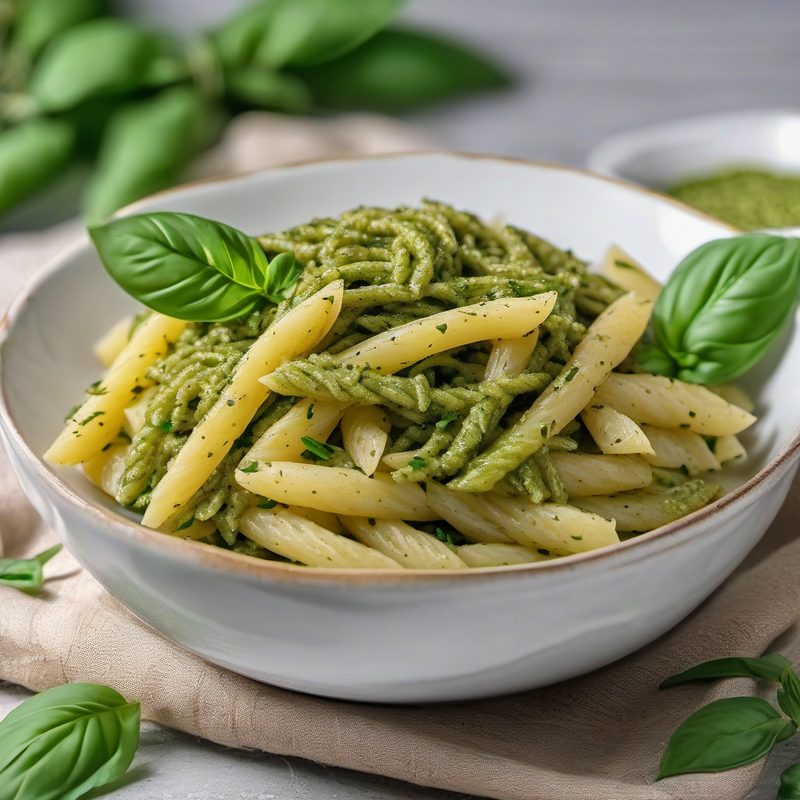
Photo reference: `vol1_105.png` — A wide, shallow ceramic bowl filled with short twisted pasta (trofie or fusilli) generously coated in vibrant, bright-green basil pesto. Tender golden potato cubes and vivid green bean pieces are scattered throughout, with some of the pasta mounded slightly higher in the center. A generous dusting of grated Parmigiano-Reggiano rests on top, and a glossy ribbon of deep-green extra-virgin olive oil catches the light. Fresh basil leaves are tucked around the edge of the bowl for garnish. Shot from a 45-degree overhead angle in soft, warm natural daylight on a rustic wooden or light marble surface. Rustic Italian Riviera summer presentation—fresh, herbaceous, vibrant, and inviting. A woven bread basket with crusty focaccia sits in the background, and a glass of chilled white wine (Vermentino) completes the scene.
Recipe from "The Italian Kitchen" by Vita Milanese — Volume 1: Pasta Perfetto
Recipe from The Italian Kitchen by Vita Milanese — Volume 1 · Pasta Perfetto. Discover all volumes on the ebook page.