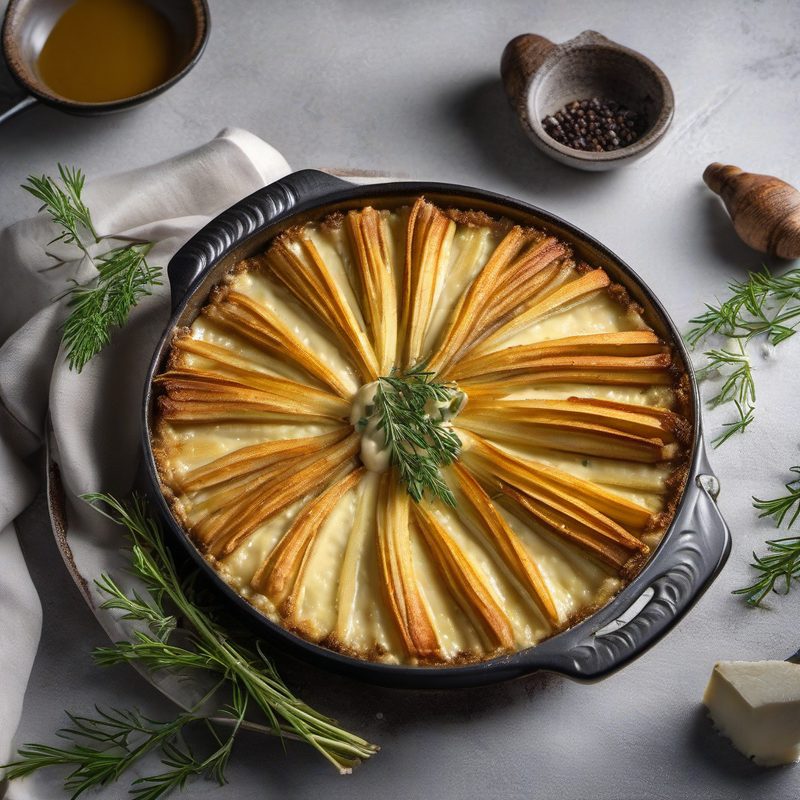
Baked Black Salsify
| Amount | Ingredient |
|---|---|
| Black salsify (scorzonera) | 500 g (about 6–8 medium roots) Look for firm, unblemished roots with dry, intact black skin |
| Extra-virgin olive oil | 3 tbsp (45 ml) A mild, fruity oil — the scorzonera's delicate flavor should not be overwhelmed |
| Garlic cloves | 2 medium, thinly sliced Sliced, not minced — thin slices perfume the oil without burning |
| Kosher salt | ¾ tsp Or ½ tsp fine table salt |
| Black pepper | ½ tsp, freshly ground |
| Fresh lemon juice | 2 tbsp (30 ml) For acidulated water to prevent browning |
| Fresh flat-leaf parsley | 2 tbsp, finely chopped For finishing |
Baked Black Salsify (Scorzonera)
Category: Contorni (Side Dishes)
Servings: 4
Total Time: 45 minutes
Active Time: 15 minutes
Level of Difficulty: Easy
1. WHY THIS RECIPE WORKS
Black salsify (scorzonera hispanica), known simply as scorzonera in Italy, is a winter root vegetable prized for its delicate, artichoke-like flavor with subtle notes of oyster and asparagus — hence its English nickname "black oyster plant." Despite its rustic appearance (a long, slender root with a rough black skin), its interior is creamy white and tender when cooked, and it has been a staple of Italian contorni since the Renaissance, particularly in the northern regions of Piedmont, Lombardy, and Veneto.
The challenge with scorzonera is twofold: it discolors almost instantly when peeled (the white flesh oxidizes to a muddy gray-brown), and its texture can turn gluey if overcooked or mushy if undercooked. This recipe addresses both with two simple but decisive techniques. First, an acidulated water bath — a bowl of cold water with lemon juice — arrests oxidation on contact, keeping the batons snow-white as you work. Second, roasting at 200°C (400°F) rather than boiling or braising concentrates the vegetable's natural sweetness while developing gentle browning at the edges, producing a tender interior with a hint of caramelization and a clean, nutty finish.
The result is a quietly elegant side dish: batons of scorzonera, golden at the tips, fragrant with garlic and olive oil, and finished with a scattering of fresh parsley. It pairs beautifully with roasted meats, fish, or a simple frittata, and it brings an authentic taste of northern Italian home cooking to the table.
3. EQUIPMENT
- Chef's knife and cutting board
- Vegetable peeler
- Large bowl (for acidulated water)
- Colander or salad spinner
- Large mixing bowl
- Rimmed baking sheet (half-sheet pan, 18 × 13 inches / 45 × 33 cm)
- Parchment paper (optional but recommended for easy cleanup)
- Measuring spoons
- Kitchen towel or paper towels (for drying the batons)
- Spatula or tongs (for turning the batons halfway through roasting)
4. PREPARATION
- Preheat the oven to 200°C (400°F) with a rack positioned in the middle.
- Prepare the acidulated water: Fill a large bowl with about 1 litre (4 cups) of cold water. Add the 2 tbsp lemon juice and stir. This will be used to hold the peeled salsify and prevent discoloration.
- Prepare the garlic: Peel the 2 garlic cloves and slice them thinly crosswise into rounds. Set aside.
- Prepare the parsley: Wash and dry the parsley, then chop finely. Set aside.
- Line the baking sheet with parchment paper (optional) for easier cleanup.
5. PEEL AND CUT THE SALSIFY
Black salsify has a rough, bark-like black skin that must be completely removed. Using a vegetable peeler, peel each root from tip to end, working over the bowl of acidulated water so the exposed flesh drops directly into the lemon water. The white flesh will begin to darken within seconds if exposed to air — do not pause between peeling and submersion.
After peeling, transfer each root to the acidulated water. Once all roots are peeled, remove them one at a time, place on the cutting board, and cut into batons roughly 7–8 cm (3 inches) long and 1–1.5 cm (½ inch) thick. As each root is cut, immediately return the batons to the acidulated water. The salsify must remain submerged until ready to season and roast.
6. DRY AND SEASON
Once all the salsify is cut into batons, drain them in a colander. Spread the batons on a clean kitchen towel or a double layer of paper towels and pat them thoroughly dry. This step is critical — excess moisture on the surface of the batons will prevent browning and produce steamed, pale salsify instead of roasted, golden-edged salsify.
Transfer the dried batons to a large mixing bowl. Drizzle with 3 tbsp olive oil, add the sliced garlic, ¾ tsp kosher salt, and ½ tsp black pepper. Toss with your hands or a spatula until every baton is evenly coated. The garlic slices should be well distributed among the batons.
7. ARRANGE ON BAKING SHEET
Spread the seasoned salsify batons in a single layer on the prepared baking sheet. Arrange them so they are not touching or overlapping — crowding traps steam and inhibits browning. If the batons do not fit in a single layer, use a second baking sheet rather than stacking. The garlic slices can be scattered among the batons; they will soften and perfume the oil as they roast.
8. ROAST
Place the baking sheet in the preheated oven and roast for 15 minutes. Remove the sheet, flip each baton with a spatula or tongs so the other side faces the pan. Return to the oven and roast for another 10–15 minutes, until the batons are tender throughout (a skewer or paring knife slides through with minimal resistance) and the edges are lightly golden and caramelized — 25–30 minutes total. The garlic slices should be softened and fragrant but not burnt.
9. FINISH AND SEASON
Remove the baking sheet from the oven. Sprinkle the chopped parsley over the hot salsify and toss gently to distribute. Taste a baton and adjust seasoning: a light additional sprinkle of flaky sea salt (such as Maldon) or a final crack of black pepper can brighten the flavors. If desired, a final drizzle of extra-virgin olive oil adds gloss and richness.
10. TO SERVE
Transfer the baked salsify to a warmed serving platter or individual plates. Serve immediately — the batons are at their best within 5 minutes of leaving the oven, when the contrast between the tender interior and the lightly caramelized exterior is most pronounced. A wedge of lemon on the side allows each diner to add a squeeze of acidity at the table, which lifts the earthy-sweet flavor of the scorzonera.
11. VARIATIONS
- Scorzonera al burro e salvia (Butter and Sage): Replace the olive oil with 2 tbsp unsalted butter (melted) and add 6–8 fresh sage leaves, torn, to the tossing bowl. Roast as directed. Finish with a final pat of butter and parsley.
- Scorzonera con parmigiano (With Parmesan): After the first 15 minutes of roasting, sprinkle 2 tbsp (15 g) freshly grated Parmigiano-Reggiano over the batons before returning to the oven. The cheese forms a delicate, savory crust.
- Scorzonera al limone e timo (Lemon and Thyme): Replace the garlic with 1 tsp fresh thyme leaves (or ½ tsp dried thyme). Add 1 tsp lemon zest to the tossing bowl; finish with a squeeze of lemon juice instead of parsley.
- Scorzonera piccante (Spicy): Add ¼–½ tsp red pepper flakes to the olive oil and garlic mixture before tossing.
- Scorzonera con balsamico (Balsamic Glaze): After roasting, drizzle with 1 tbsp aged balsamic vinegar (or balsamic glaze) and toss gently. The sweet-sour tang complements the earthiness of the salsify.
- Scorzonera al forno con patate (With Potatoes): Combine peeled scorzonera batons with an equal weight (500 g) of peeled potato batons. Toss together with oil, garlic, salt, and pepper. Roast on two sheets; the potatoes may need 5 extra minutes. A classic northern Italian winter contorno.
12. MAKE AHEAD & STORAGE
- Make ahead (peeled and cut only): The salsify batons can be peeled, cut, and held in the acidulated water in the refrigerator for up to 6 hours before roasting. Drain and dry thoroughly before proceeding.
- Make ahead (seasoned, unbaked): Once tossed with oil and seasonings, the batons can be covered and refrigerated for up to 2 hours. Bring to room temperature for 15 minutes before roasting; add 2–3 minutes to the roasting time if going directly from fridge to oven.
- Storage: Leftover roasted salsify keeps in an airtight container in the refrigerator for up to 3 days. The texture will soften upon storage.
- Reheating: For best texture, reheat on a baking sheet in a 200°C (400°F) oven for 5–7 minutes, flipping once. Do not microwave — it will turn the batons soggy and watery.
- Freezing: Not recommended; frozen roasted scorzonera becomes mushy and loses its structure upon thawing.
13. KEYS TO SUCCESS
- Work quickly with acidulated water — scorzonera oxidizes faster than any other common root vegetable. Have the lemon water ready before you peel the first root, and submerge as you go.
- Dry the batons thoroughly after draining — moisture is the enemy of caramelization. Pat with a kitchen towel or paper towels until no surface water remains.
- Cut uniform batons — pieces of similar size ensure even cooking. Aim for 7–8 cm long and 1–1.5 cm thick.
- Don't overcrowd the pan — a single layer with breathing room between batons allows hot air to circulate freely, producing golden edges rather than steamed, gray surfaces.
- Flip halfway through — turning the batons ensures even browning on all sides and prevents the underside from steaming in its own released moisture.
- Serve immediately — roasted scorzonera is at its peak right out of the oven. The delicate texture and caramelized edges fade within 10–15 minutes.
14. COMMON MISTAKES & HOW TO AVOID THEM
| Mistake | Why It Happens | Fix |
|---|---|---|
| Gray, discolored salsify | Peeled and cut salsify exposed to air too long before cooking | Submerge immediately in acidulated water; do not pause between peeling, cutting, and submersion |
| Soggy, steamed batons | Not dried before roasting; overcrowded pan | Pat batons thoroughly dry; arrange in a single layer with space between each |
| Pale, unbrowned batons | Oven not hot enough; too much moisture on surface; pan not preheated | Verify oven temperature; dry batons well; consider preheating the baking sheet |
| Burnt garlic | Garlic slices burn faster than salsify roasts | Slice garlic thinly (not minced) so it softens and perfumes without burning; if garlic begins to darken too early, tent loosely with foil |
| Tough, undercooked center | Batons cut too thick; oven temperature too low | Cut batons to 1–1.5 cm thickness; verify oven temperature |
| Mushy, waterlogged salsify | Boiled or steamed instead of roasted; overcooked | Roast only until tender when pierced — check at 25 minutes |
| Bland or flat flavor | Under-seasoned; insufficient oil; no finishing salt | Season generously with kosher salt before roasting; finish with flaky sea salt and fresh parsley |
15. PLATING & GARNISH
- Serve on a warmed white platter or in a shallow ceramic baking dish — the pale-to-golden batons stand out beautifully against white.
- Garnish with the chopped fresh parsley and, if desired, a few thin shavings of Parmigiano-Reggiano (using a vegetable peeler) for visual contrast and savory depth.
- Place a lemon wedge on the side of the platter — a squeeze of lemon juice brightens the earthy-sweet flavor of the scorzonera and echoes the acidulated water used during prep.
- For an elegant presentation, arrange the batons in a tidy bundle or a neat row alongside a roasted protein, with the garlic slices and parsley scattered over the top.
- A light dusting of flaky sea salt (e.g., Maldon) just before serving adds a last-minute burst of salinity and a pleasant crunch.
16. WINE PAIRING
- White (lean & mineral): A crisp Gavi di Gavi, a mineral-driven Soave Classico, or a Franciacorta Brut (sparkling) — the high acidity and subtle minerality mirror and lift the delicate flavor of the scorzonera.
- White (aromatic): A northern Italian Sauvignon Blanc (from Collio or Alto Adige) — its herbal, grassy notes complement the parsley and garlic without overpowering the vegetable.
- Red (light-bodied): A young, chilled Barbera d'Alba or a Schiava (Vernatsch) from Alto Adige — low-tannin reds with good acidity and red fruit character harmonize with caramelized root vegetables.
- Rosé: A dry rosato from the Veneto or Friuli, such as a Refosco rosato — its fresh, berry-driven profile and crisp finish work well with the garlic and olive oil.
- Beer: A Belgian saison or a farmhouse ale — the peppery, spicy notes and dry finish of these beers are a natural companion to roasted roots.
17. COMPOSITION NOTES (for the cook)
Black salsify (Scorzonera hispanica, also called scorzonera nera or scorzonera di Spagna) is a member of the Asteraceae family — the same botanical family as lettuce, chicory, and the true artichoke (Cynara cardunculus). This botanical kinship explains the subtle artichoke-like flavor that connoisseurs prize. Despite being classified as a root vegetable, scorzonera is botanically a taproot, and its texture-shape-flavor profile is unique among root vegetables: it is less starchy than potatoes, more delicate than carrots, and possesses a slight sweetness that is released most fully through dry-heat cooking methods such as roasting.
Key ratios to remember:
- Salsify : Oil = roughly 500 g : 3 tbsp (just enough to coat without pooling)
- Salsify : Salt = roughly 500 g : ¾ tsp kosher salt
- Acidulated water ratio = 1 L cold water : 2 tbsp lemon juice (sufficient to prevent oxidation for up to 6 hours)
Preparation tip for high volume: If cooking for 8 or more servings (1 kg+ salsify), work in batches for the peeling-cutting-drying sequence. Do not leave peeled whole roots sitting in acidulated water for more than a few minutes before cutting — the cut surfaces oxidize slower than the peeled surfaces, but the cut edges should still be submerged promptly.
Why roast instead of boil or braise? Boiling scorzonera dilutes its flavor and can make the texture slippery or gluey. Braising in butter or stock yields a pleasant result but softens the batons into submission. Roasting concentrates the natural sugars, firms the texture to a creamy-tender bite, and adds the dimension of caramelization that transforms a humble root into a memorable side dish.
18. REGIONAL ITALIAN CONTEXT
Black salsify (scorzonera) has a long and distinguished history in Italian cuisine. It was cultivated and consumed in the Mediterranean since classical antiquity — the Roman naturalist Pliny the Elder mentioned a root he called scorzonera in his Naturalis Historia, noting its use in both food and folk medicine. The plant's Latin specific epithet (hispanica, "of Spain") hints at its route into European cultivation: scorzonera was introduced to the rest of Europe from Spain, where it had been grown since the Moorish period.
Today, scorzonera is most closely associated with the northern Italian regions of Piedmont, Lombardy, and Veneto, where it appears on winter menus as a contorno for bollito misto (mixed boiled meats), brasato al Barolo (Barolo-braised beef), and ossobuco. In Piedmont, it is sometimes simply boiled and dressed with butter, sage, and Parmigiano-Reggiano — a preparation known as scorzonera al burro — or roasted alongside tartufo bianco (white truffle) shavings in the autumn, when both are in season.
In Lombardy and Veneto, roasted scorzonera is a classic accompaniment to pollo alla diavola (deviled chicken) and vitello tonnato (cold veal with tuna sauce), where its mild sweetness and tender texture provide a counterpoint to the assertive flavors of those dishes. The roasted preparation (al forno) is considered the most elegant way to serve scorzonera: it preserves the root's integrity, concentrates its subtle flavor, and allows it to absorb the aromas of olive oil and garlic without being overwhelmed by them.
Despite its northern stronghold, scorzonera is grown and appreciated throughout Italy under various local names: scorzonera nera (black salsify), scorzonera di Spagna (Spanish salsify), or simply radice nera (black root). A close relative, tragopogon porrifolius (white salsify or salsifica), is sometimes confused with scorzonera but has pale skin and a milder, more oyster-like flavor; it is less common in Italian markets and is prepared identically.
19. ADAPTATIONS
- Vegan: This recipe is already vegan as written. For a richer finish, drizzle with a nut-based "Parmesan" (blanched almonds, nutritional yeast, and salt ground to a powder) before serving.
- Gluten-free: No modifications needed — this recipe is naturally gluten-free.
- Low-FODMAP: Replace the garlic cloves with garlic-infused olive oil (use 3 tbsp of infused oil instead of plain olive oil + garlic). The parsley is safe. Scorzonera itself is low in FODMAPs in servings of up to 75 g (about ¾ cup), so portion accordingly.
- Keto / Low-Carb: Scorzonera contains moderate carbohydrates (about 15 g net carbs per 100 g). For a keto-friendly version, reduce the portion to 100 g per serving and increase the olive oil to 4 tbsp. The high fat content slows glucose absorption.
- Paleo / Whole30: This recipe is fully compliant as written — all ingredients are Whole30-approved.
- Air-fryer adaptation: Preheat the air fryer to 200°C (400°F). Toss the dried batons with oil, garlic, salt, and pepper as directed. Place in the air-fryer basket in a single layer (work in batches if needed). Cook for 12–15 minutes, shaking the basket halfway through, until the batons are tender and lightly golden at the edges.
- Large batch (8–10 servings): Double all ingredients. Use two baking sheets on the upper-middle and lower-middle racks. Rotate and swap the sheets at the 15-minute mark (when flipping the batons). Extend roasting time by 3–5 minutes if needed.
- Sheet-pan meal: After the first 15 minutes of roasting, add 4 bone-in, skin-on chicken thighs or 4 pork chops to the baking sheet (nestled among the batons). Return to the oven and roast until the meat reaches 74°C (165°F) for chicken or 63°C (145°F) for pork — about 20–25 minutes more. Everything finishes together on one pan.
- Roasted with other roots: Combine scorzonera batons with an equal weight of peeled carrot batons, parsnip batons, or celery root wedges. Toss together with oil, garlic, salt, and pepper. Roast on two sheets; adjust timing based on the densest root.
Buon appetito!
Recipe from The Italian Kitchen by Vita Milanese — Volume 1 · Pasta Perfetto. Discover all volumes on the ebook page.