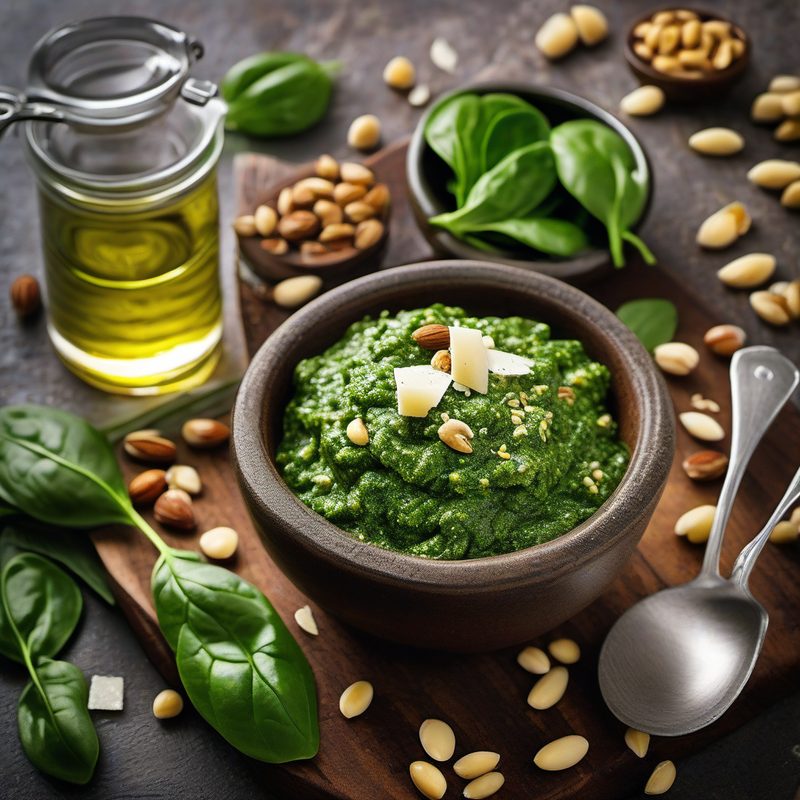
Spinach Pesto
A vibrant, emerald-green pesto that transforms humble spinach into a silky, nutty sauce — blanched and shocked to preserve its brilliant color, then blended with pine nuts, Parmigiano, and garlic into a versatile condiment that's ready in 15 minutes.
| Amount | Ingredient |
|---|---|
| Storing without an olive oil cap | Surface oxidizes and turns brown, unappetizing within hours Pour a thin layer of olive oil on top before sealing the container |
Most pestos start with basil, but this quick spinach version proves that great sauces can come from the vegetable crisper drawer when you know how to treat the greens right. A lightning-fast 30-second blanch in boiling water tames spinach's raw, vegetal edge and sets its chlorophyll, locking in a vivid green that stays bright for days. A plunge into ice water stops the cooking instantly and preserves that color. Then comes the crucial step: squeezing the blanched spinach as dry as humanly possible. Excess water is the enemy of a creamy pesto — it thins the sauce, dulls the color, and prevents proper emulsification. Wring it out like a dishcloth, and you'll be rewarded with a pesto that's dense, silky, and intensely flavored. Pine nuts bring their signature buttery richness, Parmigiano adds salty umami depth, garlic provides a gentle pungent backbone, and a squeeze of lemon cuts through it all with bright acidity. The result is a sauce that's simultaneously richer and milder than basil pesto — nuttier, creamier, and infinitely adaptable. Use it on pasta, spread it on crostini, dollop it over roasted vegetables, or swirl it into soups. Made in minutes, it keeps for a week in the fridge and gives you a secret weapon for fast, impressive meals.
Use the freshest spinach you can find — look for crisp, deep-green leaves with no signs of wilting, yellowing, or sliminess. Flat-leaf (also called smooth-leaf) spinach is ideal; baby spinach works beautifully too and requires less stem trimming. Avoid frozen spinach, which has already been cooked and will produce a waterlogged, muted-green pesto with a cooked flavor. The pine nuts should be raw and fresh — if they smell stale or acrid, replace them. For the cheese, grate a block of Parmigiano-Reggiano yourself; pre-grated cheese contains anti-caking agents that prevent smooth blending.
🥘 Equipment
- Large pot (6 qt / 6 L minimum) for boiling water
- Medium bowl (for ice water bath)
- Colander or strainer
- Clean kitchen towel or several layers of paper towels (for squeezing spinach dry)
- Food processor (standard work bowl) or high-speed blender
- Chef's knife and cutting board
- Rubber spatula
- Measuring cups and spoons
- Microplane or fine grater (for Parmigiano)
- Small dry skillet (for toasting pine nuts)
- Slotted spoon or spider strainer
- Citrus juicer or reamer
- Airtight jar or container for storage
📋 Preparation
Step 1 — Bring Water to a Boil and Prep the Spinach (5 minutes)
Fill a large pot with about 3 quarts (3 liters) of water — you don't need a full pasta pot, just enough to submerge the spinach comfortably. Bring it to a rolling boil over high heat. Add 1 tablespoon of kosher salt — the salt helps season the spinach and sets the color.
Meanwhile, fill a medium bowl with ice water and set it nearby. This is your ice bath.
Wash the spinach: Fill the sink or a large bowl with cool water, submerge the spinach, and swish it around to dislodge any grit or sand. Lift the spinach out, leaving the grit behind in the water, and repeat if necessary — spinach can be surprisingly sandy. Shake off excess water but don't dry it thoroughly; the water clinging to the leaves will help the blanching.
Trim any thick, tough stems from the spinach — if using baby spinach, this is rarely necessary; mature flat-leaf spinach may have fibrous stems worth removing.
The ice bath is non-negotiable. It stops the cooking instantly, which is what preserves that brilliant green color. Skipping the ice bath means the residual heat will continue cooking the spinach, turning it olive-drab and mushy.
Step 2 — Blanch and Shock the Spinach (2 minutes)
Add the spinach to the boiling water all at once. Press it down with a slotted spoon or spider strainer to submerge it fully. Cook for exactly 30 seconds — start timing as soon as all the spinach is submerged. The leaves will wilt dramatically and turn a deep, vibrant green.
Immediately transfer the spinach to the ice water bath using a slotted spoon or spider. Swirl it around to cool it as quickly as possible — about 30 seconds in the ice water is enough.
Don't overcrowd the pot — if you have a lot of spinach, blanch it in two batches. Overcrowding drops the water temperature too much, resulting in uneven cooking and dull color. Thirty seconds is all it takes; any longer and the spinach becomes overly soft and loses its fresh flavor.
Step 3 — Squeeze the Spinach Bone-Dry (2 minutes)
Lift the spinach from the ice water and transfer it to a clean kitchen towel or a stack of several layers of paper towels. Gather the corners of the towel and twist firmly to squeeze out as much water as possible. When you think you've squeezed enough, squeeze again — you should end up with a dense, compact ball of spinach that barely feels damp.
Transfer the squeezed spinach to a cutting board and give it a few coarse chops with your chef's knife — this helps it break down more easily in the food processor.
This is the most important step in the recipe. Wet spinach produces thin, watery pesto that won't cling to pasta or spread properly. A well-squeezed spinach ball should feel almost dry to the touch — you've removed the water that was absorbed during blanching, concentrating the flavor and ensuring a creamy, emulsified pesto.
Step 4 — Toast the Pine Nuts (2 minutes)
Place a small dry skillet over medium-low heat. Add the pine nuts and cook, shaking the pan frequently, until they are fragrant and pale golden — about 2 to 3 minutes. Watch them closely; pine nuts go from pale gold to burnt in seconds due to their high oil content. Immediately transfer them to a plate or small bowl to stop the cooking.
Toasting awakens the pine nuts' dormant oils and transforms their flavor from flat and starchy to warm, buttery, and nutty. Skip this step and your pesto will taste noticeably less complex. Let them cool for a minute before adding to the food processor — blending hot nuts can warm the pesto and dull its fresh flavor.
Step 5 — Blend the Pesto (3 minutes)
Add the toasted pine nuts and garlic cloves to the bowl of a food processor. Pulse 8 to 10 times until they are finely chopped — you want a coarse crumb, not a paste.
Add the squeezed, chopped spinach, grated Parmigiano-Reggiano, lemon juice, ½ teaspoon of kosher salt, and a few grinds of black pepper.
Pulse 5 to 6 times to roughly combine, then scrape down the sides of the bowl with a rubber spatula.
With the processor running, slowly drizzle in the olive oil through the feed tube in a steady stream. Process for about 30 to 45 seconds after all the oil has been added, stopping to scrape down the sides once more, until the pesto is smooth, creamy, and emulsified. The consistency should be thick but spoonable — like a loose hummus or thick cream.
Adding the oil in a slow, steady stream while the processor is running creates a stable emulsion, similar to making mayonnaise. This ensures a silky, cohesive sauce rather than a separated, oily mess. If you prefer a chunkier, more rustic texture, add all the oil at once and pulse instead of running continuously.
Step 6 — Taste and Adjust (1 minute)
Taste the pesto — it should be nutty and creamy with a gentle garlic warmth, brightened by lemon and balanced by salty Parmesan. The spinach flavor should be present but mellow, with none of the raw, grassy edge.
Adjust as needed:
- Too flat: Add another pinch of salt and grind of pepper.
- Needs brightness: Add another ½ teaspoon of lemon juice.
- Too thick: Add 1 tablespoon of warm water (or pasta water if using with pasta) and pulse to incorporate.
- Too thin: Add more Parmigiano or a few extra pine nuts and pulse briefly.
Transfer the pesto to an airtight jar or container. If not using immediately, pour a thin layer of olive oil over the surface to prevent oxidation.
Seasoning is personal and ingredient-dependent. Your Parmigiano might be older and saltier, your lemon might be less acidic, your garlic might be more pungent. Taste and adjust with confidence — the perfect pesto is the one that tastes right to you.
Step 7 — Serve or Store
This pesto is ready to use immediately. Its uses extend far beyond pasta:
- Toss with pasta: Boil 12 oz (340 g) of short pasta (trofie, fusilli, orecchiette, or gemelli) until al dente. Reserve ½ cup of pasta water, drain, and toss with the pesto, adding pasta water by the tablespoon until the sauce coats the pasta evenly. Top with extra Parmigiano.
- Spread on crostini or bruschetta: Toast slices of rustic bread, rub with a cut garlic clove, spread generously with pesto, and finish with shaved Parmigiano.
- Dollop over roasted vegetables: A spoonful on roasted cauliflower, broccoli, or potatoes transforms simple sides.
- Use as a sandwich spread: Replace mayonnaise or mustard with spinach pesto for an instant upgrade.
- Swirl into soups: A spoonful stirred into minestrone, creamy vegetable soup, or tomato bisque adds color and depth.
🧑🍳 Chef's Tips
- Squeeze, squeeze, squeeze — the single most important step. Waterlogged spinach makes watery pesto. Wrap the blanched spinach in a clean kitchen towel and wring it out with conviction. You'll be amazed at how much water comes out and how much more concentrated the flavor becomes.
- Toast your pine nuts — raw pine nuts are starchy and bland. Two minutes in a dry skillet transforms them into something golden, buttery, and aromatic. It's a small step that makes a huge difference.
- Use a Microplane for the cheese — finely grated Parmigiano incorporates more evenly and melts into the pesto seamlessly. Coarsely grated cheese leaves you with stringy bits that don't blend smoothly.
- Don't over-process — a smooth, creamy pesto is the goal, but you don't want it to turn into a hot, greasy paste. If your food processor feels warm to the touch, stop and let it rest for a minute before continuing.
- Garlic intensity is personal — one medium clove gives a gentle warmth; two cloves bring more assertiveness. If you want a milder garlic presence, remove the green germ from the center of the clove before adding it.
- Make it nut-free: Replace pine nuts with toasted sunflower seeds or pepitas. The texture will be slightly different but equally delicious.
- Make it vegan: Omit the Parmigiano and add 1½ tablespoons of nutritional yeast plus an extra pinch of salt. Add 1 tablespoon of raw cashews or an extra 1 tablespoon of pine nuts for body.
❌ Common Mistakes
| Mistake | Why It Hurts | The Fix |
|---|---|---|
| Skipping the ice water bath | Retained heat continues cooking the spinach, turning it olive-drab and dull | Always have a bowl of ice water ready before you blanch — the shock stops cooking instantly |
| Not squeezing spinach dry enough | Creates thin, watery pesto that won't cling to pasta or spread properly | Wring spinach in a kitchen towel until it forms a tight, nearly-dry ball |
| Over-blanching (more than 30 seconds) | Spinach becomes mushy, loses fresh flavor, and turns muddy green | Set a timer for exactly 30 seconds — it's all the time the spinach needs |
| Skipping the toast on pine nuts | Pesto tastes flat, starchy, and one-dimensional | Toast pine nuts in a dry skillet for 2–3 minutes until fragrant and pale gold |
| Dumping all the oil in at once | Pesto separates into a greasy, watery mess instead of a creamy emulsion | Drizzle oil in slowly with the processor running to create a stable emulsion |
| Using pre-grated cheese | Anti-caking agents prevent smooth blending, leaving a gritty texture | Grate Parmigiano from a block using a Microplane or fine grater |
| Over-processing | Heat from the blade warms the pesto, dulling the fresh green color and making the texture pasty | Process just until smooth and creamy — about 30–45 seconds after the oil is added |
💡 Variations
- Spicy Spinach Pesto: Add 1 small red chili (seeds removed, finely chopped) or ¼ teaspoon of red pepper flakes with the garlic in the first pulse. The heat cuts through the creamy richness beautifully.
- Spinach-Walnut Pesto: Replace pine nuts with 50 g (½ cup) toasted walnuts. The earthy, slightly bitter walnut flavor creates a more rustic, hearty pesto that pairs wonderfully with roasted vegetables and whole-grain pasta.
- Spinach-Almond Pesto: Replace pine nuts with 50 g (⅓ cup) blanched almonds. Almonds give a milder, sweeter nuttiness that lets the spinach flavor shine even more.
- Spinach-Ricotta Pesto: Add 60 g (¼ cup) of fresh whole-milk ricotta to the blend. This creates an even creamier, milder sauce that's closer to a dip in texture — excellent as a crostini spread.
- Creamy Spinach-Avocado Pesto: Add ½ ripe avocado (about 60 g of flesh) to the food processor. The avocado makes the pesto extra creamy and adds healthy fats, though it also makes the pesto more perishable — use within 24 hours.
- Extra-Herby: Replace 25 g of the spinach with fresh basil or flat-leaf parsley for a more aromatic, complex green sauce. Basil adds sweet floral notes; parsley adds fresh, clean earthiness.
- Lemony: Double the lemon juice (to 2 tablespoons) and add 1 teaspoon of finely grated lemon zest. The extra citrus brightness lightens the pesto and makes it especially good with seafood or as a dressing for grain salads.
❄️ Storage
| Method | Details |
|---|---|
| Refrigerator | Transfer pesto to an airtight container and pour a thin layer of extra-virgin olive oil over the surface to create an oxygen barrier. Close the lid and refrigerate for up to 7 days. The olive oil layer may solidify in the fridge — simply stir it back in when you're ready to use. Bring to room temperature for 15 minutes before serving, then stir well. If the pesto seems thick after refrigeration, stir in 1–2 teaspoons of warm water or lemon juice. |
| Freezer | For best results, freeze the pesto without the Parmigiano-Reggiano — the cheese can become grainy when thawed. Make the pesto through Step 5, omit the cheese, and freeze. Spoon pesto into an ice cube tray (about 2 tablespoons per cube) and freeze until solid (about 3 hours). Pop the cubes out and transfer to a freezer bag, pressing out as much air as possible. Keeps for up to 3 months. When ready to use, thaw the desired number of cubes at room temperature for about 30 minutes, then stir in the grated Parmigiano and adjust salt and lemon juice. |
🍷 Wine Pairing
| Wine | Why |
|---|---|
| Vermentino di Sardegna | Crisp, saline, with green almond and herbal notes. The wine's bright acidity and subtle bitterness mirror the spinach's character beautifully, while the almond notes echo the pine nuts. |
| Pinot Grigio (Alto Adige) | Clean, unoaked, with green apple, citrus zest, and a mineral finish. The acidity cuts through the pesto's richness while its green fruit notes keep things fresh. |
| Gavi di Gavi | Lemon zest, green melon, and almond notes with a crisp, persistent finish. The almond notes harmonize with the pine nuts while citrus brightness matches the lemon. |
| Sauvignon Blanc (Loire) | Herbaceous, grassy, with gooseberry and citrus notes. The pronounced herbaceous character is a natural match for the spinach-based pesto. |
| Soave Classico | Garganega's signature almond blossom and lemon-citrus notes match the nutty pine nuts and bright lemon. Medium-bodied enough to carry the sauce without overwhelming it. |
| Prosecco (Extra Dry) | For a celebratory pairing, the fine bubbles and crisp acidity cut through the creamy pesto beautifully. Chill well and serve alongside crostini topped with this pesto. |
| Provence Rosé (dry) | Dry, pale, with strawberry, herb, and citrus notes. The chill and subtle red fruit provide a refreshing counterpoint to the nutty, creamy pesto. |
📊 Nutrition (per ¼-cup serving, estimated)
| Calories | Protein | Fat | Carbs | Fiber |
|---|---|---|---|---|
| 220 | 7 g | 20 g | 4 g | 2 g |
Nutrition values are estimates based on 6 servings (yield: 1½ cups / 12 fl oz) using 200 g fresh spinach, 50 g raw pine nuts, 50 g Parmigiano-Reggiano, 2 garlic cloves, and 80 ml extra-virgin olive oil. Actual values will vary based on specific brands, oil absorption, and exact portion sizes. This pesto is naturally vegetarian and gluten-free. Spinach is a nutritional powerhouse packed with vitamins A, C, and K, iron, calcium, and folate. Pine nuts contribute heart-healthy monounsaturated fats, magnesium, and zinc. Parmigiano adds protein and calcium. A ¼-cup serving provides a satisfying dose of healthy fats and protein with minimal carbohydrates.
❓ Frequently Asked Questions
Can I use frozen spinach instead of fresh?
We strongly recommend against it. Frozen spinach has already been cooked and frozen, which breaks down its cellular structure and releases much of its water. The result is a waterlogged, muted-green pesto with a noticeably cooked flavor that lacks the freshness of blanched fresh spinach. If you're truly in a pinch, thaw frozen spinach completely, squeeze it absolutely bone-dry (you'll need to repeat this several times), and proceed — but expect a darker, less vibrant color and a more subdued flavor.
Do I have to blanch the spinach? Can I use it raw?
You can use raw spinach, but we don't recommend it. Raw spinach in pesto has a harsh, vegetal, "green-grass" edge that dominates the more delicate flavors of pine nuts and Parmigiano. The 30-second blanch tames that edge, deepens the color to a brilliant emerald, and creates a much more balanced, pleasant sauce. The difference is striking — try it both ways side by side and you'll never skip the blanch again.
My pesto tastes bitter. What went wrong?
Three likely culprits: (1) Burnt pine nuts — if they darkened beyond pale gold, they'll add bitterness. Toast them more gently next time. (2) Over-blanched spinach — if it cooked more than 30 seconds and wasn't shocked in ice water, it can develop slight bitterness. (3) Your olive oil — some robust, grassy oils can contribute bitterness that's amplified in the pesto. Try a milder, fruitier oil.
Can I make this in a blender instead of a food processor?
Yes, but with caution. Blenders create a much smoother, more homogeneous purée than food processors. If using a blender, pulse rather than running continuously to avoid over-processing. You may need to add 1–2 tablespoons of water or extra olive oil to get the blender moving. The texture will be silkier and less rustic than a food-processor version.
Can I use a different green instead of spinach?
Absolutely. This technique works beautifully with other tender greens. Try: Swiss chard (blanch leaves 45 seconds, strip stems first), arugula/rocket (blanch 30 seconds, has a peppery kick), watercress (blanch 30 seconds, similarly peppery), kale (blanch 1 minute, stemmed first), or a mix of spinach and basil (replace 50 g of spinach with fresh basil for a hybrid pesto).
Why does my pesto look brown/gray after a day in the fridge?
This is oxidation — exposure to air causes the chlorophyll in spinach to break down, turning it darker. To minimize this: (1) press plastic wrap directly onto the surface of the pesto before closing the lid, (2) pour a thin layer of olive oil on top to create an oxygen barrier, (3) add a little extra lemon juice, which helps stabilize the color. Despite the color change, the flavor remains good for up to a week if stored properly.
Can I freeze this pesto?
Yes, with a caveat. See the Storage section above for detailed instructions. The key insight: freeze without the Parmigiano for best texture, then stir in fresh cheese after thawing.
Can I use this pesto on pizza?
Absolutely. Use it as a base sauce instead of tomato sauce on a white pizza. Top with fresh mozzarella, cherry tomato halves, and a sprinkle of pine nuts. Bake as usual and finish with a drizzle of olive oil and fresh Parmigiano.
What pasta shape works best with this pesto?
Short, textured shapes that trap the chunky sauce — trofie (the classic Ligurian pesto pasta), fusilli, orecchiette, gemelli, cavatappi, or campanelle. Long pasta like spaghetti or linguine works but tends to let the pesto slide off; if using long pasta, loosen the pesto with extra pasta water so it clings better. For a low-carb option, serve over zucchini noodles or spaghetti squash.
How do I thin this pesto if it's too thick?
Add warm water or pasta cooking water 1 teaspoon at a time and stir or pulse until you reach the desired consistency. The starchy pasta water is ideal if you're serving with pasta — it adds salt and helps the sauce cling to the noodles. Warm water works perfectly for other uses.
🔗 Related Recipes
- Trofie al Pesto Genovese — The basil-based Ligurian classic that inspired this spinach variation
- Pasta with Watercress Pesto (#303) — A peppery cousin using blanched watercress instead of spinach
- Pasta with Arugula Pesto and Shrimp (#90) — Another quick green-pesto pasta with peppery arugula and seared shrimp
- Pasta with Kale Pesto (#310) — A heartier green pesto made with Tuscan kale, almonds, and Pecorino
- Pasta with Rocket Pesto, Eggplant, and Stracciatella (#115) — A more indulgent take on green pesto pasta with fried eggplant and creamy stracciatella
- Pasta with Pistachio Pesto (#251) — A vibrant, nut-forward pesto from Sicily with hand-peeled pistachios
- Fusilli with Beet Pesto and Walnuts (#301) — A colorful root-vegetable pesto with roasted beets, walnuts, and ricotta
- Almond and Olive Pesto (#112) — A briny, no-cook Sicilian-style pesto with almonds, olives, and cherry tomatoes
- Tagliatelle with Walnut and Fig Pesto (#173) — A sweet-savory autumnal pesto with walnuts, dried figs, and Parmigiano
- Pasta with Sun-Dried Tomato Pesto (#221) — A tangy, umami-rich sun-dried tomato and almond pesto
🏷️ Search Tags
📸 Photo Reference
Photo reference: `vol1_337.png` — A warm, slightly angled overhead shot of a shallow ceramic bowl (cream or pale sage green) filled with bright, emerald-green spinach pesto. The pesto is smooth and creamy with a slight sheen from the olive oil emulsion. Small pale flecks of toasted pine nut are visible throughout. Beside the bowl, an arrangement of ingredients on a rustic wooden board: a handful of fresh spinach leaves, a small pile of raw pine nuts, a wedge of Parmigiano-Reggiano with a Microplane grater resting against it, two garlic cloves, and a small bowl of fresh lemon wedges. A crusty piece of ciabatta bread is partially torn, showing its airy crumb, with a smear of pesto across one side. A small glass cruet of golden-green extra-virgin olive oil stands nearby. The lighting is soft, diffused daylight, casting gentle highlights on the glossy pesto. A linen napkin is folded casually beside the board. The mood is rustic, fresh, and approachable — the kind of simple, honest cooking that turns everyday ingredients into something special.
Recipe from "The Italian Kitchen" by Vita Milanese — Volume 1: Pasta Perfetto 🍝
Recipe from The Italian Kitchen by Vita Milanese — Volume 1 · Pasta Perfetto. Discover all volumes on the ebook page.