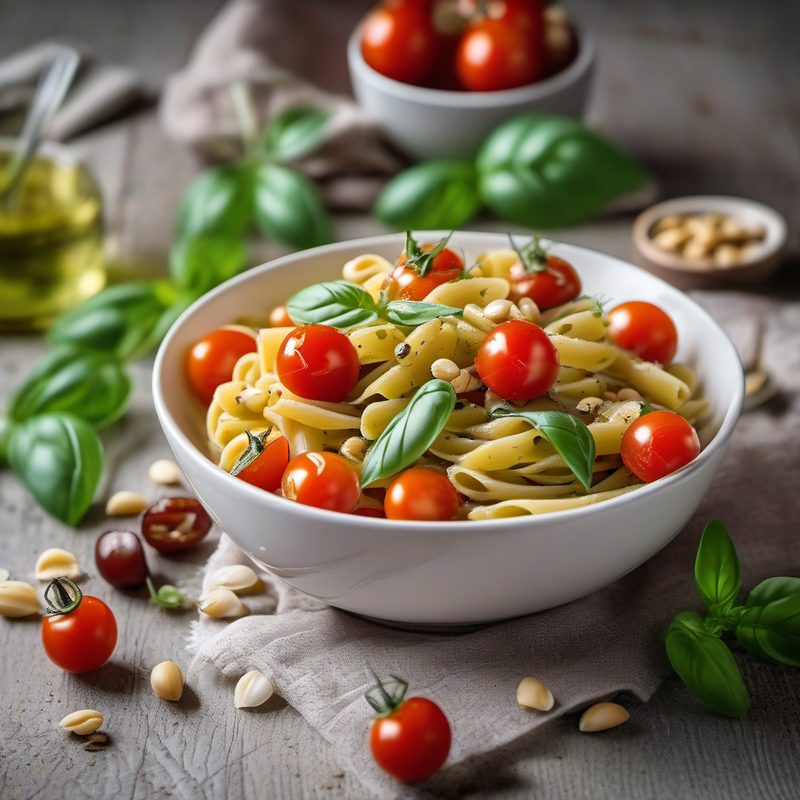
Turiddu Spaghetti
A rustic Sicilian pasta named for a beloved opera character — tender spaghetti tangled in a slow-simmered tomato sauce studded with briny green olives, perfumed with oregano, and finished with sharp pecorino. Ready in 35 minutes, this is the pasta equivalent of a hearty folk song.
| Amount | Ingredient |
|---|---|
| 320 g (11 oz) | Spaghetti (use 160 g / 5.5 oz for 2 servings) |
| 250 g (about 2 cups chopped) | Ramato tomatoes (coppery-skinned heirloom tomatoes) |
| 65 g (½ cup) | Green olives (such as Castelvetrano or Cerignola), pitted and roughly chopped |
| 3–4 tbsp | Extra-virgin olive oil |
| 2 cloves | Garlic, whole but lightly smashed |
| 1 | Fresh chili pepper (such as peperoncino or red jalapeño), halved lengthwise |
| 1 tsp | Dried oregano |
| Fresh oregano, about 2 tbsp chopped | |
| Sicilian pecorino, grated (about ½ cup / 50 g, plus more for serving) | |
| Fine sea salt, to taste | |
| Black pepper, freshly ground, to taste | |
| Reserved pasta cooking water |
"Turiddu" is the Sicilian diminutive of Salvatore — and the name of the passionate, tragic protagonist of Pietro Mascagni's opera Cavalleria Rusticana (Rustic Chivalry), a verismo masterpiece set in a Sicilian village. This pasta captures the same rustic, sun-baked soul of Sicily: ramato (copper-colored) tomatoes slowly simmered with garlic and chili until they break down into a rich, concentrated sauce, joined by briny green olives and finished with a double hit of oregano — dried for depth, fresh for brightness. The pecorino melts into the hot pasta, creating a silky, savory finish. It is honest, bold, and deeply satisfying — a pasta worthy of an operatic name.
Ramato tomatoes are traditional Sicilian heirloom tomatoes with coppery-bronze skin and a sweet, concentrated flavor. If unavailable, substitute San Marzano tomatoes (canned, whole, hand-crushed) or a mix of ripe Roma tomatoes and a spoonful of tomato paste for depth. Green olives should be mild and buttery — Castelvetrano olives are ideal. Avoid overly salty or vinegar-cured green olives, which will overpower the sauce. Sicilian pecorino (pecorino siciliano) is slightly milder and creamier than Pecorino Romano; if unavailable, Pecorino Romano or a good aged pecorino from another region works well, but use slightly less (about ⅓ cup) as it is saltier.
🥘 Equipment
- Large pot (6 qt / 6 L) for pasta
- Medium saucepan or pot (3 qt / 3 L) for the sauce
- Colander
- Chef's knife and cutting board
- Wooden spoon
- Measuring cups and spoons
- Small bowl (for olives)
📋 Preparation
Step 1 — Prepare the Ingredients (10 minutes)
Pit and chop the olives: If your green olives are not already pitted, gently smash each olive with the flat side of a chef's knife, then remove the pit. Roughly chop the olives into ¼-inch (5 mm) pieces. Set aside.
Prepare the tomatoes: If using fresh ramato tomatoes, core them (remove the stem attachment), then cut into ½-inch (1 cm) cubes. If using canned San Marzano tomatoes, crush them by hand in a bowl. Set aside with their juices.
Prepare the garlic and chili: Peel 2 cloves of garlic but leave them whole — just give each a gentle smash with the flat of your knife. Halve the fresh chili pepper lengthwise; remove the seeds and membranes for a milder sauce, or leave them in for more heat.
Leaving the garlic whole (not minced) allows it to perfume the oil and sauce without becoming the dominant flavor. The whole cloves infuse the oil gently and are removed at the end, leaving behind a subtle garlic essence without any harshness. The same applies to the chili — halved, it releases steady warmth without overwhelming the dish.
Step 2 — Start the Sauce (20 minutes)
Place a medium saucepan (3 qt / 3 L) over medium-low heat. Add 3 to 4 tablespoons of olive oil, the smashed garlic cloves, and the halved chili pepper. Cook gently for 2 minutes, until the garlic is fragrant and just beginning to sizzle — do not let it brown.
Add the chopped tomatoes (with their juices), a generous pinch of salt, a few grinds of black pepper, and 1 teaspoon of dried oregano. Stir to combine.
Cover the pot and reduce the heat to low. Let the sauce simmer gently for 20 minutes, stirring occasionally. The tomatoes should break down into a thick, chunky sauce — not completely smooth, but cohesive and rich.
The slow, covered simmer allows the tomatoes to release their juices and concentrate their flavor without reducing too quickly. The dried oregano infuses the sauce during this long simmer, developing its aromatic character. Stirring occasionally prevents the sauce from sticking to the bottom of the pot.
Step 3 — Cook the Pasta (10 minutes, halfway through the sauce simmer)
About 10 minutes before the sauce is done, fill a large pot (6 qt / 6 L) with generously salted water and bring to a rolling boil. Add the spaghetti and cook according to package directions until al dente — typically 8 to 10 minutes for dried spaghetti.
Reserve about 1 cup (240 ml) of the pasta cooking water before draining. Drain the pasta well (do not rinse).
Timing the pasta to finish at the same time as the sauce is the single most important organizational detail of this dish. Start the pasta when the sauce has been simmering for about 10 minutes — this ensures both are ready simultaneously.
Step 4 — Finish the Sauce (5 minutes)
When the sauce has simmered for 20 minutes, remove the garlic cloves and the chili pepper halves from the sauce. Discard them — their work is done.
Add the chopped green olives to the sauce and stir. Add a ladleful (about ½ cup / 120 ml) of the reserved pasta water and another pinch of dried oregano (about ¼ teaspoon). Stir and let simmer, uncovered, for 2 minutes to allow the olives to warm through and the flavors to meld.
Taste and adjust — the olives will add brininess, so taste before adding additional salt. Add more black pepper or a pinch of chili flakes if you want more heat.
The olives are added at the end so they retain their texture and bright, briny flavor. Cooking them for too long makes them soft and dull. The pasta water at this stage thins the sauce slightly and adds starch that will help it cling to the spaghetti.
Step 5 — Combine and Finish (2 minutes)
Add the drained spaghetti directly to the pot with the sauce. Toss vigorously with tongs or a wooden spoon for 1 minute to coat every strand.
Remove the pot from the heat. Add the chopped fresh oregano and about ⅓ cup (35 g) of the grated Sicilian pecorino. Toss vigorously off heat until the cheese melts and the sauce emulsifies into a creamy, clingy coating — about 30 seconds.
If the pasta seems dry, add another splash of pasta water (1 to 2 tablespoons) and toss again. The finished pasta should be glossy and well-coated, not dry or soupy.
The off-heat finishing is crucial — the residual heat of the pasta melts the pecorino into the sauce without overheating it, which would make the cheese clump and turn greasy. The fresh oregano at this stage provides a bright, herbaceous counterpoint to the rich, slow-cooked tomato sauce.
Step 6 — Plate and Serve (2 minutes)
Divide the spaghetti among 4 warm shallow bowls, using tongs to create neat, coiled nests.
Top each serving with a generous shower of grated Sicilian pecorino — about 1 to 2 tablespoons per portion. Drizzle with a final touch of extra-virgin olive oil and scatter a few fresh oregano leaves (whole) for garnish.
Serve immediately — this pasta waits for no one, and the pecorino will begin to seize as it cools.
The finished dish is beautiful in its rusticity: deep amber-red spaghetti studded with pale green olive pieces, crowned with a snowy drift of pecorino and bright green fresh oregano. It looks like Sicily on a plate — warm, vibrant, and welcoming.
🧑🍳 Chef's Tips
- Use whole garlic cloves, not minced. The garlic is meant to perfume the oil subtly, not dominate the sauce. Whole smashed cloves release their essence gently and are removed at the end, leaving behind a whisper of garlic rather than a punch. This is traditional for longer-simmered Sicilian tomato sauces.
- Ramato tomatoes are worth seeking out. These coppery-skinned heirloom tomatoes have a higher sugar content and lower acidity than standard red tomatoes, giving the sauce a naturally sweet, concentrated flavor. They are available at farmers' markets in late summer and early fall. In winter, use high-quality canned San Marzano tomatoes — crush them by hand for the best texture.
- Don't skip the dual oregano treatment. Dried oregano, added at the start, infuses the sauce with its warm, earthy aroma during the long simmer. Fresh oregano, added off heat at the end, provides a bright, herbaceous, almost minty finish. They serve completely different purposes and are both essential.
- Choose the right green olives. Castelvetrano olives (bright green, buttery, mild) are ideal. Cerignola olives (large, meaty, mild) also work well. Avoid Kalamata or other brine-cured dark olives — their sharp, acidic flavor will overwhelm the delicate tomato sauce.
- Remove the garlic and chili before serving. This is non-negotiable. Leaving whole garlic cloves or chili halves in the finished dish creates an unpleasant surprise bite. Fish them out with a slotted spoon or tongs before adding the pasta.
- Undercook the pasta slightly. Drain the spaghetti about 30 seconds before the package's al dente time — it will finish cooking in the hot sauce, absorbing flavor without becoming mushy.
❌ Common Mistakes
| Mistake | Why It Hurts | The Fix |
|---|---|---|
| Leaving garlic and chili in the sauce | Biting into a whole garlic clove or chili half is unpleasant and overpowering | Remove them with a slotted spoon or tongs before adding the pasta — their work is done |
| Adding olives too early | Olives cooked for too long become soft, dull, and lose their bright brininess | Add olives only in the final 2 minutes of cooking, just to warm them through |
| Using too-salty olives | Overpowering the delicate tomato sauce with aggressive brine | Use mild, buttery green olives like Castelvanos. Rinse them briefly if they taste overly salty |
| Adding cheese over heat | Pecorino will seize, clump, and turn greasy if added to hot sauce on the stove | Always remove the pot from heat before adding the cheese. The residual heat of the pasta is sufficient to melt it smoothly |
| Overcooking the pasta | Mushy spaghetti cannot support the chunky sauce and will fall apart when tossed | Cook to al dente (or 30 seconds less) and finish in the sauce |
| Skipping the pasta water | The sauce will be too thick and won't cling to the pasta properly | Always reserve at least 1 cup of pasta water and add a generous splash when combining |
| Using dried oregano only | The sauce will lack brightness and fresh herbaceousness | Use both dried oregano (for depth during simmering) and fresh oregano (for brightness at the end) |
💡 Variations
| Variation | How To |
|---|---|
| Add capers | Add 1 tablespoon of rinsed capers along with the olives. The extra brininess complements the olives and adds another layer of Sicilian flavor |
| Add tuna | Add 150 g (5 oz) of oil-packed tuna, drained and flaked, along with the olives. This transforms the dish into a heartier alla trapanese-style pasta. Use high-quality ventresca (belly) tuna for the best result |
| Use orecchiette or bucatini | Short ear-shaped pasta (orecchiette) catches the chunky sauce beautifully. Bucatini (hollow spaghetti) allows the sauce to seep inside the strands. Adjust cooking times accordingly |
| Add toasted breadcrumbs | Toast ¼ cup of breadcrumbs in a dry skillet until golden and sprinkle over the finished pasta. The crunchy texture contrasts nicely with the soft sauce and olives |
| Make it spicy | Use 2 chili peppers (or leave the seeds in) for a more aggressive heat, or add ½ teaspoon of red pepper flakes with the dried oregano. Sicilian cooking can be quite spicy — embrace it |
| Add anchovy for depth | Add 2 anchovy fillets to the oil with the garlic in Step 2. Cook until dissolved. The anchovy adds umami depth without tasting fishy — it simply makes the tomato sauce more savory and complex |
| Use cherry tomatoes | Substitute 300 g (2 cups) of halved cherry tomatoes for the ramato tomatoes. They cook more quickly (about 12 minutes total) and produce a sweeter, more concentrated sauce. Add a tablespoon of tomato paste if using cherry tomatoes for deeper color |
| Lemon finish | Add the zest of ½ lemon and a squeeze of lemon juice with the fresh oregano at the end. The bright citrus lifts the rich tomato-olive sauce beautifully |
❄️ Storage & Leftovers
| Method | Details |
|---|---|
| Refrigerator | Store in an airtight container for up to 2 days. The olives will soften slightly, and the pasta will absorb some of the sauce |
| Reheating | Reheat in a skillet over medium-low heat with a splash of water or pasta water, tossing gently until warmed through (3–4 minutes). Add a fresh sprinkle of pecorino and fresh oregano to restore brightness. Do not microwave — it makes the garlic flavors harsh and the olives rubbery |
| Freezing | The sauce (without pasta) freezes beautifully for up to 3 months. Cool completely, transfer to a freezer-safe container, and thaw overnight in the refrigerator. Cook fresh pasta when ready to serve. Do not freeze the completed pasta dish — the spaghetti becomes mushy upon thawing |
🍷 Wine Pairing
| Wine | Why |
|---|---|
| Etna Rosso (Sicily) | A light-to-medium-bodied red from the volcanic slopes of Mount Etna — notes of red cherry, dried strawberry, wild herbs, and volcano dust minerality. The bright acidity and moderate tannins (from Nerello Mascalese grapes) handle the tomato sauce beautifully, while the herbal notes echo the oregano. The volcanic minerality is a subtle but perfect match for the briny olives |
| Cerasuolo di Vittoria (Sicily) | Sicily's only DOCG wine — a blend of Nero d'Avola and Frappato with flavors of red berries, violets, and Mediterranean herbs. Medium-bodied with soft tannins and bright acidity, it is the classic Sicilian food wine. The juicy fruit character balances the brininess of the olives |
| Nero d'Avola (Sicily, young) | A youthful, unoaked Nero d'Avola — think dark cherry, plum, and a hint of black pepper. Its full body stands up to the rich tomato sauce, while its moderate acidity and tannins keep the pairing balanced. Avoid heavily oaked versions, which would overwhelm the dish |
| Grillo (Sicily, chilled) | A full-bodied white Sicilian wine with flavors of citrus, white peach, and Mediterranean herbs. Served lightly chilled (50°F / 10°C), it provides a refreshing contrast to the rich tomato sauce. The herbal notes harmonize with the oregano. This is the white wine choice for those who prefer not to drink red with tomato-based pasta |
| Lambrusco Grasparossa (Emilia-Romagna, chilled) | A lightly sparkling, fruity red with bright acidity and low tannins — the bubbles scrub the palate clean of the rich tomato sauce, while the red berry fruit provides a sweet-tart contrast to the briny olives. Serve lightly chilled (55°F / 13°C) |
| Primitivo di Manduria (Puglia, light chill) | A bold, fruit-forward red with notes of blackberry, plum, and sweet spice. Served with a slight chill (60°F / 15°C), its ripe fruit and moderate tannins stand up to the intensity of the olives and pecorino without overwhelming the dish |
🥗 Suggested Side Dishes
- Simple fennel and orange salad — Thinly sliced fennel bulb, segments of blood orange, a handful of arugula, dressed with olive oil, lemon juice, salt, and black pepper. The bright, citrusy, anise-tinged salad is the perfect palate cleanser alongside the rich, savory pasta
- Grilled eggplant with mint — Thick slices of eggplant grilled or pan-seared until tender and smoky, finished with chopped fresh mint, olive oil, flaky salt, and a drizzle of honey. The smoky, creamy eggplant and cooling mint are a classic Sicilian pairing
- Marinated anchovies or sardines — A small plate of marinated white anchovies (acciughe marinate) or grilled sardines, dressed with olive oil, lemon, and parsley. The briny seafood echoes the coastal soul of the dish
- Crusty pane cafone or focaccia — A rustic Sicilian bread with a crackling crust and airy crumb, perfect for sopping up every last drop of the tomato-olive sauce from the bowl
- Roasted peppers with capers — Strips of red and yellow bell peppers roasted until sweet and tender, tossed with capers, olive oil, and a splash of red wine vinegar. The sweet peppers and briny capers are a natural complement to the olive-tomato sauce
- Arancini (optional) — If you are going full Sicilian, start the meal with a single arancino (fried rice ball) per person. The crispy, cheesy rice ball sets the stage for the pasta to follow
📊 Nutrition (per serving, estimated)
| Calories | Protein | Fat | Carbs | Fiber |
|---|---|---|---|---|
| ~480 | 14 g | 18 g | 64 g | 5 g |
Nutritional values are estimates based on 4 servings with 320 g spaghetti, 250 g tomatoes, 65 g green olives, 3 tbsp olive oil, and ½ cup grated pecorino. Actual values will vary based on specific brands, the type of olives used, and portion sizes. Green olives are rich in monounsaturated fats and vitamin E. Tomatoes provide lycopene, a powerful antioxidant, especially when cooked (cooking increases lycopene bioavailability). Pecorino adds calcium and protein but also contributes saturated fat and sodium. This is a moderate-calorie main course; as a primo (first course), it will serve 6 with smaller portions (approximately 320 calories per serving). To lighten the dish, reduce the pecorino to ¼ cup and skip the final olive oil drizzle (approximately 430 calories and 14 g fat per serving).
❓ Frequently Asked Questions
Who is Turiddu and why is this pasta named after him?
Turiddu is the protagonist of Cavalleria Rusticana (Rustic Chivalry), a one-act opera by Pietro Mascagni premiered in 1890. It is a masterpiece of the verismo (realism) movement, set in a Sicilian village and telling a passionate, tragic story of love, jealousy, and honor. Turiddu is a young Sicilian peasant — passionate, proud, and hot-blooded. This pasta, with its bold, rustic flavors and sun-baked Sicilian soul, is named in his honor. The dish is not historically tied to the opera; rather, it is a modern homage that captures the same intense, authentic, earthy character of rural Sicily that the opera immortalized.
What are ramato tomatoes and where can I find them?
Ramato (meaning "coppery" in Italian) refers to a group of heirloom tomato varieties with distinctive copper-bronze skin and a balanced sweet-tart flavor that is less acidic than standard red tomatoes. They are grown primarily in Sicily and other parts of southern Italy. In North America, look for "Cuore di Bue" or "Costoluto Genovese" varieties at farmers' markets in late summer. If unavailable, the best substitute is canned San Marzano tomatoes (the DOP protected variety from the Sarno Valley), crushed by hand. A mix of ripe Roma tomatoes with one tablespoon of tomato paste also works well.
Can I use black olives instead of green?
You can, but the flavor profile will change significantly. Black olives (especially Kalamata or Gaeta) are more pungent, fruity, and acidic than mild green olives. They will dominate the sauce rather than complementing it. If using black olives, reduce the quantity to ¼ cup (about 30 g) and choose a milder variety such as Taggiasca or Arbequina. This is no longer Spaghetti alla Turiddu in the traditional sense, but it can still be delicious.
My sauce is too thin. How do I thicken it?
The sauce should be chunky and rustic, not completely smooth. If it is watery: (1) Remove the lid for the last 5 minutes of simmering to allow excess liquid to evaporate. (2) Add a tablespoon of tomato paste when you add the tomatoes. (3) Let the pasta finish cooking directly in the sauce — the starch from the spaghetti will help thicken it. (4) Add extra grated pecorino, which acts as a natural thickener.
My sauce is too thick. How do I fix it?
Simply add more reserved pasta water, 1 tablespoon at a time, and stir until you achieve the desired consistency. The starchy water also helps the sauce cling to the pasta. The sauce should be thick enough to coat the back of a spoon, but still loose enough to flow slowly.
Can I make this vegan?
Yes — omit the pecorino cheese and substitute 2 tablespoons of nutritional yeast for umami depth, or use a high-quality vegan parmesan alternative. For extra richness, add 2 tablespoons of olive oil at the end (when you would add the pecorino). All other ingredients are naturally vegan. The flavor will be different (less savory, less salty), but the olive, tomato, and oregano character will still shine.
Can I prepare this dish in advance for a dinner party?
Partially. The sauce can be made up to 3 days ahead and stored in the refrigerator. On the day of serving, cook fresh pasta, reheat the sauce gently (adding a splash of water to loosen it), and combine just before serving. The final toss with fresh oregano and pecorino should be done at the last minute to preserve the brightness of the herbs and the creaminess of the cheese. Do not combine the pasta and sauce more than 5 minutes before serving.
Do I need to remove the seeds from the chili pepper?
That depends on your heat tolerance. The seeds and white membranes contain most of the capsaicin (heat). For a mild sauce ( kid-friendly ), remove all seeds and membranes. For medium heat (the traditional level), leave half the seeds. For a spicy sauce, leave all the seeds in and consider using two chili peppers. You can also add a pinch of red pepper flakes at the end for an extra kick.
🔗 Related Recipes
- Bucatini with Sardines and Raisins (Bucatini con sarde e uvetta) (page 94)
- Pasta alla Siciliana (Sicilian-Style Pasta) (page 214)
- Pasta with Eggplant (Pasta con melanzane) (page 108)
- Penne with Vegetable Ragu (Penne al ragù di verdure) (page 119)
- Spaghetti alla Cetarese (Spaghetti Cetara-Style) (page 142)
- Pasta with Tuna and Saffron (Pasta con tonno e zafferano) (page 172)
🏷️ Search Tags
📸 Photo Reference
Photo reference: `vol1_189.png` — An overhead or slightly elevated three-quarter shot of a shallow warm-toned ceramic bowl filled with spaghetti alla Turiddu. The spaghetti is a deep amber-red, each strand generously coated in a chunky tomato sauce. Pale green olive pieces (Castelvetrano) are scattered throughout — their bright color providing a beautiful contrast against the dark red sauce. The pasta is topped with a generous, snowy drift of freshly grated Sicilian pecorino and scattered whole fresh oregano leaves for a bright green garnish. A final drizzle of golden-green extra-virgin olive oil catches the light on the surface of the pasta. Beside the bowl: a small glass of red wine (Etna Rosso), a fork, and a small dish of additional grated pecorino. A few fresh ramato tomatoes and sprigs of oregano are arranged casually on the table for context. The lighting is warm and golden, evoking a late summer evening in Sicily. The overall mood is rustic, hearty, and inviting — a dish that feels like it was made with love in a sun-drenched Sicilian kitchen.
Recipe from "The Italian Kitchen" by Vita Milanese — Volume 1: Pasta Perfetto
Recipe from The Italian Kitchen by Vita Milanese — Volume 1 · Pasta Perfetto. Discover all volumes on the ebook page.