Spaghetti Tonnaresca
A bold, briny twist on the classic puttanesca — tender strands of spaghetti tangled with oil-packed tuna, black olives, and ripe tomato passata in a garlicky, chili-flecked sauce that comes together in under 30 minutes.
| Amount | Ingredient |
|---|---|
| 12 oz (350 g) | Spaghetti or linguine |
| 5 oz (150 g / 1 can) | Canned tuna in oil, drained |
| ½ | Medium onion, finely chopped |
| 1½ cups (400 g / 14 oz) | Tomato passata (smooth strained tomatoes) |
| ¾ cup (100 g) | Pitted black olives, halved or roughly chopped |
| 1 | Small dried chili (or ½ tsp red pepper flakes) |
| 3 tbsp (45 ml) | Extra-virgin olive oil |
| Kosher salt | |
| 2 tbsp | Fresh flat-leaf parsley, finely chopped |
If puttanesca is the firecracker of Italian pasta — all briny anchovies, punchy capers, and spicy chili — then tonnaresca is its more approachable, pantry-friendly cousin. By swapping the anchovies for canned tuna in oil, Benedetta Rossi transforms the aggressive, in-your-face classic into something gentler, more rounded, and infinitely weeknight-friendly. A quick soffritto of onion and chili perfumes the olive oil before the tuna is added and lightly sautéed just until warmed through, preserving its delicate texture. Tomato passata provides the silky, brick-red base, while briny black olives add pops of salt and richness. Tossed with al dente spaghetti and finished with fresh parsley, this is a pasta that asks nothing more of you than a well-stocked pantry and fifteen minutes of active cooking — yet delivers all the deep, savory satisfaction of a slow-simmered Sunday sauce. It's the kind of honest, unfussy cooking that reminds you why simple Italian food has conquered the world.
Use level tablespoons and standard US measuring cups. Canned tuna in olive oil is preferred over water-packed tuna for flavor — save the oil from the can and use it in the soffritto for an extra layer of richness. Look for passata (smooth, uncooked strained tomatoes) in Italian markets or well-stocked grocery stores; if unavailable, substitute 1½ cups of crushed San Marzano tomatoes passed through a food mill or blender until smooth.
🥘 Equipment
- Large pot (6–8 qt / 6–8 L) for pasta
- 12-inch (30 cm) skillet or sauté pan
- Chef's knife and cutting board
- Colander
- Ladle or heatproof measuring cup (for pasta water)
- Tongs
- Measuring cups and spoons
📋 Preparation
Step 1 — Start the Pasta Water (concurrent with sauce)
Bring a large pot of generously salted water (about 1½ tablespoons kosher salt per 4 quarts of water) to a rolling boil over high heat. Add the spaghetti and cook until al dente according to package directions.
Just before draining, reserve 1 cup (240 ml) of the starchy pasta cooking water. Drain the spaghetti well (do not rinse).
Step 2 — Make the Soffritto (5 minutes)
While the pasta cooks, set a 12-inch skillet over medium heat and add the olive oil. Once the oil shimmers, add the finely chopped onion and whole dried chili (or red pepper flakes). Cook, stirring frequently, until the onion is soft, translucent, and just beginning to take on color at the edges — about 4 minutes. The onion should be tender and sweet, not browned or crisp.
The soffritto is the backbone of this sauce. Cook the onion slowly enough that it softens without browning — golden edges are fine, but dark caramelization will make the sauce bitter. If using a garlic clove (see tip), add it with the onion so it softens alongside.
Step 3 — Add the Tuna and Tomato (5 minutes)
Add the drained tuna to the skillet, breaking it into rough chunks with a wooden spoon — don't pulverize it; you want discernible pieces of tuna throughout the finished sauce. Cook, stirring gently, for 2 minutes, just until the tuna is warmed through and beginning to absorb the flavors of the soffritto.
Add the tomato passata and a pinch of kosher salt. Stir to combine. Reduce the heat to medium-low and let the sauce simmer gently, stirring occasionally, until it thickens slightly and the flavors meld — about 5 minutes. The sauce should be rich and velvety, not watery.
Tuna is delicate — don't cook it for too long or it will dry out and become mealy. Two minutes in the soffritto is enough to warm it through and infuse it with flavor; the remaining time in the passata finishes the job gently.
Step 4 — Add the Olives and Toss with Pasta (2 minutes)
Add the pitted black olives to the skillet and stir to combine. Cook for 1 minute to warm them through.
Add the drained spaghetti directly to the skillet along with ¼ cup (60 ml) of the reserved pasta water. Toss vigorously with tongs for 1 to 2 minutes, until the pasta is well coated and the sauce is glossy and emulsified. If the pasta looks dry, add more pasta water 1 tablespoon at a time — you're aiming for a loose, silky coating that clings to each strand, not a soupy pool.
Remove from heat. Add the chopped parsley and toss once more. Taste and adjust salt — the olives and canned tuna are already briny, so go easy.
Step 5 — Serve
Serve immediately in warmed shallow bowls. Finish with a drizzle of your best extra-virgin olive oil, if desired, and an extra crack of black pepper. A final pinch of fresh parsley on top adds a bright, green finish.
This pasta waits for no one. Have your bowls warmed and your table set before you start tossing the pasta in the sauce. The starches begin to set as soon as the pasta hits the bowl, so serve immediately for the best texture.
💡 Chef's Tips
- Use the oil from the tuna can. If your tuna is packed in olive oil, drain it over the skillet before adding your own olive oil — that flavorful tuna oil adds an extra layer of savory depth to the soffritto. Reduce the measured olive oil by a tablespoon to compensate.
- Substitute garlic for onion if preferred. Benedetta Rossi suggests using half a clove of garlic instead of the onion for a sharper, more pungent flavor profile. Slice the garlic thinly and add it with the chili in Step 2 — cook just until fragrant, about 30 seconds, then proceed with the tuna.
- Don't oversalt. Between the brined olives, the preserved tuna, and the salted pasta water, this dish has plenty of salinity. Taste before adding any salt, and add it incrementally — you can always add more, but you can't take it out.
- Use good-quality tuna. The tuna is the star protein here, so spring for Italian or Spanish oil-packed tuna (tonno in olio d'oliva) rather than bargain-brand water-packed chunks. The difference in texture and flavor is night and day — premium tuna is silky and rich, while cheap tuna is dry and flaky.
- Spaghetti or linguine both work. Spaghetti is traditional, but linguine's flat shape catches the chunky sauce beautifully. Even bucatini or mezze maniche are fine choices — use whatever long pasta you have on hand.
❌ Common Mistakes
| Mistake | Why It Hurts | The Fix |
|---|---|---|
| Overcooking the tuna | Canned tuna is already cooked — prolonged heat turns it dry, stringy, and mealy | Add the tuna in Step 3, cook just 2 minutes in the soffritto, then add the passata and simmer only 5 minutes more |
| Using water-packed tuna | Water-packed tuna lacks the richness and silky texture that oil-packed tuna brings to the dish; it can also make the sauce taste lean and watery | Always use tuna packed in olive oil — drain it well but save the packing oil for the soffritto |
| Browning the onion too aggressively | The soffritto should be sweet and tender, not bitter and caramelized — dark onion bits compete with the delicate tuna flavor | Cook the onion over medium heat, stirring frequently, until just softened and translucent (about 4 minutes). Golden edges are fine; dark brown is too far |
| Adding too much pasta water | A watery, soupy sauce won't cling to the spaghetti — you want a glossy, emulsified coating, not a pool | Start with ¼ cup of pasta water and add more only 1 tablespoon at a time. The sauce should coat the pasta, not float it |
| Skipping the pasta water entirely | The starchy pasta water is essential for emulsifying the olive oil and passata into a cohesive, clinging sauce | Always reserve at least 1 cup of pasta cooking water before draining — the starch is what binds the sauce to the pasta |
| Overcooking the pasta | Mushy pasta collapses under the sauce and loses its pleasant toothsome texture | Cook the pasta to al dente (or even 30 seconds shy, since it will finish cooking when tossed with the hot sauce in the skillet) |
🔗 Related Recipes
- Puttanesca Risotto (page 91)
- Spaghetti with Clams and White Wine (Spaghetti alle vongole veraci) (#65)
- Spaghetti with Garlic, Butter, and Pecorino (#66)
- Spaghetti with Squid Ink, Mussels, and Shrimp (#103)
- Bucatini with Sardines, Raisins, and Pine Nuts (Bucatini con le sarde) (#94)
- Creamy Tuna Pasta with Peas (#9)
- Spaghetti Aglio e Olio (page 27)
- Linguine with White Clam Sauce (page 44)
- Spaghetti with Sicilian Pesto (Trapanese) (page 33)
🏷️ Search Tags
📸 Photo Reference
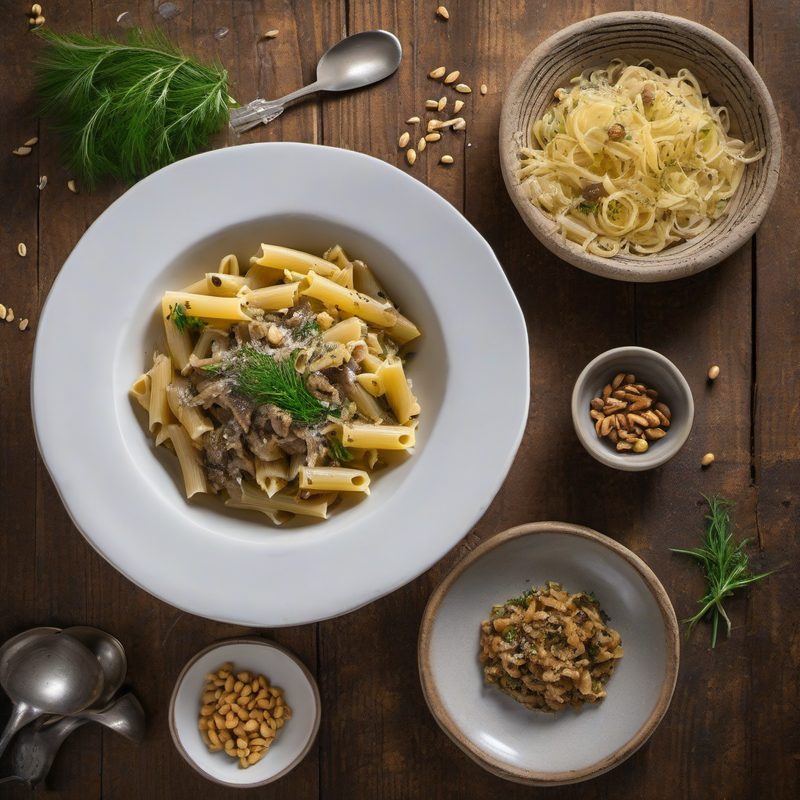
Photo reference: `vol1_174.png` — A top-down overhead shot of glossy spaghetti coiled in a wide, matte white ceramic bowl. Rust-colored tomato sauce clings to every strand, punctuated by chunks of pearly tuna and dark, wine-colored olive rings. A dusting of bright green chopped parsley provides the sole color contrast. A small bowl of grated Pecorino Romano sits to the side. Shot on a rustic wooden table with soft natural lighting filtering in from the left — warm, inviting, and deeply homey, capturing the essence of Italian home cooking made from humble, high-quality pantry ingredients.
This recipe is adapted from Benedetta Rossi's original — a weeknight-friendly, pantry-forward take on the classic puttanesca that proves you don't need a trip to the fishmonger to make a deeply satisfying seafood pasta.
Recipe from The Italian Kitchen by Vita Milanese — Volume 1 · Pasta Perfetto. Discover all volumes on the ebook page.